Canada
The homeland of hockey, the eighth country in the world in terms of the number of immigrants and the third in terms of oil reserves - here are three short facts about Canada, whose history dates back only a few centuries.
Everyone is well and comfortable here - people of different nationalities and skin colors live peacefully and happily under the maple leaf flag. Religious tolerance and a friendly attitude towards "foreigners" have long made Canada a haven for immigrants from all over the world.

General information
Canada is one of the youngest countries in the world. It received its modern name and international recognition in 1867 - almost a hundred years later than its powerful neighbor, the United States.
In terms of quality of life, environmental protection, personal safety, and education, Canada is at least in the top five of all major world rankings. Millions of people dream of getting a Canadian passport and are thinking about emigrating.

Canada: emigration, beauty. Big issue
Capital | Ottawa |
|---|---|
Area | approximately 9.98 million km² |
Population | 41,417,056 inhabitants as of April 1, 2026 |
Administrative divisions | 10 provinces and 3 territories |
Official languages | English and French |
Currency | Canadian dollar (CAD) |
Form of government | constitutional monarchy and parliamentary democracy |
Head of state | Charles III, King of Canada |
Prime Minister | Mark Carney |
Governor General of Canada | Louise Arbour |
Mark Carney is the 24th Prime Minister of Canada and has held office since March 2025. Louise Arbour became the 31st Governor General on June 8, 2026.
History
Canada has a rich history that dates back to the indigenous peoples who inhabited the area thousands of years before the arrival of Europeans. The first European explorers were the Vikings, who, led by Leif Erikson, reached the coast of Newfoundland around 1000. In the 16th century, French explorer Jacques Cartier explored the St. Lawrence River, which initiated French colonization, including the creation of New France.
The British gained control of Canada after the Seven Years' War (1756–1763), and in 1763 the Treaty of Paris formally ceded the territory to Britain. In the late 18th and early 19th centuries, Canada experienced a significant wave of British immigration. The British North America Act of 1867 created Canadian Confederation, uniting the provinces of Ontario, Quebec, New Brunswick, and Nova Scotia into a single dominion.

Painting “Seven Years' War”, artist Karl Reuchling
In the 20th century, Canada played a major role in two world wars and was a founding member of the United Nations and NATO. In 1982, Canada officially gained full legislative independence from Great Britain with the adoption of a Constitutional Act that included a Charter of Rights and Freedoms. The country has developed into a multicultural and economically developed society with one of the highest qualities of life in the world.

Canadian Charter of Rights and Freedoms, 1892
Canada currently consists of ten provinces and three territories, each with its own unique cultural and historical characteristics. It remains a constitutional monarchy with a parliamentary democracy, where the Governor General represents the British monarch. Canada continues to play an important role on the international stage, maintaining peace and stability around the world.
Population, Currency, and Political System
As of April 1, 2026, the population of Canada was estimated at 41,417,056. During the first quarter of 2026, it decreased by approximately 55,000 people, or 0.1%, which was primarily due to a change in the balance of international migration.
Canadians speak two languages – English and French. They have been considered equal since 1967. This is due to the ongoing policy of federalization, as well as to the current realities – the informal division of the country into English and French Canada.
French Canada is the province of Quebec: here, as you can imagine, the inhabitants speak mainly French. The rest of Canadians speak English, but bilingualism is mandatory in all official spheres of life. Even the prime minister, who addresses the people with his annual message, delivers a speech in both languages in turn.
Canada is a federal state, a constitutional monarchy, and a parliamentary democracy. The head of state is King Charles III of Canada, who is represented federally by Governor General Louise Arbour. The head of government is Prime Minister Mark Carney, who took office in March 2025.

Prime Minister of Canada - Justin Trudeau
The national currency of the country is the Canadian dollar, international code CAD. According to the Bank of Canada's indicative average exchange rate on August 18, 2026, one US dollar was equal to 1.3889 CAD, and one euro was equal to 1.6082 CAD. Exchange rates change daily, so you should double-check them before traveling.
Geography and Climate
Canada is the second largest country in the world by area, with a total area of approximately 9.98 million square kilometers. It is located in the northern part of North America and is bordered by the Atlantic Ocean to the east, the Pacific Ocean to the west, and the Arctic Ocean to the north. Canada has the world's longest land border with the United States to the south and northwest (the state of Alaska).
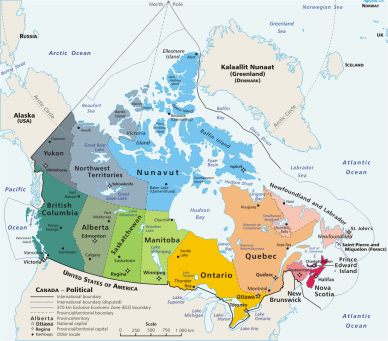
Map of Canada
Despite being the second largest country in the world, only a very small part of the country is inhabited, namely the region from Quebec to Windsor. The rest is barren land, rocky massifs, rivers and lakes. There are so many lakes in Canada that even Finland would envy them. There are over two million of them, scattered throughout the country.
The legend of the North American continent is the Great Lakes. This is an entire freshwater system that contains a fifth of the total water supply on Earth. In addition to Lake Michigan, which is entirely in the United States, the other four (Ontario, Erie, Superior and Huron) are located along the Canada-US border - the longest land border in the world, which is almost 9,000 km long.
The Canadian climate cannot be described briefly. One thing is certain: in most regions of Canada, snow lies for eight months of the year. The remaining four months, as Canadians themselves joke, are devoted to road repairs.
Winter in this part of the North American continent is varied. Average temperatures can range from -15 to -45 °C, although in the Yukon there have been reports of temperatures dropping to -63 °C.
In summer, most of the country is very hot: the temperature rises to 35-40 ° C, but in the northern regions it is very cool - the thermometer barely reaches 5-6 ° C. The further north you go, the colder the winter, the cooler and shorter the summer.
How to get there?
There is only one way to get to Canada, located in the northern part of the North American continent - by buying a plane ticket. There are charter flights, on which you can save a lot: the cost of tickets on them is half the price of regular ones.
But traveling within the country is a real pleasure: the railways, bus connections, and everything related to them are excellent. The service is excellent everywhere.
Important: Traveling to Canada requires a visa, which is a very complicated procedure. You will need to provide many copies of documents, which must be translated into English and French and certified with an apostille.
Where to stay?
Hotel, apartment, hostel and motel are the four main ways to get a roof over your head in any country in the world, and Canada is no exception. A hotel room is the most expensive, a hostel is the cheapest accommodation option, as everywhere. Budget hotels offer their services for 30-50 USD per night, hostels for 15-20 USD.
Cleanliness and courteous staff are the most striking features of Canadian hotel service. Even in crowded hostels, you can always count on fresh linen, a comfortable bed, and free "house" coffee.
The only downsides are paid parking, the almost universal lack of free breakfasts, and often paid Wi-Fi. Interestingly, inexpensive Canadian hotels are more willing to offer free internet than the fancy five-star Hilton or Sheraton hotels.
Here are some options for budget hotels in different cities in Canada:
Pangea Pod Hotel is a three-star hotel in Whistler, British Columbia. Rooms with a living room and air conditioning. There is a microwave and even a dishwasher everywhere. Comfortable beds, good bathrooms;

Pangea Pod Hotel in Whistler
Mountain View Inn is a small and very cozy hotel with stunning mountain views in Canmore, Alberta. Family rooms with a full set of familiar household amenities: air conditioning, refrigerator, ironing facilities, hairdryer. Each has a bathroom;

Mountain View Inn hotel in Canmore
- Abri du voyageur Hotel is a quite decent two-star hotel in the largest city of Quebec - Montreal. It is located in the Quartier des Spectacles - an area where music and theater festivals are constantly held. The rooms offer all the standard amenities - hairdryer, air conditioning, telephone. There are so-called kitchen niches for cooking any food;
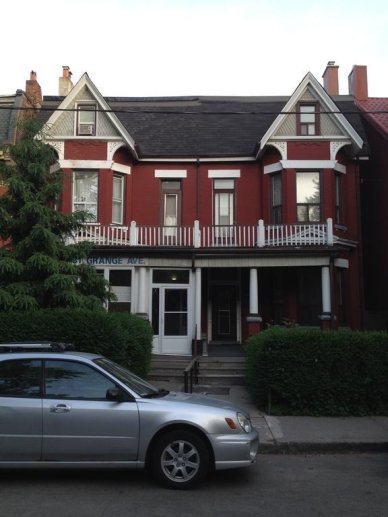
Toronto Travellers Home is a three-star hotel in Toronto. Modest but cheap: that’s how you can describe its rooms. The area is very lively: the Asian Quarter and markets are nearby, so the hotel is unlikely to be suitable for people who are used to a quiet holiday. The rooms have a toilet and shower, and the microwaves are shared, they are placed in the corridor;

Toronto Travelers Home in Toronto
Auberge Des Arts is a budget hotel in Ottawa. Located in Lowertown, the heart of the capital, five minutes from the National Gallery and the Royal Mint. Type - BB (bed and breakfast), some rooms have shared bathrooms.

Auberge Des Arts hotel in Ottawa



You can also rent a room, apartment, or even a house. This is a good option for those who are staying in the country for a long time. The best services for finding accommodation in Canada are Airbnb and Booking.com.
What to see?
There are few countries on earth where nature is treated as carefully as in Canada. Incredible beauty of forests, lakes, rivers and mountains - Canadians try to preserve all this in the purest form. The fact is that of the entire vast territory of this North American state, only a third is inhabited by people. Canadians are in no hurry to change the situation.
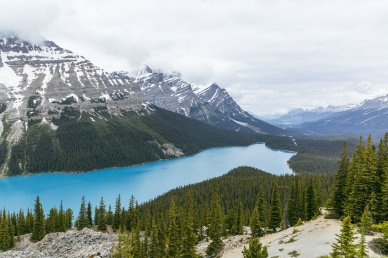
Peyto Lake, Alberta, Canada
As of 2026, the Parks Canada system includes 37 national parks and 11 national park reserves. Together, they protect approximately 343,000 km² of Canadian land.
If we consider not only federal national parks, but all recognized protected and preserved areas, then at the end of 2025 they covered 14% of Canada's land and inland waters and 15.5% of its marine territory.
So what is there to see in this beautiful corner of North America? Both nature lovers and city dwellers will find something to do here:
Gros Morne National Park
Mountains, fjords, sheer cliffs and waterfalls – all this beauty can be found in Newfoundland. The reserve is quite far from civilization – and this is its special charm.

Gros Morne National Park
You can admire the beauty of the wild nature by walking along mountain trails or by boating through these wonderful places. For the most adventurous, kayaking is the perfect way to add some adrenaline to your blood.
Stanley Park
In the western part of Vancouver is a huge park with an area of over 400 hectares. It is crowded every day: its sea wall is filled with couples in love, mothers with children, athletes and other passers-by. Tourists enjoy local attractions - the aquarium, Beaver Lake and other amazing places.

Aerial view of Stanley Park in Vancouver
Vieux Montréal
There is a place in Quebec's largest city where time seems to have stood still. Everything here is as it was before - the Basilica of Notre-Dame de Montréal, the Hôtel de Ville (the old town hall) and the Place Jacques-Cartier (the market square). To enhance the effect of traveling back in time, you can even take a horse-drawn carriage tour through the narrow, winding streets of the historic center.
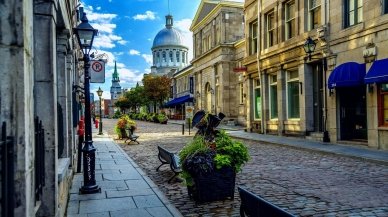
Vieux Montreal – the old quarter of the city
Rocky Mountains (British Columbia)
This mountain range is another must-see for any nature lover. The majestic mountain range, crystal clear lakes, and dense coniferous forests are so beautiful and unique in their uniqueness that they have been designated a UNESCO World Heritage Site.
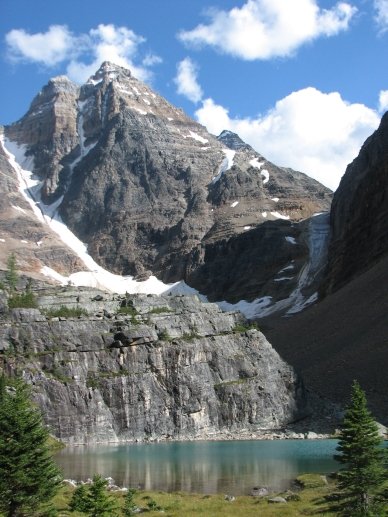
Ringross Peak and Lake O'Hara, British Columbia
CN Tower (Toronto)
Would you visit Canada’s largest city without seeing one of the tallest towers in the world? No, you can’t. The 550-meter-tall structure is 200 meters taller than the famous Eiffel Tower in Paris.
The CN Tower is visible from all corners of the city. However, it looks especially impressive at night, when the building is illuminated by thousands of light bulbs. Tourists and locals praise the restaurant in the tower: it rotates, so the view from it is simply incredible. Gambling is also allowed in Canadian casinos, which are regulated by individual provinces. For example, land-based and online casinos with a Kanawake license.

CN Tower in Toronto
These are not all of Canada's attractions, but just a few of the wonderful places worth visiting. Making any rankings when it comes to what there is to see in this country is a thankless and pointless task: everything is beautiful here.
What to eat?
Canada is multinational: every year more and more people from all over the world come here. Naturally, this feature leaves its mark on the menu of the inhabitants of this country. At every step in every city there are Asian restaurants, Turkish and Arabic cafes, pizzerias, regular cafes and food courts.
Canadians do not have a national cuisine as such: what they eat here is a kind of mixture of British and French cuisines. These were the ancient ancestors of today's Canadians, who once came here to explore the lands of the continent. It is also worth adding to this the food of the indigenous people (Indians, who have lived here since time immemorial), as well as dishes from the neighboring United States, where people are deeply accustomed to fast food.
And yet: what do Canadians eat? They love hearty and rich food. Meat is cooked in every home - turkey, lamb, pork on the table in various forms. All kinds of stews, salads and casseroles are served as a side dish, and soups are served first. Pumpkin, cabbage and tomato soups are especially popular. Canadians also love aromatic meat broths with the obligatory crispy croutons.
Butter Tart is a traditional Canadian dessert consisting of a crispy base filled with a mixture of butter, sugar and eggs. In some versions, raisins or nuts are added. This dessert has a rich sweet taste and is very popular throughout the country.

Butter Tart - a traditional Canadian dessert
Tourtière is a traditional meat pie from Quebec. It is usually made with minced pork, beef, or game meat, seasoned with spices and vegetables, and baked in a crispy crust. Tourtière is especially popular during holiday dinners.

Tourtière - a famous Canadian pie
The signature sauce in Canada is maple syrup: it is impossible to imagine the morning of a Canadian going to work or school without it. Toast, pancakes, fritters, waffles - everything is served with this thick and very sweet syrup, reminiscent of buckwheat honey. They even bake cornbread with it.

Maple syrup is the signature sauce of Canadians
Canada is a country that is not so easy to get to. But those who are lucky enough to visit it will never forget how beautiful it is.