Most beautiful places to visit in Iceland
Iceland is a country where scale is not measured in kilometres. It is not large in terms of area, but in terms of the feeling of space: this relatively small island is home to glaciers, active volcanoes, lava deserts and coastlines that look as if they are thousands of kilometres apart.
In Iceland, there is no sharp boundary between the road and the place: journeys here are no less important than stops, the landscape changes every hour, light rearranges space, and the weather can completely change the perception of the same route.
The question ‘what to see in Iceland’ actually means something else — where to start and how to read this space: the capital, classic routes, waterfalls, glaciers and volcanic landscapes do not make up a list, but a sequential history of the island.
Geographical location | An island nation in the North Atlantic, between Europe and North America |
|---|---|
Area | ~103,000 km² |
Population | ~390,000 people |
Population density | One of the lowest in Europe — most of the island is uninhabited |
Capital | |
Currency | Icelandic króna (ISK) |
Official language | Icelandic (one of the least changed Germanic languages) |
Form of government | Parliamentary republic |
Tectonic position | The boundary between the North American and Eurasian plates |
Natural features | Volcanoes, glaciers, geysers, geothermal fields |
Time zone | GMT (no daylight saving time) |
Climate | Maritime subarctic, with sudden changes in weather |
Level of urbanisation | Most of the population lives in and around the capital city. |

Iceland cinematic, Land of Fire & Ice
Tourist attractions in Iceland
In Iceland, tourist attractions rarely exist in isolation from one another. Waterfalls, volcanoes, canyons, glaciers and cities form a continuous route around the island. That is why travelling here is perceived as a journey through different landscapes, from inhabited coastal areas to almost deserted inland regions.
The most popular tourist destinations in Iceland form several major routes, which are usually the starting point for a first visit to the country:
Cities and cultural centres:
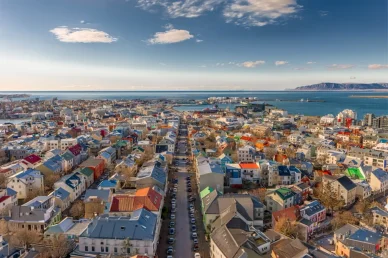
Reykjavík — the capital and cultural centre of the country;

Reykjavík — the capital and cultural centre of the Iceland
Guidetoiceland.is Akureyri — the ‘northern capital’ of Iceland.

Visit Akureyri - The Capital of North Iceland - A Nation of It's Own
Classic routes:
The Golden Circle — the most popular route for first-time visitors, combining history, geology and one of the country's most famous water systems;

The Golden Circle — the most popular route for first-time visitors Iceland
Icelandia.com Ring Road / Route 1 — Iceland's main transport artery, allowing you to drive around the island and see most of the key landscapes.

29 of the BEST Places to see on Iceland Ring Road
National parks and natural areas:
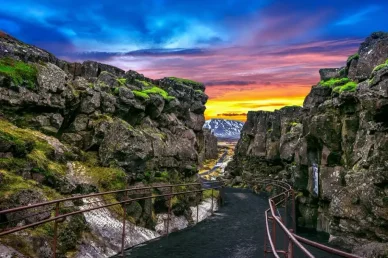
Þingvellir National Park — the meeting place of tectonic plates and the ancient political centre of the country, combining geology and history;

One of the places that really deserves attention is Þingvellir National Park
Carsiceland.com South Coast — waterfalls, glaciers, black beaches;

South Coast — waterfalls, glaciers, black beaches
Icelandia.com North Iceland — tranquil landscapes and fjords.

The MOST Beautiful Places to Visit in Northern Iceland 2025 (Iceland Travel Guide)
Waterfalls:
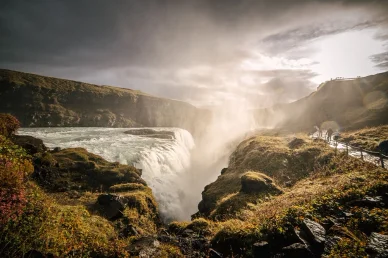
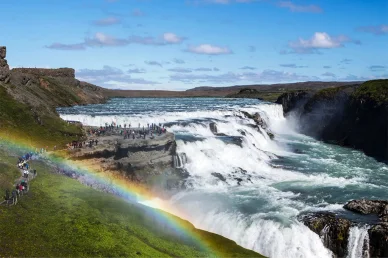
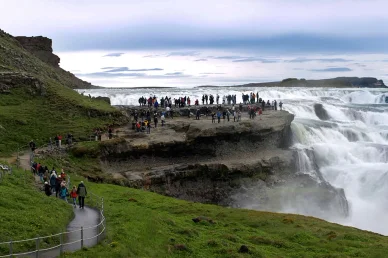
Gullfoss — a two-tiered waterfall on the Hvítá River, one of the key points of the Golden Circle;

Gullfoss — a two-tiered waterfall on the Hvítá River
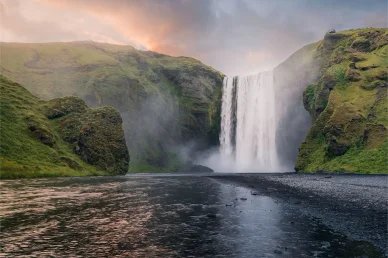
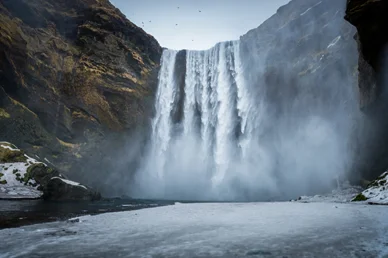
Re.is Skógafoss — a wide wall of water about 60 metres high, where rainbows often appear in sunny weather;

A beautiful plume of white water rushing over towering cliffs, Skógafoss attracts visitors from far and wide
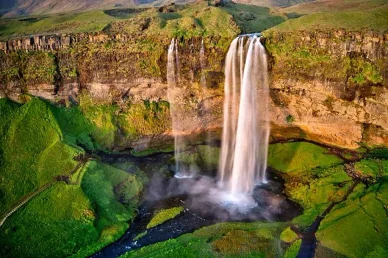
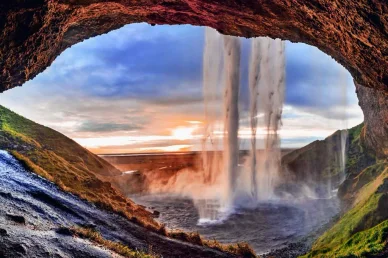
Re.is Seljalandsfoss — its uniqueness lies in the path that allows you to walk behind the water curtain and see the stream from the inside;

Seljalandsfoss Waterfall is situated approximately 120 kilometers (75 miles) from the capital city of Reykjavik. Its convenient location makes it easily accessible for both locals and tourists alike
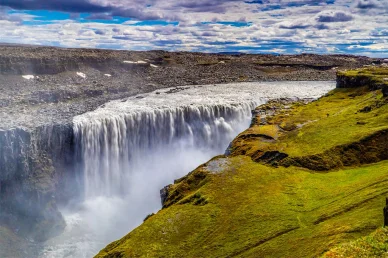
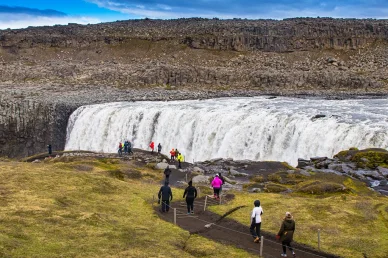
Motorhomeiceland.com Dettifoss — is the most powerful waterfall in Europe in terms of water volume, where the noise and vibration can be felt even before it is visible.

The Dettifoss waterfall is the most powerful waterfall in Europe, 200 cubic meters of water per second plunge over the edge. Dettifoss is 45 m high and 100m wide
Northiceland.is
Glaciers, volcanoes and geothermal landscapes:
- Vatnajökull Glacier — Iceland's largest glacier, under which active volcanic systems are hidden;
- Eyjafjallajökull — is a volcano known for its 2010 eruption, which affected air traffic across Europe;
- Lake Mývatn — a lake in the north of the country, surrounded by lava fields, pseudocraters and geothermal areas;
Kerið Crater — a volcanic crater with a lake, accessible for viewing from the edge and below.

Iceland: Land of Fire and Ice, Volcanoes, Glaciers & Geothermal Wonders
Canyons and coastline:
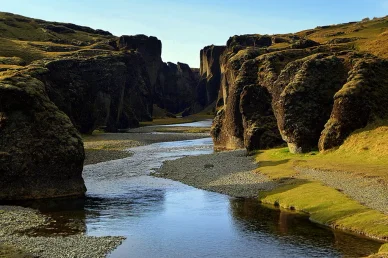
Fjaðrárgljúfur is a narrow canyon formed by a glacial river, with viewing trails along the edge;

Fjaðrárgljúfur is a canyon with a unique, serpent-like shape
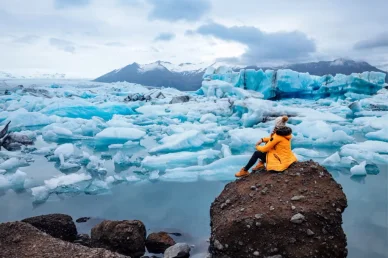
Guidetoiceland.is Jökulsárlón is a glacial lagoon where icebergs slowly drift towards the ocean;

Nestled within Vatnajökull National Park, Jökulsárlón is one of Iceland’s most iconic natural wonders
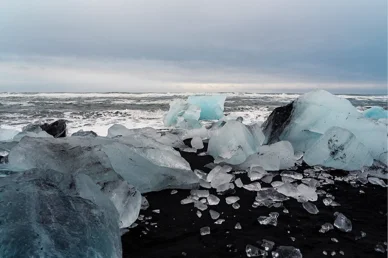
Guidetoiceland.is Diamond Beach is a stretch of black sand onto which ice fragments from the lagoon are washed.

Glistening orbs of ice that seem to absorb the sunlight itself sit against the volcanic black sand at the Diamond Beach Iceland
Re.is
Geothermal baths and modern attractions:
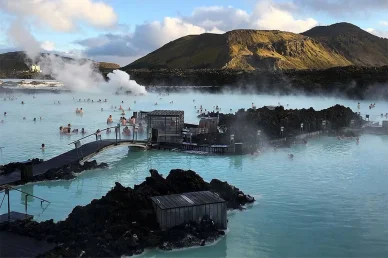
Blue Lagoon is a geothermal resort with mineral water, popular for relaxation after a flight;

The Blue Lagoon is one of Iceland‘s top tourist attraction. And for a good reason, the geothermal waters and the alien lava field landscape offer a great experience in a beautiful landscape
Icelandtravel.is Sky Lagoon is a modern complex with panoramic ocean views and a bathing ritual inspired by Icelandic traditions.

Sky Lagoon is just a few minutes’ walk away from the city center of Reykjavik when one experiences the tranquillity it offers
Motorhomeiceland.com
FlyOver Iceland is a flight simulator that allows you to see Iceland's main landscapes from the air.
Reykjavík is usually the first stop on the itinerary and, at the same time, the introduction to the entire island tour.
Reykjavík
Reykjavík is one of the smallest capitals in Europe and, at the same time, the main starting point for gathering Icelandic experiences. This city does not separate people from the landscape: the ocean, wind and weather are as much a part of everyday life here as they are outside the capital. It is a convenient place to stop and understand the scale of the country before venturing out into the island.

Reykjavik Iceland: 12 BEST Things To Do In 2024 (Travel Guide)
The most prominent building in the city is the Hallgrímskirkja cathedral, whose shape echoes the rhythm of basalt columns typical of Iceland's natural landscapes. Inside, the space is restrained and almost empty, and the tower offers a view of the compact city, which quickly gives way to the ocean and mountains.
Near the harbour is Harp, a modern cultural centre. The glass facade of the building changes depending on the weather, time of day and season: on a cloudy day, it looks restrained, almost cold, and at sunset, it turns into a living mosaic. It is not only a concert venue but also a public space where locals simply drink coffee, read or wait for the weather to change.
To understand the country's history, the key point in Reykjavík is the National Museum of Iceland. Its exhibition shows Iceland as a country of slow development: from the first Viking settlements to the modern state. Much attention is paid here to everyday life, survival in harsh conditions, the role of nature and isolation. This museum explains well why Icelandic society has become reserved, autonomous and, at the same time, very cohesive.
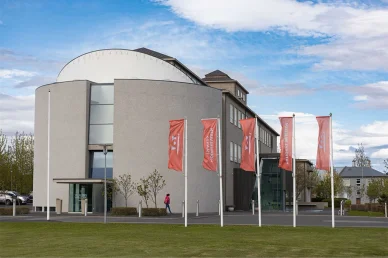
The National Museum displays objects that provide insight into Icelandic cultural history - displays that encourage visitors to dwell on the past, present and future
Another important cultural space in Reykjavík is Perlan, a natural history museum and observation deck. Inside, there are exhibitions dedicated to glaciers, volcanoes and climate, as well as an artificial ice cave. Perlan provides a ‘blueprint’ of Iceland — a theoretical understanding of the processes that can be encountered on a real journey around the island.
Geothermal pools occupy a special place in the life of the city. They operate all year round and are considered part of everyday life. The pools are open all year round, regardless of the weather, and serve a social function: people meet here to socialise.
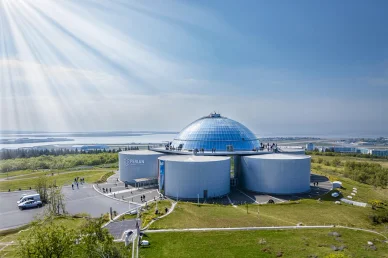
Perlan is the top attraction in Reykjavík
Interesting fact: Iceland has one of the highest numbers of writers per capita in the world, and Reykjavik is the centre of this process. Bookshops, small publishing houses, poetry readings and music venues are a familiar part of the urban landscape here.
Reykjavik does not try to impress. Its strength lies in its human scale and constant dialogue with its surroundings. That is why it works well as the first stop on the itinerary: the city does not ‘close off’ Iceland, but slowly introduces you to its rhythm before you leave the civilised world behind.
Golden Circle
Route length | approximately 300 km |
|---|---|
Main stops | Þingvellir, Geysir, Gullfoss |
Distance from Reykjavík | ≈100 km to the first stop |
Route type | circular, by car |

Golden Circle: Iceland's most famous route and most beautiful secret
This is the route that marks the beginning of a journey beyond the city limits for many. Its popularity is explained not so much by the number of sites as by their density: places where geology, history and water work together are concentrated within a relatively small distance.
The Golden Circle is well suited for independent travel and guided tours. Along the route, there are cafes, hotels, viewing platforms, car parks and opportunities for trekking. Most of the roads are paved and accessible all year round, although conditions can be more difficult in winter.
The first stop is usually Thingvellir (Þingvellir or Thingvellir) — a national park and one of the key points of Icelandic identity. This is where the North American and Eurasian tectonic plates converge, forming cracks and ledges that are clearly visible in the relief. It was here in the 10th century that the Althingi, one of the oldest parliaments in the world, was established. Iceland's political history is literally inscribed in the landscape, without architectural landmarks or monuments.

Iceland's Golden Circle: Thingvellir and Geysir — Rick Steves Travel Bite
It was here, on the plains of Þingvellir, that the annual sessions of the Althingi were held from 930 to 1798, where laws were passed and disputes between free people were resolved. It was here in 1000 that Iceland adopted Christianity, and on 17 June 1944, it declared its independence as the Republic of Iceland. The ruins of the ancient ‘towers’ (the dwellings of the delegates) and the Lögberg rock (‘law stone’) are historical monuments and symbols of Icelandic statehood.
The route then leads to the Geysir geothermal field, which gave its name to all geysers in the world. The Great Geyser itself is active irregularly, but nearby is Strokkur, a geyser that ejects a column of hot water every few minutes. This place clearly demonstrates the underground tension of the island: the water here does not just boil, but reacts to the heat that constantly rises from the depths.
The route ends at Gullfoss — the Golden Waterfall. The Hvítá River falls into the canyon in two cascades, creating a feeling of power that is difficult to capture in a photo. The water disappears into the gorge as if the terrain breaks off suddenly and without warning. In clear weather, water mist and rainbows often appear above the waterfall, while in cloudy weather, the space is reduced to the sound and movement of water.

Golden Circle day trip from Reykjavik, Iceland
The Golden Circle does not give an exhaustive picture of Iceland, but it sets the right perspective, where land, water and history overlap.
Waterfalls of Iceland
In Iceland, waterfalls are the result of water moving through volcanic terrain and glacial terraces. Most of them formed where rivers cross layers of lava of different ages: hard basalt layers retain their shape, while softer rocks are washed away. That is why the waterfalls here have a clear geometry and a noticeable scale.
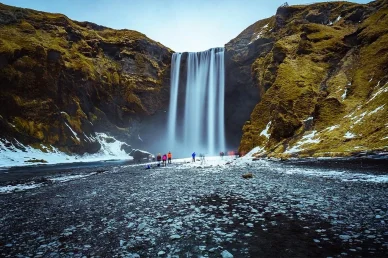
Skógafoss. One of the most famous waterfalls on the south coast. The stream falls from a height of about 60 metres in a wide, even wall, without cascades or branches. In sunny weather, rainbows almost always appear at the foot of the waterfall due to the constant water mist. The waterfall is easily accessible and at the same time retains a sense of power — the noise can be heard long before it comes into view;

One of the most famous waterfalls on the south coast - Skógafoss
Glacierguides.is Seljalandsfoss. This waterfall is known for the possibility of walking behind the water curtain. The path leads around the stream, allowing you to see it from the inside — through the movement of water and mist. In rain or strong winds, the route becomes slippery, but that is when you can best feel the interaction of water, stone and air. Seljalandsfoss clearly shows how the perception of the landscape changes depending on the viewing point;

Seljalandsfoss is one of the most breathtaking waterfalls in South Iceland with a whooping 196 ft (60 m) cascade
Gacierguides.is Dettifoss. The most powerful waterfall in Europe in terms of water volume. It is not so much beautiful in the classical sense as it is physically palpable: the ground vibrates, the air is filled with noise and tiny droplets. Dettifoss is located in the north of the country, in a less touristy region, and gives the impression of a force of nature that does not care about human presence;

The falls are 100 metres (330 ft) wide and have a drop of 44 metres (144 ft) down to the Jökulsárgljúfur canyon
Icelandtravel.is Gullfoss. The Golden Waterfall is often mentioned in the context of the Golden Circle, but it deserves special attention. Two cascades fall into a narrow canyon, and the water disappears from view almost instantly. This creates the effect of a cliff, as if the river suddenly falls into the ground;

Gullfoss is one of the most popular tourist attractions in Iceland and part of the Golden Circle
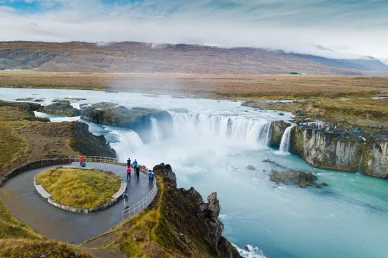
Icelandtravel.is Goðafoss. The ‘Waterfall of the Gods’ is associated with the adoption of Christianity in Iceland in 1000. According to legend, pagan idols were thrown here. Goðafoss resembles a horseshoe in shape, and the water flows evenly in several streams.

The water in Skjálfandafljót river falls 12 metres in Goðafoss waterfall. The river has its origin in the Icelandic Highlands, running north through Barðárdalur valley
Icelandtravel.is
Glaciers and volcanoes
Glaciers and volcanoes in Iceland constantly interact and shape the island's landscape. Many key processes occur hidden from view: magma moves beneath the ice, heat accumulates and, from time to time, changes the appearance of entire regions.
Vatnajökull (Vatnajökull Glacier) is Iceland's largest glacier and one of the largest in Europe. It covers an area of approximately 7,900–8,100 km², which is about 8% of the country's territory. For comparison, this is larger than Cyprus and significantly larger than European cities such as Berlin (~890 km²) or London (~1,572 km²).

Vatnajökull Glacier, Iceland|Discover Europe's Largest Glacier
The ice in the central parts of the glacier is up to 900 metres thick, and several active volcanic systems are hidden beneath its surface, including Grímsvötn and Bardarbunga. The glacier is constantly moving: its tongues slowly slide down to the lowlands, forming glacial lagoons, rivers and sandy plains on the south coast.
During volcanic activity, the heat of the magma melts the ice, forming subglacial lakes. When the water breaks through to the surface, jökullhlaups occur — sudden glacial floods that can change the landscape in a matter of hours, destroying roads and carrying millions of tonnes of sand and rocks.
From the outside, Vatnajökull looks like a massive white platform, but in reality it is a mobile system. It feeds many southern waterfalls and rivers.
Glacial caves are a seasonal phenomenon, accessible mainly in winter. They are formed by meltwater passing through the ice and creating tunnels and halls with translucent walls. The colour of the ice varies from light blue to deep blue depending on its thickness and lighting.
No two glacier caves are alike: every year they appear in new places and disappear in the spring. That is why visits are only possible with a guide — the structure of the ice is unstable, and safety depends on temperature, precipitation and glacier movement.
Eyjafjallajökull is a volcano under a glacier in southern Iceland that became famous in 2010. Its eruption led to the formation of fine volcanic ash that entered the upper layers of the atmosphere and virtually halted air traffic over Europe.

Eyjafjallajökull: Iceland's Fiery Giant Awakens
For Iceland, it was one of many eruptions, but for the rest of the world, it was a reminder of how modern infrastructure depends on natural processes. When magma interacts with ice, it breaks down into microscopic particles that are dangerous for aircraft engines. It was this mechanism that made the event global.
Today, the Eyjafjallajökull area looks peaceful: green slopes, glacier tongues, rivers. But the very presence of the volcano under the ice reminds us that this landscape is not permanent, but temporary.
In Iceland, volcanoes do not always have a distinct cone or crater. Often they are fissure systems, lava fields and plateaus that look calm but retain geological tension. This is why news of seismic activity here is perceived as part of the normal background rather than an extraordinary event. Earthquakes in Iceland are part of the everyday geological background.
Glaciers and volcanoes set the rhythm of the island: they determine where rivers flow, where waterfalls appear, where roads can be built, and where the landscape is left untouched. This is the foundation on which all of Iceland rests.
Northern Lights
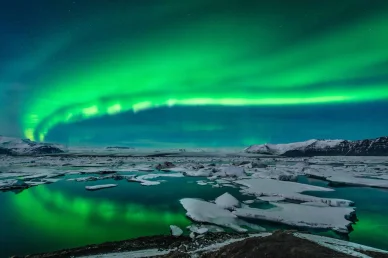
The auroras, which have enchanted us humans for millenniums
The Northern Lights in Iceland cannot be predicted with certainty; it is not a guaranteed event, but a natural phenomenon that depends on several specific factors: solar activity, darkness, cloud cover, and the absence of light pollution. It is the combination of these conditions that determines whether the lights will appear on a given night.
The Northern Lights season in Iceland lasts from September to March. During this period, the nights are dark enough and the length of daylight hours decreases. The highest chances are from October to February, when darkness is stable and aurora activity is often higher.
Important: even in winter, the aurora is not visible every day. Sometimes it appears several nights in a row, sometimes it may not appear for weeks. The best places for observation are outside cities. Even weak light pollution significantly reduces visibility.
Most often, the following are chosen for observation:
- the coast and open spaces near Reykjavík;
- the south coast and rural areas;
- the north of Iceland, where darkness is deeper and there are fewer settlements.
On a clear night, the aurora can be seen even from the capital, but it looks much more vivid outside the city.
In reality, the northern lights are not always bright green, as they appear in photographs. Often, they begin as a light, almost grey or pale green band that slowly moves across the sky. Intense colours — green, pink, purple — appear when solar activity is high. A camera with a long exposure sees more than the human eye, so photographs often look brighter than they appear in reality.

Amazing northern lights over Reykjavík, Iceland on November 28th, 9:00PM
For successful observation, you will need:
- clear or partly clear sky;
- minimal light pollution;
- patience, sometimes you have to wait an hour or more;
- warm clothing and a thermos — not a recommendation, but a necessity.
Iceland is located near the auroral oval, the area where the Northern Lights occur most frequently. The absence of large cities and relatively short distances allow you to quickly change locations in search of clear skies — sometimes driving 30–40 kilometres is enough.
Blue Lagoon
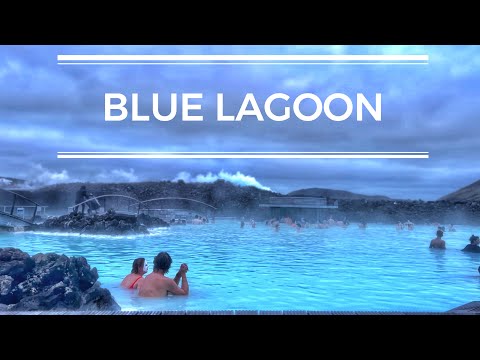
Blue Lagoon, Reykjavik, Iceland
Blue Lagoon Iceland is a geothermal resort with mineral water that emerged in a lava field on the Reykjanes Peninsula. The milky blue colour of the water is due to its high silica and mineral content, and the temperature remains at 37–40 °C throughout the year. Bathing here is perceived as a slow stay in warm steam among black lava — a characteristic Icelandic contrast.
The Blue Lagoon is one of the most popular places for spa and relaxation after a journey. It is often planned for the beginning or end of a trip: after a flight, long journeys or before returning home. The format of the visit is unhurried, usually lasting 2–3 hours.
How to get there from Reykjavík:
- Bus transfers: regular services from the city centre and Keflavík Airport;
- By car: approximately 45–50 minutes' drive on a convenient paved road;
- Combined tours: combine the lagoon with a tour of the Reykjanes Peninsula.
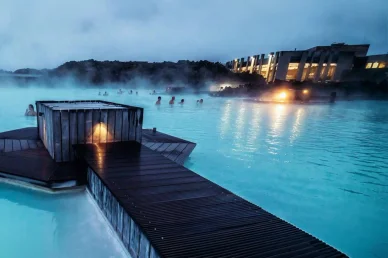
Blue Lagoon is nature’s ultimate luxury spa located in the volcanic landscape of Iceland
Tips for visiting
- Reservations are required — the number of visitors is limited;
- It is best to choose early morning or late evening when there are fewer people and the light is softer;
- Be sure to use hair conditioner before entering the water — the minerals dry it out significantly;
- During periods of volcanic activity, check the status of operations: the lagoon is only open when conditions are officially deemed safe.
The Blue Lagoon is not ‘wild’ Iceland, but a well-organised break between routes. It serves as a place to recharge before continuing your journey around the island or as a peaceful end to your trip.
Sky Lagoon Iceland

The Ritual at Sky Lagoon
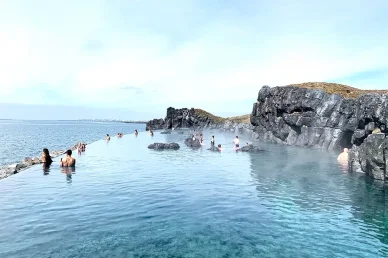
Sky Lagoon is a modern panoramic geothermal complex on the coast near Reykjavík. Its space is designed so as not to separate people from the landscape: warm water flows directly into the ocean horizon, and the edge of the pool blurs the boundary between the bathing area and the Atlantic.
The main focus here is on the ocean and light. In clear weather, the horizon seems open and almost limitless; on windy or cloudy days, the space is reduced to water, stone and the movement of waves. Sunset is the most popular time to visit, when the minimalist architecture works in harmony with nature.
Tips for visiting
- Advance booking is recommended, especially for evening slots;
- There are different ticket formats: standard access and full ritual packages;
- You can get there by bus or car in 15–20 minutes from the centre of Reykjavík;
- It is better to allow 1.5–2 hours for relaxation without rushing.
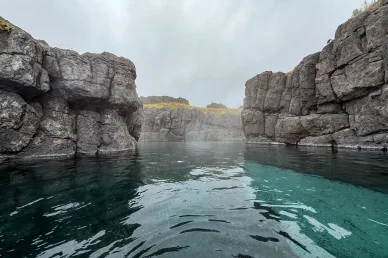
Sky Lagoon is an upscale hot spring atmosphere located just a few minutes from Reykjavik
Sky Lagoon is an urban geothermal bath with a well-thought-out rhythm. It is suitable for a short stop between routes or as a peaceful end to the day when you want to stay in touch with the ocean without travelling far from the capital.
FlyOver Iceland
FlyOver Iceland is a way to see Iceland ‘from above,’ even if it's raining and windy outside and you don't have time for long trips. The attraction is located in the Grándi area of Reykjavík and serves as a short but very expressive pause in your itinerary — like a quick preview of the country before you really get to explore it.

FlyOver Iceland On Ride POV
The main part is a ‘flight’ over the island: glaciers, volcanoes, waterfalls, fjords and black coasts change as if you are moving through different climatic worlds. The footage is shot from the air, and the effect of presence is enhanced by movement, wind and moisture in the air — Iceland also works here through sensations, not just through images.
Before the flight, there are short introductory scenes that set the tone: a little bit of mythology, a little bit of the country's character, a little bit of explanation as to why this landscape looks the way it does. Ultimately, it does not replace a real trip, but it does set the scene well: after FlyOver Iceland, it is easier to ‘read’ the space of Iceland.
It is best to book a slot in advance, allow about an hour and a half for the entire visit, and remember that the format may be difficult for those who do not tolerate motion sickness well or have a strong fear of heights.
Museums and cultural attractions
What Are The Best Museums In Reykjavik? - Europe Travel Pros
Icelandic museums rarely focus on ‘big history’ in the usual sense. Rather, they explain how people learned to live in isolation, cold, and constant contact with nature, and how this shaped the country's culture.
National Museum of Iceland is the country's main historical museum. The exhibition is built not around events, but around everyday life: housing, clothing, religion, writing, law. It shows Iceland as a slowly developing society where survival and mutual responsibility were more important than expansion or luxury.
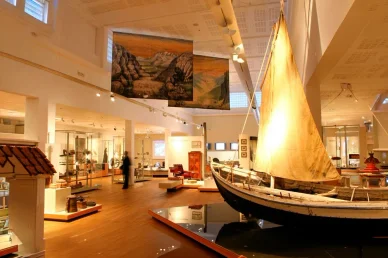
This museum (Þjóðminjasafn Íslands) is the place to go when you want to learn about Icelandic life through the centuries
Perlan is a natural history museum and observation deck under a glass dome. Inside, there are exhibitions about glaciers, volcanoes, climate and water, as well as an artificial ice cave. Perlan provides a general ‘map of processes’ that are then easy to recognise in the real landscape.
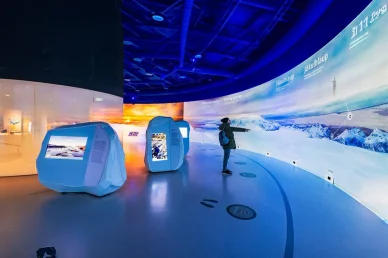
Perlan - it’s an iconic building that houses unique nature exhibitions, an observation deck, and a revolving café and restaurant
Viking Village is a replica of a Viking settlement on the Stokness Peninsula near the town of Höfn, below the Vestrahorn mountain. It was originally built as a film set for a movie that was never made, but is now a popular tourist destination and photo spot. It is not an academic museum, but a visual way to imagine the conditions in which the Icelandic community was formed.
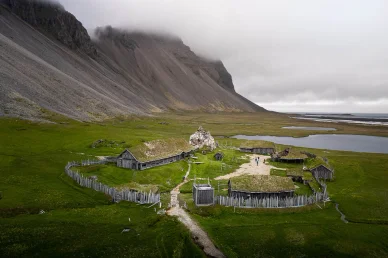
Very special and surprising place—an old Viking Village that looks like it came straight out of a movie or a forgotten legend
Subsequently, the location began to be actively used as a tourist attraction and occasionally — again in filming, in particular for the Netflix series The Witcher: Blood Origin.
At some point, Iceland takes an unexpected turn: after geysers and waterfalls, you suddenly find yourself in a greenhouse, where it smells like tomato leaves and the warmth stays in, as if the Atlantic Ocean were not behind the wall. The key to this is geothermal energy: hot water and heat from underground allow greenhouses to be heated almost all year round. One well-known example is the tomato farms in Iceland, which operate thanks to geothermal energy. Tomatoes are grown in greenhouses all year round, and some farms are open to visitors, combining agriculture, gastronomy and tourism in one space.
Craters and canyons
Iceland's craters and canyons are places where the depth of time is also clearly visible. Here, the landscape does not embellish, but rather records the traces of volcanoes, glaciers and water.
Kerið Crater is a volcanic crater with a lake, formed about 3,000 years ago. Its slopes have a reddish tint due to the iron-rich soil, and the water in the lake changes colour depending on the lighting and season. The crater is easy to view and clearly shows the structure of an extinct volcano.
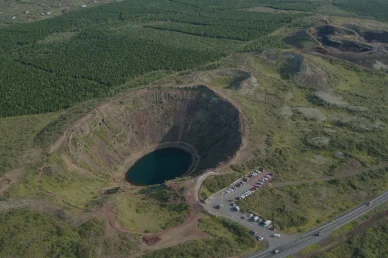
Kerið is a 55 m deep volcanic crater, about 3000 years old
Fjaðrárgljúfur Canyon is a narrow canyon about 2 km long, formed by a glacial river. Trails along the edge allow you to observe how water has gradually carved complex curves into the basalt rocks. This is an example of a landscape where beauty arises from a long, almost imperceptible process.
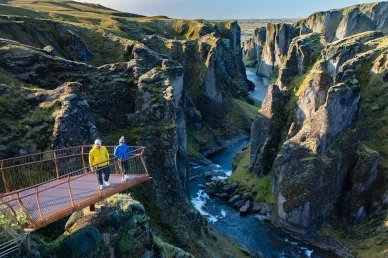
In southeast Iceland, away from the main tourist routes, lies a natural wonder that looks like something from a fantasy novel - Fjaðrárgljúfur Canyon
Tourist routes and trips
A trip to Iceland is usually planned not around individual places, but around routes that combine different types of landscapes into a logical sequence.
Ring Road is a circular road around the island with a length of about 1,332 km. It connects most of Iceland's key regions: the south, the eastern fjords, the north and the west. The Ring Road allows you to see the country as a whole without having to return the same way.
When travelling on the ring road, many people turn off the main route to visit lesser-known but noteworthy places. One of them is Seydisfjörður. It is a small town in the eastern fjords, nestled between mountains and water. It is known for its blue church with a rainbow road leading to it. This is the most famous visual symbol of the town.
Bustravel Iceland is one of the most popular operators of organised bus tours. This format is suitable for those who do not plan to rent a car or want to focus on observing the landscape without logistical concerns.
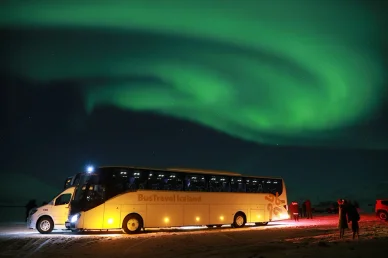
Northern Lights Bus Tour from Reykjavik, take advantage of this unique opportunity to enjoy this spectacular atmospheric phenomenon
Þingvellir is a separate and mandatory stop on the Golden Circle route. This place combines geology and political history: a tectonic rift and plains where the Icelandic state was born. Þingvellir often becomes the point where the journey ceases to be just a tourist trip and begins to be perceived as a deep acquaintance with the country.

Thingvellir National Park - The Parliament of the Vikings, Iceland, Treasures of the World
What's more, Iceland is a place where the digital modernity meets the primordial chaos. There is no need to worry about cash here: bank cards work everywhere, from terminals in the capital to lonely payment terminals in toilets in the middle of nowhere.
The only thing that remains truly unpredictable is the weather. The locals joke,
‘If you don't like the weather, just wait five minutes.’
This is the rhythm of the island: in a short trip, you can experience several seasons, and it is this variability that makes the space alive. Iceland cannot be fixed in one state; it is always different, and this is its main truth.