Ireland
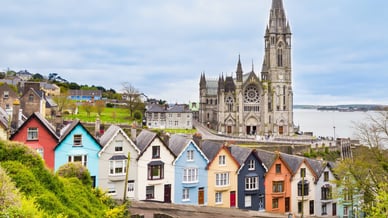
If you truly adore beer festivals, strongly dislike snakes and mosquitoes, dream of building a successful business, and want to live among warm-hearted, good-natured people, then Ireland may well be the best place on Earth for you. This small Northern European country, located on an island near Great Britain, is an absolutely magical corner of the planet. It is no surprise that filmmakers have long favoured it: the ruins of thousands of ancient castles, dramatic cliffs, and emerald-green plains create a unique atmosphere and often serve as natural backdrops for world-class blockbusters.
Just think of Star Wars, the Harry Potter saga, or the epic drama Braveheart, and it immediately becomes clear why these films were shot here.
Holidays in Ireland are especially appreciated by people who prefer a mild climate without extreme temperature fluctuations, as well as a high quality of life and hotel service.
General information
Ireland is one of the most prosperous countries in Europe—an oasis of economic stability and a true hub for IT specialists and start-ups, for whom exceptionally favourable conditions have been created.

Ireland
There is another Ireland in the world—Northern Ireland—which is why the two are often confused. In reality, however, the Republic of Ireland is an independent sovereign state, while Northern Ireland is part of the United Kingdom. Despite this political division, the two share much in common: they are located on the same island, have a closely intertwined history, and both use Irish (a Gaelic language) alongside English.
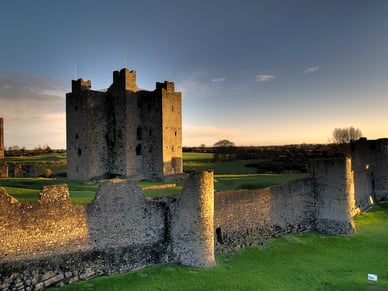
The remains of the 12th-century Trim Castle in County Meath, the largest Norman castle in Ireland
For centuries, Ireland was under English and later British rule. From the late Middle Ages until the early 20th century, the island was governed from London, which led to the emergence of strong nationalist movements. These movements sought varying degrees of self-government or complete independence from the British Crown, while a significant part of the population—particularly in the north—favoured remaining within the United Kingdom.
Tensions culminated in the Irish War of Independence (1919–1921), which resulted in the Anglo-Irish Treaty. In 1921, the Government of Ireland Act laid the groundwork for partition by creating two political entities—Northern Ireland and Southern Ireland—within the United Kingdom, each with limited self-government.
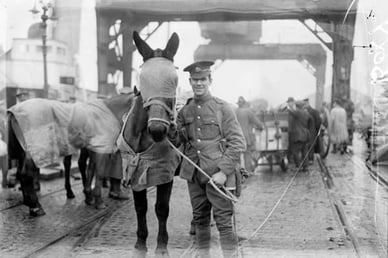
British cavalry leaving Ireland, 1922
The treaty was followed by the Irish Civil War (1922–1923), fought between supporters and opponents of the agreement. The pro-treaty forces emerged victorious, leading to the establishment of the Irish Free State in 1922 as a self-governing dominion within the British Commonwealth. Northern Ireland, whose leadership and majority population favoured continued union with Britain, opted out of the Free State and remained part of the United Kingdom.
Ireland gradually reduced its constitutional ties to Britain over the following decades. The 1937 Constitution formally renamed the state Ireland (Éire), and in 1949 the country officially became a republic, fully severing its remaining links with the Commonwealth.
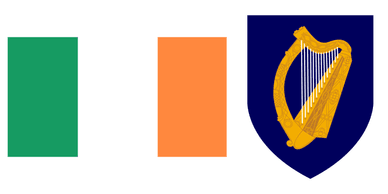
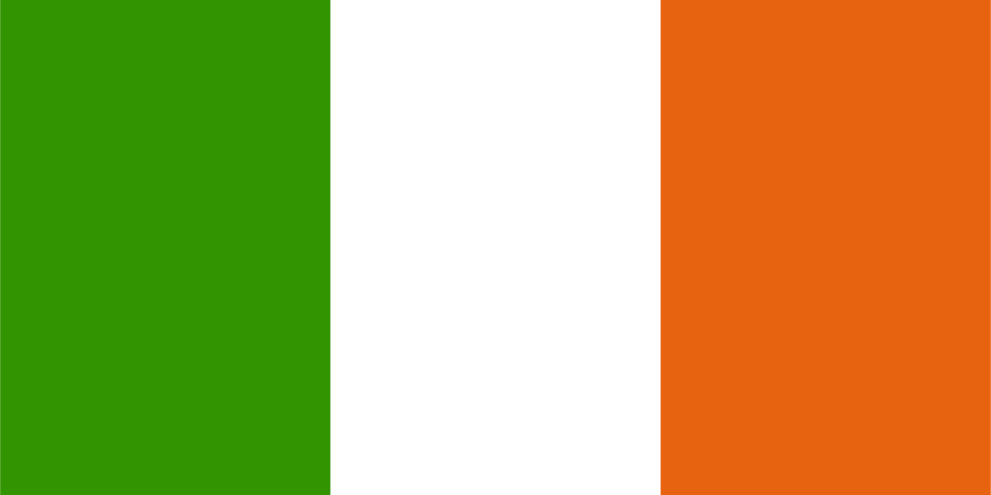
Flag and coat of arms of Ireland
The partition of the island left Northern Ireland as a deeply contested region. From the late 1960s, violent clashes erupted between Irish republican groups—most notably the Irish Republican Army (IRA)—and British security forces. This period, known as the Troubles, lasted for several decades and claimed thousands of lives. The conflict formally ended with the signing of the Belfast (Good Friday) Agreement in April 1998, which established a power-sharing system and significantly reduced violence.
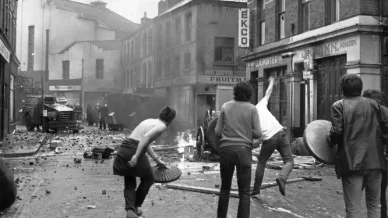
In just 30 years of conflict, more than three and a half thousand people have died.
While the political situation has stabilised considerably since then, debates over Northern Ireland’s future status continue. Brexit, following the United Kingdom’s withdrawal from the European Union in 2016, added new tensions by raising questions about borders, trade, and political alignment on the island.
Despite its complex historical and political background, the Republic of Ireland today is a safe, stable, and welcoming country for living, doing business, and travelling.
Geography and climate
The Republic of Ireland is an island nation in northern Europe. It shares a land border with Northern Ireland, which is part of the United Kingdom, and is surrounded by the Irish Sea and the Celtic Sea, the North Channel and St George’s Channel, and the Atlantic Ocean. It also includes several nearby islands. The Republic of Ireland occupies approximately 85 per cent of the island’s total area.
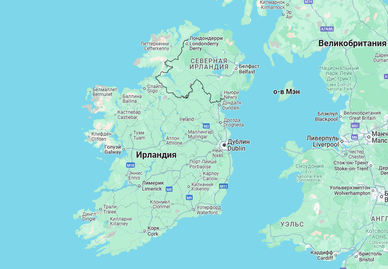
Map of Ireland
The climate is maritime, which means mild temperatures throughout most of the year and relatively frequent rainfall. Precipitation is especially high in coastal regions. In winter, temperatures rarely fall below +5 °C, while in summer they usually do not exceed +21–22 °C.
In general, the weather in Ireland and Great Britain is a constant topic of conversation. It is commonly discussed in detail during meetings, phone calls, and everyday interactions between neighbours, colleagues, and relatives, and often serves as a natural starting point for conversations with strangers. This informal tradition makes it easier for newcomers to connect with locals, as the weather provides an effortless and universally accepted topic.
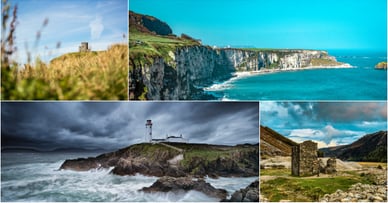
Ireland's climate is mild and rainy
Although the climate is not particularly suited to traditional beach holidays, Ireland offers many scenic coastal locations ideal for rest and relaxation. While few people choose to swim in the cold waters, walking along the shore, having a picnic, and enjoying the fresh sea air are popular and rewarding activities.
Ireland does not have a clearly defined “high season,” but tourist numbers increase significantly during major national and cultural celebrations, including St. Patrick’s Day, Samhain, Beltane, and Catholic Christmas.
One often-cited and genuinely interesting fact is that there are no native snakes in Ireland, a feature commonly attributed to the island’s geographic isolation. Mosquitoes are present, but they are far less widespread and troublesome than in many other countries. Ireland also has no native moles. As a result, encounters with unpleasant wildlife are rare, contributing to the country’s reputation as a comfortable and stress-free destination for travel and leisure.
Language, population and currency
Ireland is relatively homogeneous in terms of ethnic composition: approximately 18–20 per cent of its population consists of people born outside the country. A significant proportion of immigrants come from other EU states, with Polish, Lithuanian, Latvian, and Romanian communities among the largest. British nationals also make up a notable share of the foreign-born population, alongside growing African and Asian communities.
Ireland has two official languages: Irish (Gaeilge), a Celtic language, and English. Irish is not a “dialect” but a distinct language belonging to the Goidelic branch of Celtic languages. Despite its official status, only about 1.5–2 per cent of residents use Irish as their primary language in daily communication, most of whom live in rural areas known as the Gaeltacht regions.
The Irish government and public institutions actively promote the preservation and use of the Irish language. It is taught in schools nationwide and is a compulsory subject in the education system. In certain western regions of the country, particularly within Gaeltacht areas, Irish is the dominant language, and public signage may appear primarily or exclusively in Irish. However, in cities and most urban areas, English is the main language of everyday communication, spoken by people of all ages.
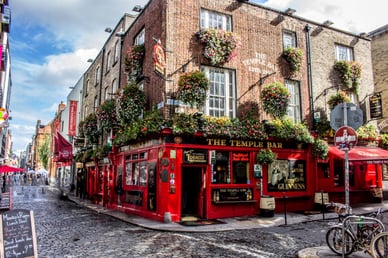
Dublin is the largest city and capital of Ireland.
The population of Ireland is slightly over 5 million people, and the country has experienced steady population growth in recent years, largely due to immigration. Dublin is the largest city and the capital, with a metropolitan population of approximately 1.4–1.5 million people.
Interestingly, a large proportion of people of Irish descent live outside Ireland. Worldwide, there are an estimated 70–80 million people with Irish ancestry. The largest Irish diaspora is found in the United States, where around 33 million people claim Irish roots.
There is a long-standing stereotype that Irish people are easily identifiable by red hair, fair skin, and light-colored eyes. While red hair is more common in Ireland than in many other countries, the majority of Irish people do not fit this image. Irish heritage is more reliably reflected in surnames. Just as Scottish surnames often feature the prefix “Mac” or “Mc,” Irish surnames commonly include the prefix “O’.” Examples include the writer O. Henry and footballer Jamie O’Hara. The prefix “O’” comes from Irish Gaelic and means “descendant” or “grandson.”
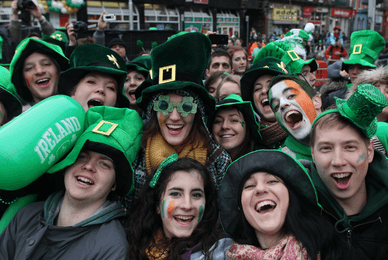
The Irish are warm, hospitable and very sociable people
In terms of national character, the Irish are widely known for their friendliness, warmth, and strong sense of humour. They are highly sociable and enjoy lively gatherings, celebrations, and spending time in pubs, which play an important role in social life. Compared with their closest neighbours, the English, the Irish are often perceived as more openly expressive and informal.
Ireland is traditionally a Catholic country, and although religious observance has declined in recent decades, Catholicism continues to play an important cultural and historical role in society.
The official currency of Ireland is the euro (€). The country is a member of the United Nations, the European Union, the Council of Europe, the World Trade Organization, and several other major international organizations.
Where to stay
Ireland is renowned for the majestic beauty of its mountainous and flat landscapes, its deep respect for Celtic traditions, and its colourful, visually striking rituals associated with pagan holidays. A steady flow of tourists keeps the hotel industry active almost year-round. The country offers a wide range of accommodation options with varying levels of comfort, and their number continues to grow.
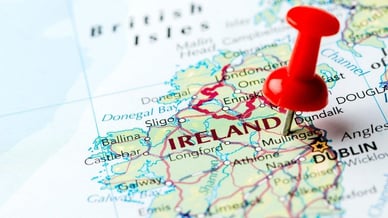
An illustrative image of Ireland on a map
Tourists can choose from:
- hotel rooms of various categories, from 1★ to 5★, with star ratings that generally correspond closely to actual service standards;
- guest houses offering home-like comfort and high-quality national and European cuisine;
- private guesthouses.
The best balance between price and quality is typically found in 3★ hotels. Room rates are relatively affordable, while the range of services is sufficient and consistently delivered. Travellers looking to reduce costs can opt for hostels or motels, which are widely available throughout the country.
The average cost of a double room in Irish hotels is:
- 1–2★: €75–130;
- 3★: €60–180;
- 4★: €100–300;
- 5★: €200–900.
Castle hotels deserve special mention. Ancient castles and fortresses can be considered Ireland’s calling card: according to various sources, there are over 30,000 of them within the country’s relatively small territory. Of course, not all are in a habitable condition, but a number of castles have been carefully restored and adapted for use in the hotel industry.
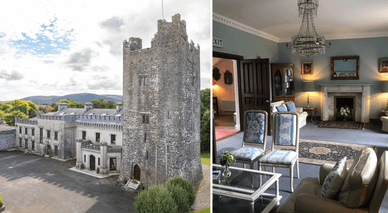
Blackwater Castle Hotel is a stunning wedding venue
People come here to celebrate birthdays or weddings, enjoy a romantic honeymoon, or organise spectacular photo shoots — surely more than enough reasons to rent an ancient castle in Ireland.
Guests are welcomed into cosy apartments equipped with all modern amenities, high-speed internet, and spa facilities. Luxurious gardens and manicured flower beds add a sense of elegance and charm, while more active guests can enjoy a round or two of golf. Some of the most well-known castle hotels include Luttrellstown Castle Resort in Castleknock near Dublin, Blackwater Castle in Millstreet, and Tyrone Castle in Kilmaine. The cost of staying in a castle is comparable to that of a 5★ hotel, with additional services—such as weddings and private events—charged separately.
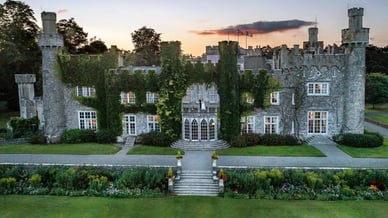
Luttrellstown Castle Resort in Castleknock, near Dublin
Here are some accommodation options in Ireland:
Marlin Hotel Stephens Green — a 4★ hotel in Dublin, located just 400 metres from the famous Dublin Castle. All standard amenities are available, including family rooms and rooms adapted for guests with disabilities. The hotel also features an on-site restaurant;

Marlin Hotel Stephens Green in Dublin
Blooms Hotel — a 3★ hotel in the Temple Bar area, close to Trinity College and approximately 800 metres from the National Gallery. All basic amenities are provided, with breakfast included. Non-smoking and family rooms are available. Free Wi-Fi and parking are offered;

Blooms Hotel in Dublin
- House Bedrooms Dublin — a 2★ hotel in Dublin, located near the Little Museum. Rooms include a private bathroom with a shower, free toiletries, and Wi-Fi. Guests can also enjoy a garden with outdoor furniture;
- Destiny Student – Broga House Cork — a student hostel in Cork. All rooms are non-smoking, and smoking is prohibited throughout the premises. Internet access is not available;
Yugo Amnis House — a hostel located on the banks of the River Lee in Cork, close to the university college. The property offers a 24-hour reception and free Wi-Fi throughout the premises. Shared facilities include a kitchen and showers, as well as a games room with billiards and table tennis.

Yugo Amnis House Hostel in Cork
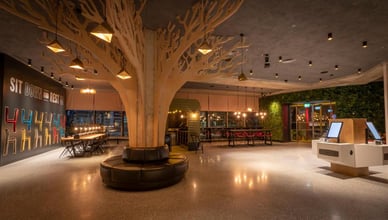
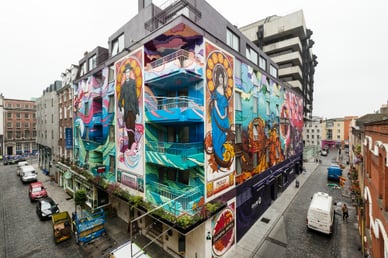
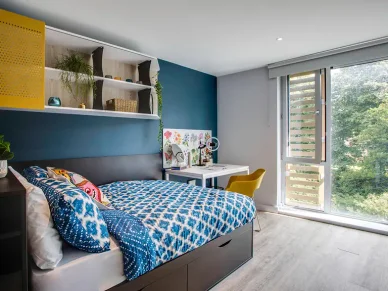
You can also rent an apartment — options are available on Airbnb and various Irish property rental websites.
What to see
Celtic customs and traditions, as well as Christian holidays, are deeply revered throughout Ireland. The most important among them are Samhain, Beltane, and St. Patrick’s Day. These dates are special for the entire country and best convey the spirit of the Irish nation. For this reason, it is well worth planning a trip to Ireland to coincide with one of these national holidays.

Top places in Ireland
St. Patrick's Day Parade
The biggest Irish holiday takes place every year on 17 March. This date marks the death of Saint Patrick, a Catholic saint revered in many countries around the world and often compared to Moses. At least, descriptions of his life and trials reveal many similarities with the biblical prophet.
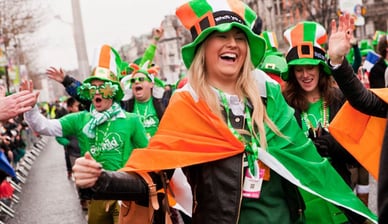
St. Patrick's Day is a national Irish holiday
In Ireland, Saint Patrick is regarded as the patron saint of the country, which is why the holiday is treated with particular significance.
The symbol of the day is the shamrock — a stylised clover leaf and the official emblem of Ireland. Clothing, or at least some elements of it, must be green. People of all ages dress up as leprechauns and other fairy-tale characters. Leprechauns, elves, goblins, fairies, and dozens of other mythical creatures form the foundation of Irish folklore. These stories are not only told to children — many Irish adults openly admit that they believe in them as well.
The main event of the celebration, which can last several days, is the parade in Dublin. The procession becomes a continuous stream of people moving through the city streets, accompanied by theatrical performances, live shows, and dance competitions.
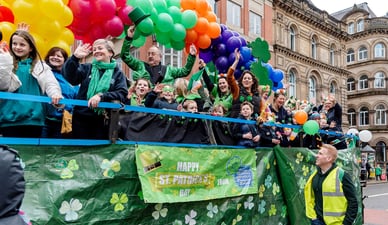
The St. Patrick's Day Parade is the biggest Irish holiday
Skyfest is a spectacular fireworks display that everyone looks forward to, especially children. This cascade of fireworks serves as a dazzling finale to St. Patrick’s Day.
In addition to Dublin, parades also take place in Downpatrick — the town where, according to legend, the saint died — as well as in Cork, Belfast, and many other cities.
While Irish holiday parades may not rival the tropical intensity and colour of the Rio de Janeiro Carnival, they are nevertheless considered among the most spectacular folk festivals in Europe.
Samhain
Fans of neo-pagan culture and spirituality will be fascinated by ancient Irish rituals accompanied by vibrant celebrations. Particularly noteworthy is the Wheel of the Year — a cycle of eight festivals associated with the changing seasons.
The pagan harvest festival of Samhain was celebrated many centuries ago on the night of 31 October to 1 November. It was believed that from midnight until dawn, the light half of the year ended and the dark half began. Throughout the night, people combined unrestrained celebration with everyday tasks. Between dancing and jumping over bonfires, they counted and divided the harvest, decided how much livestock needed to be slaughtered to ensure a peaceful and comfortable winter, and made predictions about the future.

Samhain parade
Samhain continued to be observed even after Christianity replaced paganism. Over time, the holiday came to coincide with Halloween, but this caused little concern. Since then, both celebrations have existed side by side in Ireland.
Today, Samhain night remains as vivid and atmospheric as it was centuries ago. Witnessing it is undoubtedly a rare opportunity and an unforgettable experience for anyone fortunate enough to be there.
Beltane
Another holiday from the Wheel of the Year cycle, Beltane is celebrated on 1 May as the beginning of summer. It also carries a more romantic meaning, symbolising a celebration of love. This day has been observed since the early Middle Ages, although it was later overshadowed by Catholic saints’ days and, in some years, by Easter when it fell on 1 May according to the calendar. Since the 2000s, the Wiccan movement — created specifically to revive ancient pagan traditions — has been gaining popularity in Ireland, Scotland, and other countries.
Thousands of its followers gather for the celebrations and, as they did hundreds of years ago, organise spectacular events featuring ancient rituals. On this day, bonfires are lit, and jumping over them symbolises spiritual purification. A May bush — a rowan sapling decorated like a Christmas tree — is planted, and a May branch is hung on the door as a talisman to ward off evil spirits.
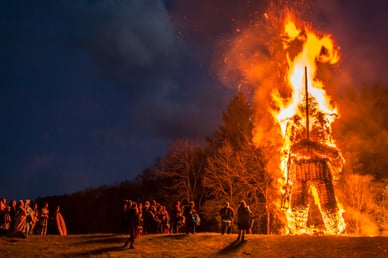
A wicker man bonfire at Beltane
Beltane is especially popular in Irish villages along the west coast, where descendants of the Celts still live. There, by the way, one can still hear the Gaelic language, the native language of the Irish.
The thousand-year-old pub
No national holiday — or even an ordinary day off — in Ireland is complete without a visit to the pub. Here, as in Great Britain, a pub is far more than just a place to have a drink. For a true Irish person, it is a kind of refuge — a club built around shared interests which, once chosen, he or she may remain loyal to for many years, and sometimes even for life.
The oldest and most famous pub not only in Ireland but in the entire world is Sean’s Bar in Athlone. Today, the town, located on the border of County Westmeath and County Roscommon, has fewer than 20,000 inhabitants. In 900 AD, when the future Guinness World Record holder first appeared, the settlement consisted of only a few dozen residents.
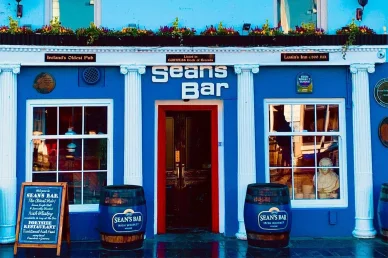
Sean's Bar is considered one of the oldest drinking establishments in the world
The town stands on the banks of the River Shannon, Ireland’s longest river, which during the Middle Ages served as a strategically important natural boundary between the northern and southern parts of the island. Over a pint of beer at Sean’s Bar, locals will almost certainly tell visitors a few eerie stories about the monster Cata — the Irish counterpart of the famous Loch Ness monster — which is said to dwell somewhere in the depths of this ancient river.
Naturally, the settlement gradually expanded, with many travellers passing through and in need of accommodation. The original owner initially established an inn for these visitors, which over time slowly evolved into a pub.
The earliest written references to Sean’s Bar date back to the beginning of the 10th century. Since then, almost nothing has changed in its interior. Inside the small, dimly lit room with low ceilings, the same oak tables and benches remain — furniture that was placed there by the first owner more than a thousand years ago. The walls display complete lists of every owner who has run the establishment over the course of its long history.
The walls of Sean’s Bar have witnessed millions of visitors enjoying their time over a pint of beer. Among the most famous modern-day guests are Freddie Mercury, Boy George, Mia Farrow, and the band U2.
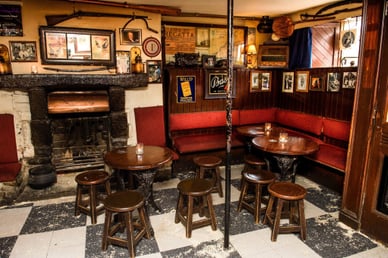
Sean's Bar inside
It is widely believed that the best time for tourists to visit is around midday, when local regulars are usually busy with their daily routines. In the evening, however, it becomes nearly impossible to move through the crowd, and in the course of a single day, the hardworking bartenders serve approximately 500 visitors.
Be sure to visit Sean’s Bar — one of Ireland’s most iconic and historic venues.
What to eat
“‘One, two, and the Irish stew is ready!’”
— a phrase from Jerome Klapka Jerome’s famous novel — can slightly mislead anyone who assumes that Irish cuisine is something completely primitive. First of all, Irish cuisine is diverse enough to delight millions of people who have visited the country. And secondly, who ever said that simple food is a bad thing?
In light of the global enthusiasm for healthy eating, Irish cuisine appears particularly appealing:
- food is rarely fried and usually only in small quantities;
- preference is given to boiling, stewing in its own juices, and grilling;
- portions are generous.
The main ingredients of a typical Irish lunch or dinner are various kinds of meat, potatoes, and countless variations built around these staples.
A full Irish breakfast is a popular dish in some British and in virtually all Irish restaurants. It is a very hearty breakfast that typically includes up to six components: scrambled eggs or omelettes, sausages with several side dishes, fried bacon, and much more. Yes, that’s right — a lot of food all at once, so you don’t have to spend time explaining to the waiter what you would like to eat on this sunny, cloudy, summer, or winter morning.
People here love food and know how to cook, so Irish cuisine is always plentiful, filling, sometimes heavy, but undeniably tasty — even though Ireland is not particularly known for refined culinary masterpieces.
Still, it is definitely worth trying:
Coddle — a type of stew made from sausages, with the addition of bacon, potatoes, onions, and seasonings;

Dublin coddle
Haggis steak — a piece of beef fillet roughly the size of a large man’s palm, properly fried and served with traditional Irish stew as a side dish;

Gaelic steak is a favorite dish of Elizabeth II
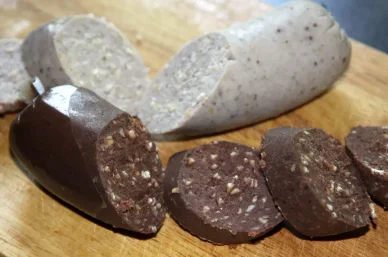
Oatmeal puddings, both black and white — dishes common to Scottish cuisine. How can they be described? Anyone who enjoys liver or blood sausages will be delighted.

Irish pudding
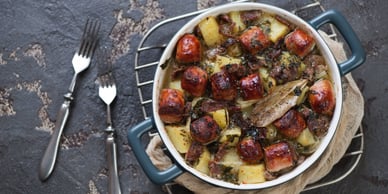
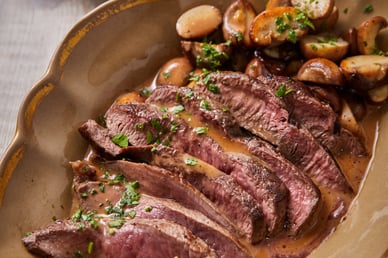
Of course, Irish cuisine is not limited to these dishes, but they give a good sense of the main principles of cooking in this country: good food is food that is plentiful, tasty, and filling. Give it a try — you’ll enjoy it.
Ireland is something of a fairy-tale country: its landscapes resemble scenes from ancient legends. It is home to kind, warm-hearted people with a wonderful sense of humour. Everything here exists in balance — warmth and cold, good and evil — and perhaps this is exactly what you have been dreaming of all your life?