Reykjavík
Reykjavík is the capital of Iceland and the country's largest and most populous city. It serves as Iceland's historical, cultural, political, and economic centre. In this article, we explore essential and up-to-date information about Reykjavík, along with the many unique, exciting, and unforgettable experiences that Iceland's capital offers to every visitor.
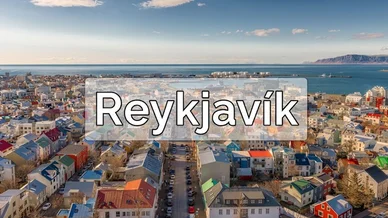
Reykjavík has a population of approximately 139,000 people (as of early 2026 within the municipality). The wider Capital Region is home to around 252,000 residents, representing more than 64% of Iceland's total population. The city is also the northernmost capital of a sovereign state in the world.
Around 90% of Reykjavík's heating is supplied by geothermal energy, making it one of the world's cleanest and most environmentally friendly capitals. The city also consistently ranks among the safest cities globally, thanks to its exceptionally low crime rate.
Reykjavík is divided into ten districts: Vesturbær, Miðborg (the historic city centre), Hlíðar, Laugardalur, Háaleiti og Bústaðir, Breiðholt, Árbær, Grafarvogur, Kjalarnes, and Grafarholt og Úlfarsárdalur. Although more than 64% of Iceland's population lives in and around the capital, Reykjavík has a relatively low urban density compared with many other capital cities. Much of the city consists of quiet residential neighbourhoods surrounded by green spaces and breathtaking natural scenery.
Population (2026) | ≈ 139,000 people |
|---|---|
Capital Region population | ≈ 252,000 people (around 64% of Iceland's total population) |
Year founded | 874 |
City area | 244 km² |
Status | Northernmost capital of a sovereign state in the world |
Heating | ≈ 90% from geothermal energy |
Cultural status | UNESCO City of Literature (since 2011) |
Number of districts | 10 |
Official language | Icelandic (English is spoken almost everywhere) |
Currency | |
Best time to visit | June–August (summer, the Midnight Sun) or December–February (Northern Lights) |
Time zone | UTC+0 (GMT) |
International airport | Keflavík International Airport (KEF) — approximately 45–50 minutes from Reykjavík city centre |
History of Reykjavík

15 Fascinating Facts About the History of Iceland - Viking Sagas
The origins of Reykjavík date back to the Viking Age and the legendary settlement of Iceland. According to the Book of Settlements (Landnámabók), the principal written source on Iceland's early history, the first permanent Norse settler in the area was Ingólfr Arnarson, who established his farm there around AD 874.
According to tradition, Ingólfr Arnarson, a Norwegian chieftain from Rivedal in Sunnfjord, western Norway (c. 849–910), became involved in a violent blood feud together with his foster brother Hjörleifr Hróðmarsson. Blood feuds were common in medieval Norway, where the killing of one person often triggered generations of retaliation between families and clans. To escape the cycle of violence and seek a better future, Ingólfr decided to leave his homeland. He had heard stories about a newly discovered island far to the west that remained largely uninhabited.
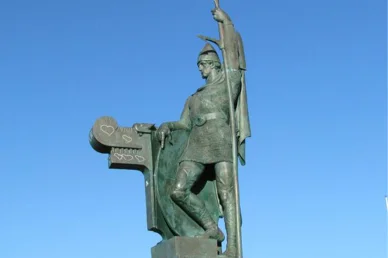
Ingólfr Arnarson a noble Norwegian who moved to Iceland with his army at the end of the 9th century and founded the first settlements on the island
Accompanied by his wife Hallveig Fróðadóttir, his foster brother, and several thralls (enslaved people), Ingólfr set sail in search of a new home. As his ship approached the Icelandic coast, he followed an ancient Norse custom by throwing his high-seat pillars (öndvegissúlur) into the sea. These elaborately carved wooden pillars stood on either side of the high seat—the place of honour reserved for the chieftain inside a Viking longhouse—and symbolised both authority and the protection of the gods.
The Viking longhouse served as the centre of family and community life. It was a large rectangular building with a central hearth running through the middle, where extended families lived, feasts were held, disputes were settled, assemblies took place, and religious ceremonies were performed. Longhouses were typically constructed from timber, stone, and turf, with turf-covered roofs. The sacred high-seat pillars were among the most important objects inside the building, representing both leadership and divine favour.
When Ingólfr left Norway, he brought these pillars with him. Their role in the settlement ritual carried deep religious significance: it was believed that the gods would reveal the proper place to settle by allowing the pillars to drift ashore. According to the Book of Settlements, Ingólfr's thralls spent three years searching the coastline before finally discovering them in a small bay where steam rose from natural hot springs.
Legend says that this is how the area—and eventually the city—received the name Reykjavík, meaning "Smoky Bay" or "Bay of Steam."
It was here that Ingólfr Arnarson established his new homestead. His foster brother, Hjörleifr Hróðmarsson, was soon killed by his Irish thralls, and Ingólfr later avenged his death on the islands that became known as the Westman Islands (Vestmannaeyjar), or the "Islands of the Westmen." Although archaeological discoveries—including those displayed at the Reykjavík 871±2 Settlement Exhibition—suggest that people may have lived in the area slightly earlier, AD 874 is traditionally recognised as the founding year of Reykjavík and the beginning of permanent Norse settlement in Iceland. Before the arrival of the Vikings, Irish hermit monks, known as the Papar, are believed to have visited or temporarily inhabited the island before leaving rather than living alongside pagan settlers.
For the next several centuries, Reykjavík remained a small farming and fishing community. Following the Kalmar Union and Iceland's incorporation into the Danish Crown in the late fourteenth and early fifteenth centuries, the settlement developed slowly under Denmark's strict trade monopoly. A major turning point came in 1786, when Reykjavík was officially granted the status of a kaupstaður (chartered trading town). The Danish Crown awarded the town commercial privileges, relaxed the monopoly, and encouraged economic growth. This marked the beginning of Reykjavík's true urban development, with the construction of its first stone buildings, expansion of the harbour, and a steady increase in population.
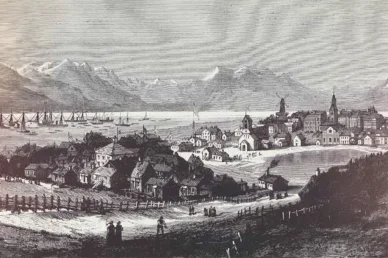
Reykjavik became the administrative center of Iceland during the nineteenth century
During the nineteenth century, Reykjavík gradually became Iceland's administrative, political, and cultural centre. In 1845, the Althing, Iceland's parliament, reconvened in the city after centuries of inactivity, holding its first session on 1 July. Reykjavík soon emerged as the heart of Iceland's national awakening and independence movement. The country's first newspapers were published there, educational institutions expanded, and a new generation of Icelandic intellectuals began to shape modern national identity. The population grew steadily, increasing from only a few thousand residents at the beginning of the century to more than 6,000 by 1900.
The early twentieth century brought rapid modernisation. In 1904, Iceland was granted Home Rule, with its government based in Reykjavík. The Act of Union signed with Denmark in 1918 recognised Iceland as a sovereign state in personal union with the Danish monarch. Iceland adopted its own national flag and assumed full control over domestic affairs. At the same time, Reykjavík continued its transformation into a modern city, introducing electricity, expanding its harbour, improving its road network, and constructing its first apartment buildings.
The outbreak of the Second World War dramatically altered Iceland's strategic importance. After Nazi Germany occupied Denmark in April 1940, communication between Copenhagen and Reykjavík was effectively severed. To prevent Germany from gaining control of the North Atlantic and its vital shipping routes, British forces peacefully occupied Iceland on 10 May 1940 during Operation Fork. In 1941, responsibility for Iceland's defence was transferred to the United States. Thousands of American troops arrived, building airfields, roads, and other essential infrastructure. For Reykjavík, the war years brought an economic boom, new employment opportunities, and increased international influence, firmly establishing the city as a strategic North Atlantic hub.
On 17 June 1944, Iceland officially became an independent republic. In a national referendum, 97% of voters supported ending the union with Denmark, while 95% approved the new republican constitution. The date is now celebrated annually as Iceland's Independence Day. Sveinn Björnsson became the country's first president, and Reykjavík was confirmed as the capital of the newly independent nation.
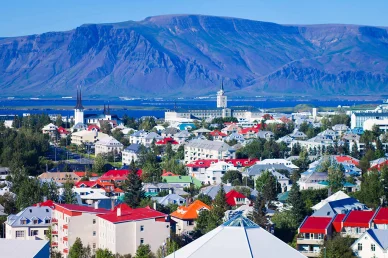
Reykjavik is the northernmost capital city in the world
The second half of the twentieth century was marked by rapid growth and modernisation. Reykjavík experienced the political and economic impact of the Cod Wars with the United Kingdom over fishing rights, one of Iceland's most important industries. During these decades, geothermal energy expanded dramatically and eventually became one of Reykjavík's defining characteristics. In 1972, the city hosted the legendary World Chess Championship between Bobby Fischer and Boris Spassky, one of the most famous chess matches in history. Fourteen years later, in 1986, Reykjavík welcomed Ronald Reagan and Mikhail Gorbachev for the historic Reykjavík Summit, widely regarded as a key milestone on the path toward the end of the Cold War.
Modern Reykjavík has evolved from a modest fishing and administrative settlement into a dynamic, innovative, and environmentally conscious capital. Following the 2008 financial crisis, which severely affected Iceland's banking sector, the city increasingly focused on tourism, creative industries, and sustainable development. Geothermal energy—supplying more than 90% of residential heating—together with clean renewable power has become both an economic advantage and a symbol of Icelandic identity. Today, Reykjavík is internationally recognised for its rich literary heritage, having been designated a UNESCO City of Literature in 2011, as well as for its vibrant street art, contemporary architecture—including Harpa Concert Hall and Perlan—and its deep respect for its Viking heritage.
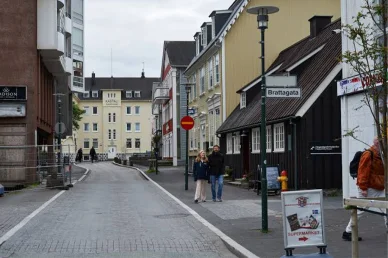
Das Haus Aðalstræti 10 is a former business house in the city center of Reykjavík
The statue of Ingólfr Arnarson on Arnarhóll, the remains of the first Viking settlement on Aðalstræti, the Old Harbour, and numerous historic buildings throughout the city centre all stand as living reminders of Reykjavík's more than 1,150 years of history. Born from legend and hope, Reykjavík continues to write its story as one of the world's most distinctive, resilient, and sustainable capital cities.
Weather in Reykjavík
Due to its northern location (approximately 64° N latitude), Reykjavík has a generally cool and highly changeable climate, strongly influenced by the Gulf Stream. Winters are characterised by long periods of darkness, with daylight lasting only around 4–5 hours in December and January. Despite its high latitude, winters are relatively mild compared with many other parts of Scandinavia, and temperatures rarely fall below −10 to −15°C (14 to 5°F). The city is also known for its frequent strong winds because of its coastal location.

Iceland in June 2026 Special Events, Weather and Daylight Saving Time
Summers are cool and exceptionally bright. Average temperatures in July range from 11 to 14°C (52–57°F) and only occasionally exceed 20°C (68°F). From late May until the end of July, the sun barely sets, creating the famous Midnight Sun and nearly continuous daylight. Precipitation is distributed fairly evenly throughout the year, averaging around 870–900 mm (34–35 inches) annually, most often falling as rain or wet snow.
Reykjavík is famous for its rapidly changing weather, reflected in a popular local saying: "If you don't like the weather, just wait five minutes."
Where to go and what to see in Reykjavík
There really is plenty to see, explore and experience in Reykjavík. The city is compact yet incredibly diverse — it combines striking architecture, street art, water and nature.
In the centre, you’ll find charming side streets lined with colourful corrugated iron houses in traditional Icelandic style and elegant buildings in the Danish colonial style. The main pedestrian thoroughfare — Laugavegur — is lined with cafés, shops, galleries and vibrant street art. Running parallel to it is the equally colourful Skolavörðustigur, which leads straight to Hallgrímskirkja.
Hallgrímskirkja is one of Reykjavík's most iconic and photographed landmarks. Standing 74.5 metres (244 feet) tall, its striking design was inspired by the basalt columns found throughout Iceland's volcanic landscapes. Construction took 41 years, from 1945 to 1986. Visitors can take a lift or climb the stairs to the top of the tower for spectacular panoramic views of the city, Mount Esja, and Faxaflói Bay. In front of the church stands the impressive statue of Leif Erikson, a gift from the United States commemorating the 1,000th anniversary of Iceland's parliament.
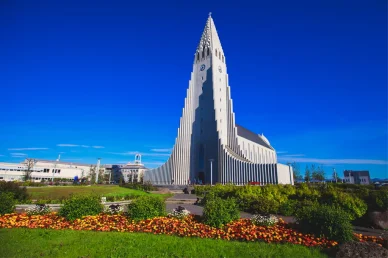
Hallgrímskirkja, or Hallgrímskirkja as it is called in Icelandic, is the tallest and most well-known landmark in Reykjavík
Perched on Öskjuhlíð Hill, Perlan ("The Pearl") is one of Reykjavík's most popular modern attractions. Built on top of former hot-water storage tanks, it features a panoramic observation deck with breathtaking 360-degree views of the city. Inside, visitors can explore interactive exhibitions about Iceland's glaciers, volcanoes, whales, and natural history, as well as a planetarium and several restaurants. The surrounding hill is covered by one of Reykjavík's largest forests, criss-crossed with scenic walking and cycling trails that are ideal for hiking, jogging, or picnics.
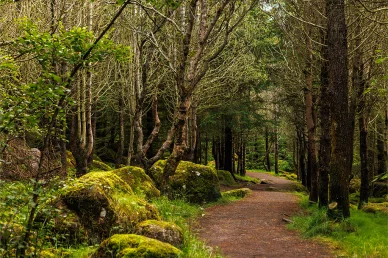
Öskjuhlíð is a unique outdoor recreation area near the center of Reykjavík, with diverse nature and interesting historical landmarks
The city's waterfront is lined with picturesque walking paths featuring sculptures, public art, and historical monuments. One of the most popular routes stretches along the northern shoreline from Laugarnes to Harpa Concert Hall, whose shimmering glass façade was designed to resemble Iceland's distinctive basalt formations. Beyond Harpa lies the Old Harbour and the Grandi district, an area that has been transformed in recent years into a lively neighbourhood filled with cafés, restaurants, galleries, and vibrant street art.
No visit to Reykjavík is complete without seeing Sólfar (The Sun Voyager), the famous stainless-steel sculpture resembling the bow of a Viking ship. Unveiled in 1990 to commemorate Reykjavík's 200th anniversary, it symbolises discovery, hope, and the spirit of adventure. The sculpture is particularly stunning at sunset, when it is silhouetted against the sea and surrounding mountains.
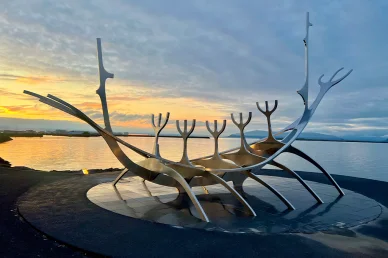
The Sun Voyager is a sculpture by Jón Gunnar Árnason, located next to the Sæbraut road in Reykjavík, Iceland
In the heart of the city lies Tjörnin, Reykjavík's picturesque central lake, where ducks, swans, and other waterfowl gather throughout the year. The lake is surrounded by elegant historic buildings, including the nearby Althing (Iceland's Parliament) overlooking Austurvöllur Square, one of the city's main public spaces.
On the Seltjarnarnes Peninsula, Grótta Nature Reserve offers a peaceful escape from the city. The area is famous for its historic lighthouse, black volcanic beaches, abundant birdlife, and occasional seal sightings. It is also one of the best places near Reykjavík to watch the sunset or, during winter, the Northern Lights.
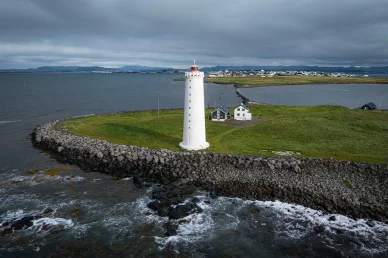
Grótta, located in Seltjarnarnes City Area, is a captivating natural and historical site that offers visitors a unique blend of scenic beauty and rich heritage
Located about 45 minutes by car from Reykjavík, the world-famous Blue Lagoon is one of Iceland's most celebrated geothermal spas. Its milky-blue, mineral-rich waters are surrounded by dramatic lava fields and are renowned for their relaxing and skin-soothing properties. The complex includes outdoor geothermal pools, saunas, steam rooms, relaxation areas, and spa facilities. Organised tours with transfers and admission typically cost between ISK 24,000 and ISK 35,000, depending on the package selected. As the Blue Lagoon is one of Iceland's most popular attractions, advance booking is strongly recommended.
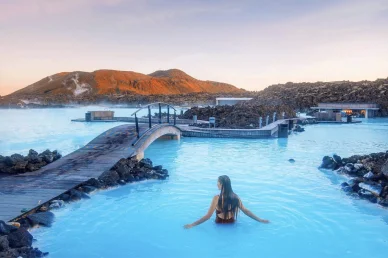
The Blue Lagoon is one of Iceland's top tourist attractions
Popular leisure activities
Reykjavík offers a wide variety of activities, both within the city and in the surrounding area.
Hiking Mount Esja (914 m) is one of the most popular outdoor activities among locals and visitors alike. From the summit, you'll enjoy breathtaking views of Faxaflói Bay and Reykjavík. Bus P29 runs from Mosfellsbær to the Esjurætur trailhead. Keep in mind that this hike requires a reasonable level of fitness and appropriate hiking gear, as mountain weather in Iceland can change very quickly.
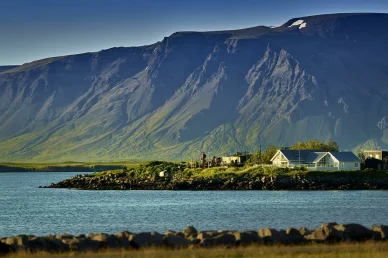
Mount Esja (914 m), often called Esjan, is located about 10 km north of the capital city of Mosfellsbær
Viðey Island is a peaceful nature reserve with a history dating back to the 10th century. A round-trip ferry from Reykjavík costs approximately ISK 2,400 for adults. Visitors can join a guided tour of Viðeyjarstofa, the island's historic residence. The island is also home to the Imagine Peace Tower, a light installation created by Yoko Ono in memory of John Lennon.
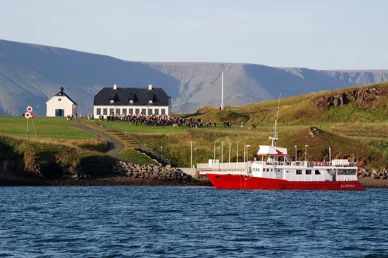
Viðey holds a special place in the hearts of the residents of Reykjavík and has long been a center of culture, nature and outdoor activities
The Golden Circle is the most popular day trip from Reykjavík, typically lasting 6–8 hours. If you're visiting Iceland for the first time, it's considered an absolute must-see. The classic itinerary includes:
- Þingvellir National Park – the historic site of Iceland's ancient parliament (Alþingi) and a dramatic rift valley between the North American and Eurasian tectonic plates (a UNESCO World Heritage Site);
- Gullfoss – one of Iceland's most spectacular two-tiered waterfalls;
- Geysir Geothermal Area and Strokkur – where Strokkur erupts every 5–10 minutes.
Tour prices typically range from ISK 10,000 to 22,000.
Whale watching is another unforgettable Icelandic experience, with tours departing from Reykjavík's Old Harbour. The best season runs from April to October, when you may spot humpback whales, orcas, and dolphins. Tickets generally cost around ISK 15,000–18,000.

Iceland's BEST way to see the Golden Circle
Other popular things to do in Reykjavík include:
- relaxing in the city's geothermal swimming pools, such as Laugardalslaug, Sundhöllin, and others;
- exploring the city by electric scooter or bicycle;
- joining a Northern Lights tour during the winter months;
- seasonal puffin watching in spring and summer;
- cycling or kayaking in Faxaflói Bay.
Museums
Beyond its incredible natural landscapes and fascinating architecture, Reykjavík also offers a wide range of museums to suit every interest.
Reykjavík Art Museum (Reykjavík Art Museum / Listasafn Reykjavíkur)
Home to the largest collection of Icelandic art, featuring both contemporary and classical works. The museum operates across three locations, and a single ticket grants access to all three within 24 hours:
- Hafnarhús — Tryggvagata 17, 101 Reykjavík (city centre, near the Old Harbour);
- Kjarvalsstaðir — Flókagata 24, 101 Reykjavík (in Klambratún Park);
- Ásmundarsafn — Sigtún 105, 105 Reykjavík (sculpture museum).
Admission: approximately ISK 2,900 for adults. Children under 18 enter free of charge. Admission is also free for holders of the Reykjavík City Card.
If you plan to visit several museums, purchasing a Reykjavík City Card (available for 24, 48, or 72 hours) is well worth considering. It includes free admission to most of the city's museums, unlimited travel on public buses, and discounts on various attractions.
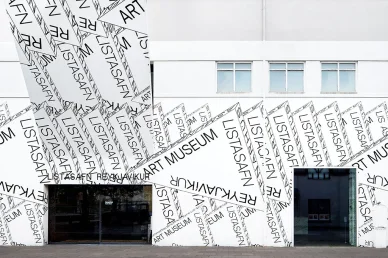
The Reykjavik Art Museum is a prominent cultural institution in Reykjavik
Saga Museum
An interactive museum with an audio guide that brings Iceland's history to life through realistic exhibits. Visitors can try on Viking clothing and handle replica weapons.
Address: Grandagarður 2, 101 Reykjavík (Grandi district, near the Old Harbour).
Admission: approximately ISK 3,600 for adults. Children aged 6–12: around ISK 970–1,000. Children under 6 enter free of charge.
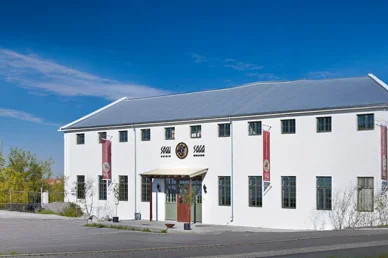
The history museum recreates in a tangible way important events in Icelandic history
The Settlement Exhibition Reykjavík 871±2
An archaeological museum built directly around the excavation site of a Viking longhouse dating back to around AD 871. It offers a fascinating glimpse into Reykjavík's earliest history.
Address: Aðalstræti 16, 101 Reykjavík (city centre)
Admission: approximately ISK 2,900 for adults. Children under 18 enter free of charge. Admission is also free for Reykjavík City Card holders.
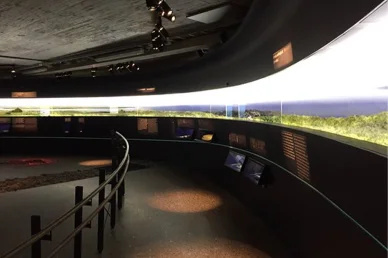
Reykjavík 871±2 is a fascinating archaeological museum
National Museum of Iceland (Þjóðminjasafnið)
The country's most comprehensive museum, covering Iceland's history from the first settlement to the present day. It features outstanding permanent exhibitions, interactive displays, and temporary exhibitions.
Address: Suðurgata 41, 101 Reykjavík
Admission: ISK 3,300 for adults. Children under 18 enter free of charge.
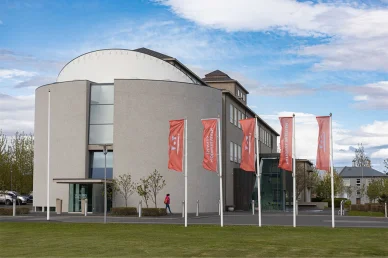
National Museum of Iceland (Þjóðminjasafnið)
Perlan
A modern museum and exhibition centre dedicated to Iceland's natural wonders, including glaciers, volcanoes, whales, and more. It also features a planetarium and a panoramic observation deck.
Address: Öskjuhlíð, 105 Reykjavík (on Öskjuhlíð Hill)
Admission (exhibitions + observation deck): approximately ISK 4,500–5,500.
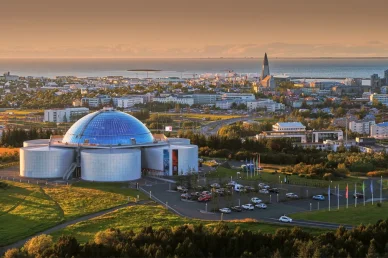
Perlan is a museum with a revolving glass dome, it stands on the hill Oskjuhlid and is one of Reykjavík's landmarks
Reykjavík Maritime Museum
Part of the Reykjavík City Museum, this museum explores Iceland's fishing industry, maritime heritage, and the everyday lives of Icelandic fishermen.
Address: Grandagarður 8, 101 Reykjavík (Grandi district)
Admission: approximately ISK 2,550 for adults (often included in combination tickets with other Reykjavík City Museum locations).
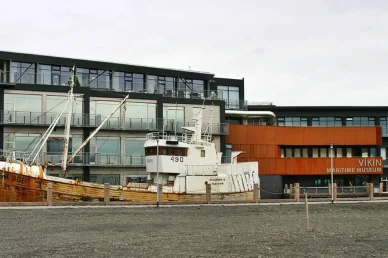
Das Schifffahrtsmuseum Reykjavik, formerly known under the name Víkin Maritime Museum, is a maritime museum in the old harbor of Reykjavik
Icelandic Phallological Museum
One of the world's most unusual museums, featuring a collection of phallic specimens from more than 200 animal species, including whales. It's certainly not for everyone, but it's an unforgettable and uniquely Icelandic attraction.
Address: Laugavegur 116, 105 Reykjavík
Admission: approximately ISK 2,500–3,000.
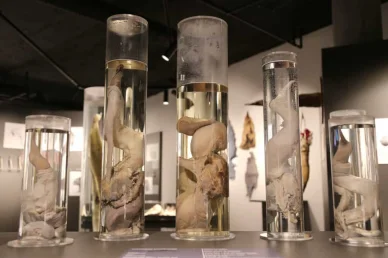
The Icelandic Phallological Museum is probably the only museum in the world to contain a collection of phallic specimens belonging to all the various types of mammal found in a single country
Where to stay in Reykjavík
Accommodation options in Reykjavík are plentiful and cater to every budget and travel style, but prices are generally high and vary significantly depending on the season. The most expensive periods are June to August (summer) and December to February (Northern Lights season and the holidays). It's highly recommended to book your accommodation well in advance, especially if you're visiting during the peak season, as the best properties are often fully booked months ahead.

10 BEST Hotels in Reykjavík, Iceland | Where to Stay for Any Budget
Luxury (5-star hotels and premium accommodation)
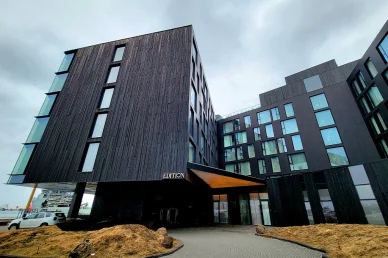
The Reykjavík EDITION is one of the best hotels in the city. It features modern design, an excellent location right next to Harpa, a great restaurant, and a spa. Prices start from 65,000–95,000+ ISK per night, depending on the date and room type.

The Reykjavik EDITION
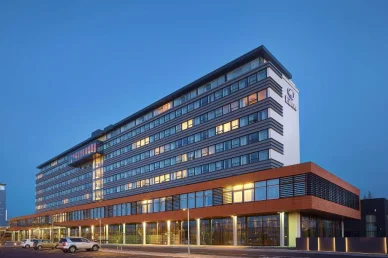
Upgradedpoints.com Hilton Reykjavík Nordica offers a convenient location, a large pool, and a spa. It is a good choice for families and business travellers. Prices start from 55,000–80,000 ISK.

Hilton Reykjavík Nordica in Iceland
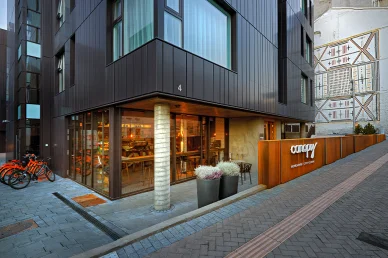
Booking.com Canopy by Hilton Reykjavík City Centre is a stylish boutique hotel in the city centre with an excellent breakfast. Prices start from 60,000 ISK.

Canopy by Hilton Reykjavík City Centre in Iceland
Tripadvisor.com
Mid-range (excellent value for money)
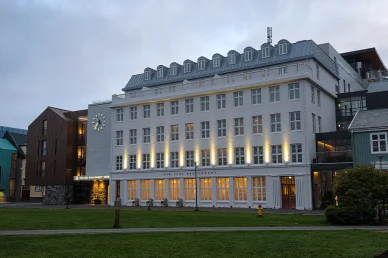
Iceland Parliament Hotel is located on Austurvöllur Square, just a two-minute walk from the Parliament building. It offers stylish interiors and an excellent central location. Prices start from 32,000–55,000 ISK per night.

In the heart of Reykjavík, where history whispers from parliament walls and modern design pulses through every street corner, the Iceland Parliament Hotel stands as a stylish, soulful sanctuary for the luxury traveler
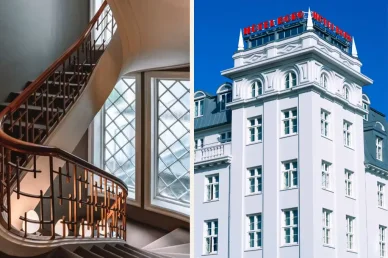
Luxeglobalawards.com Hotel Borg by Keahotels is a historic hotel dating back to the 1930s, situated in the heart of Reykjavík. It combines classic elegance with a prime central location. Prices start from 35,000–60,000 ISK per night.

Hotel Borg by Keahotels - a Reykjavik icon, Iceland's first luxury hotel
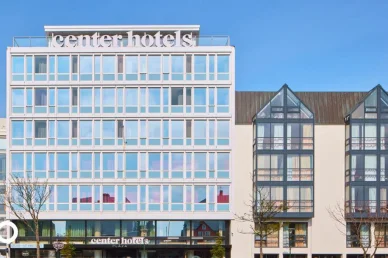
Keahotels.is Center Hotels Plaza and Center Hotels Klöpp are reliable city-centre options offering excellent value for money. Prices start from 28,000–45,000 ISK per night.

Center Hotels Plaza is a reliable accommodation option in the city center
Booking.com
Budget and Upper Mid-range
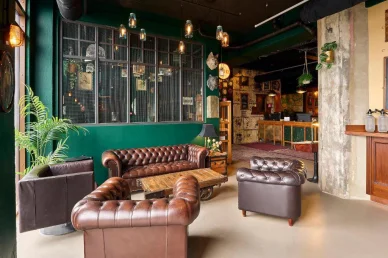
KEX Hostel is one of Reykjavík's most popular hostels, located in the city centre. Housed in a beautifully renovated historic building, it offers stylish interiors, a lively bar, spacious communal areas, and a great social atmosphere. Dormitory beds start from 5,500–9,000 ISK per night, while private rooms are available at higher rates;

Is one of Reykjavík's most popular hostels - KEX Hostel
Booking.com Lækur Hostel is a quieter option in the Laugardalur district, close to Reykjavík's largest swimming pool and a beautiful park. It's an excellent choice for travellers looking for a more peaceful stay. Dormitory beds start from 4,500–8,500 ISK per night;

A great choice for travelers looking for a more relaxing stay - Lækur Hostel
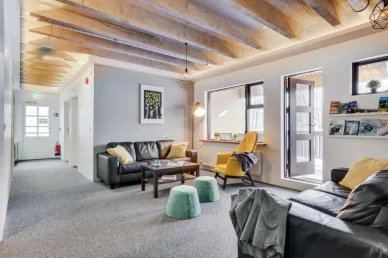
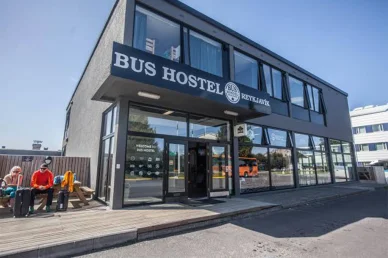
Booking.com Reykjavík Downtown Hostel and Bus Hostel Reykjavík are both reliable budget-friendly options with consistently good reviews, offering clean facilities, comfortable accommodation, and easy access to the city's main attractions;

Bus Hostel Reykjavík is a reliable, budget-friendly option with consistently good reviews
Booking.com
Apartments and Airbnb
There are plenty of high-quality apartments and studio rentals in Reykjavík's 101 district (the city center). They are an excellent choice for families or longer stays, as having a kitchen allows you to prepare your own meals. Prices typically range from ISK 25,000 to ISK 60,000 per night, depending on the size of the property and its location.
Booking Tips
- Many hotels in Reykjavík, especially between September and March, offer special winter packages that include not only accommodation but also Northern Lights-related services. These packages often include a guided Northern Lights tour or a Northern Lights wake-up call, making it easy to experience the aurora without having to arrange transportation yourself or risk sleeping through the display.
- The Reykjavík City Card does not include discounts on accommodation, but it pairs well with visits to museums and unlimited access to public transportation.
- If you prefer a quieter stay, consider the Laugardalur or Vesturbær neighborhoods. If you want to be close to the city's main attractions, restaurants, and nightlife, Reykjavík's 101 district (the city center) is the best choice.
Restaurants worth visiting in Reykjavík
Reykjavík's culinary scene blends traditional Icelandic cuisine with fresh seafood, premium lamb, and modern New Nordic gastronomy. The city is also known for its excellent burgers, steakhouses, and a wide variety of Asian restaurants. Most of the best dining options are concentrated in the city center.
Traditional Icelandic dishes worth trying:
- Kjötsúpa (traditional Icelandic lamb soup).
- Fish soup or stewed fish.
- Hákarl (fermented shark) — an acquired taste.
- Fresh cod, salmon, and Arctic halibut.
- Icelandic lamb and skyr.

Best RESTAURANTS in REYKJAVIK (budget friendly)
Recommended Restaurants:
- Fiskmarkaðurinn (The Fish Market). An excellent choice for a special dinner. Known for its premium seafood, creative presentation, and outstanding wine list. The atmosphere is both elegant and inviting. Address: Aðalstræti 12 (city center).
- Bastard Brew & Food. A lively brewpub serving its own craft beer alongside excellent burgers, small plates, and a popular bottomless weekend brunch. A favorite among both locals and visitors. Address: Vegamótastígur 4 (city center).
- Kol Restaurant. A modern restaurant offering creative cuisine with a strong focus on locally sourced ingredients. Highly regarded for its tasting menu and signature cocktails. An ideal choice for a romantic dinner. Address: Skólavörðustígur 40 (near Hallgrímskirkja).
- Skál! Contemporary Icelandic cuisine with an emphasis on seasonal, locally sourced ingredients. Stylish interior, attentive service, and inventive dishes. Address: Laugavegur 107.
- Íslenski Barinn (The Icelandic Bar). A relaxed restaurant specializing in traditional Icelandic cuisine. It's a great place to try hákarl, Icelandic lamb, and other local classics in an informal setting. Address: Laugavegur 20 (city center).
- Hosiló. A distinctive restaurant showcasing Nordic ingredients combined with creative influences from international cuisines. An excellent option for those looking to try something a little different.
- Bæjarins Beztu Pylsur. Reykjavík's legendary hot dog stand and a must-visit for anyone wanting to experience Iceland's most famous street food. Many visitors consider it one of the best hot dogs in the world. Address: Tryggvagata (near the Old Harbour).
- Sea Baron (Sægreifinn). A simple but beloved seafood restaurant in Reykjavík's Old Harbour, famous for its delicious lobster soup, fresh fish skewers, and relaxed atmosphere.
During the high season (summer and December–January), it's advisable to reserve a table in advance, especially at the city's most popular restaurants. Many restaurants also offer lunch menus, typically served between 11:30 a.m. and 2:30 p.m., at significantly lower prices than their evening menus.
Transport in Reykjavík
The most convenient and popular way to get around Reykjavík is by Strætó buses. The network covers the entire city as well as the surrounding suburbs. The easiest way to plan your journey, purchase tickets, and track buses in real time is through the official Klappið (Klapp) app.
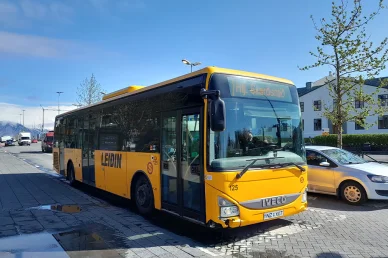
The most convenient way to travel around Reykjavík is by bus
If you're traveling from Keflavík International Airport, the most convenient options are the Flybus service or a private airport transfer, as Strætó buses do not operate direct routes from the airport. You can pay your bus fare by card directly with the driver or through the Klapp app.
Public Transport Fares (as of 2026):
- A single adult ticket costs ISK 690 and is valid for 75 minutes, including transfers.
- Children under 12 travel free of charge.
- Teenagers aged 12–17 and seniors aged 67 and over receive a discounted fare of approximately ISK 345.
When paying by contactless card, the Kapp fare-capping system applies: in one day, you will pay for a maximum of 3 trips, and over one week, for a maximum of 9 trips. Any additional journeys beyond that are free.

To get around the city, it is highly recommended to download the Klapp app
The Reykjavík City Card is the best-value option for tourists:
- 24 hours — ISK 6,100;
- 48 hours — ISK 8,500;
- 72 hours — ISK 10,500.
The card includes:
- Unlimited travel on Strætó buses within the capital region;
- Free admission to many museums, around 17 in total;
- Free entry to 8 of the city’s geothermal swimming pools;
- A free ferry trip to Viðey Island;
- Discounts on selected tours and attractions.
If you plan to move around the city actively and visit museums and swimming pools, the card quickly pays for itself.
How to Get a Reykjavík City Card
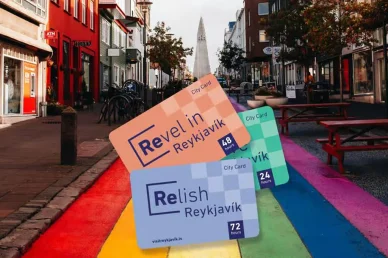
The Reykjavik City Card is the practical companion for the Icelandic capital
You can purchase the card in two main ways:
- The most convenient option is to buy it online in advance.
- Visit the official website: visitreykjavik.is/reykjavik-city-card;
- Choose the card duration (24, 48, or 72 hours);
- Pay securely by card;
- After completing your purchase, you will receive an electronic voucher by email.
Once you arrive in Reykjavík, you will need to exchange your electronic voucher for a physical Reykjavík City Card. This can be done at several locations:
- Visit Reykjavík Tourist Information Centre (city centre);
- Selected museums (such as the Maritime Museum and the Settlement Exhibition);
- Some hotels and hostels.
The validity period of the Reykjavík City Card begins with its first use, not when you purchase it. It is activated the first time you use it on a bus or present it at a museum, swimming pool, or other participating attraction. This means you can buy the card in advance and activate it once you arrive in Reykjavík.
- Buy it in person after arriving in Reykjavík at any of the following locations:
- Visit Reykjavík Tourist Information Centre;
- Selected museums and public swimming pools;
- Some hostels and hotels.
It is important to note that the Reykjavík City Card is available only as a physical card—there is no digital version.
Electric scooters and bicycles are a popular way to get around central Reykjavík. They can be rented through mobile apps such as Dott, Bird, Lime, and others. Rental prices typically range from 300 to 600 ISK per ride, plus a per-minute fee. They are a convenient option for covering short distances.
The city centre (District 101) is compact and highly walkable. Most of Reykjavík's main attractions are located within a 15–20-minute walk of one another, making walking one of the best ways to explore the city.
Renting a car offers the greatest flexibility, especially if you plan to explore destinations outside the city, such as the Golden Circle, the Blue Lagoon, or Iceland's mountain regions. Driving in Reykjavík itself is straightforward, and parking is generally easy to find. During winter, however, roads can be icy and weather conditions may change rapidly. Be sure to rent a car equipped with winter tyres and always drive with extra caution.
A new rapid bus system, Borgarlína, is planned to be introduced during the 2030s. Once completed, it is expected to significantly improve public transport connections between different parts of Reykjavík.
Tips for tourists

Top 10 Things To Do in Reykjavik
Reykjavík is a very tourist-friendly city, but a few practical tips will help make your trip even more comfortable and enjoyable.
Reykjavík remains one of the safest cities in the world. However, in recent years, there has been a slight increase in pickpocketing in the city centre, particularly along Laugavegur and around popular tourist attractions. Keep your bag or backpack in front of you, avoid leaving your phone or wallet unattended on café tables, and stay aware of your belongings in crowded areas.
Be sure to book your hotel, popular restaurants, and tours well in advance, especially excursions to the Golden Circle, Blue Lagoon, and whale-watching tours. During the high season (June–August and December–February), the best options are often fully booked 2–4 months ahead. If you are visiting over Christmas or New Year's, reserve restaurant dinners several months in advance.
Credit and debit cards, including contactless payments, are accepted almost everywhere—in cafés, restaurants, shops, buses, and even parking meters. Carrying cash (ISK) is rarely necessary.
Tap water in Reykjavík is among the cleanest in the world, so it is perfectly safe to drink straight from the tap.
Dress in layers. Even in summer, temperatures typically range between 10°C and 15°C (50–59°F), and strong winds are common. Be sure to pack:
- a windproof and waterproof jacket;
- comfortable walking shoes (streets and trails can be wet);
- a warm hat and gloves if you are visiting in winter.
Don't forget to bring a swimsuit—Reykjavík's geothermal swimming pools are open all year round.
The official language is Icelandic, but English is widely spoken, and almost everyone can communicate in it.
Iceland uses European Type C and Type F electrical outlets.
You can buy a local SIM card at Keflavík International Airport or in Reykjavík city centre.
Free Wi-Fi is available in most cafés, restaurants, and hotels.
Tipping is not expected in Iceland, but leaving around 10% for excellent service is always appreciated.
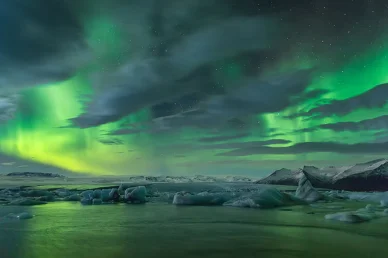
The Northern Lights are one of Iceland’s most alluring and elusive attractions
It is sometimes possible to see the Northern Lights from within Reykjavík itself, although your chances are much better outside the city, where there is less light pollution. Many hotels also offer a Northern Lights wake-up service, notifying guests if the aurora becomes visible during the night.
Useful Apps

5 Apps you NEED for an Iceland Trip
- Klappið — public transport and bus tickets;
- Vedur.is — Iceland's most accurate weather forecast;
- 112 Iceland — emergency services and safety app;
- Google Translate — useful for translating Icelandic;
- Aurora Forecast or My Aurora Forecast — Northern Lights forecasts.
Interesting facts about Reykjavík

9 Weird Things ONLY Icelanders Do
- Construction of Hallgrímskirkja took 41 years, from 1945 to 1986.
- Reykjavík is a UNESCO City of Literature, recognized for its rich literary heritage and vibrant book culture.
- Viðey Island is home to the Imagine Peace Tower, a light installation created by Yoko Ono in memory of John Lennon.
- Reykjavík's Punk Museum is housed in a former underground public toilet in the city centre.
- Reykjavík has eight public geothermal swimming pools, giving it one of the highest numbers of public pools per capita in the world.
- Reykjavík is the birthplace of Vigdís Finnbogadóttir, the world's first woman to be democratically elected as a president. She served from 1980 to 1996.
- Reykjavík has one of the lowest crime rates among the world's capital cities.
- The city is well known for its vibrant street culture and festivals. The best-known events include Iceland Airwaves, an internationally acclaimed music festival, and Secret Solstice, which celebrates Iceland's famous midnight sun.
- Reykjavík is home to the Icelandic Phallological Museum, the world's only museum dedicated entirely to phallology.
- Reykjavík is one of the world's most environmentally friendly cities, with more than 90% of its heating supplied by geothermal energy.
- New Year's Eve fireworks in Reykjavík are a true national celebration. On the night of 31 December, residents across the city gather outdoors to launch fireworks, creating one of the most spectacular New Year's celebrations in the world.
Frequently asked questions
❓ Is Reykjavík safe?
Yes. Reykjavík is one of the safest capital cities in the world, with an exceptionally low crime rate. The only issue visitors should be aware of is occasional pickpocketing in the city centre and other busy tourist areas.
❓ Is Reykjavík expensive to visit?
Yes. Reykjavík is considered one of the world's most expensive cities. However, the high quality of life, spectacular natural surroundings, and unique experiences make it well worth the cost. It's also possible to enjoy many of the city's attractions on a budget.
❓ What souvenirs should I bring home from Reykjavík?
Popular souvenirs include puffin-, volcano-, and Northern Lights-themed gifts, Viking-inspired items, traditional Icelandic wool sweaters (lopapeysa) and other wool products, locally made chocolate and sweets, Icelandic craft beer, and handcrafted lava stone products.
❓ What are the must-see attractions in Reykjavík?
Don't miss Hallgrímskirkja, Harpa Concert Hall, the Sun Voyager sculpture, Perlan, Reykjavík's Old Town, the Blue Lagoon, the Golden Circle, whale-watching tours, geothermal swimming pools, and—if you're visiting in winter—the Northern Lights.
❓ Which universities are located in Reykjavík?
The city's main universities are the University of Iceland, Reykjavík University, and the Iceland University of the Arts.
❓ When is the best time to visit Reykjavík?
Summer (June–August) is ideal for sightseeing, hiking, and outdoor activities thanks to the long daylight hours. Winter (December–February) is the best season for seeing the Northern Lights and experiencing Iceland's festive atmosphere. Spring and autumn offer a good balance between weather, prices, and visitor numbers.