The smallest countries in the world
The smallest countries in the world are just as attractive to tourists as larger ones. Their territories are home to many fascinating landmarks.
We present five of the smallest countries in the world, highlighting their unique features — from climate to economy.
Name | Area | Population | Continent |
|---|---|---|---|
Vatican City | 0.49 km² | 531 people | Europe |
Monaco | 2.02 km² | 38,382 people | Europe |
Nauru | 21 km² | 11,000 people | Oceania |
Tuvalu | 26 km² | 9,492 people | Oceania |
San Marino | 61 km² | 33,574 people | Europe |
Vatican
Vatican City is the country with the smallest population in the world. It is a small enclave within Rome. It is often associated with Italy and has international status as the residence of the Pope, the supreme spiritual leader of the Roman Catholic Church. Its area is 0.49 km², and the total length of its borders is 3.2 km.
The list of Vatican City’s main attractions includes:
- St. Peter’s Basilica;
The Sistine Chapel;

The Sistine Chapel
- Raphael’s frescoes and the Vatican Gardens;
- The Apostolic Palace and the Necropolis grotto;
- Works of ancient art and masterpieces of the High Renaissance.
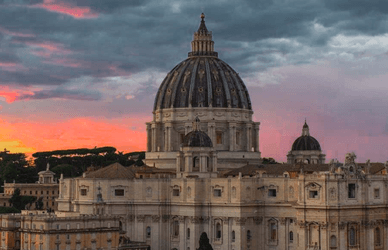
Vatican City is officially the smallest country in Europe and a major tourist destination, attracting visitors from many countries. The sovereign city-state is headed by the Pope, who is elected for life by secret ballot during a conclave.
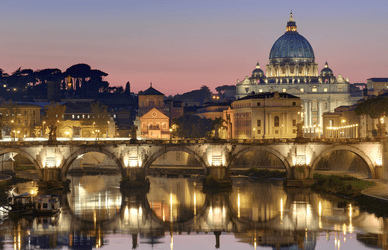
Vatican City State
Vatican City has a Mediterranean climate, with mild winters and hot, dry summers.
Its economy is non-commercial, and its main source of income is donations from Catholics around the world. Part of its revenue comes from tourism, including the sale of stamps, souvenirs, and museum tickets, as well as from renting church-owned property in other countries. Vatican City has no industry apart from printing.
Monaco
Monaco has an area of 2.02 km² and is located in southern Europe on the Mediterranean coast, bordering France. The principality is headed by Prince Albert II, and its form of government is a constitutional monarchy.
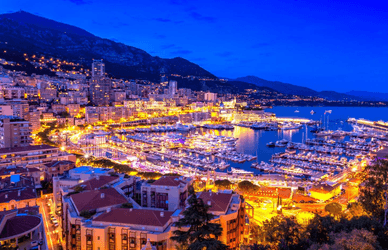
The country of Monaco
Executive power is exercised by the Minister of State, while legislative power belongs to a unicameral parliament consisting of 24 members elected for five-year terms.
The main attractions of Monaco include:
- Fort Antoine, an open-air theatre with a rich summer programme of concerts, theatrical performances, and musical shows;
- Monaco Cathedral, built in the 19th century from white stone, featuring a large organ, a marble altar, and decorative elements dating back to the 16th century;
- The Oceanographic Museum and Aquarium, the country’s scientific and cultural centre;
- Port Hercule, where you can see some of the world’s most expensive yachts.
Many tourists come to Monaco because of its numerous casinos. Monte Carlo is home to one of the oldest and most prestigious casinos in the world.
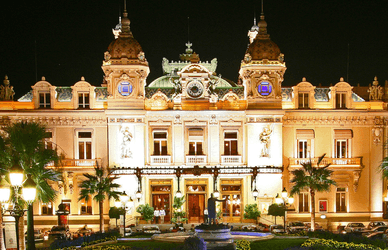
Casino Monte Carlo
Monaco has a subtropical Mediterranean climate. As for the economy, the principality does not impose income tax. The financial sector includes a number of major financial institutions, while the local real estate market is one of the most expensive in the world.
Nauru
Another small state, although slightly larger than the previous two. Its area is 21 km². It is not a country as such, but an island belonging to Japan, located in the western Pacific Ocean, with an equatorial, warm, and humid climate. The local economy is based on phosphate exports, although these reserves are gradually being depleted.
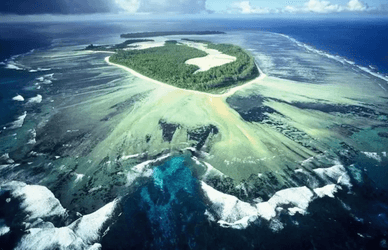
State of Nauru
A large number of coconut palms grow on Nauru, and fishing is well developed.
During the Ming dynasty (from the 15th century to the second half of the 16th century), the island served as a port for Japanese ships sailing to China.
The island’s economy depends on an influx of foreign workers, mainly from the neighbouring island nations of Kiribati and Tuvalu.
Tourists visit the island of Nauru partly to see attractions such as:
- Tōdai-ji Temple, the largest wooden structure in the world;
- A five-storey, 50-metre-high pagoda built in 1426;
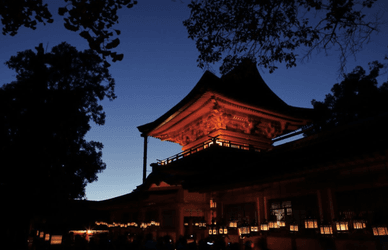
Kasuga Taisha Shrine, with two thousand bronze lanterns and numerous stone lanterns, one of Japan’s most important shrines;

Kasuga-taisha Temple
- Nara Palace;
- Shiratake Observatory;
- Gangō-ji Temple, the first Buddhist temple in Japan.
Tuvalu
Tuvalu is an island country in Oceania, located in Polynesia in the southwestern Pacific Ocean. It consists of nine coral atolls. The capital is Funafuti.
Tuvalu has a warm tropical climate influenced by the southeast trade winds, with two distinct seasons: a wet season from November to April and a dry season from May to October. Annual rainfall ranges from 3,000 to 4,000 mm. The climate in the northern part of the islands is drier than in the south, with a tendency toward prolonged droughts.
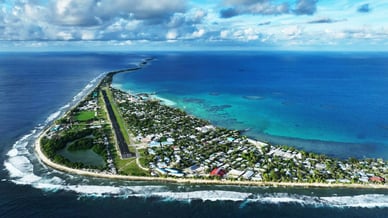
The State of Tuvalu
Tuvalu’s economy is based on agriculture and fishing. Large areas are devoted to growing coconut palms. The main exports are copra and frozen fish. Tuvalu’s economy can be described as market-oriented and based on self-sufficiency.
The island nation is known for its handicrafts and unique cuisine. There are several interesting attractions:
- Funafuti Marine Conservation Area.
Funafuti Lagoon.

Funafuti Lagoon
- St. Francis Church.
- Nukufetau Atoll.
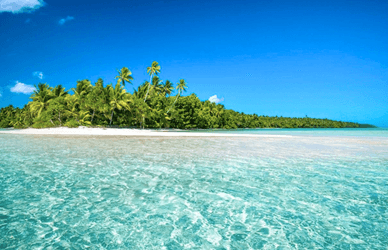
The local museum has an exhibition featuring objects related to local history and culture, traditional tools, clothing, and household items.
Tourists visiting the islands can choose from a wide range of water activities.
San Marino
San Marino is one of the smallest countries in Europe and the world, completely surrounded by Italy. It is located in the south-central part of Italy, west of the Apennines. One of its distinctive features is that San Marino is landlocked. The distance to the Adriatic coast is 24 km.
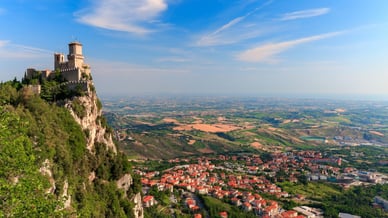
San Marino, one of the smallest countries in Europe
San Marino has a Mediterranean climate with continental influences. Winters are relatively mild, and snowfall is rare. Precipitation is evenly distributed throughout the year, with the highest levels occurring during the autumn and winter months. Due to its elevated location, San Marino has a cooler climate than the neighbouring lowland areas of Italy.
The country’s economy is based on tourism. Up to 3 million people visit it every year. Several major banks operate in the country, and the production of collectible postage stamps also generates considerable revenue. Agriculture is fairly well developed: olives, fruit, grapes, and cereals are grown in San Marino. Local farmers also raise cattle and pigs. The country’s industrial sector includes branches of Italian engineering and other companies, as well as businesses producing textiles, leather goods, and other products. The production of ceramics, glass, porcelain, and furniture is also well developed.
Among San Marino’s main attractions are Pergami Belluzzi Palace, which houses the State Museum of San Marino, Palazzo Pubblico, the seat of government, and the historic fortresses on the three peaks of Monte Titano.
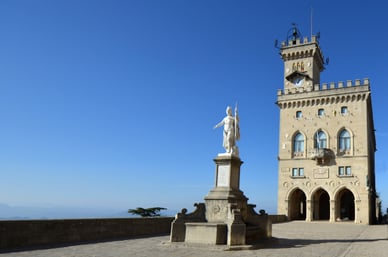
Palazzo Pubblico – seat of government
San Marino is recognized as the oldest sovereign state in Europe. In July 2008, its historic centre and Mount Titano were added to the UNESCO World Heritage List.
Frequently Asked Questions
❓ What is the smallest country in the world?
The smallest country in the world is Vatican City, with an area of 0.49 km².
❓ Which country has the smallest population?
Vatican City has the smallest population in the world, with just over 500 residents.
❓ How big is Monaco?
Monaco has an area of just 2.02 km².