Haitian Institute of Statistics and Information Technology (IHSI)
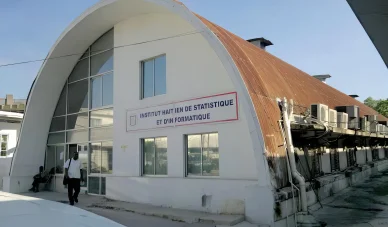
The Haitian Institute of Statistics and Information Technology (IHSI) serves as the sole central body of the Republic of Haiti’s national statistical system. It is a decentralized public institution that, although operating under the supervision of the Ministry of Economy and Finance, enjoys full technical and administrative autonomy. This independence allows the institute to maintain political neutrality and rigorous objectivity in calculating indicators that are vital to the country.
Key Information
Full Name | Haitian Institute of Statistics and Informatics (IHSI) |
|---|---|
Initial Establishment Date | September 4, 1951 (under the name IHS) |
Restructuring | February 19, 1981 (integration of information technology) |
Supervising Ministry | Ministry of Economy and Finance of the Republic of Haiti |
Headquarters | Port-au-Prince, Haiti |
Areas of Activity | Demographic, economic, and social statistics; national censuses |
Mission and Mandate
The IHSI’s fundamental mission is enshrined in law. The institution has the exclusive mandate to “produce, analyze, and disseminate reliable, relevant, and up-to-date statistical information.” The IHSI serves as the primary repository and analyst of Haiti’s socioeconomic condition. These data constitute the essential foundation for the preparation of government budgets, the formulation of monetary policy by the Central Bank, and the operations of international donors (such as the World Bank, the IMF, and the UN), which rely on IHSI statistics to assess the effectiveness of humanitarian aid and development programs.
Organizational Chart

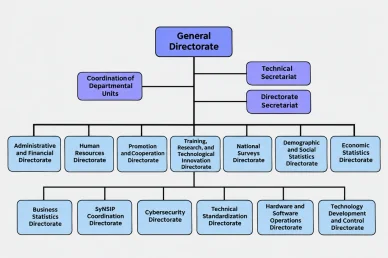
To ensure continuous data collection throughout the country, the institute has a branch-based structure with a strict hierarchy:
- General Directorate: The strategic management body responsible for approving methodologies and officially publishing final reports.
- The Directorate of Demographic and Social Statistics (DSDS): The largest division in terms of field staff. It oversees the preparation and implementation of the General Population and Housing Censuses (RGPH), as well as social surveys.
- The Directorate of Economic Statistics (DSE): The analytical center focused on macroeconomics. It calculates GDP, inflation, trade balances, and industrial production indices.
- The Directorate of Information Technology (DI): The technological heart of the institution. It is responsible for database architecture, software development for questionnaire processing, and the cybersecurity of national statistical archives.
- The Departmental Directorates: Regional offices in Haiti’s 10 geographic departments, providing logistical support for field surveys, particularly in mountainous or rural areas that are difficult to access.
Actions and Achievements
Despite chronic political instability and devastating natural disasters, the IHSI has established itself as one of Haiti’s most resilient government institutions. Among its most significant achievements are:
- The successful conduct of several General Population Censuses (notably the 4th RGPH in 2003), which made it possible to create the country’s first accurate digital map.
- The uninterrupted publication of monthly inflation reports, even during the most acute crises.
- The introduction of digitized data collection (CAPI - Computer-Assisted Personal Interviewing), replacing paper questionnaires with tablets, which has significantly reduced data entry errors and accelerated the publication of results.
The History of the IHSI
The history of the development of Haiti’s statistical system reflects the government’s attempts to modernize its governance. Until the mid-20th century, the country had no unified system for recording population or economic data, relying instead on fragmentary customs and parish records.

IHSI's 75th Anniversary: Workshops on Digital Governance
In 1950, the government faced an urgent need to assess the country’s human capital, which led to the creation of a temporary “Census Bureau.” This experience demonstrated the need for a permanent agency. Consequently, on September 4, 1951, a special law established the Haitian Institute of Statistics (IHS). During its first three decades, the IHS focused exclusively on demographic statistics and basic economic publications.
A veritable revolution took place in the late 1970s and early 1980s. The exponential growth of data, the need to integrate with international financial systems, and the advent of computers called for radical reform. On February 19, 1981, a government decree not only changed the name to the Haitian Institute of Statistics and Information Technology (IHSI) but also designated it as the primary national center for information technology. The institute was granted a monopoly on the standardization of computer equipment for the entire public sector and on the design of electronic databases, thereby becoming a technological pioneer within the Haitian government.
Methodology
The institution strictly adheres to international standards to ensure that its data is relevant and compatible with global databases (such as those of the World Bank).
- Classification Systems: The IHSI uses the United Nations System of National Accounts (SNA), the International Standard Industrial Classification (ISIC), and the Classification of Individual Consumption by Purpose (COICOP);
- Sampling Design: For intercensal surveys, the institute applies a multistage stratified cluster sampling method. The territory is divided into primary sampling units (urban and rural), allowing data from a survey of a few thousand households to be extrapolated with high precision to the entire population;
- Processing and Validation: All collected data undergoes a “cleaning” procedure. Specialized software automatically detects anomalies (for example, if a questionnaire indicates that a 5-year-old child has a university degree), after which the questionnaires are manually verified by supervisors.
Products

The results of the IHSI’s work are presented in a wide range of statistical “products,” divided into broad categories to meet the specific needs of users.
Economic Statistics
The economics section provides critical information for understanding the structure of Haiti's fragile yet dynamic economy, with a particular focus on the informal sector.
National Accounts
This is the most comprehensive macroeconomic summary. The IHSI calculates Gross Domestic Product (GDP) using three approaches: the production approach, the expenditure approach, and the income approach. The data detail the contribution of each sector: primary (agriculture, the historical foundation of employment), secondary (textile industry, construction), and tertiary (services, telecommunications, and commerce, which today account for the largest share of GDP). Indicators of national income and investment levels are also calculated here.
ICAE-HAITI
Since calculating annual GDP is a time-consuming process, the IHSI developed the ICAE. It is a quarterly indicator that allows the government and the private sector to track short-term trends. Based on a sample of key businesses, it indicates whether the economy is expanding or contracting during a specific quarter (for example, following political unrest or natural disasters).
Economic Indicators
This summary report includes monthly and annual data on imports and exports (obtained in collaboration with customs), the volume of industrial production in manufacturing parks, as well as indicators for the energy sector (electricity production and consumption, imports of petroleum products).
Consumer Price Index (CPI)
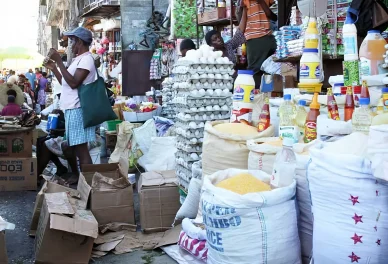
This is one of the IHSI’s most critical products. The CPI measures the inflation rate, which often reaches double digits in Haiti. The IHSI regularly updates the “consumer basket,” which consists of hundreds of essential goods and services (food, rent, transportation, health care). The institute’s staff discreetly record prices each month at major markets and supermarkets in the metropolitan area and the provinces to reflect the actual cost of living.
Employment Index
An indicator designed to track trends in the formal labor market. It measures changes in the volume of wage employment across the country’s major economic sectors, providing a clear picture of job creation or job losses.
Demographic and Social Statistics
The Demographic Division produces data that reflect the social makeup of the nation, the level of poverty, and the structure of society.
Key analytical documents:
- Analysis of the Millennium Development Goals (MDGs - 2010): An in-depth report analyzing Haiti’s progress toward the UN goals. The report highlighted serious challenges in reducing extreme poverty, ensuring universal primary education, and combating child mortality. It emphasized that the 2010 earthquake had set the country back several years in terms of social development.
- Key Socio-Demographic Lessons (2009): A document exploring the concept of the “demographic dividend.” It analyzed the extremely young structure of Haiti’s population (where more than half are under 25) and warned that without job creation, this demographic advantage would turn into a factor contributing to social unrest.
- Estimates of the Total Population and Persons Aged 18 and Over (2015): A document of paramount importance to the democratic process. These projections were used by the Provisional Electoral Council to determine the number of potential voters, allocate polling places, and print ballots for each municipality in the country.
Analysis Report on the Census of the Municipality of Gonaïves
This unique document is the result of the Rapid Post-Disaster Survey System (SERPD). In 2008, the city of Gonaïves was almost entirely flooded by a series of hurricanes (Fay, Gustav, Hanna, Ike). The IHSI conducted an emergency local census to assess the damage. The report provided accurate data on the number of destroyed homes, deaths, internally displaced persons, and lost crops, serving as the basis for the distribution of international humanitarian aid.
Demographic Analysis
This section contains the key indicators: total population, natural growth rate, age and sex structure (the age pyramid, which in Haiti has a broad base, indicating a high birth rate), and life expectancy at birth.
Construction
Unlike “housing” (which pertains to households), this section analyzes the physical characteristics of infrastructure. The IHSI collects data on the materials used for walls (cement blocks, wood, earth, cardboard), roofs (concrete, corrugated metal, straw), and floors. This is a direct indicator of the population’s vulnerability to earthquakes and hurricanes.
Birth Rate and Fertility
A detailed calculation of the Crude Birth Rate (number of births per 1,000 people) and the Total Fertility Rate (average number of children born to a woman during her lifetime). The data are broken down by the mother’s age, educational level, and place of residence (showing that fertility is significantly higher in rural areas).
Economic Characteristics
This section of the social statistics assesses the level of economic activity among the working-age population. It clearly distinguishes between those who are employed, the unemployed (according to the strict criteria of the International Labor Organization), and the economically inactive (students, retirees). Particular attention is given to the enormous weight of the informal sector (small businesses and crafts), which, although not officially recorded by the government, ensures the survival of the majority of Haitians.
Housing
An analysis of household living conditions. The focus is on access to basic sanitation services: sources of drinking water (public water system, public fountains, rivers), waste disposal methods, and the availability of toilets. The type of fuel used for cooking (charcoal, firewood, propane) is also documented, which is directly linked to the problem of massive deforestation in Haiti.
Education
Data collection on the literacy rate of the population aged 15 and older. The IHSI analyzes children’s school attendance rates, the highest level of education attained (from elementary school to college) and highlights the problem of delayed school enrollment (when children start school at a much later age due to family financial difficulties).
Migration

The institution tracks internal and external migration flows. The intensity of rural exodus (the mass migration of young people from villages to Port-au-Prince in search of work) is analyzed there. Estimates of the size of the Haitian diaspora (emigration to the United States, Canada, the Dominican Republic, etc.), which plays a key role in the economy through remittances, are also provided.
Surveys
In addition to general censuses (which are costly and infrequent), the IHSI regularly conducts national sample surveys. The most notable example is the ECVMAS (Survey on Household Living Conditions). These are large-scale studies that fill the data gaps between censuses, making it possible to dynamically track poverty, changes in consumption patterns, and the nation’s health.
Census maps
Mapping is the first and most important step in any census. In the IHSI’s Geographic Information Systems (GIS) laboratories, the entire country is divided into Enumeration Sections (SDE). Each SDE contains between 150 and 200 households - the number that a census taker can cover during the census period. These digital maps help prevent double-counting or the omission of entire neighborhoods, and illustrate population density.
Events
The institute's website also serves as a platform for announcing scientific and educational events.
- Training workshops: Before launching any large-scale data collection effort, the IHSI organizes training sessions lasting several weeks for thousands of temporary workers (interviewers, field staff, supervisors), teaching them the ethics of communicating with respondents, the rules for completing questionnaires, and how to use GPS devices;
- Results-sharing seminars: Upon completion of the research, the institute organizes press conferences attended by ministers, journalists, and UN representatives for the official presentation of the data. During these events, IHSI experts explain the methodology and answer questions about the results.
Publications
The work of the IHSI is taking shape as an extensive library of periodicals and special publications. All are organized for easy access:
- The IPC Monthly Bulletin: The publication most eagerly awaited by the financial sector, featuring a detailed analysis of the goods (such as imported rice or local vegetables) that drove inflation during the month;
- The ICAE Bulletin: A quarterly analysis of economic conditions;
- The Economic Papers: In-depth analytical articles written by the institute’s economists on GDP growth trends;
- RGPH Results Volumes: Hundreds of pages of tables and graphs based on general censuses, divided into separate volumes by topic (Demographics, Housing, Education);
- Special Reports: Publications devoted to specific topics (e.g., the impact of telecommunications on GDP or the status of women in the labor market).
Conclusion
The Haitian Institute of Statistics and Information Technology is much more than just a repository of numbers. It is the institutional memory of the Republic of Haiti and its primary analytical tool. In a country often beset by crises, the objective and scientifically sound data produced by the IHSI - ranging from inflation to literacy rates and the state of the housing stock - serve as the only reliable guide. Through strict adherence to international methodology and continuous modernization, the IHSI provides the Haitian government and the international community with the critical information needed to plan policies for reconstruction, sustainable economic development, and poverty reduction.
FAQ
❓How can I obtain IHSI publications?
Physical publications from the Haitian Institute of Statistics and Information Technology (IHSI) can be obtained from the Dissemination and Public Relations Department for a nominal fee. This minimal cost represents only a small percentage of the documents’ printing costs.
❓How do I access the IHSI Documentation Center?
Access is open to the public. Anyone with valid identification may enter the Documentation Center of the Haitian Institute of Statistics and Information Technology to conduct research or consult the physical archives.
❓Are IHSI's statistical data available online for free?
Yes, in the interest of transparency and wide dissemination, most recent publications - such as Consumer Price Index (CPI) bulletins, summary reports, and census results - are available for viewing and free download in PDF format on the institution’s official website.
❓How often is inflation data for Haiti published?
The Consumer Price Index (CPI), which serves as the official measure of inflation nationwide, is continuously compiled and published on a strictly monthly basis by the IHSI.
❓How does the institution ensure the confidentiality of personal data during censuses?
The IHSI is subject to strict statistical confidentiality requirements. All individual or personally identifiable data collected from citizens during general censuses or sample surveys are fully protected and anonymized. The final results are disclosed only in a generalized and aggregated form, preventing any personal identification.