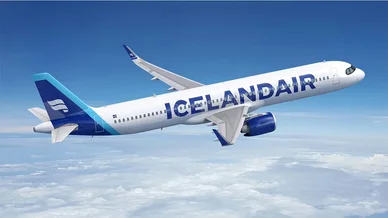
Icelandair
Icelandair is Iceland's flagship airline, transforming the island into a key hub between Europe and North America. It is often referred to as the country's national carrier, the ‘Icelandic bridge’ across the Atlantic. Thanks to its unique geographical location and well-thought-out transfer model in Keflavik, the company has remained the number one choice for decades for those who want to combine a transatlantic flight with a trip to the ‘land of ice and fire’.
Below is a comprehensive guide for Icelandair passengers: how it works, where it flies, and what you need to know before travelling.
Company / group | Icelandair (part of Icelandair Group) |
|---|---|
Network model | The airline uses Iceland as a key hub for routes between Europe and North America, applying a hub-and-spoke model (radial-ring network). |
Domestic flights | From Reykjavík (RKV) to Akureyri, Egilsstaðir, Ísafjörður, etc. |
Stopover programme | Stopover in Iceland at no extra charge (up to 7 days in the basic booking logic) |
Flight status | https://www.icelandair.com/en-ie/support/pre-flight/flight-status/ |
Gift certificates | Gift Certificate (can be purchased/balance checked; valid for 5 years) |
Loyalty | Icelandair Saga Club: Vildarpunktar bonus points (valid for up to 4 years) |
Icelandair promotions | Listed on NASDAQ Iceland, ticker ICEAIR |

Airbus | Icelandair
The history of Icelandair
It all began on 3 June 1937, when Flugfélag Akureyrar was founded in the northern town of Akureyri. For a country with a population of around 117,000, it was a bold step into the future. In Iceland, where roads are often longer than the distance itself, aeroplanes became not a luxury, but a reliable means of communication. The first aircraft, a small Waco seaplane (named TF-ÖRN), carried mail and passengers between remote fjords, and the company later moved to Reykjavík and changed its name to Flugfélag Íslands.
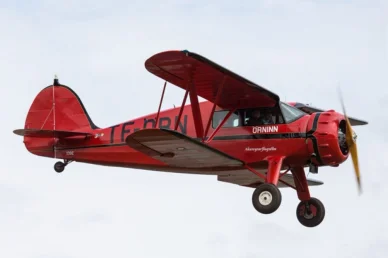
The first aircraft, a small Waco seaplane (named TF-ÖRN)
The technology was fragile, the conditions were difficult, and the company experienced accidents and aircraft losses, but it learned from its mistakes, developed and gradually moved from isolated attempts to regular flights: in 1942, with the advent of the twin-engine Beechcraft D-18, routes between key cities began to operate more reliably.
At the same time, a second important airline, Loftleidir, grew in the country. In the 1940s and 1960s, both developed side by side, expanding their fleets and experience: from domestic transport to Atlantic ambitions. An important symbol of this transition was the Douglas DC-4 Skymaster long-haul aircraft, which appeared in both fleets in the late 1940s. On 25 August 1948, Loftleidir received permission and operated its first regular flight between Iceland and the United States — Iceland began to enter the transatlantic travel logic not as the edge of the map, but as a hub on it.
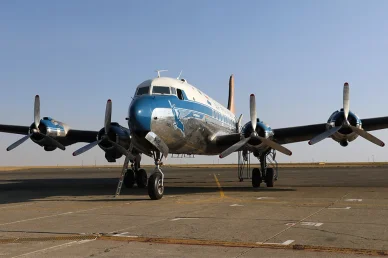
The Douglas DC-4 Skymaster long-haul aircraft, which appeared in the late 1940s
In the 1950s, Loftleidir focused on the North Atlantic and low fares, while Icelandair maintained its domestic network and expanded its international routes in Europe. Aviation was becoming faster and better: in 1957, Icelandair acquired Vickers Viscount turboprop aircraft with pressurised cabins, which changed the comfort and possibilities of flying. In 1967, the company introduced Iceland's first jet aircraft, the Boeing 727-100C, and from then on, international flights began to stop in Keflavík as a hub on the route.
The late 1960s and 1970s brought new challenges: fierce competition, financial pressure and the realisation that two national carriers were becoming too crowded in one market. After lengthy negotiations, the government decided to merge Loftleidir Icelandic and Icelandair: the agreement was signed on 11 April 1973, and on 20 July 1973, Flugleidir was founded — a joint company that spent several years merging not only schedules and offices, but also two different corporate cultures.
In the 1980s, Icelandair went through a difficult period amid recession and expensive fuel, but at the same time laid the foundation for the future hub: a key event was the opening of the terminal in Keflavik on 15 April 1987. It was then that a model emerged that would become classic: Keflavik as a hub between North America and Europe, allowing passengers to quickly transfer when travelling from one side of the Atlantic to the other.
The 1990s were a period of fleet renewal (notably the arrival of the Boeing 757) and network consolidation. The company developed not only commercial transport but also tourism, working with Iceland as a place where you could not just ‘transfer’ but stop and stay for a few days. This idea of stopping on the route across the Atlantic eventually took shape as the modern Stopover product and became one of the reasons why Icelandair has such a significant impact on Iceland's connection with the world: it not only transports Icelanders to Europe and North America, but also brings people to Iceland — in the off-season, for short visits, for longer trips.
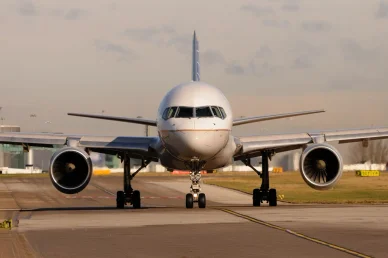
The 1990s were a period of fleet renewal - notably the arrival of the Boeing 757
In the 2000s, Icelandair Group became a holding structure that combined aviation and tourism businesses. In the 2010s, the network grew, new destinations appeared, services were updated (from service classes to digital solutions), and the model of a transatlantic ‘bridge’ via Keflavik became firmly established.
In the 2020s, the company continued to adapt to new aviation requirements: it integrated domestic flights and destinations to Greenland into a common network (2021), updated its livery and brand image (2022), and shifted its focus on efficiency to its aircraft fleet — with the transition to the Airbus A321LR (the first arrived in December 2024) and a contract for the A321XLR with deliveries starting in 2029.
After a turbulent 2020s, Icelandair entered the middle of the decade as a mature, flexible airline. By 2026, the focus had shifted definitively to fleet renewal and efficiency. At the same time, Icelandair retains its key identity as a convenient ‘bridge’ between North America and Europe. Icelandair no longer strives to be the biggest — instead, it strives to be precise and safe.
Icelandair fleet

Overview of Icelandair Aircraft Fleet (September 2025)
Icelandair's fleet is a direct extension of the country's geography. Since Iceland is located right in the middle between Europe and America, the airline relies not on giant airliners, but on medium-range aircraft with a long flight range. This allows it to fly across the ocean frequently, flexibly and with less impact on the environment.
The company's fleet is currently undergoing a major upgrade. The legendary Boeing 757s, which have been the backbone of transatlantic routes for decades, are gradually giving way to the modern Boeing 737 MAX. The latter are significantly quieter and consume less fuel, making the flight more pleasant for passengers and more environmentally friendly for the planet. The end of 2024 was a real milestone, when the first Airbus A321LR in the company's history joined the fleet, ushering in a new era of comfort on long-haul flights, and from 2029 it will be joined by even more powerful XLR models.
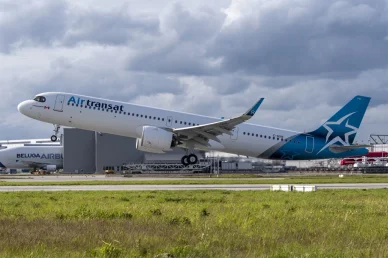
The end of 2024 was a real milestone, when the first Airbus A321LR in the company's history joined the fleet
Aircraft for regional routes occupy a special place. Since domestic airports in Iceland and Greenland often have short runways and difficult weather conditions, reliable Dash 8 turboprops are used here. They provide stable connections to remote corners of the north, even where large aircraft are powerless. Overall, the fleet upgrade for Icelandair is not just a replacement of equipment, but a way to make travel more environmentally friendly by reducing CO₂ emissions on every flight.
Route network
Geography is Icelandair's main advantage. The airline's base in the middle of the Atlantic allows it to operate as an ideal logistics hub, connecting more than 60 destinations. The main idea behind the network is to make travel between Europe and North America as short and logical as possible. Instead of flying far south to large mainland hubs, passengers choose to fly via Iceland, effectively following the shortest arc on the world map.
In North America, the company not only covers giant metropolises such as New York, Boston and Chicago, but is also actively expanding its presence in regional centres. Since 2025, cities such as Nashville and Pittsburgh have been added to the list of routes, making the airline indispensable for those planning to immerse themselves in the culture of the United States or Canada. At the same time, the flight schedule in Keflavik is synchronised so that passengers from European capitals can change planes with minimal waiting time.

20 Airlines with FREE Stopovers
Destinations that are usually difficult to reach for the average tourist occupy a special place in the network. Thanks to Icelandair, you can easily reach Greenland or the Faroe Islands, as well as quickly travel within Iceland itself — from the capital to picturesque Akureyri or Ísafjörður. But the real treasure for travellers is the Stopover programme. It is an opportunity to turn a regular transatlantic flight into two trips in one: you can stay in Iceland for up to seven days at no extra cost to your ticket price to see geysers and glaciers before continuing across the ocean.
Services for passengers
Icelandair's service is based on the principle of ‘honest flexibility’. There is no division into classes in the traditional sense — instead, travellers choose the type of fare that suits their needs. However, there are some things that remain the same for every passenger on international flights: an individual entertainment system with a large selection of films and music, as well as free water, coffee and tea.

ICELAND AIR Journey Through Skies, Connecting Worlds with Exceptional Service and Comfort
For most trips, there are three levels of economy class. The simplest — Economy Light — is suitable for light travel with hand luggage only. Standard already includes checked baggage and the option to choose a seat, while Flex adds complete freedom: the ability to change the date or return the ticket without penalties. If you want maximum comfort, you should consider Saga Premium. This is not just more comfortable, wider seats, but a full premium service: from priority check-in and Fast Track at airports to free meals and access to the branded lounge in Keflavik.
What's included? | Economy Light | Economy Standard | Economy Flex | Saga Premium |
|---|---|---|---|---|
Hand luggage | Yes | Yes | Yes | Yes |
Luggage (23 kg) | No | 1 unit | 1 unit | 2 unit |
Choosing a location | Paid | Paid | Paid | Paid |
Ticket changes | No | With fee | With fee | With fee |
Food | Paid | Paid | Paid | Paid |
What about food?
Icelandair's catering model is quite fair and practical. In Economy, the company offers passengers the option to pre-order a meal or purchase light meals from the in-flight menu during the flight. Icelandair also offers pre-ordering: this can be added during booking or via My Journey/My trips (the selection of pre-ordered options is usually wider than what is available on board). The beverage base in Economy Class fares includes water, coffee, and tea.
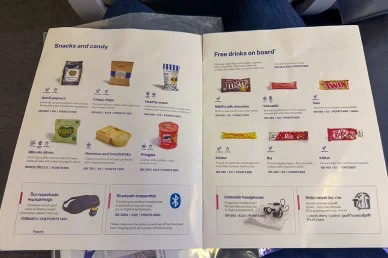
In economy class, passengers can order food or purchase light meals from the onboard menu during the flight
In Saga Premium, Icelandair lists complimentary meals as part of the product — that is, meals are already included.

Introducing: Saga Premium
In terms of digital comfort, Icelandair offers Wi-Fi on almost all of its jet aircraft ‘from gate to gate.’ In economy class, access can be purchased for a separate fee, and for premium segment passengers, it is free for two devices. However, the company specifies that Wi-Fi is not available on domestic flights and flights to Greenland, as other types of aircraft are used there.
Saga Club loyalty programme: how to fly more profitably?
For those who plan to use the ‘Icelandic bridge’ frequently, the airline offers the Icelandair Saga Club loyalty programme. Its internal currency is called Saga Points (or Vildarpunktar in Icelandic). This is a classic bonus system where points are accumulated for each flight and converted into real discounts or additional comfort.

Lower the Price with Saga Points | Icelandair
Points are not only awarded for Icelandair tickets. Thanks to a wide network of partners, you can earn bonuses for flights with JetBlue or Alaska Airlines, hotel reservations through Booking.com and Expedia, car rentals, and even purchases from the Saga Shop onboard. The main advantage is that your points remain valid for 4 years, giving you enough time to accumulate a significant discount.
There are several ways to spend your accumulated Saga Points:
- Ticket payment: full or partial (Points + Cash);
- Class Up: upgrade from economy to premium class;
- In-flight service: purchase of Wi-Fi or food from the Saga Shop Kitchen menu during the flight.
In addition to points, travellers can also purchase gift certificates. These can be purchased with money or the same bonuses. Such a certificate is valid for 5 years and is a great gift option for those who dream of visiting Iceland. To avoid missing out on sales and special offers, it is worth subscribing to the airline's newsletter (https://www.icelandair.com/newsletter/) and its social media accounts. Current ticket discounts and sales are also published on a special page https://www.icelandair.com/flights/special-offer/ with current ticket discounts.
There are several ways to track Icelandair flights in real time:
- The https://www.icelandair.com/support/pre-flight/flight-status/ section on the Icelandair website allows you to search by flight number or route;
- The Icelandair app (available for iOS and Android) sends push notifications about delays or gate changes;
- Third-party services for detailed technical tracking (flight map, exact landing time): https://www.flightradar24.com/ and https://www.flightaware.com/live/fleet/ICE.
Accidents and unusual situations
Icelandair has an impeccable reputation for flight safety. According to the independent rating agency AirlineRatings.com, Icelandair receives a maximum score of 7 out of 7 for safety, which means full compliance with the most stringent international requirements, ICAO standards and successful completion of all safety audits.
Icelandair operates flights in the challenging weather conditions of the North Atlantic, flying in northern latitudes where strong winds and changeable weather prevail, requiring the highest level of skill from its crews.
However, some of the most serious aviation incidents in the history of Icelandic civil aviation are associated with Icelandair's predecessors (the companies that once formed the modern carrier). It is important to note that these incidents date back to the 1950s and 1960s, when aviation regulations and technology were different:
Douglas C-47 plane crash in Héðinsfjörður, 29 May 1947. The Flugfélag Íslands (predecessor of Icelandair) plane crashed while flying from Reykjavík to Akureyri, killing 25 people on board. This is one of the most serious aviation disasters in Iceland's history;

Douglas C-47 plane crash in Héðinsfjörður, 29 May 1947
1931.aero/news - C-47 in the sea near Hafnarfjörður, 31 January 1951. Another aircraft of that time crashed into the sea while attempting to land in heavy snow, killing all 20 people on board;
- Vickers Viscount near Oslo, 14 April 1963. A Flugfélag Íslands (TF-ISU) aircraft crashed into the island of Nesøya while approaching Oslo Airport, killing 12 people;
Fokker F-27 in the Faroe Islands, 26 September 1970. During a flight from Bergen to the Faroe Islands, the aircraft crashed into a mountain near Vágar, killing eight people.

Fokker F-27 plane crash in the Faroe Islands, 26 September 1970
Baaa-acro.com/crash


Although some of the incidents listed above were fatal, Icelandair has not experienced any serious accidents involving passenger fatalities in its modern history. The closest to such situations were incidents involving partial technical failure (pressure, landing gear), but thanks to the trained crew, passenger safety was maintained. This is confirmed by an independent safety rating assessment, in which the airline has the highest score according to global standards. Here are these cases:
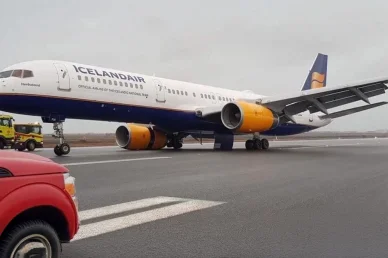
Landing on the engine — Keflavík, 7 February 2020. An Icelandair Boeing 757-200 (flight FI529) with 166 people on board suffered a failure of its right main landing gear during landing at Keflavík Airport due to strong winds and storms. The aircraft landed on its right engine/fuselage, but none of the passengers or crew were injured. After the incident, the flight was cancelled and the aircraft was temporarily taken out of service;

7 February 202 due to strong winds, the right main landing gear of a Boeing 757-200 failed, the plane landed on its right engine, no one on board was injured
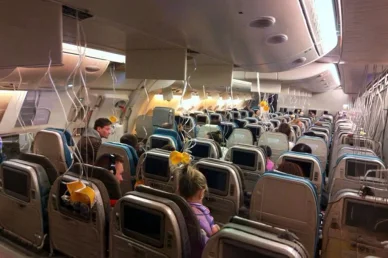
Gatechecked.com Sudden cabin pressure failure — 7 June 2023. During flight FI670 (Denver — Keflavik) on board a Boeing 757-200, the crew discovered an unfortunate problem with the cabin pressure. As a result, the aircraft was forced to make an emergency landing in Minneapolis (USA) without casualties, and the flight was later cancelled and passengers were transported on another aircraft.
 without casualties")
Sudden cabin pressure failure — 7 June 2023
Avherald.com
It is worth remembering that in civil aviation, any serious incident is investigated by independent bodies, and the results influence updates to safety rules, training and maintenance. Data on individual cases from the 1940s to the 1960s do not characterise modern operations, but are part of the historical context of aviation development in Iceland. Most of Icelandair's modern flights are incident-free, and the airline complies with international safety requirements.