Icelandic Transport Authority
The Icelandic Transport Authority is a government agency officially known in Iceland as Samgöngustofa. Its area of responsibility is the administration and supervision of aviation, maritime transport and road traffic, as well as safety control in the transport system.
In practice, people most often encounter Samgöngustofa through services related to vehicles: registration, reference information, and car ownership services. Some of these services are available online through the government portal https://island.is/, and some older online tools have been transferred there from separate sites.
The main functions of Samgöngustofa are:
- administers transport matters and supervises aviation, maritime and road transport;
- ensures safety control and supervision of transport infrastructure elements and navigation systems (within its mandate).
Official name | Samgöngustofa / Icelandic Transport Authority |
|---|---|
Status and role of the body | State supervisory and administrative body in the fields of aviation, maritime transport and road traffic |
Address | Ármúli 2, 108 Reykjavík, Iceland |
Telephone number of the Icelandic Transport Authority | |
Working hours / support hours | Weekdays 09:00–15:00 (working with clients) |
General e-mail | |
Official website |
The history of the establishment of the Icelandic Transport Authority
In the early 2010s, Iceland's transport system looked like that of many old-style European countries: each mode of transport had its own separate regulator. Aviation operated under one set of rules, the maritime sector under another, and road traffic under a third. Each structure kept its own records, issued permits, and conducted inspections.
This worked for a while. But after the 2008 financial crisis, the state began to rigorously review ineffective management models. It became clear that a fragmented system was expensive, created confusion for businesses and citizens, and made safety control difficult. It was then that government circles came up with the idea of combining the transport sectors into a single centre.

Samgöngustofa began full-fledged operations on 1 July 2013
In 2012, the Icelandic parliament passed a law establishing a single transport authority, Samgöngustofa. The document effectively abolished the separate transport administrations and transferred their powers to the new institution. Samgöngustofa began full-fledged operations on 1 July 2013.
This was not a mere change of name; for the first time, Iceland concentrated the following functions in one place:
- aviation oversight;
- maritime safety control;
- road traffic regulation;
- transport registers and licensing procedures.
The idea was simple — to make the transport system transparent, manageable and understandable for people. After the agency was established, an active transition to digital services began: car registration, change of ownership and vehicle data verification gradually moved online. For the country's residents, this meant less paperwork and fewer queues. For the state, it meant centralised control and less chaos in the data.
Over the decades, Samgöngustofa has become a key transport regulator in Iceland. Today, no decision related to licensing, safety or official transport registration can be made without its involvement.
In 2023, the agency celebrated ten years of practical work as a structure that completely changed the way the state controls the country's transport system.
Main functions of Samgöngustofa

Samgöngustofa acts as the central transport regulator in Iceland
Samgöngustofa acts as the central transport regulator in Iceland. Its powers are focused on four key areas.
- Regulation of transport activities. The Authority establishes rules for transport operators in the areas of road, sea and air transport. It implements national and international standards, sets requirements for companies and specialists, and monitors their compliance with legislation. In effect, Samgöngustofa sets the ‘rules of the game’ for the entire transport system of the country.
- Safety control. One of the main missions of the authority is to supervise the safety of transport and related systems. The goal is to reduce accidents and prevent risks to passengers and operators.
Samgöngustofa checks:
- technical condition of vehicles;
- compliance with standards in aviation and maritime sectors;
- safety of transport infrastructure and navigation systems.
- Enforcement of transport legislation. The Authority monitors compliance with transport regulations and has the power to:
- conduct inspections;
- make administrative decisions;
- apply sanctions and restrictions.
- Issuing permits and licences. Samgöngustofa is responsible for administrative admission to transport activities:
- licenses carriers;
- certifies specialists in the field of aviation and navigation;
- approves technical permits;
- maintains key transport registers.
Without these procedures, most transport services in Iceland cannot operate legally.
What types of transport does Samgöngustofa regulate?
The Icelandic Transport Authority covers all key areas of transport in the country. This is a fundamental difference in the Icelandic model: instead of several agencies, there is a single regulator. It covers three major areas: roads, air and sea.
The Authority's responsibilities include:
- road transport;
- air transport;
- maritime transport.
Each area has its own rules, registers and procedures, but they are all concentrated within a single body.
Road transport
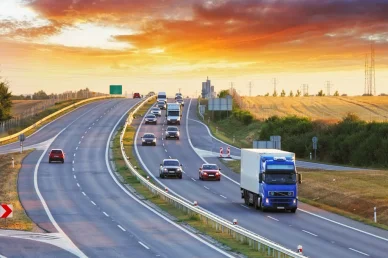
Road transport is the most visible part of everyday life
Road transport is the most visible part of everyday life. Every car driving on Icelandic roads must be registered with the state. Vehicle data is stored in the official vehicle register (ökutækjaskrá). The owner is also recorded here.
Buying or selling a car in Iceland is not just a matter of shaking hands and signing a contract. A change of ownership (eigendaskipti) must be formalised through government services administered by the Transport Authority.
The same system is used to assign number plates (bílnúmer) and carry out online data checks (uppfletting) on any vehicle. Simply enter the number and basic information becomes available.
But the Icelandic Transport Authority does not only deal with cars.
Air transport
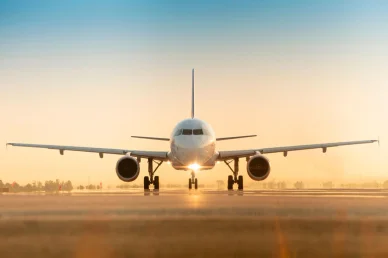
The second major area is civil aviation
The second major area is civil aviation. In a country where air travel is often the only fast way to travel between regions and the main channel for international communication, flight safety is a matter of national importance.
The Transport Authority oversees airlines, airports, aircraft technical standards, and operating procedures. It is here that pilot licences and drone operator certificates are issued. Without the approval of the Icelandic Transport Authority, no civil aviation activity can operate legally.
The Transport Authority sets and publishes rules on passenger rights, including refunds or compensation in the event of delays or cancellations under certain conditions. The authority is the point of contact for complaints and enquiries regarding air transport.
The sections on the Authority's website contain information on safety standards, materials for pilots, including safety advice and flight planning data.
Maritime transport
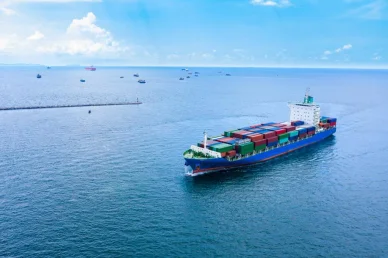
The third area is maritime transport
The third area is maritime transport. For an island country, this is no less important than roads and aviation. The administration maintains a register of ships, certifies crews and monitors the technical safety of the fleet. This applies to both commercial vessels and some private boats. It is here that the state monitors compliance with international maritime regulations and safety standards.
The Icelandic Transport Authority regulates who can work on board. This includes the legal registration of crew members and the issuance of appropriate certificates in accordance with age and professional requirements. Ships and large boats undergo regular technical inspections, registration inspections and periodic assessments. This is part of safety measures to minimise the risk of accidents and breakdowns at sea.
Control of maritime transport in Iceland is integrated into a broader international framework: the authority cooperates with international maritime organisations to ensure that national rules comply with European and global standards.
As in aviation, passengers have certain rights if a sea journey is cancelled or delayed. In such cases, passengers can file a complaint with the Icelandic Transport Authority, and the authority will consider their appeal in accordance with domestic and international rules.
In fact, the Icelandic Transport Authority (Samgöngustofa) controls all traffic in Iceland — from cars on mountain roads to planes in the sky and ships in the North Atlantic.
Obtaining a driving licence in Iceland

How to get a drivers license in Iceland.How much it cost? Step by step procedure
In Iceland, driving licences are part of a centralised transport system administered by the Icelandic Transport Authority. This authority is responsible for training, examinations and licence registration.
The basic logic for obtaining a driving licence in Iceland is as follows: first training, then examinations, then registration in the system.
- Training for general categories can begin at the age of 16.
- Licences are issued for the first time no earlier than the age of 17.
Another important point is that the state directly improves the quality of training through requirements for instructors. The rules stipulate that driving instructors must undergo training and pass an exam in the relevant category (previously, this was partly at the level of subordinate legislation).
Exchanging foreign driving licences is a separate scenario that interests most new residents. Key fact: it is possible to exchange a foreign licence for an Icelandic one after 6 months of permanent residence in Iceland.
The details depend on the country that issued the licence (whether there are agreements/recognition, whether additional tests are required). That is why it is always worth checking this process against the official description of the procedure at island.is at the time of application.
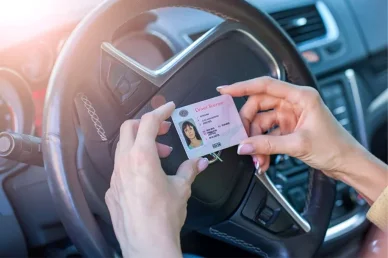
Driving licences in Iceland
Driving licences in Iceland are not valid indefinitely. Depending on the age of the driver and the category of transport, the document must be renewed regularly. For some categories, a medical certificate is mandatory, particularly for professional drivers and older age groups. This is another element of safety policy: the state regularly checks whether a person can safely drive a vehicle.
If an international driving licence is required, it is only issued to those who have a valid Icelandic licence and are over 18 years of age.
Fines and violations
The Icelandic Transport Authority is responsible for administrative supervision in the transport sector. This does not only concern classic traffic violations; the system also covers drivers, transport companies and technical requirements for transport.
In practice, Icelandic transport control can be divided into several major groups:
- Traffic violations. These include speeding, ignoring road signs, parking violations, driving without valid documents or insurance. Fines for these offences in Iceland are high by European standards, as the state deliberately makes financial responsibility tangible in order to reduce accidents;
- Violation of technical requirements for transport. Cars must meet safety standards and undergo mandatory inspections. Driving a vehicle that does not meet the requirements or does not have valid registration status may also result in penalties;
- Violations in the field of transport and licences. A separate category is companies and operators that operate without permits or violate the terms of their licences. In such cases, fines may be combined with suspension of activities or revocation of permits.
Here, the role of the Icelandic Transport Authority goes beyond ‘traffic tickets’ and becomes a full-fledged business regulator.
In Iceland, fines are specified in the Regulation on fines for traffic violations and related rules (Reglugerð nr. 1240/2019), which has been in force since 1 January 2020, and are applied as a standardised table: amount in ISK + (in some cases) driving disqualification period.
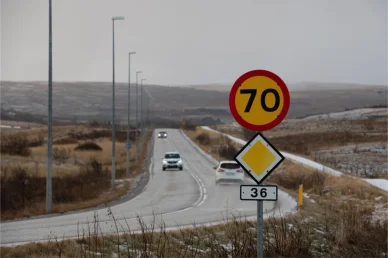
In Iceland, fines are specified in the Regulation on fines for traffic violations and related rules
Speeding: how it is calculated and how much it costs
The regulations include a table: the horizontal axis shows the permitted speed, the vertical axis shows the actual speed, and the cells show the penalty in thousands of crowns and, if necessary, the length of the driving ban in months. For example:
- Speed limit 50 km/h, driving at 66–70 km/h → fine of ISK 10,000.
- Speed limit 50 km/h, driving at 71–75 km/h → fine of ISK 20,000.
- Speed limit 50 km/h, driving at 81–85 km/h → fine of ISK 40,000.
- Speed limit 70 km/h, driving at 101–110 km/h → fine of ISK 50,000.
If it is a car with a trailer/camper, truck, bus, etc., 20% is added to the fine.
‘Everyday’ violations that drivers are often caught committing
- Running a red light — 50,000 ISK.
- Ignoring signs / no overtaking / driving against one-way traffic — typically 20,000 ISK (depending on the location).
- Headlights not on (daytime running lights/low beams are mandatory) — ISK 20,000.
- Using a phone/smart device without hands-free — ISK 40,000.
- Seat belt not fastened — ISK 20,000.
- Child without a proper child restraint device — 30,000 ISK.
- Driver failed to ensure that a passenger under 15 years of age was wearing a seat belt/restraint — 30,000 ISK.
- Driver's licence simply ‘forgotten at home’ — 10,000 ISK (this refers to ‘not having it with you’, not to the absence of a driving licence).
Drink driving: fines and driving bans
The system here is strict and very mathematical: the regulations specify scales in per mille (blood) and mg/l (breath). For the first offence:
- 0.50–0.60‰ → ISK 90,000 + 2 months' disqualification.
- 0.76–0.90‰ → ISK 120,000 + 6 months.
- 1.20–1.50‰ → ISK 180,000 + 1 year 6 months.
- 2.51‰ and above → ISK 270,000 + 3 years and 6 months.
For repeat offences, the amounts and terms increase even more (for example, from ISK 240,000 to ISK 350,000 with a driving ban of up to 5 years, depending on the blood alcohol level).
In Iceland, most administrative procedures have been digitised. Information about fines can be checked via government online services on the Ísland.is portal, which displays:
- amounts charged;
- grounds for violation;
- payment deadlines.
Payment is also made online — without visiting institutions and paperwork. The Regulations contain an important incentive: a 25% discount if a person pays the fine (including costs) within 30 days of the date of the fine/payment proposal/signature.
Then, the standard logic of government services applies: recording the violation → calculation → payment → (if necessary) objection/appeal procedure.
If the driver or company disagrees with the fine or administrative decision, the Icelandic system provides for an appeal procedure. It usually includes:
- submission of objections through official services or in writing;
- consideration of the case by the relevant authority;
- decision on cancellation, modification or confirmation of the fine.
In more complex cases, it may be necessary to refer the matter to the courts. It is important to remember that filing a complaint does not always stop the accrual or payment deadlines, so it is worth carefully checking the terms of the procedure in the official instructions.
What tourists should know about the Icelandic Transport Authority

How to get around Iceland - Transportation Options
Travelling around Iceland almost always means driving: a rental car, mountain serpentines, empty roads between waterfalls and volcanoes. And it is here that tourists most often encounter the Icelandic transport system for the first time.
Everything related to rules, safety, and administrative control goes through the Icelandic Transport Authority (Samgöngustofa). This is not an authority ‘for locals’; its decisions directly affect visitors to the country.
The first thing that surprises tourists is the strict speed control. Cameras are located not only near cities but also on roads in the middle of nowhere, and speeding is recorded automatically. If the car is rented, the fine is first sent to the rental company, which then bills the driver along with a service fee. It is practically impossible to avoid this.
The second classic trap is headlights. In Iceland, lights must be on at all times: during the day, in fog, in sunshine, in summer and in winter. This rule is not for bad weather, but a constant requirement. Many tourists are used to driving differently and therefore regularly receive fines in the first days of their trip.
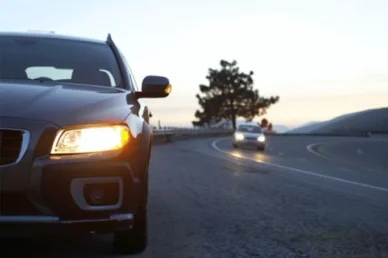
In Iceland, lights must be on at all times: during the day, in fog, in sunshine, in summer and in winter
Seat belts and child transport are also strictly enforced here. All passengers without exception must wear seat belts, and children must be in certified car seats. The responsibility lies with the driver, regardless of who is sitting in the back seat.
Another thing that often seems trivial but is costly is holding a phone in your hands. Even a quick glance at the screen without a hands-free device is considered a violation. The Icelandic police and automatic control are not lenient here.
Mountain roads marked with an F deserve special attention. They look like ordinary routes on the map, but are actually only intended for four-wheel drive vehicles. Often there are river crossings and a complete lack of services. Driving on such a road in a regular car can mean not only a breakdown, but also a refusal by the insurance company to pay compensation.
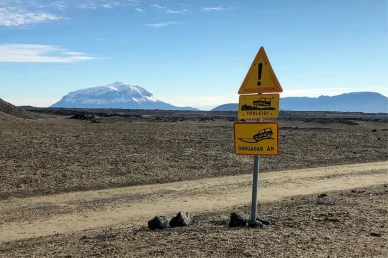
Mountain roads marked with an F deserve special attention
And most importantly, tourist status does not exempt you from responsibility. Fines are imposed on foreigners in the same way as on residents of the country. They are deducted from rental car deposits or issued as separate bills. Ignoring payments can create problems when re-entering Iceland.
The Icelandic transport system is strict but fair: the rules are the same for everyone. If you follow them, your trip will be smooth. If not, it will quickly become very expensive.
Tips for tourists
- Always adhere to speed limits — cameras are in operation throughout the country.
- Keep your headlights on at all times, regardless of the time of day or weather conditions.
- Always fasten your seat belts and use child seats.
- Do not use a handheld phone while driving; use hands-free only.
- Check the type of road before you drive: routes marked with an F are only accessible to four-wheel drive vehicles.
- Read the car rental terms and conditions carefully.
- Tourists are subject to the same penalties as local residents for breaking the rules.
- For official information on rules, fines and transport procedures, use the government portal or contact the Icelandic Transport Authority.
Contacts for working hours
Address | Ármúli 2, 108 Reykjavík |
|---|---|
Opening hours | 9am to 3pm on weekdays |
Social security number | 540513-1040 |
Telephone | |
Social media