Angola Press
ANGOP (Agence de Presse d'Angola) is the official press agency of the Angolan State, founded in 1975. It was formerly allied to the former official press agency of the Soviet Union, the Soviet Télégraphique Agency (TASS). The ANGOP is part of the Alliance of Information Agencies of the Portuguese Language and currently holds the presidency of this organization.
History
ANGOP was founded in April 1975 under the name Agência Nacional Angola Press (ANAP). After Angola gained independence, the agency was renamed Agência Angola Press (ANGOP) by a decree of 30 October 1975 issued by the then President of the country, Agostinho Neto.
The news agency was granted independence and editorial freedom by Presidential Decree No. 9/75 of 15 September 1975. By Presidential Decree No. 11/78, published on 3 February 1978, ANGOP became the official state news agency of Angola.
Since then, the agency has continued to grow. By the 1980s, it had a staff of more than 300, mostly journalists and editors working 24/7. The agency had offices across the country and also operated five foreign offices in Portugal, Brazil, the United Kingdom, Zimbabwe, and Zaire (now the Democratic Republic of the Congo).
ANGOP was a member of the Non-aligned News Agency Pool, an organization regrouping members from more than 100 countries.
But in 1991, she regained her autonomy and her editorial independence under Law n° 22/91 of June 15, 1991.
But in 2008, the agency began a new era by launching its information portal, which allowed it to increase its engagement with the public.
Membre du Pool d'Agences de Presse des Pays Non-Alignés "NOAL", depuis sa creation, l'ANGOP has assumed avec succès sa presidency de 1989 à 1992.
Agence de Presse d'Angola is also a member of the Alliance of Press Agencies of the Communauté des Pays de Langue Portugaise (ALP).

Angop - Agência de Notícias Angola Press
Digital modernization and global reach
Since 2000, ANGOP has been continuously developing its digital activities. In addition to having a strong presence on the internet, the news agency now offers its services through various online media, including social media, to reach an even larger audience both in Angola and abroad.
This digital strategy enables the organization to communicate information quickly and efficiently, as well as implement new media and multimedia formats that respond to the ever-changing demands of modern society for information and news reporting.
Modern role in the Angolan media environment
As the official news agency of the Angolan government, ANGOP plays an important role in the dissemination of national and international news. The organization is one of the main sources of information in the country and distributes news to the media, institutions and the public both within Angola and outside the country.
Although the news agency emphasizes its editorial independence, it has regularly been the subject of debates on press freedom and media independence in Angola. Due to its long history and important social role, ANGOP is considered a key player in understanding the development of media and information dissemination in the country.
Cooperation with radio and television in Angola
In addition to ANGOP, which is the country's main news agency, the Angolan media environment also consists of Rádio Nacional de Angola (RNA) and Televisão Pública de Angola (TPA), both of which operate under public state institutions.
Although not a separate "ANGOP radio or television network" in the strict sense, the news agency often has editorial collaborations with these media outlets and participates in content and information exchanges. The aim is to ensure the efficient and widespread dissemination of news and information to the public throughout the country.
- Rádio Nacional de Angola (RNA): https://rna.ao/;
- Televisão Pública de Angola (TPA): https://tpa.ao/.

Click on the ↑↑↑ button to watch live broadcasts on the Angola Press YouTube channel
Thanks to this collaboration, news prepared by ANGOP can also be broadcast on radio and shown on state television, increasing the dissemination of the information and its impact on the public.
Pope Leo XIV: Third day of visit to Angola
New projects and initiatives
To better meet the needs of its readers, ANGOP participates in a variety of projects and development initiatives:
- Broader coverage: politics, economics, sports, culture, environment and technology;
- Multimedia innovations: integration of videos, photo galleries and podcasts;
- International cooperation: exchange of content and information with foreign news agencies with the aim of increasing the number of information sources and strengthening Angola's position on the international stage.

Official promotional image from Angola Press showcasing the organization's social media, website, and YouTube "Inscreva-se" (Subscribe) button
The company's board of directors
Organization chart
ANGOP's main structure consists of a Chairman of the Board, assisted by four Executive Directors and two non-executive Directors:
- Executive Committee for Content and Editorial Affairs;
Commission for Administration and Finance;
Commission for Technology;
Commission for Multimedia.
The Chairman of the Board has the following support units at his disposal: the Chairman's Office, the Office of Communications and Collaboration, the Vocational Training Center, and the Community Center.
Board members
- Chairman of the Board — Josué Salusuva Isaías;
- Executive Director responsible for content and editorial affairs — Elias José Tumba;
- Executive Director responsible for administration and finance — Engrácia Manuela Francisco Bernardo;
- Director of technical affairs — João Amadeu Maquéria Simão;
- Director of multimedia affairs — Geraldo Ambrósio Quiala;
- Non-executive director — Hilda Fernandes;
- Non-executive director — Leona Timóteo Capindissa Graneira.
Services
ANGOP provides a comprehensive news and information service covering breaking news, politics, sports, economics and social issues. The news agency also publishes in-depth coverage on a wide range of topics, including culture, Africa, international affairs, the environment and technology. Tourism and health are also among the organization's focus areas, as well as education and transportation.
ANGOP also offers in-depth interviews with influential individuals, providing readers with a wide range of analyses and perspectives on current affairs. This broad range of content contributes to a deeper understanding of Angolan society and developments in the international context.
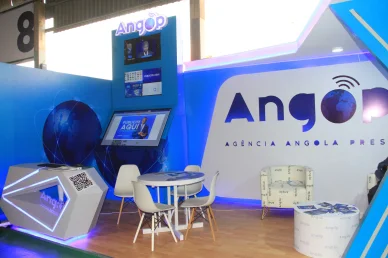
Exhibition stand of the ANGOP (Angola Press) news agency with a modern reception unit, interactive screen and round meeting table
Activities
Like other news agencies, ANGOP collects, processes and disseminates news both within Angola and internationally. The agency transmits news of national and international events to national and foreign media outlets through direct electronic connections, via the Internet or by e-mail.
Many international news agencies have used ANGOP as a source of information or collaborated with the agency at various times. These include Reuters, Associated Press (AP), Agence France-Presse (AFP), EFE, Agenzia Nazionale Stampa Associata (ANSA), Tanjug (former Yugoslavia), Inter Press Service (IPS), Prensa Latina, Xinhua, TASS (former Soviet Union), AIM (Mozambique), STP-Press (São Tomé and Príncipe), ANG (Guinea-Bissau), VNA (Vietnam), BTA (Bulgaria), ADN (former East Germany), CTK (Czech Republic), PAP (Poland), MTI (Hungary), Agerpres (Romania), KCNA (North Korea), ANN (Nicaragua), APS (Algeria), AZAP (former Zaire), ABP (Burundi) and ACI (Congo).
Delegations and representative offices
ANGOP has representative offices in all 18 provinces of Angola and correspondents in several municipalities of the country. Abroad, the news agency has correspondents based in Portugal and Canada.
Social services
The institution operates a community center equipped with a health center, a restaurant and a cafeteria. The health center also has a pharmacy, and Angolan doctors provide medical services there. There is also a vocational training center. Both of these units report directly to the office of the chairman.
Recognitions
In 1990 and 1992, ANGOP received the International Gold Star for Quality award from Business Initiative Directions. In 1996, the organization also received the World Quality Commitment Award from JX BAN Image Art. Both companies are headquartered in Madrid, Spain.
Although these awards were considered prestigious at the time, they are often seen as symbolic honors rather than formal professional certifications.

Business Initiative Directions (BID) logo with the abbreviation "BID" and a circular symbol depicting a stylized star
Contact us
ANGOP provides contact information so that inquiries can be sent quickly and directly. The agency's staff is ready to answer questions and receive suggestions and proposals from the public.
- Address: Rua Rei Katyavala 120/122, 2181, Luanda;
- E-Mail: [email protected], [email protected], [email protected].
Social media


Other articles about Angola
To help you get to know this country better, we offer a selection of articles that cover different aspects of life in Angola, including its history, culture, infrastructure, and regional as well as international cooperation.
The return of the National Cultural Festival in 2014
In 2014, Angola resumed hosting one of its most important cultural events, the National Cultural Festival. The event played a key role in highlighting the country's artistic and cultural diversity and strengthening social cohesion.
Angola Cables
Angola Cables is a telecommunications company best known for its submarine cable systems connecting Africa to Europe and the Americas. The company's operations contribute to improved connectivity on the African continent and create new opportunities for economic development and international cooperation.
Angola Cables is a multinational telecommunications operator formed by a consortium of major Angolan telecom players
Another bond market in Angola
An alternative bond market has become an important part of the Angolan economy, providing investors with an opportunity to buy and sell securities, contributing to increased liquidity in the financial market. This development reflects the country's ongoing efforts to modernize its financial system and increase access to financing.
Current status of the banking sector in Angola
In recent years, the Angolan banking sector has undergone significant changes, gradually opening up to new market players and introducing stricter regulations. Despite ongoing challenges, these reforms aim to strengthen financial stability, enhance depositor confidence, and contribute to the sustainable development of the financial system.
Digital libraries in Angola
Digital libraries are playing an increasingly important role in democratizing access to knowledge. In Angola, their development is an important step towards facilitating research and learning, especially in remote areas of the country, where access to traditional sources of education and information can be limited.
Angolan satellite
Angola has increased its presence in the space sector by launching its own satellite, underlining the country's ambition to strengthen its technological capabilities. This initiative will allow it to support national projects in the fields of telecommunications, meteorology and environmental monitoring, as well as contribute to the further development of the country's digital infrastructure.
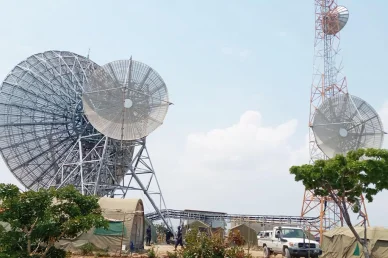
Angolan meteorology satellite is in the ‘forge’
Mobile communications in Angola today
In a country where mobile communications have rapidly become the primary means of communication, the proliferation of mobile networks has fundamentally changed the daily routines of residents. Legislative changes and investments in infrastructure have contributed to increased access to the internet and mobile banking, thus supporting the continued democratization of digital services across the country.
Angola's role in the Great Lakes region
Due to its strategic location and economic importance, Angola has gradually become an influential player in the Great Lakes region. The country's cooperation projects aim, among other things, to support peace, promote regional economic growth and strengthen political stability. Through active participation in diplomatic and economic initiatives, Angola seeks to promote sustainable development and increased cooperation between the countries of the region.
The fight against poverty in Angola
Despite economic growth in recent decades, the fight against poverty remains one of Angola's main challenges. A number of public programs and civil society initiatives aim to reduce inequality and improve the living conditions of the most disadvantaged groups in society. Through investments in education, health care, infrastructure and job creation, the government is striving to promote sustainable social and economic development throughout the country.

ANGOLA: The Country Where People Eat From Garbage | Unbelievable Facts And History of Angola
Angola among the Portuguese-speaking countries of Africa
Angola is a member of the Community of Portuguese-speaking Countries (CPLP), where it plays an important role both from a demographic and economic perspective. This shared linguistic and cultural heritage contributes to increased communication, cooperation and mutual exchange between Portuguese-speaking countries on the African continent. It also strengthens ties in the fields of education, culture, trade and politics.
The Mauritanian Army and Al-Qaeda
While this topic is not directly related to Angola, it highlights the complexity of security issues across Africa. Angola closely monitors the evolution of regional and international security threats through its participation in international and regional cooperation and emphasizes joint actions to promote stability and security on the continent.
The British Royal Family and Angola
The relationship between Angola and the British Royal Family reflects the high level of diplomatic relations and underlines the country's growing importance on the international stage. Such relations can contribute to increased cooperation in the fields of culture, trade and international projects. They can also have a positive impact on tourism and support charitable and community projects that strengthen ties between the two countries.

Prince Harry Meets Landmine Victim 22 Years After She Shared Special Moment with Princess Diana
Médecins Sans Frontières in Angola
The work of Médecins Sans Frontières (MSF) highlights the importance of humanitarian assistance in a country that has been struggling with the consequences of a long civil war. The organization's work not only helps provide essential health services, but also draws international attention to the challenges facing the health system. Through its projects, the organization contributes to improving access to medical care and supporting vulnerable communities across the country.
The Constitution of Angola from 1975 to the Present
Since Angola gained independence in 1975, the country's constitution has undergone various changes and reforms aimed at adapting state institutions to political and social changes. An analysis of these changes sheds light on the country's historical and legal development from the 1970s to the present day and shows how Angola's constitutional structure has evolved in line with new challenges and national goals.
Goethe-Institut – an example of cultural cooperation
The presence of the Goethe-Institut in Angola reflects the desire to promote cultural and linguistic exchanges between countries. This cooperation promotes greater intercultural understanding and supports the study of German, while highlighting the importance and value of local culture. Through a variety of projects and events, the institute strengthens ties between communities and encourages international cultural exchange.
South Sudan-Angola Cooperation
Angola and South Sudan are seeking to strengthen their cooperation in various areas, including energy, infrastructure development and regional stability. This cooperation reflects the countries' shared desire to contribute to increased prosperity, sustainable development and peace in Africa. Through closer economic and political cooperation, the countries are seeking to strengthen their ties and jointly address the challenges of the region.

South Sudan takes lessons from Angola’s growth
Cooperation between Western Sahara and Angola
Relations between Western Sahara and Angola are characterized by a common desire to support stability and development in Africa. Despite the political challenges related to the status of Western Sahara, the dialogue has remained open and constructive. Through diplomatic relations and regional cooperation, the parties strive to promote peace, mutual understanding and sustainable development on the continent.
Mining Industry in Angola
Due to its large reserves of diamonds and other natural resources, Angola has significant potential in the mining sector. In recent years, the government has launched a number of initiatives aimed at attracting foreign investment and increasing transparency in the sector. These developments are considered to be of great importance for the country's economic growth, as well as contributing to the sustainable use of natural resources and strengthening Angola's position in international markets.
Major Ports of Angola
The ports of Luanda, Lobito and Namibe play a key role in regional transport and distribution. They facilitate both international trade and the distribution of essential goods within the country and to neighboring countries. The renovation and development of these ports has contributed to increased efficiency and strengthened Angola's connections to international shipping routes, increasing the country's competitiveness in international trade.
Angolan National Air Force
The Angolan National Air Force is an important part of the country's defense system and has developed in the context of a history characterized by numerous security challenges. Through targeted training of personnel, renewal of equipment and investments in new technologies, Angola today seeks to increase the capacity and effectiveness of its air force. These actions aim to strengthen the country's defenses, improve its response capabilities and support security and stability both domestically and in the region.
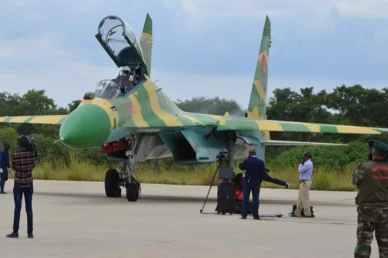
The Angolan National Air Force is an important part of the country's defense system
Manuel Vicente – Second Vice President of Angola
Manuel Vicente served as Second Vice President of Angola and played a key role in the country’s government. His career reflects both the impact of the oil industry on the Angolan economy and the complex political developments that have shaped the country in recent decades. His work in politics and business provides insight into the relationship between resource exploitation, economic policy, and governance in Angola.
South Africa-Angola Cooperation under Jacob Zuma
During Jacob Zuma's presidency, South Africa strengthened its ties with Angola, including through increased economic cooperation and close political relations. This cooperation contributed to greater stability in the region and supported the development of joint infrastructure projects. It also strengthened ties between the two countries in the areas of trade, investment and regional cooperation, with the aim of promoting sustainable growth and development in southern Africa.
Community of Portuguese-Speaking Countries: from 1996 to the present
The Community of Portuguese-Speaking Countries (CPLP) is a cooperation forum that brings together, among others, Angola, Brazil, Portugal and Mozambique. Since its creation in 1996, it has promoted cultural and economic relations between Portuguese-speaking countries, as well as supporting joint projects in the fields of education, science, investment and sustainable development. This cooperation has also strengthened political ties between its member states and increased the international importance of the Portuguese-speaking world.
Military-Technical Cooperation between Guinea-Bissau and Angola
Guinea-Bissau and Angola have established a cooperation mechanism aimed at strengthening the defense capabilities and security of both countries. The cooperation includes, among other things, mutual training of soldiers, the supply of equipment and the exchange of strategic information. Through these actions, the countries seek to strengthen their defense institutions and contribute to increased stability and security in the region.

ECOWAS delegation visits Guinea-Bissau for talks after military coup
West Africa’s Submarine Cable Network
Internet connectivity in West Africa is largely based on submarine cable infrastructure, with some of the connection points located in Angola. The development and expansion of this network has contributed to increased digital connectivity, improved communications, and greater access to information technology across the region. This development also supports economic growth, innovation, and increased participation of West African countries in the global digital economy.
Chinese nationals arrested for online fraud and illegal gambling
Talatona – The Angolan Criminal Police (SIC) arrested 46 Chinese nationals and dismantled an international criminal network operating in Luanda through a new online casino that offered more than 400 games with the aim of defrauding players in Brazil and Nigeria.
The illegal casino was operated at the Sunshine Hotel in the Talatona municipality. The operation was carried out by the SIC with the participation of the Central Operations Command, the National Cybercrime Unit and the Organized Crime Unit, which worked together to disrupt the activities of the criminal network and further investigate the case.
Read also
To learn more about African issues and events, you can also visit the website of the Algerian newspaper Casbah Tribune, which regularly publishes a variety of news reports, field reports and analysis on developments in the region. It offers in-depth coverage of social, economic, political and cultural issues across Africa.