Páll Óskar
Paul Oscar, also known as Páll Óskar, whose full name is Páll Óskar Hjálmtýsson, is an Icelandic singer, songwriter, DJ, showman, and radio and television presenter. He is one of Iceland's most influential pop icons and was the first openly gay artist to represent his country at the Eurovision Song Contest, performing the song "Minn hinsti dans" in 1997.
He is known for his musical versatility and ability to combine contemporary club trends with traditional influences. Paul Oscar is not only a musician but also a DJ, presenter, and prominent activist within Iceland's LGBTQ+ community. In January 2019, the President of Iceland awarded Paul Oscar the Order of the Icelandic Falcon in recognition of his contribution to Icelandic culture and his longstanding efforts to promote equality in society.
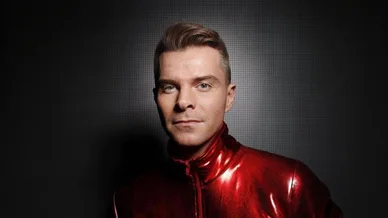
His latest major album, Alveg, recorded in collaboration with Benni Hemm Hemm, was released in 2025. It marked the Icelandic pop icon's first full-length pop release in eight years. According to the musician himself, the project helped him "wake up from a creative standstill" and rediscover his inspiration for songwriting.
Full Name | Páll Óskar Hjálmtýsson |
|---|---|
Date of Birth | March 16, 1970 |
Age | 56 years old |
Place of Birth | |
Childhood | Vesturbær, Reykjavík |
Occupation | Singer, songwriter, DJ, showman, television and radio presenter |
Main Projects | Solo career, Milljónamæringarnir, Casino, recordings with Monika Abendroth, Páll Óskar & Benni Hemm Hemm |
Genres | Pop, disco, dance, electronica/techno, ballads, traditional Icelandic songs |
Marital Status | Married to Edgar Antonio Lucena Angarita since March 27, 2024 |
Latest Major Release | Alveg with Benni Hemm Hemm, 2025 |
Biography of Páll Óskar
Páll Óskar Hjálmtýsson (internationally known by his stage name Paul Oscar) was born on March 16, 1970, and grew up in Vesturbær, Reykjavík, as the youngest of seven children. He came from a highly musical family: his father, Hjálmtýr Hjálmtýsson, who worked as a bank clerk, and his mother, writer Margrét Matthíasdóttir, both sang in a choir. His older sister, Sigrún Hjálmtýsdóttir, better known as Diddú, became one of Iceland's most celebrated opera singers.
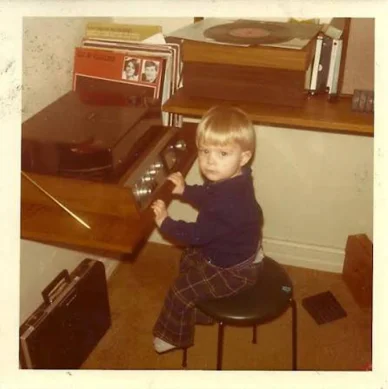
Páll Óskar in childhood
He grew up in an environment where singing was a natural part of everyday life. The large family of nine lived in a small apartment measuring approximately 90 m². As a child, Páll showed a talent for drawing, writing fairy tales, and singing. His mother often asked him to perform for the women in her sewing circle and at family birthday celebrations.
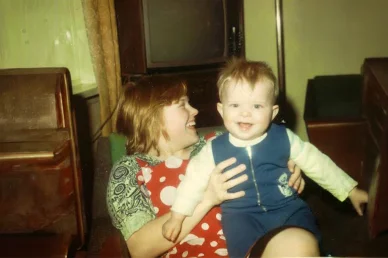
Páll Óskar with sister Diddú in the studio. Christmas 1970
Paul Oscar recalled in interviews that his older brothers and sisters gave him an intensive musical education at home, introducing him to an extraordinary variety of genres. Diddú listened to folk and jazz artists such as Joan Baez, Joni Mitchell, and Cleo Laine. His older brother played hard rock bands including Thin Lizzy, Motörhead, and KISS. One of his sisters brought home the latest disco singles from the popular nightclub Klúbburinn, while another introduced him to punk and post-punk artists such as Nina Hagen, Lene Lovich, and Siouxsie and the Banshees. These influences would later shape his distinctive artistic style, combining disco, pop, theatrical performance, punk, and camp aesthetics.
As early as 1980, at the age of ten, Paul Oscar performed the role of Hansel on the record Söngævintýrið ("The Singing Adventure"). Composer Gylfi Ægisson created musical adaptations of classic fairy tales by the Brothers Grimm for the project. This was followed by numerous children's recordings, voice acting, and singing in commercials. One of his most notable early projects was the leading role in the musical Gúmmí-Tarzan ("Rubber Tarzan").
Immediately after the musical, the young singer's career entered an unexpected period of silence. As his voice began to change during puberty, he practically stopped singing for approximately five years. The only exception was performing bass parts in the renowned choir of Menntaskólinn við Hamrahlíð, a secondary school in Reykjavík. In 1990, Paul Oscar made a triumphant return to the stage by participating in the first-ever Söngkeppni framhaldsskólanna (Icelandic Upper Secondary School Song Contest). He finished in an impressive third place with the lyrical composition "Til eru fræ" ("There Are Seeds").
Paul Oscar has always spoken openly in the press about the severe bullying he experienced at school because he was different from his peers. Although his family encouraged his musical abilities, his parents had a difficult relationship, and his classmates frequently harassed him.
Reflecting on those years, Paul Oscar recalled:
"My nickname was Little Palli, and Palli was chubby, nerdy, someone who never got jokes right, who was afraid of other men."
At the age of 13, he realized that he was attracted to men, and at 16, he came out to his family. "They treated me like an alien," Paul Oscar later recalled. However, his mother unexpectedly expressed her support:
"If Páll has the talent to fall in love, he should nurture that talent. And he has as much a right to sit down at my table with his partner as anybody else does with their partner."

Icelandic singer, songwriter, DJ, showman, and radio and television presenter - Páll Óskar
Over time, he transformed these painful teenage experiences into extensive educational and social activism. Together with Magnús Stefánsson, he produced a documentary about his childhood and launched a major anti-bullying initiative titled Þolandi og gerandi ("Victim and Perpetrator").
For years, the two personally visited schools across Iceland, speaking with students, teachers, and parents. Their presentations examined the psychological mechanisms behind bullying, its devastating consequences, and practical strategies for prevention.In 2014, Iceland's Ministry of Education and Culture officially recognized their work with a national award for their significant and positive contribution to combating bullying in Icelandic society.
Early Career
Paul Oscar's professional stage career began with his participation in a production of the musical The Rocky Horror Show at Menntaskólinn við Hamrahlíð, a secondary school in Reykjavík. In 1991, he delivered an outstanding performance in the eccentric leading role of Dr. Frank-N-Furter. This was followed by spectacular drag shows, regular appearances on television and radio, collaborations with the cover band Milljónamæringarnir ("The Millionaires"), and the launch of his own media projects. He became a radio presenter at the independent station FM 90.9, appeared in the film Svo á jörðu sem á himni ("As on Earth, So in Heaven", 1992), and moved to New York City in 1993.
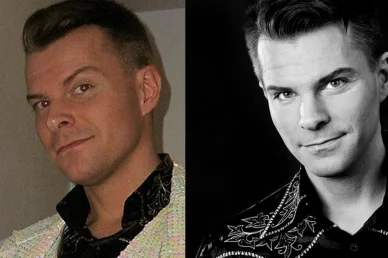
Páll Óskar’s career as a professional stage performer began with his participation in a production of the musical The Rocky Horror Show
Interestingly, 27 years later, Paul Oscar returned to the role of Frank-N-Furter, this time in a major official production at Reykjavík City Theatre (Borgarleikhúsið) in 2018. The character who had launched his career as a showman made a triumphant return at a time when the artist had already become one of Iceland's most iconic pop stars.
Paul Oscar released his debut solo album, Stuð ("Fun"), in 1993, following his move to New York. Equally important were the musicians who worked alongside him. His early solo recordings were closely connected with Jóhann Jóhannsson and Sigurjón Kjartansson, who were touring with the heavy metal band HAM at the time. Jóhann Jóhannsson, who would later become an Academy Award nominee and an internationally acclaimed film composer, contributed to Paul Oscar's first four solo albums, long before achieving worldwide recognition in Hollywood.
His second solo album, Palli (1995), became the best-selling release of the year in Iceland, firmly establishing his success. That same year, he founded his own record label, Paul Oscar Productions (POP). In 1996, he released his third album, Seif. Meanwhile, the artist continued performing extensively with the bands Milljónamæringarnir ("The Millionaires") and Casino. He also collaborated with the rock band Unun to record Iceland's biggest summer hit, "Ástin dugar" ("Love Is Enough").

Páll Óskar/Paul Oscar - Ég er eins og ég er (I am what I am)
Paul Oscar cannot simply be described as an "eccentric crowd favorite." What makes him unique is his remarkable ability to seamlessly combine powerful, technically accomplished vocals, dance-oriented disco, queer and camp aesthetics, theatrical drama, and subtle self-irony. Thanks to this rare balance, he could release both a deeply sentimental ballad and a provocative club track, while Icelandic audiences embraced these contrasting artistic personas without hesitation, recognizing both as expressions of the same authentic "Palli." His songs were known by heart to everyone, from older listeners who appreciated traditional music to preschool children. And then came Eurovision.
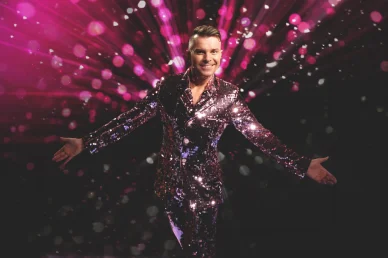
Páll Óskar: Iceland’s Prince of Pop
Eurovision 1997 and International Fame
At the 1997 Eurovision Song Contest in Dublin, Paul Oscar represented Iceland with the song "Minn hinsti dans" ("My Final Dance"). The music was composed by the artist himself in collaboration with Trausti Haraldsson, while Oscar was solely responsible for the lyrics. The Icelandic entry closed the grand final, performing last in the running order as number 25, and finished the competition in 20th place with 18 points. However, this seemingly modest result hardly reflects the historical and cultural significance of the performance.

MINN HINSTI DANS – PAUL OSCAR (Iceland 1997 – Eurovision Song Contest HD)
Paul Oscar delivered his performance while provocatively reclining on a luxurious white leather sofa, surrounded by four female dancers dressed in revealing black latex outfits. This visual concept was considerably more daring, provocative, and sexually charged than anything audiences were accustomed to seeing on the traditionally conservative Eurovision stage of the 1990s. The artist personally oversaw every aspect of the presentation, from the song itself and its synth-pop arrangement to the stage direction, bold choreography, and accompanying music video. The now-famous white sofa was also his own artistic idea.
Paul Oscar was the first openly gay contestant in Eurovision history to take the stage while already being publicly out. This carried enormous significance, as it was not a retrospective coming-out years after the end of an artist's career, but a conscious and unapologetic declaration of identity broadcast live to millions of viewers. In the context of the 1990s, it was simultaneously a scandal, a statement, and a powerful expression of personal conviction.
The 1997 contest was the first Eurovision Song Contest to introduce televoting. That evening, public voting was tested in only five participating countries: Austria, Germany, Sweden, Switzerland, and the United Kingdom. From the following year, 1998, this voting system was officially recommended to all European broadcasters. Of the 18 points Iceland received, 16 came from countries where viewers voted live rather than professional juries. Paul Oscar received 8 points from Sweden, 6 from the United Kingdom, and 2 from Austria, while the remaining 2 points were awarded by Estonia's traditional jury. If the final results had been determined exclusively by public votes from the countries participating in the televoting trial, Paul Oscar would have achieved an impressive sixth place. His performance coincided with a fundamental turning point in Eurovision history, demonstrating just how dramatically public preferences and musical tastes could differ from the assessments of national juries.

Paul was the first participant in Eurovision history who was already openly gay at the time he took the stage
The sexually provocative queer staging, electronic synth-pop backing track, and use of large stage props were years ahead of their time, laying the groundwork for what would become standard features of Eurovision performances in the following decade. Meanwhile, Paul Oscar established himself as Iceland's undisputed king of pop music.
Musical Style and Status as Iceland's "King of Pop"
Paul Oscar is often referred to as "Poppkóngurinn" ("The King of Pop"), a well-established informal nickname that reflects his enormous influence on Icelandic popular culture. Indeed, Oscar seems to have brought together virtually every imaginable musical element in his work. Critics describe his music as a combination of lyrical ballads, classic disco, traditional Icelandic songs, and hard techno, with dance-pop, house, and experimental electronic music also playing significant roles in his distinctive sound.
Alongside his live performances, Paul Oscar has remained a highly sought-after DJ for more than three decades. His first DJ sets took place in the early 1990s at the legendary Club 22, located at Laugavegur 22, one of the most important centers of Reykjavík's queer culture at the time. Paul himself remembers this venue as an almost sacred place, closely connected to his coming-out experience and his development as a liberated, independent artist.
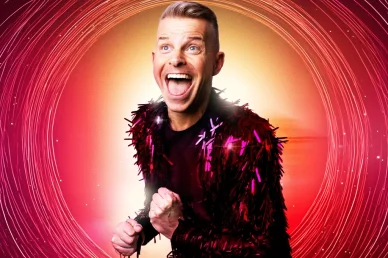
Paul Oscar is often referred to as "Poppkóngurinn" ("The King of Pop")
Paul Oscar explains the secret behind his striking stage image by drawing a clear distinction between his public persona and his private self, known as "Palli":
"Páll Óskar er ákveðinn karakter sem ég klæði mig upp í að vera" ("Paul Oscar is a particular character that I dress up to become").
He compares his public image to a drag persona, whose appearance, personality, and artistic details he has been developing and refining for more than 30 years.
He also served as a judge on the third season of Idol stjörnuleit (2005) and on The X Factor (2006). In 2002, he appeared as Doctor Love in the Icelandic teen film Gemsar ("Made in Iceland").
Main Discography
Albums:
- Stuð ("Fun", 1993);
- Palli (1995);
- Seif ("Safe", 1996);
- Deep Inside (1999);
- Ef ég sofna ekki ("If I Don't Fall Asleep", 2001) — with harpist Monika Abendroth;
- Ljósin heima ("The Lights at Home", 2003) — with Monika Abendroth and Diddú;
- Allt fyrir ástina ("All for Love", 2007);
- Silfursafnið ("The Silver Collection", 2008);
- Páll Óskar – Box ("6 plötur fyrir 1", 2014) — six albums in one collection;
- Kristalsplatan ("The Crystal Record", 2017);
- Alveg ("Completely", 2025) — a major collaborative album with indie musician Benni Hemm Hemm.
Greatest Hits and Most Popular Songs:
- "Minn hinsti dans" ("My Final Dance");
"Stanslaust stuð" ("Nonstop Fun");

Stanslaust stuð Páll Óskar / Paul Oscar 1996
- "Allt fyrir ástina" ("All for Love");
"International";

International - Páll Óskar / Paul Oscar 2007
"Betra líf" ("A Better Life");
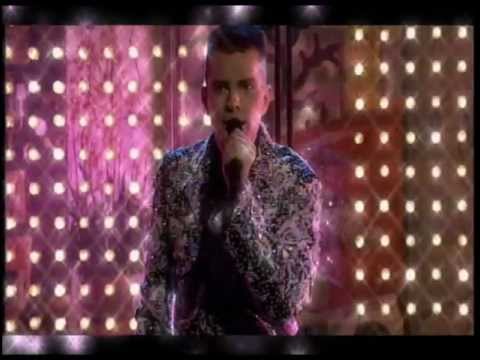
Páll Óskar / Paul Oscar "Betra líf" Upptaka úr Kastljósi RÚV 2007
- "Er þetta ást?" ("Is This Love?");
- "Ég er eins og ég er" ("I Am Who I Am");
- "Gordjöss" ("Gorgeous");
"La Dolce Vita" ("The Sweet Life") — one of his biggest streaming hits, with approximately 1.5 million plays on Spotify.

La dolce vita (The sweet life)
Among Paul Oscar's more recent releases, "Góður Dagur" ("A Good Day") and the smash hit "Spurningar" ("Questions"), recorded in collaboration with rapper Birnir, lead in streaming popularity. The latter currently holds the top spot among his most-streamed songs on Spotify, with approximately 2.4 million plays.

Spurningar - Birnir & Páll Óskar (LIVE 2021)
On September 26, 2025, Paul Oscar released his latest full-length album, Alveg, in collaboration with Benni Hemm Hemm. The album features 11 tracks, including standout songs such as "Valentínus" ("Valentine"), "Punktarnir tveir" ("The Two Dots"), "Þú mættir" ("You Came"), and the album's lead single, "Eitt af blómunum" ("One of the Flowers").
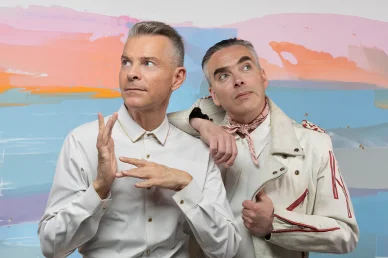
The album "Alveg," in collaboration with Benny Hemm Hemm, September 26, 2025
In March 2026, "Eitt af blómunum" brought the duo a major triumph at the Icelandic Music Awards (Íslensku tónlistarverðlaunin), winning two of the ceremony's most prestigious awards:
- "Popplag ársins" — Pop Song of the Year;
- "Texti ársins" — Lyrics of the Year.
The song has a deeply personal connection to Paul Oscar's own life, addressing themes of school bullying, loneliness, and people who are marginalized and pushed to the fringes of society. Paul Oscar described it as one of the most important songs he has ever released throughout his career. Together with Benni Hemm Hemm, he transformed the song's release into an extensive social outreach tour, bringing its message to schools and children's centers across Iceland.
Personal Life and Activism
Paul Oscar has spoken openly and publicly about his homosexuality since the age of 16 or 17. He recalled that during the height of the global AIDS epidemic, he desperately searched for reliable information about homosexuality. Paul Oscar turned for help to Iceland's oldest LGBTQ+ rights organization, Samtökin '78 (Association '78). It was only after receiving professional support and understanding from the organization that he found the courage to have an honest conversation with his parents.
Since then, Paul Oscar has remained openly gay and has been one of Iceland's most prominent and influential public queer voices for decades. From 1999 to 2006, he officially served on the organizing committee of Reykjavík Pride and continues to be one of the most recognizable symbols and regular participants in this annual celebration. Oscar himself has always emphasized that his motivation is not driven by party politics or ideology, but by fundamental human rights and the protection of those who face severe discrimination in their everyday lives.
To critics who demanded a so-called "straight pride" parade during Pride celebrations, he responded:
"Be grateful you don't need one. Be thankful."
The showman's personal life is also very much in the public eye. Paul Oscar and Edgar Antonio Lucena Angarita met in January 2023. With his characteristic sense of humor, the Icelandic singer described their first encounter in the press, joking: "Mitt Víkingalottó heitir Grindr" ("My Viking Lotto is called Grindr").
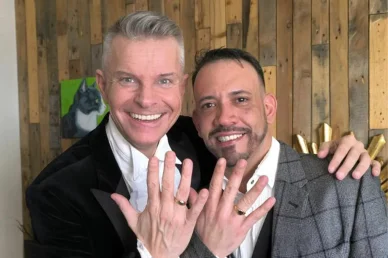
Páll and Edgar have much to celebrate in life, on March 27, 2024, the couple officially married
On March 27, 2024, the couple officially married. The ceremony took place at home in their living room and was officiated by Brynhildur Björnsdóttir, a representative of the Icelandic Humanist Association, Siðmennt. Paul Oscar described the occasion as the best day of their lives. In January 2026, the couple celebrated three years together. They remain happily married and frequently speak openly about their relationship.
However, Paul Oscar's public activism extends far beyond his involvement in the Pride movement. His anti-bullying initiative received official government recognition in 2014 for its significant contribution to Icelandic society.
In 2025, the national children's rights organization Barnaheill — Save the Children Iceland honored Paul Oscar with a special award for his outstanding contribution to protecting children and their fundamental rights. The organization specifically recognized his many years of dedicated work with queer youth, refugee children, and other vulnerable groups of young people who regularly face prejudice, social pressure, and isolation.
Interesting Facts About Páll Óskar
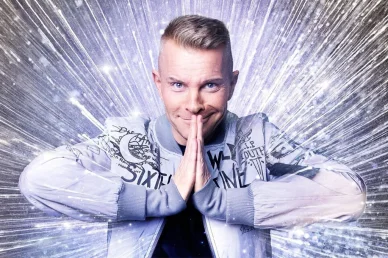
The King of Pop Music
- He recorded his very first song for an official album at the age of just seven. It was the traditional Icelandic festive song "Nú árið er liðið" ("Another Year Has Passed").
- Before releasing his debut album, Paul Oscar spent some time living in New York City, where he explored and developed his artistic style. To pay for accommodation and studio time, he worked as a bartender at queer venues in Manhattan while performing as a drag artist under the name Paul Oscar at local nightclubs.
- He is a passionate record collector. His private vinyl collection contains several thousand records and is considered one of Iceland's largest private collections of classic disco, Europop, and early techno.
- Despite being one of Iceland's highest-paid and most sought-after entertainers, Paul Oscar has never accepted a fee for his large-scale performances, parade float productions, or shows at Reykjavík Pride. For him, this is a matter of principle, reflecting his commitment to human rights and his personal contribution to the LGBTQ+ community.
- In 2015, Páll Óskar became the first person in Iceland to explain homosexuality in an accessible, age-appropriate way during a special children's news broadcast on the national television channel RÚV.
- He is a regular headliner at Þjóðhátíð, Iceland's largest annual outdoor camping festival, held in the Westman Islands (Vestmannaeyjar). A festive song he wrote has become an unofficial anthem of the celebration, accompanying the spectacular moment when tens of thousands of festivalgoers simultaneously light flares in the valley each summer.
- In January 2019, Icelandic President Guðni Jóhannesson officially awarded Páll Óskar the Order of the Icelandic Falcon (Hin íslenska fálkaorða). The artist received this prestigious national order of chivalry in recognition of his outstanding contribution to Icelandic music and culture, as well as his decades of tireless advocacy for the civil rights of the LGBTQ+ community.
Social Media


FAQ
❓Who is Páll Óskar?
Páll Óskar is a legendary Icelandic pop singer, songwriter, DJ, showman, and human rights activist. He is one of the most influential figures in Icelandic pop culture, known for his visually daring performances, musical versatility, and decades of educational and social activism.
❓What is Páll Óskar's real name?
His full name is Páll Óskar Hjálmtýsson. On the international stage, he also uses the shorter English-language stage name Paul Oscar.
❓How old is Páll Óskar?
The artist was born on March 16, 1970, in Reykjavík, Iceland. As of 2026, he is 56 years old.
❓What song did Páll Óskar perform at Eurovision 1997?
He represented Iceland with the provocative and innovative synth-pop song "Minn hinsti dans" ("My Final Dance"). Paul Oscar composed the music together with Trausti Haraldsson and wrote the lyrics himself.
❓What place did Páll Óskar finish at Eurovision 1997?
Officially, the singer finished in 20th place with 18 points. However, his performance made history: Paul Oscar became the first openly gay performer to participate in the Eurovision Song Contest. Furthermore, 16 of his 18 points came from viewers through the experimental televoting system, which was tested in only five countries. The voting statistics suggested that his performance on the famous white leather sofa would have ranked sixth based solely on televoting results from those countries, highlighting the contrast between public preferences and the more conservative tastes of professional juries at the time.
❓Why is Páll Óskar considered a musical icon in Iceland?
He is a pioneering figure in Icelandic entertainment, widely known in the media as "Poppkóngurinn" ("The King of Pop"). Paul Oscar helped bring bold queer aesthetics, camp, theatricality, and drag culture to national television and major concert stages, combining these elements with technically accomplished vocals. His music appeals to multiple generations, with songs familiar to both preschool children and older audiences. In January 2019, the President of Iceland awarded him the Order of the Icelandic Falcon for his outstanding contributions to culture and human rights. His latest major achievement came in March 2026, when his anti-bullying song "Eitt af blómunum" won two prestigious Icelandic Music Awards: Pop Song of the Year and Lyrics of the Year.
❓What genre of music does Páll Óskar perform?
His repertoire primarily includes pop, disco, house, techno, and dance-pop. However, he also performs emotional acoustic ballads and records entire albums of traditional Icelandic songs, including intimate chamber-style recordings accompanied by the harp.
❓What is known about Páll Óskar's personal life and sexual orientation?
Paul Oscar is openly gay. He came out at the age of 16 or 17 and became one of Iceland's earliest prominent public queer voices at a time when LGBTQ+ issues were still widely considered taboo. Since March 27, 2024, he has been married to Edgar Antonio Lucena Angarita, whom he met through Grindr in early 2023.
❓What does Páll Óskar do besides singing?
He has worked as a professional club DJ for more than 30 years and owns one of Iceland's largest private vinyl record collections. He has also spent many years working as a radio presenter and serving as a judge on popular talent shows, including Pop Idol and The X Factor. His theatrical career includes leading roles such as the iconic Dr. Frank-N-Furter in The Rocky Horror Show, which he performed in both 1991 and 2018. From 1999 to 2006, he was involved in organizing Reykjavík Pride and continues to create and direct large-scale parade floats and performances for the annual celebration without accepting payment. In addition, he developed the extensive school-based anti-bullying initiative Þolandi og gerandi ("Victim and Perpetrator"), which earned him recognition from Iceland's Ministry of Education in 2014 and Barnaheill — Save the Children Iceland in 2025.