David Frederick Attenborough
David Attenborough is one of those figures who changed the way humanity views the planet. He did not discover new continents or run scientific institutes, but it was through his voice and camera that millions of people saw the real life of the oceans, tropical forests, deserts and polar regions for the first time.
Attenborough is a British naturalist, television presenter and producer who has worked with the BBC for over seven decades. During this time, he has effectively created the modern genre of nature documentary. Before him, nature programmes were short educational inserts. After him, they became major film projects with scientific accuracy, complex filming and a global audience.
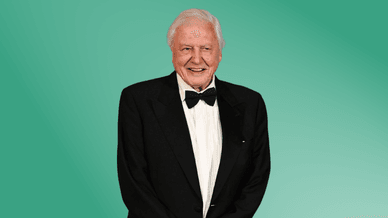
His uniqueness lies in the combination of three roles. Attenborough is not just a voiceover narrator; he is a researcher by education, a producer by profession, and a public intellectual by influence. He knows how to find scientists, work with field biologists, organise complex expeditions, and turn science into a story that is understandable to the general public.
Over the years, his work has gone far beyond television. David Attenborough has become one of the most influential voices on climate change and biodiversity loss. His films and public appeals have changed the environmental agenda in many countries. For entire generations, he has become the person who sparked their interest in nature in the first place.
Full name | Sir David Frederick Attenborough |
|---|---|
Date of birth | 8 May 1926 |
Age | 100 years old (2026) |
Place of birth | Isleworth, Middlesex, Great Britain (now London). |
Profession | Naturalist, television presenter, producer, author of books |
Education | Natural sciences, University of Cambridge |
Main area | Documentary films about nature |
Collaboration with the BBC | Since 1952 |
Leadership roles | BBC Two, Director of Programmes, BBC |
State recognition | Knighthood in 1985; Companion of Honour in 1996, Order of Merit in 2005, honorary doctorates from over 30 universities; BAFTA, Emmy, awards for contributions to science and ecology; new species of animals and plants have been named in his honour. |
Biography of David Attenborough
David Attenborough was born on 8 May 1926 in Islington, a suburb of London, but spent his childhood in Leicester. Attenborough's parents were key figures in shaping who all three sons — David, Richard and John — became.
Their father, Frederick Attenborough, was head of Leicester University College at a time when the institution was just building its academic reputation to later become a university. This meant constant communication with professors, scientists, and students from different countries. Education in this family was a way of life.
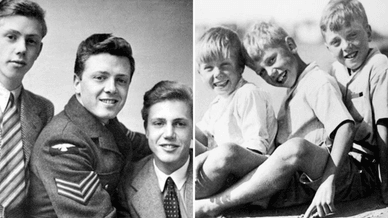
John Attenborough, Richard Attenborough and David Attenborough
Their mother, Mary Attenborough, created a calm but intellectually rich environment at home. She encouraged her children's curiosity, reading, collecting, and observing nature. There were always books in the house, and conversations about science, culture, and world events.
The family literally lived on campus. For David and his brothers, university buildings, laboratories, and libraries were part of everyday life. Teachers, scientists, and students from different countries were always visiting the house. From an early age, Attenborough grew up in an environment where education was the norm and curiosity was a value.
During World War II, the family also took in two Jewish girls who had fled Europe, saving them from Nazi persecution. For the Attenborough children, this was their first personal experience of global tragedies and people's responsibility for one another. Later, David often recalled that it was then that he first felt how closely human destinies and world events were intertwined.
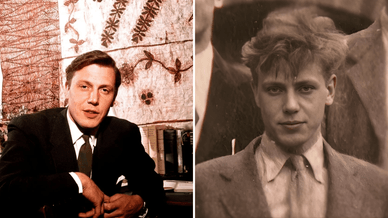
Sir David Attenborough
In such an environment, the brothers naturally developed different but strong life trajectories. One went into science and television, the second into cinema, and the third into business. But they were all united by a disciplined way of thinking, a respect for knowledge, and a habit of looking at the world with a broad perspective.
For David, this became the foundation of his future approach to nature. He did not perceive it as something romanticised or decorative. From childhood, he saw the world as a system of interrelationships — people, science, ecosystems, history. Even as a schoolboy, David Attenborough collected fossils, stones, insects, and kept home collections of minerals and shells. At the age of seven, David was already reading books on geology and natural history, and as a teenager he even organised a small ‘museum’ in his home.
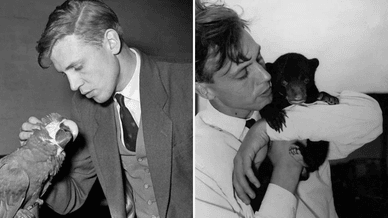
David Attenborough with animals
World War II interrupted his normal life. After school, Attenborough was drafted into the Royal Navy, where he served as an officer on ships in the North Atlantic and Mediterranean. It was during this period that he first saw the world outside Britain — different climatic zones, seas, coastlines, and the wildlife of other countries. He later said many times that these travels only strengthened his interest in the planet as a whole.
After demobilisation, David returned to education — now with a clear understanding that he wanted to pursue a career in the natural sciences.
Training and education
Academic science has always been an important part of David Attenborough's life. After school in Leicester, he enrolled at Clare College, Cambridge, where he studied natural sciences. He specialised in zoology and geology — disciplines that study living organisms and the processes of planet formation. He received his degree in 1947.
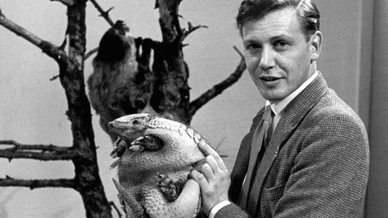
A young Sir David Attenborough at the beginning of his career at the BBC
It was a comprehensive scientific education: field research, working with biological collections, analysing ecosystems, studying the evolution of species and the interactions between them. Geological cycles, climatic processes, landscape structure. Attenborough was taught not to observe phenomena superficially, but to understand why nature works the way it does, to see nature as a complex interconnected system.
After university, he worked for a scientific publishing house for some time. He edited researchers' texts, read specialised works, and communicated with scientists from various fields. It was there that he learned to translate the complex language of science into a form that was understandable to a wide audience — a skill that would later become key to his films. It was this combination of academic discipline and the ability to explain that became the foundation of his entire future career.
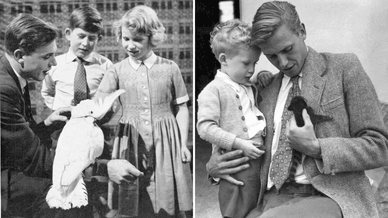
Archive photos of a young Sir David Attenborough
When David Attenborough came to television, he already thought like a naturalist: he knew how ecosystems function, why details are important, and why inaccuracy distorts the picture of the world. Therefore, from the very first programmes, he insisted on consulting with biologists, making real observations in nature, and ensuring the scientific accuracy of each story.
His major series were always built around science: species behaviour, evolution, climate, food chains, human impact on the environment. The camera in his projects did not just capture beauty (although it did that too), it explained the processes in the system.
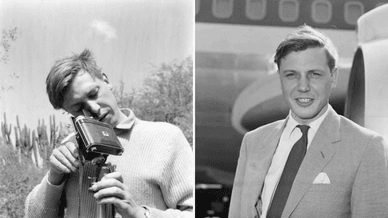
David Attenborough at the beginning of his career
That is why Attenborough was not perceived as an ordinary TV presenter. For the scientific community, he remained a colleague working in a different format. For viewers, he was a guide to the complex world of nature without simplifications or sensationalism. His education and scientific approach became the foundation of the standard of documentary filmmaking that is considered the norm today.
Career start
After university and a brief period working for a scientific publishing house, David Attenborough's career unexpectedly took a turn towards the media. In 1952, he joined the BBC, not immediately as a presenter, but initially as a trainee producer. His tasks were technical and organisational: preparing programmes, working with archives, coordinating filming, and assisting with editing.
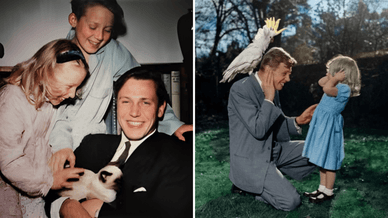
Young David Attenborough
Television was still in its infancy at that time, and nature programmes were considered niche and cheap. In the early 1950s, they consisted of short studio lectures or simple stories without expeditions or serious scientific work. It was here that David Attenborough's scientific training began to play an important role, as he saw that television could show nature in a completely different way — not as an illustration to the text, but as a living process.
In his early years, Attenborough insisted on location filming, real observations in the wild, and collaboration with scientists. It was more difficult, more expensive, and more risky, but the effect was revolutionary.
The turning point came with the launch of the programme Zoo Quest in the mid-1950s, when television showed expeditions to tropical countries, filming animals in their natural environment and working with biologists on site for the first time. Attenborough did not just host the programme — he was part of the research team.
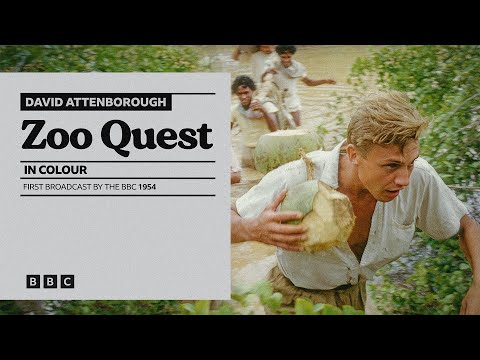
Zoo Quest in Colour | David Attenborough | BBC Select
Viewers saw something that had never been seen on screen before: live jungles, reptiles, primates, and birds in the wild, not in zoos. The format instantly became popular. From that moment on, David Attenborough's career took off. He quickly moved from intern to producer and then to management positions.
But more importantly, it was during this period that his approach to television as a tool for education through real science took shape. David Attenborough did not entertain viewers with facts; he showed processes: how animals behave, how ecosystems work, how climate, plants and humans interact. And this approach remained with him for decades to come.
Working at the BBC
After the success of Zoo Quest, Attenborough quickly moved beyond being just a producer of nature programmes. By the end of the 1950s, he was responsible for the development of documentaries and later took on management positions.

Sir David Attenborough on the Planet Earth series | Planet Earth III | BBC Earth
In 1965, Attenborough became controller of the new BBC Two television channel. This was one of the highest management positions within the BBC. It was there that he launched many formats that are now considered classics of British television: serious scientific series, authorial documentary projects, and programmes about culture and nature without simplifications for the mass audience. He also actively supported the use of colour television, which was a technological revolution at the time.
From 1969 to 1972, Attenborough held the position of Director of Programmes at the BBC. In fact, he was responsible for the corporation's entire broadcasting schedule. But even in administrative positions, he did not stray from science and systematically invested in documentary filmmaking: he financed expeditions, allowed long shoots in the wild, and supported work with local scientists. It was during this period that the BBC laid the foundation for its legendary nature series, which would later become the benchmark worldwide.
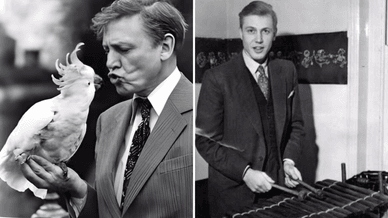
Young Sir David Attenborough
Returning to active creative work in the 1970s and 1980s, David Attenborough launched a series of major authorial projects that changed television forever. These included Life on Earth, The Living Planet, and The Trials of Life. These were scientific narratives about evolution, species adaptation, and ecosystem interrelationships. For the first time, viewers saw how life on the planet had formed over billions of years; how animals adapt to deserts, jungles, mountains, and oceans; how climate change affects the survival of species; and how humans are gradually disrupting the natural balance. Later, this approach formed the basis for the world-famous series Planet Earth, Blue Planet, Frozen Planet, and many others. Cameras descended into the depths of the ocean, flew over jungles, and captured animal behaviour in detail that no one had ever seen before.

Attenborough - Baby Caymans hatching - BBC wildlife
All these projects were created in close collaboration with scientists — zoologists, oceanographers, ecologists, and climatologists. David Attenborough personally checked the accuracy of the facts and the scientific correctness of each story. In fact, he turned the BBC into a world leader in nature documentaries. What seems standard today — expeditions, scientific consultants, years of filming a single series — became possible thanks to his approach to work.

Sir David Attenborough - The story behind Life on Earth - BBC
It was through his work at the BBC that Attenborough influenced documentary filmmaking not only as an author, but as the architect of the entire genre. He showed that science can be popular, profound and exciting at the same time.
Advocate of the planet: position and views
Over the years, David Attenborough has gradually changed his role in the public sphere. While he was initially primarily an observer and populariser of science, since the end of the 20th century he has become one of the most authoritative voices speaking openly about the environmental crisis. Not from the position of an activist, but from the position of a person who has seen with his own eyes how the planet has changed over the decades.
In the 1950s, he filmed a world that was almost untouched. The tropical forests seemed endless. The coral reefs were alive and colourful. Animal populations seemed stable. In the 1980s and 1990s, the first signs of destruction began to appear in his films: deforestation, ocean pollution, and the reduction of wild species habitats. In the 21st century, these processes became the main theme of his work.
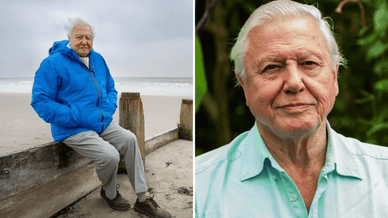
A still from the documentary "The Ocean", by David Frederick Attenborough
David Attenborough consistently links climate change to human activity. He talks about rising temperatures, melting glaciers, rising sea levels, and loss of biodiversity as elements of a single system. For him, these are not separate environmental problems, but signs of a global imbalance on the planet.
In his speeches at international forums and UN sessions, he does not appeal to emotions. He speaks the language of science. He explains how burning fossil fuels changes the atmosphere, how it affects weather cycles, agriculture, access to water, and how the destruction of ecosystems reduces the planet's ability to regulate itself.
His speeches were heard at UN climate change conferences, including before the start of the 2021 climate summit in Glasgow, where he warned delegates that humanity was ‘in the final stages of climate stability.’ In his speeches, he explained that the decisions made in the coming years will determine the conditions of life on the planet for centuries to come.
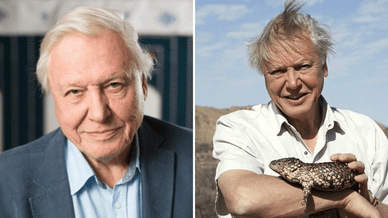
Attenborough holding a short-tailed skink
David Attenborough has also spoken at UN General Assembly meetings and climate forums on biodiversity. His key message is repeated over and over again: nature is not an infinite resource, and the stability of civilisation directly depends on the state of ecosystems. He talks about the disappearance of forests as a threat to food security, about the warming of the oceans as a factor in global economic change, and about the loss of species as the destruction of natural climate regulation mechanisms. Unlike many activists, Attenborough appeals not to fear, but to responsibility. He constantly emphasises that modern science already has enough data to act, and that procrastination will cost much more than the transition to sustainable development models.
The focal point of his public stance is the film David Attenborough: A Life on Our Planet, released in 2020 and created in collaboration with the BBC's natural history unit and global streaming platforms. In this film, he constructed the narrative for the first time as a personal testimony, a chronicle of the changes he has observed throughout his own life.
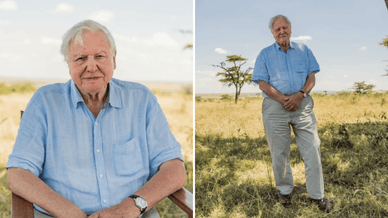
Attenborough in the Masai Mara Reserve
The film begins with images of an almost pristine planet and gradually moves to the modern reality — forest degradation, coral death, and urbanisation displacing wildlife. Attenborough shows how, in a single human generation, the world has lost a huge part of its biological diversity. He pays particular attention to the oceans, which absorb most of the excess heat and carbon, changing their chemistry. This leads to the mass destruction of reefs and the disruption of marine ecosystems. What previously seemed distant and abstract is presented in the film as a direct consequence of our daily consumption of energy and resources.
At the same time, the film is not purely pessimistic. David Attenborough talks about the possibility of restoring natural systems if humanity reduces emissions, preserves forests, and changes its approach to agricultural production and the use of the oceans. He shows examples of regions where nature has already begun to recover thanks to conservation programmes.

David Attenborough at huge glaciers in Antarctica - BBC wildlife
After the film's release, his position became even more direct — David Attenborough openly calls the climate crisis the greatest challenge of modern civilisation, not only ecological, but also economic, social and political. He warns that the effects of global warming are already affecting population migration, food security and the stability of states.
At the same time, Attenborough actively supports scientific and environmental organisations, educational programmes for young people, and ecosystem restoration projects. His later films increasingly have a clear educational purpose — not just to show nature, but to explain what humans are changing and what the consequences are.

Secret World of Sound with David Attenborough | Official Trailer | Netflix
What makes David Attenborough unique is that he is listened to by different generations and political camps. He does not accuse or moralise; he shows cause-and-effect relationships. That is why his voice has become one of the most influential in the global conversation about the future of the planet.
Films and television programmes
David Attenborough's filmography is a long conversation with and about the planet, and it has been going on for decades. In the beginning, in the era of black-and-white television, nature programmes were like short lessons with illustrations. Attenborough turned them into something else: an expedition, a presence, a feeling that the camera was not just watching, but learning to see. His early projects grew out of a spirit of discovery — but with each decade, another note became increasingly prominent:
not ‘look how strange’, but ‘look how life works’.

Incredible Wildlife Scenes Narrated by David Attenborough | BBC Earth
That is why the Life series (along with his classic Life on Earth and other Life... series) is perceived as the culmination of the author's grand logic: from the evolution and origin of species to behaviour, survival, and the complex rules by which ecosystems exist. Planet Earth was the moment when technology and the author's vision converged: for the first time, the planet looked on screen as if it could be read — by its relief, by its migrations, by its seasonal rhythms, by life in the most extreme conditions. And Blue Planet and Blue Planet II made the ocean not a backdrop, but the main character: with its depths, silence, invisible chains of life — and, ultimately, its vulnerability.
Our Planet already belongs to a different era — one in which the beauty of nature can no longer be neutral. Here, spectacle constantly borders on the reality of loss: environments are shrinking, the climate is shifting familiar boundaries, species are disappearing or retreating. David Attenborough does not press for pity or guilt in these projects, nor does he play on apocalyptic themes; he does what he has always done: he shows cause-and-effect relationships, but he does so in a way that allows the viewer to feel the weight of what they are seeing for themselves.
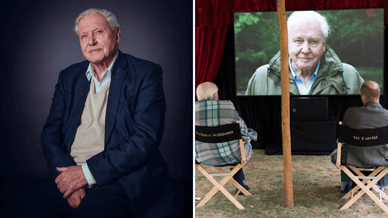
Prince William and David Attenborough
It is also important that David Attenborough has almost never been ‘just a voice behind the scenes,’ even though his voice is recognised around the world. At various times, he has appeared on screen as a presenter, worked as a narrator, and very often as a producer and editor, the person who weaves expeditions, the team, the scientific framework and the drama into a single story. His role as an author lies in accuracy and tone: not simplifying, not substituting science with effect, not turning nature into a backdrop.
The scientific accuracy of his series is based on infrastructure. Large projects of this scale are impossible without biologists, field researchers, oceanographers, ecologists, climatologists — people who know the places, species, seasons, risks, and who can say which shot is important or whether an explanation is correct. The camera in these films works alongside science, not instead of it. That is why David Attenborough is trusted by both viewers and scientists: in his stories, nature does not ‘play a role’; it lives by its own laws, just as it does in real life.
Complete chronological list (by filmography)
1950s
- 1952 — Coelacanth (producer);
- 1953 — Animal, Vegetable, Mineral? (participation in production);
- 1953 — Song Hunter;
- 1953 — Animal Patterns;
- 1953 — Animal Disguises (host);
- 1954 — It’s a Small World (producer);
- 1954 — Zoo Quest (screenwriter, presenter, sound engineer, producer);
- 1955 — Zoo Quest to Guiana;
- 1956 — Zoo Quest: Dragon Quest;
- 1957 — Zoo Quest: Quest for Birds of Paradise;
- 1959 — Zoo Quest in Paraguay.
1960s
- 1960 — The People of Paradise (screenwriter, presenter, sound engineer, producer);
- 1960 — Elsa the Lioness (producer and presenter);
- 1960 — Travellers’ Tales (producer and narrator);
- 1961 — Zoo Quest to Madagascar (screenwriter, presenter, sound engineer, producer);
- 1961 — Japan (producer);
- 1962 — The Extinction of the Indians;
- 1963 — Attenborough and the Animals (host);
- 1963 — The Quest Under Capricorn (screenwriter, presenter, sound engineer, producer);
- 1965 — Zambezi (screenwriter and presenter);
- 1967 — Life — Eastern Africa;
- 1969 — The World About Us (narrator; participation in a series of episodes);
- 1969 — The Wonders of Bali (narrator and producer).
1970s
- 1971 — Blank on the Map (screenwriter and presenter);
- 1973 — Eastwards with Attenborough;
- 1973 — The Game of Life (host);
- 1973 — Nature Break;
- 1973 — Christmas Lectures (Royal Institution) (screenwriter and presenter);
- 1973 — Omnibus (script/episode host);
- 1973–1975 — The Explorers (introduction/narrator);
- 1975 — Fabulous Animals (host);
- 1975 — The Tribal Eye (screenwriter and presenter);
- 1976 — The Discoverers (host);
- 1977 — Wildlife on One (long cycle);
- 1979 — Life on Earth (screenwriter and presenter).
1980s
- 1980 — The Spirit of Asia (narrator);
- 1981 — The Ark in South Kensington (host);
- 1984 — The Living Planet (screenwriter and presenter);
- 1986 — World Safari (co-host);
- 1987 — The First Eden (screenwriter and presenter);
- 1989 — Lost Worlds, Vanished Lives.
1990s
- 1990 — The Trials of Life (screenwriter and presenter);
- 1993 — QED: Gallop to Freedom (narrator);
- 1993 — Life in the Freezer (screenwriter and presenter);
- 1993 — Arena: Night of the Radio (host);
- 1995 — The Private Life of Plants (screenwriter and presenter);
- 1996 — Attenborough in Paradise;
- 1998 — The Life of Birds (screenwriter and presenter).
2000s
- 2000 — State of the Planet (screenwriter and presenter);
- 2001 — The Blue Planet (narrator);
- 2002 — The Life of Mammals (screenwriter and presenter);
- 2005 — Life in the Undergrowth (screenwriter and presenter);
- 2006 — Planet Earth (narrator);
- 2006 — The Truth About Climate Change (screenwriter and presenter);
- 2008 — Life in Cold Blood;
- 2009 — Charles Darwin and the Tree of Life;
- 2009 — Life.
2010s
- 2010 — First Life (screenwriter and presenter);
- 2011 — Frozen Planet (narrator/host);
- 2012 — Kingdom of Plants 3D (screenwriter and presenter);
- 2013 — Africa (narrator/host);
- 2015 — The Great Barrier Reef (screenwriter and presenter);
- 2016 — Planet Earth II (narrator/host);
- 2017 — Blue Planet II (narrator/host);
- 2018 — Dynasties (narrator/host);
- 2019 — Our Planet (narrator);
- 2019 — Seven Worlds, One Planet.
2020s
- 2020 — Extinction: The Facts (narrator/host);
- 2020 — David Attenborough: A Life on Our Planet;
- 2021 — A Perfect Planet (narrator);
- 2021 — The Mating Game (narrator);
- 2022 — The Green Planet (ведучий);
- 2022 — Prehistoric Planet (narrator);
- 2022 — Frozen Planet II (narrator);
- 2023 — Wild Isles (host);
- 2023 — Planet Earth III (narrator/host);
- 2024 — Secret World of Sound with David Attenborough;
- 2024 — Mammals (host);
- 2024 — Asia (co-production with BBC Studios NHU, etc.);
- 2025 — Parenthood (narrator);
- 2026 — Secret Garden (announced/upcoming in the list).
In addition to major series, David Attenborough appeared for decades in individual episodes and specials on British television. These included scientific investigations, documentaries, anniversary projects, interviews, and themed programmes, where he acted as a presenter, narrator, or expert. These included episodes of Panorama, participation in the cultural documentary project Omnibus, and many years of involvement in the nature programme Natural World.
David Attenborough's personal life
Despite his global fame and decades in front of the camera, Attenborough's private life always remained a separate territory — quiet, without public drama or ostentatious openness.
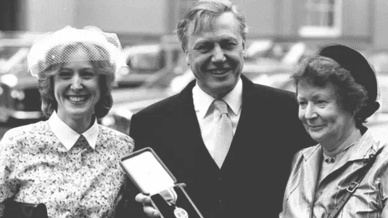
David Attenborough, Jane Elizabeth Ebsworth Oriel and Susan Attenborough
His wife was Jane Elizabeth Ebsworth Oriel, whom he married in 1950, before his real television rise. Their marriage lasted almost half a century, until Jane's death in 1997. She was not a public figure and deliberately stayed out of the press spotlight, but it was on her shoulders that the life of a man who could disappear on expeditions for months and years rested for many years.
The couple had two children, a son, Robert, and a daughter, Susan. It is known that David Attenborough always tried to be present in their lives as much as his work allowed, although his schedule rarely permitted it.
Attenborough himself later admitted honestly that because of his constant expeditions, he was often an absent father. In an interview with the British press, he said that what he regrets most are the months he missed in his children's lives when they were young. In his words, when a child is six or eight years old and their father disappears for three months at a time, it is a loss that cannot be recovered. This candour largely explains his particularly warm and caring attitude towards his family in later years.
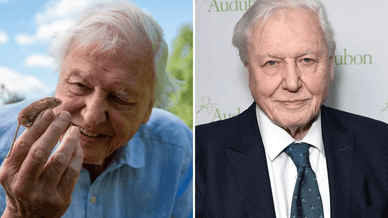
David Attenborough
Despite his absence during their childhood, both children actually followed in their father's footsteps — each in their own way. His son, Robert Attenborough, became a scientist and devoted himself to bioanthropology — the science of human evolution, population health and behavioural anthropology. He worked in the field of archaeology and anthropological research, in particular at the University of Cambridge, where he studied the biological aspects of human communities, including in the regions of New Guinea. David Attenborough recalled with a smile that Robert literally grew up among animals: as a child, lizards, amphibians and other living ‘gifts’ that his father brought back from his travels would appear at home. It was through these little domestic adventures that his son's interest in science was formed very early on — not from textbooks, but from living contact with nature.
His daughter, Susan Attenborough, worked in education for a long time and was the headmistress of a primary school.
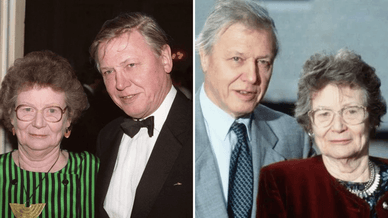
David Attenborough with his wife Jane Elizabeth Ebsworth Oriel
After her mother's death, she took over some of her father's family and professional affairs and now helps him with company management and organisational issues related to films and projects. In interviews, David Attenborough has said more than once that Susan regularly visits him, helps with household chores, shopping and health care. They have a very close relationship.
Attenborough's grandchildren deliberately remain out of the public eye. The family has a policy of not exposing them to the media, and Attenborough himself has always emphasised that fame is his choice, not a legacy for future generations.
After Jane Attenborough's death, he never remarried. In later conversations, he cautiously hinted that the loss of his wife was one of the most difficult moments of his life. At the same time, he never turned this experience into a public drama — there were no confessional interviews or emotional statements. His way of coping was quiet and deeply personal.
With age, his family circle shifted even more towards his children and grandchildren. Although he rarely talks about them in the media, it is clear from occasional mentions that his family remains his main support outside the professional world. This is the space where he is not the ‘voice of the planet,’ not a producer or a public intellectual, but simply a father and grandfather.
Awards and achievements
David Attenborough is one of the few public intellectuals whose work has been recognised by the state, the scientific community, television and international organisations. His awards span more than seven decades of activity.
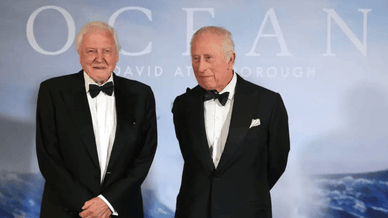
Charles III, David Attenborough
In total, he has received over 100 official awards and orders, more than 30 honorary doctorates, dozens of television and scientific awards in various countries around the world, as well as symbolic recognition in the form of animal and plant species and educational programmes named after him.
Key state and royal honours
- 1985 — Knight Bachelor — official recognition of contribution to education and television;
- 1996 — Companion of Honour (CH) — for outstanding cultural influence;
- 2005 — Order of Merit (OM) — one of the country's highest honours, held by a limited number of people at any one time;
- 2022 — Knight Grand Cross of the Order of St Michael and St George (GCMG) — one of the highest orders in Great Britain, awarded for global contributions to television and nature conservation.
International awards and television awards
- BAFTA Awards — more than 10 awards in different years (from the 1970s to the 2010s) for best documentary series and contribution to television;
- 1997, 2002, 2007, 2018 — Emmy Awards for outstanding natural history programmes;
- 2019 — BAFTA Fellowship — the highest honour of the British Academy of Film and Television Arts;
- 2020 — Primetime Emmy Governors Award — for long-standing influence on documentary filmmaking.
Scientific and academic recognition
- Over 30 honorary doctorates from universities in the United Kingdom, the United States, Canada, Australia, and Europe;
- Honorary member of the Royal Society of Biology;
- Awards from environmental and nature conservation organisations in the 1980s–2020s for contributions to biodiversity conservation.
Environmental awards and humanitarian honours
- 1985 — WWF Gold Medal (World Wildlife Fund);
- 1991 — UNEP Global 500 Award from the United Nations Environment Programme;
- 2006 — Descartes Prize for Science Communication (EU);
- 2015 — Edinburgh Medal for the popularisation of science;
- 2022 — Champions of the Earth Lifetime Achievement Award (UN).
Biological honours
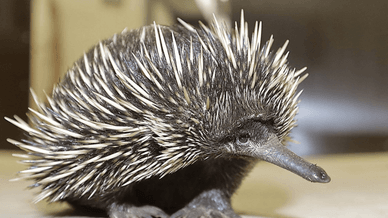
Attenborough's long-beaked echidna
More than 50 new species of living organisms have been named in honour of Attenborough, including:
- Attenborosaurus conybeari — a fossil marine reptile;
- Trigonopterus attenboroughi — a species of beetle;
- Sir David's Long-beaked Echidna — considered extinct, but was rediscovered;
- Nepenthes attenboroughii — a giant carnivorous plant from the Philippines, capable of digesting even small rodents;
- Several species of plants, spiders and insects discovered in the 21st century.
Cultural recognition
- Regularly included in lists of the most influential Britons of the century (BBC, The Guardian, Time UK editions);
- His series are consistently ranked among the best documentary projects in television history.
Popularity in Iceland and other countries
In northern European countries, Attenborough's story sounds particularly convincing. Where the ocean determines the climate, economy and way of life, and where winters and glaciers are not abstractions from a textbook but a reality outside the window, his films are perceived not as a beautiful television journey but as a conversation about one's own future.
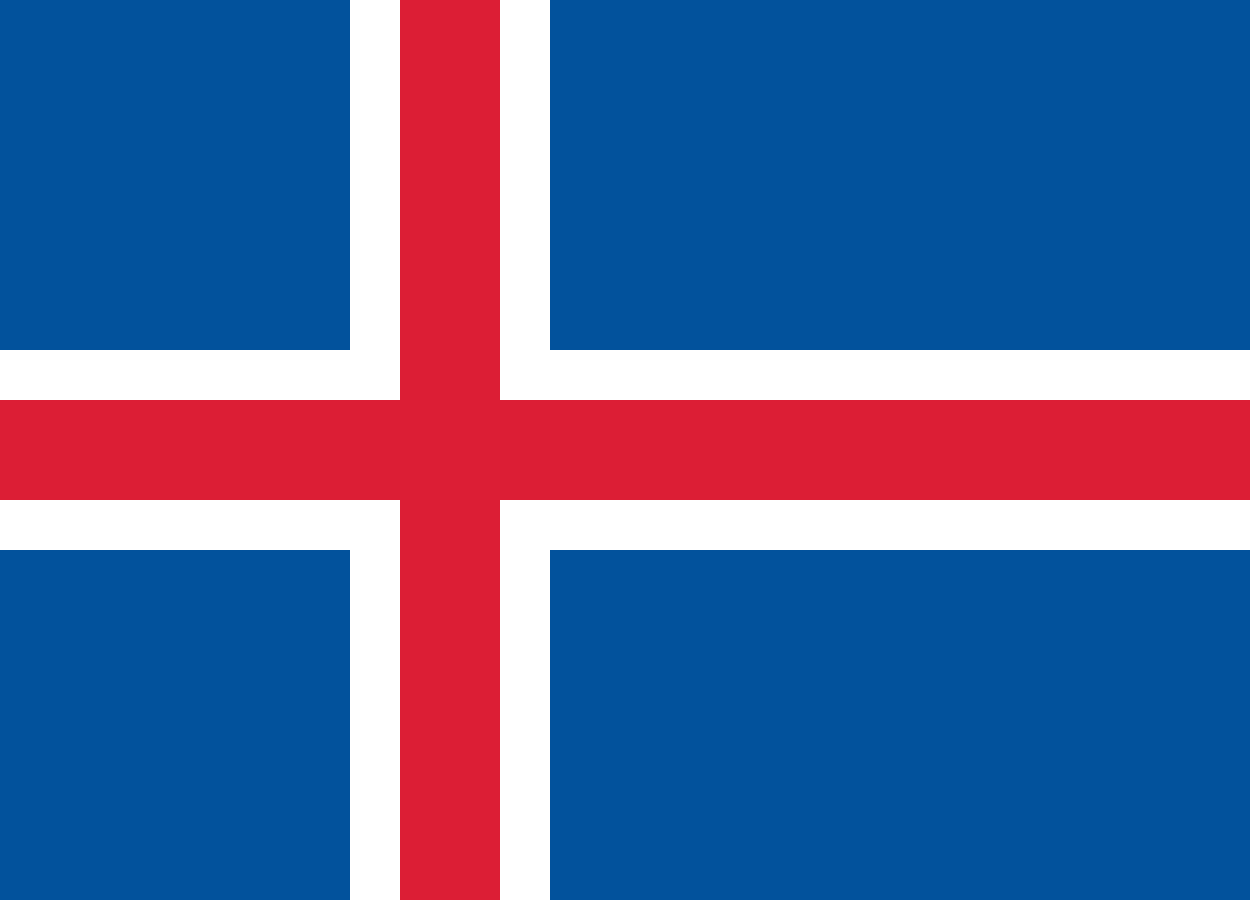
In Iceland, David Attenborough's work has long been part of the media landscape. State television regularly broadcasts his series and documentary specials, and new releases are discussed in the news and cultural reviews on a par with political events. For a country whose life is closely linked to the ocean, fishing and climate risks, the themes of Blue Planet, melting glaciers and changes in marine ecosystems are not distant environmental issues, but matters of daily stability.
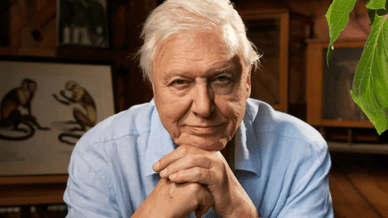
David Attenborough
The picture is similar throughout Northern Europe — in Norway, Denmark, Finland, and Sweden. There, Attenborough's series have long crossed the line of ‘documentary television’ and become part of the public conversation about climate responsibility. His films are quoted in the media, referenced by politicians and environmentalists, and used as visual arguments in discussions about energy, ocean conservation and biodiversity preservation.
On a global scale, Attenborough has become a rare example of a scientist-populariser who is equally well received in Britain, the United States, Canada, Australia and the EU countries. Major series such as Planet Earth, Blue Planet and Our Planet have become international events, watched by millions of people in dozens of countries, regardless of culture and language. His voice has become a universal symbol of nature storytelling — calm, precise and at the same time emotionally powerful.
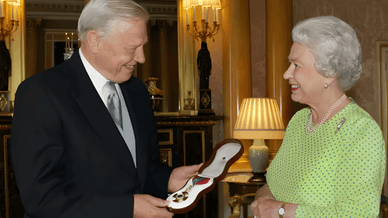
Elizabeth II presents David Attenborough with the Order of Merit
A separate dimension of this popularity is education. His series are used in schools to explain ecosystems, evolution, climatic processes and species interactions. In universities, they are used in courses on ecology, biology, geography, climate science and even environmental sociology, where the films serve as examples of real changes in natural systems.
The reason for this trust is simple: his projects combine scientific accuracy with visual evidence. Students see not a diagram in a book, but the live migration of animals, the destruction of reefs, changes in ice masses, and disruptions in food chains. What could remain an abstract theory becomes an understandable reality in David Attenborough's films.
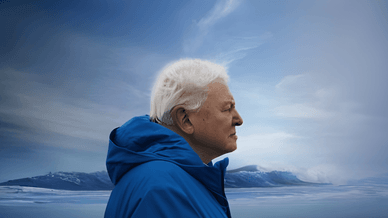
A still from the documentary "David Attenborough: The Ocean"
That is why his documentaries are officially recommended as supplementary teaching materials. They serve as a bridge between science and everyday experience, showing that the climate, the ocean, and biodiversity do not exist separately from humans, but shape the conditions of our lives right now. His films are watched with equal attention by schoolchildren in Reykjavik, students in Oslo, and families in London or Toronto — as a story about our shared planet, for which we can no longer postpone taking responsibility.
David Frederick Attenborough: interesting facts
- The only person to have won BAFTA awards in all formats: the only person to have received the prestigious British award for programmes in black and white, colour, HD, 3D and 4K formats.
- More than 50 species of living organisms and fossils have been named in honour of the naturalist, from the giant predatory reptile Attenborosaurus to rare species of flowers and insects.
- When David Attenborough began his career at the BBC in 1952, he did not own a television and had only seen one television programme in his life.
- It was Attenborough, working as a controller for BBC Two, who introduced colour broadcasting of Wimbledon, which forever changed the way viewers perceived the sport.
- Despite having travelled the entire planet, David Attenborough never passed his driving test and does not drive a car.
- His contribution is so significant that he has been knighted twice: first by Queen Elizabeth II in 1985, and then by King Charles III in 2022 (for his services to nature conservation).
- As programme director of BBC Two, he gave the green light to Monty Python's Flying Circus, even though he didn't quite understand their humour at first.
- David Attenborough is the only person whose voice has been officially recognised as ‘the most trusted in Britain’ according to numerous opinion polls.
- Not only species and minerals are named after him, but also an underwater mountain in the Atlantic Ocean and the research vessel RRS Sir David Attenborough.
- His series Blue Planet II caused the so-called ‘Attenborough effect’ — a massive reduction in the use of single-use plastics around the world after viewers saw its impact on the ocean.
- He set a Guinness World Record by gaining one million followers on Instagram in 4 hours and 44 minutes.
Social networks
Despite his advanced age, David Attenborough has managed to make a smooth transition from the television era to the digital space, transforming himself from the ‘voice of documentary filmmaking’ into a full-fledged voice of the internet generation.
Although Attenborough rarely manages his pages personally, social media has become an important addition to his media presence. Accounts associated with his brand or films publish short videos with environmental messages, explanations of threats to the environment, and reminders of the role of humans in preserving the planet. They cover the same topics as his series: climate change, biodiversity loss, the importance of protecting oceans and forests — but in a format that is easily accessible to a young online audience.
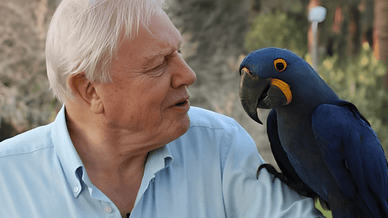
Sir David Attenborough with a hyacinth macaw
For a long time, Attenborough had no personal accounts, believing that his films spoke for themselves. The situation changed in September 2020, when he officially launched his Instagram page @davidattenborough. It became a real digital phenomenon: a million followers appeared in less than five hours — a Guinness World Record. Attenborough himself explained the reason at the time: the world is in crisis, and he needs a new way to talk to young people in the language of their generation.
After the promotional campaign for the film Life on Our Planet ended, active personal management of the page ceased. Currently, the account is maintained by teams of his colleagues and partners, including Silverback Films and conservation organisations such as WWF. But even in this format, the profile remains one of the most influential environmental media resources on social media.
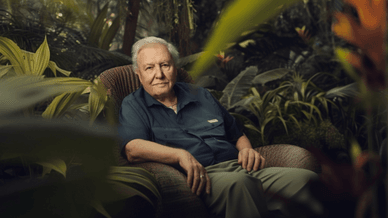
David Attenborough from his autobiographical documentary
Attenborough's presence in the modern media space has long gone beyond Instagram. Excerpts from his series and his recognisable voice are widely shared on TikTok — from educational videos to viral memes and even ASMR videos with natural sounds. He actively works with streaming platforms such as Netflix and Apple TV+, thanks to which new projects are released simultaneously in hundreds of countries. VR and AR projects have become a separate area of focus — in particular for the Natural History Museum in London, where viewers can literally ‘find themselves’ alongside prehistoric creatures or in the heart of ecosystems.
Attenborough's online strategy is based on the transition from a fascination with nature to an awareness of the responsibility for its preservation. Through social media, he promotes specific actions — reducing plastic consumption, switching to a more plant-based diet, and rewilding. During global climate summits such as COP26, his online appeals turn into manifestos that are shared by millions of people, creating public pressure on politicians.
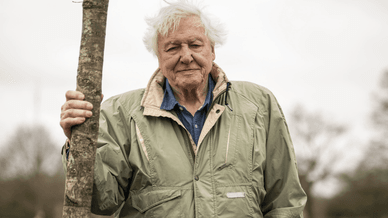
David Frederick Attenborough
Social media platforms became an extension of the same mission he had been pursuing for decades on television — only now in the rhythm of the 21st century and with a global online audience.

The rest are fan pages.
FAQ
Is David Attenborough alive?
Yes, as of February 2026, he is alive and continues to participate in documentary projects.
How old is David Attenborough?
As of 2026, he is 100 years old.
Is David Attenborough vegan?
He has significantly reduced his meat consumption and openly supports a plant-based diet as more environmentally responsible.
How many documentaries has David Attenborough made?
Over a hundred projects, from early television programmes to large-scale series and feature films.
What is David Attenborough's most famous film?
The series Planet Earth, Blue Planet and the film A Life on Our Planet, which became the environmental manifesto of the 21st century, had the greatest global impact.