P Diddy
P Diddy is the stage name of American rapper, producer and entrepreneur Sean John Combs, also known as Puff Daddy, Diddy, Love, Brother Love and several derivatives thereof. In the 1990s, P Diddy became one of the key figures in mainstream hip hop: as a producer and founder of Bad Boy Records, he influenced the rap and pop scene of the 1990s and promoted the label's artists, including The Notorious B.I.G., Mase and Lil' Kim.
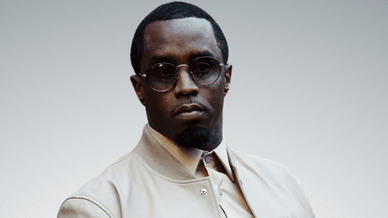
As of 2026, Combs is serving a sentence in a federal case: on 3 October 2025, a court in New York sentenced him to 50 months in prison and a $500,000 fine on two counts of transporting people for the purpose of prostitution. At the same time, the jury acquitted him of racketeering and two of the most serious charges related to sex trafficking.
Full name | Sean John Combs |
|---|---|
Date of birth | 4 November 1969 |
Place of birth | Born in Harlem (New York), raised in Mount Vernon (New York State) |
Citizenship | United States |
Stage names | Puff Daddy, Puffy, P Diddy, Diddy, Love / Brother Love (used at various times) |
Main activity | Music producer, rapper, entrepreneur |
Label | Bad Boy Records (founded in 1993) |
Genres | Hip hop, rap, R&B |
Active years | Since the early 1990s |
Children | 7 (publicly acknowledged): Quincy Taylor Brown (34), Justin Combs (32), Christian ‘King’ Combs (27), Chance Combs (19), D'Lila Star Combs (19), Jessie James Combs (19), Love Sean Combs (3). |
Education | Howard University (business administration), did not graduate, received an honorary doctorate in 2014 |
Current legal status (January 2026) | Serving federal sentence (50 months) following conviction on 3 October 2025; $500,000 fine. Acquitted of racketeering and two counts of sex trafficking. |
Biography
Sean John Combs was born on 4 November 1969 in Harlem. He spent his childhood between New York City and the suburb of Mount Vernon.
For a long time, Sean believed that his father, Melvin Earl Combs, had died in a car accident. This version was diligently supported by his mother, Janice Combs, in an attempt to protect her son from the cruel truth. It was only while studying at university, leafing through old newspaper archives in the library, that Sean learned that his father had been found shot dead in his car on Central Park West in 1972. He was only 33.
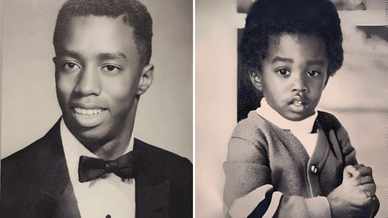
P Diddy, as a child and teenager
Melvin Combs was no ordinary Harlem resident. A US Air Force veteran, he chose a path that would later be romanticised in films: according to investigations, Melvin was close to the legendary drug lord Frank Lucas. His father's death was Sean's first and most important lesson: there are only two outcomes to a life of crime — prison or the morgue. That is why he chose the legal hustle (from the English word hustle — energetic activity, survival). In Combs's understanding, this meant acting aggressively, like a gangster, but within the law — through music and control over brands.
Education was a priority for Janice Combs. Sean graduated from Mount Saint Michael Academy, a Catholic school, where he earned his nickname ‘Puff’ because of his habit of angrily puffing out his cheeks while playing American football.
In 1987, he enrolled at Howard University to study business administration. However, he was less interested in lectures than in organising events. It was at Howard that Combs first tested his business model: he threw such large parties that they brought him more money than his future career as a clerk.
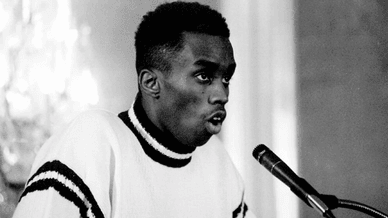
P Diddy in his youth
In 1990, Combs left the university without completing his studies or receiving a degree in order to focus entirely on his work in the music business and his internship at Uptown Records. However, in 2014, Howard University awarded Sean Combs an honorary Doctor of Humane Letters degree. That same year, he gave a speech at the graduation ceremony, where he talked about entrepreneurship, perseverance, and his own path in business.
Combes has long been a public supporter of the university and was considered one of its most prominent patrons. In 2016, he donated $1 million to establish a scholarship fund for business students. He also announced his intention to make an additional contribution in the future.
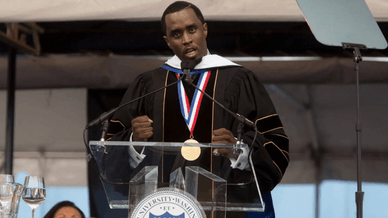
Sean Diddy Combs gives a commencement speech
However, in June 2024, after the release of a video showing physical violence against his former partner, Cassie Ventura, Howard University revoked Combs' honorary degree, returned his donations, and severed all official ties.
As of 2026, Howard University has no contact with Sean Combs. This decision remains in effect following his conviction in October 2025 to prison.
But let's go back to the nineties.
While studying, Sean Combs got an internship at Uptown Records in New York, one of the key R&B and hip-hop labels of the early 1990s. He started with technical and organisational work: artist support, logistics, promotion.

Jodeci, Mary J. Blige, Heavy D., Christopher Williams - Next Stop Uptown (Live)
He quickly became involved in creative decisions and working with artists. At Uptown Records, Combs collaborated with Mary J. Blige and the group Jodeci, participating in the production and formation of a sound that combined R&B with hip-hop aesthetics.
In 1991, the young P Diddy was one of the organisers of a charity basketball game and concert at the City College of New York. Problems arose even before the event began. The sports hall could hold about 2,700 people, but according to various estimates, almost 5,000 people came to the event. A stampede began. As a result, nine young people died and more than twenty were injured to varying degrees. It became one of the most high-profile tragedies in New York in the early 1990s involving mass events.
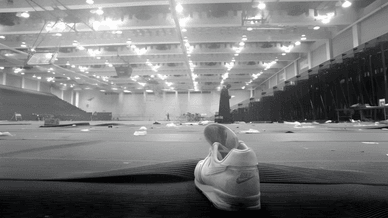
The aftermath of the tragic 1991 stampede at a charity basketball game organized by Sean Combs
No criminal charges were brought against Sean Combs or other organisers. The authorities concluded that the tragedy was the result of a combination of factors: excessive attendance, lack of adequate security controls, and crowd control errors.
At the same time, the families of the victims filed civil lawsuits against the event organisers, the City College of New York, and the City of New York, accusing them of negligence. The case was settled out of court. The total amount of compensation was approximately $3.8 million, of which, according to public records, Combs personally paid approximately $750,000.
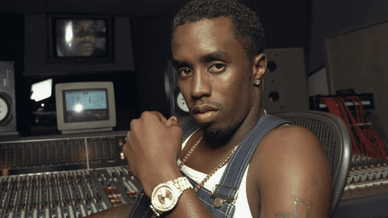
Rapper and music producer Sean Combs
For the young Combs, this episode was a serious blow to his reputation even before he became a well-known figure in the music business. Despite the lack of criminal liability, the tragedy permanently cemented his image as a person associated with risky, poorly controlled events. Combs himself later recalled this period as psychologically difficult and acknowledged that the event was a harsh lesson in responsibility for him.
Relations with the management of Uptown Records were also unstable and gradually deteriorated. In 1993, Combs was fired from the label. Shortly thereafter, he founded his own company, Bad Boy Records, taking with him several artists he had previously worked with, including Notorious B.I.G. It was from this moment that his rapid rise as a producer and media figure began.
Bad Boy Records
After leaving Uptown Records in 1993, Sean Combs quickly moved on to the next step and founded his own label, Bad Boy Records. Formally, it was a risky move: he had reputation problems and no catalogue of his own, but Sean Combs already had the most important things — contacts, market intuition, and a clear understanding of how to sell hip-hop to a mass audience.
Logo of the American label Bad Boy Records
Bad Boy Records started as a joint project with Arista Records, which provided access to distribution and financial support. Combs immediately took on several roles: executive producer, A&R, manager, and public face of the label. He controlled not only the music, but also the artists' image, music videos, clothing style, and media presence.
One of the first and key signings was The Notorious B.I.G. (Christopher Wallace). It was with him that Bad Boy achieved its first major success. The album Ready to Die (1994) quickly made the label a prominent player on the national level. P Diddy was not only a producer but also an active participant in building the artist's narrative — from sound to public image.
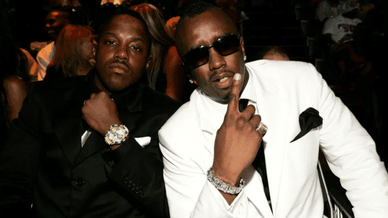
Mase and Sean Combs pose for a photo at the MTV Video Music Awards
In the second half of the 1990s, Bad Boy Records expanded its roster. Among the key names was Mase, whose commercially successful album Harlem World (1997) cemented the label's status as a hit maker. Over the years, Faith Evans, Total, 112, Lil' Kim (early in her career) and other artists who shaped the R&B and rap sound of the decade also worked with Bad Boy.
P Diddy bet on combining hip-hop with pop structures. His approach was often criticised for being overly ‘pop’, but it was this that allowed Bad Boy to break out of the niche scene and get on the radio, TV charts and into mainstream culture.
Bad Boy Records became one of the labels that established the model where the producer is not a shadow figure, but a public brand. P Diddy regularly appeared in music videos, on album covers and in live performances by artists. This revolutionised the perception of the role of the producer in hip-hop. The label also played a prominent role in the commercialisation of the US East Coast at a time when hip-hop's dominance was gradually shifting from the underground to the mainstream.
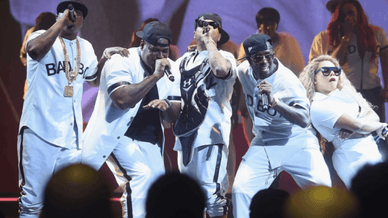
Sean Combs with his label mates
Bad Boy's success was accompanied by conflicts. Artists repeatedly complained publicly about the financial terms of their contracts and excessive control by P Diddy. Some musicians left the label under tense circumstances or openly criticised its management.
The biggest blow to Bad Boy Records was the death of The Notorious B.I.G. (Christopher Wallace) on 9 March 1997 in Los Angeles. He was shot after a party organised as part of a music conference. The case has not been officially solved as of 2026.
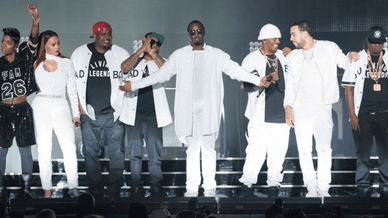
Bad Boy Family Reunion Tour
This murder was the culmination of a long and public conflict between the East Coast and West Coast hip-hop scenes, which in the mid-1990s went far beyond music. The confrontation was personified by two artists — The Notorious B.I.G. (Bad Boy Records, New York) and Tupac Shakur (Death Row Records, Los Angeles).
In the early 1990s, Tupac and Biggie were not enemies. They communicated, performed together and respected each other. The situation changed after Tupac was attacked in November 1994 in New York, when he was wounded in an armed attack near the Bad Boy Records studio. Tupac publicly stated that he suspected Biggie and the Bad Boy entourage of involvement or at least knowledge of the attack. There was no direct evidence of this.
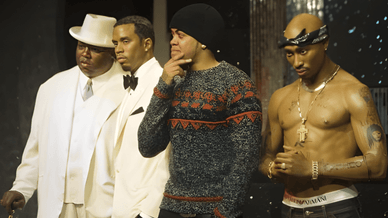
The Notorious B.I.G., P Diddy, Bow Wow та Tupac Shakur
After Tupac's imprisonment and his move to Death Row Records, the conflict became public and media-driven. Both sides used diss tracks, interviews and public statements to fuel the tension. For the labels — Bad Boy and Death Row — this confrontation became part of their marketing strategy, albeit with dangerous consequences.
P Diddy publicly denied any involvement in the attack on Tupac and repeatedly stated that the conflict had gotten out of hand. At the same time, it was his label and his artist who found themselves at the centre of the East Coast side of this confrontation.
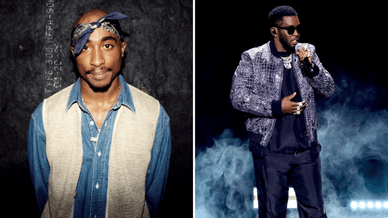
Tupac and P Diddy
On 7 September 1996, Tupac Shakur was fatally wounded in Las Vegas and died six days later. Less than six months later, in March 1997, The Notorious B.I.G. was killed. Both murders remain unsolved at the official level, despite numerous investigations, journalistic books and documentaries.
Biggie's death effectively put an end to the ‘coastal war.’ After two murders, it became clear that media escalation had real, fatal consequences. The industry began to distance itself from the rhetoric of confrontation. For Bad Boy Records, Biggie's death meant the loss of its main artist and symbol of the label.
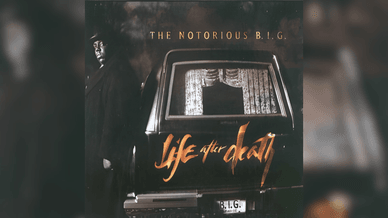
Cover of the posthumous album "Life After Death"
P Diddy completed and released Christopher Wallace's posthumous album Life After Death, which was a huge commercial success.
After 1997, Bad Boy remained financially successful for several more years, but gradually lost its central position in hip-hop. The music scene was changing, new regional centres and independent artists were emerging, and the influence of old-school labels was waning.
For P Diddy himself, this period was a turning point. He began to actively build his own career as a solo artist and, at the same time, expand his business beyond music. But the shadow of Biggie's death and Bad Boy's role in the East Coast-West Coast conflict remained part of his public image for a long time.
Music and awards
After the death of The Notorious B.I.G., P Diddy came to the fore not only as a producer but also as a solo artist. His musical career developed in parallel with his management of Bad Boy Records and was often closely linked to events in his personal and professional life.
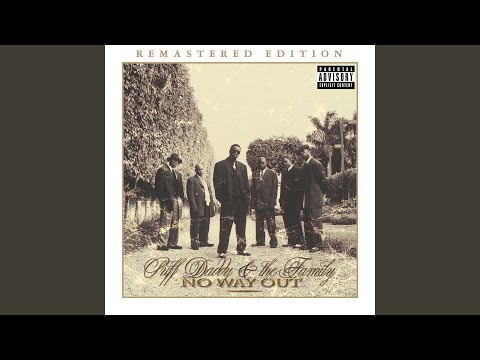
No Way Out (Intro)
His debut album, No Way Out, was released in 1997 under the name Puff Daddy. The album was largely a reaction to Biggie's death. It was dominated by themes of loss, loyalty and survival in the industry. The album was a huge commercial success and became one of the best-selling rap releases of the late 1990s.
Among the most famous tracks of this period are:
‘I'll Be Missing You’ (feat. Faith Evans & 112) — dedicated to The Notorious B.I.G.;
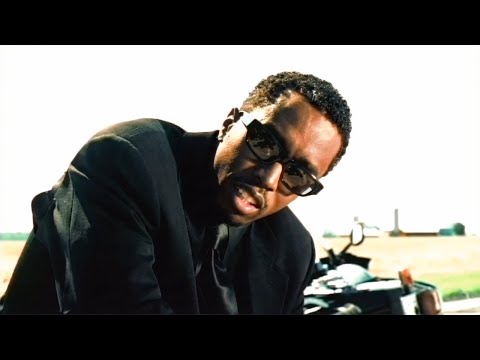
Puff Daddy [feat. Faith Evans & 112] - I'll Be Missing You
‘Can't Nobody Hold Me Down’ (feat. Mase) — debut single, which spent six weeks at the top of the Billboard Hot 100 chart;

Puff Daddy - Can't Nobody Hold Me Down
‘Victory’ (feat. The Notorious B.I.G. & Busta Rhymes) — one of the most expensive music videos in history (budget over $2.7 million), filmed in the style of the film ‘The Running Man’.

Victory (feat. The Notorious B.I.G. & Busta Rhymes)
In 1999, the album Forever was released, which cemented Sean Combs' commercial presence as an artist, but was received more cautiously by critics. It was remembered by critics as Diddy's attempt to maintain his status as the ‘king of parties’ after Biggie's death. Although it did not repeat the commercial success of the first album, it cemented his image as one of the richest and most influential people in show business at the time.

Forever
In 2001, Sean Combs released The Saga Continues... under the name P. Diddy & The Bad Boy Family. This album became a symbol of the revival of Bad Boy Records after a series of legal problems for Sean (including a trial over a nightclub shooting).

The Saga Continues
In 2006, the album Press Play was released, which gave the world the hit Last Night featuring Keisha Cole. Today, in 2026, this ballad about complicated relationships and late-night phone calls is perceived by social media with bitter irony. In the context of court proceedings, lyrics about emotional instability and ‘dependence’ on a partner became the basis for countless memes and TikTok investigations, where fans look for hidden meanings and warnings.
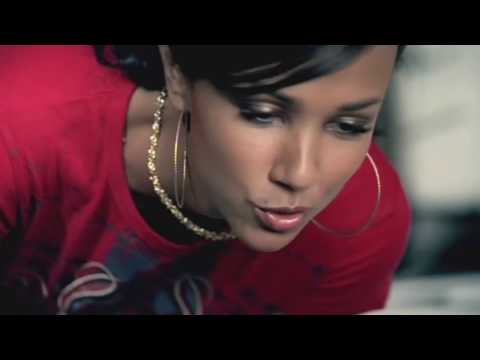
Diddy [feat. Keyshia Cole] - Last Night
In subsequent years, P Diddy released fewer solo albums, focusing on singles, collaborative projects and production work. His musical activity became sporadic, but he maintained a strong public presence.
P Diddy actively worked with artists of different generations and genres. In the 1990s and 2000s, he collaborated with Jay-Z, Nas, Mary J. Blige, Faith Evans, Busta Rhymes, as well as Lil' Kim, Total, 112, Usher, and Mariah Carey at various stages of his career.
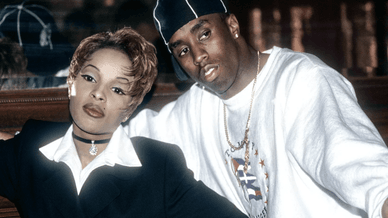
Mary J. Blige and Sean Combs in the recording studio, 1993-1994
His collaboration with Mary J. Blige is considered one of the defining moments in the formation of the genre that later came to be known as hip-hop soul. He worked with Faith Evans as a producer and label manager. She became one of the key R&B faces of Bad Boy Records in the mid-1990s. After the death of The Notorious B.I.G., their joint work, in particular their participation in the track I'll Be Missing You, received wide rotation and commercial success.
In collaboration with rap artists such as Jay-Z and Nas, Combs often acted not as the central producer, but as a media partner or guest participant. His appearances on tracks were usually minimalistic but recognisable.
P Diddy also worked extensively with vocal R&B groups. The 112 and Total projects were examples of how Bad Boy integrated hip-hop aesthetics into traditional radio- and television-oriented R&B. These groups did not always receive critical acclaim, but they sold consistently.
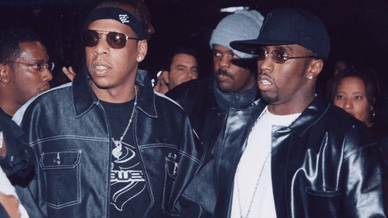
Jay-Z and P Diddy
His ability to adapt hip-hop for a wider audience often sparked controversy in the rap community. P Diddy was criticised for using samples from well-known pop and soul hits, as well as for being overly chart-oriented. At the same time, it was this approach that allowed him to create products that worked simultaneously in clubs, on radio and on television.
P Diddy is a Grammy Award winner. In 1998, his debut album No Way Out won the award for Best Rap Album. That same year, the single I'll Be Missing You, recorded with Faith Evans and the group 112, won Best Rap Performance by a Duo or Group. The song became one of the most successful of his career and remained on international charts and radio rotation for a long time.
Throughout his career, Combs has been nominated for multiple Grammys as a solo artist, producer, and executive producer of other musicians' projects. Some of the nominations were for his behind-the-scenes work rather than his public presence on the tracks.
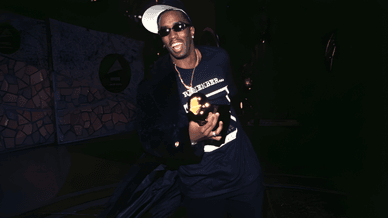
P Diddy with his Grammy Award, 1998
In addition to the Grammy, he has received industry awards and honours for his contributions to the music industry, fashion and media business. Over the years, he has been included in lists of the most influential figures in show business according to the relevant media. After 2023, some of these recognitions were revised or revoked by individual organisations amid lawsuits and public accusations.
Beyond music, P Diddy had a noticeable influence on the visual image of hip-hop in the late 1990s and early 2000s. His public style, expensive suits, luxury accessories, and ostentatious presence in high society contrasted with the traditional image of a rapper as a representative of street culture. Combs systematically promoted the idea of financial success as a goal for artists.
P Diddy's business empire
Alongside his music career, P Diddy systematically built a business outside the studio. Almost every project was linked to his public image and existing audience. The goal was simple: to turn recognition into long-term income.
In 1998, P Diddy launched the Sean John clothing brand. The brand quickly became popular on the border between streetwear and mass luxury. The clothes were sold in large department stores, and the brand itself was associated with the image of a ‘successful rapper’ who does not hide his wealth but emphasises it.
In 2004, Sean John received the CFDA Award in the Menswear Designer of the Year category. This was a rare recognition for a brand created by an artist without a classical design education.
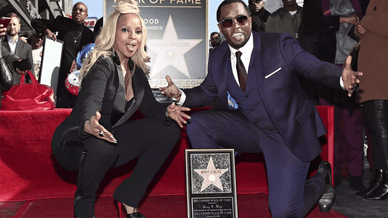
Sean "Diddy" Combs at the unveiling of Mary J. Blige's star
Subsequently, sales began to decline. The brand underwent several relaunches and changes of ownership. In 2021, Combs bought Sean John back, but after 2023, the brand's activity significantly decreased.
Combs' most successful business project was his collaboration with the vodka brand Cîroc. Since the late 2000s, he has been not just an ambassador, but a partner with a share in the profits, responsible for marketing and promoting Cîroc as a premium product closely associated with nightlife, club culture and hip-hop. Campaigns featuring him significantly increased sales, and the brand became one of the leaders in its segment in the United States.
After 2023, the collaboration effectively came to an end, and public materials featuring him were withdrawn.
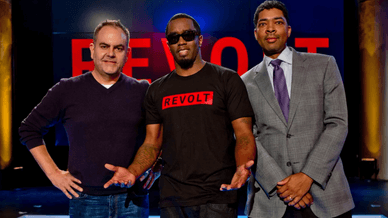
Keith Clinkscales and Sean Combs
In 2013, P Diddy founded the media platform Revolt TV. The channel focused on music, culture and social issues related to young audiences and hip-hop.
Revolt positioned itself as an alternative to traditional music television channels. It featured interviews, talk shows and live performances. P Diddy remained the public face of the platform for a long time and influenced its editorial policy. After the start of lawsuits and criminal charges against P Diddy in 2023–2024, he stepped down from his leadership positions, and the channel began to distance itself from his name. As of 2026, Revolt TV continues to operate, but without his active participation.
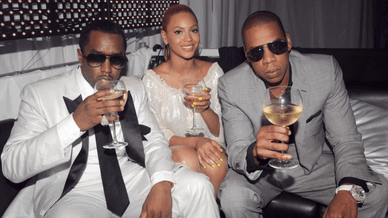
P Diddy, Beyonce, Jay-Z
P Diddy built his business on the same principle as his music career: he focused on control, aggressive marketing, and his own presence in the product. He was often not a technical leader, but rather the face and driver of sales. This style brought quick results, but also made businesses dependent on his reputation. After 2023, this became obvious: problems in his personal and legal life directly affected his commercial assets.
P Diddy's main principle is to sell not a product, but a lifestyle. Alcohol, clothing, and media have always been part of a broader image of success, access to a closed world, and financial freedom.
Alcohol and drug problems
Sean Combs' public image has long been built around success, control and discipline. At the same time, throughout various periods of his career, there have been indications of problems with alcohol and drugs. Some of these come from his own statements, while others come from court documents and third-party testimony.
In the 1990s and 2000s, P Diddy repeatedly spoke to the media about his regular alcohol consumption in the context of nightlife, club culture and the entertainment industry. He did not refer to it as an addiction.
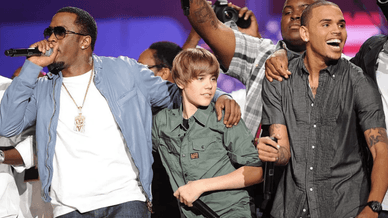
P Diddy, Justin Bieber and Chris Brown at the BET-SOS benefit concert
The first serious warning came in December 1999. After a shooting at a Manhattan nightclub, P Diddy and his then-girlfriend Jennifer Lopez were arrested. A firearm was found in their car.
Lopez was quickly released, and this incident marked the beginning of the end of their relationship. Sean Combs was completely acquitted thanks to a team of top lawyers, while the label's young rapper, Shyne, received a 10-year prison sentence.
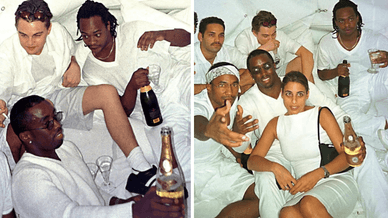
Actor Leonardo DiCaprio and P Diddy relaxing at one of the private "white parties" organized in the 1990s
In 2025, during a new trial, this old case was revisited as the first piece of evidence that Sean Combs was able to get away with things while leaving others to take responsibility for their actions.
While in the 2000s, Diddy's regular alcohol consumption was presented as part of his ‘premium lifestyle,’ the lawsuits of 2023–2024 revealed another side to it. Witnesses and victims claimed that alcohol and illegal substances (including pink cocaine and ecstasy) were an integral part of his private environment. According to the investigation we saw in 2025, drugs were used to make his party guests more compliant and controllable.
Scandals and accusations
The name P Diddy began to appear regularly in police reports and court news as early as the late 1990s.
1999, New York. Sean Combs was arrested for assaulting Interscope Records executive Steve Stoute after a conflict over a music video. The case was closed without a prison sentence: he admitted to aggressive behaviour and underwent anger management training.
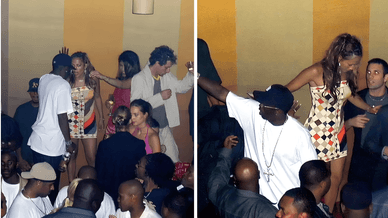
JLo and Sean Combs
1999, a nightclub in Manhattan. After a shooting at the club, Combs and his then-partner Jennifer Lopez were detained. A firearm was found in the car. Combs was later fully acquitted and the charges were dropped.
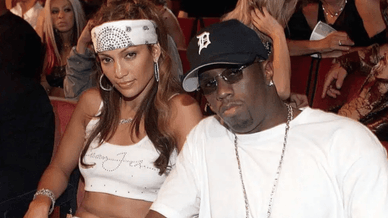
Jennifer Lopez and Sean Combs at the MTV Video Music Awards
Over the next few years, there were isolated reports of aggressive behaviour and conflicts with employees and partners. Most of them either did not reach court or ended without convictions. Until 2023, none of these cases led to long-term criminal consequences. This allowed Sean Combs to maintain his status as an influential producer and public figure.
The turning point came with Cassie Ventura's lawsuit in November 2023. It concerned:
- long-term physical and psychological abuse;
- coercion into sexual acts;
- control through fear, threats and dependence.
P Diddy publicly denied the allegations. Within a day, the parties reached an out-of-court settlement on undisclosed terms. Formally, this was not an admission of guilt, but the very fact of the lawsuit triggered further events.
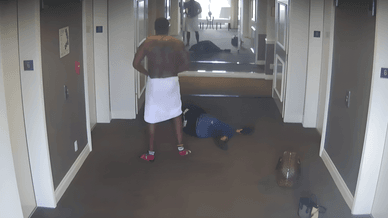
P Diddy's attack on Cassie Ventura
In May 2024, CNN released a video from 2016 showing P Diddy physically assaulting Cassie Ventura in a hotel hallway. After the video was released, Sean Combs publicly acknowledged his behaviour as unacceptable for the first time and apologised, but the snowball had already started rolling. Then more facts about the ‘freak offs’ came to light.
For decades, P Diddy's parties were part of his public image. In the 1990s and 2000s, they were seen as a symbol of success, access to the elite and living life to the fullest. These were large-scale events with a strict dress code, celebrity guests, security and complete control by the organiser.
March 2024. Federal agents conducted searches of P Diddy's homes in Los Angeles and Miami as part of an investigation into human trafficking for sexual exploitation.
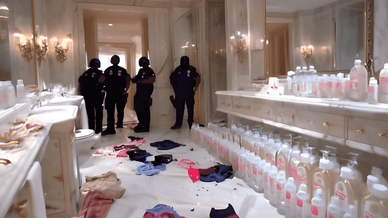
One of the bathrooms at Combs' estate, where law enforcement officers found more than 1,000 bottles of baby oil during a search
September 2024. Sean Combs was arrested and taken into custody. The court denied bail due to the risk of witness tampering.
May 2025. The trial began in New York.
The federal case file and testimony refer to ‘freak offs’ — closed private parties that, according to the prosecution, could last several days. According to the prosecution:
- guests were encouraged to participate in sexualised activities under the influence of alcohol and drugs;
- sex workers were hired for the events;
- participants were sometimes transported between cities or states;
- some of the events were filmed and the videos were later used as a means of pressure or control.
Combs and his defence insisted that this was a voluntary lifestyle choice for adults, rather than coercion or exploitation. However, the court found that there was evidence of specific instances of human trafficking for the purpose of prostitution, which was a key element of the 2025 verdict.
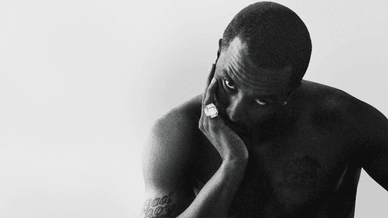
Sean Combs: Payback
In December 2025, Netflix released the documentary series Sean Combs: The Reckoning, which brings together Sean Combs' career, the culture of his entourage, parties and legal consequences. The project was directed by Alexandria Stapleton, with Curtis ‘50 Cent’ Jackson serving as one of the executive producers.
The series does not pass new judgments, but captures the moment when the public myth finally fell apart.

Sean Combs: The Reckoning | Official Teaser | Netflix
Verdict (October 2025): A jury found Sean Combs guilty on two counts of transporting people for the purpose of prostitution. He was acquitted of racketeering charges and several counts of human trafficking.
Sentence:
- 50 months of imprisonment (4 years and 2 months);
- a fine of $500,000;
- part of the sentence was counted from the time spent in custody.
In parallel with the criminal case, dozens of people filed civil lawsuits against Combs. As of 2026, some of them are still pending, while others are being appealed by the defence.
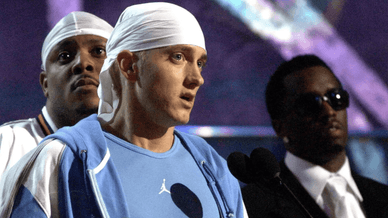
Eminem, Sean "Diddy" Combs and Proof
It is also interesting that not only 50 Cent, but also Eminem has been publicly feuding with P Diddy for many years, using hints and satire in his tracks. In rap culture, he has repeatedly raised the topic of rumours surrounding Combs, particularly in the context of the deaths of The Notorious B.I.G. and Tupac Shakur. A new stage in the confrontation began in 2024 with the release of the track ‘Fuel,’ in which Eminem veiledly hinted at sexual allegations against Combs. After P Diddy's conviction in 2025, these lines began to be actively quoted and analysed. Eminem is now often cited as an artist who did not shy away from criticising P Diddy for years, while most of the industry remained silent.

Eminem - Fuel
The scandals surrounding P Diddy were not sudden. They had been building up for decades, but for a long time had no serious consequences. After 2023, the situation changed: a combination of public testimony, video evidence and a federal investigation led to a real prison sentence and the complete collapse of his public status.
P Diddy's net worth
Sean Combs' financial situation changed dramatically after 2023. While he was often referred to as a billionaire in 2019–2022, as of January 2026, such assessments are no longer used without reservation.
Business media outlets report a significant reduction in capital due to legal costs, loss of partnerships, and the cessation of key sources of income. Combs's primary income has never come directly from music. Recordings, royalties, and the Bad Boy Records catalog provided a stable but not decisive income.
Sean John logo
Music served more as a foundation for building a brand and accessing larger deals.
The most profitable asset over the years was partnerships with alcohol brands, primarily Cîroc. It was this business that made Combs one of the richest figures in hip-hop. After a public conflict with Diageo and the termination of cooperation in 2023–2024, this income virtually disappeared. This was a major financial blow.
The financial portfolio also included media assets, notably Revolt TV, the Sean John fashion brand, and a number of smaller investments. After the lawsuits began, some of the assets were frozen, while others lost their commercial appeal. Sean John ceased to be an active brand, and Revolt TV distanced itself from Combs' name.
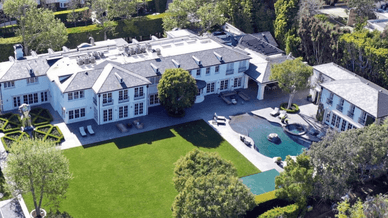
Sean Combs' mansion, California
Over the years, he owned expensive real estate in Los Angeles, Miami, and New York. Luxury cars, jewellery, watches, and artworks were also publicly available. As of 2026, some of these assets are under legal review or are no longer directly associated with him.
After the 2025 verdict, Combs remains a financially secure man, but his real capital is significantly lower than public estimates in previous years. Most importantly, he no longer controls the businesses that made him extremely wealthy.
Personal life
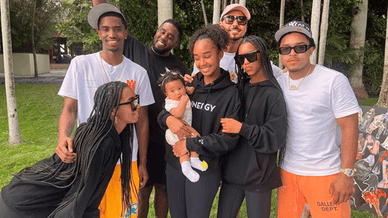
Sean Combs with his children in March 2023
P Diddy's personal life is also part of his media history. He is the father of seven children, and for years, fatherhood has been an important part of his image as a ‘man who controls everything.’ At the same time, his family model has never been ‘classical’: different mothers for his children, no long-term official marriage, complicated relationships and breakups.
Among his most famous partners are:
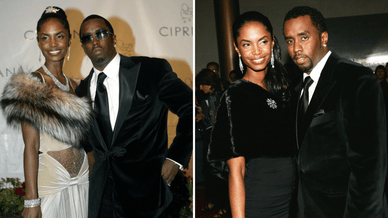
Kim Porter is an important figure in his personal history; they were together on and off for many years and have children together. Porter died in 2018 (officially from complications related to pneumonia);

Kim Porter and P Diddy
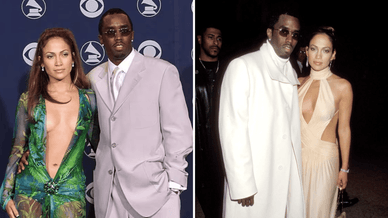
Jennifer Lopez — a high-profile romance in the late 1990s/early 2000s that became part of the tabloid culture of the time;

Jennifer Lopez and P Diddy
Cassie Ventura — a long-term relationship (2007–2018), and since 2023 — a key figure in the public part of the allegations that started the domino effect.

Cassie Ventura and P Diddy, at the 2017 Met Gala and the premiere of "Can't Stop, Won't Stop"
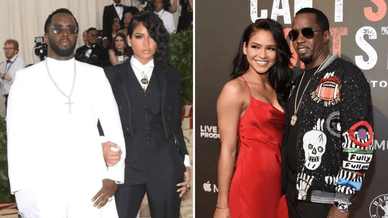
After 2023, private relationships became the focus rather than the background, because the ‘private’ sphere turned out to be closely linked to issues of violence, control and the use of power.
10 facts about P Diddy
- Throughout his career, he has changed his name several times: Puff Daddy, P. Diddy, Diddy, and in 2021, he officially changed his middle name to ‘Love’ (Sean Love Combs).
- In 2003, he ran the New York Marathon, raising $2 million for New York educational programmes. He trained for the race in just eight weeks.
- He introduced a special dance style known as the ‘Diddy Bop’ to hip-hop culture: a relaxed, confident walk with a swaying of the shoulders, which became his trademark in music videos of the 90s.
- At the beginning of Justin Bieber's career, Diddy acted as one of his unofficial mentors. The famous video ‘48 Hours with Diddy,’ in which 15-year-old Justin spends time with the producer, became the subject of widespread discussion and investigation in 2024–2025.
- In 2024–2025, Harvard University and Howard University officially revoked the honorary degrees awarded to Combs, and the mayor of New York returned the symbolic ‘Key to the City.’
- A 2025 investigation revealed details of his famous ‘White Parties,’ where, according to investigators, guests were given drugs for further exploitation. Key evidence in the 2025 case was more than 90 terabytes of video and photos seized from Diddy's gadgets during searches.
- His famous ‘White Parties’ in the Hamptons had such a strict dress code that even Katy Perry was once almost kicked out for wearing a different colour.
- In 2025, Diddy was forced to transfer control of Bad Boy Records to a third party due to the legal impossibility of conducting business from prison.
- Together with actor Mark Wahlberg, he co-owns the alkaline water brand AQUAhydrate, promoting it as a means of recovery after parties.
- Forbes removed Combs from its list of billionaires in 2025 because most of his contracts (including alcohol brands) were terminated due to reputational risks.
Films and participation in cinema
Sean Combs' film career has never been his main focus. He has never attempted to become a full-fledged actor. His involvement in film is complementary to his status as a musician and producer, as well as a way to cement his presence in the broader entertainment industry. Combs has appeared sporadically, usually in supporting or character roles:
- Made (2001) — acting debut as the formidable mafia boss Rupert;
Monster's Ball (2001) — his most critically acclaimed role. He played Lawrence Musgrove, a man sentenced to death. His co-star in the film was Halle Berry;
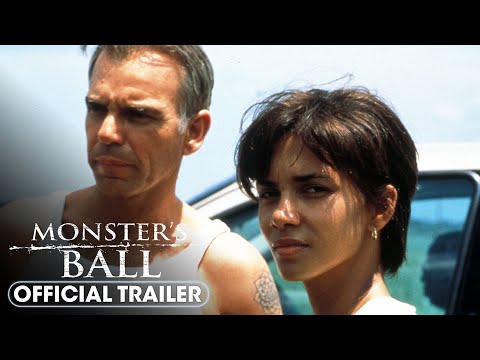
Monster's Ball (2001) Official Trailer
A Raisin in the Sun (2008) — a television adaptation of Lorraine Hansberry's play. He received positive reviews and award nominations for his role as Walter Lee Young;

A Raisin In The Sun Trailer
- Get Him to the Greek (2010) — a comedic role as the crazy music mogul Sergio Roma. The character was close to his public image and was perceived more as self-irony.
He also appeared in films and television series as himself or in small roles related to music and show business.
His influence behind the scenes was even greater. He specialised in music documentaries and reality shows:
- Making the Band (MTV) — one of the most popular reality shows of the 2000s, where Diddy held tough auditions to create new bands (such as Danity Kane);
- Notorious (2009) is a biopic about the life of Christopher Wallace (The Notorious B.I.G.). Combs served as executive producer;
- Undefeated (2011) — a documentary film about a high school football team, which won an Oscar in the Best Documentary Feature category. Diddy was one of the executive producers.
As of 2026, his contribution to media is viewed through the lens of Revolt TV, a music television channel he launched in 2013. It provided a platform for Black content creators and artists.
However, after his arrest and conviction in 2025, most major studios and streaming services (including Netflix, which released a documentary series about him in early December 2025) suspended their collaboration or shifted the focus of their projects to investigating his crimes. Diddy's influence on the industry is currently being reassessed due to numerous allegations of exploitation of young talent.
P Diddy in 2025/2026
As of January 2026, Combs' public status has been destroyed. He is serving a federal sentence following his 2025 conviction, his name is associated with a criminal case and a wave of civil lawsuits, and any business that relied on the ‘Diddy atmosphere’ is forced to distance itself in order to survive.

Sean ‘Diddy’ Combs’ ex-girlfriend Cassie Ventura gives bombshell testimony
2025 became the year of the ‘cancellation’ of Diddy's legacy: no new releases were made. Previously planned releases were cancelled or postponed without new dates being announced. There was also no record of work on production projects or participation in collaborations. On the contrary, many streaming services removed his curated playlists, and radio stations minimised the rotation of his tracks. The project ‘The Love Album: Off the Grid’ became his last official release.
His business empire collapsed. He completely lost control of the Sean John brand, and Diageo (his partner in Cîroc and DeLeón) finally severed all ties. In 2025, he was also forced to sell his stake in Revolt TV.
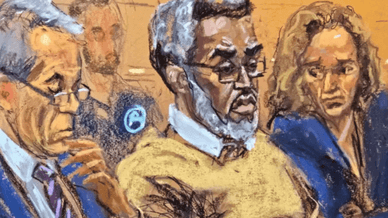
Court sketch of rapper Sean Combs
As of January 2026, P Diddy's return to show business seems unlikely, with most major partners and platforms having ceased their collaboration with Combs.
As of 2026, Sean Combs remains the subject of numerous civil lawsuits, which could take years to resolve.
Instead of music awards, 2025 cemented his status as a figure in one of the most high-profile criminal trials in the history of modern pop culture.
Social networks
The official Instagram and Twitter accounts have not been updated by the artist himself since his arrest in autumn 2024. Any posts that appear are usually official statements from his legal team. Millions of users have unfollowed the artist in protest against the allegations of violence.

Prime Crime: The Rise and Fall of P. Diddy
His official YouTube channel remains active as an archive of music videos, but comments on most of P. Diddy's videos are disabled or heavily moderated due to a barrage of criticism. TikTok has been frozen.
Due to restrictions on official channels, a large number of fake pages and ‘fan clubs’ appeared in 2025, spreading conspiracy theories about his case.
His children's social media accounts (particularly those of Christian and his twin sisters) have become the main source of news about their father's condition in prison, although they also face massive hate in the comments.
Sean Combs' official social media accounts:


Due to the 2025 trial and his detention, Sean Combs' personal access to gadgets and social media is restricted in accordance with the rules of detention.