Bræðslan
On the last Saturday of July, in Borgarfjörður eystri in eastern Iceland, an intimate music festival called Bræðslan takes place inside a former herring processing factory (síldarbræðsla). The old industrial building fills with people and noise, but instead of factory machinery, the stage, lighting, and music take over. Over the years, the festival has hosted performances by Of Monsters and Men, Damien Rice, Belle and Sebastian, Emilíana Torrini (who actually founded the festival with its first concert in 2005), and Daði Freyr.
Borgarfjörður eystri is a remote, almost isolated, picturesque fishing village in the far northeast of Iceland, home to just 100–130 people. Locals believe that Borgarfjörður eystri is the residence of Iceland's "hidden people" (Huldufólk) and their queen. A large rocky hill near the village is called Álfaborg, meaning "Elf Castle", and according to legend, it is home to elven royalty. Borgarfjörður eystri lies on the shores of the fjord of the same name, surrounded by spectacular multicolored rhyolite and basalt mountains. Several hiking trails begin here, and the village is considered one of the most remote and authentic places in Iceland, largely untouched by mass tourism. Except during the festival.
Although the number of tickets for Bræðslan is limited (only 800–900 are sold each year), the population of Borgarfjörður eystri increases 10–20 times during the festival week. Nevertheless, Bræðslan has no ambition to become a large-scale event. Its official concept revolves around a small, close-knit community, and the organizers describe it as a festival hosted by the people of Borgarfjörður (Borgfirðingar) for those who want to enjoy music and spend time with family and friends. Each year, the lineup brings together emerging Icelandic artists and internationally renowned musicians, while the main concert is broadcast on Rás 2 radio.
Name | Bræðslan |
|---|---|
Founded | 2005 |
Location | Borgarfjörður eystri, Austurland |
Main Venue | Former síldarbræðsla — herring processing factory |
Format | One main Saturday concert + Bræðsluvikan/off-venue events in the preceding days |
Genres | Pop, rock, indie, folk, alternative, and other contemporary music |
Date | Last Saturday of July |
Number of Tickets | Approximately 800–900 tickets have typically been sold for the main concert; the limit may vary |
Village Attendance | In some years, more than 1,000 visitors during the festival weekend |
Next Festival | July 24, 2027 |
Tickets for 2027 | Ticket sales announced for early April 2027 |
Official Website | Bræðslan.is |
History of the Bræðslan festival
The story of Bræðslan should begin not with the first concert at the former herring processing factory, but with how such a factory came to exist among the colorful cliffs where, according to legend, the mythical "hidden people" and their elven queen reside. It is also worth exploring why this period of Icelandic history is compared to the American Klondike Gold Rush and is known as the "Herring Rush" or Síldarævintýrið — the "Herring Adventure."

The Spirit of Iceland: Bræðslan brings music to a beautiful, remote fjord | Icelandair
The herring adventure — Síldarævintýrið
In the early 20th century, Norwegian fishermen introduced new fishing technologies to Iceland, including the use of large nets. It soon became clear that Iceland's northern and eastern fjords were literally teeming with enormous schools of herring during the summer months. An economic boom followed, and herring quickly became one of the country's most important export commodities. During peak years, exports of salted herring, fishmeal, and fish oil accounted for between 25% and 44% of Iceland's total export revenue. Tiny fishing villages such as Borgarfjörður eystri rapidly developed and expanded within just a few years, with large processing factories (síldarbræðsla) springing up around them. At these facilities, herring was processed into oil and fishmeal used in animal feed.
However, the "Herring Rush" ended just as suddenly as it had begun. Due to severe, uncontrolled overfishing by Icelandic, Norwegian, and Soviet fishing fleets, combined with changes in ocean currents, the marine ecosystem could no longer sustain the pressure. In 1969, the herring simply failed to return to Iceland's shores.
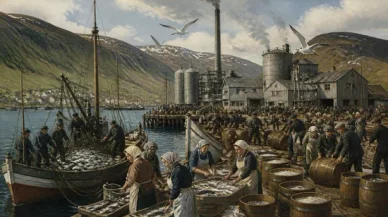
During the herring boom, small villages in Iceland’s north and east fjords filled with boats, salting crews and herring factories, until the fish vanished in 1969
This was an economic catastrophe for the country. Herring oil processing factories (síldarbræðsla), many of which had only recently been built or modernized (including the one in Borgarfjörður eystri), suddenly shut down. Thousands of people lost their jobs, millions in investments turned into rusting industrial ruins, and once-thriving, bustling ports gradually became half-empty villages again.
Today, Icelanders look back on the "Herring Boom" with enormous nostalgia. It was an era of romance, quick fortunes, jazz, foreign records playing in workers' dormitories, and a newfound sense of freedom. During this period, the "Herring Girls" (Síldarstúlkur) established Iceland's first women's trade union and later organized a major strike, demanding higher wages and better living conditions in their barracks. They won. This era laid the foundations for modern gender equality in Iceland: through hard work, women began earning as much as men (and sometimes even more), buying their own homes, and gaining financial independence.
Today, the town of Siglufjörður is home to the fascinating Herring Era Museum (Síldarminjasafnið), considered one of Europe's finest industrial museums. Meanwhile, abandoned factories across Iceland, including those in Borgarfjörður eystri and the village of Djúpavík in the Westfjords, have found a second life as art spaces and concert venues, hosting bands such as Sigur Rós and, of course, the Bræðslan festival itself.
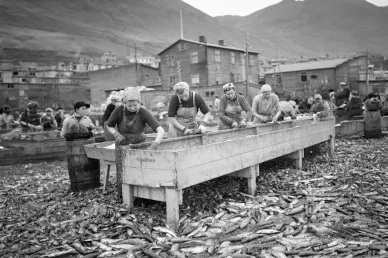
Herring Salting in Siglufjörður in 1945–1946. Herring salting in Siglufjörður, Iceland in the forties
Herring oil processing factory - Síldarbræðsla
In the 1960s, a síldarbræðsla — a factory for extracting herring oil and producing fishmeal — was also built in Borgarfjörður eystri. When Iceland's herring boom came to an end, the factory became unprofitable and was soon shut down. For decades, the enormous concrete building stood abandoned on the shores of the fjord, slowly rusting under the Arctic winds. Locals simply called it "The Rendering Plant" (Bræðslan). That was until 2005, when Bræðslan unexpectedly found a new lease on life.
Emilíana Torrini and "Fisherman's woman"
In 2005, renowned Icelandic singer Emilíana Torrini was looking for an unusual venue for an acoustic concert as part of her tour. Although she was born in southern Iceland to an Italian father and an Icelandic mother, she spent part of her childhood in Borgarfjörður eystri and had a special sentimental connection to this remote region of fjords. When she released her iconic (and still most successful) acoustic folk album, Fisherman's Woman, in 2005, she wanted to find a location for her nationwide tour that would perfectly capture the album's title and atmosphere — an authentic, rugged fishing village far from the hustle and bustle of Reykjavík.
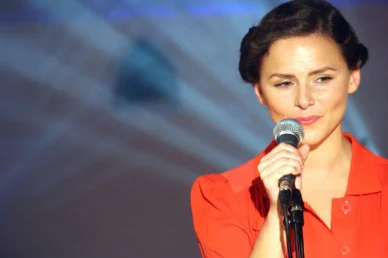
Famous Icelandic singer Emilíana Torrini
The tour organizers happened to notice the old herring processing factory. The building had none of the facilities needed for a concert: it was terribly damp, filled with old iron structures, and completely lacked any acoustic treatment. The factory had stood abandoned for years, with drafts sweeping through its interior and the smell of dampness and old fish lingering in the air. Local residents thought the idea of bringing concert equipment into such a place was sheer madness.
But when Emilíana and her guitarist stepped inside the building and sang the opening lines of "Sunny Road", something remarkable happened. The exceptionally high ceilings and vast interior created an acoustic effect similar to that of a Gothic cathedral. The sound resonated throughout the space, becoming rich, soft, and deep. The concert was such an overwhelming success among residents of the Eastfjords that Ásmundur Guðmundsson, the head of the local community center, and his friends came up with an idea: why not turn it into an annual music festival?

Emilíana Torrini - Sunny Road - Music Video
Bræðslan festival
Initially, the 2005 concert was intended to be a one-off event, but the emotional response from local villagers and visitors from East Iceland was so overwhelming that Ásmundur Guðmundsson and a group of volunteers decided to take a chance. The following year, in 2006, they cleared the factory of scrap metal with their own hands, built the first wooden stage, and organized the first full-scale music festival inside Bræðslan. They invited Icelandic rock bands and international guests, including the Scottish band Belle and Sebastian.
From the very beginning, the organizers decided that Bræðslan would never become a large commercial festival. They deliberately limited ticket sales to 800–900 to protect the environment and preserve the peaceful atmosphere of the village, which is home to just over 100 people. And news of the "secret indie festival at the edge of the world in an old factory" quickly spread throughout the music world.
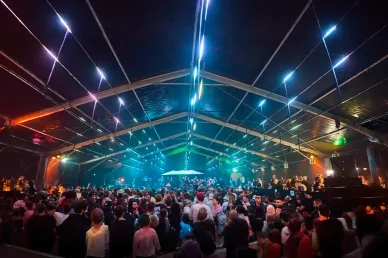
Bræðslan, the summer music festival in Borgarfjörður Eystri, takes its name from the village’s old herring factory
By 2010–2012, Bræðslan had already achieved cult status. International stars began making their way to this remote village. British indie icons Belle and Sebastian and Irish singer-songwriter Damien Rice, for example, agreed to perform not for enormous fees (which the festival simply could not afford), but for the unique experience and breathtaking scenery. The festival also helped introduce emerging Icelandic bands to wider audiences. It was at Bræðslan that the then relatively unknown Of Monsters and Men delivered remarkably heartfelt and energetic performances, just a few years before they went on to conquer the international music charts.
As tickets for the main Saturday concert at the factory began selling out within minutes, and thousands of people started arriving in the village independently, simply to be close to the event, the organizers gradually expanded the festival's format. They created Bræðsluvikan — an entire week of free off-venue concerts. Throughout the week, musicians perform in open fields, at the local Alfacafé, and at the Fjarðarborg community center. This way, even those who cannot get into the factory for the main Saturday concert can still become part of the extended Bræðslan musical family.
In 2026, the festival celebrated its 21st edition, with the main Saturday concert taking place on July 25, 2026. This year was particularly special thanks to the highly anticipated return of legendary Icelandic bands from previous decades, including Greifarnir, Land og synir, and Sólstrandargæjarnir, who shared the stage with contemporary stars such as Ásgeir. RÚV (Iceland's national public broadcaster) also produced its traditional concert documentary covering the highlights of the 21st festival.
Today, Bræðslan has become a legend of the Icelandic music industry. Although the factory was cleaned up long ago and equipped with a modern stage and lighting, the organizers have deliberately preserved its rusty iron beams, remnants of old machinery, and raw concrete walls. The festival also remains a strictly non-commercial, family-oriented project, sustained by the volunteer efforts of local residents (Borgfirðingar) and a shared desire to preserve the spirit of authentic, pure music without enormous crowds or plastic waste.
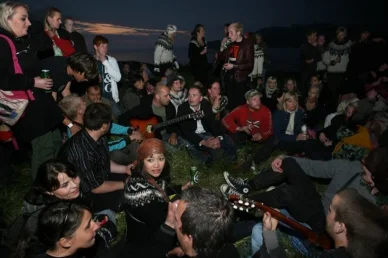
Bræðslan is a music festival that focuses on friendly atmosphere, having fun and of course great music
And since the village is considered Iceland's "elf capital", there is a deeply rooted belief among locals (Borgfirðingar) that any loud activity in the valley should first be approved by the "hidden people" (Huldufólk) who live in the Álfaborg rock formation. According to local stories, before the first festival in 2005, the organizers symbolically visited the hill to "ask permission" from the Elf Queen to hold the concerts.
Ever since, a running joke has suggested that the elves enjoy indie music and acoustic folk so much that they ensure good weather for the festival every year. And indeed, although eastern Iceland often experiences prolonged spells of cold rain, the sun seems to shine suspiciously often over Borgarfjörður eystri on the last weekend of July. So, who knows?
Location and atmosphere: borgarfjörður eystri
Borgarfjörður eystri, as we have already established, is a rather remote village in Austurland (East Iceland), approximately 70 km from Egilsstaðir. The name literally translates from Icelandic as "Eastern Castle Fjord" or "Eastern Fortress Fjord" (from borg — castle, fortress, or town; fjörður — fjord; and eystri — eastern). The word "eastern" is added to distinguish it from the larger Borgarfjörður fjord in western Iceland.
The village lies off the main Ring Road, so travelers are far less likely to stumble upon it by chance than places such as Vík, Höfn, or the popular Mývatn tourist area. The road leading here passes through the steep Njarðvíkurskriður mountain pass, known for its rockfalls.
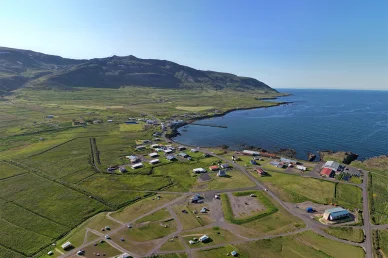
Borgarfjörður a remote settlement in Austurland
On an ordinary summer day, Borgarfjörður is a place of silence, magnificent natural scenery, and an intricate network of mountain trails. It is the starting point of the famous "Deserted Fjords Trail" (Víknaslóðir), which winds through uninhabited fjords, abandoned farms, and colorful rhyolite mountains, including the dramatic Dyrfjöll peaks. There are more than 150 km of marked hiking trails in the area between Seyðisfjörður and Héraðsflói Bay. Visitors come here to climb the legendary elf hill Álfaborg, listen to the cries of tens of thousands of puffins near the Hafnarhólmi cliffs, and enjoy a cup of coffee at Alfacafé.
However, everything changes during the last week of July, when the festival week (Bræðsluvikan) takes place. All local businesses begin operating at full capacity, catering to the festival crowd, which swells from the village's usual population of 100–130 residents to 1,000–1,300 Bræðslan visitors. Cozy off-venue concerts take place every evening at the local Fjarðarborg community center, while the usually quiet campsite transforms into a bustling tent village.
The regional tourism office, Visit Austurland, describes Bræðslan as an event that has an enormous impact on everyday life in Borgarfjörður and generates a substantial share of the annual income for local businesses.
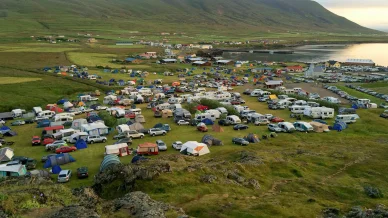
A great many people come to the festival
This, incidentally, is one of the fundamental differences between Bræðslan and major European music festivals or even other Icelandic open-air events: the festival grounds are not separated from the village by fences or turnstiles. There is no clear boundary between where the stage ends and the village's everyday life begins. In fact, for several days, the entire Borgarfjörður becomes one enormous, living backdrop for the festival. Musicians who perform to sold-out crowds at the factory in the evening spend their afternoons ordering soup at the same small restaurant as ordinary tourists or photographing puffins alongside them in the harbor.
In materials published by Visit Austurland, this atmosphere is described as sannkölluð sveitastemning — an authentic countryside atmosphere, a warm, close-knit rural gathering where everyone feels at home. It is the feeling of visiting relatives in a small village for the weekend, where, purely by coincidence, world-famous musicians happen to be performing.
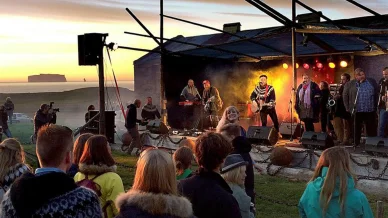
Each summer, Bræðslan draws Icelandic bands and visitors to the remote village of Borgarfjörður Eystri
Borgarfjörður eystri lies at approximately 65.5° north latitude, just south of the Arctic Circle. By late July, the sun already dips below the horizon here. Therefore, strictly speaking, this is not the polar day in the scientific sense. However, summer nights in eastern Iceland remain extraordinarily bright. Instead of darkness, the mountains are bathed in a deep, lingering golden-pink glow, and the summer twilight stretches on for hours. These incredibly long, cool, and crystal-clear evenings in late July create the sensation that time itself has stood still.
Musical format and famous performers
The Bræðslan festival stands out not because of any particular musical genre, but because of its unique approach to curating the lineup. The organizers have established two key objectives for the event. First, the musical program should appeal equally to listeners of different generations. Second, internationally renowned artists should share the same stage with young, emerging musicians who are just beginning their careers.
One of the most striking examples of this approach is the band Of Monsters and Men. They performed at Bræðslan in 2010, at the very beginning of their career. Today, Of Monsters and Men are among Iceland's most successful indie rock exports, but in the early 2010s, they were still relatively unknown newcomers. According to recollections, when they first arrived at Bræðslan, they could not even afford proper accommodation or a separate hospitality rider. Just a year after their performance at the factory, in 2011, they released the single "Little Talks", which entered international charts, achieved multi-platinum status, and has since accumulated more than 400 million views on YouTube and over a billion streams across music streaming platforms. Their debut album, My Head Is an Animal, reached No. 6 on the US Billboard 200 chart. Their music also appeared on the official soundtracks of major franchises such as The Hunger Games and the television series Game of Thrones, in which the band members even made cameo appearances as traveling musicians, as well as Ben Stiller's film The Secret Life of Walter Mitty.
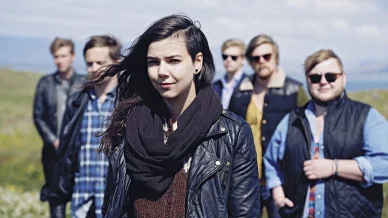
Of Monsters and Men is a five-piece indie folk/indie rock band hailing from Keflavík, Iceland
In 2014, the band made a triumphant return to Borgarfjörður eystri as the festival's main headliner. Today, the story of Of Monsters and Men and their 2010 Bræðslan performance has become one of the festival's legends. Every year, the organizers remind emerging Icelandic musicians that the journey from performing in an abandoned fish processing factory on the edge of Iceland to achieving international recognition may be shorter than it first appears.
But there have been other legendary stories over the years. For example, Scottish indie icons Belle and Sebastian came to the festival in 2006 at the invitation of their friend Emilíana Torrini. The Glasgow-based musicians were accustomed to performing in large stadiums, but Borgarfjörður eystri completely won them over. On the day of the festival, the band turned their performance into a massive interactive experience: halfway through the concert, Stuart Murdoch began inviting audience members onto the stage. As a result, the band played much of the rest of their set surrounded by a tightly packed crowd of local Icelandic fishermen, farmers, and their children, all dancing and singing alongside the rock stars. The following day, the band even organized an impromptu, completely free mini-concert at a tiny local café for those who had been unable to get tickets to the main show at the factory.
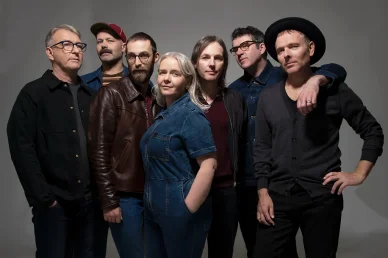
Scottish indie icons Belle and Sebastian took part in the festival in 2006
Another legendary story dates back to 2008, when famous Irish singer Damien Rice arrived at the festival. He was so deeply impressed by the intimate atmosphere and the history of the old factory that he did something completely unexpected during his performance. In the middle of the concert, he simply switched off all the microphones and amplifiers and unplugged his guitar cables. Rice stepped away from the edge of the stage, stood in the middle of the open space inside the old herring factory, and began singing a cappella. All 800 people froze. The factory fell so silent that you could hear the breathing of the people standing next to you. Thanks to the unique resonance of the thick concrete walls, his voice and the acoustic guitar that later joined him carried perfectly all the way to the back rows. Locals still remember this moment as pure magic. And after his official performance, Rice did not head back to his hotel. Instead, he picked up his guitar, made his way to the local campsite, and spent hours singing songs with tourists around a campfire.

Damien Rice - 3. Me My Yoke & I (T in the Park 2007)
Over the years, dozens of iconic artists have graced the Bræðslan stage, leaving behind countless wonderful stories. Among them are:
- Emilíana Torrini — the godmother of the festival;
- Damien Rice and Glen Hansard — Irish romantics;
- John Grant — a renowned American singer-songwriter who fell so deeply in love with Iceland that he even moved there. After his performance in 2013, he publicly described Bræðslan as one of his favorite festivals in the entire world;
- Eivør — an extraordinary singer from the Faroe Islands;
- Páll Óskar and Megas — icons of Iceland's pop and rock scenes;
- Hjálmar — the pioneers and leading ambassadors of Icelandic reggae;
- Mugison — one of Iceland's most charismatic blues-rock musicians;
- Mammút — a post-punk band known for its mystical and aggressive sound;
- Bríet — a contemporary superstar of Icelandic indie pop;
- Daði Freyr — a Eurovision fan favorite and master of ironic synth-pop;
- Agent Fresco — a progressive rock band.
And many more. Radio station Rás 2 regularly broadcasts the concerts from the factory live. As a result, despite its modest capacity of just 800–900 attendees, the festival attracts a huge nationwide audience every year, reaching listeners far beyond the fjord.
It is also important to understand that Bræðslan and Bræðsluvikan are not exactly the same thing. Bræðslan is the main concert held inside the old factory building, always on a Saturday. Attending it requires one of those highly sought-after tickets. Bræðsluvikan, on the other hand, is the festival week leading up to Saturday. The days before the main show have evolved into a celebration in their own right, featuring numerous additional performances. Live music fills terraces and cafés, while post-concert parties gradually flow into late-night entertainment.
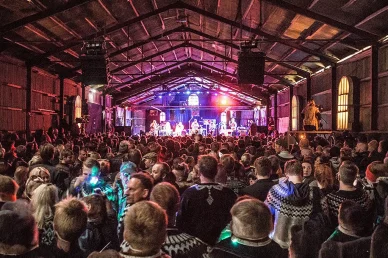
Bræðslan — a major central concert held in an old factory building, which always takes place on a Saturday
Tickets
The intimate nature of the venue has a significant practical consequence — tickets for the main Saturday concert are extremely limited. The organizers officially keep ticket sales at approximately 800–900. Demand is enormous, and tickets often sell out within hours of becoming available.
The organizers have already established the schedule for the upcoming festival:
- July 24, 2027 — the main Saturday concert at the factory;
- Early 2027 — the official announcement of the lineup and festival program;
- Early April 2027 — the official start of ticket sales.
Exact ticket prices, purchase conditions, and the authorized ticket distributor should be checked directly on Bræðslan.is when spring ticket sales open. Your electronic ticket will be scanned at the venue and exchanged for a fabric festival wristband. To avoid long queues before Saturday's concert, the organizers usually open wristband collection points in advance. Visitors can typically collect their wristbands as early as Friday near the Bræðslan factory building or on Saturday afternoon near the Fjarðarborg community center.
How to get there
The easiest starting point for planning your trip is Egilsstaðir. Borgarfjörður eystri is located approximately 70 km from the town and is connected to it by Road 94, known as Borgarfjarðarvegur. Part of this road underwent major reconstruction in 2021–2022.
If you are driving to the festival directly from Iceland's capital, Reykjavík, keep in mind that the journey covers more than 700 km and requires at least 8–9 hours behind the wheel.
An alternative and faster option is to take a domestic Icelandair flight from Reykjavík to Egilsstaðir (the flight takes just 45 minutes), then rent a car or use local ground transportation upon arrival.
A local scheduled bus service operates between Egilsstaðir and Borgarfjörður eystri. According to the current information on the village's official website, the regular weekday timetable is as follows:
- 08:00 — Borgarfjörður eystri → Egilsstaðir;
- 12:00 — Egilsstaðir → Borgarfjörður eystri.
A standard one-way adult ticket costs 3,000 ISK, while tickets for children under 13 and discounted fares for senior citizens cost 1,500 ISK. However, keep in mind that the main concert takes place on Saturday, while the regular bus service operates from Monday to Friday. It is best to check the timetable directly before the festival.
Where to stay during the festival
Borgarfjörður eystri already has a cozy but relatively limited tourist infrastructure. Official accommodation options include hotels and guesthouses such as Blábjörg (known for its oceanfront spa facilities) and Álfheimar. However, if you are looking for a traditional hotel room with a comfortable bed, private bathroom, and hotel services, you should book your accommodation six months or even a year in advance, long before the final festival lineup is announced.
There is also a pleasant campsite nearby, Álfaborg Campsite, which does not accept advance reservations. However, the camping area is spacious, green, and well-organized into designated zones, so there is usually enough room for everyone who wants to stay.
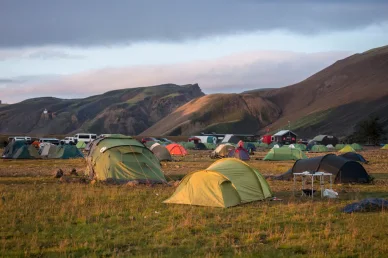
Álfaborg Campsite lies at the foot of the Álfaborg rock, which local folklore calls home to the queen of Icelandic elves
Current campsite rates (October 2026):
- Adults — 2,000 ISK per night;
- Accommodation tax — 400 ISK per accommodation unit (tent or vehicle);
- Children under 12 — stay free of charge;
- Electricity hookup (for campervans or caravans) — 1,700 ISK;
- Shower facilities — 500 ISK.
The campsite offers a large shared kitchen, a covered dining area, Wi-Fi, two modern service buildings with toilets and other sanitary facilities, and approximately 40 electrical hookup points.
What to bring with you
Although the main Saturday concert takes place under the sturdy roof of the former herring processing factory, all your movements between the campsite, off-venue locations at the Fjarðarborg community center, cafés, and food trucks will be outdoors. The Borgarfjörður valley is fully exposed to Arctic winds blowing in from the ocean, so strong, stormy winds, sudden drops in temperature, or prolonged rainfall in Austurland are entirely possible even in the middle of summer.
Your essential clothing kit should follow the three-layer principle:
- Outer layer: A reliable waterproof and windproof membrane jacket (hardshell) to protect against harsh weather conditions;
- Middle layer: A thick fleece jacket or a traditional Icelandic wool sweater (lopapeysa);
- Base layer: A high-quality T-shirt or lightweight thermal underwear (ideally made from merino wool) to wick moisture away from the skin;
- Footwear: Hiking boots or at least sturdy waterproof trainers with good grip for walking on wet grass and rocky terrain;
- Accessories: A warm, snug-fitting hat to protect your ears from the cold ocean breeze, along with plenty of clean, dry socks;
- For camping: A reliable double-walled tent, a warm sleeping bag with a comfort temperature rating of approximately 0–5°C, and an inflatable or foam sleeping mat that provides insulation from the cold ground.
There is no need to bring a huge down jacket. The golden rule for staying comfortable at an Icelandic music festival is to ensure complete protection against biting winds and moisture.
Interesting facts about the Bræðslan festival
- The first Bræðslan festival took place in 2005, and in 2025, the festival celebrated its 20th edition.
- The former herring oil processing factory was not abandoned back in the 1960s, like many other factories in Iceland. The plant remained operational until the late 1980s.
- One of the factory's steam boilers had previously been used in South America and Reykjavík before arriving in Borgarfjörður. It remained in operation at the local factory until 1966 and is now preserved as a historical feature.
- Only around 800–900 tickets are sold for the main concert each year.
- The festival has a tradition of keeping one of its headline performers a complete secret until the very last moment. Famous musicians who were not listed on the official lineup often make surprise appearances on off-venue stages or during the main concert.
- In 2010, Bræðslan received the prestigious Icelandic Eyrarrós Award. Presented under the patronage of Iceland's First Lady, this award recognizes outstanding cultural contributions to the development of Iceland's remote regions.
- Tickets for the 2013 festival sold out in approximately 60 hours.
- During the transformation of the factory into a concert venue, architects and organizers faced strong opposition from the local community to any modern renovations. As a result, they preserved the raw, industrial walls and conserved the rusty remnants of old machinery and metal beams. Today, this weathered, rusty aesthetic has become a defining visual element of Bræðslan's branding and merchandise.
- Because the village is surrounded by steep, towering mountains, mobile phone reception would sometimes disappear completely during the festival's early years when around a thousand visitors arrived.
Social media and resources


Telephone: +354 862 6163
E-mail: [email protected]
FAQ
❓ What is the Bræðslan Festival?
Bræðslan is an intimate indie music festival held in Borgarfjörður eystri in eastern Iceland. The main concert takes place once a year (on the last Saturday of July) inside a former herring processing factory. Additional concerts and events are held throughout the village in the days leading up to the main show.
❓ Where does the Bræðslan Festival take place?
The festival takes place in Borgarfjörður eystri in Austurland (East Iceland). The main concert is held inside the old síldarbræðsla, a former herring processing factory in Borgarfjörður eystri.
❓ When is the Bræðslan Festival held?
Traditionally, the festival takes place on the last Saturday of July. The next main concert is scheduled for July 24, 2027.
❓ What does the name Bræðslan mean?
The name comes from síldarbræðsla, the Icelandic term for a herring processing factory, where the festival is held. It literally means "The Rendering Plant."
❓ What music genres are represented at the festival?
The festival does not focus on any single musical genre. Over the years, its lineups have featured pop, indie, rock, folk, alternative music, and singer-songwriters. The main principle is to bring together emerging artists and established Icelandic and international performers.
❓ How many people attend Bræðslan each year?
Historically, around 800 tickets have been sold for the main concert, while figures from previous festivals indicate that more than 1,000 visitors have arrived in the village during the festival weekend.
❓ How and when can I buy tickets for the festival?
Bræðslan announces ticket sales through its official website and social media channels. For the 2027 festival, ticket sales are expected to begin in early April.
❓ How do I get to Borgarfjörður eystri?
Borgarfjörður eystri is approximately 70 km from Egilsstaðir via Road 94. A local bus operates on weekdays, but its regular schedule does not include Saturdays, when the main concert takes place. Therefore, transportation options for the specific festival weekend should be checked separately.
❓ Where can I stay during the festival weekend?
Borgarfjörður offers several guesthouses and hotel accommodation options, including Blábjörg and Álfheimar, but availability is limited. An alternative is Álfaborg Campsite, which does not accept advance reservations but usually has enough space to accommodate all visitors.
❓ Can I attend Bræðslan with children?
The festival presents itself as a family-friendly event. In 2026, children under the age of 14 could attend the main concert without a wristband, but only when accompanied by a parent or guardian.