The first day of summer in Iceland (Sumardagurinn fyrst)
The first day of summer in Iceland is Sumardagurinn fyrsti, an official public holiday, which sounds a little ironic to those who have seen Icelandic April. Imagine: it's spring according to the calendar, but outside the window, snowflakes may be swirling or freezing rain may be lashing down, and Icelanders greet each other with the phrase ‘Gleðilegt sumar!’ (Happy summer!). But for locals, Sumardagurinn fyrsti is not about ‘July-like’ temperatures, but about the transition of the season in the traditional calendar, longer days, hope after winter, and a very warm (in terms of atmosphere) family tradition. It is celebrated with parades, city events and small ‘summer gifts’ for children.
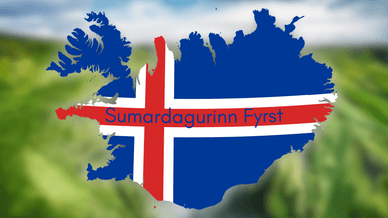
If you are planning a trip to Iceland in April, here is everything you need to know about this amazing ‘summer’. The article below explains where the date comes from, why the beginning of summer is celebrated in April, folk signs, and how this day is actually celebrated in Iceland's cities and towns.
Since 1921, the first day of summer has been a public holiday, and since 1971, it has also been an official day off. It is also one of the so-called flag days — dates when the Icelandic flag must be raised on government buildings.
Characteristics | What you should know |
|---|---|
Title | First day of summer (Sumardagurinn fyrsti) |
Date 2026 | 23 April (Thursday) — public holiday |
When is it celebrated? | First Thursday after 18 April (date varies between 19 and 25 April) |
Meaning | The start of the summer month of Harpa according to the ancient Icelandic calendar |
How it is celebrated | Parades, events for children, outdoor activities (or indoors if the weather is unfavourable) |
A separate tradition | Parades, children's entertainment and summer gifts (summer gifts / sumargjafir) |
History of the holiday
The main reason why the first day of summer in Iceland falls in April is simple: it is not summer according to the forecast, but according to the old calendar used in Iceland until the 19th century. The logic here is not meteorological, but historical. This calendar divided the year into only two seasons: six months of short days (winter) and six months of long daylight hours (summer). Although the real summer weather had not yet arrived, the days were already getting longer. It is Sumardagurinn fyrsti that marks the beginning of the summer half-year and the first summer month, Harpa.
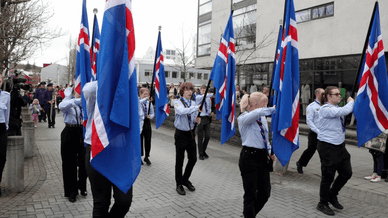
A scout parade with Icelandic flags marching down a city street on the first day of summer in Iceland
The date was set so that it always fell on a convenient day of the week: the holiday is celebrated on the first Thursday after 18 April (i.e. between 19 and 25 April).
And yes, the weather often emphasises the irony of the name, with temperatures dropping below zero. Icelanders like to point out that ‘the first day of summer’ can be cold, windy and wet, but the point of the holiday is to welcome the light and longer days, even if your gloves are still in your pocket. Icelanders are masters of optimism.
Folk omens associated with the first day of summer
The first day of summer has many folk beliefs and traditional omens, dating back to a time when the ancient Icelandic calendar and way of life were linked to nature and agriculture. It is part of the folk consciousness that measured seasonal changes and the future weather.
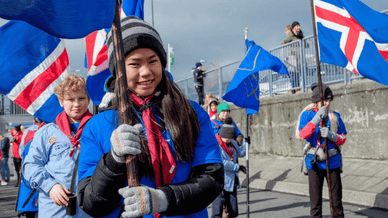
Young scouts smiling and carrying Icelandic flags during a parade on the First Day of Summer
Here are some folk signs and beliefs associated with this day:
- The origin of the name of the month Harpa, which begins with Sumardagurinn fyrsti, is lost in the depths of centuries, but in the 19th century, it acquired a romantic embodiment in Icelandic culture — in the form of a young girl. She was imagined as the daughter of Torr and Goi, the last two winter months, symbolising the transition from harsh winter to the bright period of the year. According to one version, Harpa could also be the name of a forgotten female deity;
- The beginning of summer is the time of unmarried girls. If the previous months in the folk calendar were associated with married life, the first summer month was considered the ‘territory’ of the unmarried. They became the central figures of ritual jokes and observations. In some villages, each day of the month of Harpa was symbolically ‘assigned’ to a particular girl. The weather on that day — sun, wind or rain — became a reason for joking comments about her temperament and character;
- Drawing lots for future acquaintances. Another popular pastime was for girls to draw the names of unmarried boys. According to popular belief, these boys were the first to visit them at the beginning of the month, at the end of the so-called Lonely Month (Einmánuður);
- ‘If winter and summer freeze together...’ If the temperature drops below zero on the night before the first day of summer and there is frost or hoarfrost, it is believed that the summer will be successful and favourable, especially for fields and livestock;
- Place a bowl of water outside overnight. Some people traditionally placed a bowl of water outside before the holiday and checked in the morning to see if the water had frozen. If the water froze, it was a sign of a good year;
- The temperature of a frosty night as a sign of harvest. It was believed that the frost of the last night could predict not only a warm season, but also good nutrition for livestock and a good hay harvest — factors that were traditionally important for prosperity;
- Listen to the behaviour of birds. In ancient times, the behaviour of migratory birds (such as the golden plover — lóa ) could be used to predict the arrival of summer. The return of certain species was considered a sign that ‘summer had truly begun’.
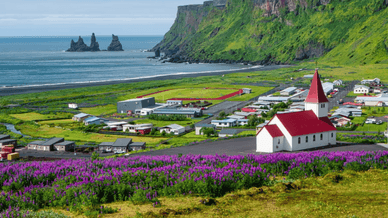
The iconic Vik i Myrdal church overlooking a coastal village with blooming purple lupines in the foreground and sea stacks in the distance
Today, the ancient ritual meanings have almost disappeared, but the day remains important. Festivals, parades, fairs, sporting events and family gatherings are held across the country — more as a celebration of light, movement and the new season than as a mystical ritual.
How the first day of summer is celebrated in Iceland
The first day of summer in Iceland is not a loud national show or a pompous ceremony. Quite the opposite: it is a very human, warm and slightly ironic holiday that Icelanders greet with a smile, even if it is cold and drizzling outside.
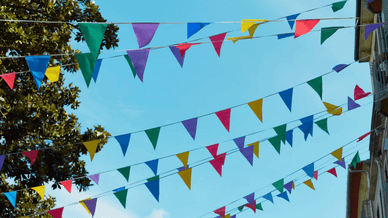
Colorful festive bunting flags hanging across a street against a clear blue sky during the First Day of Summer
Since Sumardagurinn fyrsti is an official public holiday, schools, most offices and government institutions are closed on this day. Cities seem to slow down — it feels like the country has paused to ‘enter summer’ together. In many cities and towns, small parades begin in the morning: scouts march, brass bands play, children carry flags, and adults greet each other with the phrase Gleðilegt sumar! — ‘Happy summer!’
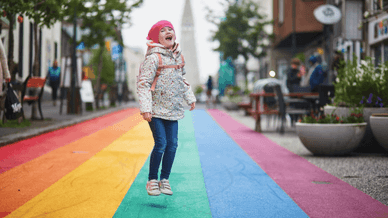
Joyful little girl jumping in mid-air on the famous Rainbow Street in Reykjavik during the First Day of Summer
This is a very family-oriented holiday. Children play a central role in it. Games, entertainment, small festivals, sports competitions, attractions, and festive venues are organised for them. Even if the weather does not allow for long stays outdoors, events are easily moved to sports halls or community centres, and the mood remains high. In Iceland, the weather is viewed philosophically.

Sumardagurinn fyrsti 2017
A separate and very characteristic tradition is ‘summer gifts’ for children. In some families, on the first day of summer, children are given small gifts related to activities: balls, outdoor toys, books, clothes, or small surprises. This custom is much older than Christmas gifts and symbolises the beginning of a brighter period of the year when life gradually comes out into the open.
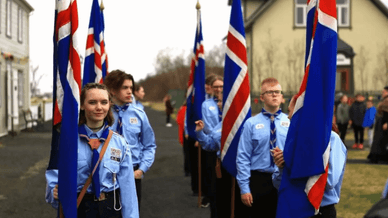
The image displays a formal line of Icelandic scouts in blue uniforms holding national flags during the First Day of Summer celebrations
In modern Iceland, Sumardagurinn fyrsti does not have a single celebration scenario. For some, it is a parade and festival in the city centre, for others, it is a walk with the children, ice cream despite the cold, or a family dinner. It is a day when people take their time, leave the house without any particular purpose and allow themselves to enjoy the very idea of summer — even if it is still very cautious, even if the temperature drops below zero.

Sumardagurinn fyrsti 2026
That is why the first day of summer reflects the Icelandic character so well: a little self-irony, respect for traditions, a lot of attention to the community — and the ability to celebrate the light without waiting for ideal conditions.
FAQ
❓ When is the first day of summer in Iceland in 2026?
The first day of summer in Iceland in 2026 falls on Thursday, 23 April. This holiday is celebrated on the first Thursday after 18 April and symbolises the arrival of summer.