Björk
Björk is a phenomenon in the world of music. She embodies raw energy, turbulence, screams, emotional intensity, harmony and disharmony, visual and musical experimentation, educational projects, and a constant drive to push boundaries. Over half a century in music, this petite woman has transcended the borders of Iceland, and Björk's voice now resonates around the world. From a childhood album of cover songs and garage punk in Reykjavík to electronic avant-garde music, symphonic projects, cinema, multimedia installations, and a unique artistic language in which sound is almost impossible to separate from costumes, music videos, or stage design. All of this is Björk.
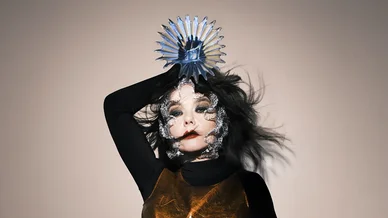
In April 2026, the singer officially confirmed that her next (11th) studio album would be released in 2027. Work on the album is ongoing. Audiences were introduced to the new song “Nerve Bloom,” which will be included on the upcoming album, as part of her large-scale multimedia exhibition and performance “Echolalia,” held from May to September 2026 at the National Gallery of Iceland.
Full name | Björk Guðmundsdóttir |
|---|---|
Date of birth | November 21, 1965 |
Age | 60 years old (as of October 2026) |
Height | Approximately 163 cm |
Hometown | Born and raised in Reykjavík |
Occupation | Singer, songwriter, composer, producer, actress, DJ, multidisciplinary artist |
Projects | Tappi Tíkarrass, KUKL, The Sugarcubes, solo career, Cornucopia, Echolalia, and Björk Orkestral concert tours, the Echolalia performance exhibition and the rave of the same name. The worldwide release of the live album Björk Orkestral With the Hamrahlíð Choir is scheduled for late November 2026. |
Marital status | Was married to Þór Eldon from 1986 to 1987 and was in a long-term relationship with artist Matthew Barney until 2013. Currently unmarried. |
Children | Son Sindri Eldon Þórsson and daughter Ísadóra Bjarkardóttir Barney |
Biography of Björk
Björk, whose full name is Björk Guðmundsdóttir, was born on November 21, 1965, in Reykjavík, into a family of a hippie and an electrician. Her mother, Hildur Rúna Hauksdóttir, was a passionate feminist, environmental activist, and participant in the progressive arts movement. Even in 2002, she went on a hunger strike to protest the construction of the Kárahnjúkar hydroelectric power plant in the Icelandic wilderness. Her mother raised Björk in a free-spirited, bohemian environment and was also the one who enrolled her daughter in music school.
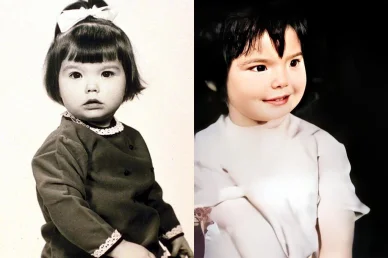
Björk in childhood
Björk's biological father, Guðmundur Gunnarsson, separated from Hildur shortly after Björk's birth, so the girl did not grow up living with him. He worked as an electrician throughout his life and even became the leader of Iceland's national electricians' union. Later, he also became involved in municipal politics in Reykjavík. Despite her parents' separation, Björk maintained a relationship with her father. In 2010, he officially represented the singer and delivered a speech at the ceremony where she received the prestigious Polar Music Prize, saying that her musical talent had emerged even before she learned to speak.
After the separation, Björk's mother moved with her young daughter into one of Reykjavík's first and largest hippie communes. This was a truly unusual experience in what was then a conservative Icelandic society. There, her mother's new partner and Björk's stepfather became Sævar Árnason, a guitarist in the popular local band Pops, who was half-jokingly referred to in Iceland as the "Icelandic Eric Clapton." While Björk's mother devoted herself to painting and activism, her stepfather spent entire days playing records, gradually introducing the girl to classic rock artists such as Jimi Hendrix and Janis Joplin. He encouraged her to write her own songs and actively helped 11-year-old Björk record and produce her first children's album in 1977.
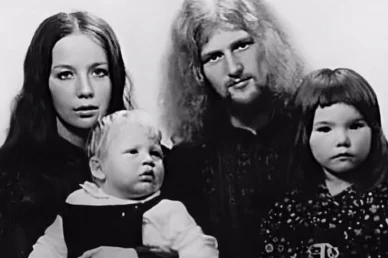
Björk with mum and stepfather, 1971
When the RÚV radio station became interested in 11-year-old Björk's voice, Sævar took on the roles of manager and arranger. He helped her select songs, adapt them into Icelandic, and spent hours with her in the recording studio. He also played guitar on most of the album's tracks, while his musician friends contributed as session instrumentalists. Although the album was successful and her stepfather was fond of classic rock, teenage Björk quickly outgrew that aesthetic. She felt that the older generation's rock music, including her stepfather's, had become too comfortable, commercialized, and outdated. When the British punk wave, led by bands such as The Clash and the Sex Pistols, reached Iceland in the late 1970s, Björk realized that this was exactly the raw, energetic, and uncompromising sound she had been searching for. She cut her hair, began wearing safety pins, and formed her first punk band, Spit and Snot.
The house where the future singer grew up was constantly home to between 10 and 20 people, including artists, poets, musicians, and activists. The doors were never locked, music played everywhere, passionate political and philosophical discussions were common, and everyday life was entirely communal. Björk later remembered this environment as incredibly vibrant but also chaotic. The adults around her were so absorbed in "changing the world," art, and spiritual practices that they sometimes neglected ordinary household responsibilities. This constant chaos inspired an unusual form of rebellion in Björk. While children from traditional families dreamed of freedom, young Björk dreamed of structure and order. She recalled envying classmates whose homes were clean and whose mothers bought ordinary factory-made white bread, while everyone in the commune ate only homemade whole-grain bread and healthy food.
Björk was enrolled in music school at approximately five years old. There, she was introduced to European classical music at an early age and later acknowledged that this education had left a profound mark on her, even though she rebelled against academic conventions as a teenager. She studied piano, flute, and music theory. Björk recalled that by the age of ten, she was already arguing with her teachers about the curriculum's excessive focus on the old European academic tradition. Over time, she began to see music not merely as something to perform but as material she could reshape according to her own vision. Although Björk later said in interviews that she had never wanted to become a singer as a child, in 1976, a recording of her performance of Tina Charles's "I Love to Love" reached RÚV. Representatives of the Fálkinn record label heard the schoolgirl's voice, which led to the idea of recording an album with the young singer.
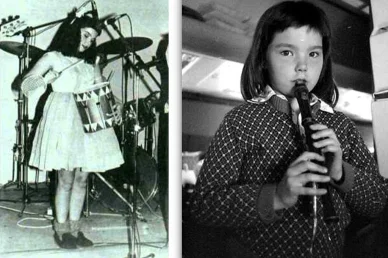
Björk was enrolled in music school at approximately five years old
Björk's first album was recorded when she was 11 years old and released in December 1977, shortly after her twelfth birthday. The record featured Icelandic versions of international songs, including The Beatles' "The Fool on the Hill," as well as her own instrumental composition, "Jóhannes Kjarval," which young Björk performed on the flute. The album brought her fame, but she did not enjoy it. Afterward, she promised herself that she would never release another record under her own name unless she felt it was truly her album. Instead of pursuing a career as a child star, Björk chose a completely different side of Reykjavík — its punk scene.
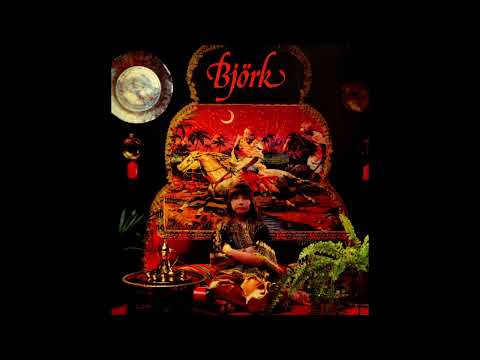
björk : 1977
Björk sees her distinctive singing style as something shaped less by other vocalists than by Iceland itself. In the documentary Inside Björk (2003), she recalls the long summer days, winter darkness, volcanic eruptions, ice, and almost treeless landscapes as perfectly natural parts of her childhood environment. She spent a great deal of time outdoors and believes this experience influenced the way she learned to use her voice. She even describes this connection in almost physical terms: in calm weather, she could crouch beside the moss and sing barely above a whisper, while standing on a hill in strong winds meant practically shouting the chorus.
Early Career
At the turn of the 1970s and 1980s, Björk became part of the movement that was shaping Iceland's emerging independent music scene. When punk rock reached Iceland, she was around 14 years old, but she was already actively singing in teenage bands such as Spit and Snot and Exodus. She later recalled that period as a genuine explosion of creativity: for several years, according to her, it seemed as though literally everyone around her was forming their own punk band. This scene was not limited to music. It brought together poets, painters, musicians, and virtually the entire generation of young Icelandic artists.
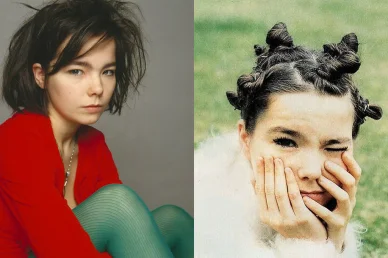
At the age of 14, the Björk was already actively singing in teenage bands
One of her first truly significant bands as a young adult was Tappi Tíkarrass (whose name roughly translates as "Cork the Bitch's Ass"). As a member of this group, she appeared in the cult documentary Rokk í Reykjavík ("Rock in Reykjavík"), which captured the explosive rise of Iceland's punk movement in the early 1980s.
The next important chapter was KUKL, an experimental avant-garde post-punk band. In this group, Björk collaborated with Einar Örn Benediktsson, Sigtryggur Baldursson, and other key figures of Reykjavík's music scene. KUKL released two landmark albums on the renowned British anarcho-punk label Crass Records: The Eye (1984) and Holidays in Europe (The Naughty Naught) (1986). Punk allowed Björk to combine industrial noise, free improvisation, theater, and rock music without conforming to any established genre boundaries. Forty years later, Björk would conceptually recreate this raw punk spirit of freedom and sonic chaos in her large-scale multimedia performance exhibition Echolalia (2026) and at the summer rave of the same name, held during a solar eclipse in Iceland.

Björk - KUKL - Hvar ertu (Where Are You) Assassin - Rokk Arnir - Live @ Iceland, (1986) - [HD]
Björk's generation was trying to understand how to be modern Icelanders without abandoning their connection to nature, mythology, and local culture. In 1986, the band Sykurmolarnir, better known internationally as The Sugarcubes, emerged from the remnants of Iceland's artistic punk scene. With this group, Björk entered the international rock scene for the first time. The breakthrough came with the track "Ammæli," whose English-language version was released under the title "Birthday." In August 1987, the influential British music magazine Melody Maker named the single its "Record of the Week." One Little Indian, the independent label that released it, was immediately flooded with offers from major international distributors. Ironically, the single's initial release in Iceland had attracted almost no attention.

Björk - Ammæli
The Sugarcubes' debut album, Life's Too Good (1988), became a musical sensation. By the end of the year, sales had approached half a million copies, instantly putting Iceland's alternative music scene on the global music map. The charismatic Björk quickly became the face of the band in the eyes of the press, although the musicians themselves strongly resisted attempts to reduce the group to a mere backing band for her.
Despite their remarkable success, Björk gradually felt that she had outgrown both the band and its artistic circle. Conversations with poets remained intellectually stimulating, but traditional indie rock was no longer enough for her. She wanted to find like-minded musicians who were equally obsessed with exploring radically new electronic sounds. Even before fully committing to a solo career, she began searching for such collaborators. In 1990, Björk approached Graham Massey of the Manchester-based electronic group 808 State. She modestly introduced herself simply as "an Icelandic singer," without mentioning that she was Björk from The Sugarcubes. She played him some of her early songs, several of which she had written as a teenager and originally intended to arrange for Icelandic brass bands.
There is one almost cinematic detail from this period. In the summer of 1990, Björk traveled by bicycle between churches across Iceland, setting herself the task of improvising or composing one piece of music along the way and recording it on a portable tape recorder. This method of creating music through direct contact with the landscape would eventually become one of her artistic trademarks. Decades later, Björk would use a similar approach to collect field recordings for Fossora and her upcoming 11th studio album, scheduled for 2027. It was these acoustic, jazz-influenced, and earthy sketches from 1990 that later collided with Massey's breakbeats and electronic sounds, giving birth to her solo album Debut.

björk : fossora
In 1992, following the release of The Sugarcubes' third album, the band officially broke up. Björk packed her bags, moved to London, and started over from scratch — no longer as the eccentric vocalist of a rock band, but as an independent artist with her own creative identity, as Björk.
Solo Career and International Success
Björk's first adult solo album, Debut, was released in 1993, when she was 27 years old. The title was deliberate: she did not consider her childhood record from 1977 the beginning of the artistic career she wanted to build on her own terms, but she regarded this album as her true debut. Debut combined dance-oriented electronic music, house, jazz, and pop. Songs such as "Human Behaviour," "Venus as a Boy," and "Big Time Sensuality" demonstrated that Björk could bring the experimental spirit of Reykjavík's music scene into international pop music without compromising its complexity. According to Official Charts, the album reached number three in the United Kingdom and spent 79 weeks on the chart.
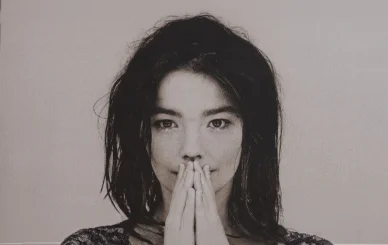
Björk's first adult solo album, Debut, was released in 1993, when she was 27 years old
The success of Debut was largely due to the fact that Björk did not simply join the fashionable British electronic music scene of the early 1990s. Instead, she brought together the sounds circulating in London at the time: club culture, early trip-hop, IDM, jazz elements, and non-European musical influences. However, all these components were filtered through her own artistic vision, imagery, and sense of rhythm. As a result, the album did not sound like an imitation of any particular genre. It transcended genre boundaries altogether.
Her next album, Post (1995), expanded this approach even further, bringing together electronic music, big band arrangements, industrial sounds, trip-hop, and almost theatrical pop. The record reached number two in the United Kingdom. Two years later, Homogenic (1997) combined powerful electronic beats with classical string arrangements. The album's entire structure is often interpreted as a musical representation of Iceland's landscape — a contrast between something tectonic, cold, and yet profoundly alive. Homogenic reached number four on the UK Albums Chart.
According to Björk, each of her albums has its own conceptual character. She described the protagonist of Debut as a shy, polite newcomer entering an unfamiliar world for the first time. The character of Post, meanwhile, is a "girl from the countryside" who absorbs the energy of the big city while the city simultaneously absorbs her.
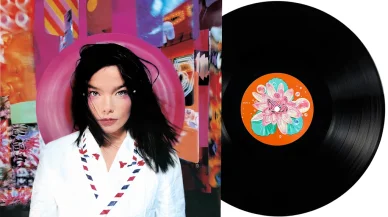
In 1995, Björk released the album Post
After several years of an international career, Björk began asking herself a question: if her music had become global, what remained distinctly Icelandic about it? Her answer was an attempt to create, in her own words, "modern Icelandic pop music," featuring "volcanic beats" and deeply romantic, almost patriotic string arrangements. This was how Homogenic took shape. At the same time, the album was a response to profound exhaustion. Björk recalled years when she worked almost without days off, constantly pouring her energy into dozens of projects simultaneously. As a result, the album's central character became a kind of warrior — but not one who responds with weapons or aggression. In her words, this is someone who wants to "fight with love."
Album covers, hairstyles, costumes, music videos, and stage personas are not merely decorative elements accompanying Björk's songs — they extend the identity of each particular record. The visual eras of Debut, Post, Homogenic, Vespertine, and Fossora are easily distinguishable from one another. Her music videos are just as important as the songs themselves. Working with Michel Gondry, she created the videos for "Human Behaviour" and "Hyperballad." Spike Jonze directed "It's Oh So Quiet," a vibrant homage to Hollywood musicals, while Chris Cunningham transformed "All Is Full of Love" into an iconic futuristic story about two robots. In 2015, the Museum of Modern Art (MoMA) in New York even dedicated a major retrospective exhibition to the artist.
After the outward power of Homogenic, the album Vespertine (2001) moved in the opposite direction, becoming an introspective record exploring the inner world. Tiny sounds play a crucial role here: celesta, harps, music boxes, microbeats, and insect-like noises created in collaboration with the electronic duo Matmos. On Vespertine, she also worked with a women's choir from Greenland and spoke about her particular connection to Arctic cultures. In her view, northern passion is no less intense than Mediterranean passion — it simply manifests itself differently, with greater depth and less outward display.
From that point onward, each Björk album developed its own distinctive artistic universe: the intimate, almost microscopic Vespertine (2001); Medúlla (2004), built primarily around the human voice; the brass-driven Volta (2007); the exploration of the relationship between nature, technology, and music education in Biophilia (2011); the deeply personal experience of separation in Vulnicura (2015); the airy world of Utopia (2017); and the fungal, earthy universe of Fossora (2022).

Björk - Hidden Place
As her longtime record label, One Little Indian / One Little Independent Records, points out, Björk's music intertwines electronic music, pop, classical music, trip-hop, IDM, and avant-garde influences, making it impossible to confine her work to a single genre. The very structure of her career reflects her refusal to divide her music into an "early pop" period and a later "experimental" phase. In an interview with The Guardian, she rejected this interpretation of her artistic evolution. According to the singer, every one of her albums has always featured both more accessible compositions and pieces that make no attempt whatsoever to appeal to a mainstream audience. Commercial success has never been her primary goal.
"I just like breaking the rules," Björk says.
Another striking example of this approach was Cornucopia, her most ambitious stage production to date (2019–2023). The show combined material from Utopia and Fossora with 360-degree sound, projections across 27 screens, and a choir performing within the scenery of a fantastical forest. In 2025, the project was given a second life as a concert film and an art book. After completing this spectacular production, Björk said she wanted to return to more flexible and intimate concert formats.
In the summer of 2026, the National Gallery of Iceland presented her large-scale exhibition Echolalia, where the tracks "Ancestress" and "Sorrowful Soil" were transformed into immersive audiovisual installations, while one of the rooms offered a preview of her upcoming 11th studio album, officially expected in 2027. On November 27, 2026, the live album Björk Orkestral with the Hamrahlíð Choir is scheduled for its official physical and digital release. This monumental recording captures her performance at the Harpa Concert Hall, featuring 50 singers from the renowned Hamrahlíðarkórinn choir. Despite her reputation as a serious avant-garde artist, Björk has always emphasized the importance of humor and self-irony in her work. She notes that even her dramatic and epic compositions, such as "Isobel" and "Bachelorette," actually have a distinctly humorous, exaggerated side that her close friends understand particularly well.
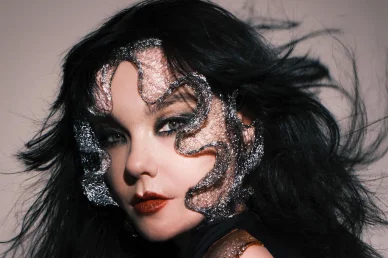
Björk: the "Echolalia" project, a daytime rave, and then the new album
Film Career: Dancer in the Dark
Björk's most famous film role is undoubtedly Selma in Lars von Trier's musical drama Dancer in the Dark. Initially, she was only supposed to compose the music, but the director eventually convinced her to play the leading character — a Czech immigrant who is gradually losing her eyesight and saving money for an operation to prevent her son from suffering the same fate.
At the 2000 Cannes Film Festival, the film won the Palme d'Or, while Björk received the Best Actress Award. The soundtrack was released separately as the album Selmasongs. The song "I've Seen It All," which Björk performed with Radiohead frontman Thom Yorke, was nominated for an Academy Award for Best Original Song. Björk attended the 2001 Oscars ceremony wearing the famous swan dress designed by Marjan Pejoski, which became one of the most recognizable looks of her career. The upper part of the dress featured the neck and head of a swan, and she even left decorative eggs on the red carpet. Initially, the outfit was widely ridiculed, but over time it became one of the defining fashion symbols of the early 2000s. The dress perfectly illustrates Björk's overall approach to fashion: for her, it is essential to synchronize the inner and outer worlds. Björk's dresses, masks, and costumes are best understood not as attempts to shock the public, but as part of the same artistic language as her music.
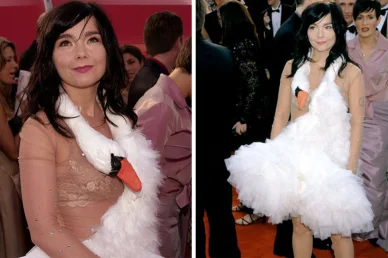
Singer Björk caused a stir at the 2001 Oscars with her animal-themed dress
From an artistic perspective, her performance in Dancer in the Dark was a triumph, but Björk later described the filming process in very different terms. In 2017, amid the rise of the #MeToo movement, she spoke publicly about sexual harassment by an unnamed Danish director. The context strongly suggested that she was referring to von Trier, who denied the allegations. In a 2025 interview with Le Monde, Björk spoke directly about working with Lars von Trier, describing the filming experience as a "disaster" and an abusive ordeal. She explained that the conflicts on set ultimately convinced her not to pursue a traditional acting career.
This does not mean that Björk never appeared in films again. She participated in Drawing Restraint 9 (2005), an experimental film by her then-partner Matthew Barney, and in 2022 she appeared as the Slavic Seeress (a Slavic witch) in Robert Eggers' historical epic The Northman. Nevertheless, music has always remained her primary profession.
Biophilia Mobile App
Björk's desire to transcend traditional artistic formats led her to explore various forms of art, and in 2011, it resulted in Biophilia — the world's first app-album, which radically transformed the concept of music distribution. The singer abandoned the traditional idea of an album as a simple collection of audio recordings and instead developed an interactive multimedia ecosystem for the iPad and iPhone.
Each song from the album is represented as an individual star within a three-dimensional constellation. Users can explore this digital universe and launch interactive games that investigate the connections between musical structures and natural phenomena, such as crystals, tectonic plates, and lunar cycles. Developed in close collaboration with leading digital artists, scientists, and mobile technology developers, the project became a major technological manifesto for pop music in the early 2010s.
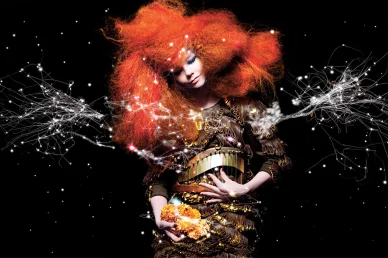
Björk, ‘Biophilia’ Album cover, designed by M/M Paris and photographed by Inez van Lamsweerde and Vinoodh Matadin (2011)
The album evolved into an international educational initiative for children called the Biophilia Educational Program. Using the app, students in Iceland, Scandinavia, and eventually around the world learn to understand the principles of physics, biology, and music theory through play, challenging the conventional academic teaching methods that Björk herself had rebelled against as a child.
In 2014, the Museum of Modern Art (MoMA) in New York officially added the Biophilia mobile app to its permanent collection of architecture and design. This marked the first time in history that a world-renowned art museum had acquired a smartphone app.
Björk's Personal Life
In public, Björk may appear on stage wearing a mask resembling a marine organism or build an entire concert around a futuristic flute, but her everyday life is far more private. She has repeatedly emphasized that her stage persona should not be confused with her personality. In real life, Björk is an ordinary Icelandic woman.
Björk's only official husband was musician Þór Eldon, the guitarist of The Sugarcubes. They married in 1986 and divorced shortly afterward. Their son, Sindri Eldon Þórsson, was born on June 8, 1986 — the same date associated with the founding of The Sugarcubes.
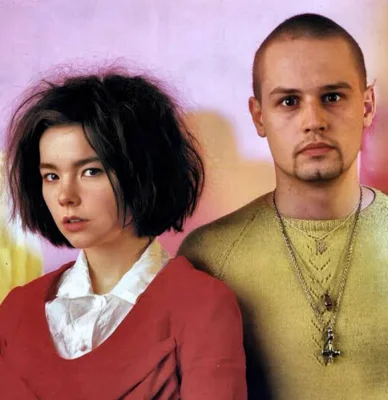
Þór Eldon - ex-husband Björk, they married in 1986 and divorced shortly afterward
Later, Björk was in a long-term relationship with American artist Matthew Barney. Their daughter, Ísadóra Bjarkardóttir Barney, was born in 2002. The couple separated in 2013, and their breakup became the inspiration for one of Björk's most personal albums, Vulnicura.
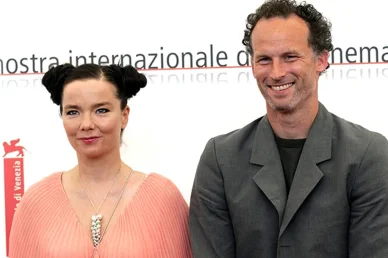
Matthew Barney - ex-boyfriend Björk, the couple separated in 2013
Fossora marked the first time both of Björk's children could be heard on one of her albums: Sindri contributed vocals, while Ísadóra sings alongside her mother on "Her Mother's House." Björk explained that she had deliberately avoided involving her children in her public work until they were old enough to decide for themselves whether they wanted to participate.
As for Björk's current personal life in 2026, there is no reliable public confirmation of any new romantic relationships.
For many years, Björk divided her time between Reykjavík and New York, where her daughter was studying. However, she eventually sold her New York apartment and returned to Iceland permanently. The singer says she now lives in a house by the sea in Reykjavík, regularly takes walks along the coastline, and considers Iceland in the summer the best place on Earth. Motherhood has also influenced her professional life: since the Biophilia era, she has increasingly favored extended concert residencies in individual cities over exhausting daily touring schedules. She describes herself as a matriarch and consciously challenges the culture of working around the clock, creating conditions that allow her musicians to enjoy a fulfilling family life.
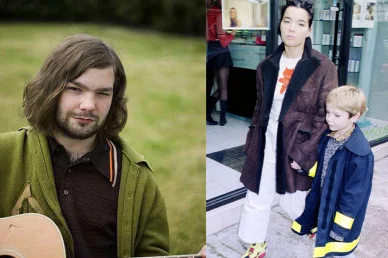
Björk with his son Sindri Eldon Þórsson
The order and peace that Björk seeks have been threatened several times throughout her career by her international fame and uncompromising views. One of the most frightening episodes in her biography, frequently mentioned in connection with her years in England, was her persecution by American stalker Ricardo López. The man became obsessed with the singer and, after learning about her relationship at the time with musician Goldie, sent a package containing a sulfuric acid bomb to her London address. López died by suicide, recording the act on video after mailing the package to Björk. Fortunately, police intercepted the dangerous parcel just hours before it was due to be delivered. The incident deeply shocked Björk, prompted her to strengthen her personal security, and contributed to her decision to leave London. It also significantly influenced the aggressive, defensive sound of Homogenic.
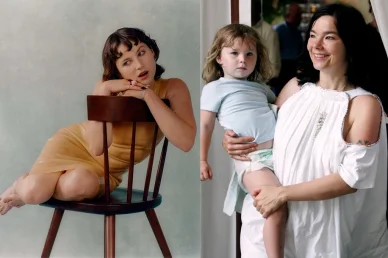
Björk with her daughter Ísadóra Bjarkardóttir Barney
In addition, the singer's environmental and geopolitical activism has repeatedly brought her serious difficulties. Because her mother was a radical environmental activist, Björk grew up surrounded by these ideas, although for a long time she resisted turning every song into a political manifesto. One exception was the track "Declare Independence" (2007). When Björk shouted "Tibet! Tibet!" during a performance of the song at a concert in Shanghai in 2008, the Chinese government regarded it as a threat to national security. China's Ministry of Culture officially banned the singer from entering the country and significantly tightened censorship rules for all foreign performers. Similar conflicts and threats of concert cancellations arose when she dedicated the song to the political independence of Kosovo and Greenland.
Today, Björk actively campaigns against commercial whaling in Iceland, the destruction of natural habitats by aluminum smelters, and open-net fish farming. In 2023, she collaborated with singer Rosalía on the charity single "Oral," directing all proceeds toward legal action against Norwegian corporations whose industrial salmon farming operations threaten the unique ecosystems of Iceland's fjords. This environmental campaign continues alongside preparations for her new album, scheduled for release in 2027.
Interesting Facts About Björk
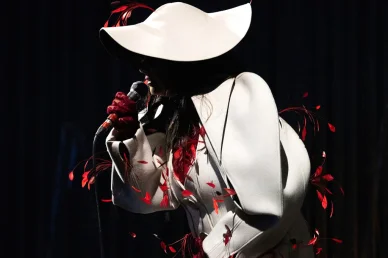
Björk is a phenomenon in the world of music
- Björk has received 16 Grammy nominations but has yet to win a personal award. In 2013, her album Biophilia won a Grammy for Best Recording Package, but the award went to its designers (M/M Paris), meaning Björk herself officially remains without a Grammy.
- In 1994, Björk co-wrote Madonna's hypnotic track "Bedtime Story" for the pop superstar's album Bedtime Stories.
- Björk now lives permanently in Iceland. After spending many years between Reykjavík, London, and New York, she sold her apartment in Brooklyn and returned home.
- Cornucopia ran for five years, including a break caused by the pandemic. The show featured 360-degree sound, 27 screens, a choir, seven female flutists, and specially designed musical instruments.
- As a teenager (around 13–14 years old), Björk formed her first all-girl punk band, appropriately named Spit and Snot.
- In Iceland, Björk is actively involved in environmental causes. Her main concerns include whaling, wildlife conservation, energy production, and industrial fish farming.
- A main-belt asteroid has officially been named in her honor — (275215) Björk, discovered in 2009 by astronomer Timur Kryachko.
- Iceland's climate literally shaped her singing style. Björk associates her ability to switch between soft singing and a sharp, powerful voice with her childhood among Iceland's winds, snow, hills, and vast open landscapes.
- For many years, she did not consider her childhood album a "real Björk album." She felt uncomfortable seeing her name on the cover when she had not written most of the material herself.
- Nature almost serves as a substitute for religion in her life. Björk has recalled that she was once a firmly convinced atheist, but as she grew older, she began to consider whether nature itself might be her own form of religion.
- Björk once described her work as a kind of "modern folk music." For her, pop music is valuable because it can communicate an emotional state to other people almost instantly, making it understandable and relatable.
- As a teenager, Björk briefly worked on the production line at a Coca-Cola factory. Her job was to sit on a chair and carefully check whether the bottles passing by were clean. She often fell asleep during her shifts and did not keep the job for long.
Social Media


FAQ
❓ Who is Björk?
Björk is an Icelandic singer, composer, songwriter, producer, and artist from Reykjavík. She began her career in the local punk scene, gained international recognition with The Sugarcubes, and has pursued a successful solo career since 1993.
❓ What is Björk's real name?
Her full real name is Björk Guðmundsdóttir.
❓ Where is Björk from, and where does she live now?
Björk was born and raised in Reykjavík. For many years, she divided her time between Iceland and London, and later New York. She sold her Brooklyn apartment in 2019 and now lives permanently in Iceland. According to Björk, she had always spent most of her time at home in Iceland, and after her daughter completed her studies in the United States, she simply stopped dividing her life between two cities.
❓ How old is Björk?
She was born on November 21, 1965. As of October 2026, Björk is 60 years old and will turn 61 in November.
❓ What genre of music does Björk perform?
There is no single correct answer. Her music combines art pop, electronic music, avant-garde, classical music, dance, trip-hop, experimental pop, and even gabber. Each Björk album has its own distinctive sonic concept.
❓ What is known about Björk's children?
She has two adult children. Her son, Sindri Eldon Þórsson, was born in 1986 during her marriage to Þór Eldon. Her daughter, Ísadóra Bjarkardóttir Barney, also known as Doa, was born in 2002 during her relationship with Matthew Barney.
❓ Is Björk currently in a relationship?
As of October 2026, Björk has not publicly identified a current partner. Her last widely documented long-term relationship was with Matthew Barney, which ended in 2013.
❓ For which film did Björk win an award at Cannes?
For her portrayal of Selma in Lars von Trier's Dancer in the Dark. In 2000, Björk won the Best Actress Award at the Cannes Film Festival, while the film itself received the Palme d'Or.
❓ Why is Björk considered a fashion and avant-garde icon?
For Björk, costumes, album covers, music videos, stage design, and sound have never been separate artistic disciplines. She has created a unique universe in which visual imagery serves as a direct extension and physical embodiment of music. Björk has collaborated with Alexander McQueen (who transformed her into a geisha warrior for the Homogenic album cover), Iris van Herpen, Marjan Pejoski (designer of the legendary swan dress), James Merry, Michel Gondry, Chris Cunningham (creator of the iconic robots in "All Is Full of Love"), and many other artists.
In 2015, the Museum of Modern Art in New York dedicated an exhibition to her creative universe. In the summer of 2026, the National Gallery of Iceland presented Echolalia, an exhibition combining classical painting with 3D animation.
❓ What makes Björk's famous swan dress so iconic?
Björk attended the 2001 Academy Awards wearing a dress designed by Marjan Pejoski, featuring a swan's neck and head as its upper section. She even left decorative eggs on the red carpet. Initially, the outfit was widely ridiculed, but over time it became one of the defining fashion symbols of the early 2000s.
Marjan Pejoski's swan dress perfectly illustrates Björk's overall approach to fashion: for her, it is essential to synchronize the inner and outer worlds. Björk's dresses, masks, and costumes are best understood not as attempts to shock the public, but as part of the same artistic language as her music.