Sichovyk – Sicheslav Patriotic Journal
‘Sichovyk’ is a Ukrainian online journal covering social, political, historical and philosophical topics, associated with the Movement for the Hetmanate. The website has published articles on Ukrainian state-building, the struggle for independence, the Cossack era, the Ukrainian People’s Republic (UNR) and the Ukrainian Insurgent Army (UPA), religion, culture, international politics and conservative thought.
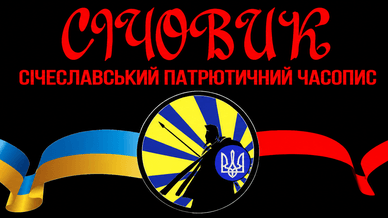
"Sichovyk" is a Ukrainian socio-political, historical, and worldview-oriented online journal linked to the Hetmanate Movement. The site published materials on Ukrainian state-building, liberation struggles, the Cossack era, the UNR (Ukrainian People's Republic) and UPA (Ukrainian Insurgent Army), religion, culture, international politics, and conservative thought.
Journal Overview
In its "About Us" section, the editorial board described "Sichovyk" as the official non-commercial publication of the Hetmanate Movement, founded in the spring of 2013 with support from the "National Initiative". The project's stated goal was to spread knowledge of Ukrainian history, refute Soviet and Russian myths, and popularize the idea of a Ukrainian Hetmanate. However, the editorial board openly rejected the principle of ideological pluralism, publishing only texts that aligned with a Hetmanate-nationalist line — so the materials should be seen as ideologically engaged commentary rather than neutral historical or political analysis.
The archived version of the site contains nine main sections: "For the Hetmanate," "Newsman," "Historical Glory," "Living Word," "Catechism," "World View," "Signpost," "Revenge," and "Reviewer" (a collection of embedded videos and radio broadcasts on historical and political topics).
The journal's name points to the project's regional attachment to Dnipro, which the authors consistently call "Sicheslav" — an alternative name proposed in 1918 by Ukrainian intellectuals and pro-national forces to replace the imperial name "Katerynoslav," though the renaming was never officially approved due to a change in power. The name derives from "Sich," honoring the Zaporozhian Cossacks. Despite this local focus, the site aimed at a broader, nationwide Ukrainian audience and sought to shape its political and historical worldview.
"Sichovyk" is a characteristic example of a small ideological media project of the 2010s, combining historical education, nationalist commentary, and promotion of a specific political model (the Hetmanate).
History of the Journal
"Sichovyk" began operating in spring 2013 as the official non-commercial publication of the Ukrainian nationalist Hetmanate Movement, with support from the independent online news agency "National Initiative".
In 2013–2014, its core ideological line took shape: Ukrainian nationalism, conservatism, and the Hetmanate statist movement.
The editors treated history not merely as a subject of study but as a source of models for modern Ukraine — the Cossack state, the Ukrainian Revolution of 1917–1921, Pavlo Skoropadsky's Hetmanate, and the activities of OUN and UPA all served as arguments in a broader discussion about Ukraine's future structure.
After the Revolution of Dignity and the start of Russian aggression in 2014, the journal's focus naturally sharpened, adding coverage of the war, occupation, Ukrainian volunteer and nationalist movements, information warfare with Russia, and post-revolutionary societal issues.
By 2015, "Sichovyk" functioned as a structured online journal. On February 28, the editors published an "About Us" page outlining the project's goals, its ties to the Hetmanate Movement, and its non-commercial status; advertising revenue was meant only to cover domain and hosting costs, and readers could submit their own articles, questions, and suggestions.
By mid-2015, a system of thematic sections had formed: "For the Hetmanate" (programmatic texts on state structure), "Newsman" (socio-political news), "Historical Glory" (historical research), "Living Word" (literary prose), "Catechism" (religious materials), "World View" (world history and politics), "Signpost" (works by Ukrainian statist authors), and "Revenge" (sharp opinion pieces), alongside the multimedia "Reviewer".
Between November 2015 and February 2016, "Reviewer" was updated regularly with episodes such as "Euromaidan or the Revolution of Dignity?", "The Struggle for Dignity and Freedom," "Finlandization," "Terrorism as a Civilizational Challenge," "State Independence: The Finnish Experience," "Problems of Ukrainian History," "The Hetmanate as the Traditional Ukrainian State," "The Chechelivka Republic," "Political Repressions," and "The Estonian War of Independence".
On April 23, 2016, the journal published one of its most notable historical articles, "How Ukrainians Stopped Stalin's Aggression in Finland," authored by Denys Kovalov and Yuriy Yakuba, covering the Winter War, the defeat of the Soviet 44th Rifle Division near Suomussalmi, and the alleged participation of Ukrainians fighting on Finland's side.
After spring 2016, the site continued publishing historical and multimedia content, including an article on how the world learned about UPA, a "Reviewer" episode on Otto von Bismarck's statecraft, and a piece on the Battle of Brody 1944. Posts were cross-promoted on Facebook and X, with videos hosted on YouTube.
Over time, social media became the primary distribution channel rather than a supplement — Facebook and X mainly carried short announcements, links, and historical posts, while the Telegram channel "SICHOVYK" became the most important later platform, preserving the journal's name, symbols, and section structure.
After the start of the full-scale Russian invasion, war became the project's central current topic, though historical narratives persisted, often linked to the present — comparing the Ukrainian experience to Finland's, analyzing US and NATO policy, and covering occupied cities, Russian propaganda, the Ukrainian military, and post-war prospects. In 2025, social media continued publishing content from the old sections, including material on the Hetmanate model of statehood, Finnish policy, NATO, and the Russo-Ukrainian war, with full texts increasingly hosted on affiliated platforms.
"Sichovyk" is best described as a media project that evolved in form: from 2013 through most of the 2010s it centered on a standalone site with full articles and an archive of sections, later distributing its functions across Facebook, X, Telegram, YouTube, the "National Initiative" blog, and other platforms.
Editors and Authors
The site does not list a full editorial staff — the "About Us" page carried only a collective signature, "Editorial Board of the journal 'Sichovyk,'" without naming editors, proofreaders, administrators, or board members. In "Reviewer" materials, historian Denys Kovalov was presented as editor-in-chief, with much of the multimedia project built around his appearances on Sicheslav regional radio discussing liberation movements, national state formation, Ukrainian-Finnish ties, and notable political figures. Oleksandr Pysarevsky, then commander of the "Sarmat" unit of the "Right Sector" Volunteer Ukrainian Corps, was named chief editor in a 2015 episode about World War I.
Confirmed authors include Yuriy Yakuba, co-author with Denys Kovalov of the Winter War article, and co-author with Oleksandr Pysarevsky of "The Constitution of the Third Hetmanate," a programmatic text proposing an alternative model of Ukrainian statehood. Yurko Fomenko authored the literary piece "Father's Orchards," and Roman Popov signed the article "The Sicheslav Metro: Liquidation or Development?". Some publications appeared under pseudonyms, including Friend Arii, Warrior's Spirit, Mark Ternovy, and Roaring Cossack. The journal also reprinted works by notable historians and ideologues, such as historian Roman Szporluk's "1848: Nationalism Against Communism" and Dmytro Dontsov's "For What Kind of Ukraine?"
Site Sections
The archived version of "Sichovyk" contains nine main sections, later carried over to social media, spanning the Hetmanate Movement's political program, current news, Ukrainian and world history, religion, literary prose, and multimedia — combining the functions of an ideological publication, historical journal, news outlet, and literary platform.
For the Hetmanate was the central programmatic section, presenting the vision of a future Ukrainian state, criticizing the republican-party system, and discussing local self-governance and administrative structure. Key texts included "The Constitution of the Third Hetmanate" (Feb 22, 2015), presented as a draft basic law with an alternative model of state power, and "The Program of the Last Party" (published the next day), a scathing critique of Ukrainian parties and the electoral system. Other articles included "Hetmanate or Federalization?", "Prospects of Local Self-Government in Ukraine," "The Hetmanate as an Idea of Ukrainian Statism," and "The People's Hetmanate — Remembering the Future!" These texts function as ideological manifestos rather than political science research, proposing a model of strong personal rule by a Hetman with property liability to the people, without seriously addressing risks of authoritarianism or historical precedents of failure (including the 1918 Hetmanate itself).
Newsman served as a current-events feed, though curated according to the editors' political interests, covering the Russo-Ukrainian war, nationalist organizations, environmental protests, international politics, and events in Sicheslav. Examples include a March 2016 piece on Rakhiv residents protesting illegal logging in the Carpathians (linked to the Donbas war and persecution of activists), and coverage of Estonia's 98th independence anniversary celebrations, including the paramilitary organization Kaitseliit. A local-focus article, "The Sicheslav Metro: Liquidation or Development?", discussed the potential halt of metro construction in Dnipro. Other topics included the Italian youth group Blocco Studentesco, the Ukrainian "Sokil," Estonian right-wing protests, and boycotts of Russian business.
Historical Glory, one of the largest sections, spanned medieval Rus and the Cossack era through the Ukrainian Revolution, anti-Bolshevik resistance, the UNR, OUN, and UPA, often aiming to refute Russian and Soviet historical interpretations. Articles included "The Muscovite Campaign of Ukrainian Cossacks" (about Hetman Petro Konashevych-Sahaidachny), "Great Russia and Little Russia" (on the origin of these names), "Unconquered Volyn" (on the insurgent movement in Zhytomyr region), "The Last Battle of the UNR Army," a profile of historian Stepan Tomashivsky, and "The Bolokhiv Princes". This section also included later pieces on UPA and the Winter War, discussed further below.
Living Word, the literary section, published prose, essays, memoirs, and everyday and landscape sketches centered on village life, nature, and family memory rather than politics. Examples include "Father's Orchards" by Yurko Fomenko, "The Village Theater," "The Postwoman" (about a rural postal worker cycling over 15 km daily), and "Steppe People" (stories of children from the Dnipro region). The section also ranged beyond Ukraine, as in "The Story of a Knife from the Village of Kaukava," about a Finnish knife-making festival.
Catechism, a religious-worldview section, covered Christianity, theology, church history, monasticism, and morality, generally from a traditionalist Christian perspective critical of secularism and liberalism. Articles included "The Martyr Giordano Bruno" (disputing his portrayal as a purely scientific martyr), "What Is the Divine Darkness?", "A Conversation on Envy," "Scientific Christianity," "The Temptation of Modern Idols," "Anthony of the Caves and Domestic Monasticism," and "Modern Satanism as a Social Disease".
World View covered world history, political ideologies, international conflicts, and other nations' cultural traditions, letting editors situate Ukrainian issues within a broader civilizational context. Topics included the revolutions of 1848 ("1848: Nationalism Against Communism"), the Japanese code of bushido, traditionalist critiques of progress ("The Decline of the West"), an analysis of ISIS ideology, and a piece on the Reconquista.
Signpost functioned as a worldview and historico-political library, publishing or reprinting works considered important to Ukrainian conservative, nationalist, and statist thought, including Dmytro Dontsov's "For What Kind of Ukraine?", a piece referencing General Petro Zalesky of the Don Army, "The Joy of Creative Life," an analysis of Bolshevism, and even a text on Italian fascism as a national and universal idea.
Revenge carried sharp opinion pieces on Ukrainian nationalism, patriotism, the Revolution of Dignity's aftermath, globalization, and internal conflicts within nationalist circles. Some pieces, such as "Lost Patriotism," went beyond conservative or nationalist commentary into openly exclusionary and discriminatory rhetoric regarding race and sexual orientation, showing that the editorial policy tolerated radical right-wing positions alongside traditionalist ones.
Reviewer, the multimedia section, complemented written content with videos and radio recordings, mostly formatted as thematic conversations on Sicheslav regional radio hosted or commented on by Denys Kovalov, with early episodes featuring Oleksandr Pysarevsky. The broader YouTube playlist covers Ukrainian history and state-building ("DNA of the Ukrainian Nation," "Ukraine within the Grand Duchy of Lithuania," "Wars of a United Ukraine," "Kruty as Ukraine's Thermopylae," "The Chechelivka Republic," "The Battle of Brody"), small-nation independence struggles ("State Independence: The Finnish Experience," "Finlandization," "Estonia's Struggle for Freedom"), military history ("World War I," "The Kuban People's Republic," "From Compiègne to Ilovaisk"), a series on state-builders called "The Path of the Statesman" (Bismarck, Simón Bolívar, Ioannis Kapodistrias, Theodore Roosevelt, Sun Yat-sen, and Pavlo Skoropadsky), and modern political ideology episodes, including one referencing the French far-right movement Génération identitaire. Most episodes function as ideological commentary rather than deep historical research.
Most Notable Articles
"How Ukrainians Stopped Stalin's Aggression in Finland" (published April 23, 2016, by Denys Kovalov and Yuriy Yakuba) is among the journal's most prominent pieces. It centers on Yuriy Horlis-Horsky, a writer and former UNR Army officer, who allegedly arrived in Helsinki in December 1939 and formed a Ukrainian unit from captured Red Army soldiers of Ukrainian origin and OUN-linked volunteers. The article's boldest and most debatable claim, featured in its title, suggests that Ukrainian defections to Finland risked demoralizing the wider Red Army, possibly influencing Stalin's decision to end the war — though the article provides insufficient evidence to establish a direct causal link. Stylistically, it blends historical narrative, political commentary, and heroic storytelling, explicitly connecting the events of 1939–1940 to the contemporary Russo-Ukrainian conflict. Historical publications in "Sichovyk" are almost always polemical and didactic in nature, using the past as an argument in present-day political discussion, which often means emotionally charged language, heroization of "their own," and sharp contrasts with Russian/Soviet historiography.
"How the World Learned About UPA" covers UPA's international raids after World War II, focusing on efforts to break an information blockade and reach Central and Western Europe to publicize the anti-Soviet insurgency. Notably, this piece was not original to "Sichovyk" — the text, credited to Vasyl Kolomiiets, had circulated online since at least March 2011, before the journal even existed.
"The Hetmanate as an Idea of Ukrainian Statism" (February 13, 2016, by Denys Kovalov) is one of the journal's key programmatic pieces, criticizing Ukrainian parliamentary democracy and proposing a revived Hetmanate tradition instead, tied to statism and referencing Mykola Mikhnovsky, Vyacheslav Lypynsky, Dmytro Dontsov, Mykola Stsiborsky, and Yevhen Onatsky as key Ukrainian statist thinkers. It envisions a popularly elected Hetman combining legislative and executive power, personally liable via pledged property, evaluated by referendum after his term — a text that functions as an ideological manifesto rather than balanced political analysis, largely ignoring risks of power concentration.
"The Muscovite Campaign of Ukrainian Cossacks" (February 29, 2016, under the pseudonym Friend Arii) covers Hetman Petro Konashevych-Sahaidachny's 1618 campaign against Muscovy, arguing this episode was deliberately downplayed by Russian historiography. Written in an emotional, popular-history style full of irony and unverified claims (including an anecdote about Sahaidachny allegedly crushing a Muscovite commander's skull, which the author admits may not be true), it exemplifies the journal's blend of historical content, heroization of Ukrainian figures, anti-Russian polemics, and conversational irony.
Further Reading
Readers interested in related topics may also want to explore a few other resources. For those curious about online entertainment platforms, the guide to the best online casinos in Ireland breaks down licensing, payment methods, and welcome bonuses across top-rated Irish gambling sites. Another worthwhile read is the review of Polymarket, a decentralized prediction market that lets users speculate on everything from politics to sports and pop culture, along with an honest look at its legal status and risks for Irish users. Finally, for those interested in emerging technology, the roundup of the best AI tools offers a practical overview of current AI-driven platforms and their real-world applications.