Ukraine
You’ve already heard about Ukraine, if only because of the recent war and the geopolitical tensions between Ukraine and Russia. The struggle for an independent Ukraine dates back for centuries and was exacerbated during the Cold War, when the Eastern Europe country was a key part of the Soviet Union.
What you might not realise is that the country Ukraine has a rich history and a strong culture all of its own. We’re going to take a closer look at that in today’s general overview, covering what Ukraine is, where it’s located, when it gained independence and why it matters in the wider context of Europe and the world as a whole.
Key Facts About the Country
Date of Independence | 24 August 1991 (confirmed by referendum on 1December 1991) |
|---|---|
Capital of Ukraine | Kyiv |
Official Language | Ukrainian |
Area of Ukraine | 603,628 km² |
Population | Approximately 37 million (difficult to measure during wartime) |
Currency | Ukrainian Hryvnia (UAH) |
Government Type | Republic |
Administrative Divisions | 24 regions (oblasts), plus the Autonomous Republic of Crimea and two cities with special status (Kyiv and Sevastopol) |
What You Need to Know About Ukraine
Ukraine’s History as Part of Europe
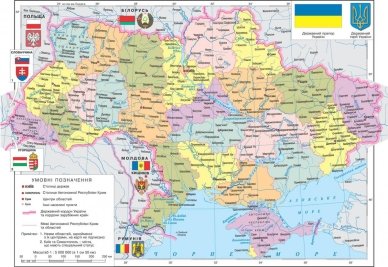
If you look at a Ukraine map, you’ll see that it is located in a key position in Eastern Europe. It's a huge country, with its 600,000+ square kilometres making it almost the same size as Texas. Before Russia's full-scale invasion in 2022, it had a population of around 40 million.

As for its neighbors, Ukraine borders Poland, Slovakia, Hungary, Romania, Moldova, Belarus and Russia. Not many people realise that Ukraine is actually considered to be the largest country that’s fully in Europe.
Understanding the sheer size is most easily done by looking at a map of Ukraine. You can also check out an interactive map if you want to see the current situation along Ukraine's borders.
Is Ukraine Part of the EU?
This is one of the most common questions that people ask.
The country has been an official EU candidate since June 2022, meaning that EU membership could be just around the corner. For Ukraine, European Union membership could mean stronger diplomatic ties and greater security for the country’s economy, but it will need to be accepted into the EU first.
In June 2024, the EU officially opened negotiations for Ukraine to join the Union, although the country will be required to meet the Copenhagen criteria. This means it will need to prove democratic stability, a functioning market economy and the ability to adopt the EU’s laws and standards throughout the country. This process can take years to complete and could be delayed by the ongoing war, but don’t be surprised if Ukraine becomes an EU member sometime in the next 5-10 years.
In other words, the answer to the question "Is Ukraine in the EU?" is currently no.
Government Structure
The government of Ukraine takes the form of a unitary semi-presidential constitutional republic, which is a complicated way of saying that control and authority are split between the president and the prime minister.
The unitary republic is split into 24 administrative regions, which are called oblasts, as well as the Autonomous Republic of Crimea and the two cities of Kyiv and Sevastopol, which have been granted special status. Crimea and Sevastopol are both internationally recognised as being part of Ukraine despite being under Russian occupation.
Ukraine’s Economy, Science and International Role
The economy of Ukraine largely revolves around its status as one of Europe’s “breadbaskets” thanks to its huge agricultural industry. In fact, the country is one of the largest global producers of wheat, maize, barley and sunflower seeds, allowing it to feed itself and export the surplus.
Beyond agricultural products, Ukraine is also known for its steel production and information technology, as well as its manufacturing output. There’s a particularly close link with aviation and space technology, in part due to its history of aircraft development for the Soviet Union. However, like most European countries, the economy doesn’t focus on any one single area and is instead made up of a strong presence across multiple different industries.
Ukraine is also a member of a number of international organisations including the United Nations (UN), the International Monetary Fund (IMF) and the United Nations Educational, Scientific and Cultural Organisation (UNESCO).
History
The Ukrainian lands were shaped over centuries, with kingdoms and empires coming and going and redrawing the maps over time. Different parts of the country have been ruled by Kyivan Rus, the Polish-Lithuanian Commonwealth, the Ottoman Empire, the Austro-Hungarian Empire and the Russian Empire.
Let’s dive deeper into the rich history of Ukraine!
The Early Centuries
The ancient history of Ukraine dates back thousands of years and has had a huge influence on our understanding of the human past.
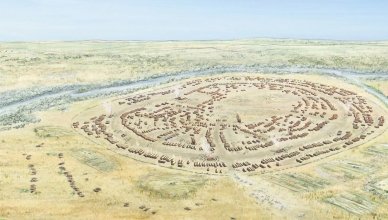
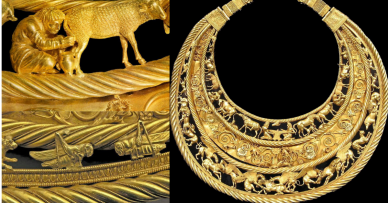
Ukrainian archaeology in particular is known for laying the foundations for much of what we know about Eastern Europe. In fact, one of the oldest known human settlements is western Ukraine’s Korolevo, with evidence showing human activity for around a million years. Then there’s the Maidanetske settlement, which is associated with the Trypillians who were an advanced civilisation in around 4,000 BC.
There was also the Scythian period, when an ancient Iranian people controlled much of Ukraine during the 7th–3rd centuries BC, leaving behind burial mounds and other archaeological remnants. They were followed by the Sarmatians, a warrior people who dominated similar regions to their predecessors.
All of this goes to show just how significant Ukrainian archaeology was and is to our understanding of the history of Europe and humanity as a whole.
The Middle Ages and the Tribes
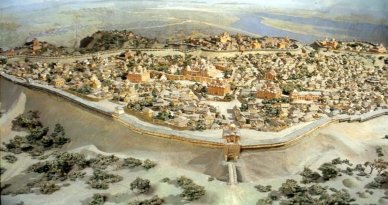
More recently, if you can call a millennium and a half ago “recent”, Ukraine was inhabited by the Antes, a union of different tribes who came together to dominate the region and who established the blueprint for future Slavic societies. That eventually led to the state of Kyivan Rus, which formed around Kyiv and became one of the most influential states in Medieval Europe.
The state was led by iconic rulers like Volodymyr the Great and Yaroslav the Wise, with Danylo of Galicia later becoming the ruler of the Principality of Galicia-Volhynia after the fragmentation of Kyivan Rus’. With these three men, their titles tell you most of what you need to know about them.
Volodymyr in particular is interesting because it was under his leadership that Christianity became the region’s official religion, a decision that impacted everything from military policy to architectural styles and the day-to-day life of the ordinary people.
The state reached its peak in the 11th century, before eventually and inevitably fading and fragmenting. The Mongols invaded in the 13th century, accelerating the decline of Kyivan Rus, while the Galicia-Volhynia Principality became its primary successor.
The Early Modern Period
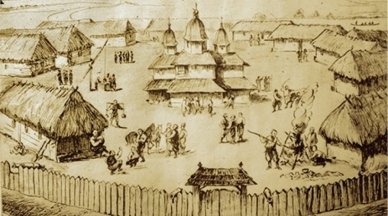
That brings us up to the early modern period, which most experts agree began in the 15th century. This was the period during which the Cossacks emerged as a major political and military force in Ukraine, with the horse-riding soldiers building an impressive reputation for their mix of military might and forward-thinking democratic traditions. Their equivalent of a capital city was the Zaporizhian Sich, a huge stronghold that protected the Cossacks from threats from the south.
In 1648, Cossack leader Bohdan Khmelnytsky wrote himself into the history books by leading an uprising against the Polish-Lithuanian Commonwealth, which had taken over huge swathes of Ukrainian land. The result was the Khmelnytsky Uprising (or the Cossack-Polish War), which led to the establishment of the Cossack Hetmanate, which went on to become a key force in Eastern Europe for more than one hundred years.
By the end of the 1700s, modern-day Ukraine had essentially been split between the Russian Empire and the Austrian (Habsburg) Empire. This melting pot of cultures and attitudes would shape the course of the country’s history well into the 20th century.
The Road to Independence
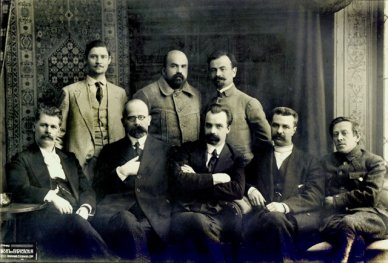
In the 19th century, the country went through a national awakening as poets, novelists, artists, philosophers, scholars and other cultural figures started to put Ukraine on the map. Through their efforts, the Ukrainian language and literary scene started to flourish, despite the restrictive influence of the Russian and Austro-Hungarian Empires.
The Russian Empire collapsed in 1917, which led to the establishment of the Central Rada in Kyiv and the creation of the Ukrainian People’s Republic (UNR). This was then merged with the West Ukrainian People’s Republic (ZUNR) in 1919, but lasting peace was just a pipedream. The Soviet Union had plans of its own, and most of Ukraine would eventually become the Ukrainian Soviet Socialist Republic.
During the Soviet period, Ukraine experienced the Holodomor of 1932 and 1933, a devastating famine which killed millions of people and remains one of the country's deepest historical traumas, though there are few who were alive at the time to remember it. It was still deeply rooted in the national consciousness on 24 August 1991, when the country declared the independence of Ukraine at the end of the Cold War.
Ukraine as an Independent Country
August 1991 signalled the start of a new era and a more modern Ukraine, but it was also just the first step along a long road.
According to the results of a nationwide referendum on 1st December 1991, more than 90% of voters supported independence. That was also the day that Leonid Kravchuk was elected as the first of a half dozen presidents that have led Ukraine over the last three and a half decades.
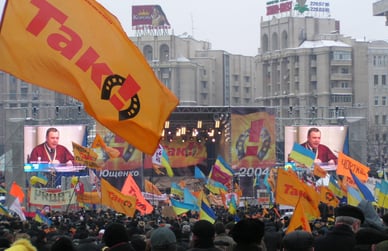
Since then, a number of other votes and referendums have taken place, with the country’s official constitution being adopted in 1996 and reforms being introduced several times since. In 2004, the Orange Revolution took place, in which the election results were disputed and another vote took place. Nine years later, the Euromaidan protests of 2013 and 2014 took place after the government changed its mind about whether to sign an agreement with the EU.
That brings us up to the annexation of Crimea in 2014 and the Russian full-scale invasion in 2022.
Presidents of Ukraine
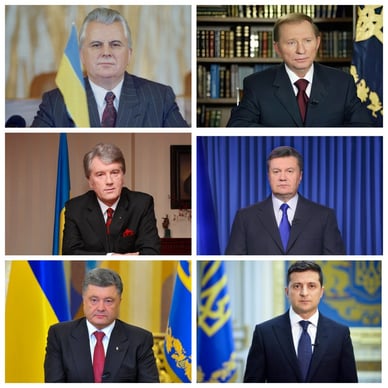
Here’s the full list of presidents in order, starting with Kravchuk after the dissolution of the USSR:
Presidents | Years in Office |
Leonid Kravchuk | 1991-1994 |
Leonid Kuchma | 1994-2005 |
Viktor Yushchenko | 2005-2010 |
Viktor Yanukovych | 2010-2014 |
Petro Poroshenko | 2014-2019 |
Volodymyr Zelenskyy | 2019 - present |
No list of presidents of Ukraine would be complete without a mention of Oleksandr Turchynov, who served as acting president from 23rd February to 7th June 2014 whilst also serving as the Chairman of the Ukrainian parliament (the Verkhovna Rada).
This happened during a period of turmoil after Yanukovych left office in February of that year due to the Euromaidan protests. Parliament voted that he was unable to fulfil his constitutional duties and scheduled a new election, which led to Poroshenko taking up office.
Geography
Borders and Size
Ukraine is a huge country, with its extreme points over 1,300 kilometres apart from west to east and nearly 900 kilometres apart from north to south. If you follow the land borders around the Ukraine map, you’ll find that its borders measure around 5,600 kilometres, although there’s also some coastline along the Black Sea and the Sea of Azov to factor in. Ukraine also has seven neighbouring countries: Poland, Slovakia, Romania, Hungary, Russia, Moldova and Belarus.
As for the geography of Ukraine, you’ll find that its geographic centre is most typically defined as being Marianivka in Cherkasy Oblast, while these are the points at the extreme ends of the compass:
North: Hremiach (Chernihiv Oblast)
East: Rannia Zoria (Luhansk Oblast)
South: Cape Sarych (Crimea)
West: Solomonovo (Zakarpattia Oblast)
Landscape and Natural Zones
If you look at a relief of Ukraine, you might be surprised by how flat the country is. It’s known for its rolling fields and its flat lowlands, with much of the country classed as part of the Eastern European Plain. These flat areas are perfect for agriculture, which is one of the reasons why it’s Europe’s breadbasket.
The highest point in the country is the peak of Hoverla, which is part of the Carpathian Mountains and which rises over 2,000 metres above sea level. Speaking of mountains, there are also the Crimean Mountains to the south, perhaps the most famous of which is Mount Roman-Kosh.
As you can tell, the country is known for the diversity of its landscapes, from stunning mountains to the iconic Ukrainian plains, forests and rivers that tourists love to discover.
Climate
The climate of Ukraine is fairly steady, though it varies across different regions. Its temperate-continental climate means that it has cold winters and warm summers, with noticeable differences as the seasons change.
Expect temperatures as low as −7°C in January in the northeast of the country, though −3°C is more typical throughout winter. Summer temperatures tend to range between 17°C and 25°C throughout July, depending upon the region, with moderate rainfall but wetter conditions in the Carpathians. The best time to visit, then, is usually in late spring or early autumn, depending upon the purpose of your visit and the kind of weather you enjoy.
Currency and Language
Unsurprisingly, the official Ukrainian language is Ukrainian, something that was established in the country’s constitution as the state language. The Slavic language is used throughout the country in official and casual settings, from government to classrooms and offices, although other languages are also used as needed.
As for the national currency, that’s the hryvnia (UAH), which was introduced in September 1996 as a result of the economic reforms that followed independence. Banknotes are available in denominations of 20, 50, 100, 200, 500, 1,000 and 2,000 UAH. Coins (kopiyka when singular and kopiyky when plural) are available in denominations of 50 kopiyky (with 10 kopiyky being phased out) and 1, 2, 5 and 10 UAH. The Ukrainian equivalent of the Bank of Ireland or the Federal Reserve is the National Bank of Ukraine (NBU).
Politics and Population
Demographics
The population of Ukraine has changed a lot over the years, as you can probably guess from what we’ve told you about its history. Even over the last 30 years or so, since the dissolution of the Soviet Union and the period of relative peace, the cities of Ukraine have grown and then shrunk again after the country hit a peak of over 50 million citizens in the early 1990s.
Since then, birth rates have declined and more and more Ukrainians have looked to emigration as a way to change their lot in life. The demography has also been affected by the war, with millions of people being displaced and a higher than average mortality rate for young men serving in the armed forces.
Politics and Elections
The best way to describe the political system of Ukraine is as a semi-presidential republic, which means that power is shared between the president and the prime minister. Elections in Ukraine are generally held every five years, although early elections may be called in certain circumstances provided by law.
The Ukrainian parliament is called the Verkhovna Rada, and politicians are elected to it through national elections. They’re then responsible for establishing laws and overseeing the government. These elections are usually organised by the Central Election Commission, but everything’s on hold at the moment.
That’s because Russia’s full-scale invasion in 2022 led to the declaration of martial law. While it remains in force, national elections cannot be held because of security concerns and the practical difficulties of conducting free and fair elections under such conditions.
Getting to Ukraine
Roads and Railways
Travel to Ukraine is a little complicated at the moment due to the ongoing war in the country, so let’s see what it used to look like.
Before 2014, Ukraine was known for its extensive transportation network, making it just as easy to get around on the railway as it was to drive, fly or take a ship. The trains were particularly important for cross-border connections, linking the country with the rest of Europe and transporting huge amounts of freight and thousands of passengers.
Today, international checkpoints are typically in the west of the country, with routes through Poland, Hungary, Slovakia, Moldova and Romania for people travelling by trains, buses and cars.
Air Travel
Travelling by air has historically been a solid option, with the airports of Ukraine including those in Kyiv, Odesa and Lviv, although not all of them are still active today thanks to the closure of Ukrainian airspace.
The country’s largest airport is Boryspil International Airport, which serves Kyiv and which has historically been the main gateway. Other aviation hotspots include Lviv Danylo Halytskyi International Airport, Odesa International Airport and Kharkiv International Airport.
However, it’s important to remember that flying isn’t currently an option, with civil aviation suspended throughout the country due to martial law. You can still enter the country by train, bus or road, but air travel is far too dangerous amidst the backdrop of the war.
Sea Travel
Historically, there was another option if you fancied paying the country a visit, and that was to visit by sea. The sea ports of Ukraine are numerous to say the least, with navigable sea routes stretching across 1,700 kilometres of the Black Sea and the Sea of Azov.
In fact, these maritime routes have played a vital role in the country’s development, opening it up to international trade and bringing huge amounts of goods and wealth into the country. The Odesa port is particularly iconic, being responsible for much of the country’s grain exports before the outbreak of war.
Where to Visit in Ukraine
Tourism in Ukraine will leave you spoiled for choice, because there are so many different places to choose from. You can take your pick from ancient cities to stunning natural wonders and unforgettable pieces of cultural heritage, and if you plan your visit just right, you can bring a few of these together.
Our picks for the top tourist places include the streets of Kyiv, Lviv and Kamianets-Podilskyi, stunning sites and sights like the St. Sophia Cathedral and Kyiv Pechersk Lavra, and of course the sheer beauty to be found along the Black Sea coast.
Kyiv: Capital of Ukraine
If you only get the chance to visit one place, try to make it to Kyiv. Based on the banks of the Dnipro, it’s a cultural and political hub with a whole heap of history, as well as some of the most iconic tourist spots in the country.

Key sights of Kyiv include:
- Kyiv Pechersk Lavra: A UNESCO World Heritage site and a monastery complex
- St. Sophia Cathedral: A stunning piece of medieval architecture
- Andriivskyi Uzviz: A historic descent connecting the Upper Town with the commercial centre
- Maidan Nezalezhnosti: Translates into English as “Independence Square”
- Golden Gate: The entrance to the medieval city
- Motherland Monument: Part of the National Museum of the History of Ukraine in the Second World War
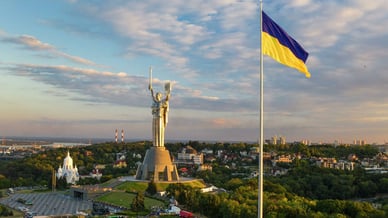
Of course, if you’d prefer to chill in the hotel and use your spending money on the best online casinos, that’s fine too. In fact, you’ll find yourself spoiled for choice when deciding where to stay in Kyiv, because in the capital of Ukraine, you can take your pick from luxury hotels to modern apartments, travel hostels and unforgettable Airbnbs.
Visiting Lviv
This western city is the next-best thing. In fact, if it’s architecture that you’re after then it might even have the edge over the country’s capital. That’s because the sights of Lviv include architectural masterpieces like the Lviv Opera House, the Potocki Palace and St. George’s Cathedral. There’s also Ploshcha Rynok (aka Market Square), which is home to a ton of historic buildings mixed in with authentic Ukrainian cafes and eateries, while the historic centre of Lviv is recognised as a UNESCO World Heritage Site.

If you’d prefer to spend a little time outside, you’ll want to take a stroll around Lychakiv Cemetery, which is as beautiful as it is haunting, while High Castle Park is home to some of the most stunning views across the city.
As for where to stay, there’s as much choice in Lviv as there is in Kyiv, from hotel chains to boutique accommodation and luxury flats and apartments.
The Carpathians
These are the iconic mountains of Ukraine, and as such they offer some of the most stunning areas of natural beauty in the whole of the country.

As you travel around the Carpathians, you can find stand-out spots like the following:
- Hoverla: The highest peak in Ukraine, reaching over 2,000 metres above sea level
- Bukovel: A mountain resort and popular ski destination
- Yaremche: A stunning town that’s known as the gateway to the Carpathians
- Probiv Waterfall: One of the most beautiful places in the country
- More: Take your pick of lakes, alpine meadows, wooden churches and more!
There’s less choice in the Carpathians, but the accommodation that is there tends to be top-notch, with everything from hotels and guesthouses to ski resorts, lodges and cottages. If you’re feeling particularly adventurous, you might even want to give camping a go.
Visiting Cherkasy
This is one of the oblasts (i.e. regions) in the centre of the country, and it has a reputation for having some of the best natural beauty in the whole of Ukraine thanks to stunning locations like Sofiyivka Park in Uman. This 18th-century landscaped park is an unforgettable highlight of the Cherkasy region because of its lakes, sculptures, bridges and gardens, all of which come together to make it the perfect place for a hike (or even a more relaxed stroll).

Other highlights of Cherkasy Oblast include Buky Canyon (a dramatic, rocky gorge that looks like something out of a movie) and Chernecha Hora near Kaniv, a vital spot for Ukrainian culture thanks to its links to poet Taras Shevchenko.
If you’re a history buff, be sure to spend some time getting to know the ancient Trypillia culture, one of Europe’s oldest agricultural civilisations and one which is featured in museums throughout the region. In the Cherkasy region, there really is a little something for everyone.
Pripyat and Chornobyl
Pripyat (sometimes spelled Prypiat) is home to an amusement park with a difference. It was never actually opened, unlike other failed ones that ran out of money or were cancelled before they could welcome visitors. The park never opened because of the Chornobyl disaster on April 26, 1986. That day, Reactor No. 4 at the nearby nuclear power plant went out of control during a routine test and ended up exploding and catching fire.

The Chornobyl zone (like Pripyat, the spelling varies) has historically been a popular spot for disaster tourists, with people going out of their way to visit the abandoned amusement park and the nearby Duga radar system, the Red Forest, School No. 2 and the Prypiat Stele, which was the main entrance to the city.
Despite the radiation in the exclusion zone, wildlife has been recovering over the years, and tourism is possible though complex. If you do visit, don’t expect to spend a huge amount of time in the area because visitors need to limit their exposure to radiation. You should also bear in mind that regular tourism to the area has been suspended since the Russian invasion.
Kamianets-Podilskyi
This pick is another one for the history fans, because Kamianets-Podilskyi is arguably the best-preserved historic city in the whole of the country. We’re talking about a medieval masterpiece that’s so well-preserved in some places that it can feel as though you’ve travelled back in time.

The city is most well-known for its fortress, an imposing piece of defensive architecture which towers above the nearby Smotrych Canyon. The combination of the canyon and its cliffs makes for a view like no other, and in years gone by, it also made it difficult for hostile armies to attack the city.
Today, the canyon and the fortress are the perfect places to spend a day or two exploring, while the old town offers a great mixture of elegant architecture and boutique shopping. Be sure to check out the town hall and the nearby Polish Gate and Ruska Gate, two remnants of the city’s defences. There are also a number of churches, as well as plenty of accommodation options including the usual hotels, guesthouses and apartments.
Zakarpattia
There’s one more oblast for us to talk about, and that’s the wellness and nature-driven hotspot that is Zakarpattia. There’s almost too much variety here to cover, so let’s just take a look at a few highlights.

First up, there are the Zakarpattia castles:
- Palanok Castle (also called Mukachevo Castle): The best-preserved and most visually impressive.
- Uzhhorod Castle: Another well-preserved citadel with a great museum.
- Nevytske Castle: Worth visiting to learn about the legend of the Bad Maiden.
- Khust Castle: Once a key stronghold for trade through the Carpathians.
Then there are other key hotspots like the Kosino Thermal Baths and their naturally heated waters, the Shypit Waterfall and the Valley of Narcissi, a protected nature reserve that’s famous for its flowers. It’s also worth paying a visit to some of the traditional villages, like Kolochava and Solotvyno, which are as picturesque as they come.
Food
Ukrainian cuisine might not be as well-known as Italian or French, but that doesn’t mean that the country doesn’t have a lot to offer. In fact, you can find some of the most delicious dishes in Eastern Europe in cities like Kyiv and Lviv, and even the smaller towns are known for their good quality grub.
That’s why it’s becoming a popular destination for food tourism amongst travellers from all over the world, with traditional dishes including borscht, holubtsi, deruny and varenyky.
Famous Ukrainian Dishes
Ukrainian food is interesting because it draws upon so many different cultures while also having a unique flavour profile all of its own. Most traditional recipes are hearty, filling dishes that forgo frills and instead prioritise taste and affordability. Many local favourites are just as common in high-end restaurants as they are in a typical home kitchen.

Some of the most famous Ukrainian dishes include:
- Borscht: A type of beetroot soup, recognised by UNESCO as part of Ukraine's cultural heritage
- Varenyky: Filled dumplings (usually with potatoes, cheese or fruit)
- Holubtsi: Stuffed cabbage rolls
- Kholodets: A cold meat jelly served as a starter
- Banosh: A creamy cornmeal porridge traditionally topped with bryndza cheese
- Bograch: Meat and vegetable stew
- Galushky: Soft dumplings
- Syrnyky: Cheese pancakes (typically served for breakfast)
- Shpundra: Pork and beetroot in a rich sauce
- Mamalyga: A Cornmeal dish that’s reminiscent of polenta
Regional Cuisine Highlights
Perhaps one of the most interesting things about the country’s culinary traditions is the fact that many of the dishes are associated with specific areas. It’s not like Italy, where the whole country is known for pasta and pizza. It’s more like the United States, where southern food is very different from that found in the North or on the East Coast.
The regional cuisine of Ukraine, then, is known for local dishes associated with tourist hotspots, like so:
- Poltava: Famous for its galushky, soft dumplings that feel like they melt in your mouth
- Zakarpattia: Renowned for its bograch, a meat and vegetable stew that’s often cooked over an open fire
- Lviv: Known for its syrnyky, iconic cheese pancakes that are sometimes topped with chocolate
- Carpathian Mountains: Home to banosh, a maize porridge cooked with cream and served with cheese or mushrooms
- Bukovyna: Famous for cornmeal mamalyga paired with a sheep’s milk cheese called Brynza
Other Interesting Facts About Ukraine
Let’s kick this section off with a few interesting facts about Ukraine:
- Kyiv’s Arsenalna Station is the world’s second-deepest metro station (at 105.5 metres below ground)
- The Antonov An-225 Mriya, the world's largest cargo aircraft, was designed and built in Ukraine
- The world’s longest musical instrument is the trembita, which is up to eight metres long and originates in the Carpathians
- The world-famous Christmas song Carol of the Bells is set to the melody of Shchedryk, the Ukrainian folk shchedrivka (New Year celebration song), arranged by composer Mykola Leontovych
Historical Facts
We’ve already talked about some important periods in history, but there are still a few more historical facts about Ukraine that may surprise you.
Ukraine has really deep democratic roots. It all started with the Zaporizhian Sich, which was run as an early Cossack democracy where people elected their leaders and voted on laws. In 1710, Zaporozhian Cossack statesman Pylyp Orlyk authored the Pacts and Constitutions of Rights and Freedoms of the Zaporizhian Host, which is generally referred to as Orlyk’s Constitution. This is one of the earliest constitutional documents in Europe.
Centuries later, the 1991 Act of Independence changed the course of Ukrainian history. And after the public voted "yes" in the December referendum, the world rushed to support them, with 92 countries recognizing Ukraine's independence in just two months.
Geographical and Natural Facts
You’ve probably already noticed that there’s a lot to like about the nature of Ukraine. The country has a reputation for having one of the widest ranges of landscapes in Europe, with its huge geographical area allowing it to host everything from semi-deserts to rolling plains, stunning waterfalls and verdant forests.
If you really want to enjoy the diversity that the country has to offer, you’ll want to visit locations like:
- Oleshky Sands: Europe’s second-largest expanse of sand (according to NASA), featuring huge desert dunes and a unique mix of wildlife
- Dnipro River: The longest river in the country (and one of the longest rivers in Europe), and the driver of much of Ukraine’s historic trade
- Kamianna Mohyla: An ancient outcrop of sandstone that’s home to prehistoric evidence of early man
- Optimistic Cave: The longest of all of the world’s gypsum caves, home to over 260 kilometres of tunnels
- Black Soil: Ukraine holds around 30% of the world’s chernozem (black soil) reserves
- Chornobyl Wildlife: An area where wildlife is thriving even after the nuclear disaster
- Tunnel of Love: A tree-lined railway passage near Klevan that’s perfect for photo opps
Cities and Culture
Let’s take a look at some cultural facts about Ukraine:
- The Arsenalna station on the Kyiv metro is the deepest in Europe (and the second-deepest in the world) and was built during the Soviet era.
- The Motherland Monument (or Mother Ukraine) in Kyiv is over 100 metres tall and dominates the city’s skyline as a memorial to the country’s wartime history.
- Kropyvnytskyi city has had six names, starting out as Fort St. Elizabeth in 1754 and becoming Elisavetgrad, Zinovyevsk, Kirovo and Kirovograd before adopting its current name in 2016.
- Shukhov Tower in Cherkasy is a historic example of a steel water tower and showcases early 20th century lattice engineering and some of the incredible architecture Ukraine is known for.
- Ukrainian Borscht is so traditional that it’s been added to the UNESCO cultural heritage list to reflect its importance to the country’s culture.
- At Easter, Ukrainians decorate Easter eggs called pysanky using patterns and symbols to represent nature, life and protection.
War in Ukraine
We’ve already talked about the war in Ukraine a few times throughout this article and so we’re not going to dwell on it too much. With that said, we can’t talk about the country without covering the Russian Ukraine war, which has dominated global headlines over the past few years.
It all began with Russian aggression in 2014, with the annexation of Crimea escalating into a full-scale conflict after Russia's full-scale invasion in 2022 kicked off the most significant European war since World War II. Today, the war isn’t in the headlines as much as it was when fighting first broke out, but many of Ukraine’s allies continue to support the country.
The Annexation of Crimea
The first sign of what would become the war we know today was Russia's illegal annexation of Crimea in March 2014, following the military occupation of the peninsula by Russian forces. Despite the illegal annexation, though, Ukraine and the majority of the international community still recognise Crimea as part of Ukraine.
At the same time as the annexation, Russia-backed separatists seized buildings in Donbas, which led to further military conflict in eastern Ukraine. That led to the establishment of the Anti-Terrorist Operation (ATO), a Ukrainian initiative which aimed to restore government control. This took place on April 14th, 2014, and the conflict remained unresolved, eventually escalating when Russia launched its full-scale invasion in 2022.
The Full-Scale War
During the Russian Ukraine war, Ukraine introduced martial law following Russia's full-scale invasion on 24 February 2022, under which elections cannot be held and certain rights and freedoms are temporarily restricted for security reasons.
Since then, Russian forces have occupied a number of territories throughout the east and the south, while Ukrainian politicians continue to seek international support for restoring the country's internationally recognised borders. Some cities and towns have been almost completely destroyed by the fighting, with Mariupol, Bakhmut and Avdiivka among the hardest hit.
If you're looking to stay up to date with the situation in Ukraine, searching for ISW Ukraine will take you to the Institute for the Study of War, one of the best sources for regular updates.
Current Situation on the Frontline
At the time of writing, the ISW map is one of the most reliable options out there when it comes to understanding the situation on the frontline. The ISW Ukraine daily updates are widely regarded as one of the most comprehensive sources of publicly available analysis of the war.

Of course, there are plenty of other sources to turn to, and some of them are more trustworthy than others. Many independent observers caution against believing any official Russian state reports due to their track record of inaccuracy, with Ukrainian government channels being much closer to the truth, though they too risk being biased.
Even mainstream media publications don’t get it right all of the time, although if you look for reputable media sources then you boost your chances.
Summary
As we’ve seen throughout this article, Ukraine is a modern state with a deep history, and its cities are known for bringing the past and the present together in a way that few other countries can compete with.
The Ukrainian identity is as strong as they come, forged from centuries of war and resilience and a burning desire to honour the past and usher in a brighter future. It’s no surprise that so many people throughout the world are interested in learning more about what the country has to offer.