Arsenal
This North London team is one of the most historic clubs in English football history. It’s also one of the most widely supported, with a global fanbase that tunes into the club’s games from all over the world.

One of the interesting things about Arsenal F.C. is that, like Manchester United, Derry City FC, Celtic and several other major teams, you don’t have to be a local to be a fan. In fact, one report found that the club has the third largest fan base in the world.
This article takes a closer look at the Premier League club and its history, covering everything from its foundation in 1886 to its major successes and the current Arsenal team.
Club History and Beginnings
The Early Years
Let’s go all the way back to 1886, when Arsenal F.C. was founded by munitions workers at the Royal Arsenal in Woolwich. This is where the nickname “the Gunners” comes from, because the workers behind the 1886 foundation were responsible for the manufacture of ammunition.
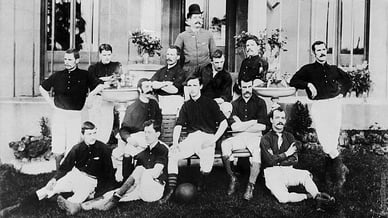
To begin with, the new club was called Dial Square, which was the name of one of the factory’s workshops, but it was soon renamed to Woolwich Arsenal in 1891, when the club went pro. Two years later, it joined the Football League and became the first southern club to play in it.
The club went from strength to strength as the 20th century rolled around, although declining attendances on match day eventually led to it relocating across the Thames to Highbury. The Highbury move would go on to make history, becoming the club’s home for nearly 90 years and providing the infrastructure it would need to become the club that we know today.
Rise to Prominence
It can be easy to forget that success didn’t come overnight. In fact, it wasn’t until the 1930s that Arsenal would emerge from the shadows as one of the country’s dominant football clubs, thanks largely to the leadership of legendary manager Herbert Chapman.
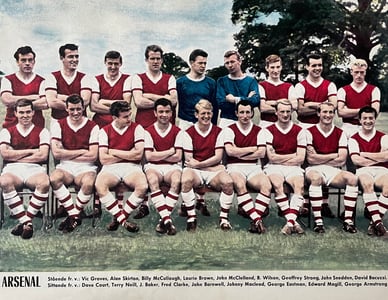
Chapman passed away in 1934, but his successors continued to build on the foundations that he’d laid down. Before long, the Arsenal team had won five First Division league titles and become two-time FA Cup winners. This early historic success gave the team a reputation for consistency and high performance, establishing a winning culture amongst the players and ensuring that it would receive a hefty dose of respect from the English elite.
In 1939, a little thing called the Second World War interrupted the domestic football leagues, but the club soon returned to its rightful place at the top of the sport once competition resumed.
Modern Era
The Invincibles Under Arsene Wenger
Jumping forward to the modern era, the obvious place to start is with the incredible Arsene Wenger. His reign at the helm lasted from 1996 to 2018, making him the longest-serving manager in Premier League history.
Wenger revolutionised Arsenal F.C. by introducing more modern training sessions and advanced sports science, as well as specialising in a style of attacking football that struck fear into the hearts of opponents both domestically and in Europe. Being an Arsenal player started to mean being at the forefront of modern football.

Under Wenger’s leadership, the club won the Premier League three times and picked up seven FA Cups, but it’s the 2003-2004 Premier League season that’s the most impressive of all. That’s because the club had an unbeaten season, completing the entirety of their Premier League campaign without sustaining a loss and earning the nickname “The Invincibles”.
This classic team featured iconic players like Thierry Henry, Dennis Bergkamp, Sol Campbell and Patrick Vieira, and it’s been hailed as one of the greatest teams in English football history.
The Move to Emirates Stadium
Change was in the air in 2006, when the Arsenal squad made the move from Highbury to Emirates Stadium. This marked a huge change for the club, which had called Highbury home for the best part of a century, but it was also a strategic decision that had almost become an inevitability.

The stadium move gave them access to a much more modern venue, a newly built ground that they could call home for the decades to come and which would allow over 60,000 fans to come through the gates on match day. It also marked the shift towards a new era, with Arsenal becoming an even more modern club for the 21st century.
The good news for Arsenal (and its financial backers) is that the stadium move led to further commercial growth, making the financial and competitive challenges that they experienced during the move worthwhile. Now, the club’s commercial position and global image are stronger than ever.
Arteta’s New Project
In 2019, Mikel Arteta took over as the club’s manager, and his reign so far has been marked by his willingness to pivot and rebuild the squad almost from scratch. As a former Arsenal player himself, Arteta knows exactly what the club needs to be successful.
He’s put a lot of emphasis on developing young players, because the club doesn’t always have the transfer cash to bring in heavyweights like Cristiano Ronaldo, who reportedly almost signed an Arsenal transfer in 2003 under Wenger’s leadership. He’s also focused on developing a structured tactical identity with disciplined defending and controlled possession underpinning intuitive attacking and clever pressing.

Under Arteta, key players like Bukayo Saka, William Saliba and Gabriel Martinelli have helped to make the team serious contenders in European competition once again. Meanwhile, the landscape of the Premier League has changed a lot since the days of the Invincibles, but Arteta and the Arsenal squad have shown that they’re serious contenders for the Premier League title and notably won the FA Cup in 2020.
Stadium and Supporters
The Atmosphere at Emirates
The Arsenal team today arguably wouldn’t be the same without the Emirates Stadium, which has quickly become one of the most iconic Premier League grounds and given the Gunners somewhere new to call home. The Emirates atmosphere is indescribable, striking fear into the hearts of opponents and giving the club a huge boost during home games.

Emirates is so much more than just a stadium. It’s the home of the club and a hub for its global support, with fans from all over the globe making pilgrimages to the grounds if they’re fortunate enough to be able to travel to London. For Arsenal fans, nothing quite beats sitting in a sea of red and white while the team demolishes one of its rivals. It’s no surprise that it’s still one of football’s most followed clubs, even after all these years.
Current Players and Squad
The Arsenal team today is a reflection of Arteta’s leadership, and it shows a deep commitment to long-term success rather than a desire for short-term wins. That’s because the Arsenal squad consists of a healthy mixture of experienced leaders and emerging stars, along with a commitment to nurturing young talent today so that the club can stay on top tomorrow.

Key players include Bukayo Saka, William Saliba and Martin Ødegaard, but the reality is that the current Arsenal team is all about squad depth and the interplay between teammates, rather than relying on any one star. It doesn’t matter who your favourite Arsenal player is; the current squad is all about bringing together different skills for the good of the team as a whole.
Speaking of which, today’s team is all about maintaining position and pressing forward when possible, as well as closing ranks and shutting down the opposition when defence needs to take priority. It’s an approach which clearly works.
Watching Arsenal Games
As one of the most popular clubs in the world, Arsenal is known for how easy its matches are to watch, because there’s a live broadcast for the majority of games and plenty of TV coverage both via traditional media and via streaming platforms. Broadcasters know that an Arsenal game is sure to bring in viewers, so they’re generally more than happy to pay for the rights to broadcast them.
In fact, instead of worrying about what channel is Arsenal on, a lot of fans just go to the pub or check results at an online casino with betting options, because there’s a solid chance that if the club is playing, the game is being shown on a big screen.
In Summary
As we’ve seen throughout this article, Arsenal F.C. is a historic club that’s managed to stay relevant and competitive for over 100 years, maintaining a consistently dedicated fan base since its establishment.
When we look at the English football giant, we see a club that combines tradition and a rich football legacy with major honours and modern ambition. Even those who don’t like the team still have to admit that they’re a force to be reckoned with, and no one relishes the prospect of playing them at home.
In the years to come, we can expect Arsenal to maintain its relevance as one of the sport’s most recognisable institutions, with new fans flocking to the club every day. Here’s to the next 100 years!