Video on the Go
Vidéo en Poche was an initiative run by Cinémas Utopia that let customers buy films as a digital copy, made at the box office and saved onto a removable storage device they brought with them (a USB stick or memory card). The scheme was built around an open format (Matroska/.mkv) with no DRM, at an advertised price of €5 per film.
Vidéo en Poche announced the end of the scheme as of 30 November (at midnight), with a final counter showing 30,237 copies sold "DRM-free on USB drives," last updated on Friday, 2 December 2022.
Key Information
Name | Vidéo en Poche |
|---|---|
Run by | Cinémas Utopia |
How it worked | The chosen film was copied onto a removable device brought in by the customer, at the box office of a member cinema |
Storage devices mentioned | USB stick or memory card |
File format | Matroska (.mkv) |
DRM | None ("DRM-free") |
Advertised price | €5 |
Price breakdown | €3 for the rights holder; €0.82 VAT; €1.18 for the cinema |
Video quality | Minimum resolution: DVD; where possible: HD 720p |
End of the scheme | Ended 30 November (midnight); final count: 30,237 copies sold; last updated: 2 December 2022 |
Catalogue size | 125 films |
Some additional context:
- Elemac's write-up frames Vidéo en Poche as a "practical" response from independent cinemas to questions around remuneration and cultural exchange, set against the backdrop of what it calls a "copyright war."
- The scheme was linked to the development of an open-source tool (Objectif Libre), with the stated aim of expanding an alternative distribution network.
- The site's closing message refers to an "original promise" made in opposition to the restrictive logic behind France's Hadopi law.
What Was Vidéo en Poche?
Vidéo en Poche was a Cinémas Utopia initiative aimed at addressing some of the questions of its time around cultural exchange and fair pay for creators, set against what the cultural industry had dubbed the "copyright war" — a standoff over copyright that tended to pit creators against their audiences through restrictive, and often ineffective, legislation. Vidéo en Poche was independent cinemas' modest contribution to that debate.
The idea was simple: you'd bring a removable storage device — a USB stick or memory card — to the box office of a member cinema, and staff would copy the film of your choice onto it in the open Matroska (.mkv) format, DRM-free, for the modest sum of €5 (made up of €3 for the rights holder, €0.82 in VAT, and €1.18 for the cinema). The minimum video resolution was DVD quality, and where the source allowed, films were provided in HD (720p).

Vidéo en Poche also involved the development of open-source software by the company Objectif Libre, funded by the Utopia cinema group (see the project's Launchpad page for more detail on the software). The goal was to build a genuine alternative film distribution network. At the time, only Utopia cinemas were part of it, though other independent cinemas within the ISF association were expected to join soon after. Growing that network required a proper software tool capable of managing sales and reliably reporting sales data back to a server for rights holders. Making the tool open source meant that no one — not even Cinémas Utopia itself — could ever claim sole ownership of it, and gave others the freedom to adapt it for other languages or other uses.
The price of each film matched the average price of a cinema ticket, and the open, DRM-free format gave people full freedom in how they used their copy (strictly for private use, of course), while also being a durable format suited to personal archiving of cultural works. Matroska was the natural choice, meeting all these requirements: it supports multiple subtitle and audio tracks plus chapter markers, it was already widely used, and an increasing number of home media devices were compatible with the format (see the "Tips for Playing Films" section below for more detail).
Non au Mac Drive, directed by Frédéric Chignac, was the first film offered as a copy onto a removable device, at Utopia Bordeaux, at a screening attended by the director on 24 September 2009. It was thanks to him, and to the enthusiasm of the audience that evening, that the decision was made to turn the experiment into a genuine alternative distribution model. As a result, his film was offered — and remained available — through the Vidéo en Poche network for as long as he wished. Non au Mac Drive was made available under a Creative Commons licence, while the other films on offer were subject to standard copyright, which permits copying a work solely for private use (the open, DRM-free format simply made it possible to actually exercise that right). CC licences provide a legal framework for practices tied to the digital environment while still protecting certain rights for creators (for a clearer picture of what these licences are about, this talk by Lawrence Lessig is a good place to start).
A big thank you also to ABUL and Toulibre, two free software user associations, for their support in getting this experiment off the ground during the screenings of Non au Mac Drive in Bordeaux and later in Tournefeuille.
Les Films du Paradoxe were the first video distributor willing to try this new distribution model alongside Cinémas Utopia, with the films Les brebis font de la résistance, Ma mondialisation, Paul dans sa vie and Les LIP, l'imagination au pouvoir. Our thanks go to these early adopters for their spirit of adventure, and for the trust they placed in the scheme.
Vidéo en Poche launched at Utopia Bordeaux during the Rencontres Mondiales du Logiciel Libre, running from 6 to 11 July, before rolling out to all Utopia cinemas from mid-September 2010.
If you liked the idea, and wanted your local cinema to get involved, you were encouraged to raise it with them directly — the more cinemas involved, the more attractive the network became for rights holders. Likewise, if you knew of a distributor or film
Members of the Vidéo en Poche Network
The scheme was offered at a number of independent cinemas:
Cinema | City |
|---|---|
Cinéma Alhambra | Calais |
Le Cinéma des Cinéastes | Paris |
Cinéma Les Carmes | Orléans |
Cinéma Le Dietrich | Poitiers |
Cinéma Le Méliès | Saint-Étienne |
Cinéma Le Rio | Clermont-Ferrand |
Cinéma Ciné LUX | Cadillac |
Cinéma Studio | Tours |
Cinémas Utopia | Avignon |
Cinémas Utopia | Bordeaux |
Cinémas Utopia | Montpellier |
Cinémas Utopia | Saint-Ouen l'Aumône |
Cinémas Utopia | Toulouse / Tournefeuille |
Partner Distributors and Publishers
Partners included:
AD Vitam, ASC Distribution, Capricci Films, Distrib Films, ED Distribution, Epicentre Films, Héliotrope, Les Films du Losange, Les Films du Paradoxe, Les Films du Whippet, Iberi Films, Jour2Fête, Memento Films, Pyramide, Rezo Films, Shellac, UFO Distribution, and Urban Distribution.
The Films
The catalogue included both fiction titles and a large number of politically engaged documentaries. Here's a summary of the films featured.
Sous l’aile des anges (The Better Angels)
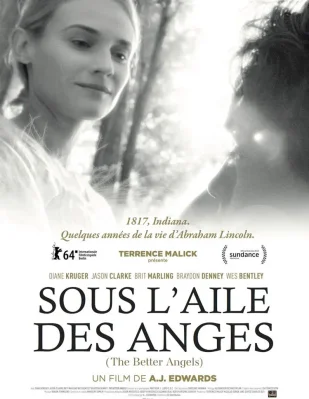
Written and directed by A. J. Edwards, produced by Terrence Malick, starring Diane Kruger and Jason Clarke. A 2014 film centred on a young boy watching his father build a cabin that becomes a home.
Ham on Rye
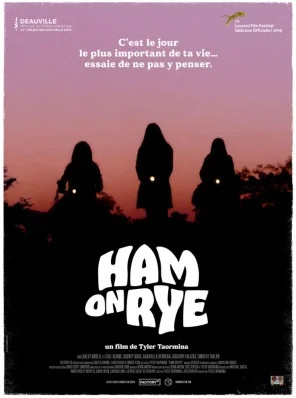
Directed by Tyler Taormina (screenplay with Erick Berger), following teenagers preparing for "the most important day of their lives." The story tracks an almost ritualistic journey to a local fast-food joint (Monty's), where a surreal ceremony of food, dancing and romantic anxiety unfolds.
À la vie
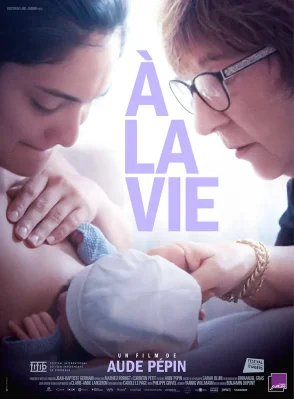
A documentary by Aude Pépin about "the time after birth" and what women experience once they become mothers. The film focuses on the isolation new mothers can face after pregnancy, featuring midwife Chantal Birman.
Qui a tué Lady Winsley ?
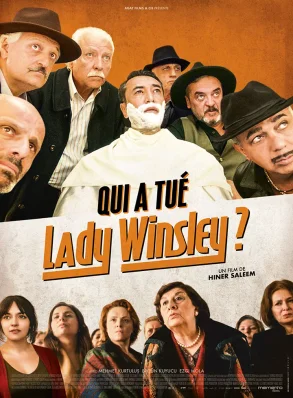
A film by Hiner Saleem playing with the Agatha Christie-style whodunnit, while keeping a wry, humorous tone. It also offers a critical eye on Turkish society (the Kurdish question, women's place in society), echoing the director's earlier My Sweet Pepper Land.
Un pays qui se tient sage
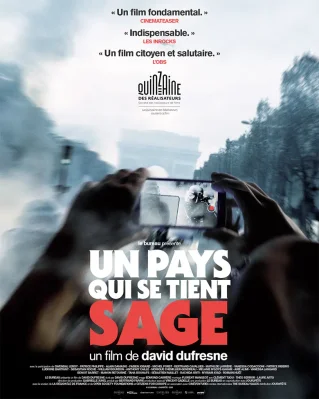
A David Dufresne documentary on the long and often fraught relationship between the public and the police, grounded in literary and historical references (from slang for "police" to the 1789 Declaration and Victor Hugo).
DSK, Hollande, etc.
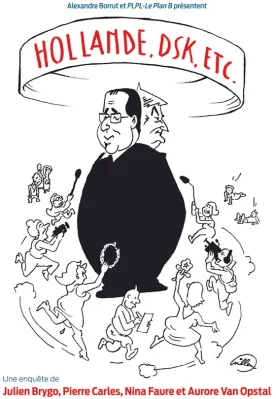
A documentary by Pierre Carles, Julien Brygo and Aurore Van Opstal on the relationship between the media and politics ahead of the 2012 presidential election, examining how the press "pre-selects" candidates compatible with economic interests, tracing the arc from DSK to Hollande.
Fin de concession
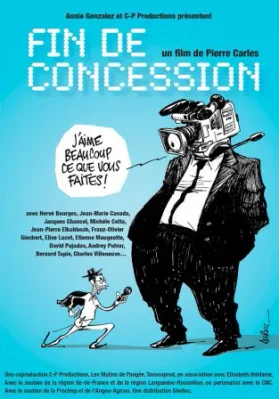
A Pierre Carles documentary examining the privatisation and renewal of the broadcasting licence for France's main public TV channel, awarded to Bouygues. A critical look at the media, featuring figures including Pujadas, PPDA, Tapie, Lucet and Montebourg.
Enfin pris ?
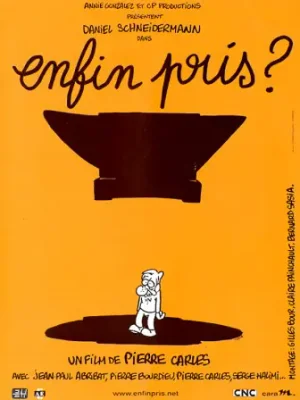
A Pierre Carles documentary framed as "the story of a reversal" within the media system — a journalistic comedy of manners, sharper than his earlier Pas vu, pas pris, featuring figures such as Daniel Schneidermann and Pierre Bourdieu.
Opération Correa 2 : on revient de loin
A documentary by Pierre Carles and Nina Faure about Ecuador in 2007, marked by a debt default and the refusal to repay debt judged unfair, telling the story of Rafael Correa's election and his break from IMF conditions.
Opération Correa 1 : les ânes ont soif
A Pierre Carles documentary (with Nina Faure and Aurore Van Opstal), starting from the question of why the French press gave so little coverage to Rafael Correa's visit to Paris, including his lecture at the Sorbonne on 6 November 2013.
Au bout du conte
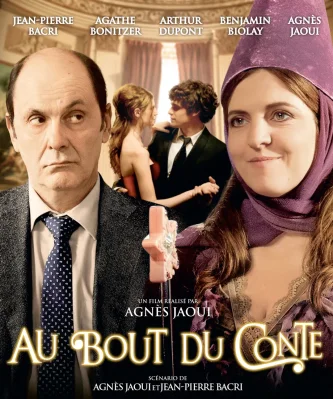
A film by Agnès Jaoui, co-written with Jean-Pierre Bacri, a comedy that reworks and subverts fairy tales — subtle, clear-eyed and never saccharine, with tales that aren't afraid to be cruel.
Une intime conviction
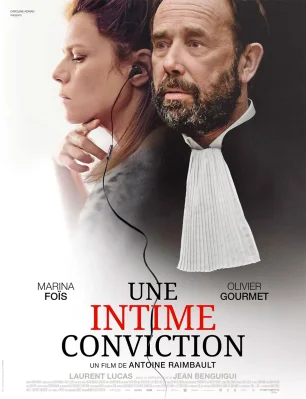
A film by Antoine Raimbault inspired by a real case the director followed, structured as a courtroom thriller centred on the disappearance of Suzanne Viguier (27 February 2000), exploring how a trial can leave more questions than answers.
Tharlo, le berger tibétain
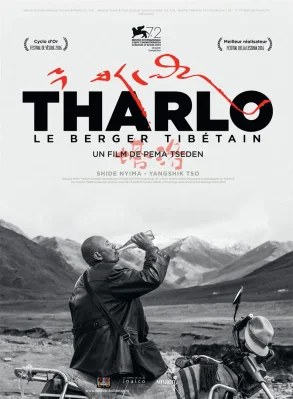
Written and directed by Pema Tseden, a portrait of a Tibetan shepherd nicknamed "Little Braid," known for his exceptional memory, including a striking scene where he recites Mao's "Serve the People" speech, set against his simple, quiet life as a shepherd.
Volem rien foutre al païs
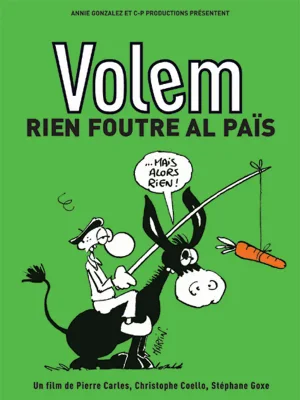
A documentary by Pierre Carles, Christophe Coello and Stéphane Goxe, taking aim at mainstream narratives around work and competitiveness — a film that "clears the ground" to ask essential questions and stir up a bit of utopian agitation.
Attention Danger Travail
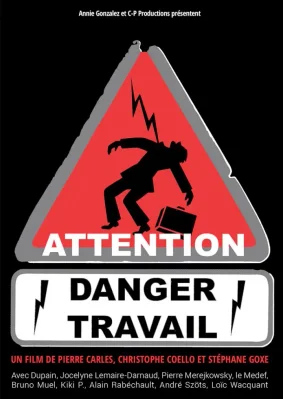
A documentary by Pierre Carles, Christophe Coello and Stéphane Goxe that directly challenges the social value placed on "Work" — an uncompromising piece of investigative filmmaking that stirred plenty of reaction.
La sociologie est un sport de combat
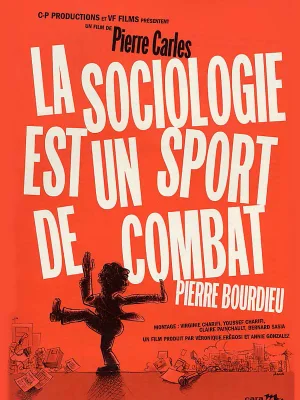
A long, in-depth Pierre Carles documentary portrait of Pierre Bourdieu, presented as engaging rather than dry, capturing the "thinking in motion" of a rigorous, pedagogical researcher.
Pas vu, pas pris
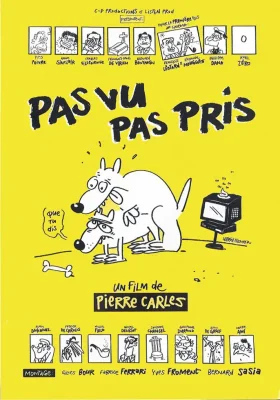
A Pierre Carles documentary that opens with a filmed conversation between François Léotard and Étienne Mougeotte (TF1), seen as damning evidence of the ties between media and politics — a close look at the relationship between media power and political power, featuring figures including PPDA, Anne Sinclair and Karl Zéro.
Institut Benjamenta
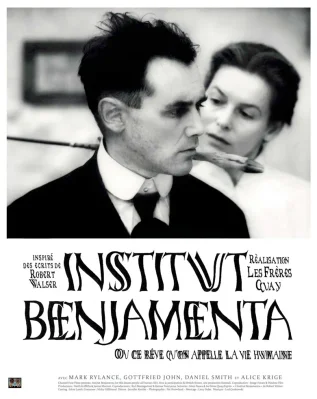
Written and directed by Stephen and Timothy Quay, set in a strange school that trains its pupils to become servants — an absurd, labyrinthine world where logic "has no place," followed through the eyes of new student Jakob Van Gunten.
J’veux du soleil !
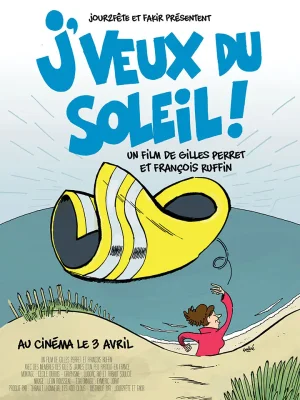
A documentary by François Ruffin and Gilles Perret, restrained and fair-minded rather than preachy, deconstructing mainstream narratives around the "gilets jaunes" (yellow vest) movement.
La Cigale, le Corbeau et les Poulets
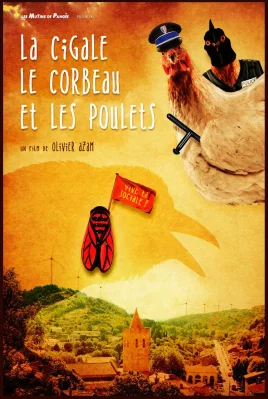
A documentary comedy by Olivier Azam and the team behind Merci Patron!, telling a true, farce-like story set in a village in the Hérault, centred on local resistance carried out with humour and persistence.
Viramundo
As part of the European "The Tide Experiment," this film had an almost simultaneous cinema and video release across ten European territories. Though it seemed a modest move on the surface, it marked a significant shift in the European film landscape, and drew criticism from defenders of the traditional theatrical release window.

Viramundo, un voyage musical avec Gilberto Gil
Viramundo, un voyage musical avec Gilberto Gil — Vidéo en Poche took part in this experiment not to challenge the traditional release window, but to affirm the role cinemas could continue to play regardless of how releases were organised. The idea was to offer an alternative: letting cinemas also provide films on video, under specific conditions.
This approach rested on a few core principles: preserving trust with audiences, ruling out any use of digital rights management (DRM), using an open, durable format (Matroska) to guarantee simple, long-term playback, keeping the price accessible (€5), and ensuring fair pay for rights holders (73% of the pre-tax price).
Tips for Playing the Films
For Vidéo en Poche, the choice fell on an open, DRM-free format to guarantee freedom of use for cultural purposes while still providing a durable format suited to personal archiving.
Matroska (.mkv) was chosen because it met all these requirements: it supports multiple audio tracks and subtitles, it was already widely used, and an increasing number of home media devices were compatible with the standard. That said, the world of media software and players is broad and sometimes complex, which can make finding the right solution tricky. It wasn't possible to test every option out there, but the goal was to point to solutions with confirmed compatibility.
On the software side, VLC media player is recommended. It's free, open-source, cross-platform software that plays Vidéo en Poche files correctly, works on the vast majority of computers, and is also available on Android and iOS.
In Summary
Vidéo en Poche was a cinema-based distribution scheme: buy a film for €5 and have it copied onto your own removable storage device, in an open format (.mkv), DRM-free, with a set breakdown between rights holders, VAT and cinemas.
The archived site notes that the scheme ended on 30 November (at midnight), with a final tally of 30,237 copies sold, last updated on 2 December 2022.
The lists of cinemas and distributors featured on the homepage document a real network of participating venues and distribution partners, and the site highlights a selection of titles (as tickets and in a "Worth Remembering" section) representative of the wider catalogue.