Adidas
Adidas is one of the largest manufacturers of sportswear and footwear in the world. Founded 70 years ago, it quickly earned widespread recognition and popularity.
Company History
Adidas started out as a family business founded by brothers Rudolf and Adolf Dassler. The company grew out of a family shoemaking tradition. Adolf Dassler grew up in Herzogenaurach, a town known as "the city of shoemakers," where a relatively small area was home to a large number of shoemaking workshops. That level of competition gave the young German the skills and knowledge that would go on to shape his future success.
The Dassler family is behind not just the Adidas brand, but also its equally famous rival, Puma.
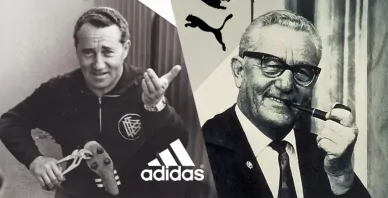
The brothers learned the value of money early on. Their parents weren't wealthy, and the family had to work hard to get by. After the end of the First World War, when Germany signed the instrument of surrender, the country was left in ruins and its people faced widespread unemployment — circumstances that pushed the Dassler family to start their own business.
In the early 1920s, they set up a small shoe workshop. Adolf Dassler, together with his older brother Rudolf, worked hard to get the business off the ground, initially making house slippers and specialised footwear for people with disabilities.
Things gradually improved, and by the mid-1920s the family business was producing around a hundred pairs of shoes a day. The Dasslers decided to focus on producing athletic footwear ahead of the 1928 Olympic Games — a gamble that paid off. German athlete Lina Radke won the 800m race wearing Dassler shoes, setting a world record in the process.
An achievement like that didn't go unnoticed, and demand for the family workshop's products shot up. A year later, the company began producing football boots, and shortly after that, tennis shoes.
The Dassler company saw rapid growth in 1939, gradually expanding its range of manufactured goods. But once the Second World War broke out, the state seized the business, attempting to convert the factory's capabilities towards mass weapons production — an idea that proved technically unworkable. The Dassler factory soon found itself producing uniforms for the German army instead.

After the war ended, the head of the Dassler family died, and the brothers fell into a serious dispute — the exact cause of which remains unknown. They split the company, with each taking a factory of his own.
That's how Puma, led by Rudolf Dassler, and Adidas, led by his younger brother Adolf, came to exist as separate companies.
A deep, lasting rivalry took hold between the two companies and their leaders — and it's quite possible that this very rivalry is part of what made both brands so successful.
Most people associate the Adidas brand with its three stripes. Strangely enough, though, the brand didn't start using that design until the first half of the 1950s. According to one version of events, the design element was thought up personally by Adolf Dassler. It's worth noting that the Finnish shoe manufacturer Karhu had previously used a similar design — after the 1952 Olympic Games, Adolf Dassler bought the rights to it.
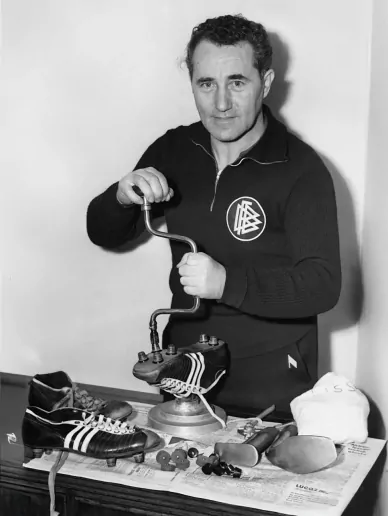
From that point on, Adidas products took on the recognisable house style the brand is known for today. The company began growing rapidly, kitting out the German national football team in its boots, and the team went on to win the 1954 World Cup wearing them — giving the brand's expansion another significant boost and helping fuel its growing popularity. Adidas became more and more recognisable, and factories began opening in other European countries too. At the 1960 Olympic Games, more than half of all athletes competed wearing Adidas shoes.
The following Olympics, held in Japan, saw the release of lightweight shoes weighing no more than 270 grams — an impressive figure even by today's standards.
By the late 1960s, the brand had begun producing sportswear as well as footwear.
In 1970, the company introduced the official match ball for the World Cup held in Mexico. Adidas had always shown a drive for innovation, and this ball, named the Telstar, was cutting-edge for its time. As TV broadcasts of matches grew more popular, the ball was given a distinctive design that showed up clearly on black-and-white screens.
Over the following two decades, the company released a huge number of now-iconic shoe models, including the Superstar, Gazelle and ZX 500.
The Stan Smith went on to become the best-selling shoe in the world, even earning a spot in the Guinness World Records.
Adidas enjoys huge popularity in Ireland, as it does across much of the world. Well-known figures, including Michael Jordan, have partnered with the brand over the years — a move that helped Adidas make real inroads against Nike.
In the first half of the 1990s, competition between sportswear and footwear manufacturers intensified dramatically, and Adidas badly needed new influencers to champion the brand. The choice fell on musicians, who, much like athletes, had a genuine love for the brand's products. Featuring artists like the Beastie Boys and Run DMC in advertising campaigns helped spread the brand's reach further.
Like other brands, Adidas has had its share of ups and downs. The late 1980s and early 1990s weren't a particularly successful period for the company. Following the death of Adolf Dassler's heir, the business went into crisis. The new owner, who bought the company in the 1990s, managed to bring it to a new level — the experienced businessman gave it fresh life and sparked a new wave of popularity.
One of the key decisions made by that new owner, Robert Louis-Dreyfus, was to move production facilities to countries in Asia.

Louis-Dreyfus
The company began turning a profit once again, proving the chosen strategy had been the right one. The brand signed contracts with famous athletes including Kobe Bryant and David Beckham.
The first half of the 2000s was a particularly successful period for the company, making its presence felt at major sporting events and breaking previous sales records.
In 2006, another major event took place: Adidas acquired its competitor, the British brand Reebok.
A year later, football star Lionel Messi joined the ranks of the company's brand ambassadors.
Adidas is a company with a long history. Founded in 1924, it has weathered plenty of ups and downs along the way. It's a genuinely major brand, holding one of the top spots among manufacturers of sportswear and athletic footwear — modern sporting culture is hard to picture without Adidas.
Adidas Products
Adidas products cover mainly clothing, footwear and sports equipment.
The brand's most popular sneaker model is widely considered to be the Adidas Superstar, designed for playing basketball, first released in 1969. Before it came the Superstar Pro Model, which served as its prototype. The updated model earned the nickname "shell toe," a reference to the distinctive shape of the rubber toe cap that protects the toes, resembling a shell. The Superstar became a design icon in its own right and went on to influence the release of other lines from the brand.

Adidas Superstar
The Adidas Gazelle line was introduced in 1966. Initially used purely for training, it was later reworked into a version for indoor handball.
The Gazelle followed on from the earlier Olympiade line, which included running shoes — a red version for outdoor use and a blue version for indoor training. The Gazelle was the first Adidas shoe made from suede; before that, the brand had relied on leather and canvas.

Adidas Gazelle
The Adidas Ultraboost line deserves special mention. The first model was introduced in 2015, built using Adidas Boost foam.
The performance running shoe gained popularity a few months after launch, following Kanye West's appearance wearing them at the Billboard Music Awards.
The defining feature of this model is a knitted Primeknit upper sitting over a Boost sole, with plastic side panels featuring the three-stripe logo — it marked the first time Adidas had used Boost technology.
The Adidas Samba is a classic model known for its distinctive design, iconic T-toe overlay and rubber outsole. For a relatively modest price, customers get a comfortable, easy-to-wear shoe.

Adidas samba
Adidas Terrex trainers are built for comfort during outdoor training, made from breathable material and known for their durability, helping athletes achieve strong results outdoors.
Adidas outlet stores, which also stock Reebok products, are well regarded by shoppers.
Anyone looking for high-quality sportswear and footwear at a reasonable price has plenty to choose from — Adidas remains one of the most popular brands in Ireland thanks to its accessible pricing.
Alongside footwear, the globally known manufacturer also offers a wide range of clothing, including:
- Jackets
- Tracksuits
- Sportswear sets
The brand's products are sold worldwide. For a relatively modest sum in euro, customers can pick up high-quality gear that's comfortable to train and play sport in.
Adidas has built a reputation for introducing genuine innovations, such as screw-in studs for football boots. The brand actively uses new materials in footwear construction, giving footballers the ability to adjust their boots to suit different pitch surfaces — an advantage that's given players wearing them a real edge.
Adidas was also the first company to use kangaroo leather in the production of football boots, making them lighter and more comfortable.
The company continuously refines the materials and technologies used in its athletic footwear. In 2013, for example, it introduced Boost technology, offering improved cushioning and comfort for runners — innovative footwear that was highly rated by professional and amateur athletes alike.
Its distinctive basketball shoes featuring Boost energy-return technology became hugely popular.
Another example is ClimaCool technology, which provides excellent ventilation and moisture-wicking during training. Designed with athletes' needs front and centre, it ensures comfort and freshness throughout a workout.

ClimaCool
The brand never stops experimenting with materials to create ever lighter, more functional products. In 2018, it introduced Primeknit technology, which enables the production of seamless clothing that's more comfortable and ergonomic.
Thanks to this approach to manufacturing, Adidas holds a leading position in the market, continuing to grow steadily while keeping customers engaged with a steady stream of innovation.
Marketing and Advertising
Adidas owes much of its popularity to carefully planned advertising campaigns. The brand sponsors well-known athletes and sports clubs.
Social media and modern technology also play a major role in its promotion.


Competition in the industry is fierce, so companies need to pay close attention to marketing — and Adidas is no exception. The German company has settled on a strategy that's clearly been paying off.
The brand uses a wide range of tools to promote its products and reinforce its position as a market leader. It adapted early to the digital era, embracing digital marketing, and its success has also been helped along by the use of e-commerce platforms. The brand continues to grow its visibility through social media.
To build customer loyalty, Adidas runs programmes like the Creators Club, offering exclusive perks and rewards to loyal customers. Adidas stores can be found in major cities everywhere from Paris to Tokyo. The company actively shapes and introduces new stylistic trends, playing a role in shaping fashion in capital cities around the world.
Rather than simply selling products, Adidas takes a holistic approach to promotion — staying attentive to customer feedback and making the most of promotional partnerships.
Its strategy of releasing certain products in limited quantities helps generate additional demand, boosting the profitability of those items.
The brand also makes skilful use of meme marketing, creating personalised versions of popular, humorous images, particularly within football culture. This helps build a genuine connection with fans and increases engagement.

Adidas actively partners with celebrities, signing deals with globally recognised names to drive sales growth. Celebrities become Adidas ambassadors because of their impressive fan bases and significant influence over audiences — and in turn, these stars help boost the brand's profile and credibility.
Its most famous collaboration is the Adidas Yeezy Boost line, which came about through the brand's partnership with rapper Kanye West.
The company has repeatedly shown it knows how to blend sport with fashion, something customers around the world respond to. It offers high-quality clothing and footwear that's accessible not just to celebrities but to everyday people too.
Bringing in famous athletes is a well-thought-out tactical move. Well-known NBA players regularly appear in Adidas advertising campaigns, promoting the German manufacturer's footwear, driving demand among fans and making the products more appealing to buyers looking for quality sports gear.
Adidas's influence is further strengthened by its ties to global fashion and its sponsorship of major sporting events. The company offers top athletes contracts worth substantial sums, and serves as the official sponsor of numerous sports teams and competitions worldwide, supplying kit to famous football clubs including:
- Real Madrid
- Bayern Munich
- Manchester United
Adidas is particularly proud of its partnership with Lionel Messi. The decorated Argentine footballer is the face of the brand, bringing in significant revenue. In 2022, he won the World Cup, cementing his reputation as the greatest player of his generation. In 2024, Adidas and Messi worked together on an exclusive project: a new version of the Adidas Samba.
One pair from the collection is dedicated to Argentina's World Cup win in Qatar, made distinctive by an embossed Messi logo on the heel and elegant gold lettering with his name on the side.
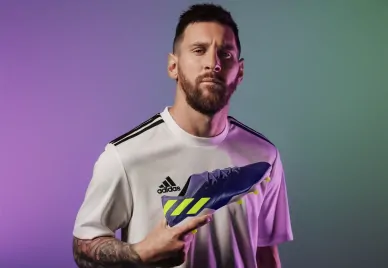
Adidas runs a comprehensive branding strategy, making use of a wide range of media and communication channels, from television to social media and billboard advertising.
The company has plenty of original advertising moments to its name. It keeps existing customers loyal while actively drawing in new fans of sport and fashion alike. The Adidas slogan, "Impossible is Nothing," speaks for itself.
Key Financial Results
Reviews of the company's financial performance in recent years show it has clearly moved past its earlier crisis. In 2022, for example, revenue reached €22.5 billion — a 6% increase on the previous year. Net profit for the year came in at around €228 million.
The company's profit margin dipped by around 1%, largely down to rising costs.
Adidas's main sources of revenue come from sales of sportswear, footwear and accessories across markets worldwide. Its products remain in high demand throughout Europe and in the US.
The company's costs are tied to the need to modernise production, introduce new technologies, and purchase raw materials and supplies.
The overall outlook for Adidas looks fairly positive. With the right approach, the company should be able to grow its sales even further, including by bringing on new ambassadors. It seems unlikely that Adidas will lose its leading position among sportswear and footwear manufacturers in the years ahead.
Adidas has cemented itself as a leading player in the global sportswear retail market through a combination of innovative products, sharp advertising campaigns, and quick adaptation to shifting consumer preferences and needs. The company has a long history of high-profile partnerships and collaborations with popular athletes. Its products remain in demand across a broad range of customers, from professional athletes to everyday fitness and fashion enthusiasts. Adidas is ready for whatever comes next — its rivalry with giants like Nike and Puma continues to push it towards releasing new, even more original and successful lines of sporting gear.