Volta ao Conhecimento
Volta ao Conhecimento is a science communication initiative launched by Portugal's Ministry of Science, Technology and Higher Education in 2016 as a side event to the Volta a Portugal cycling race. The first Volta ao Conhecimento accompanied the 2016 Volta a Portugal, which ran from 27 July to 7 August and consisted of a prologue and ten stages.
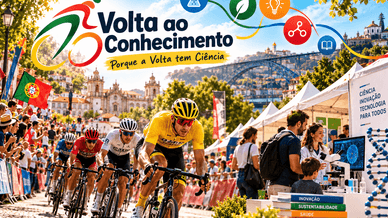
A Volta ao Conhecimento uniu ciclismo e divulgação científica
Volta ao Conhecimento is a unique educational project whose aim was to link Portugal's scientific and technological potential with the country's biggest sporting events, above all the famous Volta a Portugal cycling race. The initiative was launched by the Ministry of Science, Technology and Higher Education in 2016.
The idea was to take scientific achievements beyond universities and laboratories and show them to people right on the streets, where interest in sport served as a bridge to learning about new technologies, eco-friendly solutions and regional research.
The project introduced the public to the scientific, cultural and natural features of the regions along the route of the cycle race, and the information was presented as “knowledge stages” — from history and heritage to subjects such as health, innovation, sport, gastronomy and traditional crafts.
As most universities and research centres are concentrated in the big cities, the Ministry of Science, Technology and Higher Education played a key role in making the project happen. Thanks to the programme, innovation spread beyond Lisbon and Porto, and the race route through small towns and villages made it possible to showcase the potential of local polytechnic institutes, encouraged young people to study and underlined the importance of developing science in every region of the country.

The initiative's official website included material on the route and the scientific background of each stage, and the information was also shared on Facebook and X. Volta ao Conhecimento ran for at least three consecutive years — in 2016, 2017 and 2018.
Note: Volta ao Conhecimento is an initiative of the Ministry of Science, Technology and Higher Education (MCTES), developed in partnership with the Volta a Portugal and RTP (Portugal's public television), with the participation of higher education institutions, the Council of Rectors of Portuguese Universities (CRUP), the Coordinating Council of Higher Polytechnic Institutes (CCISP) and the National Innovation Agency (ANI).
Goals and Mission of the Project
The main goal of the Volta ao Conhecimento initiative was to make Portuguese science accessible and understandable to society, narrowing the gap between academia and ordinary citizens. Instead of conferences closed to the public, the project used the popularity of large-scale sporting events, above all the Volta a Portugal, to present the research and technological advances of universities and polytechnic institutes in an accessible way, showing their practical value for everyone.
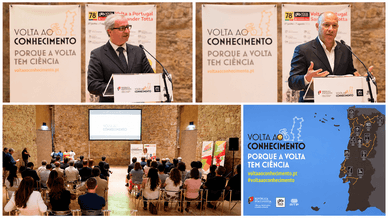
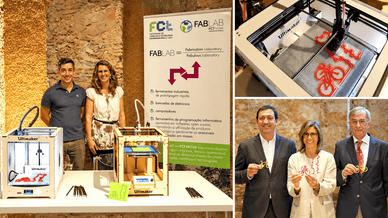
Incidentally, the Volta ao Conhecimento initiative was presented by the Secretary of State for Science, Technology and Higher Education, Maria Fernanda Rollo, on 22 July 2016 at the Teatro Thalia in Lisbon. On the same occasion, equipment that once belonged to the best-known figures in Portuguese cycling was on show, including Joaquim Agostinho's yellow jersey and the bicycle Alves Barbosa rode in the Tour de France. A 3D printer that produced a model of the bicycle was also on display — a result of the innovations and technologies developed in the research laboratories of higher education institutions.
Besides Maria Fernanda Rollo, the presentation also featured speeches by the Secretary of State for Energy, Jorge Seguro Sanches; the president of RTP, Gonçalo Reis; the president of the Portuguese Cycling Federation, Delmino Pereira; the director of the Volta a Portugal, Joaquim Gomes; the representative of the Council of Rectors of Portuguese Universities, Manuel Assunção; and the president of the Coordinating Council of Higher Polytechnic Institutes, Joaquim Mourato.
Goals of the Volta ao Conhecimento Initiative
The main goals of the Volta ao Conhecimento project were built around three main pillars, each with its own value.
- The motto “Porque a Volta tem Ciência” (“Because the Volta Has Science”) reflects the idea of combining a mass sporting event, educational activities and regional development. The central idea is that a cycle race is not just sport and physical endurance, but also aerodynamics, materials science, medicine, digital technologies and ecology — fields developed in the country's research laboratories.
- Popularising science among the general public. By going out onto the streets of the towns and villages along the race route, scientists and students presented their work as interactive exhibitions, open workshops and demonstrations, encouraging young people to choose STEM subjects and higher education.
- And finally, it was a showcase of regional potential, as the project highlighted the role of local universities and research centres as important players in regional development and in creating an environment that fosters scientific, social, economic and cultural innovation.
What Was the Format of Volta ao Conhecimento?

The Volta ao Conhecimento initiative worked in an open and dynamic format: it took science out of the laboratories and straight into the festive atmosphere of the Volta a Portugal cycle race. During the competition, scientific projects went out onto the city streets, became part of a big sporting celebration and were open to everyone — from fans to local residents and tourists of all ages. It was a way of showing that science can be interesting, understandable and close to everyone.
In total, in 2016, 19 higher education institutions and researchers joined the Volta ao Conhecimento initiative, and more than 400 pieces of content dedicated to communicating science and knowledge were published on digital platforms.
Stages and Route of Volta ao Conhecimento
In 2016, Volta ao Conhecimento accompanied ten main stages of the Volta a Portugal cycling race. The route included Ovar, Braga, Viana do Castelo, Fafe, Montalegre, Bragança, Viseu, Guarda, Castelo Branco, Nazaré, Setúbal and Lisbon.
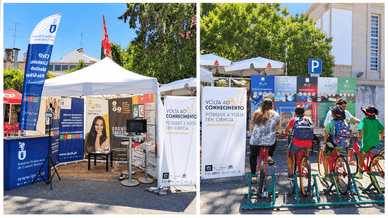
The science communication side of the project was built around ten broad themes: territory, heritage, health, innovation, literature, history, music, sport, gastronomy, and art and crafts. In particular:
- In the north of the country, the focus was on creating modern materials for bicycles and sportswear, developing technical textiles, researching the biodiversity of Peneda-Gerês National Park, as well as studying mushrooms and the traditional craft of making bagpipes in the Trás-os-Montes region.
- In inland Beira, the focus was on new ways of using wood, joint research projects with farming cooperatives and cutting-edge medical technologies for regenerating bone tissue and skin after injury.
- On the central coast, the scientific background included 3D modelling of the Nazaré Canyon, the use of marine biotechnology to add value to agri-food production and the development of specialised aquariums for aquaculture.
- Around the Sado and Tagus estuaries and the Lisbon coast, the route ended with a view of the 25 de Abril Bridge— an engineering marvel whose 50th anniversary fell that very year (it opened on 6 August 1966).

So science was present in everything: in the history and heritage of the regions, in the technologies behind equipment for top-level sporting effort, in medicine and health, as well as in the environment, landscapes, local cultures and industrial companies all along the route.
Importance for the Regions and for Tourism
The Volta ao Conhecimento initiative aimed to raise the profile of the scientific potential of Portugal's regions and bring higher education institutions closer to local communities. It successfully combined the momentum of a cycle race with an educational mission, creating a special effect: sport became not only a celebration and a spectacular competition, but also a chance to discover science and new ideas.
The project's main areas of impact and significance covered several important aspects.

Há Volta | Volta ao Conhecimento – Etapa 3
- New knowledge for everyone: science spaces and mobile exhibitions helped residents and tourists learn about current developments in a simple, understandable way.
- Combining sport and education: the cycle race became not only a celebration for thousands of fans, but also an occasion for educational activities open to local residents, fans and visitors in the towns along the route.
- Tradition and modernity: the project showed how new technologies and research can renew farming, crafts, tourism and industry, making them more modern and eco-friendly.
Conclusion
Volta ao Conhecimento was conceived as a state initiative to give Portuguese science and education visibility not only in the big cities but also in the country's smaller regions. It was launched by the Ministry of Science, Technology and Higher Education in 2016, which built the project into the legendary Volta a Portugal cycle race. As a result, scientific achievements went beyond the walls of universities and laboratories and became accessible to people right on the city streets.
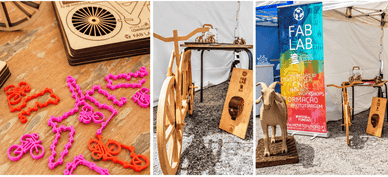
The initiative also gave universities and polytechnic institutes the chance to present their scientific potential to a wide audience and to bring researchers and students closer to local communities.
Volta ao Conhecimento ran from at least 2016 to 2018. The project became an example of how a major sporting event can be used to popularise science, the work of higher education institutions and the scientific potential of Portugal's different regions.