Payoneer
Payoneer what is it? Well, we’re glad you asked. As a specialised cross-border payments platform, it’s all about making it easier for freelancers, marketplace sellers, B2B companies and more to sell products and services internationally.
For users in Ireland, it's the perfect tool for receiving and managing multi-currency payments, and it has the other big benefit of integrating with the majority of marketplaces. On top of that, it has a decent range of withdrawal options and payment methods, a reasonable fee structure, affordable foreign exchange costs and solid security.
In this article, we'll walk you through everything you need to know as an Irish seller, including the verification process and the documentation you're likely to need. You'll be up and running in no time.
Understanding Payoneer: What is the Cross-Border Payments Platform
Why B2B Brands Love Payoneer Global
Let's go back to that question: Payoneer what is it? The simple answer is that it's a cross-border payment facilitator, which makes it different to a traditional consumer retail wallet. Instead of storing money there and using it to make your purchases, it's built around allowing freelancers and B2B businesses to accept cross-border transactions both directly from clients and from gig economy platforms. It's all about allowing you to get paid as easily as possible and in a variety of different currencies.

Payoneer's Users: Freelancers and Gig Economy Workers
As we mentioned, perhaps the most obvious use of Payoneer is for receiving international payments as freelancers or small business owners. This holds true whether you're working directly with clients or whether you're using marketplaces like Upwork, Fiverr and Amazon. Other key users of Payoneer include digital agencies, content creators and affiliate marketers. The key thing to remember here is that the users who benefit the most are those who need to accept a number of cross-border payments on a regular basis.
Is Payoneer Safe? Tips for USD, EUR and GBP Setups
Virtual Bank Accounts vs. Receiving to Local Accounts
The next big question is that of "Is Payoneer safe?" The simple answer is yes, although there's nuance there. First though, let's cover their receiving accounts, which allow users to accept payments in currencies like USD, EUR, GBP and JPY. Users have local bank details for each currency, and for payers, it looks like they're just making domestic bank transfers. It's the safest way to avoid costly international wires and makes cross-border payments much more convenient.
Support for 22 Currencies and 190 Countries
Payoneer provides support to multi-currency users from around 190 different countries, with receiving accounts supporting more than 22 different currencies. However, not all of these global currencies are available by default, with availability varying by region and account type. For Irish users, though, EUR, USD and GBP accounts make international payments easier than ever.
Balance Management, Holding Funds and Conversion Costs
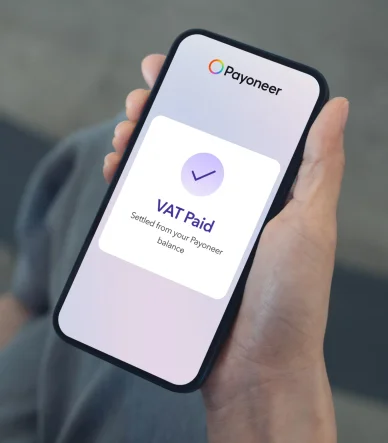
One of the big selling points for Payoneer is the fact that it allows users to hold balances in multiple currencies, as well as making it super easy to carry out FX management and to switch out from one currency to another. Their tools can help you to avoid badly-timed currency conversions and make sure you get the best deal possible.
Payoneer Integration with Upwork, Fiverr, Amazon and Other Platforms
Freelancer Platforms Like Upwork and Fiverr
Another big selling point for Payoneer Ireland is that it directly integrates with the most common platforms that freelancers use, including Upwork, Fiverr and Freelancer.com. You can use automatic payments to simplify the process so that the platforms send weekly or monthly payments directly to your Payoneer account. However, bear in mind that many of these platforms have their own fees and limitations.

Ecommerce Platforms Like Amazon, Airbnb and Getty
For those who are using ecommerce platforms and marketplaces like Amazon, as well as other specialist sites like Airbnb (for property owners) and Getty Images (for photographers), Payoneer has a lot to offer. As usual, sellers should be aware of the settlement cycles and payout schedules of the sites that they're using, as well as any additional charges and fees that might come into play.
Payment Requests and Invoicing
Another huge selling point of the platform is that it has built-in invoicing, which makes it super easy for freelancers and B2B companies to stay on top of billing. You can use Payoneer to send out payment request links and clients can choose from a range of options including debit card and bank transfer depending upon what works best for them. All invoices are fully compliant with regulatory and tax requirements, and payments (or the lack thereof) can be tracked in real time.
Withdrawal from Payoneer to Local Banks in Ireland
Bank Transfer, Card Payments and Other Irish Withdrawal Methods
When you're ready for withdrawal, Payoneer makes it simple for you to transfer your funds into your local bank account in Ireland. However, be warned that it can take a day or two for payments to process, and you'll typically need to meet a minimum withdrawal amount, although realistically they're not large enough to really matter. Supported Irish banks include AIB and Bank of Ireland.
Payoneer's Prepaid Card and ATM Withdrawals
Payoneer is interesting in that in contrast to other similar providers, it offers a prepaid Mastercard. If you opt for a card, you can use it just like you would any other, including by making payments at the point of sale or withdrawing from ATMs. However, you can only spend the money that you've already loaded onto the card, and fees could apply for card issuance, monthly maintenance and foreign exchange. It's a convenient option, but not necessarily as convenient as just having a regular debit card.
Processing Delays, Holds and Withdrawal Times
All withdrawals from Payoneer are subject to processing, and that can mean it takes time for them to complete. Initial withdrawals typically take longer than subsequent ones because your account will need to undergo verification and security checks. Expect temporary holds while this takes place and factor that into your timing. Remember, too, that any unusual or suspicious activity could trigger additional delays.
Payoneer Ireland Costs and Charges for Cross-Border Transactions
Inbound Payments from Other Platforms
When it comes to payouts, Payoneer Ireland can be subject to fees depending upon the payment source, with Upwork, Fiverr and Amazon all charging their own rates. If you're receiving direct payments from your clients, you may be charged fees depending on the payment method and currency. You may also face additional costs for making payment requests. As always, it's best to check with Payoneer before you proceed.

FX Conversion and Transfer Costs
When converting currencies in Payoneer, you can expect them to include margins above the default exchange rate, and that can affect the amount you ultimately receive. Of course, that's not a problem if your receiving and withdrawal currencies are the same, and extra conversion costs can be a small price to pay for the convenience on offer. Withdrawing to banks and withdrawing to cards can both come with charges, which differ based upon method.
Annual and Monthly Maintenance Costs
Payoneer users are subject to annual maintenance fees of $29.95 if their incoming payments stay below $6,000 across a 12-month period. Separate card maintenance costs can also come into play if you have a card with them, but you can dodge this if you stick with using bank transfers. To keep costs down in general, opt for the most cost-effective withdrawal methods (usually bank transfer) and time your currency exchanges to take advantage of the best rates.

The KYC Process at Payoneer and Documents Required
Signup Process and KYC Checks
Users in Ireland can sign up for a Payoneer account online in just ten minutes or so, although you'll want to bear in mind that verification is required before you can access the full range of services. You may need to submit documentation such as a passport or a national identity card, as well as proof of your address. Payoneer may also ask you to submit a selfie with you holding a piece of paper with today's date on it to prove that you are who you say you are.
Using Tax Forms for Business Proof
If you're using Payoneer Ireland as a business user, you may need to provide further verification information such as valid tax identification information (e.g. your PPS number). Depending on your account type and tax requirements, you may also be asked to complete a W-8BEN or W-8BEN-E form. Different checks and proofs are required for different types of users, but Payoneer will walk you through what they need from you for full compliance.
Account Limits, Verification Levels and Different Tiers
Newcomers to Payoneer are typically subjected to transaction and balance limits, but the good news is that these limits can be increased as you progress through the verification process. If you find that your limits are too low for what you need, contact Payoneer directly to ask if they can grant you access to higher limits.
Payoneer Issues and Limitations
Volatility and FX Risks
One of the biggest challenges of using Payoneer Ireland has nothing to do with the platform and everything to do with the nature of its services. Foreign exchange (FX) fluctuations mean that there's always a certain amount of risk when dealing with payments from multiple currencies, but Payoneer can help you to mitigate those risks by timing your currency conversion so that you take advantage of the best rates. The real challenge is knowing when to hold and when to exchange, but that's a skill that you'll develop over time.
Holds, Limitations and Account Freezes
Another risk is the possibility that your account will face restrictions, holds or temporary freezes, which may occur due to suspicious activity, verification issues or regulatory requirements. These can delay your withdrawals and disrupt your cash flow, but you can reduce the chance of them happening by maintaining accurate details and following Payoneer's policies. If in doubt, contact the company directly for guidance and clarification.
Regional Restrictions and Global Availability
As with any provider, Payoneer has certain limitations including the fact that it's not available in all regions. It's freely available in Ireland, of course, but you may struggle to accept payments from certain clients if they're based in a region that the company doesn't support. There are also gaps in their coverage when it comes to certain currencies and marketplaces. If you come up against one of these limitations then you may need to plug the gap with an alternative provider.
Payoneer for Freelancers in Ireland
Revenue and Records for Tax Reporting
If you're a freelancer based in Ireland then you should already be aware of your tax and accounting obligations. Payoneer can help here, providing you with a clean and complete transaction history and giving you the ability to download statements on demand. This can come in useful when declaring your earnings, and the company will even show which exchange rate was used when converting one currency into another.
Best Strategy and Setup for Irish Users
By now, you should know that the answer to "is Payoneer safe" is that it is, as long as your setup and usage patterns are legit and you're following their terms of service. Let's move on to looking at the strategy you should follow to make the most of your account.

Your best bet is to reduce costs by consolidating your withdrawals and avoiding unnecessary conversions between currencies. For example, if you have a USD balance, see whether you can use that to pay suppliers directly instead of converting it to EUR and then paying their invoices.
Freelance Use Cases and Business Suitability
The viability of Payoneer as a platform depends largely upon how and why you plan to use it. It's perfect for marketplace sellers and freelancers on platforms like Upwork and Fiverr, as well as for pretty much anyone who's receiving cross-border payments from US or UK clients. However, it doesn't make much sense to use it for domestic work within Ireland, because it's generally cheaper and easier to use traditional payment methods.
Payoneer Ireland Alternatives: Comparison and Other Options
Payoneer vs. Wise Comparison
Wise is the highest profile of all of the Payoneer alternatives, with both platforms supporting international payments and multi-currency accounts. Payoneer does a better job of integrating with freelance marketplaces, while Wise is arguably simpler to use and has a more transparent fee structure, especially for direct transfers. Wise, then, is the best option when usability is a concern, but you're better off with Payoneer if you want more functionality or flexibility.
Payoneer vs. Irish Banks
Another common alternative to using Payoneer Ireland is to rely on international wire transfers, which are supported by the majority of the country's banks. However, there's no comparison when it comes to affordability, because wire transfers are more expensive and take longer to complete. Irish banks do offer SEPA, which is ideal for cross-border payments in euros, but Payoneer is a lot better when it comes to dealing with multiple different currencies.
Payoneer vs. Revolut and Other FinTech Firms
Revolut is another option when it comes to Payoneer alternatives, and there are plenty of other fintech providers and multi-currency accounts to choose from. Instead of trying to cover every platform that's out there, it makes more sense for us to cover the features you'll want to consider, which include whether they charge account fees, what their exchange rates are like, whether they offer physical debit cards and whether they integrate with the platforms that you're using.
Summary of Payoneer Ireland
By now, you should have a good idea of the key guidance we have to offer on Payoneer and its various alternatives, and so it's over to you to figure out what works best for you.
Generally speaking, it's perfect for receiving USD, EUR and GBP payments from international clients, as well as for freelancers who are using marketplaces like Upwork, Fiverr and Amazon. When you first set up your account, be sure to verify it at the first opportunity, to link your Irish bank account and to configure your EUR and USD accounts so that they're ready to go off the bat.
While it's true that there are some costs involved for maintaining an active account and for currency exchanges, those costs aren't prohibitive and most people find that the pros outweigh the cons. Remember to keep costs down by sticking to batch withdrawals, minimising conversions wherever possible and using bank transfers and not your debit card.