Apple
Rollercoaster swings, headline-grabbing launches and outright flops have all played a part in the success of Apple, founded on 1 April 1976 in Los Altos, California.
Founded | 1 April 1976 |
Founders | Steve Jobs, Steve Wozniak, Ronald Wayne |
Headquarters | Cupertino, California, USA |
Main products | Macintosh, iPod, iPhone, iPad, MacBook, Apple Watch, Apple TV, AirPods |
First major product | Apple I, released in 1976 |
Landmark achievements | The first personal computer with a graphical user interface (Macintosh, 1984), the creation of the iPod (2001), the launch of the iPhone (2007) and the App Store (2008) |
Employees | More than 166,000 (fiscal year 2025) |
Annual revenue (FY2025) | Around US$416 billion |
Market capitalisation | Roughly US$4.7–4.9 trillion (as of September 2026) |
Shares outstanding | Around 14.8 billion shares (2026) |
Key innovations | The Retina display, Face ID, Apple silicon (M-series chips), the iOS ecosystem, Apple Intelligence |
Apple's founders and first shareholders were Steve Jobs, Steve Wozniak and Ronald Wayne. The first mass-produced computer, the Apple I, went on sale in May 1976 priced at $666.66, and its reasonably strong sales let Wozniak and Jobs raise the capital to build a genuinely groundbreaking follow-up: the Apple II. That computer quickly became one of the best-selling machines in the world, and with only minor tweaks and upgrades, the company kept producing it right up until the early 1990s, with around 6 million units sold in total.

The company went public in 1980, offering 4.6 million shares in what was the largest public listing of its time.
Its next commercial product, the Apple Lisa, launched in January 1983 and came with a genuinely innovative graphical interface and mouse. But its price tag was far too high, and sales of the machine reached only around 11,000 units. Then, in 1984, the company unveiled the revolutionary all-in-one Macintosh, which came with pre-installed software and a graphical desktop environment. While it was the first product of its kind, it turned out to be a financial drag on the company for several reasons. The resulting crisis saw Apple lose its leading position in the market to competitors like IBM and Microsoft, and in 1993, Steve Jobs left the company.
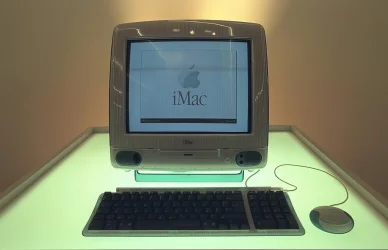
In 1997, Jobs returned to lead the company as CEO and set about updating its strategy and product line-up. In 1998, working alongside designer Jony Ive, he began developing the iMac — the most original, elegant computer of its time. Its advanced technical specs, paired with its distinctive design, made an immediate splash: around 80,000 units sold within just a few months of launch.
The first digital music player, the iPod, launched in 2001 and remained in high demand for the following decade, with around 300 million units sold in total.
A defining moment for the company came in January 2007, when Steve Jobs unveiled the first iPhone — a smartphone that completely changed how people thought about mobile phones. It came with a touchscreen, supported audio and video playback, and offered internet access.
2009 — The iPhone 3GS launched, with more than a million units sold in its first three days, significantly strengthening Apple's position in the smartphone category.
2010 — The first iPad launched: a touchscreen tablet sitting somewhere between a smartphone and a laptop, with a 24.6cm display and weighing 700 grams. Another major milestone that year was the launch of the iPhone 4, which introduced the Retina display.
Steve Jobs died of pancreatic cancer in October 2011, and Tim Cook took over as CEO, with the company continuing its growth trajectory under his leadership.
2015 — The Apple Watch launched, a smartwatch that quickly won over consumers.
2016 — Production began on the wireless AirPods, which became a core part of the Apple ecosystem remarkably quickly. The iPhone 7 also launched that year.
2017 — The launch of the HomePod smart speaker, equipped with voice control and a wide range of functions powered by Siri.
At the same time, the company was working hard on artificial intelligence, paying particular attention to services like Apple Music, Apple TV+ and iCloud, all of which helped attract more users and grow the business. In 2018, the company's market capitalisation passed US$1 trillion for the first time.
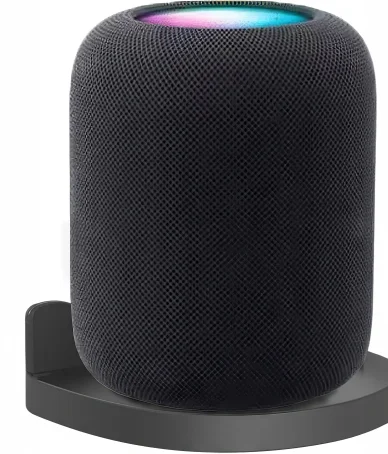
HomePod
2020 — Apple launched its own processor, the M1 chip. Its key features were the most powerful computing unit available at the time, built-in machine learning capability, and a distinctive graphics subsystem.
2021 — Apple announced new products including the AirTag and Apple TV 4K, along with new iPad Pro and iMac models built on M1 technology.
2022 — Apple unveiled the M2 chip and continued expanding its product line.
2024 — The Apple Vision Pro headset went on sale in the US in February, opening up a new level of interaction with digital content for consumers. Apple also rolled out Apple Intelligence, its suite of on-device AI features, alongside continued upgrades to its existing devices.
2025 — Apple launched the iPhone 17 line-up, including the ultra-thin iPhone Air, alongside the Apple Watch Series 11 and an upgraded Vision Pro featuring the new M5 chip.
2026 — Apple continues expanding its AI features under Apple Intelligence, alongside further updates across its hardware line-up, including the more affordable iPhone 17e.
Apple's Product Range
Constant progress and the creation of innovative products capable of setting new standards in consumer electronics remain Apple's core focus and objective. Its most popular devices include the iPhone, iPad, MacBook, Apple Watch and AirPods, all available through Apple's official website and its network of retailers.
MacBooks
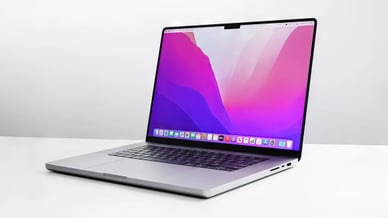
MacBook
Since their official launch in 2006, MacBook devices have gone through numerous changes and innovative upgrades to improve performance, portability and design. The original MacBook came with a 13.3-inch display and Intel processors. Later that same year, the MacBook Pro was introduced, featuring an Intel Core Duo chip and a Radeon X1600 graphics card.
The first MacBook Air was unveiled by Steve Jobs at the Macworld conference on 15 January 2008. At its thickest point, the device measured just 1.94cm, earning it the title of "the world's thinnest laptop." That same year, 2008, saw the launch of a MacBook Pro with a unibody aluminium casing, which reduced the device's weight and improved its durability.
The next major MacBook Air update came in 2010, with an 11-inch model that was thinner and lighter still. In 2012, the MacBook Pro gained a Retina display, offering sharper image quality and higher resolution.
In 2015, Apple introduced an exceptionally thin MacBook with a 12-inch Retina display and a new USB-C port — another step towards minimising the weight and size of its laptops.
The Touch Bar, which could swap out the traditional function keys, was introduced on the MacBook Pro in 2016.
Apple ID became a core part of the Apple ecosystem with the development of iCloud in 2011, letting users easily sync all their Apple devices using a single account. Today, it remains essential for using many MacBook features, including access to the App Store, account syncing, iCloud access and other related services.
In 2020, Apple introduced the MacBook Air with the M1 chip, delivering major improvements in performance and battery life. In 2021, the MacBook Pro launched with the M1 Pro and M1 Max chips, offering even more power for professional users.
Apple released the MacBook Air with the M2 chip, along with improved specs and an updated design, in 2022, followed by the MacBook Pro with the M2 chip in 2023.
The MacBook Air got a further upgrade with the M3 chip in 2024, offering around 17% better performance on everyday tasks and 21% better multitasking performance compared to the M2, along with a 15% improvement in GPU performance. Apple has since continued this pace of yearly chip upgrades, with M4 and M5 models extending those gains further across the MacBook Air and MacBook Pro line-up.
iPhones
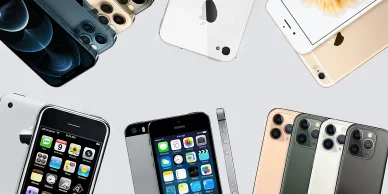
iPhone
Since the first iPhone launched in 2007, it has become a genuinely groundbreaking product in the world of mobile technology, ushering in the smartphone era with its simple, accessible interface and touchscreen. Here's how the iPhone has evolved over the years:
Model | Release Year | Key Changes from Previous Model |
|---|---|---|
iPhone | 2007 | The original iPhone: 3.5-inch touchscreen, no physical keyboard, internet and media access |
iPhone 3G | 2008 | 3G network support, GPS, App Store for downloading apps |
iPhone 3GS | 2009 | Improved performance, video recording, voice control |
iPhone 4 | 2010 | New flat-edged design, Retina display, FaceTime support, 5-megapixel camera |
iPhone 4S | 2011 | Introduction of Siri (voice assistant), improved camera (8 megapixels), better performance |
iPhone 5 | 2012 | Larger 4-inch display, LTE support, new Lightning connector |
iPhone 5S | 2013 | Introduction of Touch ID (fingerprint scanner), 64-bit processor, new camera with dual LED flash |
iPhone 5C | 2013 | Plastic body, more affordable version of the iPhone 5 in a range of colours |
iPhone 6 | 2014 | Larger 4.7-inch display, thinner body, Apple Pay support, phase-detection camera |
iPhone 6 Plus | 2014 | The first "Plus" variant, with a 5.5-inch display and optical image stabilisation |
iPhone 6S | 2015 | Introduction of 3D Touch, improved camera (12 megapixels), new Rose Gold colour |
iPhone 6S Plus | 2015 | Same upgrades as the iPhone 6S, but with a larger display and better battery |
iPhone SE (1st gen) | 2016 | Compact size (similar to the iPhone 5S), but with iPhone 6S internals |
iPhone 7 | 2016 | Removal of the 3.5mm headphone jack, water resistance, dual camera on the Plus model |
iPhone 7 Plus | 2016 | Dual camera with optical zoom, larger display |
iPhone 8 | 2017 | Wireless charging, improved camera, fast-charging support |
iPhone 8 Plus | 2017 | Same upgrades as the iPhone 8, but with a larger display and dual camera |
iPhone X | 2017 | Full-screen OLED display, no Home button, Face ID for facial recognition |
iPhone XR | 2018 | A more affordable version of the iPhone X with an LCD screen and a wide range of colours |
iPhone XS | 2018 | Improved OLED display, faster processor, dual-SIM support (eSIM) |
iPhone XS Max | 2018 | The largest iPhone of its time, with a 6.5-inch display and bigger battery |
iPhone 11 | 2019 | Improved camera with Night mode, new A13 Bionic chip, longer battery life |
iPhone 11 Pro | 2019 | Triple camera lenses, Super Retina XDR OLED display, improved water resistance |
iPhone 11 Pro Max | 2019 | iPhone 11 Pro with a larger display and bigger battery |
iPhone SE (2nd gen) | 2020 | A compact, affordable option with iPhone 11 internals |
iPhone 12 | 2020 | iPhone 4-style flat-edged design, 5G support, Ceramic Shield display protection |
iPhone 12 mini | 2020 | Smaller version of the iPhone 12 with a 5.4-inch display, 5G support |
iPhone 12 Pro | 2020 | LiDAR scanner for better low-light photos, Apple ProRAW support |
iPhone 12 Pro Max | 2020 | The largest and most powerful iPhone of 2020, with a bigger camera sensor for better photos |
iPhone 13 | 2021 | Improved camera with sensor-shift stabilisation, longer battery life |
iPhone 13 mini | 2021 | A compact version with all the benefits of the iPhone 13 in a smaller body |
iPhone 13 Pro | 2021 | 120Hz ProMotion display, macro photography, improved Night mode |
iPhone 13 Pro Max | 2021 | Larger display and battery, with all the benefits of the iPhone 13 Pro |
iPhone SE (3rd gen) | 2022 | Compact design with the A15 Bionic chip, 5G support |
iPhone 14 | 2022 | Improved camera stabilisation, crash detection, first iPhone to drop the physical SIM tray (in the US) |
iPhone 14 Plus | 2022 | iPhone 14 with a larger display and improved battery |
iPhone 14 Pro | 2022 | Dynamic Island for interactive notifications, Always-On display, 48MP main camera |
iPhone 14 Pro Max | 2022 | The largest display and most powerful iPhone, with all the benefits of the iPhone 14 Pro |
iPhone 15 | 2023 | Introduction of USB-C, improved 48MP camera, Dynamic Island on the standard models |
iPhone 15 Pro | 2023 | Titanium frame, A17 Pro 3nm chip, improved cameras, ProRes video recording support |
iPhone 15 Pro Max | 2023 | The most powerful iPhone, with more storage, better battery and periscope zoom |
iPhone 16 | 2024 | A18 chip, Camera Control button, deeper Apple Intelligence integration |
iPhone 16 Pro | 2024 | Larger displays, A18 Pro chip, 4K 120fps video, expanded Apple Intelligence features |
iPhone 16e | 2025 | A more affordable model with the A18 chip and Apple's own C1 modem, Apple Intelligence support |
iPhone 17 | 2025 | A19 chip, brighter 6.3-inch display, upgraded front camera, all-day battery life |
iPhone Air | 2025 | Apple's thinnest-ever iPhone, titanium frame, A19 Pro chip, single-lens rear camera |
iPhone 17 Pro / Pro Max | 2025 | A19 Pro chip, most advanced on-device Apple Intelligence model, improved camera system |
iPhone 17e | 2026 | A19 chip, 48MP Fusion camera, custom Apple C1X modem, doubled base storage to 256GB |
Apple Watch
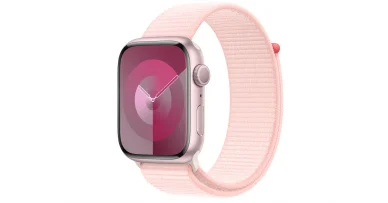
Apple Watch
The Apple Watch made its debut in 2015 and has grown steadily in popularity among consumers ever since. Each new model has brought expanded capabilities and additional features for users. Today's Apple Watch models help people easily track health-related information, including low or high heart rate alerts and irregular heart rhythm notifications, menstrual cycle tracking, ECG recording, and more.
- Apple Watch (1st generation, 2015)
- Apple Watch Series 1 (2016)
- Apple Watch Series 2 (2016)
- Apple Watch Series 3 (2017)
- Apple Watch Series 4 (2018)
- Apple Watch Series 5 (2019)
- Apple Watch Series 6 (2020)
- Apple Watch SE (1st generation, 2020)
- Apple Watch Series 7 (2021)
- Apple Watch Series 8 (2022)
- Apple Watch SE (2nd generation, 2022)
- Apple Watch Ultra (2022)
- Apple Watch Series 9 (2023)
- Apple Watch Ultra 2 (2023)
- Apple Watch Series 10 (2024)
- Apple Watch Ultra 3 (2025)
- Apple Watch Series 11 (2025)
- Apple Watch SE 3 (2025)
Headphones
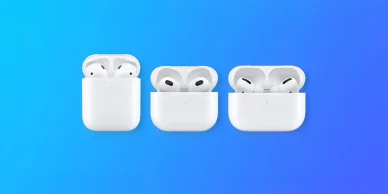
In the broad world of modern technology, Apple's headphones and earbuds have rightly earned a leading position, thanks to their excellent sound quality, seamless integration with other Apple devices, and innovative technology:
- Apple EarPods (2012)
- Apple EarPods with Lightning connector (2016)
- AirPods (1st generation, 2016)
- AirPods (2nd generation, 2019)
- AirPods Pro (1st generation, 2019)
- AirPods Max (2020)
- AirPods (3rd generation, 2021)
- AirPods Pro (2nd generation, 2022)
- AirPods 4 (2024)
- AirPods Pro 3 (2025)
- AirPods Max (USB-C, 2024)
Accessories
MacBook accessories are designed to enhance your laptop's functionality while offering protection and a way to personalise your setup. Cases and sleeves protect your device from potential damage.
MacBook docking stations provide additional ports for connecting external devices such as printers, monitors and more. Cables and adapters let you connect external displays and other devices via modern Thunderbolt or USB-C ports, ensuring backward compatibility between your laptop and older devices.
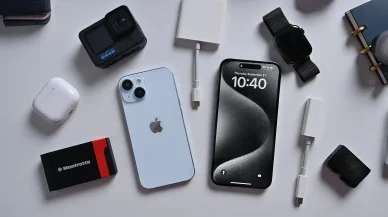
Dedicated MacBook stands help position your device comfortably on your desk, improving ergonomics while also providing better cooling for your laptop when running resource-intensive applications.
iPhone accessories such as cases are mainly used to protect the device from accidental damage, while also adding extra functionality and personal style. Alongside the latest iPhone models, MagSafe accessories have also appeared — thanks to built-in magnets, these offer added convenience, with this category including cases, chargers and wallets that attach to the back of the phone using a magnetic connection.
A screen protector is an equally important accessory, offering extra protection for the display and helping prevent cracks and scratches. Portable devices like power banks (external batteries) keep your device charged even when there's no outlet nearby, and come in a range of functions, sizes and capacities.
Apple Watch accessories play a significant role in personalising your watch, adding both convenience and protection, and are available in a variety of materials and styles. Magnetic charging cables for the Apple Watch let you connect your watch to a power source with maximum ease. Protective cases guard the watch body against knocks and scratches.
AirPods accessories, such as cases, are designed to protect the charging case from mechanical damage and scratches. Protective ear tip covers add comfort when wearing your earbuds and provide an extra layer of protection against dirt and dust. An equally useful accessory is the AirPods strap, which prevents your earbuds from getting lost or dropped, adding extra peace of mind.
Apple AirTag: How It Works
The Apple AirTag is a compact tracker that lets you locate items it's attached to using the Find My network. It uses Bluetooth to broadcast a signal to nearby Apple devices connected to the Find My network, and those devices, in turn, relay the AirTag's location back to your iPhone. Thanks to Ultra Wideband (UWB) technology in supported iPhones, you can get fairly precise directions to help you find your AirTag over short distances.
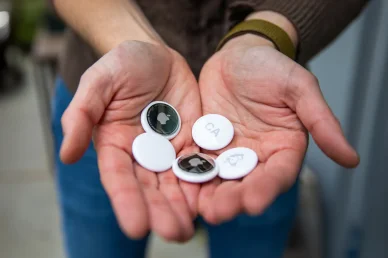
Apple AirTag
How to Change Your Apple Watch Band
To change the band on your Apple Watch, just follow these four steps:
- Remove the Apple Watch from your wrist and place it on a soft surface.
- Unlock the band by pressing the two buttons on the back of the watch.
- Once you've pressed the button, gently slide the band sideways to remove it from the Apple Watch.
- Insert the new band into the same slot until you hear a light "click" — this means the band is properly fitted and locked in place.
Apple in Ireland
Ireland holds a genuinely central place in Apple's global operations. The company has had a presence in the country since 1980, when it opened its first manufacturing facility at Hollyhill in Cork with just 60 employees — making it one of Apple's earliest overseas operations anywhere in the world.
Today, Apple is Cork's largest private-sector employer, with around 6,000 people working mainly out of its Hollyhill campus, which serves as Apple's European headquarters. The Cork site brings together teams spanning operations, engineering and manufacturing, procurement, customer support and AppleCare. In February 2026, Apple officially opened a new building on its Cork campus, Hollyhill 5, purpose-built to accommodate around 1,300 additional staff. Apple has also announced a new office in Dublin city centre, its first permanent base outside Cork, with space for roughly 300 employees.
Unlike some other European markets, Apple doesn't operate its own flagship retail stores in Ireland. Instead, Apple products are sold through authorised resellers and Apple Premium Partners around the country, including Select (with several stores across Ireland), DID Electrical, and other authorised retailers, as well as directly through Apple's official website.
Where to Buy Apple Products in Ireland
Apple products can be bought from Apple's official website, apple.com/ie, as well as through Apple Authorised Resellers and Apple Premium Partners across the country. These retailers stock the full range of Apple products — iPhone, MacBook, Apple Watch, iPad, AirPods and accessories — and buying through an authorised channel guarantees genuine products along with official warranty coverage and support.
Every Apple product sold in Ireland comes with Apple's standard one-year limited warranty, covering manufacturing defects and technical faults arising from normal use. Customers can also purchase AppleCare+, an extended warranty that covers not just technical faults but accidental damage too, such as a cracked screen — significantly reducing the cost of repairs or replacement in these situations.
Apple also offers the Apple Trade In programme in Ireland, letting customers trade in an eligible device for credit towards a new one, or an Apple Gift Card, either online or through authorised retailers. The trade-in value depends on the condition and model of the device, and the programme also ensures the responsible recycling of devices that aren't eligible for trade-in.
Interesting Facts
- The name comes from the English word "apple," which is also used in the company's logo.
- Apples were Steve Jobs's favourite fruit; the Apples Macintosh is actually a variety of apple grown and sold in the United States.
- Apple's original logo, designed by Ronald Wayne, looks nothing like the one people are familiar with today — it depicted Isaac Newton sitting beneath an apple tree.
- The now-iconic bitten apple logo was designed by Apple designer Rob Janoff, with the bite added so people would instantly recognise the fruit rather than mistake it for another.