Rainbow of Africa
In Quebec, the lives of LGBTQ people from African and Caribbean communities are often shaped at the intersection of several realities: immigration, multiple cultural belongings, racism, and homophobia — sometimes encountered even within community spaces meant to be safe. It's precisely at this crossroads that Rainbow of Africa operates: a non-profit organisation working to support the integration and wellbeing of this community, while building concrete spaces and tools for living together, opening dialogue, and being seen.
Key Information
Name | Rainbow of Africa (AECA) |
|---|---|
Status | Registered non-profit organisation in Quebec + registered charity in Canada |
Registration numbers | Quebec: 1162638408; Canada (charity): 834928632RR0001 |
Founded | 2004 (established in November) |
Base/Area of operation | Montreal and Quebec City (activity concentrated in Quebec) |
Primary audience | LGBTQ people of African and Caribbean descent, their families and allies |
Core areas of work | Awareness-raising, reducing isolation, cultural promotion, sexual health prevention |
Flagship programmes | Massimadi Festival, Fierté Afro Pride, intervention workshops, the "Crie ton art" collection, educational documentaries |
Contact details | 576 Rue Sainte-Catherine Est, Suite 104, Montreal; tel. (514) 373-1953; [email protected] |
Overview
Rainbow of Africa describes itself as an organisation built by and for the Afro-Caribbean LGBTQ community, with a clear purpose: creating safer spaces, supporting integration, and building bridges between individuals, their loved ones, and Quebec society more broadly. Its stated vision centres on the integration and wellbeing, within Quebec, of LGBTQ people of African and Caribbean descent, along with their families and friends.
Another defining feature of the organisation is its "culture plus community" approach. Rainbow of Africa isn't limited to social intervention — it also draws on art and culture as tools for dialogue, visibility and social change, through events and resources including its festival, workshops, audiovisual productions and an artistic anthology.
The organisation has also been through pivotal periods, including one significant moment of reorganisation. A statement dated 10 April 2018 announced a temporary suspension of public activities and new memberships for the remainder of 2018, in order to reposition the organisation's work and refocus certain priorities.
Mission
Rainbow of Africa builds its vision around three core missions, while explicitly weaving a sexual health prevention component (HIV and STIs) into its awareness work. Together, these efforts aim to shift the broader social environment (changing perceptions and reducing discrimination), strengthen community cohesion (reducing isolation), and support cultural visibility (affirming an Afro-Caribbean LGBTQ culture).
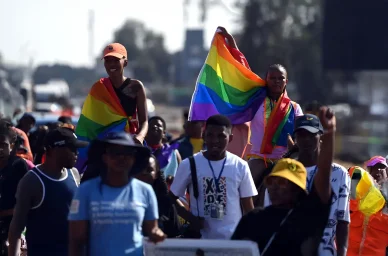
Raising Awareness of Afro-Caribbean LGBTQ Realities Across Quebec Society
The first mission is to raise awareness among the wider Quebec public about the realities faced by LGBTQ people of African and Caribbean descent, with the goal of combating homophobia and discrimination more broadly. In practice, the organisation runs public talks and workshops — including on tolerance and bullying — in a range of institutions, opening up space for discussion on a topic that can still be treated as taboo.
In line with this, Rainbow of Africa places real emphasis on demystifying homosexuality and sexual diversity by actively unpacking the misconceptions and myths that can fuel stigma.
This awareness work also carries a prevention dimension: the organisation states that it works on HIV and STI prevention as part of its efforts to reach its target communities. This link between fighting discrimination and sexual health reflects a broader truth — that access to information, prevention and resources often depends on people feeling safe and trusting the institutions around them.
Reducing Isolation and Creating Safer Spaces
The second mission is to reduce the isolation experienced by Afro-Caribbean LGBTQ people, in order to support their integration. The organisation takes a very concrete view of what integration means: understanding one's own sexual orientation, self-acceptance, and being able to live harmoniously alongside others, whether similar or different.
One notable aspect of the organisation's work is its open acknowledgement that discrimination can sometimes occur within the LGBT community itself, when cultural differences aren't properly taken into account. This can lead to a further sense of isolation, even among people who originally turned to LGBTQ spaces looking for refuge. Rainbow of Africa responds to this by insisting on the need for "safer" spaces that take into account the lived experiences and cultural references of the diaspora.
The organisation also draws on feedback from the field and internal and partnership-based research. A study of its membership (2015–2016) is cited to show that participants were, above all, looking for safety, support, and the chance to connect with other LGBT people from Afro-Caribbean communities. These findings point to some very practical priorities: making outreach more consistent, diversifying activities, and strengthening connections between members.
Promoting Afro-Caribbean LGBTQ Culture: Art, Representation and Affirmation
The third mission rests on the idea that culture forms the foundation of identity and collective memory. Rainbow of Africa champions events and activities that help build recognition and visibility for Afro-Caribbean LGBTQ culture.
The organisation places real emphasis on the role art can play as a tool for social change: art enriches culture, but it can also shift perceptions and open up dialogue around diversity. This thinking underpins several of its flagship projects, including the Massimadi Festival, conceived as a way of using art and imagery to foster self-love, social integration, and visibility for Afro-Caribbean LGBTQ stories. Massimadi is also presented as an event held as part of Black History Month, open to anyone curious or interested in taking part.
History
The history of Rainbow of Africa can be read as a series of stages: responding to a need for recognition, gradually claiming space in the public sphere, building organisational structure, and eventually consolidating its cultural projects and awareness work.
Les 10 ans d'Arc-en-ciel d'Afrique
2004: Origins and Official Founding
The organisation grew out of an observation made from the very start: many LGBTQ people of African and Caribbean descent were facing difficulties tied to homophobia and, at times, racism — including within spaces that were supposed to be inclusive. For its founders, this situation felt unacceptable, and the idea of building a structure that could support both integration and wellbeing became the starting point for Rainbow of Africa.
2006: First Public Appearances and "Jungle Tropical"
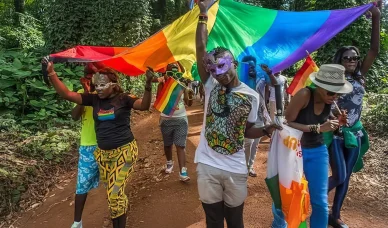
Les premières années sont décrites comme exigeantes. L’organisation doit notamment faire face à une résistance dans certains milieux où l’homosexualité est perçue comme étrangère (« maladie de Blancs »), ce qui renforce la nécessité d’un travail de sensibilisation ancré dans la réalité des communautés noires.
En 2006, Arc-en-ciel d’Afrique fait ses premiers pas dans le défilé de la Fierté à Montréal. Cette période coïncide avec la tenue des premiers Outgames mondiaux, dont la présence d’activistes LGBT africain·e·s et caribéen·ne·s est mise de l’avant. La même année, avec l’aide de l’ancien député fédéral Réal Ménard, l’organisme organise un premier événement de réseautage et de socialisation, baptisé « Jungle Tropical ».
2009: Recognition, Growth, and the Birth of Massimadi
Five years after it was founded, the organisation marked its anniversary, reporting more than 80 regular members. The year brought increased visibility: the organisation's leadership received a community engagement award at a gala held by the Conseil Québécois des Gais et Lesbiennes, and media coverage grew.
At the same time, Rainbow of Africa was invited to speak in sociology classes at the Université du Québec à Montréal (UQAM) on themes of multiple identity and discrimination. This academic recognition coincided with a key realisation: that art and culture could become powerful drivers of social change. It was in this spirit that a project destined to become the organisation's flagship initiative was born — Massimadi, a festival of Afro-Caribbean LGBTQ film and art.
2011: Professionalisation and First Educational Documentary
A new chapter began as the organisation professionalised, secured office space, and received government funding to produce an educational documentary, Être soi-même ("Being Yourself"), which was viewed more than 3,000 times. This period also saw the first invitations from cultural centres and diaspora organisations — a sign of growing legitimacy.
2012: Consolidation, Leadership and Cultural Footing
By 2012, Rainbow of Africa had established itself as a leading voice in the space. Massimadi became an official Black History Month activity, and the film festival Vues d'Afrique screened Être soi-même. The organisation also held its first Rainbow of Africa Gala, bringing together key figures from both LGBT and Afro-Caribbean communities.
2013: A Paid Team, Health Research and HIV Initiatives
2013 marked a period of internal structuring: Rainbow of Africa built a permanent team and hired its first executive director. On the research and partnership front, the organisation points to a study carried out at UQAM in collaboration with Rainbow of Africa on the overall health of MSM (men who have sex with men) within Black communities. Around the same time, a conference was held to mark World AIDS Day, bringing together key stakeholders.
2014: Expansion, New Missions, "Crie ton art" and Fierté Afro
In 2014, Rainbow of Africa reported working more closely with newcomers and refugees through a partnership with YMCA-PRAIDA. The year was also described as a period of reflection that led to a strategic retreat and a rewriting of the organisation's mission to better respond to needs on the ground.
It was also a year of production and visibility: the launch of a youth project and the "Crie ton art" collection (distributed free of charge), the production of a second educational documentary, Au-delà des images ("Beyond the Images"), a benefit gala marking the organisation's first decade, and the launch of Fierté Afro, aimed at strengthening Afro-Caribbean visibility during Pride celebrations.

2018: Announced Reorganisation and Continuity of Massimadi
The statement issued on 10 April 2018 marked a turning point: the board of directors announced a temporary suspension of public activities and new memberships throughout 2018, in order to reposition and refocus the organisation's work on certain priorities. The statement was clear that activities tied to Massimadi were unaffected and would continue as normal.
The Team
Rainbow of Africa operates under an association-based governance model, led by an elected board of directors — while noting that this structure can shift, particularly during periods of reorganisation.
Body/Period | Role | Person |
|---|---|---|
Board of Directors (elected 24/09/2017) | President | Uwayo Dushime |
Board of Directors (elected 24/09/2017) | Vice-President | Jean-Floris Nahayo |
Board of Directors (elected 24/09/2017) | Treasurer | Jessica Tavares |
Founders | — | Solange Musanganya; Didier Rwigamba; Luc Doray |
Former (co-)presidents | — | Florence François; Carlos Idibouo; Patricia Jean; Steve Bastien; Solange Musanganya; Yves Ulysse |
Beyond these individual roles, the organisation's day-to-day work relies heavily on trained volunteers, particularly for listening services and facilitating discussion spaces — underlining the importance of an ethical framework built on discretion, respect and safety at the heart of everything the organisation offers.
Services
The services offered by Rainbow of Africa are designed to meet immediate needs — being able to talk, to be heard, to find a safe space — while also supporting broader social integration and overall health.
Drop-in active listening. The organisation offers a free active listening service at its offices, with a weekly slot on Mondays from 1pm to 6pm, no appointment needed. Sessions typically run 30 to 45 minutes — time enough to sit down and talk with a trained, discreet volunteer. Those unable to attend on Mondays can call to arrange another time.
Support in urgent situations. For anyone needing to talk urgently, Rainbow of Africa refers people to its partner organisation, Gai-Écoute, which offers a helpline available 24/7. This kind of referral to a listening resource is in keeping with the organisation's broader aim of reducing isolation and offering immediate access to support.
Monthly gatherings and discussions. On the last Friday or Saturday of each month (details vary), men of African or Caribbean descent gather in a space described as safe and discreet to talk about issues connected to their lives. The space is described as welcoming to gay, bisexual, questioning, and trans men; the group is bilingual and typically draws 15 to 20 participants, with no pressure to speak during a first visit.
Film and book lending. Thanks to the development of the Massimadi festival, the organisation maintains a collection of LGBTQ films and books featuring people from African and Caribbean communities, available to browse or borrow. This library ties directly into the organisation's cultural mission and its focus on visibility for these stories.
Free condoms. The organisation's offices also serve as a distribution point for free condoms, particularly for people passing through near Berri-UQAM metro station. Access is described as open to everyone, "member or not," made possible through a partnership with a community health organisation.
Workshops and Interventions
AECA offers a range of workshops for schools and organisations, aimed at giving frontline teams practical tools and reference points, and helping build more genuinely inclusive environments.
Workshop 1 — For Frontline Workers. This workshop is aimed at frontline workers, helping them better understand the challenges facing LGBT people from ethnocultural communities, and equipping their organisations to become genuinely welcoming spaces. It also covers the impact of exclusion on mental health.
Workshop 2 — Creative, Interactive Workshops for Young People. This workshop is aimed at young people and uses a creative approach to tackle bullying and open up conversations about homophobia, racism and sexism. One figure stands out: 92% of young participants reported that the workshop changed how they thought about sexual diversity.
Workshop 3 — General Public Workshops. This third workshop offers a general-audience format covering sexual orientation and gender identity within Black communities, directly addressing misconceptions — sometimes quite bluntly — because that's often exactly where dialogue tends to break down.
Crie ton art
Within Rainbow of Africa's broader strategy, culture functions as a form of intervention in its own right. The organisation explicitly champions art as a means of dialogue and social transformation — a perspective reflected in projects that both equip people and bring them together.
A Literary and Artistic Collection as a Tool for Expression
"Crie ton art" ("Shout Your Art") is a collection of literary and visual works created for and by young people (aged 16 to 30) of African and Caribbean descent, as well as young people from other cultural communities and their friends. It serves a dual purpose: offering a space for self-expression, and providing a resource that could, over time, find its way into schools, CEGEPs, libraries and youth organisations.
Beyond its cultural value, the collection functions as a response to bullying and discrimination — giving people the words, images and stories to talk about themselves, their place in the world, and their multiple identities.
Audiovisual Work That Extends the Organisation's Awareness Mission
Documentaries appear throughout the organisation's history as key milestones in both its professionalisation and its awareness work. The first, Être soi-même, is described as an educational documentary made with government funding and widely viewed — more than 3,000 times, according to the organisation's own account.
The second, Au-delà des images, is described as an educational production released in 2014.
Becoming a Member
Membership is presented as a way of becoming part of the community and supporting its work, while acknowledging that certain periods may involve changes to how things run. The organisation notes that an annual membership fee is required to access certain services, while also suggesting that people can take part in some activities without necessarily signing up right away.
The reorganisation period announced in 2018 came with an important message: a suspension of public activities and new memberships throughout that year, alongside an invitation for anyone interested in helping shape the organisation's next chapter to get in touch.
Contact
Rainbow of Africa can be reached through several public channels: an address in Montreal (576 Rue Sainte-Catherine Est, Suite 104), a phone number, and an email address. The organisation is also active on social media, extending its mission of visibility and community connection.
- Phone: +1 514 373 1953
- Email: [email protected]
Address: 576 Rue Sainte‑Catherine Est, bureau 104, Montréal (Québec)


Social media: YouTube (youtube.com/arcencieldafriq), X/Twitter (twitter.com/arcencieldafriq), Facebook (facebook.com/arcencieldafrique), Instagram (@arcencieldafrique)
Wider Context and Related Resources
Rainbow of Africa appears in resource directories aimed at young people as an organisation offering support across Quebec, complete with contact details and a description of its mission. Its presence in this kind of youth directory highlights the importance of connecting general support services with more specialised organisations. Similar initiatives supporting LGBTQ people from African and Caribbean diaspora communities have also emerged elsewhere in Europe, including in Ireland, reflecting a broader, shared recognition that diaspora communities often need spaces attentive to the intersection of migration, race and sexual orientation, alongside general LGBTQ services.
Across the French-speaking world, similarly named organisations with related goals also exist. In France's Île-de-France region, for instance, an organisation called "Afrique Arc-en-Ciel" is listed as a member association of an LGBTQ centre, focused on tackling discrimination (in health, sexual orientation and gender identity, racism and xenophobia) within diaspora communities. While not the same organisation as the one based in Montreal, its existence points to a shared need across different countries for welcoming spaces, targeted activities, and sexual health initiatives.
For readers in Ireland exploring other online entertainment options, resources covering best mobile casinos ireland can provide a separate overview of mobile-friendly platforms and available features.
Frequently Asked Questions
This section covers questions that commonly come up around the organisation's awareness and support work. The aim isn't to offer fixed, definitive answers, but to clarify the thinking behind the organisation's approach and the social purpose behind having an organisation specifically for Afro-Caribbean communities.
Why does Quebec need an organisation specifically "for Africa"?
The name reflects a diasporic reality: the organisation serves people whose African and/or Caribbean origins are part of their social identity within Quebec. The project is built on the understanding that people can carry multiple roots at once, and that these different belongings shape how someone experiences their sexual orientation, their access to resources, and their exposure to discrimination.
Is this an "exclusive" organisation?
Rainbow of Africa centres Afro-Caribbean LGBTQ people specifically because they can face a form of double discrimination — racism combined with homophobia or transphobia — along with a real sense of isolation. That said, many of its activities and resources are designed with an open door, aimed more broadly at raising awareness across Quebec society and strengthening social cohesion overall.
Does the organisation only do awareness work?
Non : la sensibilisation est un pilier, mais elle est articulée à des services et à des espaces de soutien. L’organisme évoque des accueils personnalisés, des groupes de discussion, des ateliers-causeries et des événements, avec une attention particulière à la création d’environnements plus sécuritaires.
What role does sexual health and prevention play?
Rainbow of Africa builds STI and HIV prevention into its work, recognising that access to prevention and care depends heavily on trust, freedom from stigma, and the ability to speak openly. Its services include, for example, free condom distribution, carried out in partnership with a community health organisation.
Why invest so heavily in culture — the festival, the collection, the documentaries?
The organisation is built on the belief that art and storytelling can reshape how people are seen, build self-esteem, and foster a genuine sense of belonging. Its cultural projects — Massimadi, Fierté Afro, its documentaries, and "Crie ton art" — function as tools for dialogue just as much as spaces for celebration.