Mercedes Sosa: The Voice of Argentina
Latin America also has its own voice, which for six decades belonged to the Argentine singer Mercedes Sosa. She possessed a deep, powerful, and dramatic contralto voice and was one of the leading figures of an entire musical movement: Nueva Canción.
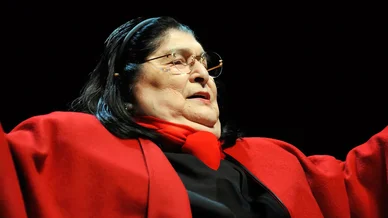
Birth name | Haydée Mercedes Sosa Girón |
Nickname | La Negra |
Other names | La Negra Sosa, La Voz de América, La Mamá Grande, La Voz de la Tierra, Mecha |
Born | July 9, 1935 |
Birthplace | San Miguel de Tucumán, Tucumán, Argentina |
Died | October 4, 2009 (aged 74) |
Place of death | Buenos Aires, Argentina |
Cause of death | Multiple organ dysfunction syndrome |
Nationality | Argentine |
Spouse | Oscar Matus |
Children | Fabián Matus |
Occupation | Folk singer |
Years active | Since 1950 |
Positions held | UNICEF Goodwill Ambassador (since 2008) |
Genres | Nueva canción, traditional music, folk music, popular music |
Instruments | Voice, percussion, guitar, piano |
Voice type | Contralto |
Political party | Communist Party of Argentina |
Childhood and Adolescence: The First Steps in Music
The Aymara people, who have lived across the Latin American continent for centuries, have always been poor: to this day, they earn their daily bread by farming the land and weaving textiles.
Working hard from dawn to dusk just to earn enough to eat, the Aymara still found time in the evenings after dinner and on holidays for songs accompanied by guitar and traditional dances — their only way to relax and escape from their harsh reality. That was their life: the Aymara knew no other.
On July 9, 1935, a girl was born into just such a family — dark-skinned and dark-haired, with a powerful voice, the daughter of a modest laborer and a washerwoman from the Argentine town of San Miguel de Tucumán. She was baptized according to Catholic tradition with two names: Haydée Mercedes.
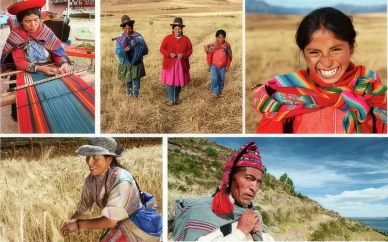
the Aymara indigenous people
However, the girl rarely heard her full name. Within the family circle, the future singer was called Marta — as she later recalled, it was a kind of compromise between her parents. They simply could not agree on what to name the girl: her father wanted to call her Haydée Mercedes, while her mother preferred the name Marta. The father "forgot" the name suggested by the mother when he went to register the girl and registered her as he wished: Haydée Mercedes. Despite this, the mother continued to call her daughter Marta.
A couple of decades later, the rest of the world came to know her as La Negra — the name her millions of fans gave her, inspired by her thick, cascading black hair.
Mercedes Sosa's family was poor but very close-knit. They worked themselves to the bone, yet always found time for a song or a dance. From a young age, Marta showed her musical talent and grace: she sang beautifully, and there was hardly a dance she hadn't mastered. Little Marta memorized songs instantly — all it took was hearing a melody once and she could sing it back, flawlessly, on the spot.
She might have become a washerwoman like her mother or followed her father's modest trade, had it not been for a stroke of luck. At the age of fifteen, Mercedes was asked to step in for a sick participant at a local municipal event. Instead of singing a popular song, she was tasked with performing the national anthem of Argentina.
Mercedes not only performed brilliantly, but was publicly recognised and was offered the chance to compete in a singing contest on the regional radio station. She won it, and in recognition of her talent, she was invited to sing on one of the radio programmes. She did so in secret, without her family's knowledge. Why in secret? Because otherwise she would never have had the chance: Marta's parents were deeply Catholic and held very strict views on raising their daughters.
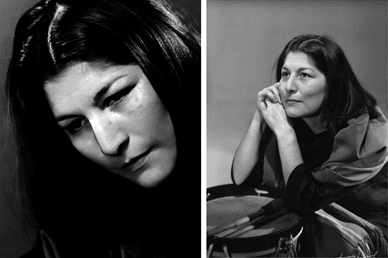
The truth came to light eventually: her father accidentally discovered the place his daughter had been regularly visiting. A scandal broke out. What would people think of a girl from a respectable family wandering about and entertaining the whole town with her singing? But Mercedes got her way: the family gave in.
She worked under a contract for two months straight, being paid to come in several days a week to sing at the local radio station. It was the first money Marta had ever earned, and from that point on she contributed her share to the family finances.
Many more competitions and victories would follow in her life, but this first one was always remembered by the singer with particular fondness: in many interviews and publications, she spoke warmly of her very first success.
Riding the Wave
The mid-1950s in Latin America marked the beginning of a long period of great interest in folklore, popular songs, and traditional dances. Musical tastes were shifting away from the passionate rhythm of the Argentine tango toward indigenous melodies and songs from the country's working-class neighborhoods.
Mercedes was, as they say, riding the wave: she received one invitation after another to perform at concerts and competitions, and by that time she was already known throughout Argentina.
However, La Negra had yet to define her artistic style: her talent was simply too multifaceted. She met the musician Oscar Matus, who soon became not only her stage partner but also her husband, and helped her make that decision. The singer chose popular music: it was there that Mercedes' voice and talent truly revealed themselves in their full magnitude.
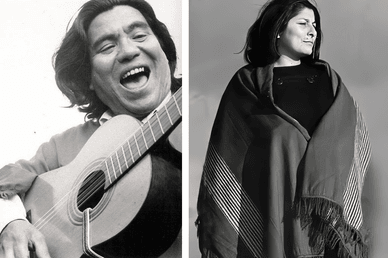
Óscar Matus – Mercedes’ first husband
Shortly after, the poet Armando Gómez joined this duo and became the lyricist for many of her songs.
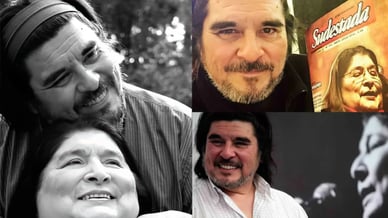
In 1957, Mercedes and Oscar became parents. Their son Fabián — Mercedes Sosa's only child — was born. Looking ahead, it is worth noting that several years later Oscar would leave the family. La Negra would go on to marry twice more, but never considered having more children.
The first milestone in young Mercedes Sosa's artistic career came in 1959 when she released her debut album, La voz de la zafra (The Voice of the Harvest). Her husband Manuel Oscar Matus took part in composing and recording the album as both a composer and a vocalist on several tracks. The lyrics were written by Armando Gómez.
Nueva Canción: Simple Songs About the Most Important Things
Seeing the growing interest in the art of Latin America's peoples, Mercedes became one of the leading figures in an emerging musical movement. According to the singer, this meant combining popular music traditions with the poetry of the working-class neighborhoods.
Nueva Canción — the name given to this musical movement — eventually became very popular across all Latin American countries. These were romantic, melodic songs dedicated to simple yet deeply important things: life, love, good and evil, hope and faith. The famous Canción con todos (Song for Everyone) became something of an anthem for the Nueva Canción movement.

Mercedes Sosa - Canción Con Todos
The singer always emphasized that singing was for her not so much a talent as a personal necessity. She called herself la cantora — the singer — because she simply could not stop singing; she needed to.
Mercedes Sosa's repertoire gradually expanded. In addition to popular songs, it included compositions set to verses by leading Latin American poets of the 20th century, such as Violeta Parra and Pablo Neruda, as well as works by musicians like Milton Nascimento.
Worldwide Triumph and Exile
Mercedes Sosa's songs soon won worldwide recognition. Her tours had a very tight schedule: she had less and less time to spend at home. Her concerts sold out not only in Argentina but also in Chile, Venezuela, Brazil, and other countries across the continent. Her albums were released one after another — several of them appeared between 1959 and 1969.
The 1970s in Latin America became the hardest years for several countries. In 1973, Augusto Pinochet seized power in Chile, and a military dictatorship ruled the country for several decades. A widespread crackdown on intellectuals, poets, and artists began there — all those who refused to stay silent. In September of that same year, the Chilean singer Víctor Jara, who also belonged to the Nueva Canción movement, was brutally murdered — he was a supporter and admirer of the Argentine singer.
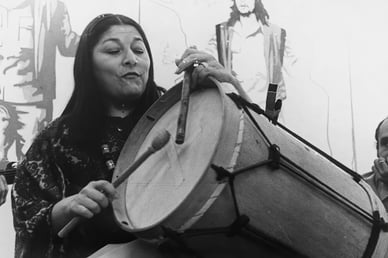
Mercedes refused to perform in Chile for as long as the oppressors ruled the country. She returned on tour only in the 1990s, after Pinochet had stepped down from power.
The same coup-driven fate awaited Argentina as well. While the country was still relatively calm, Mercedes Sosa continued touring. Reaching beyond the Latin American continent, she gave her first concerts in Europe.
La Negra's performance in Barcelona in 1975 caused a genuine sensation among the sophisticated and discerning Spanish audience, with sold-out shows at every concert. France, Italy, the United States, and many other countries followed — everywhere the singer was received with standing ovations and thunderous applause.
Argentina's peaceful existence came to an end in 1976 when Jorge Videla seized power, following the same path as Augusto Pinochet with the persecution of intellectuals and artists. Mercedes Sosa was also targeted: she was banned from performing and her records were pulled from sale. Nevertheless, the singer was not discouraged; despite everything, she stayed in Argentina and shifted to underground performances.
During one of these underground concerts, Mercedes was arrested and banned from singing altogether, though for some reason she was not imprisoned. That was when she left Argentina and moved to Europe — by that point, nothing was holding her back at home: her second husband had died in 1978.
In France, Mercedes was finally able to work with full force: between 1979 and 1980, seven of her new albums were released at once. These were subject to strict censorship in her homeland, where Videla's dictatorship continued to wreak havoc, so only a handful of Mercedes Sosa's songs ever reached her audience there.
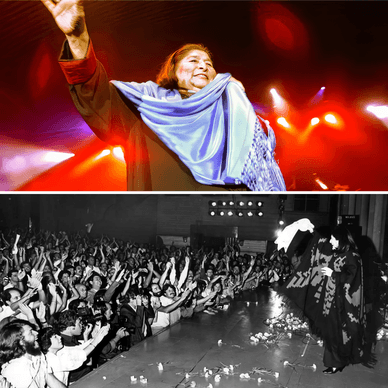
The singer returned to Argentina in 1982, when the dictator's grip on power was in its final days. Those who had persecuted Mercedes for years were no longer in a position to do so, busy as they were trying to save themselves.
And so Mercedes Sosa gave a series of long-awaited concerts and left almost immediately — she likely did not want to tempt fate. She spent a full year on tour in Brazil and Spain. It was not until 1983, when the dictatorship finally fell and Raúl Alfonsín's democratic civilian government came to power, that the singer returned to her homeland for good. From that point until her death, she lived there permanently, going on tour from time to time to take part in all kinds of concerts.
The Peak of Her Career
Mercedes Sosa reached the peak of her creativity in the 1980s. Over the course of a decade, 17 albums were released — both her own solo recordings and collaborations with other celebrated artists.

Mercedes Sosa - La Maza (Official Video) ft. Shakira
The world's most celebrated singers — Luciano Pavarotti, Andrea Bocelli, Franco Battiato, Shakira, Sting, and many others — shared the stage with her. Working alongside them revealed the most unexpected facets of Mercedes' enormous talent. Through these collaborations, she rediscovered herself across different musical styles, singing rock, pop, and even opera.
Even while gravely ill, the singer never stopped performing and touring. She was received with standing ovations at Lincoln Center in New York and at the Théâtre Mogador in Paris; her magnificent voice resonated through the Sistine Chapel in the Vatican.
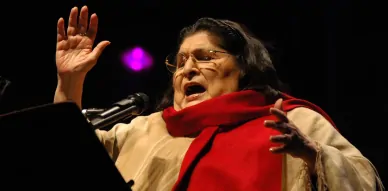
The early 2000s were a continuation of La Negra's triumph: in 2002 she performed to a full house at Carnegie Hall in New York and at the Colosseum in Rome.
In 2008, a year before her death, Mercedes was approached to record the soundtrack for the film Che, dedicated to the life of Ernesto Che Guevara, the famous Argentine revolutionary. The song was Balderrama.
This remarkable woman had the energy for everything: she managed to combine music with a great deal of social work. For several years she served as a UNICEF Goodwill Ambassador for Latin America, and throughout her life she led the fight for human rights.
In her homeland, in the Argentine province of Tucumán, Mercedes Sosa was awarded an honorary doctorate from the local university, and she received numerous awards for her participation in humanitarian missions throughout her life. She was a truly remarkable person, this modest woman with a guitar.
Don’t Cry for Me, Argentina…
Mercedes Sosa passed away on October 4, 2009. Remarkably, this was the very birthday of the poet Violeta Parra, whose poetry Mercedes adored. Her body suffered from multiple organ failures, which claimed the life of Mercedes Sosa — the celebrated Voice of Latin America.
Indeed, La Negra had devoted herself entirely to her art and to the common people whose rights she had fought for so many years, with no regard for her own health.
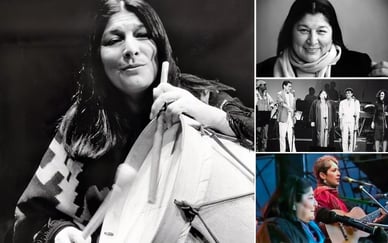
Thousands of people flocked to the National Congress Palace to say farewell to Mercedes Sosa: for three days, not only people from Buenos Aires but also from the most remote corners of the country came to bid her their final goodbye. The presidents of several Latin American countries — Cristina Kirchner, Hugo Chávez, Luiz Inácio Lula da Silva — came to pay their last respects to the singer.
In her will, the singer requested that her body not be buried but cremated, with her ashes scattered in her three favorite places in Argentina: Tucumán, Mendoza, and Buenos Aires. In Tucumán — because that is where she spent her childhood and adolescence; in Mendoza — because that is where her singing career began and where her son Fabián was born; and in Buenos Aires — because that is where she spent the rest of her life.
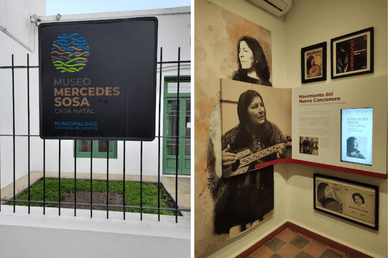
Mercedes Sosa has not been forgotten to this day. In 2011, the Mercedes Museum was inaugurated in the Argentine capital, still chaired by her son Fabián. There are monuments to the great singer in Tucumán and La Plata, and dozens of streets in different cities have been named in her honor.
La Negra's songs are not only performed by her. Her finest works have been covered by global pop stars: the famous Gracias a la vida (Thank You, Life) sounds incredible when sung by Shakira, Laura Pausini, and Alejandro Sanz, while her Alfonsina y el mar (Alfonsina and the Sea) found new life in the interpretation of Lara Fabian. Dozens of the Argentine diva's songs can be heard in films and at international folk music festivals. The world has not forgotten her deep, powerful voice.
Discography
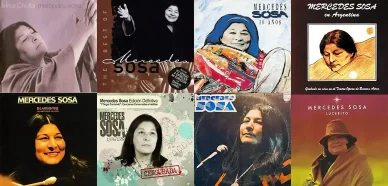
During her lifetime, Mercedes created an enormous collection of albums — 173 in total — recorded both as solo works and in collaboration with many celebrated artists. After her death, 12 more records were released in memory of the great singer, the Voice of Latin America:
1959 | Canta Mercedes Sosa/La voz de la zafra |
1965 | Canciones con fundamento Romance de la muerte de Juan Lavalle |
1966 | Yo no canto por cantar Hermano |
1967 | Para cantarle a mi gente |
1968 | Con sabor a Mercedes Sosa |
1969 | Mujeres argentinas Gracias a la vida / Te recuerdo Amanda Cosquín 69 (Obra colectiva) |
1970 | Navidad con Mercedes Sosa El grito de la tierra El Santo de la Espada (B.S.O) |
1971 | Homenaje a Violeta Parra La diablera Güemes (B.S.O) (Ariel Ramírez) |
1972 | Hasta la victoria Cantata Sudamericana Argentina canta así Vol. III (Obra colectiva) Aquí Cosquín 72 (Obra colectiva) |
1973 | Traigo un pueblo en mi voz Argentina '72 (Obra colectiva) América joven, vol II (César Isella) Si se calla el cantor / Guitarra de medianoche (Mercedes Sosa - Horacio Guarany) Ahora y aquí (Los Arroyeños) |
1974 | Canción de lejos Argentina canta así Vol. IV (Obra colectiva) Recital al cantor (Mercedes Sosa - Horacio Guarany) |
1975 | A que florezca mi pueblo Niño de mañana |
1976 | En dirección del viento Geraes (Milton Nascimento) Marrón |
1977 | Mercedes Sosa interpreta a Atahualpa Yupanqui O Cio da terra |
1979 | Serenata para la tierra de uno (versión argentina) Serenata para la tierra de uno (Mercedes Sosa) |
1980 | A quién doy Sentinela (Milton Nascimento) Gravado ao vivo no Brasil |
1981 | Traduzir-se (Raimundo Fagner) |
1982 | Mercedes Sosa en Argentina Voices of Freedom Concert (Serenata Guayanesa - Hernán Gamboa - Mercedes Sosa) |
1983 | Abril en Managua (Obra colectiva) Mercedes Sosa '83 Como un pájaro libre Recital Homenaje a Picasso (Obra colectiva) Escondo mis ojos al sol (Nito Mestre) Si se calla el cantor (Mercedes Sosa y Gloria Martín) |
1984 | ¿Será posible el sur? La mémoire chantée de Régine Mellac (Obra colectiva) 14. Festival des politischen Liedes (Obra colectiva) Los grandes en vivo (Obra colectiva) Kleiton y Kledir en español (Kleiton y Kledir) Gaudério (Raúl Ellwanger) |
1985 | Querido Pablo (Pablo Milanés) Corazón Americano (Mercedes Sosa - León Gieco - Milton Nascimento) Vengo a ofrecer mi corazón |
1986 | Mercedes Sosa ´86 Taki Ongoy (Víctor Heredia) La paz del mundo comienza en Centroamérica - Olof Palme in memoriam (Obra colectiva) La cuca del hombre (Raul Ellwanger) Beth (Beth Carvalho) Si me voy antes que vos (Jaime Roos) |
1987 | Mercedes Sosa ´87 17. Festival des politischen Liedes (Obra colectiva) |
1988 | Amigos míos Bienvenido (Tomás González) La Negra |
1989 | Diamonds & rust in the bullring (Joan Baez) Corazón libre (Rafael Amor) |
1990 | Coincidencias (Alberto Cortez) En vivo en Europa Singer in the storm (Holly Near) 17 songs (Maria Farantouri) |
1991 | De mí En tiempo real (Julia Zenko) El verano del potro (BSO) (Obra colectiva) |
1992 | El amor después del amor (Fito Páez) Tango Canción (Horacio Molina) En vivo 92 (Víctor Heredia) |
1993 | 30 años Sino Homenaje a Jorge Cafrune (Obra colectiva) Otro sueño (Gabriel Ogando) Ramírez x Ramírez (Facundo Ramírez) El caso María Soledad (BSO) (Osvaldo Montes) |
1994 | Gestos de amor Convivencia (B.S.O.) (Obra colectiva) Señora cuénteme (Gian Marco) Rock gitano (Pata negra) Canción con todos... sus amigos (Gonzalo Rei) |
1995 | Oro Juntando almas II: La memoria del tiempo (Lito Vitale) Borrando fronteras (Peteco Carabajal) Concerto di Natale (Obra colectiva) |
1996 | Todas las voces todas 1 (Obra colectiva) Todas las voces todas 4 (Obra colectiva) Escondido en mi país Nana latina (Nana Mouskouri) Chiapas (Obra colectiva) Historias populares (Peteco Carabajal) |
1997 | Alta Fidelidad Argentina mía (Jairo) Consagrados en Cosquín Vol. 1 (Obra colectiva) Consagrados en Cosquín Vol. 2 (Obra colectiva) Orozco (León Gieco) |
1998 | Lo que me costó el amor de Laura (Alejandro Dolina) Pampa del indio (Obra colectiva) Al despertar Algo más de amor (Francis Cabrel) 19 nombres de mujer (Los Sabandeños) La historia esta vol. 6 (León Gieco) Homenaje a Osvaldo Avena (Obra colectiva) Cuerpo y alma (Pedro Aznar) Spicy (Lagos - González - Lapouble Trío) Monedas de sol (Chacho Muller) |
1999 | María (María Graña) Eterno Buenos Aires (Rodolfo Mederos) Armando Tejada Gómez (Obra colectiva) Honrar la vida (Obra colectiva) Cuando es preciso (María Soledad Gamboa) |
2000 | Todos somos Chalchaleros (Los Chalchaleros) Misa Criolla Desde adentro (Dúo Coplanacu) Amor (Rafael Amor) Caja de música (Pedro Aznar) En vivo 2 (Víctor Heredia) Chamamé crudo (Chango Spasiuk) |
2001 | Yo tengo tantos hermanos. Homenaje a Yupanqui (Obra colectiva) Canción para Vieques (Obra colectiva) Cosas del corazón (Abel Pintos) Sí (Detrás de las paredes) (Sui generis) Flores y ayuno (Claudio Sosa) Hierro forjado (Franco Battiato) Sueños (Natalia Barrionuevo) Canciones blindadas (Piero) Stis Gitonies Tou Notou (Apurimac) Cordobés y argentino (Pablo Almirón) |
2002 | Acústico Tierra contada (Federico de la Vega) Razones (Ricardo Flecha) |
2003 | Argentina quiere cantar (Víctor Heredia - Mercedes Sosa - León Gieco) Chango sin arreglo (Chango Farías Gómez) Viento que vino del sur (Ricardo "Chiqui" Pereyra) |
2004 | País (Coqui Sosa) Parking Completo (David Broza) La noche final (Los Chalchaleros) O melhor de Mercedes Sosa |
2005 | Corazón libre El canto de los Karaí (Ricardo Flecha) Argentina Jazz (Cordoba Reunion) En vivo en el Teatro Ópera (Mariano Mores) Tiernamente amigos (Víctor Heredia) |
2007 | Sueños de un hombre despierto (Ismael Serrano) Gracias a la vida (Guadalupe Pineda) Almas en el viento (Juan Carlos Cambas) |
2008 | ieco Querido! Cantando al León Vol. 1 (Obra colectiva) Shake away (Lila Downs) Igual a mi corazón (Liliana Herrero) Pulpa (Orozco - Barrientos) Piel y barro (Sebastián Garay) Valses, zambas y... Travesuras (Silvia Pacheco) Campeiros Vol 2 (Luiz Carlos Borges e Mauro Ferreira) |
2009 | Cantora 1 Cantora 2 Cantora (versión internacional) Canción con todos Tangentes (Alberto Rojo) Folklore (Orquesta nacional de música argentina Juan de Dios Filiberto) Yo vengo a ofrecer mi corazón (Anna Saeki) |
2010 | Deja la vida volar, en gira El hijo del jornalero (Motta Luna) |
2011 | Censurada Otro cantar (Teresa Parodi) |
2013 | Siempre en ti Nunca mires atrás (Motta Luna) Romance de la Luna Tucumana (Diego el Cigala) En vivo |
2014 | Ángel Antología desordenada (Joan Manuel Serrat) |
2015 | Lucerito 30 años (Procanto Popular) |
The names in parentheses after album titles indicate which artists collaborated with the singer on that record — she worked with the most celebrated Latin American performers. The label "Obra colectiva" [collective work] is also used to indicate compilation albums.
FAQ
What awards did Mercedes Sosa win?
Throughout her career, Mercedes Sosa received awards including Latin Grammy Awards, the Konex Award, the Gardel Awards, Grammy nominations, honorary doctorates, international recognitions, and acknowledgments for her social work.
Where did Mercedes Sosa study?
Mercedes Sosa is not known to have studied music at any specific formal institution. Her musical education came largely from her environment and cultural surroundings in San Miguel de Tucumán, Argentina.
What is Mercedes Sosa's full name?
Mercedes Sosa's full name is Haydée Mercedes Sosa.
When was Mercedes Sosa born?
Mercedes Sosa was born on July 9, 1935.
What is Mercedes Sosa's musical style?
Mercedes Sosa excelled in folklore and the Latin American nueva canción genre.
Why is she known as "The Voice of Latin America"?
She is known as "The Voice of Latin America" because of her music's deep commitment to social justice and human rights.
When did Mercedes Sosa die?
Mercedes Sosa died on October 4, 2009.