Press the Button — Beat Cancer
“Press the button — beat cancer” was the central slogan of a major national campaign in Greece. It aimed to raise public awareness and mobilise citizens to support people fighting cancer. The initiative was carried out by Bristol-Myers Squibb with the active support of the Hellenic Cancer Federation and the Hellenic Society of Medical Oncology, to mark World Cancer Day. The project united citizens as part of a global community standing up to cancer, calling for more scientific research and better-quality cancer care for patients.
What Is the Patatokoubi Campaign?
The campaign had a clear social and educational character, aiming to rally society against cancer. Its central idea was the symbolic press of a button, which embodied each citizen's personal contribution to the shared fight, the determination to resist the disease and support for preventive measures. This interactive gesture worked as a powerful motivator, bringing people together around early diagnosis and breaking down the barriers of silence. The platform turned observers into active participants in a social movement, showing that every voice and every symbol matters in saving human lives.
The initiative was carried out by Bristol-Myers Squibb with the active support of the Hellenic Cancer Federation (ELLOK) and the Hellenic Society of Medical Oncology (HeSMO), to mark World Cancer Day, whose slogan at the time was “I Am and I Will”.

Εκστρατεία "Πάτα το κουμπί, Χτύπα τον καρκίνο"
The Aim of the Patatokoubi Campaign
The campaign's main tasks were to inform the public and raise awareness of the prevention and diagnosis of cancer.The initiative sought to dispel dangerous myths about the disease, stressing the importance of regular medical check-ups and early detection. Its second key focus was to involve as wide a circle of citizens as possible in active participation, through public events and digital platforms. At the same time, the project aimed to give practical support to the fight against cancer by uniting the efforts of patient organisations, the medical community and specialised institutions. The organisers focused solely on these information goals, avoiding unnecessary promises or manipulative statements.
Who Organised the “Press the Button — Beat Cancer” Campaign
The large-scale initiative “Press the button — beat cancer” brought together several leading bodies and social associations in Greece, each with a clearly defined role. The main organisers and participants were respected medical and social organisations working on cancer: the Hellenic Cancer Federation and the Hellenic Society of Medical Oncology. Their contribution was to provide specialist support, develop reliable information materials on the risks of the disease and coordinate the medical community's efforts to raise public awareness.
Pharmaceutical companies also took part in the project, among them Bristol-Myers Squibb, whose support helped secure the organisational and financial resources to run mass events and launch digital platforms. The organisers acted strictly within their stated remits, combining scientific expertise and civic energy for a single cause.
Bristol-Myers Squibb and Its Support for the Hellenic Cancer Federation
The pharmaceutical company Bristol-Myers Squibb was a key partner in the social campaign, setting an example of corporate responsibility in healthcare. As part of the initiative, the company worked directly with the Hellenic Cancer Federation, channelling its resources into strengthening the work of this patient organisation.
The company's main form of support was financial and organisational backing for the awareness events run by the federation. Each symbolic press of the button on the Patatokoubi platform turned into a real contribution from Bristol-Myers Squibb to the federation. This allowed the organisers not only to draw thousands of people into showing compassion, but also to give the Hellenic Cancer Federation resources for its information programmes and for defending patients' rights.
Incidentally, the Bristol-Myers Squibb awareness campaign “Press the button — beat cancer” won wide recognition, taking gold and silver at the 2019 Healthcare Business Awards, as iatropedia reports. Dedicated to World Cancer Day, the project won “gold” in the Communication category and “silver” in the Quality of Life Improvement category.
The Role of the Hellenic Society of Medical Oncology
The Hellenic Society of Medical Oncology (HeSMO) played a fundamental scientific and advisory role in delivering the “Press the button — beat cancer” initiative. In the campaign materials, the organisation was named as the leading medical expert, guaranteeing the reliability, objectivity and scientific basis of the information shared.
Thanks to the involvement of the society's leading specialists, the project's information content was shaped by the most advanced standards of evidence-based medicine. Medical oncologists took part by providing official recommendations on prevention, on methods of early tumour detection and on debunking common myths about cancer. Their involvement increased public trust in the campaign, underlining that the fight against the disease requires not only emotional solidarity but also a professional medical approach. The presence of a respected medical community confirmed the campaign's high standing as an important national health project.
How the Patatokoubi Campaign Worked
The “Press the button — beat cancer” initiative rested on an original and simple idea: the central image of the campaign was a “cancer cell”, which citizens were invited to “shrink” with a symbolic gesture.
The main means of interaction was a special interactive installation with a large button, placed in the Athens Metro Mallshopping centre, along with its digital versions during the campaign's stops in Thessaloniki, Patras, Ioannina and Heraklion. Anyone interested could also take part online, through the project's official website.
This action had a double effect:
- The psychological dimension, as the interactive gesture turned the average citizen into an active participant in a social movement, breaking down the barriers of silence and uniting society around the idea of supporting cancer patients.
- The practical result, as for every press of the button Bristol-Myers Squibb made a financial contribution to support the Hellenic Cancer Federation (ELLOK), giving the organisation resources for information programmes and help for patients.
The Campaign Launch at Athens Metro Mall
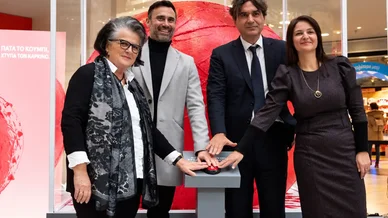
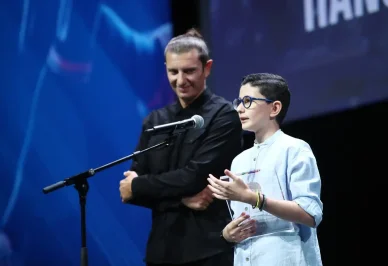
The campaign was officially launched at the capital's shopping centre, Athens Metro Mall. A large model of a cancer cell was placed in the centre's main atrium — an interactive and original work of art with a large digital button at its centre. The first to press the button was the campaign ambassador, Giorgos Kapoutzidis, who called on citizens to support the initiative and spread its central message: the fight against cancer requires a shared contribution from each of us. In total, the campaign ran from 31 January to 4 February 2019.
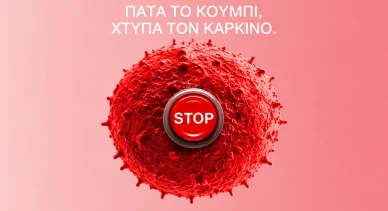
This installation became the visual and conceptual centre of the event, drawing the attention of people of all ages. Visitors' interaction with the structure was as simple as possible but emotionally powerful: anyone could walk up and press the button, which symbolised personal support for cancer patients and solidarity with the movement.
“By taking part in World Cancer Day, we support the mobilisation campaign and invite everyone to join in by pressing the button, because we believe cancer is best tackled when we talk about it openly, without fear, honestly and on a scientific basis,”Kaiti Apostolidou, president of the Hellenic Cancer Federation, told the press.
The “Press the Button — Beat Cancer” Campaign in Greek Cities
To spread this information across Greece, the campaign “travelled” digitally from Athens to Thessaloniki, Patras, Ioannina and Heraklion, where representatives of ELLOK's member associations stood in central spots in each city to encourage people to press the button. At the same time, people could press the button symbolically on the campaign website, www.patatokoubi.gr, and so join the efforts to “shrink” the cancer cell.
In each of these cities, the campaign took the form of off-site information events, with the active involvement of local patient organisations, volunteers and medical communities. Information stands were set up in central locations and squares, where representatives of the public handed out printed material on cancer prevention, explained the importance of early diagnosis and encouraged residents to join the solidarity movement. In Thessaloniki, for example, such community initiatives find a natural home near well-known city landmarks, from the Thessaloniki Concert Hall to the legendary Mylos Club. Thanks to this decentralised work, the campaign gained a national scale, uniting thousands of people across the country in the shared fight against cancer.
What You Should Know About Cancer
Moving from a simple social initiative to a deep awareness of why the fight against cancer matters rests on understanding the nature of the disease itself. According to the World Health Organization's definition, cancer is a generic term for a large group of diseases that can affect any part of the body. Their main feature is the rapid creation of abnormal cells that grow beyond their usual boundaries, can invade adjoining tissues and can spread to other organs.
Knowledge about this disease and an understanding of risk factors are crucial to saving lives. Prevention and early detection play the main role, as they significantly increase the chances of successful treatment, reduce the impact of dangerous factors and make it possible to stop the disease from progressing, even in its early stages.
Cancer Statistics According to the WHO
The global cancer statistics (GLOBOCAN 2024), produced by the International Agency for Research on Cancer (IARC) and the American Cancer Society (ACS), cover 34 types of cancer in 186 countries. According to the latest research data (as of 2026), the number of new cases diagnosed stands at 20.6 million (19.5 million excluding non-melanoma skin cancer), while the number of deaths stands at 9.8 million (9.7 million excluding non-melanoma skin cancer). One in 5 people has an individual risk of developing cancer during their lifetime, while 1 in 9 men and 1 in 13 women die from cancer.
Breakdown of incidence and mortality:
Most commonly diagnosed cancers | % of total | Leading causes of cancer death | % of total |
|---|---|---|---|
Lung cancer (2.6 million cases) | 12.8% | Lung cancer (1.9 million deaths) | 19.1% |
Female breast cancer | 11.8% | Colorectal cancer | 9.4% |
Colorectal cancer | 9.9% | Liver cancer | 7.5% |
Prostate cancer | 7.5% | Female breast cancer | 7.1% |
Stomach cancer | 4.8% | Stomach cancer | 6.6% |
By 2050, the number of new cases is expected to rise to 34.4 million a year, 67% more than in 2024.
The full set of information, broken down by country, region, income level and Human Development Index, is freely available on IARC's Global Cancer Observatory platform.
Key Risk Factors for Developing Cancer
According to the World Health Organization, up to 50% of cancer cases can be prevented by eliminating the key risk factors. These are not a guaranteed cause of the disease, but they substantially increase the likelihood of cell mutation.
The top 10 proven risk factors:
- Tobacco use — the main cause of cancer (over 20% of all cancer deaths).
- Alcohol causes tumours to develop in the oesophagus, liver, breast and bowel.
- Excessive consumption of processed meat and products, a lack of fibre and obesity significantly increase cancer risk.
- A sedentary lifestyle and physical inactivity disrupt the metabolism and contribute to hormonal imbalance.
- Infections and the hepatitis B and C viruses, human papillomavirus (HPV) and Helicobacter pylori cause up to 13% of cancer cases worldwide.
- Unprotected sex without a condom.
- Overwork, obligations and commitments that exhaust the body.
- Insufficient sleep — sleep should last at least seven to eight hours a day.
- Stressful situations.
- Carcinogenic substances and radiation: ultraviolet radiation (sun, sunbeds), radioactivity and industrial chemicals (for example, asbestos) can also cause cancer.
Understanding these factors makes it possible to consciously reduce the threat through prevention and healthy habits.
Cancer Prevention and Reducing Risk Factors
Cancer prevention is not abstract advice but specific actions that anyone can take to protect their own health.Medical organisations stress that avoiding tobacco is the most important step, as smoking remains the main risk factor for developing cancer. Limiting alcohol consumption is just as important, as it is directly linked to a higher risk of liver, stomach and other cancers.
Regular physical activity helps maintain a healthy weight, strengthens the immune system and reduces the risk of many types of cancer. A healthy diet is another key element: a diet rich in vegetables, fruit and wholegrain products, with minimal processed meat, helps prevent cancer cells from forming.
Vaccination also plays an important role, especially against human papillomavirus (HPV) and hepatitis B, which can cause cancer. In addition, it is worth avoiding excessive sun exposure and having regular medical check-ups and screening. Together, these measures form a layer of protection and significantly reduce the risk of cancer developing and progressing.
Why Early Cancer Diagnosis Matters
Medical practice draws a basic distinction between two approaches to diagnosis: early diagnosis and screening.Early diagnosis aims to detect the disease in people who already have first symptoms or complaints, which calls for prompt consultation with a specialist. Screening, by contrast, is the systematic testing of apparently healthy people with no signs of disease, to detect precancerous conditions or tumours at an asymptomatic stage.
The methods and frequency of screening tests cannot be the same for everyone. An individual diagnostic plan is always drawn up by a doctor, taking into account age, sex, family history, other existing conditions and personal risk factors. A timely and personalised approach helps protect people's lives and health.
Information and Support for People Fighting Cancer
The fight against cancer is impossible without spreading accurate information and giving patients all-round help.When patients and their families have access to verified medical data, they are less likely to fall for harmful myths, feel less anxiety and can make more balanced decisions about treatment. At the same time, public awareness helps break down the labels attached to the diagnosis, turning indifference into real solidarity.
The Greek campaign “Press the button — beat cancer” was built on exactly this combination of knowledge and moral support. Its goal was simple and human — to draw as many people as possible into a national movement supporting those facing cancer. The symbolic action — pressing an interactive button in shopping centres or on a dedicated website — became a sign of solidarity that thousands of citizens sent to patients. The project showed that even a small public gesture can mean a great deal: it gives patients the feeling that they are not alone in their fight, and that beside them stands a society ready to support them.
Frequently Asked Questions About “Press the Button — Beat Cancer”
Who Organised the Campaign?
The initiative was carried out with the active support of the Hellenic Cancer Federation, in partnership with pharmaceutical and socially responsible companies, and with the participation of local organisations and volunteer communities.
What Was the Aim of the Campaign?
The main aim was to raise public awareness of cancer prevention and the importance of early diagnosis, and to express moral and social support for people fighting cancer.
How Could People Take Part in the Campaign?
Citizens could take part both in person and remotely. In-person participation meant visiting special locations (including the Athens Metro Mall shopping centre and regional centres) where interactive installations had been set up. Online participation was possible through the project's official website, where anyone could cast their digital vote.
What Did Pressing the Button Symbolise?
Pressing the button — on the physical installation or on the website — symbolised a personal contribution to the shared fight against the disease, a sign of solidarity with patients and a call for active steps towards prevention and early diagnosis.
How Did the Campaign Support the Hellenic Cancer Federation?
The campaign helped the Hellenic Cancer Federation by drawing in the wider public and uniting efforts around its work. As a result, the organisation gained more attention for its information programmes, was able to strengthen its influence on public opinion and raised additional resources. The project also increased interest in the systemic problems of cancer care in Greece, making them visible to the wider public and helping to rally social support.
How Was the Campaign Linked to World Cancer Day?
The launch and key stages of the campaign were dedicated to World Cancer Day (4 February), underlining Greece's part in the global movement led by the Union for International Cancer Control (UICC).