Key Takeaways
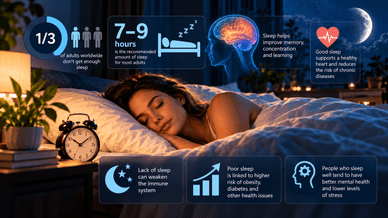
- Good sleep supports your brain performance and mood and can decrease your risk for many diseases and disorders, like type 2 diabetes, heart disease, stroke, obesity, and dementia.
- Among adults older than 18, 13.5% reported feeling tired or exhausted most days.
- More than a third of Americans report getting less than seven hours of sleep in a 24-hour period.
- About 30% of adults have symptoms of insomnia, with 10% having insomnia that impacts their daily activities.
- Sleep apnea impacts 9%–38% of the general population.
Getting enough sleep is important to our overall health and wellness. Lack of sleep has been associated with poor quality of life and increased risk for diabetes, obesity, heart disease, cancer, and even death. People who don’t get enough sleep are also at a higher risk of stroke or dementia.
Several factors contribute to the quantity and quality of our sleep. Room temperature, digital lights, and mattress quality can play pivotal roles in your ability to fall and stay asleep. The right mattress should balance comfort and support for your individual sleep style and body type. To help you make an informed decision, see our recommended resources on the best mattresses for overall sleep quality and for alleviating back pain.
The amount of sleep we need varies as we age. People need the most sleep in the first 12 months of life (12–16 hours), with that number decreasing to seven or more hours per night by the time we’re 18. And yet, research shows a significant portion of the population sleeps less than seven hours per night.
“Unfortunately, it is often overlooked just how much poor sleep impacts chronic diseases, mental/physical health, and even weight loss efforts,” said Stephanie Dixon, MSN, FNP-C, a health care provider in North Carolina. “The amount of time we should spend asleep can vary from person to person, but generally, adults should aim for around seven to nine hours of sleep per night. This allows our bodies and minds to fully rest and recover, promoting optimal health and performance. But, it’s important to note that quality of sleep is just as important as quantity. Simply spending more time in bed doesn’t guarantee better sleep.”
Statistics about sleep
The recommended sleep for adults older than 18 years is at least seven hours per night. Unfortunately, 35.5% of American adults reported sleeping fewer than seven hours in a 24-hour period, according to the United Health Foundation. The data also showed that the amount of sleep people get varies with age.
People who get less than seven hours of sleep per night by age group:
- 18–44: 38.3%
- 45–64: 38.6%
- 65 and older: 28.1%
The Centers for Disease Control and Prevention (CDC) notes the following sleep recommendations from the American Academy of Sleep Medicine and the Sleep Research Society:
Age group | Age | Recommended hours of sleep per 24 hours |
|---|---|---|
Infant | 4–12 months | 12–16 hours (including naps) |
Toddler | 1–2 years | 11–14 hours (including naps) |
Preschool | 3–5 years | 10–13 hours (including naps) |
School age | 6–12 years | 9–12 hours |
Teen | 13–17 years | 8–10 hours |
Adult | 18–60 years | 7 or more hours |
Sleep facts and statistics by state
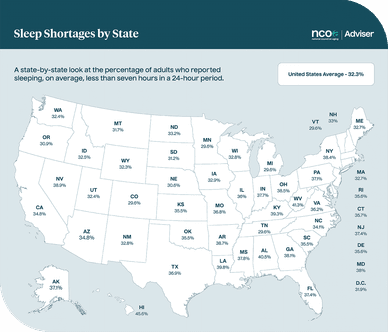
The amount of sleep varies across the United States. According to findings from the CDC, the states getting the most sleep (seven hours or more) are Minnesota and Vermont, while Hawaii is getting the worst, with 45.6% of adults reporting an average of less than seven hours of sleep in a 24-hour period.
Sleep deprivation statistics
An estimated one in five adults experiences sleep deprivation, which means they aren’t getting enough sleep.
Some causes of sleep deprivation are:
- Voluntary behavior: Consistently not getting enough sleep daily for at least three months can be classified as behaviorally induced insufficient sleep syndrome.
- Personal obligations: Providing home care for someone or having other obligations that prevent adequate rest.
- Work hours: Some occupations require work hours that can lead to inadequate time for sleep.
- Medical problems: Ongoing sleep disorders or other chronic diseases.
Sleep deprivation can lead to excessive daytime sleepiness, which can lead to falling asleep during meetings or in a class. One of the more dangerous consequences of daytime sleepiness is drowsy driving, which can lead to accidents and injuries.
Other effects of sleep deprivation are:
- Mood changes: Irritability, anxiety, lack of motivation, and symptoms of depression.
- Poor performance: Lack of concentration, attention deficits, longer reaction times, fatigue, restlessness, poor coordination, forgetfulness, and increased errors.
- Health impact: High blood pressure, obesity, diabetes, and increased risk of heart attack. In fact, severe sleep deprivation has been associated with an increased risk of death.
Some signs of poor sleep quality include:
- Waking up frequently during the night.
- Experiencing snoring or gasping for air while sleeping.
- Feeling sleepy or tired even when getting at least seven hours of sleep.
Information from the National Center for Health Statistics shows that 13.5% of adults older than 18reported feeling very tired or exhausted most days. This may be due to insomnia, which is when you have trouble falling or staying asleep or are experiencing poor-quality sleep. Short-term insomnia may last a few days to weeks, while long-term (chronic) insomnia can last longer than three months.
According to the American Academy of Sleep Medicine:
- About 30% of adults have symptoms of insomnia.
- About 10% of adults have insomnia severe enough to cause daytime consequences.
- Less than 10% of adults are likely to have chronic insomnia.
Sleep disorder statistics
Sleep disorders, also called sleep-wake disorders, involve problems with the quality, timing, and amount of sleep someone is getting. The most common sleep disorders are:
- Insomnia disorder: This affects roughly one-third of adults.
- Sleep apnea: Obstructive sleep apnea (OSA) affects 9%–38% of the general population.
- Hypersomnolence: Excessive sleepiness, despite getting at least seven hours of sleep, affects approximately 5%–10% of people experiencing daytime sleepiness.
- Narcolepsy: This is a rare disorder involving falling asleep multiple times a day, and it affects 0.02%–0.04% of the general population.
- Restless leg syndrome (RLS): This involves the urge to move your legs and sensations of creeping, crawling, tingling, burning, or itching. RLS affects roughly 2%–7.2% of the population.
A recent study revealed differences in the prevalence of sleep-related problems in older adults. Among adults age 65–79 years old:
- 30% usually get less than the recommended seven hours of sleep per day
- 9% experience frequent daytime fatigue
- 13% have frequent insomnia
- 18% have frequent insomnia/poor quality sleep
- 8% have potential OSA symptoms
- Insomnia rates were higher among women than men (16% vs. 11%)
- Higher percentages of sleep problems occurred in those with fair/poor health
- 20% (22% of women vs. 17% of men) and 45% of those with frequent insomnia (overall) reported regular sleep aid use
- Only 10% reported discussing sleep with a health care professional
Sleep and health statistics
Not getting enough sleep can increase the risk for obesity, type 2 diabetes, high blood pressure, heart disease, stroke, poor mental health, and early death. Some health effects from poor sleep can be evident after one night, like being in a bad mood, feeling excessively sleepy, poor productivity at work, and increased risk of accidents and motor vehicle crashes.
- A recent study revealed those sleeping less than seven hours were 1.83 times more likely to be overweight and 1.57 times more likely to be obese than those sleeping seven to nine hours.
- In a study of 81,233 people with pre-diabetes, those with insomnia had about a 30% increased risk of developing type 2 diabetes.
- People sleeping less than six hours a night are 27% more likely to develop atherosclerosis. Atherosclerosis is a condition where plaque builds up inside your blood vessels, termed coronary artery disease (CAD) when the buildup is in the arteries of your heart.
- People with inadequate sleep had nearly 2.5 times increased odds of frequent mental distresscompared to those with adequate sleep.
Roughly 20% of the workforce work non-traditional shifts, with health care and public service industries commonly operating 24/7. Working these off shifts can upset the natural sleep-wake cycle and lead to sleep disturbances known as shift work sleep disorder (SWD). Insomnia and excessive sleepiness are some of the symptoms associated with SWD. According to a 2020 study, decreased sleep among nurses was associated with lower quality of care and patient safety.
Bottom line
Good sleep supports your brain performance and mood and can decrease your risk for many diseases and disorders, like stroke, obesity, and dementia.
Unfortunately, the current outlook isn’t great, with nearly 40% of adults reporting they accidentally fall asleep during the day, and roughly 50–70 million Americans have ongoing sleep disorders. Additionally, about 30% of older adults reported getting less than the recommended seven to nine hours of sleep each night.
Insomnia reportedly affects nearly one-third of adults, and rates for sleep apnea can be as high as 38%. In addition to health problems, sleep deprivation can result in mood and performance changes.
In fact, people who report inadequate sleep had nearly three times the risk for frequent mental distress compared to those with adequate sleep. “Good quality sleep is just as important as diet and exercise, so make sure to prioritize it for optimal health and well-being,” said Dixon.