Artemis 2 Mission
You’d be hard-pressed to find a human being alive who hasn’t heard of the NASA Artemis 2 project. This is the most significant space story of our times, marking the first crewed flight of an Orion spacecraft and the first crewed Moon mission of the last fifty years. It’s a pivotal moment in space history which signals the relaunch of the NASA lunar program, as well as the first human mission launched on a Space Launch System (SLS) rocket within NASA’s Artemis program.
The last time a crewed mission exited low Earth orbit was the Apollo 17 mission in December 1972. No human being has set foot on the Moon since then. The Artemis 2 mission became the first step towards an eventual Mars expedition. Here’s everything you need to know about it.
Introducing Artemis II
Wondering what is Artemis 2? Here’s a clear explanation.
This is the first crewed NASA Moon mission of the Artemis program, which aims to safely send astronauts to the Moon and back in the 21st century. We’ve come a long way since the Moon missions of the 1960s and 1970s, but we’re also out of practice. The hope is that the Artemis 2 lunar flyby will provide us with the information and the confidence we need to return to the lunar surface.
The Artemis 2 NASA mission was previously known as Exploration Mission-2 before being rebranded with a catchier name, and it’s the direct successor of the Artemis I mission, which was an uncrewed test flight that proved that the SLS rocket and Orion spacecraft could travel safely.
Why Artemis II is Significant
The Artemis 2 mission is arguably the most important mission of the modern era, acting as a direct continuation of the Apollo legacy thanks to its status as the first crewed mission to the Moon since Apollo 17. It’s been so long since the last Moon mission that there are people in their sixties who don’t remember it.
But the Artemis NASA mission isn’t just symbolic and a sign of humanity’s continued commitment to deep space exploration. It’s also the first serious stage of that exploration, with plans for trips to go from the Moon to Mars, because there’s less atmospheric resistance to launch an interplanetary mission from the Moon than there is here on Earth. For NASA, and for humanity as a whole, the Artemis mission supports the goal of sustainable exploration beyond Earth orbit.
Artemis 2, Space Launch System and Orion Spacecraft
For Artemis 2 to safely get to the Moon and back, it needed the right technical systems in place. This began with the SLS Block 1, the heavy duty Artemis 2 rocket that enabled the astronauts to reach space in the first place. It used four RS-25 engines and two solid rocket boosters to generate enough thrust during liftoff to take the spacecraft into orbit.
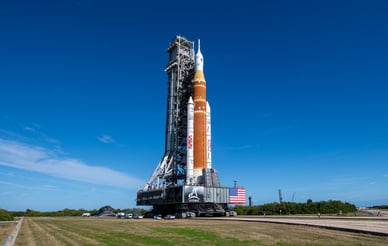
In space, the Interim Cryogenic Propulsion Stage (ICPS) system was able to push Orion beyond Earth’s orbit and towards the Moon. As for Orion, it was essentially a two-part modular craft consisting of a Crew Module (for the astronauts to live and work in) and the European Service Module, which was built by the European Space Agency and which provided the power, life support and further propulsion.
The Infrastructure at Kennedy Space Center
The NASA Artemis 2 mission was prepared for launch at Kennedy Space Center in Cape Canaveral, Florida, one of NASA’s ten field centres and the primary launch centre of American space exploration since 1968.
At Kennedy Space Center, the rocket and spacecraft were stacked up inside the Vehicle Assembly Building (VAB) near Launch Complex 39B (LC-39B). The VAB is one of the largest buildings in the world, and it’s specifically designed for the assembly of spacecraft ahead of them being moved out to the launch pad on the mobile launcher.
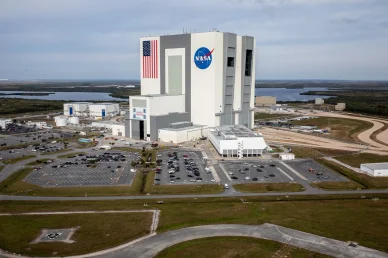
This infrastructure was important enough for Artemis 2, but it will only become even more important in the future. It was the vital infrastructure that will power NASA’s broader mission of heading from the Moon to Mars.
Meet the Crew of Artemis II
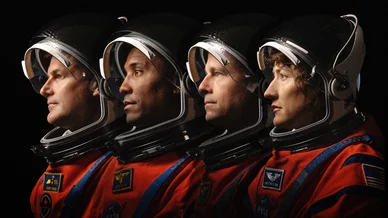
The Artemis 2 crew consisted of four of NASA’s best astronauts, each of whom was carefully selected to ensure that the right range of skills was available onboard the craft. It’s kind of ironic that in space, space is at a premium. With only enough capacity for four people on board Artemis 2 NASA needed to make sure that everyone was capable of carrying out different missions and tasks.

The four astronauts on board Artemis 2 were:
Mission Commander: Reid Wiseman
Pilot: Victor Glover
Mission Specialist: Christina Koch
Mission Specialist: Jeremy Hansen
The four crew members have a ton of experience between them, with backgrounds that encompass everything from military aviation to long-duration spaceflight (Koch holds the record for the longest single spaceflight by a woman). Hansen brought an international touch to the mission as a member of the Canadian Space Agency.
Mission Commander Reid Wiseman
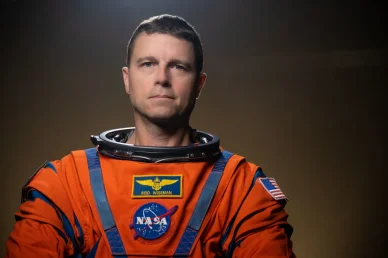
Reid Wiseman served as the mission commander and was picked for the role because of his extensive experience. A former U.S. Navy test pilot, the 50-year-old astronaut spent two years as the chief of the NASA Astronaut Office between 2020 and 2022. He also happens to be an ISS veteran, with a huge amount of time spent serving his country in space.
Wiseman is arguably the most important member of the Artemis 2 crew, because he was responsible for leading the mission and making decisions. Given that every decision could mean the difference between life and death, he held the fate of the mission and his fellow crew members in his hands. He also took charge when it came to coordinating things between the astronauts and the ground control team back on planet Earth.
Pilot Victor Glover
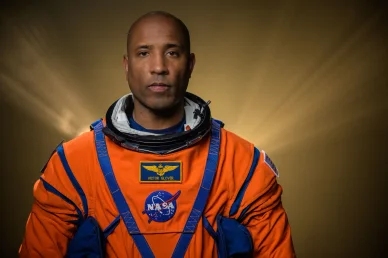
Wiseman might have called the shots and captained the ship, but it was mission pilot Victor Glover who steered it. Luckily, Artemis 2 is in safe hands, because Glover is one of the most talented and experienced pilots in the business.
Any space mission is inherently risky, but Glover brings his experience from the SpaceX Crew-1 and the International Space Station and helps to keep those risks as low as possible. As the mission pilot, he played a vital role in spacecraft operations, working with the commander to control the craft’s trajectory.
It was Glover who ensured that they stayed on course both on the way to the Moon and on the way back again. And if the Artemis 2 crew had needed to switch to manual control, it would have been Glover who was tasked with handling it.
Mission Specialist Christina Koch

Christina Koch is one of two mission specialists, which is essentially the title they give to an astronaut engineer who’s been trained with a variety of different skills so that they can take on whatever different tasks are needed. This is nothing new to Koch, who’s known for her record-breaking long-duration mission in which she spent 328 days aboard the International Space Station. She set a spacewalk record too by participating in the first all-female spacewalk in 2019.
For many, Koch is their personal favourite member of the Artemis 2 crew, in part because of how important her role is. Her responsibilities included carrying out detailed system checks and helping with navigation and communications, as well as making sure that the mission stayed on schedule.
Mission Specialist Jeremy Hansen
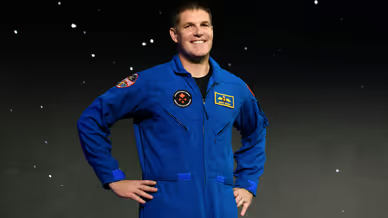
The Artemis 2 crew is rounded off with a second mission specialist called Jeremy Hansen, who joins NASA from the Canadian Space Agency. A former CF-18 pilot, Hansen has almost as much flight experience as Glover, although his military aviation background doesn’t necessarily translate into the ability to fly a spacecraft.
Hansen’s most important role is arguably to underscore the international partnership between the United States and Canada and to point to a future in which astronauts from all over the world are invited to join the Americans as they shoot for the Moon. With that said, he was a man of many talents and joined Christina Koch in ensuring that all systems were go as they headed to the Moon and back.
The Strategy Behind the Artemis Program
The NASA Artemis 2 plays an important role in the organisation’s wider strategy for the years to come. In fact, the entire project is all about building a future in which Moon landings are as commonplace as trips to the International Space Station are today.

NASA's Artemis II mission in 20 minutes
The plan looks a little something like this:
- Artemis I: Validates the Space Launch System and Orion spacecraft
- Artemis II: Shows that humans can safely travel to the Moon and back with the Orion
- Artemis III: Aims to safely return humans to the lunar surface
The Artemis NASA missions are supported by new infrastructure like the Lunar Gateway and a more advanced lunar lander, which are designed to help make lunar travel easier. Eventually, there are plans to build a Moon base and to launch a Moon to Mars mission, but let’s take that one step at a time.
The Mission’s Priorities
When it comes to the priorities and objectives of the Artemis 2 mission, the overriding objective that sits above everything else is to ensure crew safety. In fact, mission validation is the aim of the game, with NASA trying to prove that the spacecraft is viable and that the organisation can take its astronauts safely to the Moon and back.
The NASA Artemis 2 project also aims to collect flight data from a real world scenario, rather than just relying on test data. It will allow NASA and its team to practise emergency scenarios so that they can figure out how they might respond to threats when they’re out in space.
All in all, then, this is so much more than just a symbolic lunar flyby. These are the first steps in a long awaited journey.
The Mission’s Main Objectives
With the Artemis 2 mission taking astronauts out of Earth’s orbit and to the Moon and back, its main objectives were to test out the various life support systems that will keep astronauts alive and in shape during future flights. Many of these tests couldn’t take place on the International Space Station because that remains in orbit around Earth, whereas Artemis 2 was better placed for deep space testing.

You need to understand what is Artemis 2 before you can really understand why those objectives are so important. Checking out those long-distance communication systems is vital before Artemis III attempts a crewed lunar landing, and it will be even more important in the future when we turn towards Mars and plan to make our first crewed trips to the Red Planet.
What Orion Tested
The Artemis 2 mission is all about testing out the various Orion systems onboard the spacecraft. We’re talking about putting the cabin environment through its paces and seeing whether a physical space the size of two minivans can safely support four astronauts over a prolonged period of time.
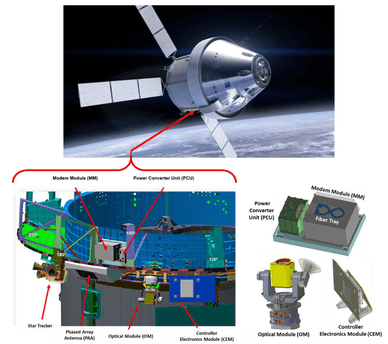
Throughout the journey, they tested out everything from the life support systems to the spacesuits, the food systems and the onboard software. Functional sanitation hardware is key, as is the ability to store cargo on the way to and from the Moon, and it should go without saying that if the comms and navigation systems didn’t work as intended, the Artemis 2 NASA team could have a huge problem on their hands.
Why Artemis Did Not Land on the Moon
Now, you might be wondering why the Artemis NASA mission went all the way to the Moon if it didn’t land there. It’s a good question, but the truth is that there was no Moon landing until the NASA team could be confident of their chances of success.
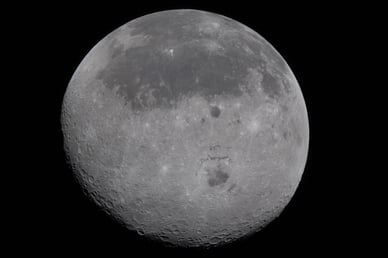
It all goes back to that question of “what is Artemis 2?” This particular mission was a test mission, and it was never designed for a lunar landing. When you understand that, it’s pretty clear why it did a lunar flyby instead of a landing. It’s the same reason why when you’re learning to drive, you start out making short journeys on the backroads before you try to drive across the country on a motorway.
A Moon landing will come eventually, just not now. You’ll have to wait for Artemis III.
The Artemis II Flight Profile
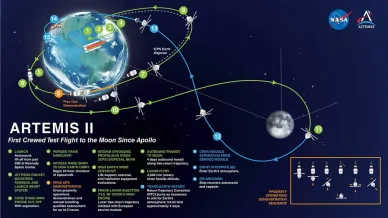
The Artemis 2 mission has a carefully planned flight profile that revolves around a free-return trajectory around the Moon. This meant that the craft wouldn’t attempt to land or enter a lunar orbit. Instead, it carried out its lunar flyby before using the Moon’s own gravity to send Orion back towards Earth.
It’s a clever approach which uses physics to reduce the need for engine power, heavy fuel loads and a large amount of thrust. Instead, the route that the craft followed naturally brought it back around for its return to Earth. At the same time, NASA was able to validate the approach and put it to use for future missions.
The Mission’s Timeline
Wondering when is Artemis 2 launch? We’ve got good news and bad news. The bad news is that it’s already happened, at 6:35 PM EDT on April 1, 2026. The good news is that the Artemis 2 launch went as planned and the craft reached space without a hitch.
The Artemis 2 mission was intended to be a ten-day journey from launch to splashdown. Along the way, the main stages look a little something like this:
- Liftoff: The craft launches aboard the Space Launch System
- Booster Separation and main engine cutoff: The vehicle reaches space and the booster drops away
- Solar array deployment: The Orion spacecraft gets ready to move
- Translunar injection: A fuel burn sends Orion towards the Moon
- Deep-space cruise: The crew monitors systems as they travel to the Moon
- Lunar flyby: The Artemis crew circles the Moon
- Return to Earth: It’s time to head home
- Atmosphericreentry: Orion breaks through Earth’s atmosphere
- Parachute descent: The module drops into the ocean while being slowed by parachute
- Recovery operations: NASA collects its crew and returns them to dry land
Launch and Journey into Space
Now you’ve got your answer to the question of when is Artemis 2 launch, you probably want to know a little more about what that launch actually looked like. As always, we’ve got you covered.
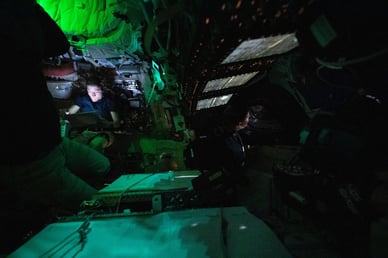
It all started with the careful fuelling of the Space Launch System that would take the Artemis 2 rocket into space. The crew then took their places inside the craft before final checks took place and the rocket lifted off from Launch Complex 39B. After a couple of minutes of thrust, booster separation took place, because the boosters had already done their job and provided the necessary thrust.

Artemis II LAUNCHES Humans to the Moon
Shortly after that, main engine cutoff (MECO) occurred, when the craft reached space and Orion separated from the rocket and entered Earth orbit. That was when the solar arrays were deployed, enabling Orion to generate power for key systems and to prepare for the next phase of the mission.
Journey to the Moon
Once the Artemis 2 mission was in orbit and ready to leave Earth orbit, the crew was given the go-ahead from ground control to activate a translunar injection burn, or TLI burn. This carefully timed fuel burn used Orion’s propulsion system to push it into a trajectory that put it on course for a lunar approach after several days.
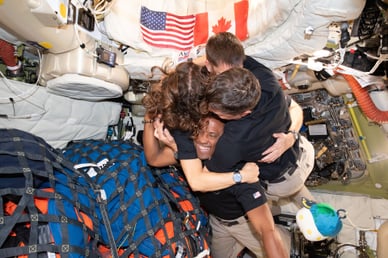
While the vessel was heading for its date with destiny, the crew carried out ongoing suit testing and system checks while continuing to communicate with mission control via the Deep Space Network. As the Orion approached the Moon, the effects of Earth’s atmosphere lessened and the Moon’s gravitational pull began to kick in, with lunar gravity helping to shape its path. It’s this gravitational pull that allowed the return journey to take place without the need for further huge fuel injections.
Return to Earth and Splashdown

Artemis II Astronauts Return To Earth - Re-entry and Splashdown
After the lunar flyby, the Artemis 2 mission began its long journey back to Earth, using the Moon’s gravity as a sort of slingshot to launch the craft towards home. If you’ve seen or read The Martian, it’s similar to the “Rich Purnell Manoeuvre” in which the Hermes performs a close flyby of Earth and then uses the velocity it gains from Earth’s gravity to launch it back towards the red planet.
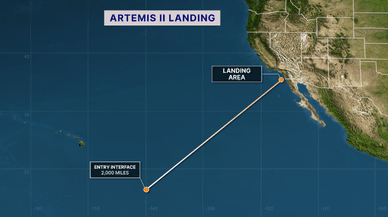
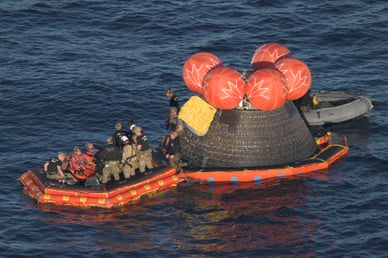
When the Orion reached Earth, it was approaching at an incredibly high speed (24,000 miles per hour) and its heat shield was exposed to temperatures of 3,000°C as it re-entered the atmosphere. As the craft slowed, it deployed its parachutes to further slow its descent before it splashed down in the Pacific Ocean. That was when NASA and the US Navy worked together to deploy recovery teams to collect the astronauts and bring them home.
System Checks and In-Flight Issues
So far, we’ve made it sound as though the Artemis 2 mission went ahead without a hitch, but that’s not quite the full story. There are so many moving parts to any flight, crewed or not, that you’re guaranteed a mission anomaly or two.
The Artemis team was fortunate that they only experienced minor problems with their onboard systems, including one or two before the launch that threatened to delay it. There was also some communication loss, although part of that was expected to happen, such as when the craft passed behind the rear of the Moon.
Minor issues like burning smells, issues with the toilets and software glitches are par for the course during a crewed test flight, but they also provide valuable data and give NASA the opportunity to implement fixes ahead of future missions and lunar landings.
Safety Testing and Emergency Procedures
Throughout the Artemis 2 mission, the crew practiced a number of safety scenarios which were all about ensuring that the crew, the craft and ground control were all prepared for a rapid response in the event of an emergency. Some of the key tests from the NASA Artemis 2 team included:
- Mission abort procedures
- Medical response
- Fire response
- Radiation shelter operations
- Rapid suit donning
- Post-splashdown crew recovery
NASA practices as many of these as possible here on Earth before the crew even thinks about liftoff, but there are also plenty of protocols and procedures that can only be tested during a live flight. The aim was to test them then ahead of future missions where there would be more variables, more things that could go wrong and more tests to be carried out.
Scientific Goals
As well as testing out the systems and giving NASA a chance to check that they still have what it takes to get to the Moon and back, the Artemis 2 mission also offered a chance to carry out a number of scientific tests and engineering tasks. The flight through cislunar space (i.e. the space between Earth and the Moon) allows the chance for all sorts of vital tests, such as radiation measurement to better understand exposure levels outside of the Earth’s magnetosphere.
The Artemis NASA team also carried out checks and tests to monitor astronaut health, as well as ensuring that the thermal control and power systems were working as intended and all of the software and onboard systems were as glitch-free as possible.
Artemis II and Future Missions
The key thing to remember about the NASA Artemis 2 mission is that it’s a bridge from the past to the future. The data that the Artemis NASA team gathered during their flight will be used for mission planning in the future, and it will also play a vital role in planning and developing the lunar infrastructure which will be needed for these missions, including the design and implementation of the overall Lunar Gateway.
It’s not just about travelling further from the Earth than any human has done before. It’s about providing practical information about crew operations, hardware reliability, communication planning and the long-term safety requirements that will be needed for future missions to the Moon and beyond.
Artemis I vs Artemis II and Artemis III
The Artemis 2 mission plays a vital role in bridging the gaps between the first and third missions in the Artemis NASA programme. Each mission has different parameters and objectives, as shown in the table below. The thing to remember is that each mission is like a different jigsaw piece in the overall puzzle.
Mission | Crew Status | Mission Type | Main Objective | Strategic Role |
|---|---|---|---|---|
Artemis I | Uncrewed Mission | Test Flight | Validate SLS and Orion systems | First integrated system test |
Artemis II | Crewed Mission | Crewed Lunar Flyby | Test flights into deep space | Bridge from tests to full landing |
Artemis III | Crewed Mission | Moon Landing | Return to the lunar surface | First sustained step in ongoing lunar exploration |
The Moon-to-Mars Strategy
As we’ve seen throughout this article, there can be no long-term strategy for the sustainable exploration of Mars without the Artemis NASA program. As for the NASA Artemis 2, that’s the vital bridge between Artemis 1 and Artemis 3, the latter of which will return human beings to the surface of the Moon.
The real value of Artemis 2, then, is in validating the transportation chain, the crew safety systems and the operational concepts that will be needed in the future. By flying astronauts through deep space and back again, we can check that we’re still able to safely do so and that today’s systems are as reliable (if not more so) as those from the sixties and seventies.
This lunar architecture is a key resource for Mars preparation and an important investment in the future. Thanks to Artemis 2, a Mars landing is no longer the stuff of science fiction.
FAQs About Artemis II
If you’ve got questions, we’ve got answers! Here are a few of the most common questions we see about the Artemis 2 NASA mission.
What is Artemis 2?
Artemis II is a crewed mission into deep space which aims to take astronauts to the Moon and back for the first time in over fifty years.
When is Artemis 2 launch?
The launch took place at 6:35 PM EDT on April 1st 2026, with the mission duration expected to be ten days.
Will it land on the Moon?
This is where the Apollo comparison falls down, because the Artemis 2 mission won’t land on the Moon. Future Artemis missions will, though.
Who is on the Artemis 2 crew?
The crew members for the Artemis mission are as follows:
- Reid Wiseman: Mission Commander
- Victor Glover: Pilot
- Christina Koch: Mission Specialist
- Jeremy Hansen: Mission Specialist
What systems are being tested?
Key systems that are being tested include life support, communication, navigation, power, software and other operational and crew safety systems.
What will happen next?
The next Artemis mission is Artemis III, which aims to launch in mid-2027 and to land astronauts on the Moon.