Festival de Musique de Chambre du Larzac
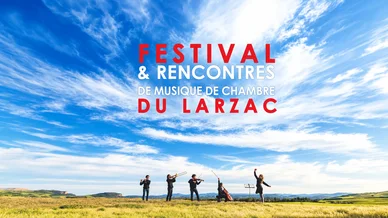
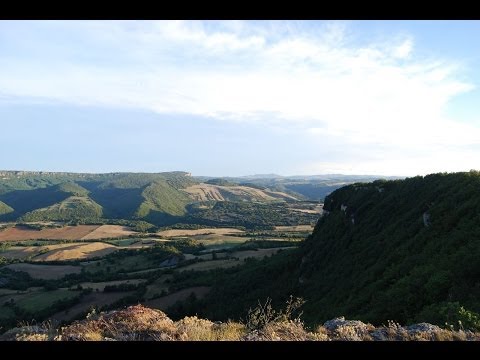
The Festival & Rencontres de Musique de Chambre du Larzac (Larzac Chamber Music Festival and Meetings) was a summer chamber music festival that held 16 editions between 2005 and 2021 on the Larzac plateau, in Aveyron. It brought resident musicians and audiences together in villages, Romanesque churches and natural spaces of the Grands Causses Regional Natural Park.
This article traces the festival's history and its approach to new music, details the last edition in 2021, its prices, venues and key news, then presents its patrons, its partners and the fallow year of 2022.
Key Information
Full name | Festival & Rencontres de Musique de Chambre du Larzac |
Organiser | Association Festival & Rencontres de Musique de Chambre du Larzac (FMCL) |
Artistic director | Jean-Sébastien Dureau |
Repertoire | Chamber music spanning more than three centuries, and new contemporary works |
Format | Artist residency, concerts, musical walks, cine-concerts, meetings |
Natural setting | Grands Causses Regional Natural Park |
Period | Late July and August |
First edition | 2005 |
Last edition | 2021 (16th edition, 6 to 8 August) |
Concerts held | More than 150 before the 2021 edition |
Years without a festival | 2020 and 2022 |
History
The Festival & Rencontres de Musique de Chambre du Larzac was founded in 2005 and held 16 editions until 2021. It was run by the FMCL association, under the artistic direction of pianist Jean-Sébastien Dureau.
The festival was a summer highlight on the Larzac plateau, in a rural part of Aveyron and the Occitanie region. It took place in the heart of the Grands Causses Regional Natural Park: Templar villages, Romanesque churches with exceptional acoustics, farms, open countryside and concerts under the stars.
Each edition was built around an artist residency. In 2016, the invited musicians worked for several days on the plateau before the opening concert. The programme combined concerts, meetings, a musical walk, a cine-concert, performance, dance and meals.
The festival aimed to be open to all, with a low-price policy. Its programmes mixed great classics, lesser-performed composers and the young generation of composers: the 2016 edition spanned more than three centuries of repertoire.
Key Milestones
Year | Milestone |
|---|---|
2005 | First edition of the festival |
2006 | 2nd edition and first commission of a chamber music work from a composer |
2016 | 12th edition: eight new concerts and two weeks of work on the plateau |
2019 | 15th edition, opened on 28 July in Sainte-Eulalie-de-Cernon |
2020 | Fallow year due to the health crisis |
2021 | 16th edition, new three-day format from 6 to 8 August |
2022 | No edition, another fallow year |
New Music
From the second edition, the founders chose to support and champion new music by commissioning a chamber music work from a composer. Alongside 20th-century works, they wanted to discover and share the music of today. The aim was to bring composer, performers and audience together.
During the Rencontres musicales du Larzac, the invited composer worked on the piece with the performers and presented it to the public on the day of its premiere. The approach introduced performers and audiences alike to the music being written today.
In 2016, the festival's new work was the score written by clarinettist François Miquel for Faust, Murnau's 1926 silent film based on Goethe's work. In 2021, the association did not want to break the thread and kept up its commissions. It wanted to support today's composers, who had been hit hard by the period of cancellations.
The 2021 commission went to composer Petar Klanac, to launch a wide-ranging project around the English writer Gilbert K. Chesterton.
Petar Klanac, Guest Composer in 2021
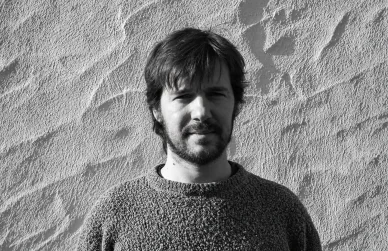
Born in 1971 in Montreal to Croatian immigrant parents, Petar Klanac received his first musical training on the violin. At the same time, he joined the choir school of the Petits Chanteurs du Mont-Royal, where he stayed for nine years. During those years, he also studied the guitar and wrote his first compositions.
The Petits Chanteurs du Mont-Royal sing the liturgy at Saint Joseph's Oratory in Montreal, perform regularly in concert and have a substantial discography. Singing Gregorian chant and Renaissance polyphony deeply shaped his calling as a composer.
After the choir school, he studied composition with Gilles Tremblay at the Conservatoire de Montréal, then with Gérard Grisey at the CNSM in Paris. He later settled in Ainhoa, in the Basque Country.
He has composed works for the Ensemble contemporain de Montréal, Ensemble Nahandove (notably at the Ars Musica Festival in Brussels), Toronto's Esprit Orchestra and Ensemble 0 (Archipel Festival in Geneva). In Paris, his works have been performed at IRCAM and at Radio France's Présences Festival.
The Last Edition (2021)
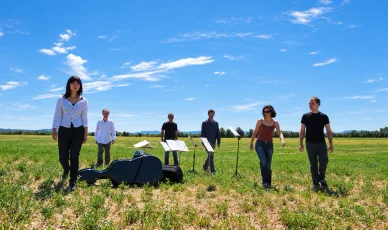
The 16th edition took place on 6, 7 and 8 August 2021 in Nant, Sainte-Eulalie-de-Cernon and Saint-Jean-d'Alcas. It took the form of three days of musical celebrations, with 9 concerts and more than 15 events in total.
A New Format
After the fallow year of 2020, the team came up with an edition that was radically new in both its offer and its organisation. After 15 years and more than 150 concerts, a different way of working had to be found.
The festival offered three days of non-stop music in its three emblematic villages. Concerts, readings and workshops made up a route that each audience member built for themselves.
Day-by-Day Programme
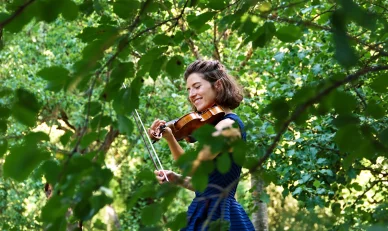
Date | Village | Programme |
|---|---|---|
Friday 6 August 2021 | Nant | A musical walk and two concerts |
Saturday 7 August 2021 | Sainte-Eulalie-de-Cernon | Three concerts and surprises |
Sunday 8 August 2021 | Saint-Jean-d'Alcas | Three concerts and surprises |
In Nant, the musical walk set off to meet the fair maid of the mill, along the stream and under the walnut trees. In the abbey church, the festival celebrated the anniversary of Beethoven's birth, a little late.
The programme also included “Les Épices de la vie” (The Spices of Life), the 2021 commission, and The Rite of Spring, before a rare serenade in a medieval courtyard in Sainte-Eulalie-de-Cernon. At Sainte-Eulalie station, an imaginary journey on the Trans-Siberian Railway made a detour via Buenos Aires before heading for Russia.
From Saint-Jean-d'Alcas, the programme travelled through India and Spain. César Franck's wedding gifts and the borderless Romanticism of Brahms and Fauré closed the 16th edition.
On Saturday 7 August, holders of a one-day or three-day pass could also ride the “Les Papillons” (Butterflies) route on the Sainte-Eulalie-de-Cernon Vélo-Rail before the evening concert. This one-hour ride required advance booking, as places were limited.
How the Concerts Were Organised
For the audience's safety, indoor capacity was strictly limited. Concerts at the Abbatiale Saint-Pierre in Nant and in the churches of Sainte-Eulalie-de-Cernon and Saint-Jean-d'Alcas were therefore held twice. An outdoor concert took place at the same time as both sessions.
Each audience member chose their session when booking and decided on their route through the three daily concerts. Every event respected reduced indoor capacity and safe distancing outdoors.
2021 Prices
Ticket | Full price | Reduced price | Under 18 |
|---|---|---|---|
Single concert | €17 | €12 | €5 |
One-day pass (Nant, Sainte-Eulalie-de-Cernon or Saint-Jean-d'Alcas route) | €33 | €25 | €10 |
Three-day pass “L'Intégrale” | €90 | €70 | Free for those accompanying an Intégrale ticket holder |
The Musicians
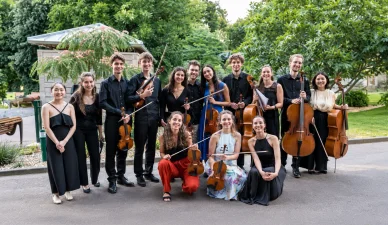
Nine musicians were on the bill for the 2021 edition.
Musician | Instrument | Background |
|---|---|---|
Ann-Estelle Médouze | Violin | Started the violin at a Suzuki school, then at 11 became a pupil of Tibor Varga in Sion (Switzerland). |
François Miquel | Clarinet | Born in Paris in 1971, he took up music at 13. First prizes in clarinet at the regional conservatoires of Boulogne-Billancourt, Rueil-Malmaison and Paris, and first prize in bass clarinet at the Paris district conservatoires. |
Guy-Loup Boisneau | Percussion and voice | Studied percussion from the age of 7 at the Nantes Conservatoire, as well as piano and opera singing. Master's in percussion performance at the Haute École de Musique de Genève in 2011. |
Claire Pigeot | Soprano | Began with intensive piano studies and won five first prizes, including at the CNSM in Lyon and the CRR in Paris. |
David Vainsot | Viola | Started the piano at 6 and the violin at 9. |
Manon Gillardot | Cello | Started the cello in Orléans, in Raphaële Sémézis's class. |
Jean-Sébastien Dureau | Piano | Studied at the CNSM in Paris and Lyon (first prizes in piano and chamber music, advanced course). In 1998, he met the Hungarian pianist and teacher György Sebök and followed his teaching in Bloomington, in the United States. |
Vincent Planès | Piano | Has worked with other artists in some of the finest international concert halls. |
Bastien Pelat | Flute | Took up the flute in Rodez, Aveyron. Gold medal, then first prize in the advanced course at the CNR in Lyon (José-Daniel Castellon's class), before joining the CNSMDP. |
Prices and Booking
At the 2018 edition, a concert cost €15 at full price, and personal passes called Sésames gave access to several concerts.
Ticket | Price |
|---|---|
Full price | €15 |
Reduced price (jobseekers, intermittent performing-arts workers, students, Carte sourire holders, RSA recipients, Réseau Aveyron Culture pass holders, groups of 10 or more) | €12 |
Under 18s and children | €6 |
“Enthousiaste” Sésame: personal pass valid for 3 concerts of your choice | €35 |
“Inconditionnel” Sésame: personal pass valid for all 8 concerts and the walk | €80 |
“Double-concert evening” Sésame: personal pass valid for one double-concert evening (3 or 9 August 2018) | €25 |
Musical walk on 4 August | €9, free for children |
On the evenings of 3 and 9 August 2018, the festival also offered a convivial meal, booked by e-mail or through the Sainte-Eulalie-de-Cernon tourist information office. In 2021, a single concert rose to €17 at full price and €5 for under-18s.
Tickets were sold online on Festik, a secure service that let buyers print their tickets and skip the queue at concert entrances. Phone bookings went through the Sainte-Eulalie-de-Cernon tourist information office and the Larzac et Vallées tourist office.
The booking form remained available on request by e-mail. Accommodation enquiries were referred to Tourisme Aveyron, and the association answered questions at [email protected].
Festival Venues
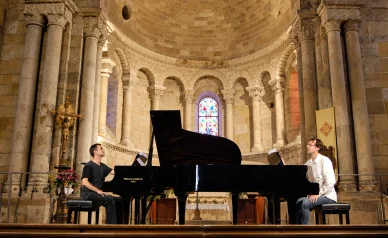
The festival took place in the villages of the Larzac plateau, in the heart of the Grands Causses Regional Natural Park. Its host communes included Nant, Sainte-Eulalie-de-Cernon, Saint-Jean-d'Alcas, Saint-Beaulize and Le Viala-du-Pas-de-Jaux.
Nant, Sainte-Eulalie-de-Cernon and Saint-Jean-d'Alcas were the festival's three emblematic villages. Concerts were held there in an abbey church, churches, a medieval courtyard, a farm and outdoors.
Village | Venues | Highlights |
|---|---|---|
Nant | Abbatiale Saint-Pierre, the banks of the stream under the walnut trees | Opening concert “Les Désarmés” (4 August 2016), “Dessine-moi une valse” (Draw Me a Waltz) evening preceded by a Viennese ball (4 August 2017), musical walk and Beethoven concert (6 August 2021) |
Sainte-Eulalie-de-Cernon | Church, medieval courtyard, station and Vélo-Rail | Opening recital “Berceuses, rêves et apparitions” (28 July 2019), the day of 7 August 2021 and the “Les Papillons” route |
Saint-Jean-d'Alcas | Church, farm | Choreographic premiere on Bach's Goldberg Variations at the farm (2016), the day of 8 August 2021 |
The association's activity also reached beyond the plateau. In February 2016, it organised a concert at the Maison du Peuple theatre in Millau, and the festival's Aveyron choir rehearsed at the Grange de Floyrac in 2017.
Festival News
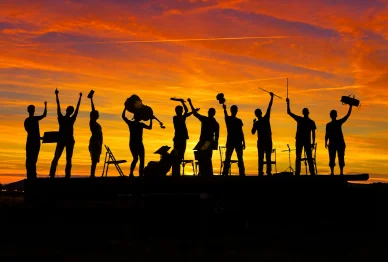
Between 2016 and 2021, the festival's news combined summer editions, off-season concerts and tours of its new works.
“Jeux du cœur et des mains” in Millau (February 2016)
To start 2016, the FMCL association invited audiences to the Maison du Peuple theatre in Millau on 12 February at 8:45pm. The programme brought together clarinet, cello and piano with Laurent Bienvenu, Valérie Aimard and Jean-Sébastien Dureau.
Alongside masterpieces by Brahms and Beethoven for this line-up came three pieces by Bruch, a bouquet of “Games” by Hungarian composer György Kurtág and a detour into mime around Lutosławski. Before the concert, educational workshops on mime, music and movement were held for primary school children.
The 12th Edition (Summer 2016)
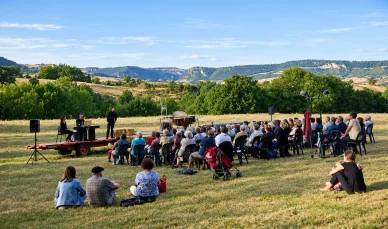
The 12th edition offered eight new concerts in the heart of the Grands Causses Regional Natural Park. Bach, Beethoven, Schubert, Schumann, Brahms, Ravel, Liszt, Bartók, Bizet and Xenakis sat alongside less-performed composers such as Berwald, Sibelius and Eisler. The young generation was represented by Martin Jost, James MacMillan, Othman Louati and David Fullmer.
Three new works and experiments marked this edition. During the musical walk, Guy-Loup Boisneau introduced audiences to Xenakis's Kassandra, performing the vocals, percussion and psaltery alone. Dancer Claire Durand-Drouhin and pianist Jean-Sébastien Dureau presented a choreographic premiere on Bach's Goldberg Variations at the farm in Saint-Jean-d'Alcas.
Clarinettist François Miquel wrote the score for Murnau's Faust for a cine-concert evening. On 4 August 2016, after several days of residency, the opening concert “Les Désarmés” brought together works by Purcell, Schubert, Jost and Ravel in the choir of Nant's abbey church.
The edition required two weeks of intense work: rehearsals, stage set-up, dance floors and projection screens, setting out chairs and lighting, receiving the pianos, sound recording, stage management and meals. Despite this success, the financial situation remained difficult, and the fundraising campaign launched in July to balance the 2016 budget continued after the festival.
“Who's Bach?” on Tour (December 2016)
Claire Durand-Drouhin's choreography on the Goldberg Variations, played by Jean-Sébastien Dureau, continued its journey after its premiere at the Alcas farm. The show “Who's Bach?” visited Limoges in November, Foix in December, Limoux in June and Arcachon in September.
“Faust” at Le Balzac Cinema in Paris (April 2017)
The festival's 2016 new work was performed again at Le Balzac cinema in Paris on Thursday 27 April 2017 at 8:30pm. Sara Wolstenholme, François Miquel, Marie Bitlloch and Jean-Sébastien Dureau played François Miquel's score for Murnau's masterpiece once more.
Aveyron Choir Rehearsals at the Grange de Floyrac (May 2017)
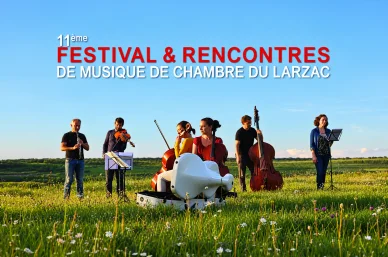
The festival's Aveyron choir members rehearsed for a weekend at the Grange de Floyrac, conducted by Jean-Pierre Cau, with pianists Romain Louveau and Jean-Sébastien Dureau. They were preparing Brahms's Love Song Waltzes (Liebeslieder-Walzer).
Another session was planned for 10 and 11 June, ahead of the “Dessine-moi une valse” (Draw Me a Waltz) concert on 4 August at the abbey church in Nant. This evening devoted entirely to the waltz was preceded by a Viennese ball open to all.
Opening of the 15th Edition with Shigeko Hata (July 2019)
On 28 July 2019 at 9pm, soprano Shigeko Hata and Jean-Sébastien Dureau opened the 15th edition at the church in Sainte-Eulalie-de-Cernon. Their recital “Berceuses, rêves et apparitions” (Lullabies, Dreams and Apparitions) invited listeners to travel and dream.
The first half offered a world tour of lullabies by Brahms, Yamada, Schubert, De Falla, Ginastera and Strauss. Night songs by Mozart, Brahms and Berg then led into the night and the mystery of dreams, up to Schubert's “Nacht und Träume”.
The second half turned to the evening of life with Mozart's “Abendempfindung”, in which the composer calmly evokes his future death. The recital ended with George Crumb's cycle “Apparition”, based on the poem Walt Whitman wrote after President Lincoln's assassination. The American composer turned 90 in October 2019.
A New Format Announced for 2021 (May 2021)
Like the whole cultural sector, the festival was hit hard by the upheavals of 2020. For 2021, the team wanted to keep its commitment to the area and adapt its offer to the health situation.
The aim was also to meet the needs of audiences and artists and to take part in the revival of cultural life. The detailed programme for the edition was unveiled on 24 June 2021.
Supporting the Association
Individuals and companies could support the association by becoming patrons of the Festival & Rencontres de Musique de Chambre du Larzac. Donations helped defend its work, make the 2019 edition possible and maintain its low-price policy.
Whatever their amount, donations were used solely for the smooth running of the festival, with real care for economy. Tax provisions for private patronage gave the right to tax reductions that lowered the real cost of giving. A support form for the association was available to download.
For Individuals
Any donation by an individual gave the right to a tax reduction equal to 66% of the amount given, up to an annual limit of 20% of taxable income.
Donation | Tax reduction | Real cost |
|---|---|---|
€50 | €33 | €17 |
€100 | €66 | €34 |
€250 | €165 | €85 |
€500 | €330 | €170 |
For Companies
Any donation by a company, in cash, in skills or in kind, gave the right to a tax reduction equal to 60% of its amount, up to 5‰ of turnover excluding tax. Depending on the amount, the company received invitations and preferential rates for concerts, as well as promotion in the festival's communications.
Donation | Tax reduction | Real cost |
|---|---|---|
€100 | €60 | €40 |
€500 | €300 | €200 |
€1,000 | €600 | €400 |
€2,000 | €1,200 | €800 |
Festival Partners
The festival was supported by local authorities, rights management organisations, a music network, two banks and a radio station.
Partner | Category |
|---|---|
Conseil départemental de l'Aveyron (Aveyron Departmental Council) | Local authority |
Région Occitanie (Occitanie Region) | Local authority |
Commune of Nant, in partnership with the town of Millau | Local authorities |
Commune of Sainte-Eulalie-de-Cernon | Local authority |
Aveyron Culture | Culture |
SPEDIDAM | Collecting society for performers' rights (recording, broadcasting and reuse of recorded performances) |
SACEM | Authors' rights |
Musique Nouvelle en Liberté | Classical and contemporary music network |
Caisse d'Épargne Midi-Pyrénées | Bank |
Crédit Agricole Nord Midi-Pyrénées | Bank |
Radio Larzac | Radio |
Conclusion: The Fallow Year of 2022
After 16 editions between 2005 and 2021, the Festival & Rencontres de Musique de Chambre du Larzac association was unable to hold a festival in 2022. This difficult decision was necessary after the last editions, which had strained its modest structure.
The association promised to keep the public informed of its future plans and called for all the ideas and energy that could bring new momentum. It hoped that the festival's friends and the local authorities attached to the event would make a fresh start possible.
Over these 16 years of ambitious and innovative programmes, the festival could count on many supporters, partners, companies, technicians and volunteers. It brought audiences and musicians together in heritage sites of exceptional beauty and acoustics.
The team held on to one conviction: it is in wide-open natural spaces that artists and audiences are most open to experiencing chamber music in a different way.