UnionPay
You might have clicked on this article because you were asking yourself, “What is a UnionPay card?” The simple answer is that UnionPay supports credit and debit cards like Visa and Mastercard, making it just another option when it comes to which provider to choose.
The interesting thing about this particular provider is that it was founded in China and was originally the country’s national payment network, although it’s grown since its 2002 inception and now covers over 183 countries.
Definition Time: What is a UnionPay Card?
Overview of China UnionPay (2002–Present)
We can’t tell this story without first explaining what CUP is: an acronym for China UnionPay, the financial services provider behind the payment network on which debit and credit cards bearing its brand are issued. The two terms are similar but subtly different, with CUP referring to the company and UnionPay usually referring specifically to their payment cards.
CUP is known for operating a global payment network, much like the ones that Visa and Mastercard offer. These networks are what enable people to make purchases, withdraw cash from ATMs and carry out online transactions.
Based in China since its 2002 inception, CUP is the world’s largest payment organisation based on the number of cards issued, with over 260 million UnionPay cards outside mainland China and hundreds of millions more domestically. CUP’s network is active in over 183 countries, with UnionPay International taking on the global expansion.
How Their Payment Processing Network Works
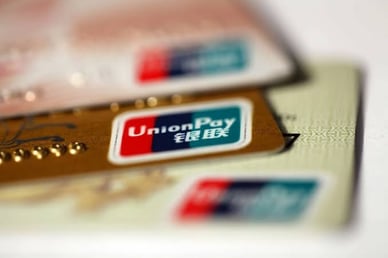
There’s nothing inherently different about how UnionPay works compared to any other network, and so this becomes a question of how payment processing networks function in general. Here’s how it works.
Instead of directly issuing cards themselves, CUP partners with banks and other financial providers to issue branded cards, just like how you can create an account at your local bank and ask for a Visa or a Mastercard.
When a customer goes to a shop and makes a purchase, CUP processes the transaction between the merchants and the cardholders, securely transferring the payment from one bank to another. Generally speaking, those transactions are free for the cardholders because the transaction fees are paid by the sellers. UnionPay also supports contactless payments and QR codes.
The Types of UnionPay Card to Choose From
Debit and PIN-Based Cards
These are the most common kinds of UnionPay cards, and with good reason.
Debit cards are perfect for daily use, and in fact the terms “bank card” and “debit card” are almost synonymous. They use PIN authentication (with PIN meaning “personal identification number”), although consumers are increasingly moving towards contactless payments instead. UnionPay hosts the world’s largest PIN network.
You can use your debit card all over the place, from withdrawing cash at an ATM to making payments at the point of sale and shopping online. It’s a safer alternative to paying in cash or using cheques, and the rise of mobile and contactless payments provides people with even more choice when it comes to how they spend their money.
Credit Cards for Revolving Purchases
When a debit card doesn’t quite cut it, the logical choice is to turn to a credit card instead.
The great thing about UnionPay credit cards is that they provide you with the ability to buy now and pay later, which is ideal for larger purchases. They support ATM withdrawals and point-of-sale transactions, and they can also be used for mail and telephone orders or for setting up recurring payments.
However, bear in mind that you can expect to pay interest on unpaid balances, and so they’re best used for revolving purchases where you borrow, repay and borrow again. It’s also worth shopping around and looking at your different options, because some premium credit cards offer additional benefits such as special discounts or reward schemes.
Reloadable and Prepaid Cards
If neither a credit card nor a debit card is right for you, don’t panic. That’s where prepaid cards come in, providing a safer alternative to cash that’s ideal for everything from budgeting and planning travel to giving away as a gift for birthdays and at Christmas. Just bear in mind that in some jurisdictions, you may need to complete “know your customer” checks.
You can pick up either a reloadable or a non-reloadable UnionPay card, with the reloadable kind able to be topped up after the initial cash injection. They can be used in the same way as any other card, which means you can shop both online and offline and use ATMs to take the money out.
Premium Cards for Business Use
If you’re a business user, UnionPay also has a range of premium cards that are designed with professional usage in mind. The options here include:
- Business Card: Designed for small businesses, sole traders and entrepreneurs
- Corporate Card: For larger businesses, providing more detailed reporting and VAT management
- Purchasing Card: Allows managers to have greater control over employee spending
- Belt & Road Commercial Card: Ideal for cross-border purchases
- Diamond Card: A premium card offering VIP healthcare, insurance and airport lounge access
- Platinum Card: Another premium card with lounge access and concierge services
On top of this, they also have cards like Travel Mate and Asia Prestige which are travel-themed and designed to support you as you explore the world.
Features and Benefits of UnionPay
Acceptance in 183 Countries
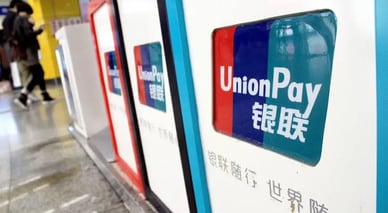
One of the biggest reasons why UnionPay cards are so popular is that the company has a global presence, being accepted in over 183 countries around the world and supported by millions of merchants.
On top of that, there are over 40 million ATMs that accept withdrawals, and acceptance is particularly high in Asia (and in China, Thailand, Malaysia and Singapore most of all). The acceptance rates are a little lower elsewhere, but acceptance is growing throughout Europe and North America and it’s more than good enough to get the job done.
QuickPass, QR Codes and Other Innovations
China UnionPay has a huge amount of resources to play with, and it’s been able to use those resources to develop some useful technology for its customers.
For example, there’s Mobile QuickPass, a handy little feature that enables shoppers to make contactless payments through their smartphones and smartwatches using NFC-enabled transactions. They can tap and pay without needing to open an app.
UnionPay also supports fingerprint and facial recognition and is compatible with most major devices, including Huawei phones, iPhones and Apple Watches. You can make payments through QR codes and easily transfer funds from person to person, and they also have a branded app with 240 million users at the time of writing.
UnionPay’s system is used by 30 million merchants in China and eight million more throughout the world.
Chip and PIN, Tokenization and Other Security Features
Like most debit and credit card providers, UnionPay uses chip and PIN technology as its first port of call for securing transactions. They also use tokenization for securing digital card data, a technique which relies on replacing key data such as card numbers with encrypted codes to reduce the chances of your card being cloned.
Other security techniques include real-time risk monitoring, which aims to stop suspicious transactions as and when they occur, and zero liability policies for unauthorised transactions. This latter approach means that the cardholder will never be punished if they fall victim to a financial attack.
On top of all of this, cardholders can manage their bank cards through the UnionPay app, freezing them at will and cancelling them easily if the card is lost. That makes them a lot more secure than traditional magnetic stripe cards.
UnionPay in Ireland Acceptance Rates
Availability Amongst Merchants
As we’ve mentioned, there’s fairly widespread acceptance of UnionPay in Ireland, although it’s not quite as widely accepted as its competitors, Visa and Mastercard. Still, you’ll find that it’s commonly accepted by merchants ranging from hotels and tourist attractions to retail chains and more. As a general rule, you’re more likely to find that it’s accepted in airports and city centres than small villages and mom and pop stores.
Meanwhile, ATM withdrawals are supported at Euronet ATMs across the country, and contactless payments are well supported at compatible terminals, too. The result is a decent alternative to Visa and Mastercard, as well as the obvious first choice for Chinese tourists who are visiting the country.
Issuing and Availability in Ireland
For Irish residents who want to obtain a UnionPay card, the process isn’t as easy as it could be. No major Irish banks are currently issuing UnionPay cards directly, and so the only solution is to take an alternative route.
One option is to open an account with a Chinese bank, although this requires Chinese residency or a Chinese business. More commonly, people use specialised fintech services that offer UnionPay cards, with a few UK and EU financial platforms partnering with UnionPay to provide alternative payment solutions.
Still, UnionPay cards aren’t designed with Irish users in mind, and so the majority of Irish residents will find that they’re better served by Visa or Mastercard. It’s just nice to know that UnionPay is an option.
Why UnionPay is Great for Tourists
Using UnionPay When You Travel to Ireland
By now, you should have a good idea of why people turn to UnionPay, especially if they’re Chinese tourists who are travelling abroad. The great thing about using UnionPay when you travel to Ireland is that you can bring your existing card and be sure that it’ll be accepted at the majority of the places you visit, especially if you stay in the tourist spots.
Better still, cardholders can withdraw Euros from compatible ATMs even when their balances are in Chinese yuan, which is often more convenient than visiting a currency exchange. In fact, the conversion rates are fairly competitive, with special discounts at participating merchants including some of the country’s luxury brands.
Remember, too, that using a UnionPay card is safer than carrying cash, and it’s often more convenient thanks to its support of mobile and contactless payments. There’s even a useful app that will help you to find participating merchants in the local area.
The Benefits of UnionPay for Merchants
There are some pretty obvious advantages to sellers who accept UnionPay in Ireland, starting with the fact that it allows them to tap into the huge market of Chinese tourists. They’re a major spending demographic throughout the world, with millions of outbound travellers every year.
Merchants can also benefit from competitive transaction fees, with the company’s real-time authorisation and settlement tools helping to fight fraud and preserve cash flow. UnionPay also does what it can to promote any business that accepts it, even if that’s just through its customer-facing smartphone app.
Ultimately, accepting UnionPay builds trust amongst Chinese customers, increasing the likelihood that they’ll spend their money with you. It provides a competitive advantage throughout the year, but particularly during tourist season.
UnionPay Card Alternatives
Visa, Mastercard and More
UnionPay is a huge payment network, but it still pales slightly in comparison to the biggest players in the industry. Both Visa and Mastercard are known for their global dominance, with them both serving over 200 countries. UnionPay, by comparison, is available in just over 180, which is still pretty good but not quite on the same level as those industry leaders.
As for Ireland in particular, Visa and Mastercard both have an acceptance rate of over 95%, while UnionPay’s is a little lower. It’s still accepted widely enough that it’s unlikely to be a huge problem, though.
UnionPay is the largest payment network by the total number of cards issued, mostly because of the size of the Chinese market, while Visa comes out on top in terms of the number of transactions. All three are roughly comparable when it comes to merchant fees, security features and other bundled add-ons.
UnionPay Use Cases and Scenarios
There are a number of different reasons why you might want to use UnionPay, whether you’re a tourist from China or Ireland-based but planning to travel the other way.
In fact, if you’re travelling to China then you’d be crazy not to sign up for a UnionPay card, because that’s the market with the most widespread acceptance. It’s also a good idea to pick one up if you’re travelling elsewhere in Asia, where there’s still strong acceptance, or if you’re trying to make purchases from China or carry out cross-border business with Chinese companies.
With that said, while UnionPay is ideal for these use cases, it’s not great for daily use if you live in Ireland because of its more limited acceptance. And if you plan to travel but only in Europe, Visa or Mastercard is usually a better option.
UnionPay Future Expansion Plans
Partnerships for Growth in Europe
As we’ve seen, UnionPay already has a strong presence in Europe, but it also seems keen to build upon that and grow even further in the years to come.
Increasing the number of partnerships with European banks is key to its expansion plan, as more bank partnerships mean more cards will be issued and that in turn will increase the demand for merchants to support the network. It is also looking at cementing its integration with digital wallets, expanding support for mobile contactless payments through platforms like Apple Pay and its own UnionPay App QR code infrastructure.
Strategically, China UnionPay also has a strong interest in growing Chinese tourism in a post-pandemic world, as well as in encouraging more spending on duty-free shopping and supporting the education sector and Chinese students. However, it is facing an uphill battle thanks to the dominance of Visa and Mastercard and the lower customer awareness for the UnionPay brand.
Guide Summary and Key Info
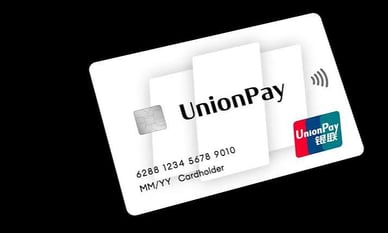
In summary, UnionPay is China’s largest payment network, growing to become the largest in the world by cards issued since its 2002 establishment. Accepted in over 183 countries, the company offers a number of different cards in partnership with local banks. They include:
- Debit cards: PIN-based and linked to a current account
- Credit cards: Revolving credit line
- Prepaid cards: Both reloadable and non-reloadable
- Commercial: For business expenses
- Premium: Diamond and Platinum cards
Despite the network being based in China, you can also use UnionPay in Ireland, although acceptance isn’t quite as high as the 98% it enjoys in its home country. Still, it’s growing in popularity in Europe and North America, with over 40 million compatible ATMs around the world.
Irish residents are better off sticking with their Visa or Mastercard, but Chinese tourists and students can safely use their UnionPay cards throughout the Emerald Isle. There are also a number of merchant discounts available, and UnionPay cards are just as secure as those of its competitors.