Natural History Museum
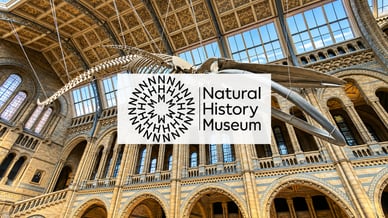
The Natural History Museum is one of the largest natural history museums in the world, situated in the South Kensington area of London. It is located on Cromwell Road, close to two other famous cultural institutions – the Science Museum and the Victoria and Albert Museum.
The Natural History Museum’s exhibitions focus on the history of the Earth, the animal kingdom, minerals and prehistoric creatures. Among its famous exhibits are dinosaur skeletons, ancient fossils and the skeleton of a blue whale.
Name | Natural History Museum |
Type | Natural history museum and scientific research centre |
Established | 1881 |
Location | South Kensington, London, United Kingdom |
Address | Cromwell Road, South Kensington, London SW7 5BD, UK |
Coordinates | 51°29′46″N 00°10′35″W |
Founder | Richard Owen |
Architect | Alfred Waterhouse |
Director | Dr Doug Gurr (since December 2020) |
The museum’s collection | Over 80 million specimens across five main fields:
|
Number of visitors per year | Over 7.1 million visitors |
Tickets | Free general admission (advance online booking for timed entry is recommended to skip queues; special temporary exhibitions require paid tickets) |
Opening hours | Daily: 10:00 am – 5:50 pm (last entry at 5:30 pm) |
Duration of the museum tour | Approximately 3 – 4 hours |
Official website |
History and description of the museum
The history of the Natural History Museum began in 1753, when the state acquired the collection of the British physician and naturalist Sir Hans Sloane. The collection comprised thousands of natural specimens, minerals, plants and artefacts, which were initially housed in the British Museum.
In the 19th century, the museum’s collection expanded, and the need arose for a separate building. On the initiative of the scientist Sir Richard Owen, the architect Alfred Waterhouse designed the new museum, including its interior and exterior. Construction began in 1873, and the museum opened on 18 April 1881.
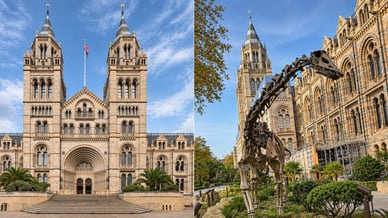
Natural History Museum – The exterior of the building
The building is in the Neo-Romanesque style, clad in terracotta and adorned with sculptures of animals and plants. In 1992, the institution was officially named the Natural History Museum. Today, it houses exhibition galleries and a research centre.
Key exhibits and zones
The Natural History Museum’s collection comprises over 80 million items relating to the history of the Earth, the animal kingdom, evolution and geological processes. The exhibits are organised into several themed zones, each of which explores a distinct area of the natural sciences.
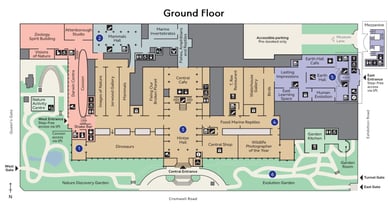
Natural History Museum – Ground Floor
- Hintze Hall: The museum’s main hall houses the skeleton of a blue whale named Hope, suspended from the ceiling. It is approximately 25 metres long. This hall also displays fossils and other natural specimens.
- Dinosaurs Gallery: This gallery is dedicated to dinosaurs and other prehistoric animals. Among the exhibits are skeletons of ancient reptiles and an animatronic model of a Tyrannosaurus rex that mimics the predator’s movements.
- Mammals Gallery: This gallery houses a collection of stuffed mammals from all corners of the globe. The exhibition allows visitors to compare the sizes and anatomical features of the animals, as well as to learn about how they have adapted to different habitats.
- Earth Hall: This hall explores the geological history of the Earth. Among the exhibits are one of the most complete Stegosaurus skeletons, minerals, gemstones and a fragment of a moon rock.
- The Vault: The Vault houses rare minerals, gemstones and unusual geological specimens. Among them are specimens of particular scientific and collectable value.
- Darwin Centre: The Darwin Centre is dedicated to the museum’s scientific work and the study of its extensive collections. In The Cocoon, visitors can learn about research methods, classifications and the specifics of preserving natural specimens. In addition to The Cocoon, the centre houses the Zoology Spirit Building, which contains a collection of specimens preserved in alcohol solutions.
- Fixing Our Broken Planet: The gallery opened in 2025 and explores contemporary environmental issues. The main themes are climate change, biodiversity loss, ecosystem restoration and the search for ways to use natural resources more sustainably.
- Museum Gardens: The gardens surround the museum building and serve as an open-air natural exhibition. They feature local plants and small natural habitats designed to provide a home for insects and other animals. The refurbished gardens opened on 18 July 2024.
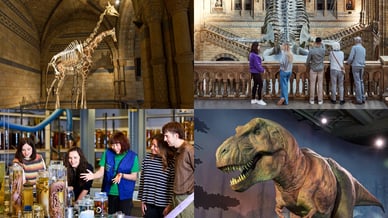
Natural History Museum – Exhibits
Opening hours
The Natural History Museum is open daily from 10:00 am to 5:50 pm. Last admission is at 5:30 pm. The museum is closed on 24, 25 and 26 December. There may be additional closures on certain dates, so it is advisable to check the official website before visiting.

Inside the Stunning Natural History Museum of London
Tickets
Entry to the permanent galleries at the Natural History Museum is free. To guarantee your visit, we recommend booking a ticket in advance via the official website. Entry without a booking is possible subject to availability.
A separate charge applies for temporary exhibitions and special events. The following prices apply in November 2026:
- Jurassic Oceans: Monsters of the Deep – from £15.00 – 17.50 for adults and from £7.50 – 8.75 for children.
- Wildlife Photographer of the Year – from £17.00 – 21.00 for adults and from £8.50 – 10.50 for children.
- Visions of Nature – £9.95 for adults and children.
Prices vary depending on the date of your visit. Tickets at weekends and during school holidays may be more expensive. Museum members enjoy free entry to certain exhibitions and discounts on selected events.
Tickets for the exhibitions listed above include access to the museum’s permanent galleries after viewing the exhibition.
Reviews
The Natural History Museum is popular with tourists and Londoners alike. On Tripadvisor, the museum has a rating of 4.5 out of 5 based on nearly 39,000 reviews and has been awarded the Travellers’ Choice Best of the Best 2026.
In positive reviews, visitors most often mention:
- the building’s impressive architecture and the design of the galleries;
- the blue whale skeleton in Hintze Hall;
- the variety of exhibits and interesting displays about dinosaurs;
- the opportunity to spend time with children;
- free entry to the permanent galleries.
Among the drawbacks, visitors sometimes mention the large number of visitors, queues at the entrance and the difficulty of finding your way around the vast building on your own. Some visitors advise planning your route in advance and setting aside several hours for the visit.
Mr. Brown:
Very beautiful journey through the history of the Earth's evolution. Suitable for adults and children.
Contact details and location
The Natural History Museum is situated in the South Kensington area, in the western part of central London. The Science Museum and the Victoria and Albert Museum are nearby, so you can combine a visit to several cultural institutions into a single outing.
Address: Cromwell Road, London SW7 5BD, United Kingdom
There are several ways to get to the museum:
- By Underground: the nearest station is South Kensington. It is about a five-minute walk from there to the main entrance. The Piccadilly, District and Circle lines stop here.
- By bus: several city bus routes stop near the museum.
- By car: the museum does not have its own public car park, and the number of parking spaces on the surrounding streets is limited.
Special Blue Badge parking spaces are available for visitors with disabilities. The number of these spaces on the museum grounds is limited, so it is recommended that you book in advance by telephone. There are also 12 parking spaces for Blue Badge holders on Exhibition Road.
Telephone: +44 (0)20 7942 5000 (Monday – Sunday: 9:00 am – 5:00 pm)
Social media


FAQ
Where is the Natural History Museum?
The museum is situated in the South Kensington area of London, at Cromwell Road, London SW7 5BD.
Is entry to the Natural History Museum free?
Yes, entry to the permanent galleries is free. Temporary exhibitions and special events are charged separately. To ensure you can visit, it is recommended that you book your ticket in advance.
What are the museum’s opening hours?
The Natural History Museum is open daily from 10:00 am to 5:50 pm. Last admission is at 5:30 pm. The museum is closed on 24 – 26 December. Before your visit, it is worth checking the official website for any changes to the opening hours.
How long does a visit take?
You should allow 3 – 4 hours to see the main exhibitions at the Natural History Museum. If you plan to visit all the main galleries and the Museum Gardens, it is best to set aside half a day.
When was the Natural History Museum built?
Construction of the building began in the spring of 1873, based on a design by the architect Alfred Waterhouse. The museum opened to the public on 18 April 1881.