Churchill War Rooms
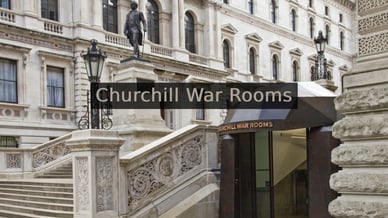
Right in the heart of London, not far from the Houses of Parliament and the Prime Minister’s official residence, lies the Churchill War Rooms museum. It is situated underground, in the very rooms where Winston Churchill and members of the British government worked during the Second World War. Inside the bunker, they discussed the military situation, made important decisions and coordinated the country’s response during one of the most difficult periods in its history.
Today, visitors have the opportunity to walk through the underground corridors, look into the offices, see the preserved wartime décor and learn about Winston Churchill’s life. Today, it is one of five branches of the Imperial War Museum, where the atmosphere of the 1940s has been fully preserved.
Name | Churchill War Rooms |
Type | Historical underground bunker and biographical museum |
Established | 1984 (opened to the public by Queen Elizabeth II) |
Location | Westminster, London, United Kingdom |
Address | Clive Steps, King Charles Street, London, SW1A 2AQ |
Number of visitors | Approximately 500,000+ annually |
Main exhibitions |
|
Tickets |
|
Opening hours |
|
Duration of the museum tour | From 1.5 to 2.5 hours |
Official website |
History and description of the museum
The history of the Churchill War Rooms began in 1938, when the British authorities began preparing for a possible war with Germany. A protected command centre needed to be set up in London from which the government could continue to operate even during air raids.
The basement of the New Public Offices in the Whitehall area, beneath the building that now houses HM Treasury, was chosen for this purpose. Construction and refurbishment of the premises began in June 1938. The work included reinforcing the structures, fitting ventilation systems, installing communications equipment and providing protection against potential flooding.
On 27 August 1939, the Cabinet War Rooms became fully operational. This took place just one week before Britain declared war on Germany.
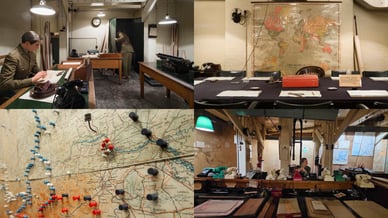
Churchill War Rooms – Images of the events of 1939
During the Second World War, the War Rooms served as the country’s underground command centre. Ministers, military personnel, analysts and communications staff worked here. Winston Churchill held meetings, discussed the situation on the fronts and made decisions, including during the air raids on London.
The war rooms remained in use throughout the Second World War until they were abandoned in August 1945 following Japan’s surrender. The headquarters ceased to operate as before, and some of the premises were later put to other uses. The historic rooms have been preserved.
In April 1984, the Cabinet War Rooms were opened to the public under the management of the Imperial War Museum. In 2005, an exhibition on the life of Winston Churchill was launched here, and in 2010 the museum was given its current name, the Churchill War Rooms.
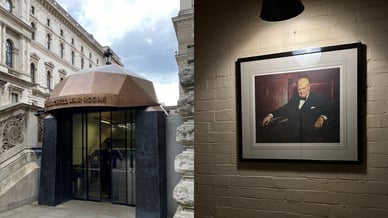
The Churchill War Rooms today
What is there to see?
A visit to the Churchill War Rooms is of interest not only to military history enthusiasts, but also to those who wish to gain a better understanding of the day-to-day workings of the British government during the war years.
The museum consists of two main parts:
- The Cabinet War Rooms: An extensive network of underground corridors and rooms where fateful decisions were made. Everything has been left exactly as it was on the day the bunker was closed in August 1945 – from the maps on the walls to the officers’ personal belongings.
- The Churchill Museum: An interactive biographical exhibition dedicated to the life, political career and legacy of Sir Winston Churchill.
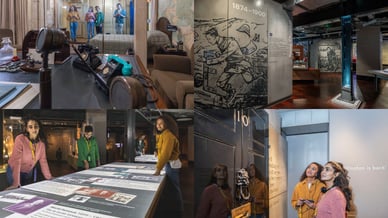
The Cabinet War Rooms and the Churchill Museum
Key locations
The Map Room: The heart of the bunker, where service personnel from the three branches of the armed forces gathered intelligence round the clock and plotted troop movements on maps. Traces of pins and marks made with coloured pencils are still visible on the walls.

The Map Room at the Cabinet War Rooms
The Cabinet Room: The main room where Winston Churchill held 115 cabinet meetings. Scratches are still visible on the armrests of his chair, left by his fingernails during tense discussions of news from the front.
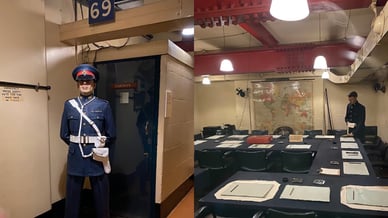
The Cabinet Room
The Transatlantic Telephone Room: A tiny room disguised as a toilet, from where Churchill conducted top-secret, encrypted conversations with US President Franklin Roosevelt using the SIGSALY system.
The Prime Minister’s Bedroom: A room fitted out for Churchill’s rest, which also contained a desk with a BBC microphone, from which he delivered his famous wartime radio addresses to the nation.
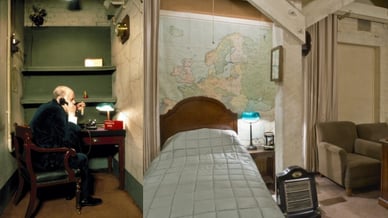
The Prime Minister’s telephone room and bedroom
The Churchill Museum: A dedicated exhibition explores the life and political career of Winston Churchill. It features photographs, letters, personal effects, documents and transcripts of his famous speeches. Interactive displays help visitors learn more about his family, his work and his role in the history of the United Kingdom.
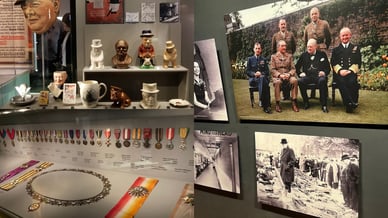
The Churchill Museum
Opening hours
Here is detailed information about the opening hours of the Churchill War Rooms:
- Standard opening hours: Daily from 9:30 am to 6:00 pm;
- Last admission: 5:00 pm (visitors are no longer admitted one hour before closing);
- Public holidays and special days: 24, 25 and 26 December – the museum is completely closed (Christmas holidays);
- 6 December – shortened opening hours (the museum closes earlier, entry is permitted until 3:00 pm).
Tickets
There is an admission charge for the Churchill War Rooms. The price depends on the visitor’s age and category.
Category | Ticket price |
|---|---|
IWM member | Free |
Adult | £34.00 |
Child (Aged 5 to 15) | £17.00 |
Child (Under 5) | Free |
Senior 65+, student, disabled | £30.60 |
One carer to assist each disabled visitor | Free |
Children under the age of 16 are only permitted to visit the museum when accompanied by an adult. Even though entry is free, you must select the appropriate ticket for children under five when booking. It is best to buy tickets in advance via the Imperial War Museums’ official website. When booking, you will need to select a date and an available time slot.

Visit Churchill War Rooms
Reviews
The Churchill War Rooms attract travellers interested in the history of the United Kingdom and the Second World War. The attraction’s page on TripAdvisor features over 24,000 reviews.
Visitors appreciate the opportunity to explore a genuine underground command centre, see the preserved interiors and view Winston Churchill’s personal belongings. The Map Room is of particular interest, as the atmosphere of a wartime command centre can still be felt there. However, it is worth bearing in mind the nature of the museum: most of the exhibition is located underground, in narrow corridors and small rooms.
Linda:
We were there on Wednesday at 3.00 pm. Yes it was crowded but not so much that it ruined it for us. The audio guide is invaluable for someone like me who isn't as well versed in history as my husband is. It is something to see so don't skip this sight if you love history.
Contact details and location
The Churchill War Rooms are situated in central London, in the Westminster area.
The museum’s address is: Clive Steps, King Charles Street, London SW1A 2AQ.
The nearest Underground station is Westminster, served by the Jubilee, District and Circle lines. It takes about four minutes to walk from the station to the museum. Another convenient option is St James’s Park, served by the District and Circle lines. The walk from there takes around seven minutes.
The museum does not have its own car park. There are paid on-street parking spaces and commercial car parks in the surrounding area. One option is Q-Park Victoria, located about a ten-minute walk away.
Telephone number: +44 (0)20 7416 5000.
FAQ
Where are the Churchill War Rooms?
The museum is situated in central London, in the Westminster area. Address: Clive Steps, King Charles Street, London SW1A 2AQ. The nearest Underground station is Westminster.
How much does it cost to visit the museum?
An adult ticket costs £34.00, and a child’s ticket (for visitors aged 5 to 15) costs £17.00. Children under five go in free of charge, but a ticket must still be issued for them.
What are the museum’s opening hours?
According to the timetable: daily from 9.30 am to 6.00 pm, last entry at 5.00 pm. Please check for any changes to the timetable before your visit.
How long does a visit take?
We recommend allowing around 1.5 to 2.5 hours for your visit.