The Kingdom of Saudi Arabia: A Rich Past, a Thriving Present, and a Promising Future
The Kingdom of Saudi Arabia is an Arab country with major political and economic weight in the Middle East. Its capital is Riyadh. The country lies at the center of the Arabian Peninsula and stretches across most of its area. King Abdulaziz Al Saud founded the Kingdom in 1932 after a long struggle.
Saudi Arabia holds a special place for Muslims. It is home to the holiest sites in Islam, Mecca and Medina, which earned it the title "Heart of the Islamic World." Its king, in turn, carries the title "Custodian of the Two Holy Mosques." Since the discovery of oil in 1938, the Kingdom has risen steadily in political and economic terms. As a result, it gained strong influence over regional politics. With the launch of Vision 2030, the country is going through unprecedented scientific, economic, and cultural change. Wide investment in technology has also strengthened its global standing.

General Information and National Symbols
Saudi national identity shows in long-standing symbols such as the flag, the emblem, and the national anthem. Together, they reflect the unity of the people and the depth of their authentic heritage.
The Name
The name of the Kingdom of Saudi Arabia comes directly from the ruling Al Saud family. Imam Muhammad bin Saud planted the family's roots in the 18th century. After King Abdulaziz worked to unify the country, the official declaration of the Kingdom of Saudi Arabia came in 1932. From then on, the state's name became a symbol of one land and one people under a single banner.
The Flag
The flag of the Kingdom of Saudi Arabia has a green background. On it, the declaration of monotheism appears in Arabic calligraphy: "There is no god but Allah; Muhammad is the Messenger of Allah." A white sword lies beneath the text. Green stands for Islam and life, while the sword represents resolve in defending the faith and the homeland. Saudi Arabia's flag also follows a unique protocol: it never flies at half-mast, even in times of mourning. This rule shows respect for the Shahada written on it. Since 2023, the country has marked Flag Day every March 11.
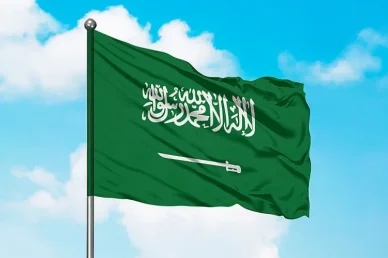
The flag of the Kingdom of Saudi Arabia stands as a symbol of pride and unification, bearing the Shahada and the sword of justice, thereby reflecting a deeply rooted national identity
The Emblem
The emblem of the Kingdom of Saudi Arabia shows two crossed swords with a palm tree above them. These swords symbolize the strength and resilience that have marked the state throughout its history. In turn, the palm tree points to prosperity, growth, and a flourishing land. The emblem represents a balance between firmness and fertility. It appears on official documents and forms a core part of national identity.
The National Anthem
The Kingdom's national anthem, "Aash Al Maleek" ("Long Live the King"), expresses loyalty and belonging. People sing it at national and sports occasions, such as the FIFA World Cup or official celebrations. The anthem symbolizes pride in the nation's achievements and respect for the King's position.
Weights and Measures
Saudi Arabia uses the metric system for weights and measures, like most countries in the world. Official, scientific, and commercial fields all rely on the kilogram, the meter, and the liter.
Geography and Environment
With vast land and varied regions, the Kingdom has a unique natural environment, which we review below:
Location, Area, and Borders

Saudi Arabia Map Explained 🇸🇦 | Provinces of Saudi Arabia Explained
On a map of Saudi Arabia, the country holds a strategic location in Southwest Asia. It covers most of the Arabian Peninsula, with a total area of about 2.15 million square kilometers. This makes it the largest country in the Middle East. It sits between the Red Sea to the west and the Arabian Gulf to the east. From this position, it directly overlooks the world's most important shipping and trade routes.
Jordan and Iraq border the country to the north, and Kuwait lies to the northeast. To the east lie Qatar and the United Arab Emirates. Its southeastern neighbor is the Sultanate of Oman, and Yemen lies to the south. The King Fahd Causeway connects the Kingdom with Bahrain. It opened in 1986 and has boosted transport and contact between the two countries. Its Red Sea coast runs for about 1,830 kilometers, and its Gulf coast adds more than 600 kilometers.
Topography
The country has wide natural variety that matches its large area and geographic position. Vast deserts, mountain ranges, fertile coastal plains, and deep valleys come together in one complete picture. This terrain gives the country a unique mix of environments and landforms.

SAUDI ARABIA: A Side You’ve Never Seen | 4K Documentary
Deserts
The Kingdom has three main deserts. In the southeast lies the Rub' al Khali (Empty Quarter), the largest continuous sand desert in the world. The Great Nafud in the north has red dunes. Between them, the Ad-Dahna Desert forms a strip of sand that links the two.
Mountains
The Sarawat Mountains run along the west coast. They include the Hejaz ranges in the north and the Asir ranges in the south. Green highlands and mild weather set them apart. The chain includes Jabal Sawda, the highest peak in the Kingdom at over 3,000 meters.
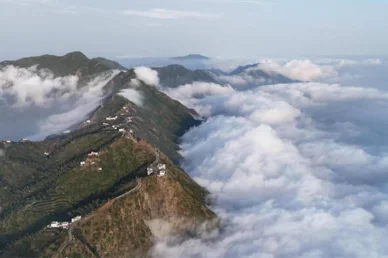
The mountainous highlands in the south of the Kingdom of Saudi Arabia are distinguished by their enchanting greenery and temperate climate, where peaks embrace the clouds in a breathtaking scene
Coastal Plains and Plateaus
Along the Red Sea, the long and narrow Tihamah plain stands out. The eastern coast faces the Arabian Gulf and has relatively low terrain. In the middle of the country lies the vast Najd plateau, the geographic and historical heart of the Kingdom.
Islands and Valleys
Saudi Arabia has many islands. The most prominent are the Farasan Islands in the Red Sea, a nature reserve rich in biodiversity. Large valleys such as Wadi ad-Dawasir and Wadi Hanifa also cross the land. They act as natural lifelines in a harsh desert environment.
Climate
Saudi Arabia's weather follows a mostly dry desert climate. High temperatures dominate in summer, while winter is milder and sometimes cold in some inland areas. Day and night temperatures also show a clear gap, especially in the deserts.
On the western and eastern coasts, relative humidity has a stronger effect. Summers there feel hot and humid, while winters stay milder. The southwestern highlands enjoy a gentler climate with seasonal summer rain, especially in Asir, Al-Baha, and Jazan.
Wildlife and Vegetation
Living things in Saudi Arabia have adapted to the harsh desert environment. Animals that can handle thirst and scarce food spread widely, such as camels and the Arabian oryx. After long protection efforts, the oryx has made a comeback. The desert is also home to several gazelle species, Arabian wolves, and migratory birds.
Most of the plant cover consists of drought-tolerant desert plants such as the date palm. The palm is the oldest and most important tree in the country. It also gives the dates that the Kingdom is famous for producing. The plant cover also includes grazing plants and seasonal herbs that grow after the rains. Mountain areas and the southwest have more varied vegetation thanks to their mild climate and seasonal rain. This gives them a green look that contrasts with the dominant desert scenery.
To keep pace with global environmental challenges, the Kingdom has launched major initiatives to protect biodiversity and fight desertification. One of the most prominent is the Saudi Green Initiative. It aims to plant billions of trees, expand green spaces, and cut carbon emissions. The Kingdom has also created nature reserves to protect wildlife on land and at sea. Examples include the Uruq Bani Ma'arid Reserve and the Farasan Islands Reserve.
History of the Kingdom of Saudi Arabia
The history of the Kingdom of Saudi Arabia has seen major shifts since ancient times. Early on, the land was home to civilizations and a center of trade. Later, it became the cradle of Islam. Attempts to unify the peninsula followed one another until King Abdulaziz succeeded in declaring the modern state in 1932. A new era of development and achievement then began. It reflects the nation's identity and the depth of the Kingdom's heritage.
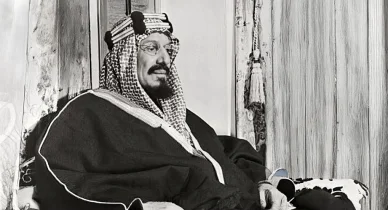
A historic black-and-white photograph of King Abdulaziz Al Saud, the founder of Saudi Arabia
History of the Arabian Peninsula
The Arabian Peninsula has a glorious history. Its geography and its position linking Asia, Africa, and Europe have been key to its importance through the ages. It was a crossing point for trade caravans and home to Arab tribes. These tribes later helped shape the features of cultural and Islamic identity. Trade routes through the Arabian Gulf and along the Red Sea coast tied the region to world markets. In this way, it became a central meeting point between civilizations.
Ancient History
Before Islam, the peninsula was home to notable civilizations such as the Nabataeans. They left striking remains at Al-Hijr (Mada'in Salih). Today it is one of the most important landmarks of the Kingdom of Saudi Arabia on the World Heritage List. The region also played a key role as a hub for trade and cultural exchange. Caravans carried incense, spices, and precious metals to many parts of the world.
Islamic History
The peninsula rose to greater prominence with the mission of the Prophet Muhammad (peace be upon him) in Mecca. From there, the message of Islam spread and changed the course of history. Ever since, the peninsula has been the religious and spiritual center of the Islamic world. This was especially true in the era of the Rashidun Caliphs. Muslims keep performing the Hajj and celebrating religious occasions such as Eid al-Fitr and Eid al-Adha. This has cemented the peninsula's place at the heart of the Muslim world.
The First Saudi State (1727-1818)
The political history of the modern Kingdom goes back to the mid-18th century. In 1744, Emir Muhammad bin Saud, the ruler of Diriyah, formed an alliance with Sheikh Muhammad ibn Abd al-Wahhab. Their goal was to build a political entity based on the true path of Islam. This alliance gave rise to the First Saudi State, with Diriyah as its capital. The state extended its influence over large parts of Najd and the edges of the region. It fell to an Ottoman military campaign in 1818.
The Second Saudi State (1824-1891)
After the fall of the first state, the Al Saud family revived it under Imam Turki bin Abdullah. He founded the Second Saudi State and made Riyadh its seat of government. This state faced serious challenges, chiefly internal disputes and the conflict with the Al Rashid family. It saw periods of relative stability, yet this phase ended with the state's fall once again. Still, it remained a bridge toward the later re-establishment of the state.
Unification and Contemporary History
The modern era began with King Abdulaziz's return. In 1902, he recaptured the capital, Riyadh, after the famous Battle of Masmak. It was the first step on a long, victorious road. He kept up his campaigns to unify Najd. Next, he turned west to the Hejaz and entered Mecca in 1924. He also extended his influence to the oil-rich Eastern Province (Al-Ahsa) and parts of the south (Asir and Jazan). His campaigns went on until 1932, when he declared the Kingdom. The new state united most of the Arabian Peninsula under one flag. On September 23, 1932, he officially proclaimed the "Kingdom of Saudi Arabia." The country has marked it as National Day every year since.

Soon after, an event radically changed the face of the Kingdom's economy. The first commercial oil discovery came in 1938, in the Dammam area of the Eastern Province. In the following decades, the oil boom became a key driver of faster development. The country invested its huge oil revenues in modern infrastructure, new schools and hospitals, and city development.
Government and Politics
The Kingdom is a monarchy. Its system combines the principles of Islamic Sharia with modern laws in running state affairs. The King is head of state, and since 2022 the Crown Prince has served as prime minister. Saudi government institutions such as the Council of Ministers and the Shura Council draft policies and give advice. Meanwhile, the judiciary plays a central role in delivering justice according to Sharia.
System of Government
The Kingdom's system of government is a monarchy. It rests on the principles of Islam and God's law (Sharia). The Basic Law of Governance acts as the constitution of the Kingdom of Saudi Arabia. It states that the Holy Quran and the Prophet's Sunnah are the highest reference. The King of the Kingdom of Saudi Arabia exercises his powers in three roles. He is head of state, supreme commander, and, under the Basic Law, head of the Council of Ministers. King Salman of Saudi Arabia has reigned since 2015. The Crown Prince helps the King run state affairs and secure continuity. This system forms a solid base for the development of the Kingdom of Saudi Arabia and its political stability.
Council of Ministers
The Council of Ministers is the highest executive body in the state. It drafts public policy and oversees ministries and government institutions. The King of Saudi Arabia chairs the sessions he attends. In 2022, an extraordinary royal order made the Crown Prince its head as Prime Minister. Key ministries in the council include Interior, Defense, Energy, Finance, and Education. The council discusses economic and development plans and contributes directly to the Kingdom's achievements in many fields. For this reason, it is a cornerstone of state administration.
Shura Council
The Shura Council is an important advisory body. To draw on national expertise and talent, the King appoints its members. The council helps review regulations and laws and gives its opinion on public policy. It also offers recommendations and proposals that support the country's development. Its role reflects the state's guiding principle of balance between tradition and modernity. It also shows the state's commitment to the principle of consultation in governance.
The Judiciary
The judicial system in Saudi Arabia relies mainly on Islamic Sharia, the highest reference for rulings and legislation. Courts fall into general and specialized types, such as personal status, commercial, and administrative courts. High bodies oversee this system, chiefly the Supreme Judicial Council. It organizes the affairs of courts and judges and monitors the course of justice. The Board of Grievances is also one of the most important judicial institutions. It strengthens judicial oversight of administrative decisions.
Foreign Relations

The Kingdom plays a central role on the international stage. It acts as a pillar of stability in the Middle East. Within the Gulf Cooperation Council, the state leads joint action. It works alongside prominent regional leaders such as Mohammed bin Zayed, President of the United Arab Emirates. He continues the approach of his father, Sheikh Zayed bin Sultan, in supporting Gulf unity. The Kingdom is also an active member of the Arab League and the Organization of Islamic Cooperation. Internationally, it plays a prominent role in the United Nations, OPEC, and the G20. This leading role strengthens its standing and confirms its strong presence in global forums.
Administrative Divisions and Major Cities
The Kingdom has adopted an integrated administrative structure. It secures sound management of state affairs and balanced development across regions. The country consists of administrative regions, each with its own cultural and geographic character. In addition, several major Saudi cities act as political, economic, and religious centers. Examples include the capital, Riyadh, along with the two holy cities.
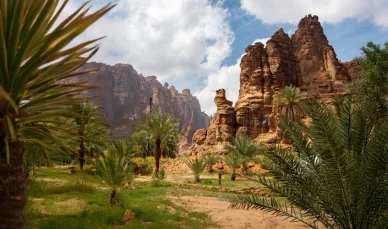
A green oasis and palm trees surrounded by towering rocky mountains in AlUla Governorate
Administrative Regions
The Kingdom has 13 administrative regions. An emir heads each one and oversees its administrative and development affairs. The regions are:
- Riyadh
- Mecca
- Medina
- Al-Qassim
- Eastern Province
- Asir
- Tabuk
- Hail
- Northern Borders
- Jazan
- Najran
- Al-Baha
- Al-Jawf
This regional division reflects the Kingdom's ability to put its natural and human resources to work for all-round development. It follows the guidance of the King and the successive rulers of the Kingdom of Saudi Arabia.
Major Cities
- Riyadh: the country's capital and its political and administrative center. It houses the Royal Court and the Shura Council. The city is also the financial and economic heart of the country, home to leading companies and banks.
- Mecca: the holiest city in Islam. It is home to the Grand Mosque (Al-Masjid Al-Haram) and the Holy Kaaba. Millions of Muslims come every year to perform Hajj and Umrah, which makes the city one of the Kingdom's most prominent landmarks.
- Medina: the second holiest city in Islam. It holds the Prophet's Mosque and the tomb of the Prophet Muhammad (peace be upon him). The city is an important religious and spiritual center.
- Jeddah: a major port on the Red Sea coast and the economic and tourism capital. It is also the sea gateway for Hajj and Umrah pilgrims heading to the holy city.
- Dammam/Khobar/Dhahran: together, these three cities form the main metropolitan area of the Eastern Province. The area is a major center of the oil and gas industry. It is also a vital economic hub that reflects the achievements of the Kingdom of Saudi Arabia in the energy sector.
Economy and Vision 2030
The Kingdom enjoys a strong economic position. It belongs to the G20 and is the largest economy in the Middle East and North Africa. For decades, the Saudi economy relied on oil revenues as its main source of income. Vision 2030, however, is currently driving a radical transformation. Its goal is a flexible, diversified economy that does not depend on a single source.
Natural Resources
The country is rich in vast natural resources. Besides its leading position in oil and gas, it holds varied mineral wealth. These resources form a solid base for a sustainable, multi-sector economy.
Oil and Gas
The Kingdom ranks among the world's three largest oil producers and is a leading crude exporter. It plays a central role in the global energy market. Saudi Aramco, one of the largest oil companies in the world, manages huge oil and gas reserves. The Kingdom is also a founding member of the Organization of the Petroleum Exporting Countries (OPEC). This gives it strong influence over production decisions and global oil prices. The country also seeks to expand into refining, petrochemicals, and liquefied natural gas. It plans to raise gas production by about 60% by 2030.
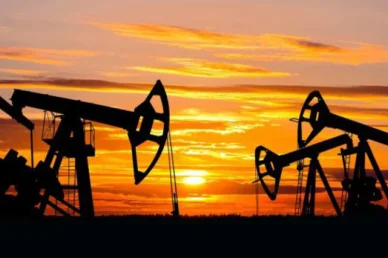
The oil extraction industry plays a pivotal role in meeting global energy demand and supporting national economies
Minerals and Mining
The Kingdom's lands hold large and varied mineral wealth. It includes gold, copper, phosphate, and bauxite, as well as aluminum, iron, lead, and other minerals. The Kingdom is currently working to turn mining into its third pillar after oil and petrochemicals. To that end, a dedicated plan aims to develop the sector. It seeks to raise mining's contribution to GDP from about $17 billion to $75 billion by 2035.
Saudi Vision 2030
Saudi Vision 2030 launched in 2016 under the leadership of the Crown Prince of Saudi Arabia, Mohammed bin Salman. It offers an ambitious roadmap for the Kingdom's future. The vision aims to diversify the national economy and reduce the historical reliance on oil. It does this by building a sustainable economy that keeps up with global change. Such an economy also strengthens the Kingdom's position as a regional and global power.
The vision rests on three main themes that form the pillars of national transformation:
- A Vibrant Society that draws its values from the principles of Islam. It improves people's quality of life through healthcare, education, and entertainment.
- A Thriving Economy built on diversified income sources, quality jobs, and a stronger private sector. It also relies on investment in strategic sectors such as tourism, technology, and industry.
- An Ambitious Nation that pursues sustainable development, more effective government institutions, and greater transparency. This approach secures lasting achievements for future generations.
The Public Investment Fund (PIF) is the main engine for reaching the vision's goals. It has grown into one of the largest sovereign wealth funds in the world.
Giga-Projects
These giant projects are a major driver of Vision 2030 and receive direct support from the Public Investment Fund. The most prominent include:
NEOM: an integrated futuristic city in Tabuk that runs on renewable energy. It aims to create hundreds of thousands of jobs and boost GDP.

Qiddiya: a modern entertainment city near Riyadh with parks and varied tourist facilities. It aims to welcome millions of visitors and create jobs.

- Red Sea Project: a luxury tourism project on the west coast that focuses on sustainability and protecting the marine environment.
ROSHN: a real estate developer that builds sustainable residential communities under the Vision 2030 quality of life and housing programs.

- Diriyah Gate: a large cultural and historical project in the birthplace of the Al Saud family. It puts heritage to work within urban development.
Industry and Trade
The Kingdom pays growing attention to its non-oil sectors. Its goal is a strong and varied industrial and commercial base. The petrochemical sector has seen major growth, and the Kingdom counts as a global hub in this field. It is also expanding into other manufacturing sectors such as cars, electronics, and machinery and equipment. To support national industries, the government launched the "Made in Saudi" program. This program aims to raise the share of Saudi products in non-oil GDP. It also seeks to make national exports more competitive at the regional and global levels.
Currency
Saudi Arabia's currency is the Saudi riyal. One riyal equals 100 halalas. Since 1986, an official peg has tied the riyal to the US dollar at a fixed 3.75 riyals per dollar. This peg supports economic stability and reduces swings in currency markets. As a result, it builds confidence in the Kingdom's economic and investment climate.
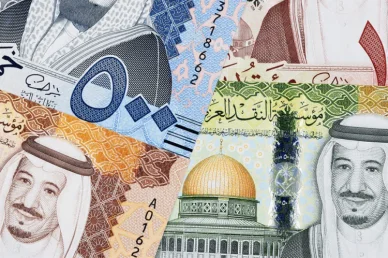
Saudi Riyal banknotes come in various denominations that reflect the Kingdom's heritage and history, serving as the official currency for all financial and economic transactions
Population and Society
Saudi society forms a rich fabric that blends deep-rooted tradition with modern values. Its young and energetic population is the cornerstone of the ambitions of Vision 2030. Strong family ties and authentic traditions play a central role in social life. The Kingdom is also going through major changes, and women are taking on a growing role across sectors. Together, these trends shape an open society that looks to the future.
Demographics and Growth
According to the General Authority for Statistics (GASTAT), Saudi Arabia's population reached 35.3 million in 2024. Society is relatively young, with a median age of 29 years in the 2022 census. Non-Saudi residents, such as expatriate workers, account for 44.4% of the total, and Saudi citizens make up the rest. This gives the Kingdom a unique and varied demographic makeup.
Language and Dialects
Arabic is the official language of the Kingdom. People speak it in several local dialects that vary from region to region. The main ones are Najdi in the center and Hejazi in the west. Northern and Southern dialects prevail in their own regions. English is also common in business and education, especially in big cities. It is the main language for dealings with foreigners.
Social Life
Family ties and family traditions are the pillar of social life in Saudi Arabia. Its people are a model of hospitality and generosity, seen as the most prominent authentic cultural traits. The Kingdom has recently carried out wide-ranging social reforms with a major impact on public life. One of the most notable is the growing share of women in the workforce across sectors. This change shows a society that keeps evolving and gives all its members equal chances to help build the future.

Saudi women in Saudi Vision 2030 .. They are everywhere
Religion
Islam is the state's official religion and the basis of its system of government and its social and legal legislation. The country is the birthplace of Islam and the Hajj destination for Muslims worldwide. This gives it great religious and spiritual standing. That it hosts the Two Holy Mosques, the holiest sites in Islam, says enough on its own.
Culture and Heritage
The Kingdom of Saudi Arabia has a rich and varied cultural heritage with roots deep in Arab and Islamic history. This heritage uniquely mixes age-old traditions and the values of hospitality. It also develops fast to keep up with modern times. Through Vision 2030, the Kingdom backs initiatives that strengthen cultural identity and protect national heritage. At the same time, it opens up to the world and offers visitors unique cultural experiences. These steps confirm the Kingdom's importance as a regional and global cultural center.
Historical and Heritage Sites
The Kingdom holds ancient archaeological and historical treasures that form part of human heritage. It takes pride in eight sites on the UNESCO World Heritage List, including:
- Al-Hijr (Mada'in Salih): the second-largest Nabataean city after Petra. It contains huge rock-cut tombs carved with remarkable artistry.
- At-Turaif District in Diriyah: the cradle of the First Saudi State, known for its traditional Najdi architecture.
- Historic Jeddah (Al-Balad): famous for its old traditional buildings that display the city's historic architecture.
Al-Ahsa Oasis: the largest palm oasis in the world, famous for its unique water system.

Saudi Arabia's Undiscovered "Petra" - AlUla & Hegra (An Unmissable Cultural Travel Guide)
Saudi Cuisine
Saudi cuisine is very varied because environments and regions differ across the Kingdom. This variety has created rich flavors and many cooking methods. The best-known traditional Saudi dishes include:
- Kabsa: the most famous dish in the Kingdom. It consists of rice cooked with meat or chicken and a blend of spices.
- Jareesh: an old dish of crushed wheat cooked with yogurt and spices.
- Saleeg: a heritage dish from the Hejaz made of white rice cooked in milk and chicken broth.
- Mandi: one of the most famous dishes of the south. The meat cooks with the rice in an underground pit.
- Haneeni: a Najdi dish made from dates, flour, and ghee, usually served in winter.
No talk of Saudi cuisine is complete without Saudi coffee and dates, the symbols of true hospitality and generosity. Saudi coffee comes flavored with cardamom, saffron, and cloves, and people serve it with dates at many social occasions.
Traditional Dress
Saudis take pride in their traditional dress, which expresses their cultural identity. Men usually wear a white thobe with a ghutra or shemagh to cover the head. At formal events, they sometimes add a bisht over the thobe. Women wear the abaya in public places. For special occasions, women also have outfits with bright colors and colorful embroidery.
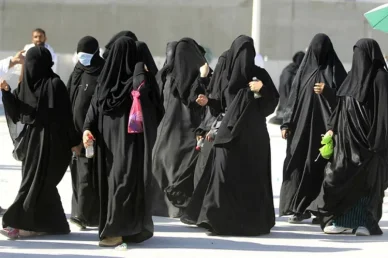
A scene showing a group of women wearing traditional black abayas and niqabs walking together on a sunny day, reflecting social traditions
Arts, Literature, and Music
Traditional arts hold a special place in the Kingdom. Arabic calligraphy has a sacred status because of its link to the Holy Quran. Poetry forms an essential part of Arab culture. The Ardah, a traditional sword dance, ranks among the best-known art forms that Saudis perform with pride. Recently, the Kingdom's art, literature, and music scene has seen major growth. A new generation of artists and writers has emerged, and cinemas and theaters have opened. These changes show the energy and creative spirit of society.
Museums and Festivals
Museums and festivals offer a full picture of the Kingdom's history and culture. The National Museum of Saudi Arabia stands in Riyadh. It is a main stop for exploring Saudi history from ancient times to the modern era. Every year, the Kingdom hosts many major events and festivals that draw visitors from around the world. Riyadh Season and Jeddah Season are two examples. Both offer many international and local art, entertainment, and cultural shows.
Infrastructure and Services
In recent years, the country has invested heavily in modernizing and developing its infrastructure. The aim is to keep pace with its economic and social ambitions. This work covered every vital sector, from modern transport and advanced telecom networks to education and healthcare. These efforts aim to provide high-quality public services to all residents. They also make trade and investment easier and improve quality of life overall.
Education
The Kingdom gives great attention to education as a key pillar of human and economic development. Its education system covers general education (from kindergarten to high school) and continues into higher education. The Kingdom has globally leading universities such as King Saud University in Riyadh. Another is King Abdullah University of Science and Technology (KAUST), a center for advanced research. The government also offers generous scholarship programs that let Saudi students study at the best universities in the world. These programs build their skills and give them the experience the job market needs.
Healthcare
The Kingdom has an advanced healthcare system that provides high-quality medical services to citizens and residents. This sector includes modern hospitals and specialized centers with the latest medical technology. The government offers citizens free health services or services at nominal cost. Its goals are to promote public health, prevent disease, and reach global standards of care quality.
Transportation
The Kingdom is seeing remarkable progress in its transport infrastructure. Vision 2030 also includes plans for further development in this field.
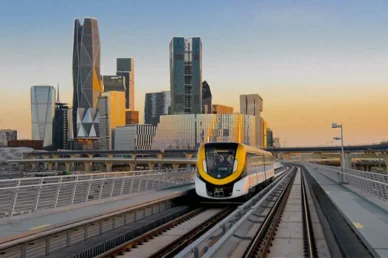
The Riyadh Metro project represents a qualitative leap in the public transport sector, efficiently connecting prominent economic landmarks such as the King Abdullah Financial District
Road and Rail Transport
To ease travel between regions, the Kingdom has built a modern road network of more than 73,000 km. Rail transport is also growing fast. The Haramain High-Speed Railway is a vital link between the two holy cities. Its speed reaches 300 km/h. The Riyadh Metro, for its part, ranks among the largest public transport projects in the region. Its six lines opened between December 2024 and January 2025.
Air and Sea Transport
Several major international airports serve the Kingdom. Examples are King Khalid International Airport in Riyadh, King Abdulaziz International Airport in Jeddah, and King Fahd International Airport in Dammam. Saudi Arabian Airlines is the Kingdom's official carrier. In 2025, the Kingdom's airports served 140.9 million passengers. They also recorded about 980,400 flights and 1.18 million tons of cargo.
For sea transport, the Kingdom has major seaports. The most prominent are Jeddah Islamic Port, King Fahd Industrial Port in Jubail, and King Abdulaziz Port in Dammam. In 2024, the volume of cargo handled at Saudi ports rose to about 320.8 million tons. That was 14.45% more than the year before.
Communications and Information Technology
The Kingdom of Saudi Arabia has built a highly advanced digital infrastructure, thanks to large government investment in the sector. This has brought high penetration rates for the internet and 5G services and greatly boosted digital transformation. The IT sector is growing fast, and startups in technology and innovation receive support.
Tourism and Entertainment
Tourism in Saudi Arabia is a key pillar of Vision 2030. The Kingdom aims to open its doors to the world as a unique travel destination. This sector changed radically with the launch of the tourist e-visa system. With the e-visa, visitors can explore the Kingdom's treasures more easily. The country offers many kinds of attractions. Historical sites tell the stories of ancient civilizations, and other places offer beautiful natural scenery. Modern entertainment projects also improve quality of life.
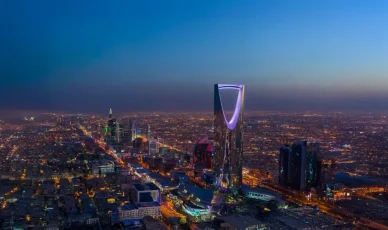
The Riyadh city skyline at night, featuring the distinctive lighting of the Kingdom Tower in Saudi Arabia
Historical and Natural Sites
The Kingdom is full of unique historical and natural sites that rank as main tourist destinations. One of the most notable is AlUla, home to the ancient Nabataean ruins of Mada'in Salih. The Red Sea region offers diving and relaxation in a rich marine environment. In the south, the Asir Mountains enjoy a mild climate and beautiful scenery.
Entertainment and Events
The entertainment sector has grown enormously and has become an integral part of daily life. Its organizers run many major festivals that draw millions of visitors, such as the entertainment seasons in the main cities. These events offer many leisure activities, including international concerts, art shows, and sports events. As a result, the Kingdom has become an important destination on the global entertainment map.
Sports
Sports play a growing role in Saudi society as a core part of the Vision 2030 quality of life initiatives. The sector has received unprecedented investment. Its aim is to raise athletic performance, give residents more leisure options, and make the Kingdom a global sports destination. These investments go hand in hand with work on sports infrastructure. That work has allowed the Kingdom to host the most important global events.
The Popularity of Soccer
Soccer is, without question, the most popular sport in the Kingdom, with millions of passionate fans. Global stars such as Ronaldo and Neymar da Silva Santos Junior moved to the Saudi Pro League in 2023. Their arrival raised the level of competition and drew the world's attention to the Kingdom. Interest in the league and local matches keeps growing, especially during major tournaments such as the FIFA World Cup. At these events, Saudi and international fans follow the Saudi Arabia national football team and its homegrown professional players.
Traditional Sports
Traditional sports are an integral part of the heritage of the Kingdom of Saudi Arabia. Camel racing and falconry enjoy wide popularity, with major festivals and championships held every year. The Kingdom also pays special attention to equestrian sports, a genuine part of its history. It hosts international championships where the world's best horses compete.
Hosting International Events
The Kingdom has become a global destination for major sporting events. It has attracted international races such as Formula 1 and the Dakar Rally, as well as world heavyweight boxing bouts. This record proves its ability to organize global sporting events to a high standard. In December 2024, FIFA confirmed that Saudi Arabia will host the World Cup in 2034. Before that, the country will host the AFC Asian Cup from January 7 to February 5, 2027.
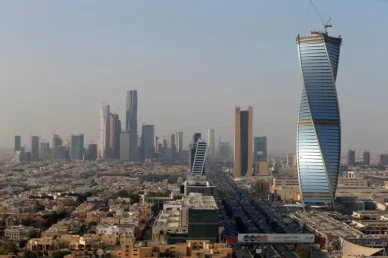
The Riyadh skyline reflects the Kingdom's rapid urban development, featuring prominent modern architectural landmarks such as the Majdoul Tower and the King Abdullah Financial District
Calendar and Public Holidays
The Kingdom gives visitors basic information about its official calendar and public holidays. This helps them plan their trips better. Although the Kingdom officially uses the Hijri calendar, the Gregorian calendar remains in wide use.
Calendar and Working Hours
In official transactions, the Kingdom uses the lunar Hijri calendar. However, the private and financial sectors also use the Gregorian calendar widely. The official weekend starts on Friday and ends on Saturday, so the workweek runs from Sunday to Thursday.
National Occasions and Holidays
The Kingdom celebrates several official occasions that count as paid holidays for all sectors. Its main holidays include:
- Eid al-Fitr: falls on the first of Shawwal, after the holy month of Ramadan, and lasts for several days.
- Eid al-Adha: falls on the tenth day of Dhu al-Hijjah and also lasts for several days.
- Saudi National Day: falls on September 23 each year and marks the anniversary of the Kingdom's unification.
- Founding Day: Saudi Arabia marks it every February 22, the anniversary of the First Saudi State's founding.
Frequently Asked Questions
Who Founded the Kingdom of Saudi Arabia?
King Abdulaziz bin Abdulrahman Al Saud founded the Kingdom of Saudi Arabia. His campaign to unify the country began in 1902 with the recapture of Riyadh. He then brought in one region after another until the declaration of the unified Kingdom in 1932.
Where Is Saudi Arabia Located?
The Kingdom of Saudi Arabia lies in the far southwest of Asia and covers most of the Arabian Peninsula. To the west lies the Red Sea, and to the east the Arabian Gulf. It shares land borders with Jordan, Iraq, Kuwait, Qatar, the UAE, Yemen, and Oman. The King Fahd Causeway links it to Bahrain.
When Was the Kingdom of Saudi Arabia Unified?
The unification of the Kingdom of Saudi Arabia under its current name took place on September 23, 1932. That day crowned the efforts of the founder, Abdulaziz bin Abdulrahman Al Saud. His efforts began with the recapture of Riyadh in 1902. It is also Saudi Arabia's National Day, which the country celebrates every year.
When Was the First Saudi State Founded?
Imam Muhammad bin Saud founded the First Saudi State in 1727, with Diriyah as its capital. This state marked the starting point of the long history of the Saudi state. The country celebrates this day on February 22 every year.
How Many Regions Does the Kingdom of Saudi Arabia Have?
The Kingdom of Saudi Arabia has 13 administrative regions. They are Riyadh, Mecca, Medina, Al-Qassim, the Eastern Province, Asir, Tabuk, Hail, the Northern Borders, Jazan, Najran, Al-Baha, and Al-Jawf. Each administrative region includes a number of governorates and centers.