Festival Park Ebbw Vale
Festival Park Ebbw Vale is one of the best-known sites in the South Wales valleys, but it means different things to different people. For some, it's the parkland and lakes left behind by a major national event in 1992. For others, it's the shopping outlet that once drew day-trippers from across Wales and the borders, then slowly emptied out. Today, the former outlet buildings have been reborn as a business and industrial park, while the surrounding green space is still open to the public. This guide brings the story together: what Festival Park was, why the shopping centre closed, and what you'll actually find there now.
What Is Festival Park Ebbw Vale?

Festival Park isn't a single, fixed thing — it's a name that covers several overlapping areas on the same 70-acre site in Ebbw Vale. There's Festival Park the parkland: woodland, lakes and sculptures left over from a 1992 garden festival. There's Festival Park the former outlet shopping centre: a cluster of retail units that traded for around three decades before closing down. And more recently, there's Festival Park the business park: the redeveloped shell of that old shopping centre, now let out to local firms and logistics operators. Understanding which "Festival Park" is being referred to matters, because the parkland is still very much open, while the outlet centre in its old form no longer exists.
Where Is Festival Park?
Festival Park sits at Victoria, Ebbw Vale, Blaenau Gwent, Wales, NP23 8FP. The site is just off the A4046, with the A465 Heads of the Valleys road a few miles away giving onward access to the M4 corridor. Ebbw Vale town centre lies roughly two miles to the north, and Ebbw Vale Parkway railway station is around half a mile from the site, with trains running through to Cardiff Central. Its location on the edge of town, close to the old steelworks, reflects its origins as reclaimed industrial land rather than a purpose-built town-centre destination.
What Was at Festival Park?
At its peak, the site combined retail, leisure and green space in a way few other locations in the valleys could match. On the commercial side there were dozens of shops and a food and coffee offer; alongside that sat a fishing lake, woodland walks, sculptures from the original 1992 event, a church and an owl sanctuary. That mix of shopping and outdoor leisure is what made Festival Park distinctive: people came not just to buy things, but to spend a whole day out with the family.
History of Festival Park Ebbw Vale
Before any of this existed, the land was industrial — part of the wider Ebbw Vale steelworks landscape that had shaped the town for generations. As heavy industry declined through the 1970s and 1980s, the site became derelict, and it was this decline that made it a candidate for a very particular kind of government-backed regeneration.
Ebbw Vale Garden Festival 1992
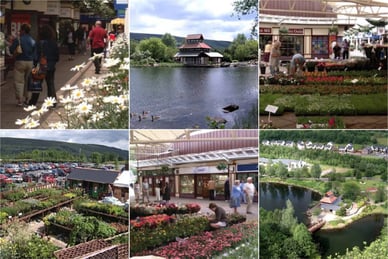
The Ebbw Vale Garden Festival of Wales ran from 1 May to 4 October 1992 and drew more than two million visitors to the town. It was the last in a series of National Garden Festivals, a high-profile initiative from the 1980s Conservative government designed to counter criticism that it had neglected areas hit hardest by the loss of heavy industry. Environment minister Michael Heseltine had proposed reclaiming derelict land for these festivals as a symbol of renewal, with earlier events held in Liverpool (1984), Stoke-on-Trent (1986), Glasgow (1988) and Gateshead (1990) before Ebbw Vale won the right to host the fifth and final festival. For a few months, former industrial land was transformed into show gardens, pavilions and fairground attractions, complete with its own mascot, Gryff, and a mechanical clock, "In the Nick of Time," commissioned specially for the event.
What Happened After the Garden Festival?
National Garden Festivals rarely produced the immediate wave of investment their organisers hoped for, and Ebbw Vale was no exception — little of the original festival infrastructure survived intact once the event closed. What did endure, and what still shapes the site today, were the lakes at the lower end of the grounds. Over time, the wider Garden Festival site was built out with more than 1,000 houses, a fishing lake, the Festival Church, an owl sanctuary, a large environmental sculpture known as Mother Earth, areas of woodland, and a shopping centre. It was this last element — the shopping centre — that would go on to define Festival Park in the public imagination for the next three decades.
Festival Park Outlet Shopping Centre
Retail units were developed on the upper part of the old festival site, eventually trading as the Festival Park outlet, also referred to locally as Festival Factory Outlet Centre or Festival Park Shopping Village. For much of the 1990s, 2000s and into the 2010s, it functioned as a discount and outlet destination, drawing shoppers from across the Heads of the Valleys area and beyond and, at various points, ranking among the busier retail parks in Wales by annual spend.
Festival Park Shops
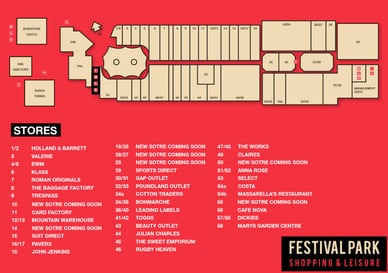
Over the years, the outlet was home to a wide range of household names. At its busiest, more than 40 companies operated stores at Festival Park — a scale that made it a genuine shopping destination rather than a minor retail park. Brands confirmed by local press coverage include:
- Marks & Spencer
- Nike
- Costa
- Gap
- Edinburgh Woollen Mill
- Holland & Barrett
- Pavers
- Sports Direct
- Select
- John Jenkins — an independent gift shop and one of the original traders on the site
For anything beyond these well-documented names, it's worth checking archive press coverage or council records, since precise tenant lists changed considerably over the decades.
Leisure and Other Attractions
Shopping was never the whole story. Alongside the retail units, the wider site offered:
- A fishing lake popular with local anglers
- Woodland walks across the parkland
- Sculptures remaining from the 1992 Garden Festival
- The Festival Church
- The Festival Park Owl Sanctuary — open to visitors until 2026
This combination of retail and outdoor leisure meant a trip to Festival Park could easily fill a full day, which is part of why its decline was felt so keenly by the local community.
Why Did Festival Park Ebbw Vale Close?
It's important to be precise here: it wasn't "Festival Park" as a whole that closed, but specifically the outlet shopping centre. The parkland, lake and (until 2026) the owl sanctuary continued to operate even as the retail units emptied out. The closure of the shops was also a gradual process rather than a single event, driven by a combination of factors: a shift towards online shopping, wider pressures on UK high streets and retail parks, the cost-of-living crisis, and the disruption of the COVID-19 pandemic.
Decline of Festival Park Shops
Even before the pandemic, a number of outlets at Festival Park were already struggling. Costa Coffee announced it would close its Festival Park branch in October 2020, following the earlier departure of retailers including Holland & Barrett, Pavers and John Jenkins. By that point, the closure left the centre with only two other units still trading, Select and Sports Direct. The decline continued into the following years: by 2022, more than 40 companies had exited the site amid a wider retail slump, leaving just a single Sports Direct store — which itself later closed once footfall dropped away almost entirely. Local traders who had been there from the start, such as the John Jenkins gift shop, relocated into Ebbw Vale town centre rather than staying on an increasingly empty site.
When Did Festival Park Outlet Close?
Because units closed one by one over roughly 2019 to 2022 rather than all at once, there isn't a single, clean closure date for the outlet centre. What can be said with confidence is that by 2022 the site was effectively empty of retail tenants, sitting fenced off and unused while its future was decided.

Sale and Redevelopment of Festival Park
The former Festival Mall facility at Ebbw Vale was purchased by Mercia Real Estate Ltd, a privately owned property investment and asset management company based in Birmingham, from its previous owners in July 2021. The sale followed a period of speculation locally about the site's future, including council interest in acquiring it and rumours of alternative uses such as a splash park or hotel. Ultimately, Mercia Real Estate opted for a very different direction: moving away from retail altogether.
Plans for a Mixed-Use Business Centre
Mercia Real Estate's planning application, approved by Blaenau Gwent County Borough Council's Planning Committee in January 2023, set out to alter the buildings and change the use of the former shopping mall into a mixed-use business centre, focused on premises for businesses, trades, and small storage and logistics operators under Use Classes A, B and D. The scheme centred on dismantling a number of the existing units to create more yard space, parking, roads and paths, modifying and removing canopies from other units, and resurfacing the central mall walkway to turn it into a service and access road. Councillors backed the plans as a way of giving the long-unoccupied site "a new lease of life" and supporting local business growth.
What Is at Festival Park Ebbw Vale Today?
The redevelopment is now complete, and Festival Park operates today as an industrial and business estate rather than a shopping outlet. Mercia Real Estate created 24 industrial units totalling 84,202 sq ft across the 70-acre site, ranging in size from around 958 sq ft to almost 12,000 sq ft, aimed at local and national businesses and logistics operators. The transformation involved modifying units, removing canopies, recladding and reroofing, and improving site access to suit industrial operators, including the resurfaced central walkway acting as a spine access road.
Business and Industrial Uses
Knight Frank's Cardiff office was appointed to attract tenants to the completed centre, and by early 2026 lettings were underway. In February 2026, five local businesses signed leases at the new Festival Park business park, including Water Treatment Products Ltd, which took the largest unit on the estate. Unit sizes on offer range from around 1,800 sq ft up to nearly 8,500 sq ft, suited to light industrial, trade counter and storage uses, and current occupiers sit alongside neighbouring retailers such as Aldi, Home Bargains and a Premier Inn near the wider site. As ever with a site still filling up, it's worth checking current listings or contacting letting agents directly for the latest occupier list rather than relying on older reports.
What Remains of the Original Festival Park?
Away from the redeveloped business units, much of the original Garden Festival legacy is still intact. Festival Park's parkland covers more than 70 acres, retaining many of the original 1992 features and sculptures, alongside woodland and two lakes that remain popular with local anglers. This green space is separate from the former retail buildings and continues to be maintained as public parkland by Blaenau Gwent Council.
Festival Park Owl Sanctuary
The Festival Park Owl Sanctuary has long been one of the site's best-loved attractions, caring for owls, hawks, falcons and other birds of prey since it was established in 1998. However, its status changed significantly in 2026: the sanctuary, run by 87-year-old Malcolm Jones, announced it would close to the public from 31 August 2026, citing difficulties meeting the requirements of its zoo licence. A Blaenau Gwent Council spokesperson confirmed the sanctuary had decided to change how it operates and reduce public access, adding that the council had worked with the sanctuary over many years to help it meet licensing standards.
The closure followed a Freedom for Animals investigation published in March 2026, which examined animal welfare and licensing practices at the sanctuary as part of a wider report on birds of prey facilities in England and Wales. Going forward, Jones and his partner will continue caring for the birds privately, and the sanctuary is expected to be permitted to open to the public on a small number of days each year without a full licence. Anyone planning a visit should check current status before travelling, since this is a recent and evolving situation rather than a settled arrangement.
Festival Park Ebbw Vale Opening Times
Because the outlet centre no longer operates, the old shopping-centre opening hours you might find in older listings are no longer valid — there isn't a single set of "Festival Park opening times" to quote anymore. The parkland itself is publicly accessible, but individual elements of the site — the business units, the church, and (where it still opens on limited days) the owl sanctuary — now keep their own, separate schedules. This is quite different from the position in 1992, when the Garden Festival ran to a single published timetable for its few months of opening; today's site is really several distinct destinations under one name, so it's worth checking each one directly rather than assuming a single set of hours applies across the whole park.
For context, the outlet's own website, festivalshopping.co.uk, last published the following contact details and trading hours before the centre closed. These are kept here purely as a historical record of how the outlet presented itself, not as current information:
Archived detail | Information |
|---|---|
Address | Festival Park, Victoria, Ebbw Vale, Blaenau Gwent, Wales, NP23 8FP |
Phone | 01495 350010 |
Fax | 01495 307363 |
Monday | 9:30am–5:30pm |
Tuesday | 9:30am–5:30pm |
Wednesday | 9:30am–5:30pm |
Thursday | 9:30am–7:00pm |
Friday | 9:30am–5:30pm |
Saturday | 9:30am–5:30pm |
Sunday | 11:00am–5:00pm |
These were the last hours listed for the outlet centre as a whole; they predate its closure and should not be relied on for visiting the site today.
Festival Park Then and Now
Period | Main use |
|---|---|
Before 1992 | Former industrial land linked to the Ebbw Vale steelworks |
1992 | Garden Festival of Wales |
1990s–2010s | Shopping, outlet and leisure destination |
Late 2010s–2020 | Decline of retail units |
2021 | Sale of the former outlet to Mercia Real Estate |
2022–2025 | Redevelopment into a business centreмм |
2026 | Business and industrial site; owl sanctuary closes to daily public visits |
Importance of Festival Park to Ebbw Vale
Festival Park's story mirrors the wider economic journey of Ebbw Vale itself. It began as reclaimed industrial land, chosen to host the last of the National Garden Festivals as a symbol of regeneration after the decline of steelmaking in the town. It then became a shopping and leisure destination that, for a couple of decades, gave the town a genuine regional draw. And now, after a difficult period of retail decline, it has been reinvented again as a business and industrial estate supporting local jobs. Across all three phases, the underlying aim has stayed the same: turning a site shaped by industrial loss into something that keeps contributing to the local economy.
FAQ
Is Festival Park Ebbw Vale still open?
The parkland, lakes and woodland at Festival Park remain open to the public. The old outlet shopping centre has closed, but the site as a whole hasn't shut down — it now operates mainly as a business and industrial park alongside the public green space.
What happened to Festival Park Outlet?
The outlet shopping centre lost its retailers gradually between around 2019 and 2022 due to online competition, wider retail decline and the pandemic. It was later bought by Mercia Real Estate and redeveloped into industrial and business units rather than reopening as a shopping destination.
What shops were at Festival Park Ebbw Vale?
Over the years, Festival Park was home to well-known names including Marks & Spencer, Nike, Costa, Gap, Edinburgh Woollen Mill, Holland & Barrett, Pavers, Sports Direct and the independent gift shop John Jenkins, among more than 40 businesses at its peak.
Why did Ebbw Vale Outlet close?
The outlet closed gradually rather than in one go, as tenants left one by one in response to falling footfall, rising online competition, the cost-of-living crisis and the disruption caused by COVID-19.
What are the Festival Park Ebbw Vale opening times?
There's no single opening-times listing anymore, since the outlet centre has closed. The parkland is publicly accessible, while businesses on site and any remaining attractions each keep their own hours, so it's best to check individually.
When was the Garden Festival in Ebbw Vale?
The Ebbw Vale Garden Festival of Wales ran from 1 May to 4 October 1992, and was the last of the five UK National Garden Festivals.
What is at Festival Park today?
Today's Festival Park combines a redeveloped business and industrial estate — home to logistics, trade and light-industrial tenants — with the surviving parkland, lakes and woodland from the original 1992 Garden Festival.
Can you still visit Festival Park in Ebbw Vale?
Yes. While the shopping outlet is gone, the parkland, lakes and woodland remain open for walking, fishing and general visits, even though the site's retail and leisure offer has changed considerably since its outlet-centre heyday.