Bristol Beacon
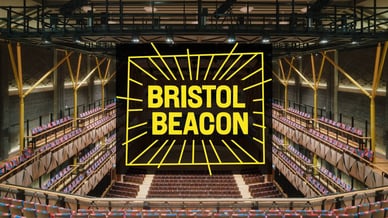
Bristol Beacon is one of Great Britain’s most famous music venues, playing a vital role in the cultural life of the city of Bristol. Over the course of more than 150 years, this concert hall has weathered fires, renovations, changing eras and even a change of name. Today, Bristol Beacon brings together the history of classical music, the rock scene, contemporary concerts and educational projects.
The venue was previously known as Colston Hall – a name used from 1867 to 2020. Following lengthy public consultations, the venue was given a new name, creating a more open and modern space for the city’s residents and visitors. In this article, we’ll explain what Bristol Beacon is, how its history has unfolded, what events take place there, and why this venue remains one of Great Britain’s key concert venues.
Name | Bristol Beacon (formerly Colston Hall) |
Address | Colston Street, Bristol, BS1 5AR |
Year founded | 1867 |
Owner | Bristol City Council |
Managing organisation | Bristol Music Trust |
Type of venue | Concert hall, music venue |
Main auditorium capacity | approximately 1,800 people (up to 2,100 standing) |
Main purpose | Concerts, music events, educational programmes, cultural events |
Year of last major refurbishment | 2023 |
What is Bristol Beacon?
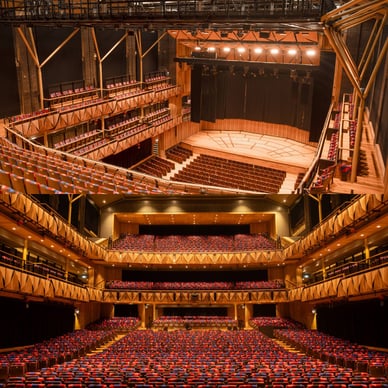
Bristol Beacon
Beacon Hall Bristol is a concert hall in the centre of Bristol which has remained one of the South West of England’s leading music venues for many decades. The building opened in 1867 and was originally designed as a public space for various events. It has hosted not only musical performances but also theatre productions, lectures, sporting events and other cultural activities.
Until 2020, the venue was known as Colston Hall. It is this name that frequently appears on old posters, in music archives and in publications about concerts in Bristol.
Over the course of its history, the hall has undergone several major changes. In 1898, the building was damaged by fire, after which extensive restoration work was carried out. Another fire occurred in 1945, after which the hall was rebuilt and reopened in 1951. Subsequently, Bristol Beacon underwent further modernisation, and the latest major refurbishment culminated in the opening of the revamped venue in 2023.
The name change holds a special place in the history of Bristol Beacon. Colston Hall was named after Edward Colston, who was linked to the history of the slave trade. In 2020, the venue officially became Bristol Beacon following public consultations and a review of the role of the name in contemporary urban culture.
Today, the Beacon Bristol is not only a venue for major concerts, but also a centre for music education, working with young artists and developing the local music scene. Following its refurbishment, the venue gained new spaces, including additional areas for performances and training.
Events and concerts at Bristol Beacon
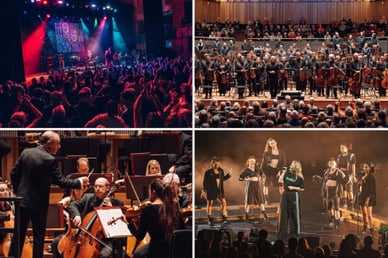
Events at Bristol Beacon
For decades, Bristol’s Beacon Hall has hosted artists from a wide variety of genres – from classical performers to the biggest names in rock, indie and pop. The venue has welcomed such renowned musicians as The Beatles, David Bowie and Bob Dylan, cementing its place in the musical history of Great Britain.
The Bristol Beacon’s current programme continues this tradition. Popular British and international performers have graced the hall’s stage, including:
- The Libertines
- Wolf Alice
- Slowthai
- Don Broco
The diversity of the line-up shows that Bristol Beacon isn’t limited to a single genre. It hosts performances by indie bands, rock concerts, pop shows, jazz programmes, classical evenings and special musical projects.
The Prodigy, for example, are known for their electronic music and spectacular live shows. Artists such as Anne-Marie and Jake Bugg represent contemporary trends in British pop and singer-songwriter music.

Labyrinth Blues - Live at the Bristol Beacon
Another well-known band, Foals, performed at Beacon Hall as part of the BBC Radio 6 Music Festival in 2016, part of which took place at the former Colston Hall. Bloc Party also took part in the same festival.
The rock band Kasabian also featured on Bristol’s concert programme, with their performances in the city taking place during the heyday of the British indie rock scene in the 2000s and 2010s. The Scottish band Biffy Clyro are also among the acts who performed at Colston Hall before the venue was renamed Bristol Beacon. Their concerts took place as part of the band’s tours in the 2000s and 2010s.
As well as major tours, the Beacon Hall regularly hosts local musicians, orchestras and educational projects. Following its refurbishment, the venue has been able to host more events and has expanded its programmes for emerging artists.
Today, Bristol Beacon Hall remains a place where different generations of audiences come together: from classical music lovers to fans of the contemporary British music scene. Its history demonstrates how a historic building can retain its significance whilst evolving alongside the city and its culture.
Where is Bristol Beacon?
Bristol Beacon is situated in the very heart of Bristol, one of the largest cities in the south-west of England. The concert hall is located on Colston Street, close to the city’s main streets and just a few minutes’ walk from Bristol’s main attractions – College Green, the Harbourside area and the Broadmead shopping district.
The building is situated in the historic part of Bristol, close to university buildings, museums, theatres and other cultural venues. This setting helps the Bristol Beacon to be more than just a concert venue; it is an integral part of the urban landscape.
Bristol Beacon Seating Plan
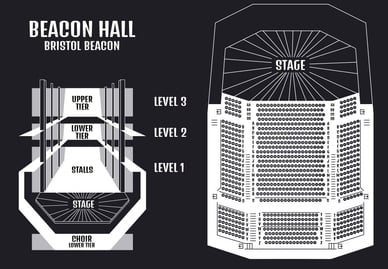
Seating Plan Bristol Beacon
Bristol Beacon’s main concert venue – Beacon Hall – features a flexible layout that allows for both classical concerts with full seating and large-scale music shows in a standing-room-only format. Following its refurbishment, the hall now boasts state-of-the-art acoustics, improved stage visibility and a more visitor-friendly layout.
The hall layout is divided into several main levels:
- Stalls – the lower section of the hall, located closest to the stage. Depending on the event format, this area may be fitted with seats or organised as a standing area.
- Lower Tier – the lower balcony with seating at the sides and at the rear of the hall.
- Foyle Upper Tier – the upper level with additional rows of seats and side sections.
- Choir seating – seats behind the stage, which are not used for all events but are ideal for orchestral and vocal performances.
Beacon Hall has a capacity of around 1,866 seats in a seated configuration and up to 2,124 people for standing events. This versatility allows the venue to host a wide variety of events – from symphony concerts to performances by rock and pop artists.

Look inside Beacon Hall
Visitors can access the official seating plan for Beacon Hall, which shows the tiers, rows and specific features of the seating layout. It helps you choose the best area depending on the event: closer to the stage for the full impact of a live performance, or the upper tiers for a broader view of the hall.
In addition to Beacon Hall, Bristol Beacon features Lantern Hall – a more intimate venue with a capacity of approximately 350 to 500 people, designed for smaller concerts and events. The layout of Bristol Beacon is designed not only for large-scale music events but also for more intimate formats, enabling the venue to host artists from a variety of genres and operate almost every day of the year.
Information for visitors
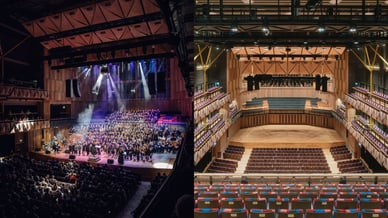
Bristol Beacon Hall
The Bristol Beacon is situated in the centre of Bristol, so it’s quite easy to get to the venue, grab a bite to eat before a concert or find a hotel nearby. There are restaurants, hotels, public transport stops and car parks nearby.
Opening hours
The Bristol Beacon is usually open daily from 8.00 am to 6.00 pm. On concert and event days, opening times may vary – bars, cafés and entrances open according to the specific event’s schedule.
Box Office opening hours:
- Tuesday – 12:00–17:00;
- Wednesday–Friday – 10:00–17:00;
- special opening hours may apply on event days.
Restaurants nearby
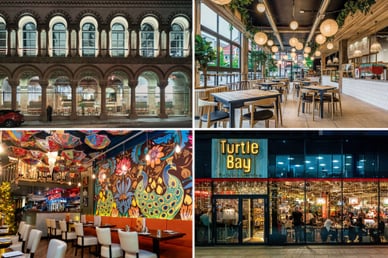
Restaurants near Bristol Beacon
Before the concert, you can grab a bite to eat either inside the Bristol Beacon or just a few minutes’ walk from the venue. The following are located within the building itself:
- Colonnade Bristol – a restaurant serving contemporary European cuisine. Ideal for dinner before the show.
- Bristol Loaf – a café serving baked goods, breakfasts, light meals and drinks.
Also nearby are:
- Nutmeg Indian Street Kitchen – a restaurant serving Indian cuisine;
- Turtle Bay Bristol Broad Quay – a restaurant serving Caribbean cuisine;
- Rosa’s Thai Bristol – serving Thai cuisine.
Hotels nearby
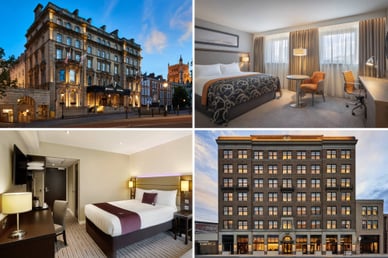
Hotels near Bristol Beacon
Concert-goers are advised to choose hotels in the centre of Bristol – most options are within walking distance.
Nearby options include:
- Bristol Marriott Royal Hotel – one of the nearest major hotels;
- Clayton Hotel Bristol City – a modern city centre hotel;
- Premier Inn Bristol City Centre (Lewins Mead) – a budget option in the city centre;
- The Bristol Hotel – an excellent choice near the riverfront.

Plan Your Visit to Bristol Beacon
How to get there?
Bristol Beacon is located in the centre of Bristol, so it’s easy to reach by train, bus, car or on foot from the city centre.
- Train. The nearest railway station is Bristol Temple Meads. From there, you can reach the venue by bus or taxi; the journey usually takes 10–15 minutes.
- Bus. Numerous city bus routes run through the centre of Bristol. The nearest stops are near Colston Avenue, College Green and the central streets around Bristol Beacon.
- Car. Due to its city-centre location, you should be aware of traffic restrictions and plan your parking in advance. If you do prefer to drive, simply enter the venue’s address into your sat-nav.
- On foot. It takes 5–15 minutes to walk from Bristol’s city centre to Bristol Beacon. The venue is situated close to the city’s main streets and shopping areas.
Parking
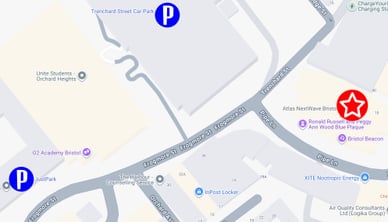
Parking near Bristol Beacon
The nearest car park is Trenchard Street Car Park, located directly behind the Bristol Beacon building. Special spaces are available on level 8 of the car park for visitors with reduced mobility.
There are also several multi-storey car parks in central Bristol, from which the concert hall is within walking distance. When attending major concerts, it is best to arrive early: car parks in the city centre fill up quickly.
Contact details and postcode
Address: Trenchard Street, Bristol, BS1 5AR, United Kingdom
Postcode: BS1 5AR
Telephone: +44 117 203 4040
Email: [email protected]


FAQ
What was Bristol Beacon called before?
Until 2020, the concert hall was known as Colston Hall. The name was changed following a public debate about its association with Edward Colston – a 17th-century merchant linked to the slave trade. Following its refurbishment, the venue was renamed Bristol Beacon.
How many people does the Bristol Beacon hold?
The main auditorium, Beacon Hall, has a seating capacity of 1,866 and can accommodate up to 2,124 people for standing-room-only events. The building also features other spaces: Lantern Hall (up to 500 visitors) and Weston Stage (up to 200 people).
What does raked seating mean at Bristol Beacon?
‘Sloping tiers’ refers to seating arranged on a slight incline rather than on a completely flat floor. This design helps audience members in the back rows see the stage more clearly, as the people in front do not block their view. In Beacon Hall, such tiers are found in various sections of the auditorium.