Yasuni – die Rettung des Nationalparks
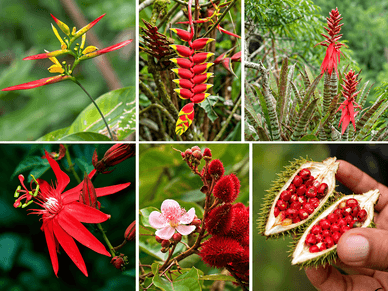
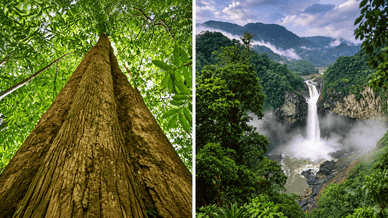
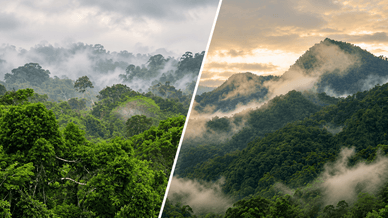
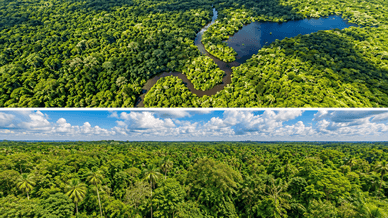
Yasuní National Park is a unique natural treasure of Ecuador. It covers more than 2.5 million acres of tropical Amazon rainforest and is considered one of the most biodiverse places in the world.
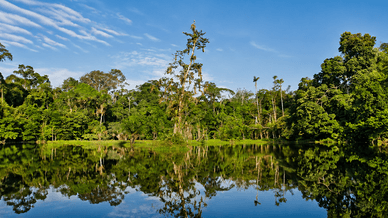
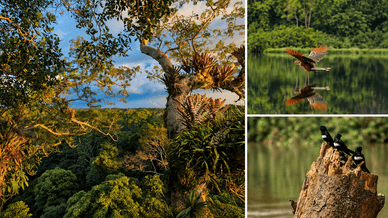
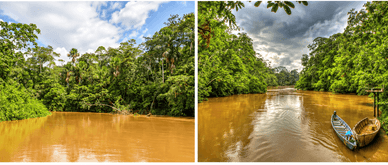
Der Yasuní-Nationalpark am Fluss im Amazonasgebiet
In 1989, UNESCO gave it the status of a biosphere reserve, recognising its global importance for nature conservation. Hundreds of plant and animal species live here and, above all, indigenous peoples still live here in voluntary isolation. Despite this exceptional value, the park was threatened by oil extraction for decades, which led to massive public resistance. In August 2023, Ecuadorians made a historic decision in a referendum: they voted to stop the development of new oil wells in Yasuní National Park. This made their country one of the first in the world to limit the exploitation of natural resources through a democratic vote.
Deep in the heart of the Ecuadorian Amazon, life thrives as it does nowhere else in the world. More than 2.5 million acres of ancient tropical forest, the status of a UNESCO biosphere reserve, thousands of rare species and ancient tribes who have deliberately chosen complete isolation from our civilisation: this is Yasuní National Park. It is a unique treasure of the world, where nature has kept its original code. Yet for years, a deadly temptation lay hidden beneath this emerald paradise: huge deposits of “black gold”. For decades, drilling platforms kept Yasuní on the brink of disaster, sparking a fierce struggle between profit and the survival of the planet.
The people themselves brought this dramatic struggle to an end. In August 2023, the people of Ecuador achieved the impossible: in a historic referendum, citizens voted firmly against new oil wells. It was the first time in world history that a society voluntarily gave up oil extraction through a direct democratic vote to save untouched nature for the future.
Full name | Yasuní National Park |
Location | In the north of Ecuador, in the Amazon region. The park covers several river sub-basins: the Tiputini, Yasuní, Nashiño, Cononaco and Curaray. All of them are tributaries of the Napo, which flows into the Amazon |
Area | About 10,227 km² (1,022,736 ha) |
Shape | Geographically, the park is shaped like a horseshoe. It stretches from the land south of the Napo River to the land north of the Curaray River and takes in the middle basin of the Tiguino River |
Special features |
|
The initiative to save Yasuní National Park | A proposal to leave around 846 million barrels of oil in the ground in the ITT area, avoiding 407 million tonnes of CO₂ (carbon dioxide) emissions and preserving biodiversity and the lives of indigenous peoples |
Initiator | Rafael Correa, then President of Ecuador, with the support of environmental organisations and Energy Minister Alberto Acosta |
Implementation in Germany | At first, the Bundestag, Germany's highest legislative body, supported the initiative unanimously. Later, however, the Federal Ministry for Economic Cooperation and Development (BMZ) refused to pay directly into the oil fund and instead offered around 48 million euros in bilateral technical assistance and grants for forest protection |
Trust fund | The UNDP-run Yasuní-ITT Trust Fund was set up in 2010 to make sure that money from international donors went only to renewable energy, reforestation and social projects |
The price of protection | 3.6 billion US dollars (about 50% of the oil's estimated value at the time), which Ecuador wanted to raise from the international community over 13 years |
Official website |

Trailer "Yasuní - Papageien, Primaten, Pipelines"
Because contributions fell short (only about 13 million US dollars in direct contributions had been raised by 2013), the Ecuadorian government cancelled the Yasuní-ITT Initiative in August 2013 and approved oil extraction. In August 2023, however, a nationwide referendum took place, in which almost 59% of Ecuadorian citizens voted to end oil extraction in the ITT block of Yasuní National Park completely.
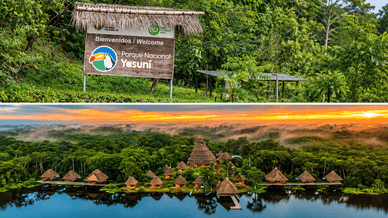
Yasuní National Park
Yasuní National Park, in Ecuador's Amazon basin, is one of the most ecologically valuable and at the same time most fragile places on our planet. Experts estimate that the Ishpingo-Tambococha-Tiputini (ITT) oil fields in Yasuní National Park contain around 846 million barrels of oil. That is about one fifth of Ecuador's total reserves. Extracting this oil could bring in more than 7 billion dollars in revenue within 10 years.
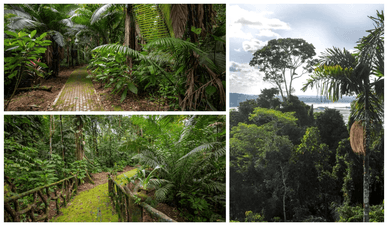
UNESCO recognised the park as a world biosphere reserve in 1989, as it is home to 100,000 animal species, many of which are found nowhere else in the world. Every hectare of forest reportedly holds more tree species than the whole of North America.
Germany also has protected areas like this. A well-known example is the Spreewald Biosphere Reserve, with its dense network of river channels.
What Is Yasuní Park Known For?
Above all, Yasuní is known for its world records in biodiversity per unit of area.Scientific studies confirm that a single hectare of Yasuní forest holds more species of trees and shrubs than the whole of North America.

Multi-day treks through the wild are also possible in Europe. Our overview of trekking in Germany offers ideas.
The park is home to:
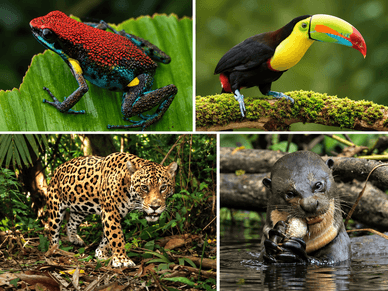
- more than 1,100 species of trees and shrubs in a 25-hectare study plot, and an estimated 100,000 insect species per hectare;
- about 600 bird species, including the rare harpy eagle;
- 150 amphibian species and 121 reptile species, making it the richest region for amphibians in the Western Hemisphere;
- more than 200 mammal species (including jaguars, pink Amazon river dolphins, giant otters and an estimated 10 primate species).
Besides its natural wealth, the park has a unique cultural value. It is the homeland of the indigenous Waorani and of the last tribes in the country who deliberately live in voluntary isolation from the outside world: the Tagaeri and the Taromenane.
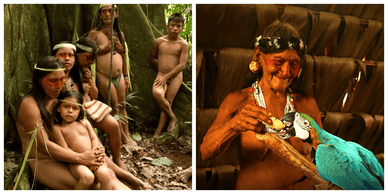
Places like this attract travellers from all over the world. Natural landscapes also feature among the top 7 sights in Germany.
Why Does This Nature Reserve Matter?
At regional level, Yasuní is the basis of the Amazon's water and ecosystem balance. The forest keeps the river systems of the Napo and Curaray basins working and ensures the food security and cultural survival of indigenous peoples. At global level, the park plays a crucial role in the fight against climate change: Yasuní's primary equatorial rainforests act as a huge “natural store” and hold hundreds of millions of tonnes of carbon. Destroying this forest would release greenhouse gases and push the Amazon closer to the point of no return of an ecological disaster.
Why Has Protecting Yasuní National Park Become So Crucial?
For a long time, the biggest threat to the park was the large oil deposits beneath its soil (especially in the ITT block: Ishpingo, Tambococha, Tiputini), which make up about 20% of Ecuador's total resources. Oil extraction inevitably brought deforestation, road building, discharges and river pollution.
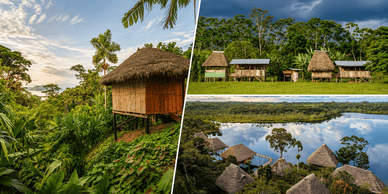
Protecting the area became a major international task for several reasons:
- To protect indigenous peoples' right to life, as the expansion of infrastructure destroyed hunting grounds and drove out isolated tribes, threatening them with extinction.
- The destruction of the ecosystem would have led to the irreversible loss of hundreds of endemic animal, bird and plant species.
- In August 2023, civil society won a historic victory: in a nationwide referendum, 59% of Ecuadorians voted to end oil extraction in the ITT block completely and to dismantle the industrial infrastructure. It was the first time anywhere in the world that a country's citizens gave up extracting “black gold” through a direct vote, in order to protect nature and indigenous peoples' right to life.
The Initiative to Save the National Park
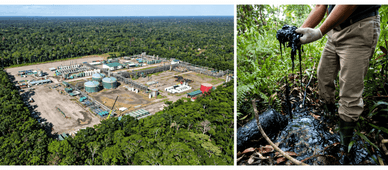
The Yasuní-ITT Initiative, whose name comes from the three oil fields Ishpingo, Tambococha and Tiputini, was an unprecedented international environmental project launched by Ecuador in 2007. The basic idea was that a developing country would voluntarily give up extracting large oil reserves in the ITT field within Yasuní National Park, in return for international financial compensation from richer countries.
What Was the Initiative and How Was It Carried Out?
In 2007, Ecuador's government, led by President Rafael Correa and at the initiative of Energy Minister Alberto Acosta, announced that the country would leave around 846 million barrels of oil in the ground. In return, Ecuador asked the international community to pay 50% of the oil's estimated value, about 3.6 billion US dollars, over 13 years. The initiative was formally sealed in 2010 by an agreement between the Ecuadorian government and the United Nations Development Programme (UNDP). It set out a revolutionary concept of global environmental responsibility and had three main goals:
- Not extracting and burning this oil made it possible to prevent more than 407 million tonnes of carbon dioxide from entering the atmosphere;
- Preserving biodiversity, as Yasuní is one of the most species-rich regions on Earth. Doing without infrastructure (roads, pipelines) protected the reserve from toxic pollution and deforestation;
- Protecting indigenous peoples, as the Tagaeri and Taromenane tribes, who live in voluntary isolation, still live within the ITT block.
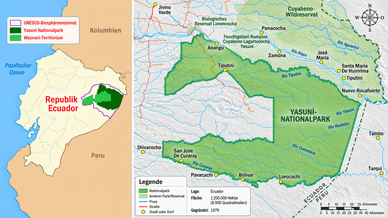
The attempt to set up a mechanism through which the rich countries of the “North” would compensate the countries of the “South” for preserving their natural resources was an innovative step in international law.
To ensure transparency and the trust of international donors, a special trust fund (the Yasuní-ITT Trust Fund) was set up in 2010 under the management of the UNDP (United Nations Development Programme). The Ecuadorian government gave donors guarantee certificates for the amount of their contribution. These certificates guaranteed that the oil would stay in the ground: if the government broke its promise and began extraction, the money would be paid back to the donors. Ecuador was not allowed to use the funds for running costs or to cover the budget deficit. The money could only go to developing renewable energy (hydropower, solar and wind), to reforestation and the protection of other nature reserves, and to social projects (healthcare, education and infrastructure) for local indigenous communities. The fund's board included representatives of the Ecuadorian government, international donors, the UNDP and Ecuadorian civil society.
Germany's Role and the Campaign in Hanover
Germany's role in the story of the Yasuní-ITT Initiative was ambivalent but highly significant: the government was wary of the project, while the German public, environmental organisations and urban movements actively supported it.
At first, Germany was to become Ecuador's main partner in funding the protection of Yasuní National Park. In 2008, the Bundestag unanimously backed the initiative and planned to provide around 50 million dollars a year for 13 years, setting an example for other European countries. But in 2010, after the new minister Dirk Niebel took office, the position changed abruptly. The government refused to pay into the UN fund and called payments “for not extracting oil” a dangerous precedent. Instead, Germany offered only around 48 million euros in bilateral technical assistance and forest protection projects, which seriously shook confidence in international support for the Yasuní-ITT project. Yet Germany knows the value of protected forests from its own experience. The Bavarian Forest National Park has existed since 1970 and is the country's oldest national park.
While the official government in Berlin blocked the funding, a large-scale movement in support of Yasuní grew up in Germany. The city of Hanover was one of its most active centres. Overall, several key players drove the campaign for Yasuní-ITT: the conservation foundation OroVerde acted as the main coordinator of fundraising and awareness campaigns, the Climate Alliance network (Klima-Bündnis) brought together hundreds of European cities and campaigned actively for the project in local communities, and in the Bundestag, the initiative was championed by Green MPs and opposition members of the development committee.
To make up for the government's refusal, OroVerde and its partners launched the “7 Cent” campaign. It showed that if every person living in Germany donated just seven cents a month, Germany's promise could be kept. Events took place across the country, from school pupils' flash mobs to collections of signatures and symbolic coins in Berlin, Cologne and Hanover. The campaign struck a chord with the public and became a symbol of solidarity, even though raising tens of millions of euros without the state remained out of reach.
Despite broad public support in Germany and other European countries, the international Yasuní-ITT Initiative officially failed in August 2013. In six years, the world had paid only about 13 million dollars into the UN fund instead of the planned 3.6 billion, less than one per cent of the sum needed, and Germany's refusal had sent a signal to other potential donors. Ecuador's President Rafael Correa declared at the time that “the world has failed us” and signed a decree ending the project, clearing the way for oil companies to drill in the ITT block.
Oil extraction in Yasuní officially began in 2016, sparking a wave of protests by environmentalists and indigenous peoples in several countries. Only ten years later, in August 2023, was historic justice partly restored: in a referendum, Ecuador's citizens obliged the government to stop oil extraction in Yasuní National Park completely and to dismantle the infrastructure, restoring the chance to preserve this unique part of the Amazon.
The Yasuní Support Network in Germany
The “Support for Yasuní-ITT” network in Germany and Europe brought together more than 40 organisations, foundations, city initiatives and political associations, which shows the reach and diversity of the movement. It included nature conservation organisations as well as human rights, education and religious groups, all working together to preserve Yasuní Park.
The network's key players:
- OroVerde – Tropical Forest Foundation: the campaign's main coordinator in Germany, organiser of information events and the “7 Cent” campaign.
- Climate Alliance (Klima-Bündnis e.V.): the largest European network of local authorities, working with the indigenous peoples of the Amazon; its members include Hanover, Frankfurt and Hamburg.
- Rettet den Regenwald e.V. (Rainforest Rescue): a conservation organisation that specialises in protecting primary forests and indigenous peoples' rights through online petitions and financial support.
- BUND (Friends of the Earth Germany): one of Germany's largest environmental organisations, which mobilised its regional branches.
- FDCL (Research and Documentation Centre Chile–Latin America): a Berlin centre working on socio-ecological conflicts and human rights in Latin America.
- GEW – Hanover Region: an education workers' union that joined the campaign, showing the involvement of the education sector.
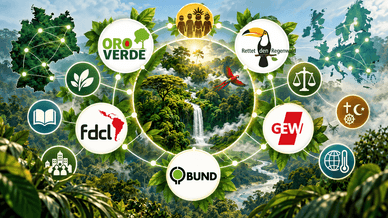
The other members of the network fall into these main groups:
- Nature conservation foundations, which worked to protect biodiversity, fight climate change and resist the extractive industries.
- Human rights organisations, which defend the rights of the Amazon's indigenous peoples, especially the Waorani, Tagaeri and Taromenane.
- Global justice organisations: advocating the concept of “ecological debt” and climate justice.
- Church and religious groups, committed to caring for creation and supporting poor regions.
- Regional networks in Lower Saxony and Hanover, which ran awareness events, talks and street actions locally.
Timeline of the Campaign to Protect the Region from Oil Extraction
Timeline of events and the final agreements on preserving Yasuní National Park:
Year | Event | Details |
|---|---|---|
2007 | Initiative announced | Ecuador's President Rafael Correa presents a proposal at the UN General Assembly: the country will leave 846 million barrels of oil in the ground in the ITT block of Yasuní Park, and the international community will pay 3.6 billion dollars in compensation over 13 years. |
2008 | Support from Germany | The Bundestag unanimously approves the project and agrees to provide around 50 million dollars a year. Germany becomes the main partner. |
2010 | UN trust fund and a political U-turn | August: Ecuador and the UNDP set up the Yasuní-ITT fund with CGY certificates (Yasuní Guarantee Certificates). |
2011–2012 | Public support in Germany | The OroVerde foundation, the Climate Alliance network and more than 40 organisations of SaveYasuni.eu launch the “7 Cent” campaign and a series of actions calling for state funding to resume |
2013 | The initiative fails | Only 13 million dollars reach the fund (less than 1% of what was needed). In August, President Correa announces the end of the project and approves oil extraction |
2014–2016 | Extraction and the Yasunidos movement | 2014: The Yasunidos movement collects hundreds of thousands of signatures for a referendum, but they are declared invalid. |
2021–2023 | Court victory and the referendum | December 2021: The Constitutional Court rules that the handling of the signatures violated Yasunidos' right to due process. |
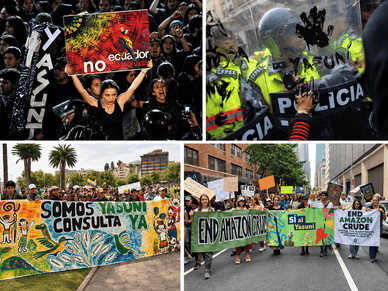
Final agreements:
- The state-owned company Petroecuador must shut down all wells.
- The industrial infrastructure must be dismantled.
- The ITT block area must be ecologically restored to protect biodiversity and indigenous peoples.
However, the government warned that the ban would cost the country around 16 billion dollars in lost revenue over the next 20 years and could expose the region to the risk of illegal resource extraction and deforestation, the BBC reports.
Discussion in the Media
The debate around Yasuní reached the world's leading media, from respected newspapers to specialist environmental outlets, including:
- International English-language press: The Guardian (UK), The New York Times (USA), BBC News, Al Jazeera English.
- German-language media (Germany, Austria, Switzerland): Der Spiegel, Süddeutsche Zeitung, Frankfurter Allgemeine Zeitung (FAZ), Der Standard (Austria), Neue Zürcher Zeitung (NZZ) (Switzerland).
- Latin American and European publications: El País (Spain), El Comercio (Ecuador), Le Monde (France) and others.
In the media, the Yasuní-ITT Initiative was described as an unprecedented and revolutionary step: for the first time, a developing country voluntarily agreed to leave its oil reserves in the ground to protect the climate and biodiversity. Journalists highlighted the global conflict between the “North” and the “South”, analysed the concept of “ecological debt” and asked whether rich industrialised nations were prepared to compensate poorer regions for protecting the “lungs of the Earth”. The European press focused in particular on the political scandal in Germany, where Development Minister Dirk Niebel refused to pay into a UN fund, opening a rift between the government and civil society. The dangers for the Tagaeri and Taromenane peoples, who live in voluntary isolation, received special attention, as building roads and oil pipelines could spell disaster for their existence and for biodiversity.

Dirk Niebel (FDP) blockiert Rettung des Yasuni-Nationalparks in Ecuador
The press releases of the SaveYasuni coalition and its partner organisations (OroVerde, Climate Alliance, FDCL) were clearly campaigning in tone, aiming to mobilise the public and put pressure on politicians. They reminded the German government of the Bundestag's promise to support Yasuní and called for funding for the UN fund to resume. The “7 Cent” campaign turned abstract billions into figures people could relate to and showed that protecting the Amazon would cost each German only a few cents a month. The articles stressed ethical as well as economic arguments: the protection of indigenous peoples' rights and the concept of the “rights of nature” enshrined in Ecuador's constitution. The media called on citizens to sign petitions, join local actions in Hanover, Berlin and Cologne and make donations, to show that public solidarity could stand up to the oil lobby and become a real force in the global fight for the environment.
Yasuní Park Today
Today, Yasuní Park is in a difficult transition between the decision to end oil extraction and the restoration of its natural ecosystems. Dismantling the industrial infrastructure in the ITT block has proved technically and financially demanding: Petroecuador is closing the wells gradually, and the first was permanently shut in 2024. At the same time, fully dismantling the pipelines and facilities takes considerable resources and time, which poses further challenges for the state. The decision to stop extraction became an important barrier to extending transport routes deep into the protected area, helping to protect the habitats of isolated tribes and to stop forests being cleared for new oil fields. A similar principle applies in the Black Forest National Park, where the forest has been allowed to develop over large areas without human intervention since 2014.
Meanwhile, economic and political debates continue in the country. Ecuador is looking for new development models that could make up for the loss of oil revenue, while civil society organisations and the Yasunidos movement keep constant watch to make sure the referendum decisions are implemented without delays or attempts at revision. One option is gentle nature tourism. Regions such as the Allgäu holiday region show how it works.
Other Nature Conservation and Climate Initiatives
The SaveYasuni network's events calendar was a kind of chronicle of the fight for Yasuní Park in Ecuador, but it also reflected a much wider range of environmental and human rights initiatives. It documented campaigns against tropical deforestation run by OroVerde and Rettet den Regenwald, as well as the promotion of the “rights of nature” concept enshrined in Ecuador's constitution. The work of the Climate Alliance network held an important place: it linked European cities with communities in the Amazon and called on local authorities to cut their CO₂ emissions while supporting indigenous peoples in protecting their territories.
A separate part of the events calendar was devoted to youth and education campaigns. The Grüne Meilen (Green Miles)initiative let pupils collect symbolic eco-kilometres by walking or cycling, and the JANUN network in Hanover ran workshops for children and young people to build a culture of climate responsibility. Meanwhile, FDCL and Attac Germany organised information evenings and supported lawsuits against transnational corporations. They shed light on environmental conflicts in Latin America and spread the idea of the Energiewende (energy transition): the gradual move away from fossil fuels towards renewable energy. The SaveYasuni calendar was therefore not just a list of actions but also a platform linking local and international efforts in ecology, climate justice and human rights. Environmental education also plays a big part in Germany's protected areas. Saxon Switzerland National Park, for example, offers programmes for school classes and junior rangers.
Conclusion

Amazon Adventure: Documenting Life in Ecuador's Yasuní National Park | National Geographic
The story of Yasuní National Park and the Yasuní-ITT Initiative was an important lesson for the whole world.Ecuador first proposed an innovative mechanism: giving up oil extraction in exchange for international compensation for protecting the environment. The idea drew wide media attention, support from the German Bundestag and a strong citizens' movement in Europe, from children's actions in Hanover to the large-scale “7 Cent” campaign. But because key funders refused and the political climate changed, the initiative officially failed in 2013, and Ecuador began extracting oil.
Yet defeat at intergovernmental level did not mean the end of the fight. Civil society kept up the pressure on the government, and ten years later, in August 2023, Ecuadorians made a historic decision in a referendum: almost 59% voted to end oil extraction in Yasuní completely. The Yasuní experience has shown that environmental justice and the move away from fossil fuels can be achieved through the direct will of citizens, setting the world's first historic precedent for future climate referendums. Anyone who wants to experience untouched nature does not have to travel all the way to Ecuador. A selection can be found among the most beautiful holiday destinations in Germany.