Iceland
Does an earthly paradise really exist? Absolutely. But anyone picturing somewhere tropical is way off the mark. In truth, every trait of a paradise-like place can be found in Iceland: a small island nation in the North Atlantic, just a stone's throw from the Arctic Circle.
Contrary to a fairly common misconception, the climate here is actually quite mild, and the environment is so clean that the water coming straight out of the tap, sourced directly from natural springs, needs no purification at all.
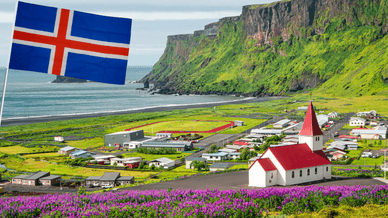
Official name | Republic of Iceland |
|---|---|
Capital | Reykjavík |
Form of government | Parliamentary republic |
President of Iceland | Halla Tómasdóttir (took office August 2024) |
Official language | Icelandic |
Currency | Icelandic króna (ISK) |
Area | ~103,000 km² |
Population | Around 400,000 |
Known for | Volcanoes, geysers, glaciers, hot springs, the Northern Lights, lava landscapes and the Blue Lagoon |
Human and professional relationships in this country are built on a level of trust that's almost absolute. Living here is remarkably safe and comfortable — it's no coincidence that Iceland has topped the Global Peace Index for years running, a set of criteria used to measure how safe life is across the world's countries. Iceland doesn't even have its own army, just a coast guard.
It's one of the best places on the planet, not just to live, but to travel to and unwind. Sure, sunbathing isn't exactly the obvious pastime here, but who says a great holiday has to mean a sun lounger and sea waves? Iceland's rugged nature — its famous geysers, volcanoes, glaciers and waterfalls — is stunning and dramatic in its own right. Shall we get going?
General Information
Iceland is an ideal destination if you're after crisp air, calm and a slower pace of travel, but it's just as well suited to hiking, fishing, road trips, skiing and snowboarding. There's something here for everyone.
A Brief History
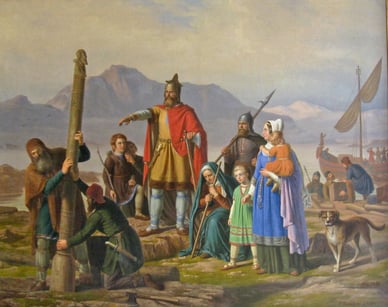
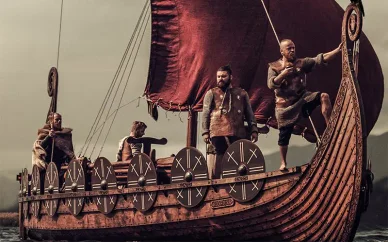
Iceland is one of the youngest countries in Europe: it was only settled from the late 9th century onwards. The island's first inhabitants were Scandinavian Vikings, along with the Irish and Scottish people they'd enslaved during their raiding campaigns. Most of the settlers were Norwegian.
Settlement of the new territory happened at such a pace that within a hundred years, very little farmable land remained on the island. Looking to address the problem, Swedish and Norwegian Vikings began exploring and settling nearby Greenland. On the "land of ice," meanwhile, a genuine state began to take shape, governed through the Althing, a legislative assembly. It still exists today and is considered the oldest parliament in the world.
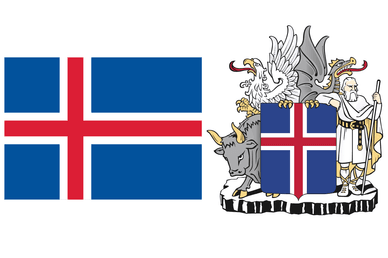
Iceland's history has always been closely tied to Norway's. Norwegian Vikings were the island's first inhabitants, and later, in the 13th century, Iceland came fully under the control of the Norwegian kingdom. When Norway joined the Kalmar Union alongside Sweden and Denmark, Iceland automatically became part of that union too. The alliance between the three kingdoms didn't last especially long — around 140 years. Sweden was the first to leave it, while Norway and Iceland remained under Danish rule for several more centuries.
In the 19th century, a movement for Icelandic independence gradually gathered pace. Iceland became a kingdom in 1918, but held that status for less than thirty years. In the middle of the Second World War, while Denmark was under Nazi occupation, Iceland's Althing voted to move the country to a republican form of government. That happened in 1944. Iceland has been a fully independent democratic state ever since.
In post-war Europe, the Marshall Plan was introduced to speed up economic recovery, giving a major boost to countries devastated by the conflict. Thanks to its participation in that plan, Iceland made an impressive leap in a short space of time, transforming from a dependent territory into one of the most prosperous countries in the world.

Today, it's a genuinely wealthy nation, with a model of government similar in many ways to the other Nordic states, built around welfare-focused economies and a high standard of living.
Since 1994, Iceland has been part of the European Economic Area. In 1949, this small country with no army of its own became one of the founding members of NATO, an alliance it remains part of today, meeting all its required contributions. Despite having no army of its own, Icelanders can still pursue a military career, serving in the Norwegian Armed Forces.
Geography and Climate
Iceland is a small island in northern Europe, considered the westernmost of all European countries. It has no land or direct sea borders — all its neighbouring countries sit at a fairly considerable distance from the island:
- Greenland, the closest, 290 km from Iceland's coast
- The Faroe Islands and Scotland, both around 800 km away
- Norway, 900 km away
Iceland's coastline is washed by two seas, the Norwegian Sea and the Greenland Sea, as well as a strait, the Denmark Strait.
"Land of ice" is the literal translation of the name of Europe's least populated country — though in reality, Iceland is hard to describe as truly icy. It's a fairly typical northern European country, with a climate that echoes conditions in parts of Norway. Spring and summer here are short and cool, while winter is fairly long but surprisingly mild: the average winter temperature in Iceland is around -1°C.
Summer is the best time to visit the island: from June to August, the climate is quite pleasant, with daytime temperatures between 15 and 22 degrees. Weather is also more stable in summer, which matters a lot in a country where sunshine can give way to a downpour, then wet snow, and then bright sunshine again, all within about five minutes.
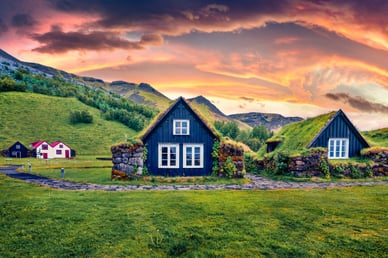
In the summer months, Iceland's landscape shows off its understated beauty in full. Emerald-green meadows dotted with golden buttercups, ash-grey earth around volcanic slopes, and the empty coastlines of the cold northern seas — there's something deeply magnetic, almost magical, about it all. It's hard not to think of Viking legends and the film sagas built around these fierce, courageous warriors.
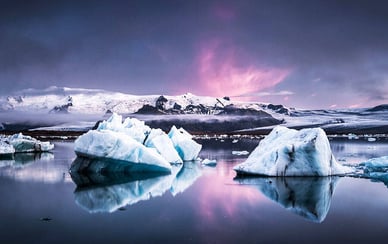
Winter tours have their own clear advantages too, especially for anyone who loves crisp cold and skiing. Cross-country skiing, glacier hikes and visits to ice caves all make for a great active getaway. The extraordinary colour symphonies of the Northern Lights, the Múlagljúfur canyon, and the majestic view over the Jökulsárlón glacial lagoon — formed thousands of years ago by the Breiðamerkurjökull glacier (try saying that one out loud) — all stir up a powerful, lasting, almost childlike sense of wonder.
Travelling to Iceland in spring or autumn, on the other hand, risks ruining your trip. During these seasons, the country is far from welcoming to visitors. Relentless rain, wind strong enough to knock you off balance, damp and biting cold — that's about all you'll remember of Iceland if you're tempted by tour operator discounts in, say, March, or between November and December.
Population, Language and Currency
There are surprisingly few Icelanders in the world: just over half a million, of whom around 400,000 live directly on the island. In the past, another 100,000 or so emigrated to Canada, forming the largest Icelandic diaspora anywhere in the world, while the remaining 50,000 settled in the United States. Within Iceland itself, though, the number of immigrants keeps growing year on year, as more and more people from Europe and beyond choose this northern country, drawn by its high quality of life and deep respect for the environment.
All of the island's native inhabitants are descendants of the Norwegian Vikings who settled these islands, not far from the Arctic Circle, around 1,200 years ago. Their language is Icelandic. It belongs to the Germanic language family and, phonetically, lexically and grammatically, is closely related to Old Norse. Interestingly, unlike many other European languages, Icelandic has almost no dialects — people from any part of the country can understand each other easily.
Icelandic is certainly not a language for the faint of heart: it rounds out the top 10 hardest languages in the world. It can fairly be called a genuine living museum of linguistic antiquity, since grammatical forms, structures and categories still used in Icelandic today have long since disappeared from the rest of the Germanic language family.
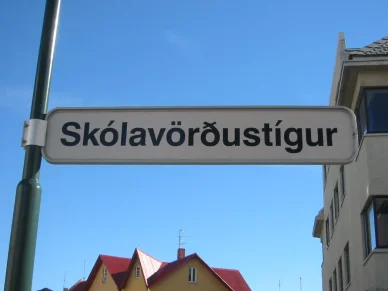
Icelandic phonetics is another genuinely curious phenomenon, really only manageable by native Icelanders and the rare few with vocal cords capable of nailing, on the first try and without a stumble, words like:
- Eyjafjallajökull — the name of a volcano
- Mengjaskilgreiningarritháttur — a mathematical term for set notation (somewhere, German sighs nervously, with more than a hint of envy)
- Hundslappadrífa — a word describing bad weather, literally "dog-slap snow" or foul, driving snow
Icelanders hold enormous love and care for their mother tongue. Unlike other nations, whose languages are now brimming with English loanwords, Icelanders are in no rush to let foreign words into their own.
Take "computer," for instance — it stays "computer" pretty much everywhere else, but not in Iceland. Here, this marvel of modern technology was first studied carefully, its purpose and workings properly understood, and then two genuinely Icelandic words were brought together: tala, meaning "number," and völva, meaning "seer" or "prophetess." Combined, they gave rise to the Icelandic name for one of the most essential objects in any home today: tölva.
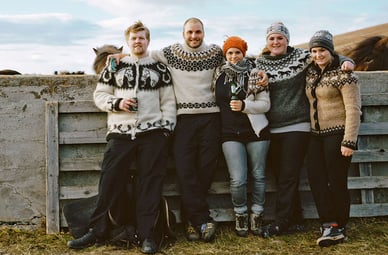
One of the defining traits of Icelanders is their deep attachment to their homeland. Islanders very rarely change citizenship. Even after long stretches abroad, say for studies or a lengthy work posting, they almost always look to return home. If an Icelander marries a foreign national, chances are they'll bring their spouse back to Iceland rather than settle abroad themselves.
Icelanders don't really have surnames in the way most people think of them. What looks like a surname is actually a patronymic, similar to what other cultures might call a patronymic naming system. Take a family where the father is named Jón — incidentally the most common name among Icelandic men, a bit like "John" elsewhere — and the couple has two children, a boy and a girl. Each child gets their own first name, but their "surname" carries the father's name, Jón, with the suffix -son ("son") or -dóttir ("daughter") attached. So the son becomes Jónsson, and the daughter Jónsdóttir. It follows, then, that Icelandic women don't change their name after marriage — they remain their father's daughter their whole lives.
There are a few quirks around first names too. Icelandic parents are asked to choose their child's name from an official government-approved register. If they want to give a child a more unusual name, they need to submit a request to the authorities, and there's no guarantee it will be approved.
There's another consideration tied to marriage, too. Iceland is a fairly closed-off country: immigration from abroad has historically remained quite low, and over the centuries, nearly all of the island's native population has ended up being more or less distantly related to one another, for fairly obvious reasons. As is well known, children born to closely related parents can face a higher risk of health issues. To help protect the population's genetic health, Icelandic couples typically run a mandatory check on how closely they might be related before organising a wedding, and only proceed if the check doesn't turn up too close a family connection.
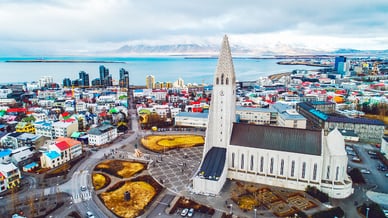
The largest city and capital of the Republic of Iceland is Reykjavík, home to around 140,000 people.
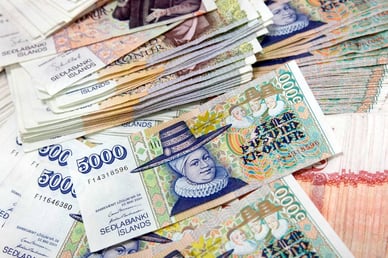
Iceland's currency is the Icelandic króna (ISK). As of writing, 1 euro is worth roughly 140 ISK, so it's well worth checking the current exchange rate before you travel, since the króna can move around quite a bit.
Getting There
Iceland is well connected from Ireland, with Icelandair operating direct flights between Dublin and Keflavík International Airport, just outside Reykjavík. The flight takes around two and a half hours, covering roughly 1,500 km, making it one of the more convenient long-haul-feeling trips you can take from Ireland without an overnight flight. Depending on the season, other carriers occasionally add direct or connecting routes too, so it's worth comparing options before booking, especially in the summer months when demand is highest.
Ireland isn't part of the Schengen Area, but Irish passport holders don't need a visa to visit Iceland for tourism: you're granted entry for up to 90 days on production of a valid passport. It's worth checking that your passport has at least six months' validity remaining before you travel, and taking out travel insurance is strongly recommended, particularly if you're planning excursions or travel into more remote parts of the country.
Where to Stay
Iceland isn't cheap, so it's worth putting together a fairly solid budget before you go. As in any prosperous country, labour here comes at a premium, so very little is genuinely low-cost — but the standard of service is consistently high, and you're unlikely to feel short-changed.
Hotels are no exception. A standard room in a traditional 2–3 star hotel starts at around $60 (roughly €55), and that's very much the floor. The more amenities on offer, the higher the final bill — a fairly transparent bit of logic.
Here are a few relatively affordable options among Icelandic hotels:
Hotel Hallormsstadur — a 3-star hotel in the picturesque village of Hallormsstaður, on the shores of Lake Lagarfljót. The cottages come with everything you need: a bathroom with toiletries, hairdryer and towels, plus a small kitchenette and electric kettle. Free Wi-Fi is included, the restaurant offers dietary options, and parking is free.

Hotel Hallormsstadur
Hotel Selfoss — a 4-star spa hotel in the town of Selfoss. Spa access is included free of charge, and there's an on-site restaurant and bar. Breakfast is included at no extra cost, along with free high-speed Wi-Fi throughout and free parking.

Hotel Selfoss
- SAXA Guesthouse — a guesthouse in the village of Stöðvarfjörður, near the harbour and at the foot of Mount Súlur. Rooms are small but cosy, each with a private bathroom. Breakfast is included and served seasonally, from May to September, with free Wi-Fi and parking.
Grímstunga Guesthouse — a guesthouse in Grímsstaðir, Víðirhóll, around 25 km from Skaftafell National Park. Rooms come with a small sitting area, and there's a shared kitchen and restaurant serving a continental and buffet breakfast. There's also a children's play area on site, with free high-speed internet and parking.

Grímstunga Guesthouse
Stracta Hotel — a 4-star hotel in Hella, close to the Golden Circle. Depending on the room category and price, rooms come with either a private or shared bathroom. The style is modern and minimalist, with a flat-screen TV and small appliances in every room. There's an on-site restaurant and buffet breakfast, plus free Wi-Fi.

Stracta Hotel
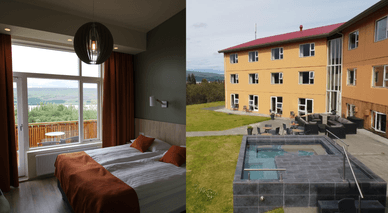
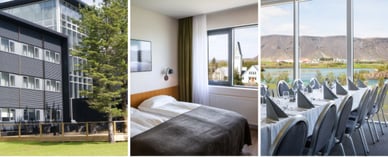
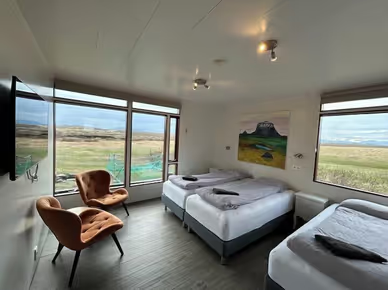
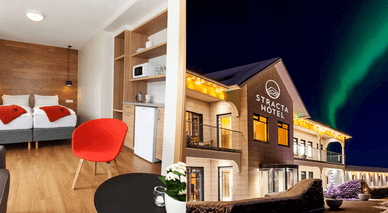
At higher-end hotels, staff speak English, reception is staffed around the clock, and a wide range of additional services is on offer.
What to See
Ice and fire: that's probably the best way to sum up Iceland, a genuinely unique natural phenomenon where ancient ice sits peacefully alongside volcanoes — active ones, no less. The contrast is so unusual, and at first so hard to quite believe, that it gives the whole place a slightly unreal feel. Did we really study all that physics at school for nothing?
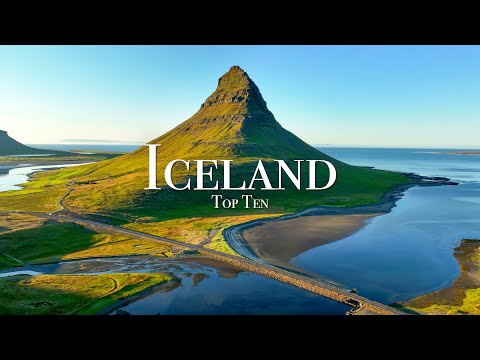
Топ 10 мест Исландии
Reykjavík
"Smoky bay" — that's the meaning behind the name Reykjavík. A farm was founded here in the 9th century, near the hot springs of the peninsula where Iceland's capital now stands. Its founder and owner was the wealthy Norwegian Ingólfur Arnarson, one of the island's very first settlers.
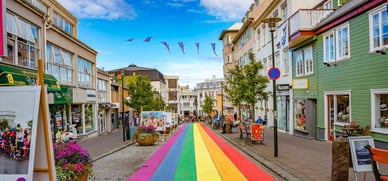
The settlement began growing quickly almost right away, and within three hundred years it had become an important trading and tax centre. Its influence kept growing until the 1630s, when Reykjavík suffered a devastating raid by Barbary pirates, and for a long century afterwards, it not only lost its importance but very nearly ceased to exist altogether.
The village's revival began in the 18th century, when another influential Norwegian, royal treasurer Skúli Magnússon, set up wool-processing workshops there. To this day, he's held in enormous affection and respect by Icelanders, referred to, quite simply, as the father of Iceland. Icelandic wool jumpers have also been a genuine symbol of this island nation for more than four hundred years — warm enough, and practically indestructible enough, to earn that status.
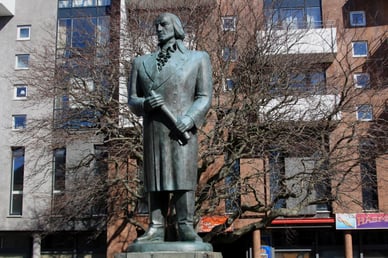
The rise of wool processing in the 18th century gave a real boost to the country's economy, and with it, to the revival of Reykjavík, which not long after became the capital of Iceland.
Today, Reykjavík looks a lot like a small Norwegian town, with none of the grandeur you might expect of a capital city — and that's hardly surprising, given how deeply Norway's centuries-long influence still runs. The city centre is home to the same kind of medieval, tile-roofed houses, packed tightly together, perhaps for warmth, alongside Lutheran cathedrals and cosy one- or two-storey timber houses where locals still live. It all feels thoroughly Scandinavian.
There's one exception, though: on the shore of the city's Tjörnin lake sits a building that's rubbed local residents up the wrong way ever since it was built. It's Ráðhús Reykjavíkur, Reykjavík's City Hall — a bulky, rather awkward-looking structure built in a high-tech style that clashed almost violently with the general atmosphere of graceful, slightly old-fashioned comfort found both around the lake and across the city as a whole.
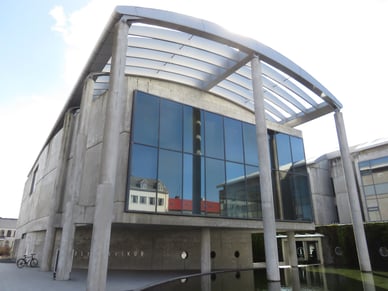
Since 1992, plenty of heated debate has played out over the building, though the controversy has gradually died down over time. As for the City Hall itself, even if it was never exactly loved, locals have come to see it as the kind of contrast that only makes the charm of this small, ancient northern European city stand out even more.
Beyond the historic centre, it's well worth visiting a few of Reykjavík's local museums, including:
The National Museum of Iceland
![]()
The Reykjavík Maritime Museum
![]()
- The Reykjavík Art Museum
The "Settlement Exhibition — 871±2," dedicated to Reykjavík's history right from its earliest days
![]()
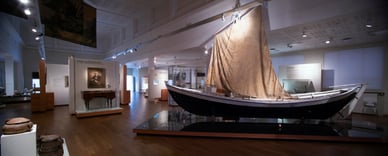
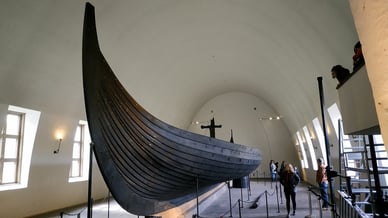
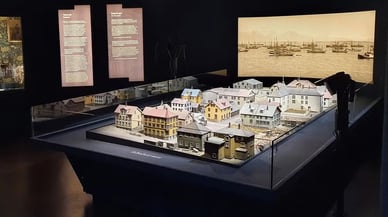
For a slightly more offbeat stop on your Reykjavík itinerary, there's the Icelandic Phallological Museum — its genuine official name — home to a collection of mammalian phalluses. Needless to say, it's not exactly the most suitable spot for children.
The Blue Lagoon
No, this has nothing to do with that idyllic stretch of water from the famous 1980s film — it's a lake fed by a hot spring, framed by dark green Icelandic moss and black lava rock. The Blue Lagoon sits not far from Reykjavík, just half an hour's drive away, on the Reykjanes Peninsula.
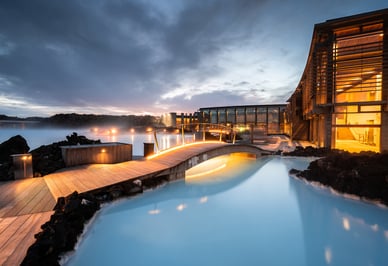
Whatever the weather, the water temperature never drops below 39°C, and its mineral composition is so beneficial for the skin that the lagoon has held a steady place on global rankings of the world's best spa resorts for years. The experience doesn't come cheap, though: 2026 prices start at around ISK 11,990 (roughly €85) per person for entry, rising to ISK 14,990 or ISK 18,490 for the Premium and Signature packages. Children aged 2 to 13 can now enter free when accompanied by a paying adult, though it's essential to book your time slot online well in advance, as the Blue Lagoon regularly sells out days or even weeks ahead, especially in summer.
The stark contrast between the dark green and black of the surrounding landscape and the milky-blue water of the spring creates an immediate impression of something fantastical, almost unreal. It's no surprise that the Blue Lagoon has been named one of National Geographic's 25 Wonders of the World.
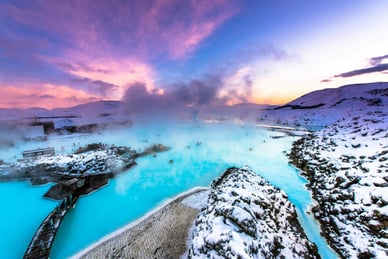
It's one of the most famous thermal spots on the planet, drawing celebrities from all over the globe like bees to honey. If you're lucky enough to visit — and it's worth booking at least three or four months ahead — who knows, the person soaking in the pool next to you might just be a film star or a famous singer. Stars including Kim Kardashian, Björk and Beyoncé have all reportedly been spotted there.
The Golden Circle
The most popular sightseeing route in Iceland is the Golden Circle tour, which lets you take in all the country's major natural attractions in just a few days.

Золотое кольцо Исландии
The journey starts in Reykjavík. The route takes in several stops, the first of which is Þingvellir National Park, the only nature reserve of its kind in Iceland to hold UNESCO World Heritage status. What makes the park unique is its location: it sits right at the meeting point of two tectonic plates, the Eurasian and the North American. It's the only place in the world where you can walk from Eurasia to North America in the space of a couple of hours. The landmark to look out for is a vertical rock wall along the road from Reykjavík to the reserve — that's exactly where the North American continent ends, with the Eurasian continent beginning just a few kilometres further on.
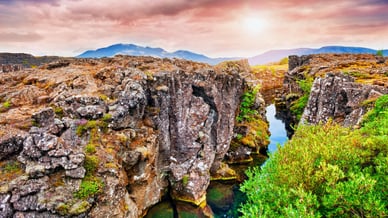
It's in this very valley that you'll find Þingvellir Park, from which the above-water section of the Mid-Atlantic Ridge is visible. Iceland is the only place on Earth where you can see it, since the ridge sits mostly underwater. The separation of the tectonic plates is still ongoing today: the rift widens by around 2.5 cm every year. This process drives intense volcanic eruptions, earthquakes, and, as a result, the formation of ravines.
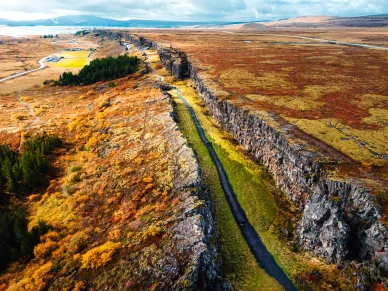
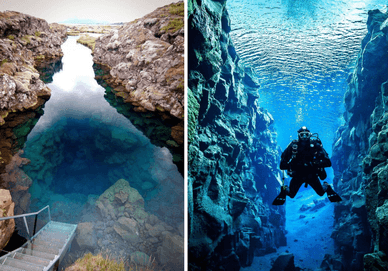
The Langjökull glacier, within the reserve, feeds these fissures with meltwater, which filters down through volcanic rock and gradually reaches Þingvallavatn, Iceland's largest lake. Thanks to this long process of underground filtration, the water resurfaces crystal clear and completely free of harmful impurities — safe to drink straight from the source — and its extraordinary clarity lets you see the lakebed down to around 100 metres.
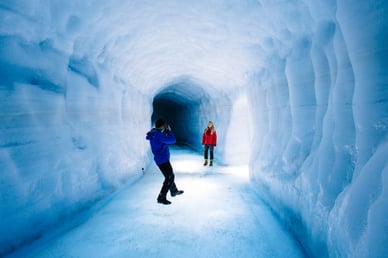
Naturally, divers and snorkellers weren't about to ignore a gift from nature like this. Deep dives are organised here using special dry suits, with divers accompanied by experienced instructors and guides. The most spectacular dives, it's said, are in the Silfra fissure. If you're over 16 and ready to explore the underwater world, a visit to Þingvellir National Park is an absolute must — it makes for a genuinely fantastic experience.
What to Eat
Icelandic cuisine is every bit as distinctive as the country's landscape: the tables of this remarkable nation can occasionally serve up genuine culinary curiosities. Take hákarl, for example — shark meat dried using a special technique, giving off an intense ammonia smell, not unlike a cotton ball soaked in smelling salts.
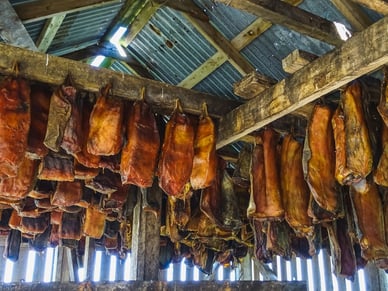
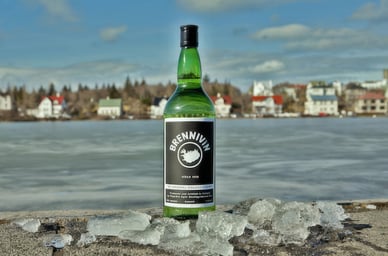
A piece of hákarl is usually served alongside the national drink with the unsettlingly romantic name "Black Death," though there's really nothing frightening about it at all. The name dates back to the prohibition era of 1915–1922, when bottles of alcohol were labelled with a skull and crossbones, part of a government effort to warn Icelanders off drinking without actually banning its sale. Somewhere along the way, the nickname "Black Death" caught on among locals and stuck for good. The drink's other name is brennivín, a strong spirit distilled from potatoes and caraway seeds.
Interestingly, hákarl is mostly eaten by older generations — younger Icelanders tend to give this national dish a wide berth, put off by its startling smell.
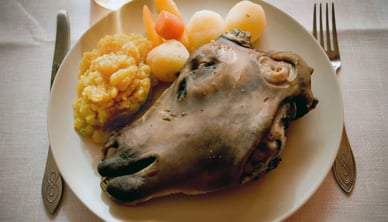
Just as exotic is svið, a sheep's head that's singed before cooking to remove all the wool. The prepared head is then boiled in broth for a couple of hours and served whole, alongside roast potatoes and vegetables. The cheeks and tongue are considered the tastiest parts.
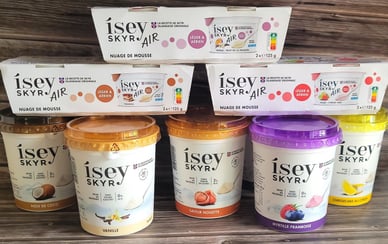
Icelanders don't start their morning with coffee, but with a glass of skyr, a fermented dairy product with a history stretching back a thousand years. It looks and tastes something like yoghurt, but has a thicker, creamier texture. Skyr is often mixed with biscuits and cream, sometimes with muesli or berries stirred in, making for a pretty hearty, healthy and tasty breakfast.
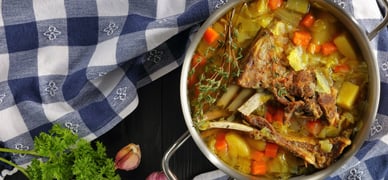
In a country with a cold climate, hearty, warming soups are a must. One of the most beloved among Icelandic families is kjötsúpa, a lamb dish slow-cooked with potatoes, carrots and turnips. The result is a thick, fragrant, deeply nourishing soup.
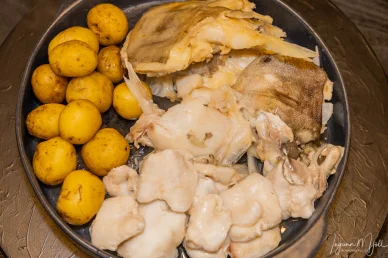
Fish is the most cherished and widely eaten food in a country surrounded on all sides by cold northern seas. For thousands of years, it's formed the backbone of the Icelandic diet, and it still does today, though statistics show fish consumption has dipped slightly over the past decade, thanks to a significant expansion in food production and greenhouse vegetable growing on the island.
Iceland's number one fish is cod. It's salted, fried, baked and served with potatoes or grains, alongside pickled, fresh or stewed vegetables. Pike, herring and redfish also turn up regularly on Icelandic tables, though it has to be said Icelanders still eat more lamb and other meats overall.
A meal out at an Icelandic restaurant won't come cheap: budget the local equivalent of at least $90–100 for two people, without drinks.
Iceland is, quite simply, a magical island, with dramatic, awe-inspiring nature, crystal-clear water and clean air. It's one of the few places on Earth where the environment is treated with the utmost respect and sense of responsibility — a country that feels like the eighth wonder of the world. There isn't much more to add.