Kyoto Tea
Do you all like tea? I drink it every day. It is great when I am thirsty, and it is great to drink when I feel like taking it slow; it is a drink I use in all sorts of situations, and that drink is tea. I think there are all sorts of reasons for drinking tea: for your health and for beauty purposes. And there are so many varieties! Green tea, black tea, oolong tea, dokudami tea, rooibos tea, and all sorts of flavoured teas.
Prices range from budget to premium, and even if you simply say “tea”, the options are endless. Still, when we hear the word “tea”, isn’t the first thing that comes to mind that slightly astringent green tea?
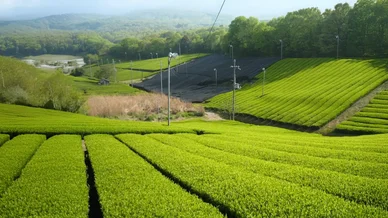
Here, I will narrow the focus to Kyoto tea and take a look at tea from various angles. The setting is southern Kyoto Prefecture, a tea-growing region with 800 years of history. Now, let me take you on a gently sweet journey into the world of tea.
Uji: a Tea-Growing Region
When you hear “Uji tea”, words like high-end and long-established probably spring to mind. If a bottle of tea says something like “with Uji matcha”, you end up buying it, believing it must be tasty. When you actually try it, the flavour is as good as its reputation, so you are convinced that fame equals trust.
Uji tea does not disappoint those expectations, and apparently it became known throughout the country as far back as the Kamakura period. Tea with Ashikaga Yoshimitsu’s seal of approval—that was Uji tea.
Ashikaga Yoshimitsu is the shogun who even appears in the anime Ikkyu-san. Yoshimitsu gave Uji tea special patronage, and this was apparently inherited by Toyotomi Hideyoshi. So they established a branding strategy for Uji tea. Outstanding marketing!
So, what exactly does “Uji tea” refer to? Let us take a look.
What is Uji Tea?
Uji tea refers to tea produced and processed in Kyoto and the area around Ujitawara. In 2004, the definition of Uji tea was officially defined as follows:
- Tea produced in the four prefectures of Kyoto, Nara, Shiga, and Mie.
- Finished and processed within Kyoto Prefecture by businesses in Kyoto Prefecture.
- Tea produced in Kyoto Prefecture is given priority.
In other words, Uji tea is tea produced and processed within Kyoto Prefecture by Kyoto artisans. This means that, as long as the main production area is in Kyoto, tea leaves from the three neighbouring prefectures can be used.
So, let us take a look at the specific types of Uji tea.
Types of Uji Tea
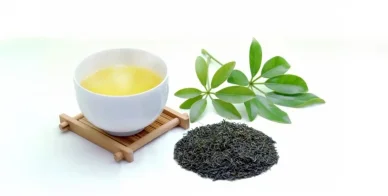
Matcha.
This is made by blocking sunlight for 20 days or more using reed screens, straw, synthetic fibres, and the like, then picking the new shoots, steaming them, drying them without rolling them, and grinding them into powder using a stone mill or similar. It has a mellow, sweet flavour.
Gyokuro.
It is cultivated in the same way as matcha and after the new shoots are steamed they are dried while being rolled. Uji gyokuro is regarded as the finest grade of Japanese tea. It has a smooth, full-bodied flavour.
Sencha.
The steps after tea picking are the same as for gyokuro. It is the representative green tea and accounts for most Japanese tea. Its defining feature is the refreshing feeling after you drink it.
Hojicha.
This is tea made by roasting sencha, bancha, and the like. It is relatively low in tannins and caffeine, and its toasty aroma and gentle mouthfeel appeal to almost everyone.
Kabusecha.
This is a tea that falls between gyokuro and sencha. After the tea bushes are covered for several days with straw, matting, synthetic fibres, and the like and the new shoots are picked, it is produced in the same way as gyokuro. It has the flavour of gyokuro, yet also a refreshing aftertaste like sencha.
Genmaicha.
This is Japanese tea with a toasty aroma, made by mixing roasted brown rice with bancha, gyokuro, sencha, and the like. It is mellow and light.
Karigane.
This is Japanese tea made using only the stems. In Kansai, including Kyoto, it is known as a high-end tea. Because the stems contain a high amount of theanine, the component that gives Japanese tea its sweetness, you can enjoy mellow umami.
So today, which companies are preserving and carrying on the tradition of Uji tea? Let us shine a spotlight on the long-established tea houses and take a closer look.
Long-Established Tea Houses
Fukujuen
Fukujuen was founded in Kansei 2 (1790) by Fukui Iyemon. In 2004, it suddenly became widely well known when it co-developed the bottled tea “Iyemon” with Suntory. It manages an integrated process from tea production through to sales, including in-house manufacturing and direct retail, and apparently it has expanded retail outlets overseas as well. Come to think of it, their tea is labelled in English too, so it is perfect as a souvenir for people overseas. When I buy tea as a gift for foreigners, or when I guide visitors from abroad in choosing tea souvenirs, I always recommend products from here.
Morihan
Founded in Tenpō 7 (1836). The tea itself is, of course, wonderful, but personally, I think Morihan’s real brilliance lies in its sweets. Sweets made with Morihan’s matcha are exquisite. Whether Japanese-style or Western-style, their creativity is overwhelming. The moment you take a bite of Morihan’s matcha sweets, the crisp bitterness and depth meld with the sweetness, and your mouth fills with a sense of happiness. It is pure bliss. Sorry, that sounded a bit like Yuzan Kaibara, but that is how strongly I recommend the sweets. Please give them a try.
Itoh Kyuemon
Founded in Tenpō 3 (1832). The shop is near Byodo-in Temple in Uji, a National Treasure. There is an attached café, and the parfaits here are sublime. They are practically edible works of art. The sweet bean paste and cream stimulate your brain, and the bouncy matcha jelly keeps the sweetness in check, so you end up finishing it without meaning to. How can a parfait make you feel wabi-sabi?
Also, Kyuemon sells matcha curry, the sort of product you might expect to see at Village Vanguard. I tried it out of curiosity, and it was surprisingly good.
Nakamura Toukichi Honten
Founded in Ansei 6 (1859). This tea merchant is based on the concept of blending the cultural power and spirituality of tea into a form suited to the times. The fresh tea jelly you can eat at the café at the Uji main shop is absolutely irresistible. The elegance and high level of craftsmanship that radiate from its appearance are such that you could display it in a gallery. Neither flashy nor plain, its balance is admirable. Incidentally, they spell jelly as “zerii”. It is a masterpiece that reflects attention to detail in every aspect.
Tsujiri
Founded in Man’en 1 (1860) by Tsujiriemon. But did you know there is more than one Tsujiri? The main house is Kyoto Uji Tsujiri, headquartered in Uji City, Kyoto Prefecture. Spun off from the main house is Gion Tsujiri, and Gion Tsujiri operates the café brand Tsujiri. There is also another branch called Kyoto Uji Tsujirihei Honten. Personally, I like Meiji’s ice bar called Tsujiri Rich Matcha. It is convenient, but its taste is not to be underestimated, so please give it a try.
Tsujirihei Honten
Founded in Man’en 1 (1860). With a long history of cultivating and processing Uji tea, it offers everything from traditional tea to new forms of tea suited to the times. It explores the potential of Uji matcha as an ingredient, and you can savour carefully crafted matcha sweets. At the tea salon, there is a line-up of colourful sweets such as tama-cha extracted over 12 hours with ice dashi, daifuku, and parfait. If you love matcha, it is a place you will want to visit at least once.
Kanbayashi Shunsho Honten
Founded in the Eiroku era (1558–1570). It is a long-established tea house with a history of supplying tea leaves to the shogun’s household. When you hear “Ayataka”, many of you may go, “Oh!” Ayataka is bottled tea co-developed with Coca-Cola Japan, and I think some of you will recognise the phrase “cloudy green tea as if brewed in a teapot, with a rich umami”. For me, it is the brand I choose when I’m in the mood for a proper, no-nonsense green tea. Incidentally, it is pronounced “Kanbayashi Shunsho”.
Shogyokuen Seicha Co., Ltd.
Founded in Bunsei 10 (1827), it handles everything from tea production through to sales in an integrated way. Before and after the war, it achieved top prizes in cultivar competitions, and in a tea competition held in Heisei 25, it won the Minister of Agriculture, Forestry and Fisheries Award in the gyokuro category—proof of its strength. What is more, the fifth-generation head of Shogyokuen Seicha is a tea master, 10th dan. If you care about quality, do give it a try.
How to Get to Each Shop in Uji
Fukujuen
Location: Uji Tea Workshop
Address: 10 Uji Yamada, Uji City, Kyoto Prefecture
Tel: 0774-20-1100
Directions: 8-minute walk from Keihan Uji Station; 15-minute walk from JR Uji Station
Morihan
Location: Uji Morihan Shop
Address: 78 Kubo, Ogura-cho, Uji City, Kyoto Prefecture
Tel: 0774-22-3063
Directions: About a 10-minute walk from Ogura Station (Kintetsu Kyoto Line); about a 15-minute walk from JR Ogura Station (JR Nara Line); parking available
Itoh Kyuemon
Location: Itoh Kyuemon Main Shop Tea House
Address: 19-3 Todo Aramaki, Uji City, Kyoto Prefecture
Tel: 0774-23-3955
Directions: About a 5-minute walk from Mimurodo Station (Keihan Uji Line); about a 12-minute walk from Uji Station (JR Nara Line); free parking available
Nakamura Toukichi Honten
Location: Uji Main Shop
Address: Ichiban 10, Uji, Uji City, Kyoto Prefecture
Tel: 0774-22-7800
Directions: 1-minute walk from Uji Station (JR Nara Line); 10-minute walk from Keihan Uji Station
Tsujiri
Location: Tsujiri Uji Main Shop
Address: 156 Myoraku, Uji, Uji City, Kyoto Prefecture (Ujibashi-dori)
Tel: 0774-94-6990
Directions: 5-minute walk from Uji Station (JR Nara Line)
Tsujirihei Honten
Location: Tsujirihei Honten Kyoto Uji Main Shop
Address: 41 Wakamori, Uji, Uji City, Kyoto Prefecture
Tel: 0774-29-9021
Directions: 4-minute walk from JR Uji Station
Kanbayashi Shunsho Honten
Location: Direct Retail Shop
Address: 38 Myoraku, Uji, Uji City, Kyoto Prefecture
Tel: 0774-22-2509
Directions: 6-minute walk from JR Uji Station; 8-minute walk from Keihan Uji Station
Shogyokuen Seicha Co., Ltd.
Location: Shogyokuen Seicha Co., Ltd.
Address: 54 Miyanogo, Kusauchi, Kyotanabe City, Kyoto Prefecture
Tel: 0774-62-0136
Directions: 14-minute walk from JR Doshisha-mae Station; 11-minute walk from Kintetsu Kodo Station
Tea Events and Activities
Fukujuen – CHA Experience Park
CHA Experience Park is a facility where you can enjoy all sorts of tea-related experiences. They offer a stone-mill experience, a matcha preparation experience, a Uji tea experience, a world tea experience, and more. Reservations are required, so be sure to enquire in advance.
Address: 3-1-1 Sagaradai, Kizugawa City, Kyoto Prefecture
Tel: 0774-73-1200
Opening Hours: 10:00–16:00 (last admission for experiences at 14:30)
Fukujuen – Uji Tea Workshop
You can fully enjoy traditional Uji tea culture, including making matcha with a stone mill, making tea utensils, and a sencha etiquette course. Please enquire about the schedule.
Address: 10 Uji Yamada, Uji City, Kyoto Prefecture
Tel: 0774-20-1100
Opening Hours: 10:00–17:00
Fukujuen – Tea Wholesaler Street
This is a charming museum displaying the activities and tools of tea wholesalers, as well as materials on tea cultivation and tea production. It opened in 2017 in Yamashiro-cho, Kizugawa City, where around 40 tea wholesalers are lined up.
Address: 16 Higashitsukurimichi, Kamikoma, Yamashiro-cho, Kizugawa City, Kyoto Prefecture (in front of Fukujuen Headquarters)
Tel: 0774-66-6280
Opening Hours: 10:00–12:00; 13:00–16:00
Kanbayashi Shunsho Honten – Matcha Factory Tour
You can look into the tea-grinding room through a window and observe matcha actually being ground. Wrapped in the soft aroma of fresh matcha, you can enjoy a pleasant time! Only one group per day is accepted, and reservations are required.
Address: 9 Kageyama, Uji, Uji City, Kyoto Prefecture
Tel: 0774-23-8855 (main); 0120-23-8866 (toll-free)
Opening Hours: 8:45–17:30
Kanbayashi Shunsho Honten – Uji Kanbayashi Memorial Museum
Historical materials handed down in the Kanbayashi Shunsho family are open to the public. Exhibits include Luzon jars used to carry tea to the Imperial court, the shogunate, and daimyo households, as well as letters written by Toyotomi Hideyoshi. At present, it is closed for maintenance, so be sure to enquire before visiting.
Address: 38 Myoraku, Uji, Uji City, Kyoto Prefecture
Tel: 0774-22-2513
Ocha no Kanbayashi – Kofu-an
You can experience an authentic tea ceremony, try grinding matcha with a stone mill, and view exhibits of tea-making tools. It is also possible to observe the actual work processes inside the tea factory through a glass window. English-language support is available, so it is also a good place to bring foreign friends.
Address: 43 Myoraku, Uji, Uji City, Kyoto Prefecture
Tel: 0774-22-5318
Opening Hours: 10:00–16:30 (Last Order 16:00)
Uji Tea Dojo – Takumi no Yakata
This is a Uji tea specialty shop where a Japanese tea instructor will advise you on how to brew it. You can also try a tea-tasting game. Visits are by reservation only, so be sure to enquire in advance.
Address: 17-1 Matafuri, Uji, Uji City, Kyoto Prefecture
Tel: 0774-23-0888
Opening Hours: 11:00–17:00 (Last Order 16:30)
Marukyu Koyamaen – Makishima Factory
You can observe the process of making matcha. Not only can you tour the matcha factory and the tea judging room, but you can also experience a tea room and taste matcha. The experience takes about 90 minutes and requires a reservation.
Address: 172-4 Nakagawara, Makishima-cho, Uji City, Kyoto Prefecture
Tel: 0774-20-0909 (reservations only)
Opening Hours: 10:00–12:00; 13:00–16:00
Wazuka Tea Friends
An instructor will teach you how to brew Japanese tea. You can not only listen to explanations, but also experience the colour and aroma of sencha and more, so afterwards you will be able to brew delicious tea easily at home too.
Reservations can be made up to two days in advance.
Address: 46 Minami Oyuusui, Wazuka-cho, Soraku-gun, Kyoto Prefecture
Tel: 0774-78-3033
Opening Hours: 11:00–16:00 (by arrangement)
Recommended Kyoto Matcha Sweets by Mail Order: Top 3 Picks
As a self-proclaimed matcha sweets enthusiast, I will introduce a selection of special Kyoto matcha sweets available for mail order, chosen purely on my own judgement and bias.
Malebranche – Okoicha Langue de Chat “Cha no Ka”
I have never eaten a cookie of such high quality. The matcha aroma is rich, and the white chocolate sandwiched between does its job without being overpowering. Even having just one makes you feel incredibly indulgent. It is good as a Kyoto souvenir, but if you live far away, be bold and order it by mail. You will not regret it at all.
Official website: http://www.malebranche.co.jp/
Kashi Shokunin – Matcha Truffles
When I first tried this, it really shocked me. I thought, "So this is what melting means." The matcha is freshly ground matcha from the long-established Kyoto shop Ippodo. Each piece seems to shine. It is a gem that I would definitely like you to buy as a treat for yourself. This is no exaggeration: it makes everyday life feel more vibrant.
Official website: https://www.kashishokunin.co.jp/onlineshop/
Chez Agata – Luxurious Freshly Ground Matcha Terrine
Elegant and delicate—truly a dessert for adults. Your everyday stress will vanish. You will not find this smooth, gently melting texture anywhere else. It is also recommended for those seeking a rich flavour. It is such a highly refined dessert that, imagining the patissier who made it, you might even find yourself reflecting that you should live a little more thoughtfully.
Official website: https://www.kyoto-sweet.jp/
Related Links
Ocha no Kyoto
Official website: https://ochanokyoto.jp/
Online shop: https://ochanokyoto.jp/onlineshop/
Fukujuen
Official website: http://www.fukujuen.com/
Online shop: https://shop.fukujuen.com/
Morihan
Official website: https://www.kyoeiseicha.co.jp/
Online shop: https://morihan.com/
Itoh Kyuemon
Official website: https://www.itohkyuemon.co.jp/corporate/
Online shop: https://www.itohkyuemon.co.jp/
Nakamura Toukichi Honten
Official website: https://www.tokichi.jp/
Online shop: https://store.tokichi.jp/
Tsujiri
Official website: https://www.kataoka.com/tsujiri/shop/
Online shop: https://tsujiri-uji.com/
Tsujirihei Honten
Official website: http://www.tsujirihei.co.jp
Online shop: https://www.rakuten.ne.jp/gold/tsujirihei/
Kanbayashi Shunsho Honten
Official website: https://www.shunsho.co.jp/
Online shop: https://shop.shunsho.co.jp/
Shogyokuen Seicha Co., Ltd.
Official website: http://shogyokuen.co.jp/
Online shop: http://shop.shogyokuen.co.jp/
In closing
I am from southern Kyoto. Until I was old enough to understand, I did not realise that Uji tea was so famous nationwide—no, worldwide. It is a fond memory of mine to head home while breathing in that indescribable toasty aroma of tea being roasted on the way back from cram school. The tea shop was next to my English cram school, you see. I looked forward to eating very strong tea dango that you could buy there only in certain seasons.
Tea is closely tied to everyday life, yet its depth is immeasurable. It has a long history, carries on tradition, and yet slips naturally into daily life. All of that together is what makes tea what it is.
Tea is what comes to mind when you hear the phrase “I’m thirsty, Mum!” But tea is also something that can evoke the formal beauty of traditions and etiquette. Days spent with tea feel rich. And so, today as well, I will keep on drinking tea diligently.