John Hume
Anyone searching for John Hume Northern Ireland history will quickly come across a name closely associated with some of the most significant political developments of the late 20th century. Hume was a politician, civil rights campaigner and Nobel laureate. His commitment to peaceful political dialogue earned him international recognition. Despite the pivotal role John Hume played in the Northern Ireland peace process and the Good Friday Agreement, many people still know relatively little about the man himself. His life, political career and ideas provide a broader picture of how he became one of the defining figures in modern Irish history.
An Introduction to John Hume
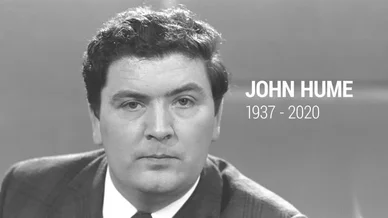
To kick things off and help you to get to know the SDLP leader, here are a few key facts about John Hume:
Full Name | John Hume |
Birth and Death Date | 18 January 1937 – 3 August 2020 (aged 83) |
Birthplace | Derry (Londonderry), Northern Ireland |
Place of Death | Derry, Northern Ireland |
Political Party | Social Democratic and Labour Party (SDLP) |
Duration of SDLP Leadership | 1979 to 2001 (22 years) |
Member of Parliament | MP for Foyle from 1983 to 2005 (22 years) |
Member of the European Parliament | 1979 to 2004 (25 years) |
Other Major Offices | Minister of Commerce in Northern Ireland’s 1974 Power-Sharing Executive |
Nobel Peace Prize | Joint winner in 1998 with David Trimble |
Other Major Awards | Martin Luther King Award in 1999, Gandhi Peace Prize in 2001 |
Hume’s Critics and Supporters
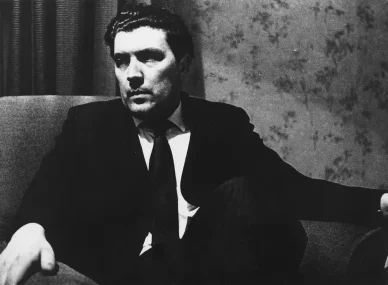
John Hume is one of many controversial Irish figures, ranging from Conor McGregor to Gerry Adams, who’ve had a polarising effect on the public. There are nearly as many people who view Hume as a villain as there are who see him as a hero.
That makes the John Hume Northern Ireland story a complicated one. His supporters see him as the Irish Gandhi, a man who dedicated his life to the advocacy of non-violence and open dialogue during the Troubles. Detractors look down on his role as a negotiator and a man who made sacrifices and compromises as part of his peace strategy, with the most extreme critics considering him to be a traitor.
As with most historical figures, the truth lies somewhere in the middle, and historians and journalists alike generally acknowledge that today’s peace is a direct result of the work of Hume and his contemporaries.
Early Life and Political Beginnings
From Teacher to Political Activist
The John Hume Northern Ireland story starts fairly modestly, with the future activist growing up in Derry, which was called Londonderry at the time. From an early age, he saw religious division and cultural inequality up close and personal, because that was just a part of life in the country at the time.
The future Derry politician attended St. Columb’s College and then St. Patrick’s College in Maynooth, originally considering becoming a priest before deciding to become a teacher instead. During the 1960s, he became increasingly interested in the civil rights movement, which was becoming as significant in Northern Ireland as it was across the Atlantic in the United States.
After campaigning against housing and employment discrimination, Hume went on to get involved in Irish politics, co-founding the Social Democratic and Labour Party (SDLP) in 1970. Its aims? To pursue nationalism through peaceful politics, rather than violence.
Hume’s Role in the Troubles
The Focus on Talking Instead of Fighting
This last point is an important one, because it’s a reminder that the John Hume Northern Ireland story isn’t a tale of a violent revolution. Hume also wasn’t the kind of man to gamble when it came to Ireland’s future, although if he was still around today, he might well have staked a few euros on the best online casinos as a way to wind down after a stressful day of talks with UK government.
Speaking of the UK government, Hume’s approach to SDLP policy was interesting because he focussed on negotiation and compromise, acting as a middleman between London and Dublin and trying to build relationships across the splintered unionist landscape. He abhorred the violence that the paramilitary groups espoused, arguing that bombing and shooting people could never lead to lasting change.
The result of all of this was that people started to trust Hume as a man who wanted to bring the country together, rather than tear it apart. It also underpinned everything he did while working on the peace process.
Hume’s Talks with Gerry Adams
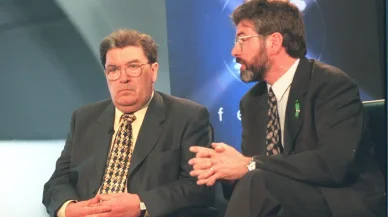
We mentioned Gerry Adams earlier as a controversial Irishman, but the interesting thing is that the two men knew each other and worked together. In fact, in the late eighties and early nineties, John Hume took part in a series of secret negotiations with Sinn Féin leader Adams.
In typical Hume fashion, his goal was to convince the republicans to focus on peaceful, democratic means, ending the violence of the IRA and bringing stability to the country. After the secret talks became public, all parties faced backlash from their supporters, but history shows that Hume and Adams were in the right.
These discussions led to the 1993 Downing Street Declaration and the eventual announcement of a ceasefire on 31 August 1994, although that eventually collapsed. However, the IRA ceasefire was restored in 1997 and a series of further talks began, ultimately leading to 1998’s Good Friday Agreement.
The Good Friday Agreement and the Shared Nobel Peace Prize
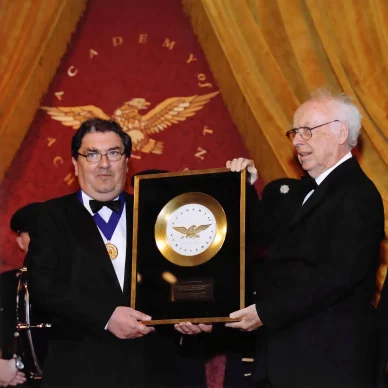
So what exactly was the Good Friday Agreement?
Well, the peace agreement of 1998 built on previous attempts to end the violence and came about due to the culmination of years of dialogue between various political and paramilitary groups on both sides of the conflict. It quickly gained international recognition because unlike earlier attempts to bring about peace, it proved to be successful in the long run.
The John Hume Northern Ireland story comes into play here because he was the leader of the SDLP and participated alongside other key figures in the talks that brought peace to Ireland. In recognition of the vital role that he played, John Hume was awarded the 1998 Nobel Peace Prize alongside Unionist leader David Trimble, who Hume had worked closely with during the process.
And it wasn’t just the Nobel committee which recognised Hume’s hard work. He was also awarded a number of other honours including the Gandhi Peace Prize in 2001.
Hume’s Symbolism and Legacy
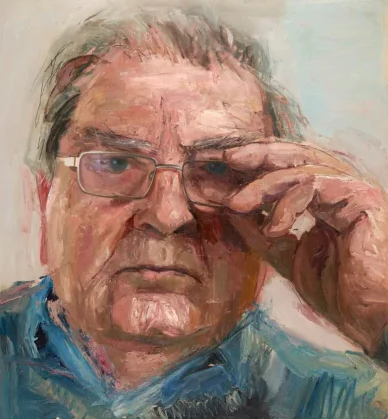
Today, John Hume is remembered both in Ireland and abroad through a number of different memorials, honours and institutions. For example, there’s a statue of him in Guildhall Square in his native Derry, while the nearby Peace Bridge reflects much of his work and what he stood for. Ulster University has a building called the John & Pat Hume Building on its Magee campus.
His European vision has also been recognised internationally, which is why he was awarded the Nobel Peace Prize, the Gandhi Peace Prize and various other high-profile awards and acknowledgements. Meanwhile, the John and Pat Hume Foundation continues to advocate for peaceful change in the Hume family name.
After Hume passed away in 2020, tributes flooded in from all over the world, and from politicians and activists in Ireland, Britain and Europe in particular. He’s also been associated with a number of civic initiatives promoting peace and peace activism into the 21st century.
In the News
John Hume passed away on 3 August 2020 at the age of 83, with political leaders including Bill Clinton, Boris Johnson and Ireland’s Micheál Martin releasing public tributes to a life well-lived. Even at a time when the news was dominated by an unprecedented pandemic, the 2020 death was big news. It was as talked about as it would be if a fellow Irishman like Liam Neeson or Conor McGregor were to pass away today.
The international reaction to Hume’s death was understandably huge, and the global reach of those reactions was a testament to his influence. Even after his death, the John Hume Northern Ireland story was far from over. His life and work are still being covered in books, studies and documentaries.
If you’re looking to read more about Hume in a source that you can trust, your best option is P. J. McLoughlin’s John Hume and the Revision of Irish Nationalism. It’s a fact-filled read that also makes some of the more complicated aspects of the story easier to absorb.
John Hume Today
The former SDLP leader is generally seen as one of the most influential Irish politicians of the late 20th century, and with good reason. He was even voted the greatest Irishman in an RTÉ documentary, and whether that particular claim is true, it’s hard to argue against him being the greatest Irish peace model.
The thing to remember is that John Hume didn’t achieve what he did alone, and we should also remember his wider EU role as a peacemaker and negotiator beyond Ireland. In 2026, six years after Hume’s death, his influence is still visible to those who are looking for it, and the peace that he helped to establish is looking stronger than ever.
In His Own Words
We can’t cover the John Hume Northern Ireland story without taking a look at a few quotes, whether he was talking about the rejection of violence, considering the latest European idea or just reflecting on life itself. Like most politicians, he was a man who knew how to use words to his advantage.
Here are a few of our favourite famous lines from Hume’s writing and speeches:
- “The answer to difference is to respect it.” – Nobel Prize Lecture
- “Difference is of the essence of humanity.” – Nobel Prize Lecture
- “Difference is an accident of birth.” – Nobel Prize Interview
- “They spilt their sweat and not their blood.” – Nobel Prize Lecture, referring to European cooperation
- “The real healing process will begin.” – In reference to the Good Friday Agreement
- “Agreement and respect for difference.” – In reference to the principles underpinning the new Europe and Northern Ireland settlement
- “We owe this peace to the ordinary people of Ireland.” – Nobel Prize Lecture
Retirement and Death
And so our piece on the John Hume Northern Ireland story draws to a close.
We’ve already touched upon Hume’s death, but there was a lengthy period before that when he stepped away from politics to enjoy his retirement. In fact, Hume stepped down as leader of the SDLP in 2001 and retired as an MP completely in 2005.
After that, he lived a relatively peaceful life in Ireland, although he struggled with declining health as the years went on. When he passed, his death led to a period of mourning amongst his followers, with political reactions from around the world acknowledging the huge impact that he’d had. His funeral was attended by friends and family members and senior politicians alike.
Ultimately, perhaps the best way to remember Hume is in the words of former US president Bill Clinton, who said that Hume had “devoted his life to finding common ground.” We couldn’t have put it better ourselves.