Wembley Stadium
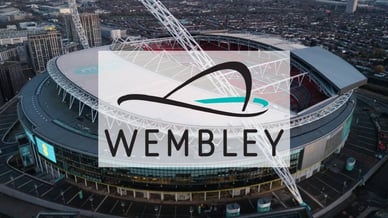
Wembley Stadium is a football stadium in Wembley, a north-western district of London. In this article, we will tell you about its history, location and past events.
Name | Wembley Stadium |
Country | United Kingdom |
Address | London HA9 0WS, Wembley, Greater London, UK |
Capacity | 90,000 spectators |
Team | England national football team |
Area | Total area of the complex 105,000 m² |
Main sports | Football, American football, rugby |
Record attendance | 98,000 people (Live Aid concert in 1985, old stadium) |
Notable events | FA Cup Finals UEFA Champions League Finals Super Bowl (NFL International Series) 2012 Olympic Games Concerts by world-famous stars (Queen, Adele, Ed Sheeran) |
History
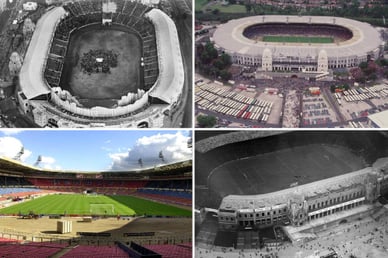
Wembley Stadium Old Photos
The history of this arena, a symbol of English football, began in 1923, when King George V of Great Britain attended its opening. The first stadium, then known as Empire Stadium (or simply Wembley), was built on the site of the future Wembley. It was opened on the eve of the British Empire Exhibition, a major exhibition held in London. The construction was carried out by Sir Robert McAlpine.
At the same time, the first FA Cup final was held there, attracting a record crowd of 200,000 people who watched the match. The old stadium became not only a venue for football matches — it hosted the 1948 Summer Olympics, the legendary 1966 World Cup final, as well as European Championship finals and many other competitions and shows.
By the early 2000s, the old stadium had become outdated, and in 2003, a decision was made to demolish it and build a new modern complex. The official opening took place on 19 May 2007 with the FA Cup final.
The new stadium became not just a football arena, but a real architectural and technical gem. It has a capacity of around 90,000 people. The arena is considered one of the largest on the European continent.
For comparison, the Principality Stadium, located in Cardiff, Wales, has a capacity of 74,500 people.

Wembley Through the Years
The stadium features a huge 133-metre-high arch, which has become its main symbol and supports a roof that can be partially closed. The arena is used not only for football matches, but also for rugby, American football, boxing and concerts by world-famous artists.
The stadium was built of concrete in 12 months, with approximately 3,000 people involved in its construction. A distinctive feature of this structure is its two snow-white towers.
It is important not to confuse Wembley Stadium with Wembley Arena (now OVO Arena Wembley). These are two different venues, but they are located next to each other in the same area of Wembley Park in London.
Like Scotland's main stadium, Murrayfield Stadium, Wembley fills to capacity during major football matches involving leading teams. It is one of the largest arenas, along with Tottenham Hotspur Stadium, which can accommodate up to 66,000 spectators.
The Saracens professional rugby club from London sometimes uses Wembley Stadium for major matches.
This venue is associated with cultural and charitable events of the past, held under the patronage of Princess Diana.
Where is Wembley Stadium located?
Wembley London is located in the capital of Great Britain. It is one of the most famous sporting and cultural venues in the world. The stadium is located in the Wembley district, which is in the north-western part of London in Wembley Park, just a 10-15 minute tube ride from the city centre. Thanks to convenient transport links, the stadium can be reached by underground, bus or train.
Wembley Park has shops, restaurants and the London Designer Outlet shopping centre. You can spend time here before or after an event.
Wembley Stadium Plan
Wembley Stadium is a venue for large-scale events such as football matches, concerts and other cultural events. Here is what the stadium layout looks like for football matches and concerts.
For football
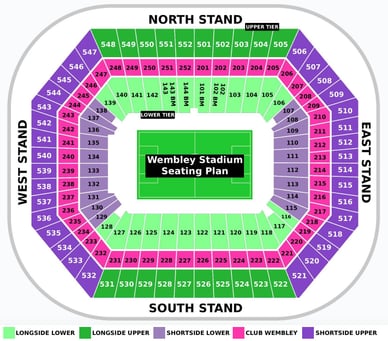
Wembley Stadium Seating Plan for Football
Wembley Stadium was designed so that spectators could enjoy the action on the pitch in maximum comfort. The stadium is divided into three tiers: lower, middle and upper.
The upper tier and side sections are suitable for those who appreciate space and a good view — from these seats, you can see the entire pitch.
The lower tier is chosen by spectators who want to be as close to the action as possible. It is a particularly good place to watch football matches: the view is direct, and you can literally feel the atmosphere of the stadium. VIP sectors are located in different parts of the arena and are designed for those who value extra comfort and a higher level of service.
For concerts
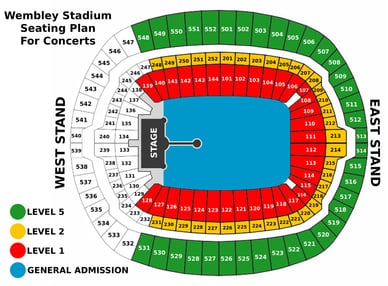
Wembley Stadium Seating Plan for Concerts
During concerts, the seating arrangement changes. The stage is usually set up on the field, so the usual football configuration is rearranged. Some spectators are seated directly in front of the stage, while others are seated on the sides or in the stands.
Depending on the format of the show and the location of the stage, Wembley Stadium can accommodate between 70,000 and 90,000 people. Spectator seats remain in the stands, and special areas are added on the field, creating a large-scale and intense concert atmosphere. The VIP and VVIP sectors provide the best view of the stage and include exclusive relaxation areas where spectators can enjoy the music and a cosy atmosphere.
How to get to Wembley Stadium?
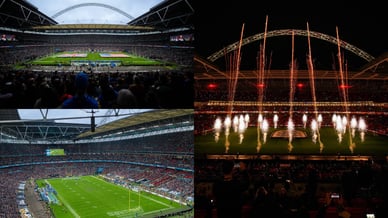
Wembley Stadium view from seat
Getting to Wembley Stadium is easy thanks to London's extensive transport network: by underground, train, bus, car and even on foot from nearby areas.
By underground (London Underground)
The nearest underground station to the stadium, Wembley Park, is just a 5-minute walk away. You can use the Jubilee Line (stations from Stratford and Canary Wharf) and the Metropolitan Line (from Baker Street and central London).
On match and concert days, the underground runs longer than usual, but large crowds are expected, so it is best to plan your trip in advance.
By train (Overground / National Rail)
Wembley Stadium station is served by Chiltern Railways and other regional trains. It is a 5-7 minute walk from the station to the stadium. Convenient for those travelling from the suburbs of London or other cities in England.
By bus
Several London Bus routes pass through the area where Wembley Stadium is located, including routes to Wembley Park and neighbouring areas. A bus transfer is a great option for those who want to save money or avoid traffic jams.
By car
Parking near the stadium is limited, so it is recommended to book a parking space in advance on the official website (Wembley Official Parking). You can use a taxi or services such as Uber, but it is better to arrive early to avoid traffic jams.
London's major Heathrow Airport is located in the western part of the city, approximately 30-45 minutes' drive from Wembley Stadium.
Wembley Stadium Events

Wembley Stadium Events
Wembley is used for national matches, cup finals and major concerts, while Emirates Stadium, for example, is a club arena with a smaller capacity (approximately 60,000).
Wembley Stadium is called the ‘home of football’ in England, and for good reason: this stadium hosts some of the most significant football events. The following events return here every year:
- The FA Cup Final — England's premier football event.
- Home matches of the England national football team.
- Major international tournaments, such as some of the EURO 2020 matches and the 2022 Women's European Championship.
In addition, Wembley hosted football competitions as part of the 2012 Olympic Games. But the stadium is not only famous for sports — concerts are often held here. This place has become a symbol of cultural life in England, and world stars regularly perform here.
Music legends at Wembley
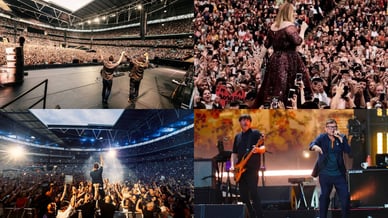
Music legends at Wembley Stadium
Paul McCartney, one of the world's greatest musicians, has performed at Wembley Stadium several times. For example, as part of his Wings Over the World tour, as well as at solo concerts that attracted thousands of fans.
Queen's concert in 1985 occupies a special place in Wembley's history. The band performed at Wembley as part of Live Aid, a grand charity concert organised to raise funds to fight hunger in Africa. This concert became a cult moment in the history of rock music, and Queen's performance is rightly considered one of the best in history.
So Wembley Stadium is not only a sports temple, but also an important cultural centre where music, art and history intersect.

Jeff Lynne's ELO - Turn to Stone (Live at Wembley Stadium)
A number of celebrities have delighted audiences at Wembley over the years:
- Beyoncé – ‘The Mrs. Carter Show World Tour’ (2013). This tour was recognised as one of the most successful and spectacular in the singer's career.
- Oasis – (What's the Story) Morning Glory? Tour (1996). One of the most memorable Oasis concerts in history. They drew a record crowd at Wembley, and this concert became an important moment in the history of British rock.
- Ed Sheeran – Divide Tour (2017).
- The Rolling Stones – Bridges to Babylon Tour (1998).
- U2 – The Joshua Tree Tour (2017).
- Take That – Progress Live (2011).
- Taylor Swift – World Tour (2015).
Information for visitors
Before travelling to Wembley Stadium, it is worth finding out what hotels and restaurants are nearby.
Hotels near Wembley Stadium
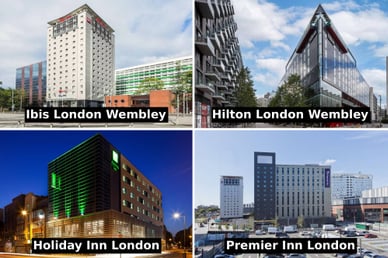
Hotels near Wembley Stadium
You can stay overnight at one of the following hotels:
- Ibis London Wembley — located just a couple of minutes' walk from the station and the stadium.
- Premier Inn London Wembley Stadium — a popular hotel chain 10 minutes from the stadium, with comfortable rooms and breakfast included in the price.
- Hilton London Wembley — a hotel with a higher level of service near Wembley Park and the stadium.
- Holiday Inn London – Wembley — a good option with parking and spacious rooms.
Restaurants and pubs near Wembley Stadium
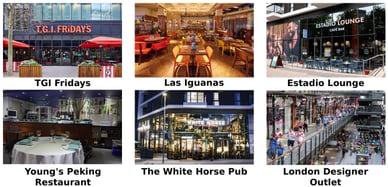
Places to eat near Wembley Stadium
The area around Wembley Stadium is quite lively, especially on event days — there are restaurants, bars and pubs where you can eat and drink before or after a match (concert). Check out the following establishments:
- TGI Fridays – Wembley – located near the stadium, offers classic American fare.
- Las Iguanas specialises in Mexican and Brazilian cuisine.
- Young's Peking Restaurant – a Chinese restaurant with numerous positive reviews.
- The Lounge Cafe – a cosy cafe in the Wembley Park area.
- Estadio Lounge is a café-bar with a relaxed atmosphere.
- London Designer Outlet is located next to the park and stadium and offers a wide selection of food and fast food.
- The White Horse Pub is a classic pub serving British food and drinks, located just a few minutes' walk from the stadium.
Parking
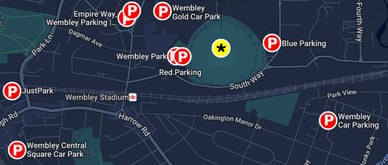
Parking near Wembley Stadium
The number of parking spaces near the stadium is limited, and there are not enough on match days. If you are travelling by car, it is recommended that you book a space in advance via the official Wembley Official Parking website.
There are several parking areas in Wembley Park: Red Parking, Blue Parking, Green Parking and Pink Parking (with different numbers of spaces and approaches). Parking spaces sell out fastest before events, and on such days there may be traffic restrictions and partial road closures around the stadium — this is worth considering when planning your trip.
Contact details and postcode
Address: Wembley Stadium, South Way, Wembley, London, HA9 0WS, United Kingdom
Telephone: +44 844 980 8001
Email: [email protected]


Frequently asked questions
How many people does Wembley Stadium hold?
Wembley Stadium has a capacity of 90,000, making it the largest stadium in England and the second largest in Europe after Camp Nou in Barcelona.
When was Wembley Stadium built?
The modern Wembley Stadium was opened on 19 May 2007. It was built on the site of the old Wembley Stadium, which had existed since 1923.
How big is Wembley Stadium?
The stadium covers an area of approximately 105,000 square metres. The pitch is standard in shape, measuring 105 x 68 metres, which complies with FIFA international requirements. The arch is 134 metres high and visible from a great distance, and is considered an architectural landmark.
Does Wembley Stadium have a roof?
Yes, the stadium has a partially covered roof. The pitch itself is open, but the stands are completely covered so that spectators are not inconvenienced by rain.
Who owns Wembley Stadium?
Wembley Stadium is owned by The Football Association (FA). It is used for both football matches and other major events, including concerts and shows.
How many people does Wembley Stadium hold for a concert?
The capacity varies slightly for concerts, as the stage takes up part of the pitch. Depending on the location of the stage, the stadium can accommodate between 70,000 and 90,000 people.
What can you take into Wembley Stadium?
Wembley Stadium has strict security rules: spectators are allowed to bring small bags and backpacks (usually up to 30 × 30 × 15 cm). Alcohol, glass bottles, food, large bags, and dangerous items are prohibited. During events, there is a cloakroom available, and food and drink outlets are open.