Lundy Island
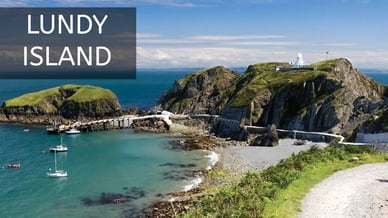
Lundy Island is an island off the coast of North Devon, where the Atlantic Ocean meets the Bristol Channel. It is home to many species of birds and animals, a small settlement, and the remains of ancient buildings. This natural site has a very interesting history. In this article, we will tell you about the attractions on the island, where to stay, and how to get there.
Name | Lundy Island |
Manager | Landmark Trust |
Country | England |
Address | Bideford, Devon EX39 2LY |
Available activities | Walks through picturesque places, bird watching, photo shoots, diving lessons |
Area | 445 hectares (1,100 acres) or 4.45 km² |
Animals and birds | Wild ponies, Soay sheep, sika deer, wild goats, European rabbits, grey seals, whales, dolphins, sea turtles, black lapwings, seagulls. |
History of Lundy Island

Lundy Island history
Lundy Island has a rich and varied history, including periods of religious fervour, pirate raids, and both successful and unsuccessful ventures. The first people arrived on the island at least 3,000 years ago. Archaeologists have discovered traces of settlements dating back to the Bronze and Iron Ages.
Around 1150, the Marisco family, who opposed the monarchy, arrived on the island and held it until 1242. Over the next few centuries, Lundy Island was ruled by marauders, smugglers and lighthouse keepers.
In 1834, it was purchased by William Hudson Haven, who owned it until 1925 and built many of the structures that exist today.
In 1969, Lundy Island became the property of the National Trust, which currently manages it.
What to do on Lundy Island?
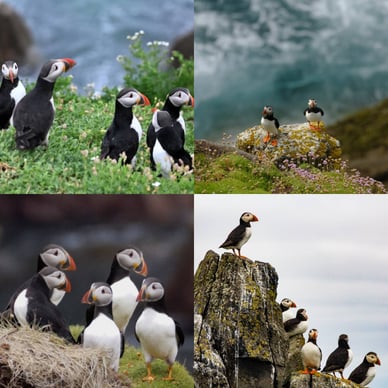
Lundy Island puffins
There are plenty of leisure activities on Lundy Island, all related to nature and history.
Many tourists come to the island to observe the natural world. Colonies of Atlantic puffins nest on the island. Seabirds have chosen it as a breeding ground, building their nests in crevices on the slopes of the cliffs. Lundy Island is also home to many seals, which like to rest on the coastal rocks. Stingrays and sharks inhabit the local waters.
The island is a protected area where you can study marine life. There are over 40 dive sites where you can admire shipwrecks, reefs, cliffs and pinnacles.

Lundy Island diving
Tourists enjoy walking along the cliffs, from where they can see the sea and watch seals lying on the rocks.
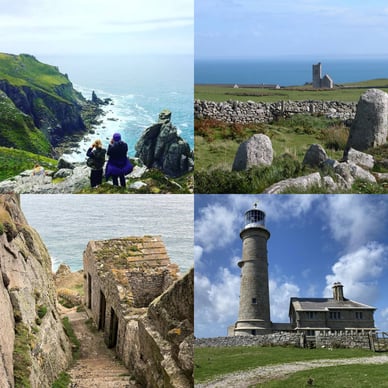
Another possible leisure activity is exploring historical structures, such as the remains of Bronze Age settlements, lighthouses, and a castle built in the Middle Ages. Tourists hear stories from locals about the eccentric landowner Martine Coles Harman and are shown locations associated with his reign.
Of particular interest is the ruined 13th-century fortress built by Henry III to control the Bristol Channel. At various times, it served as a hunting lodge, a prison, and a smugglers' den.
The Old Light was built in 1820 and operated until 1897. Today, the lighthouse has been converted into a residential property consisting of two rooms. From the upper tier, you can admire the panorama of the island, gaze at the starry sky, and watch the birds.
Tourists are also invited to visit Beacon Hill Cemetery, located on the remains of an Iron Age settlement. In its centre is a tomb, which scientists believe belongs to an early Christian saint. Four gravestones dating from the 5th to 7th centuries stand by the western wall.
What to do on Lundy Island?
The Battery was built in 1863 to serve as a fog signal station, but due to the height of the old lighthouse, it is not visible during heavy fog.
At the same time, you can see the buildings of the former Lundy Granite Company. Founded in 1863, the company specialised in granite mining. There were houses on its territory, where about 300 workers lived.
Lundy Island also has a small museum dedicated to the history of the island.
Extreme sports enthusiasts can go rock climbing, for example, on the Devil's Slide route.
The conditions for snorkelling and diving on the island are also excellent, as the local waters are clean and clear.
A popular activity is called ‘Letter Box Hunting’: following clues, you must find boxes with unique rubber stamps that can be marked on a map.
What to bring to Lundy Island?
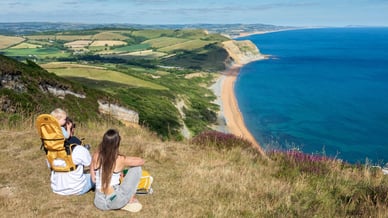
Island of Lundy
Amenities on the island are limited, so it is advisable to bring food and water with you. In addition, check the ferry schedule in advance to reserve a seat.
Bring clothing for different weather conditions. The island is exposed, so the weather is often unpredictable. You should have a waterproof raincoat, warm clothes and comfortable shoes with you.
You will need a torch to explore the island after sunset.
As for food, there is a pub on Lundy Island where you can have breakfast, lunch or dinner. If this option does not suit you, bring a snack with you.
Those planning to go diving on the island should bring their own equipment, including a wetsuit, mask, snorkel and fins (these can be borrowed free of charge on the boat, but it is better to have your own).
Researchers will need photography equipment.
Where is Lundy Island
Lundy Island is located in the Bristol Channel, off the coast of Devon, in the south-western part of England.
The distance to the coast is approximately 19 km.
Map of Lundy Island
Study the map of Lundy Island to correctly assess its location and size, and decide on the method of transfer.
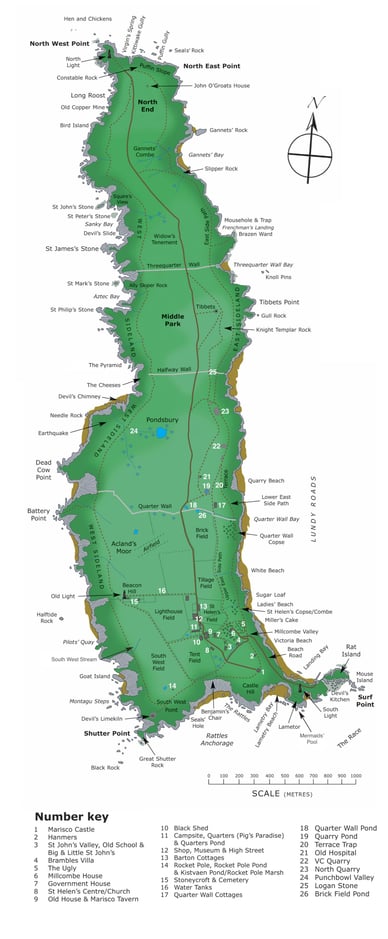
Lundy Island map
How to get to Lundy Island
There are two ways to get to Lundy Island: by ferry or by helicopter. The mode of transport is largely influenced by the season.
By ferry
During the summer months from April to October, most tourists travel to Lundy Island on the MS Oldenburg ferry from the ports of Bideford and Ilfracombe. It usually runs three days a week: Tuesdays, Thursdays and Saturdays, but it is best to check the schedule. Additional trips on Wednesdays are available in July and August. The ferry trip to the island takes about 2 hours.
The availability and schedule of ferries depend on weather conditions.
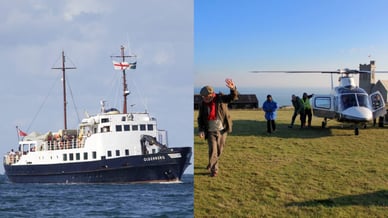
how to get to Lundy Island
By helicopter
During the winter months from November to March, the island is served by a helicopter service from Hartland Point. Flights operate mainly on Mondays and Fridays. Travel time is between 12:00 and 14:00.
Helicopter tickets cost £174 for adults and £96 for children up to 15 years old.
Accommodation on Lundy Island
There are several accommodation options to choose from on Lundy Island. The island has 23 individual accommodation units, including old cottages that have been restored and preserved in their original form.
Each cottage has hot and cold water, electricity (except Tibbetts), a fully equipped kitchen area and bedding. There are no televisions, radios or telephones in the cottages. Electricity is turned off between midnight and 6:00 a.m.
You can also stay overnight at Hanmers, a fisherman's chalet located on a hillside with picturesque views.
Or at Castle Cottage, built in 1827, designed for two guests, with an enchanting view from the living room.
Tibbetts is the most remote accommodation, located 1.5 miles from the village, designed for 4 people, with no electricity.
The Old House is a beautiful Georgian-style house divided into two wings.
In addition, it is possible to stay overnight at the Old Light lighthouse.
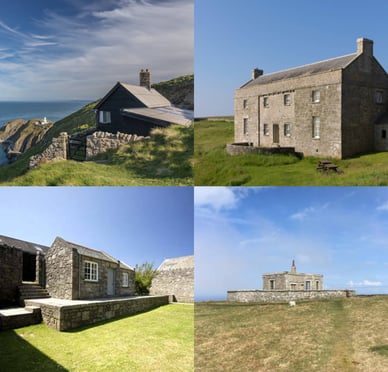
Accommodation on Lundy Island
Landmark Trust
The Landmark Trust is an English charity dedicated to the preservation and restoration of historic buildings and their rental to holidaymakers. It has been in existence since 1965 and is headquartered in Shottesbrooke, Berkshire.
The Landmark Trust has managed Lundy Island since 1969, helping with its restoration and protection.
Camping
Lundy Island in Devon has a campsite that can accommodate up to 40 people, located in the centre of the village next to a tavern and a shop. Facilities include toilets, showers and a drinking water station. Open fires and wood gathering are prohibited. There is a designated area for cooking on the premises.
Prices for camping start at £11 per person per night.
Frequently asked questions
How many people live on Lundy Island?
Approximately 30 people live permanently on Lundy Island. It is known that in 2024, the number of permanent residents of Lundy was around 30 people.
How much is the ferry to Lundy Island?
Adult day tickets cost £54, and tickets for pensioners and students cost £49. Tickets for children up to and including 15 years of age cost £28.
Are dogs allowed on Lundy Island?
No, dogs are not allowed on the island, with the exception of officially registered guide dogs. This restriction is in place due to the need to preserve the unique ecosystem of Lundy Island and the animals and birds that inhabit it.
How big is Lundy Island?
Lundy Island is the largest island in the Bristol Channel, with a total area of approximately 4.5 km², a length of 4.8 km and a width of 0.8 km.
When to see puffins on Lundy Island?
Puffins inhabit Lundy Island from late spring to August. The largest concentration of these birds can be observed from April to July. However, even in the off-season, the birds fly to the coast, allowing them to be seen year-round, albeit in smaller numbers.