STALKER
S.T.A.L.K.E.R. is a cult Ukrainian game, a first-person shooter (FPS) with elements of survival horror and role-playing (RPG). It is set in an alternative version of the modern Chornobyl Exclusion Zone in Ukraine, where, after a second disaster at Chornobyl in 2006, the world changed forever. Anomalies, strange artefacts and mutants that defy the laws of nature have appeared there.
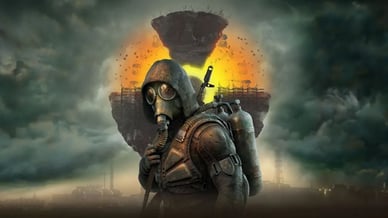
The plot is built around semi-documentary experiences, conspiracy theories and conflicts between secret agencies. That atmosphere even mirrors the way the internet around “mystery” topics can get cluttered with shady clickbait — everything from wild “leaks” to spam ads claiming to be the best casino online. Players become stalkers — brave adventurers who risk their lives to explore these phenomena and find valuable items. The word S.T.A.L.K.E.R. is an acronym meaning Scavengers, Trespassers, Adventurers, Loners, Killers, Explorers, Robbers. The relevance of this series has increased again with the highly anticipated release of S.T.A.L.K.E.R. 2: Heart of Chornobyl in 2024. This new instalment not only brings fans back to a familiar but renewed world, but also attracts new players interested in this unique blend of mysticism, survival and deep intrigue.
Development History
The developer of the S.T.A.L.K.E.R. series is GSC Game World, a Ukrainian company founded in Kyiv in 1995 by Serhiy Hryhorovych. It was the first Ukrainian company to localise computer games, first into Russian, before also becoming a publisher
The founder of the S.T.A.L.K.E.R. game series is Sergey Grigoryevich, who founded GSC Game World
The development of the first game, S.T.A.L.K.E.R.: Shadow of Chernobyl (the original title uses the spelling “Chernobyl”, while later instalments switched to “Chornobyl”, which reflects the correct Ukrainian transliteration rather than the earlier Russian-based form), was extremely difficult. This period was even described as “years of development hell” because of numerous difficulties, overcome only thanks to “good external management”. As a result, a lot of content (weapons, mutants, locations) was not included in the final version, and ambitious features such as the A-Life system were “scaled back”. Despite this, the game was released on 20 March 2007 in North America and on 23 March 2007 in Europe. Interestingly, fans of the series even ended up liking these technical imperfections, considering them part of the game’s unique charm.
After Shadow of Chernobyl, GSC Game World released two standalone expansions that expanded the S.T.A.L.K.E.R. universe:
- S.T.A.L.K.E.R.: Clear Sky (prequel): released in August 2008. It added new features, including weapon and armour customisation, as well as a major faction war system originally planned for the original game.
- S.T.A.L.K.E.R.: Call of Pripyat (sequel to Shadow of Chernobyl): released in October 2009 in Ukraine. This version stood out for much better optimisation and reintroduced certain mutants, such as the Burer and the Chimera.
Overview of S.T.A.L.K.E.R.: Shadow of Chernobyl
Shadow of Chernobyl laid the foundations for the entire series, becoming a defining phenomenon in the world of Ukrainian games. It is a cult game, recognised for its unique atmosphere and gameplay. It is a first-person shooter with RPG and survival simulation elements, set in a fictional version of the Chornobyl Exclusion Zone.
Shadow of Chernobyl laid the foundations for the entire series, becoming a defining phenomenon in the world of Ukrainian games
The plot puts the player in the role of a stalker known as the Marked One, who wakes up in the Zone with amnesia and only one task on his PDA: “Kill Strelok.” He must unravel the mystery of his past and discover what happened in the Zone after the second explosion at the Chornobyl power plant. The distinctive feature of Shadow of Chernobyl is its inimitable atmosphere. The Exclusion Zone is portrayed as a dark, dangerous, yet at the same time captivating place. The constant threat of radiation, anomalies (invisible traps that distort reality) and mutants keep the player on edge. The game beautifully conveys a feeling of isolation and the unknown, forcing you to move forward cautiously. Added to this are elements of conspiracy theory and conflicts between different stalker factions, which deepen the narrative.
Key features of this game:
- A-Life system: An artificial intelligence designed to simulate a unique ecosystem that exists independently of the player. Although it was somewhat “scaled back” in the final version, the very idea of a living and unpredictable Zone profoundly shaped the game’s unique character.
- Sinister atmosphere of the Exclusion Zone: The game masterfully conveys a sense of constant tension and vulnerability. The Zone is a character in its own right, where sudden mutant attacks or distant gunfights create a feeling of danger. Certain locations, such as the Red Forest at night and the underground bunkers, use psychological terror. The game’s landscape, carefully recreated from real photos of Chornobyl, immerses players in a truly post-apocalyptic space.
- Gameplay: A mix of first-person shooter gameplay, RPG elements and survival. Combat is realistic: headshots are more effective and weapons can jam. RPG elements include inventory management and the use of up to five artefacts — items with unique properties. Survival is essential: you have to monitor radiation levels, hunger and bleeding. The open world encourages the exploration of hidden treasures.
- Multiple storylines and endings: The game is known for its branching storyline leading to seven different endings. These depend on your actions, your accumulated wealth, your affiliation with factions, and the recovery of the hero’s memory. The amnesiac stalker known as the Marked One investigates his own past and the true origin of the Zone, revealing the secrets of the C-Consciousness group. The ambiguity of the plot, especially in the final episodes, was deliberately created by the developers to reflect the themes of mind control and the protagonist’s altered perception.
The S.T.A.L.K.E.R. universe is so iconic that it has given rise to many fan projects, including films. There are trailers and announcements of fan films entitled STALKER: Shadow of the Zone. These are not official adaptations by GSC Game World, but projects created by enthusiasts seeking to recreate the atmosphere of the Zone on screen. These works testify to the immense love and loyalty of the community for the game’s universe.
Influence of the Franchise
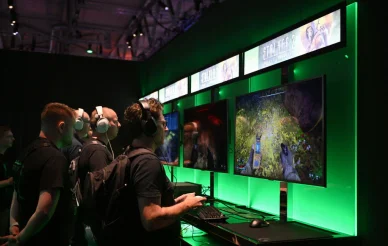
Gamers play Stalker 2
The S.T.A.L.K.E.R. franchise has had a significant impact on the gaming industry, inspiring several other projects:
- Metro series: In 2010, the first game in the Metro series was released, a Ukrainian FPS based on the Metro 2033 novels. It was created by former developers of S.T.A.L.K.E.R.: Shadow of Chernobyl, who founded the studio 4A Games in 2006.
- Survarium: In 2012, part of the development team behind the cancelled version of S.T.A.L.K.E.R. 2 (2012) founded the studio Vostok Games. In 2015, they released Survarium, a free-to-play massively multiplayer FPS in the style of S.T.A.L.K.E.R., using some ideas from the cancelled sequel. Their next project, the battle royale Fear the Wolves, is also set in Chornobyl.
- Areal / STALKER: Apocalypse: In 2014, the company West-Games, which claimed to be made up of S.T.A.L.K.E.R. developers (although GSC Game World and Vostok Games denied this), launched a Kickstarter campaign for a spiritual successor to S.T.A.L.K.E.R. called Areal, then STALKER: Apocalypse. Despite reaching the funding goal, the campaign was suspended by Kickstarter due to suspicions of fraud.
- Chornobylite: In 2019, Oleksiy Sityanov, a former game designer and writer for S.T.A.L.K.E.R.: Shadow of Chernobyl, joined The Farm 51 to work on the project Chornobylite. This game features gameplay and themes similar to S.T.A.L.K.E.R., and its environment is based on the real Exclusion Zone, created using photogrammetry.
S.T.A.L.K.E.R. 2: Heart of Chornobyl
The development history of S.T.A.L.K.E.R. 2: Heart of Chornobyl has been long and fraught. The game was first announced in 2010, but development was suspended — likely due to financial difficulties — and GSC Game World was temporarily dissolved in December 2011.The company resumed operations in 2014, and in 2018, S.T.A.L.K.E.R. 2 was announced again. Initially developed on Unreal Engine 4, the game switched to Unreal Engine 5 in 2021.
The planned release for December 2022 was postponed due to Russia’s full-scale invasion of Ukraine. Part of the team moved to Prague to continue the work safely. After many delays, the highly anticipated release of S.T.A.L.K.E.R. 2: Heart of Chornobyl took place on 20 November 2024.
The game delivered impressive results, selling one million copies in just two days. In four days, sales on Steam exceeded 1.4 million copies, with an estimated gross revenue of 66.7 million dollars (before Valve’s commission and taxes).The United States leads sales (22%), followed by Ukraine (16%), Germany (7%) and China (7%). The peak concurrent player count on Steam reached 121,335 players.
The war significantly affected the team at GSC Game World. The game’s title was changed to adopt the Ukrainian spelling “Chornobyl” instead of the Russian “Chernobyl”, and the Russian voice-over was removed.
The company refused to sell the game in Russia. GSC Game World actively urged fans and game journalists to donate to the Armed Forces of Ukraine and also donated 100 transport vans for the Ukrainian army, decorated in the style of S.T.A.L.K.E.R. 2. Some developers, such as the game designer Volodymyr Yezhov and the actor Oleksiy Khilsky, died in the war.
System Requirements
To enjoy the game without any problems, you will need fairly powerful hardware. Here are the detailed system requirements:
Category | OS | Processor (CPU) | RAM | Graphics card (GPU) | Disk space |
|---|---|---|---|---|---|
Minimum | Windows 10/11 x64 | AMD Ryzen 5 1600X / Intel Core i7-7700K | 16 GB | AMD Radeon RX 580 8 GB / NVIDIA GeForce GTX 1060 6 GB | 160 GB SSD |
Medium | Windows 10/11 x64 | AMD Ryzen 7 3700X / Intel Core i7-9700K | 16 GB | AMD Radeon RX 5700 XT / NVIDIA GeForce RTX 2070 Super / RTX 4060 | 160 GB SSD |
Recommended | Windows 10/11 x64 | AMD Ryzen 7 5800X / Intel Core i7-11700 | 32 GB | AMD Radeon RX 6800 XT / NVIDIA GeForce RTX 3070 Ti / RTX 4070 | 160 GB SSD |
Epic | Windows 10/11 x64 | Intel Core i7-13700KF / AMD Ryzen 7 7700X | 32 GB | NVIDIA GeForce RTX 4080 / AMD Radeon RX 7900 XTX | 160 GB SSD |
Unfortunately, S.T.A.L.K.E.R. 2: Heart of Chornobyl does not have official support for macOS. However, there are several ways to try to run it on Mac, such as cloud gaming (GeForce NOW, Boosteroid) or compatibility software (CrossOver, Parallels Desktop), although performance may be limited and not guaranteed.
Using Software to Run Windows Games on Mac
These methods require installing additional software and may run into performance and stability issues, particularly on Macs with older processors or with less RAM.
- CrossOver / Wine / Whisky — software that allows you to run Windows applications and games on macOS without a full Windows installation. Users report having managed to run S.T.A.L.K.E.R. 2 on Macs with M-series chips (M1, M2, M3, M4) using CrossOver with the GPTK 2.1 environment. However, additional tweaking of graphics settings may be necessary to achieve acceptable performance.
- Parallels Desktop. You can install Windows in a virtual machine using Parallels Desktop. This method demands significant Mac resources and may not deliver optimal performance for a game as demanding as S.T.A.L.K.E.R. 2.
Even if you manage to launch the game on Mac using CrossOver or Parallels Desktop, performance may be far from ideal. This is particularly true for older Mac models or those without a powerful graphics processor (GPU). Users report getting 30-40 FPS on a MacBook Pro with an M4 Max chip on medium graphics settings. Keep in mind that none of these methods is officially supported; therefore, issues may arise that the game’s developers are not obliged to fix.
Overview of Stalker 2
S.T.A.L.K.E.R. 2: Heart of Chornobyl differs considerably from the previous instalments in the series. It offers a huge, seamless open world of more than 64 square kilometres — nearly eight times larger than the combined area of the maps in the original trilogy. Instead of segmented areas with loading screens, you can move freely across the entire map without interruption, creating an unmatched sense of scale and immersion.
Did the new game meet fans’ expectations? Yes and no. At release, it received generally favourable reviews, with an average score of 77/100 on Metacritic. However, many players expressed disappointment due to initial technical issues: low performance, bugs and an insufficiently implemented A-Life system. The developers are actively releasing patches that have already significantly improved the game’s state, fixing thousands of issues and adding new features. These updates have turned S.T.A.L.K.E.R. 2 into a serious contender in the survival horror genre.
Gameplay and Mechanics
The gameplay of S.T.A.L.K.E.R. 2 is deep and requires a tactical approach. The combat system demands thought. Ammunition is scarce and expensive, so every shot must be effective. Headshots are crucial, as enemies have weak points. It is essential to use cover and flank enemies, and retreating can be a sensible strategy in difficult fights.
Exploring the Zone is at the heart of the game. The map is huge and dense, with interesting locations, hidden anomalies and dynamic weather conditions that create unpredictability and a gripping atmosphere. You can explore the world freely, but you must be prepared to face radioactive zones, mutant creatures and enemy factions. The A-Life 2.0 system, although it had some issues at launch, aims to make the world feel alive, with NPCs living their lives even outside your field of view. Your reputation in the Zone changes based on your actions, influencing which factions will be friendly or hostile towards you. A good reputation provides advantages such as safe resting places and access to special missions.
Survival features:
- Hunger gradually drains stamina and health, so you need to consume food.
- Sleep is essential. Prolonged activity without rest exhausts the character, worsening vision, accuracy and weapon reload speed.
- Injuries cause bleeding that gradually reduces health if not stopped using bandages or medication.
- Radiation builds up in radioactive zones, in water or during rain, draining health. To remove its effects, you must use anti-radiation medication, first aid kits or vodka.
- Psi radiation causes auditory and visual hallucinations that can lead to physical damage.
Emissions are deadly phenomena that require you to find shelter immediately, otherwise your character will die.
The world of S.T.A.L.K.E.R. is populated by various groups with their own philosophies and goals:
- Stalkers (Loners / Free Stalkers). Independent adventurers who search for artefacts and trade.
- Bandits. Criminals who loot and prey on others.
- Duty. A militarised faction that seeks to destroy the Zone.
- Freedom. Anarchist-minded group that believes the Zone should be free and accessible.
- Monolith. A hostile faction brainwashed by the C-Consciousness, blocking access to the Zone’s centre.
- Military. They guard the perimeter and sometimes conduct operations inside.
- Mercenaries. Shadowy contractors carrying out private missions.
- Scientists (Ecologists). Research groups funded by the Ukrainian government.
- Zombies (Zombified Stalkers). Victims of psi radiation who have lost their minds.
S.T.A.L.K.E.R. 2: Heart of Chornobyl introduces several new groups:
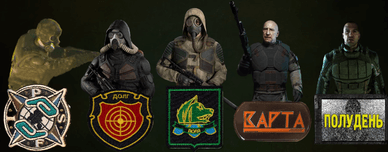
- IPSF (International Perimeter Security Force). A force responsible for controlling and enforcing the perimeter of the Zone.
- Ward. A heavily armed organisation operating inside the Zone and maintaining order through strict control.
- Spark. A scientific group focused on researching the Zone and its anomalies.
- Noon. Former Monolith members who have broken away and are trying to build a new life in the Zone.
In this instalment, the Echo detector has been added to help players search for artefacts, along with the ability to move bodies in order to manage inventory. Your decisions also have a major impact on the story and its ending. Some choices shape the outcome of future missions, while others are required to unlock specific endings. For example, key decisions such as whether to show mercy or open fire can lead to very different conclusions.
Graphics, Sound and Game Atmosphere
S.T.A.L.K.E.R. 2: Heart of Chornobyl is a game with powerful visuals that makes effective use of Unreal Engine 5’s capabilities. The use of Lumen for global illumination and Nanite for object detail creates a very realistic post-apocalyptic world. Although there are some minor flaws, such as texture pop-in, the overall visual quality is high, especially at 1080p resolution. For 1440p and 4K, you will need very powerful graphics cards.
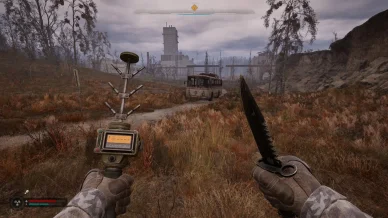
Screenshot from the game STALKER: Shadow of Chernobyl
The soundtrack has received both praise and criticism. Some players highlight the incredible and immersive quality of the sound design, particularly for environmental effects such as rain. Others, however, report issues with audio cut-outs. The Ukrainian version with English subtitles is often recommended for better immersion, as it feels more authentic than the English version.
One of the main features of S.T.A.L.K.E.R. 2: Heart of Chornobyl is the in-game radio, which plays tracks by classic and contemporary Ukrainian artists. The music was curated by Geisha Ninja Samurai, which also presented the official playlist. Alongside tracks by anastymoza, DK Energetyk, The Unsleeping, Kurs Valüt, Dity Inzheneriv, and Palindrom, you can also hear songs by SadSvit, TNMK, Hatespeech, Zwyntar, Oi FUSK, Stas Koroliov, and many others. According to Geisha Ninja Samurai, the radio features compositions “ranging from deep folk motifs to the explosive contemporary indie scene”. The official playlist includes 120 songs with a total duration of more than seven hours and is available on YouTube Music and Spotify. The game also features episodes of the podcast “Prostymi slovamy” (“In Simple Terms”) about psychology and science from The Village, as well as podcasts from the media outlet Sebto.
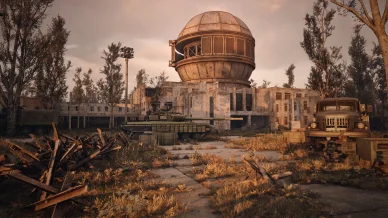
Screenshot from the game S.T.A.L.K.E.R. 2: Heart of Chernobyl
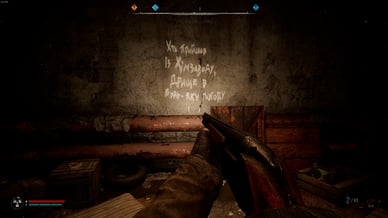
The game’s atmosphere is the hallmark of the series, and in S.T.A.L.K.E.R. 2, it is preserved and enhanced. The huge, seamless open world fosters a sense of solitude and horror. Carefully created locations, dynamic weather and unpredictable encounters with mutants and enemy factions create constant tension. The game draws heavily on Ukrainian culture, notably through Ukrainian songs, as well as authentic signage and item names, all of which add to the game’s unique and immersive atmosphere.
Game Bugs
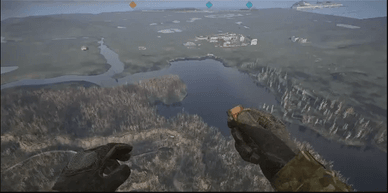
One of the players complained about a bug with flying using a bolt and anomalies.
After its release, S.T.A.L.K.E.R. 2: Heart of Chornobyl encountered a number of issues that affected the player experience. Among the most common were severe performance problems (stuttering and low frame rate), especially in cities and during certain missions. This made the controls feel sluggish and unresponsive. Significant bugs were also detected, often causing crashes in the main storyline and preventing progress. The A-Life 2.0 system was particularly problematic, as it did not work properly at launch. Instead of a dynamic world simulation, players often encountered enemies spawning right in front of them, making the Zone feel lifeless and scripted. The developers acknowledged that A-Life 2.0 was broken due to aggressive optimisation. Fortunately, GSC Game World is actively working to fix these issues, and the latest patches have already delivered significant improvements.
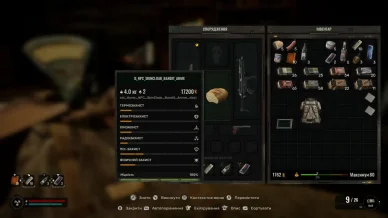
A loaf of bread instead of a suit (bugs in S.T.A.L.K.E.R. 2)
In addition to these serious issues, the game also had amusing bugs. Among these were bandits spawning in water and instantly drowning; stalkers walking straight into deadly radiation; NPCs constantly peeing; and stalkers who, after being saved from an anomaly, immediately went back into it and died. These comic bugs, while they spoiled immersion, sometimes added a touch of unpredictable humour.
Ukraine in S.T.A.L.K.E.R. 2
S.T.A.L.K.E.R. 2: Heart of Chornobyl is not only a highly anticipated game, but also a powerful cultural and political statement from Ukraine. During Russia’s full-scale invasion, the developer GSC Game World took a clear public stance. The war directly affected the team: some developers joined the ranks of the Ukrainian army. The game designer Volodymyr Yezhov and the actor Oleksiy Khilskyi, who worked on the game, were killed in the war. In the credits, GSC Game World left a moving message to the whole world:
“This project is the result of the endless love and passion of the entire team. It is our own story and our message of love for Ukraine.”
S.T.A.L.K.E.R. 2: Heart of Chernobyl
Despite cyberattacks by Russian hackers, GSC Game World refused to sell the game in Russia and removed the Russian version, changing the English transliteration of the title from Heart of Chernobyl to Heart of Chornobyl in line with the Ukrainian title.
The quality of the Ukrainian language in the game is considered authentic rather than artificial, enabling total immersion. Many players recommend playing with Ukrainian voice-over and English subtitles for a better experience. The game is rich in Ukrainian cultural elements: more than 400 Ukrainian songs, as well as authentic signage and item names. This integration of Ukrainian culture and language makes S.T.A.L.K.E.R. 2 not only a game, but also a symbol of Ukrainian resilience and cultural identity on the global stage.
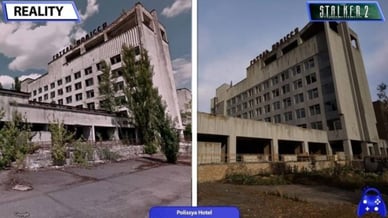
S.T.A.L.K.E.R. skilfully combines reality and the game world, recreating the iconic locations of the Chornobyl Exclusion Zone. The Polissya Hotel, built in the early 1970s in the centre of Pripyat, was an important place for specialists on assignment. With its impressive architecture, lighting and the panoramic café planned for the roof, it was the symbol of the city. After the Chornobyl accident, the hotel was used for clean-up operations, but today it is in ruins due to time, weather conditions and looting. In the first game, the hotel differed from reality, serving as a stronghold for Monolith. But in S.T.A.L.K.E.R. 2: Heart of Chornobyl, it has been reproduced much more accurately, including Room 26, where Strelok’s stash was located, and the restaurant corridors. In the game, Polissya continues to stand as a bridge between worlds, a witness to real tragedy, and an integral part of the S.T.A.L.K.E.R. universe.
The Polissya Hotel in reality and in the game Stalker 2
The Energetik Palace of Culture was Pripyat’s cultural centre, where concerts, film screenings and discos with Western bands took place. After the Chornobyl accident, like the city itself, it was looted. The Chornobyl disaster has influenced Ukrainian culture — including the post-punk band DK Energetik, whose songs are featured in S.T.A.L.K.E.R. 2, and whose music video was filmed near the sports complex. In the first game, the Palace of Culture Energetik served as the headquarters of Monolith. In the second instalment, it becomes an important location for the new faction, the Corps. The developers paid particular attention to detail, recreating the interiors and surroundings and allowing players who have never been to Pripyat to explore this iconic building from the inside, giving it even wider global recognition.
S.T.A.L.K.E.R. 2 impresses with its many references to global pop culture, Ukrainian cinema, music, games and memes. The developers paid tribute to their trilogy: you can find the loading screen with the cooling tower, the poster from the first game, Sidorovich’s familiar phrases and his tins, the frame-by-frame recreation of the hanging scene, and Strelok’s photo. The game hides many references: Gordon Freeman and the headcrabs from Half-Life, the sniper scene from Call of Duty, the leap of faith from Assassin’s Creed, the campfires from Dark Souls, the insect-filled room from Silent Hill, the postcards from DayZ, an Easter egg on Doom’s wall, a quest involving a foggy house and Geralt’s medallion from The Witcher, as well as the “arrow in the knee” line from Skyrim.
The new instalment of S.T.A.L.K.E.R. is especially full of references that resonate with Ukrainian players: a boat with a ukulele (the “Supersus” meme), the “wheel of death”, political catchphrases that became viral, the Monobank payment sound and its cat, and characters such as Misha Boxer and Hrysha Borets from a play by Les Podervianskyi.
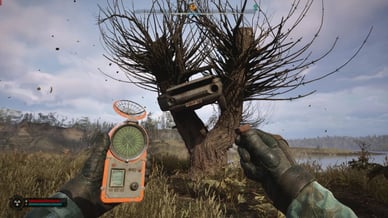
Cinema has also found its place in the Zone: containers filled with zombies reminiscent of The Walking Dead and Resident Evil, a creature bursting from a stalker’s chest like in Alien, a Zaporizhian car standing in for Harry and Ron’s flying Ford Anglia near the Whomping Willow from Harry Potter, the fire on the railway tracks from Back to the Future Part III, the Bridge of Death from the Chernobyl miniseries, the boot with the flower from WALL·E, the line “Don’t believe his lies” from Memento, and echoes of Frodo and Sam’s journey in The Two Towers.
Harry and Ron's car near the ‘fighting willow’ from Harry Potter
The fridge near the Tower of the Winds may be a reference to the music video “Tam, de nas nema” by Okean Elzy. The game also pays tribute to Dogs Playing Poker, the tale of Hansel and Gretel, the iconic Wilhelm scream, and even the poppy field from The Wizard of Oz.
Elements of the Soviet past are everywhere: architecture, mosaics, and artefacts such as the Strange Bullet. The game also includes references to Ukrainian cartoons, including Kapitochka and The Treasure Island, woven into small details and patches. A symbol of decommunisation appears in the form of a destroyed Hammer and Sickle monument. In the map found in the X-17 laboratory, Ukraine is clearly highlighted, while Russia is marked as the “dark lands”. One weapon even bears an emblem linked to the Azov unit. The ongoing war is reflected through modern references as well — including the story of a tank stolen by a farmer using a tractor, and Russian trenches appearing alongside the Zone’s mutants. The character Lyokha-Legenda is widely seen as a nod to Oleksiy Arestovych.
The game also recreates the atmosphere of smoky cybercafés from the 2000s. Players can find distinctly Ukrainian everyday items, from energy drinks and vodka to Cossack-themed mouse mats, matchboxes, and Easter baskets filled with painted eggs. Among the memorable locations are a tram on the Desna River, Perun Hill in Kyiv, and artefacts like Strange Water decorated with a blue-and-yellow flag and the word “Crimea”. And that’s only the beginning — attentive players continue to uncover new Easter eggs throughout the game.
Screenshot from the game S.T.A.L.K.E.R. 2: Heart of Chernobyl
Reviews and Сriticism
The games in the S.T.A.L.K.E.R. series have received positive feedback from major gaming outlets and have been well received by critics. On Metacritic, which aggregates review scores out of 100, the series has typically scored between 75 and 82 points:
- S.T.A.L.K.E.R.: Shadow of Chernobyl — 82/100
- S.T.A.L.K.E.R.: Clear Sky — 75/100
- S.T.A.L.K.E.R.: Call of Pripyat — 80/100
Critics have described S.T.A.L.K.E.R. 2: Heart of Chornobyl as a “true miracle” created by the Ukrainian studio GSC Game World over seven years, despite the pandemic and the war. It has been praised as “a labour of love and the best kind of sequel one could hope for”. The game’s open world is often described as one of the best, with “a palpable atmosphere and deeply rewarding exploration”.
However, critics have also highlighted major shortcomings. At launch, the game was a “technical disaster”, suffering from performance issues, bugs, and crashes. The A-Life system, which was a key promise, was described as “practically non-existent” or “broken” at release. However, GSC Game World is actively working to address these problems, and the latest patches have already delivered significant improvements. This commitment to post-launch support has made S.T.A.L.K.E.R. 2 a “serious contender in the survival horror genre”.

S.T.A.L.K.E.R.: Shadow of Chornobyl — Enhanced Edition Trailer
Overall, S.T.A.L.K.E.R. 2 is described as a game that, despite its technical flaws, has a “mad and wonderful heart”. Its mystical setting and gripping survival mechanics allow it to “overcome its technical problems and deliver an unforgettable experience”. The game’s availability via Xbox Game Pass also makes it more accessible to a wider audience.
S.T.A.L.K.E.R. is not just a game — it is a true cultural phenomenon that blends a post-apocalyptic atmosphere, a deep storyline, immense player freedom, and a unique aesthetic rooted in Ukrainian identity. GSC Game World’s work proves that Ukrainian developers can compete with the very best in the industry. With high-quality visuals, innovative technology, emotional depth, and meticulous attention to detail, S.T.A.L.K.E.R. 2 has become one of the most talked-about games right now and is already being seen as a modern classic for a new generation.