Dublin Castle
In the capital of Ireland stands a fortress that refuses to fade into history. Representing the country’s most significant historical building, Dublin Castle is a magnificent structure that served as a seat of power under English and later British rule for more than 700 years, from 1204 to 1922.

Thanks to changing political realities and architectural preferences, what started as an authoritative medieval fortress evolved over the centuries into a lavish Georgian palace. Even better, Dublin Castle now stands as one of Ireland’s premier tourist attractions, while simultaneously functioning as a modern government complex hosting presidential inaugurations and state functions.
This insightful guide will not only walk you through the comprehensive Dublin Castle history and reveal fascinating facts about its lost treasures, but also provide you with valuable visitor information to help plan your trip and recommend the best nearby accommodation options to take your Dublin experience to the next level.
Foundations of the Castle and Its Medieval Development
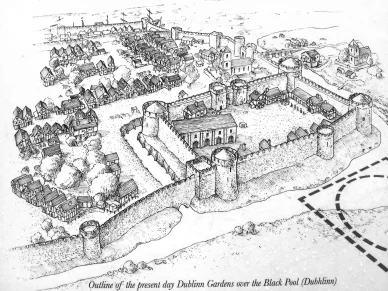
Layout map of the Dublin Castle Gardens, positioned at the site of the original "Dubh Linn" (black pool in Irish), the dark tidal pool that gave Dublin its name and served as a Viking harbor in the 9th century.
Viking Colonization and the Rise of Norman Fortifications
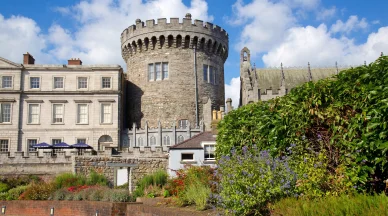
The Record Tower, the only remaining structure of the medieval castle built around 1228, stands at Dublin Castle with the Chapel Royal to its left, a Gothic Revival chapel completed in 1814 by architect Francis Johnston.
The tale of Dublin Castle begins long before its official construction in 1204. Its location didn’t just pop out of nowhere; it was carefully selected on elevated ground right next to what was known as ‘Dubh Linn,’ meaning a black pool that was naturally formed by the intersection of the River Liffey and the River Poddle. That’s where the name “Dublin” came from, evolving from its original Gaelic version.
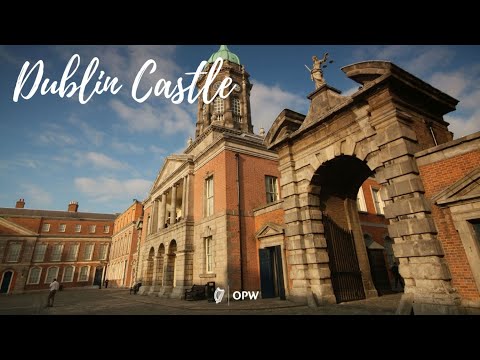
Dublin Castle, Dublin City, Ireland
In 1986, archaeological excavations led to historical revelations that were buried beneath the castle grounds. The discoveries included a critical Viking settlement that preceded the Norman structure, featuring clearly identifiable Viking defensive walls. Now that you know what existed here before, it’s time to delve right into some Dublin Castle facts.
Designed to serve as the centerpiece of Norman power in Ireland, Castle Dublin was constructed on the orders of King John of England in 1204 as a deliberate statement of English authority over the conquered territory. Hence, the Norman design wasn’t just a defensive structure. It, in fact, went on to become the administrative heart of English rule, housing everything from the courts and the treasury to the military garrison.
The Norman architects adopted a classic courtyard, clearly demonstrating medieval military engineering. Anchoring the structure were four massive corner towers that were connected by high curtain walls. The central courtyard enclosed by those walls acted as a secure area for storage, administration, and the safeguarding of the royal treasury.
From Medieval Fortress to Georgian Palace
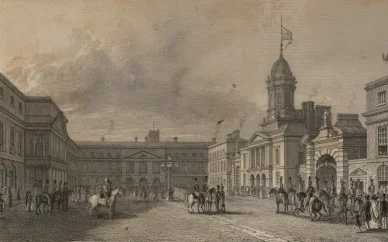
British military personnel stationed at Dublin Castle in 1830, when the complex served as the headquarters of British administration in Ireland and housed garrison troops, remaining the nerve centre of British power until Irish independence in 1922.
The tragic 1684 fire proved to be a turning point in the story of Dublin Castle. Just like that, centuries of medieval structures were reduced to ruins. From these ashes emerged something you’d never expect: a palace that aligned with the British Viceroys’ ceremonial magnificence. These are halls from which they were to govern Ireland in the centuries that followed.
The Georgian reconstruction changed the setting from a defensive stronghold into an elegant seat of power. Damaged battlements turned into symmetrical facades, arrow slits were replaced with expansive windows. The courtyards once used for military purposes were reimagined for pageantry. Clearly, these architectural transformations reflected how a conquered territory that depended on military oversight was transitioning into a governed monarchy demanding smart administration.
Quite amazingly, though, one structure that had stood firm since 1228 refused to burn in the fire, namely the Record Tower. Serving as a stone chronicle, this lone survivor has walls that still bear witness to the complete reinvention of Dublin Castle. The Tower that once hosted patrolling Norman knights later accommodated Georgian bureaucrats.
Secrets of the Castle
Defining Moments in History
Among the most compelling Dublin Castle facts are the historical moments that reshaped Ireland’s destiny. In a daring assault on the British administration, twenty-five Irish Citizen Army members stormed the castle guardhouse, an event that occurred during the Easter Rising 1916. This went down in history as a symbolic strike that stirred the flames of independence in the British Empire’s Irish headquarters.
Then came yet another notable milestone in Dublin Castle history. Exactly six years later, the power was transferred from British to Irish hands, thanks to the handover by Michael Collins in January 1922. This marked the end of centuries of British colonial rule in the region. When a British official complained about Collins arriving seven minutes late to the ceremony, his legendary response was: “We’ve been waiting 700 years; you can have the seven minutes.”
During those seven centuries, the castle had served as the control centre of foreign rule. Courts reflected the British justice system, treasuries collected Irish taxes, and prisons held anyone who resisted. These Dublin Castle facts not only cover its architectural history but also account for the country’s long walk toward independence.
Legendary Visitors and Associated Links
As you dig deeper into Dublin Castle history, you’ll realize that it reads like a guest list of prominent figures. Decades before American independence, Benjamin Franklin walked its corridors in 1771. Not only did Charles Dickens attend a grand reception in the castle in 1864, but Queen Victoria also graced it from time to time. The twentieth century brought John F. Kennedy in 1963, Nelson Mandela in 1990, and Queen Elizabeth II in 2011.

The Queen's Speech in Dublin Castle
Yet among the castle’s famous visitors, one person remains uniquely tied to it. Bram Stoker didn’t just visit the palace; he actually served as the Clerk of Inspection between 1866 and 1878. Perhaps drawing inspiration from its ancient crypts and shadowy castle chambers, Stoker wrote his breathtaking 1897 Gothic horror novel Dracula within these storied walls.
As intriguing as it is, the castle even harbors some dark mysteries. In 1907, the Office of Arms fell victim to one of the most mysterious unsolved thefts in history. Often referred to as the Irish Crown Jewels mystery, the case involved the disappearance of priceless regalia of the Order of St Patrick.
Castle Today
Inside the State Apartments
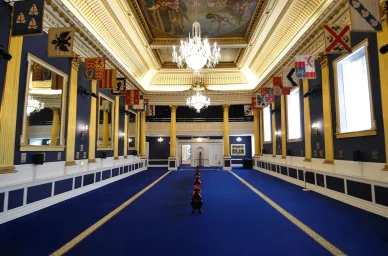
St Patrick's Hall at Dublin Castle, Ireland's grandest ceremonial room originally developed as a ballroom in the mid-18th century, featuring the magnificent painted ceiling by Italian artist Vincenzo Waldré (begun in 1788), and now serving as the venue for Irish presidential inaugurations since 1938.
The present-day Dublin Castle welcomes more than 500,000 guests each year. In 2024, it received 727,189 ticketed visitors, the highest volume in its history. The complex is open every day from 09:45 to 17:45. If you want to discover its gilded chambers where history was made, make the most of the guided tours that typically last about an hour. Group bookings, however, need to be made in advance.

Dublin Castle TOUR | Walking in Dublin Ireland
Eager to explore the country's most iconic residence, tourists head straight to the State Apartments, which easily form the crown jewel of any visit to this castle in Dublin. One of the most storied parts of the historical monument is St. Patrick’s Hall. Its incredible ceiling, which captures symbolic scenes, has borne witness to every presidential inauguration that has taken place since 1938. Standing frozen in imperial elegance, this Throne Room contains the vacant seat that keeps reminding viewers of the departure of British authority.
In the Chapel Royal, you will be greeted by exquisite wood carvings and stained glass, while the heritage centre symbolises centuries of evolution. As a self-guided tourist, you should be able to navigate these spaces within about thirty minutes, but chances are, you may not be able to resist lingering at specific spots.
Modern Government Functions
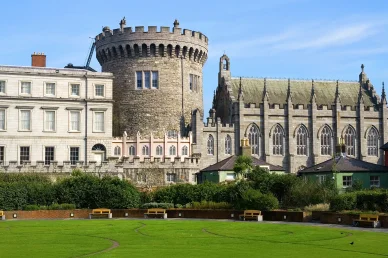
Dublin Castle viewed from the courtyard, showing the historic stone architecture and towers of one of Ireland's most important buildings.
Today’s Dublin Castle events showcase how this former fortress is not merely a museum piece, but a vibrant working building. The same chambers that were once occupied by British viceroys now host state ceremonies, including diplomatic receptions, presidential inaugurations, and other official eventsthat symbolise Irish sovereignty.
The castle’s many roles come with their own challenges. Whenever government functions are held, portions of the State Apartments are closed to tourists. High-profile events mean tighter security, so visitors may be directed to different areas instead of the ones they planned to see.
If you think about it, however, the dual identity of the castle enriches the visitor experience. Unlike dull and empty-looking historical sites, Dublin Castle shines with a purpose, one that not only lets tourists photograph gilt mirrors in the morning but also hosts treaty negotiations among diplomats in the evening. The country managed to strike the right balance between historical preservation and practical governance. And today the castle serves both as a proud symbol of national heritage and as a functioning centre of administration.
Where to Stay Near Dublin Castle
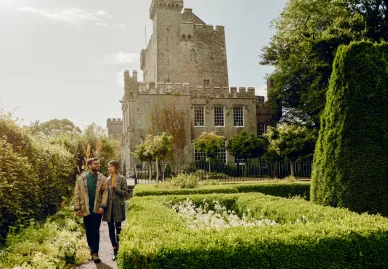
Places around Dublin Castle
Local Hotels
Numerous hotels near Dublin Castle cater to different preferences and budgets. If you prefer luxury accommodation in the city centre, you’ll start experiencing Georgian elegance even before entering the castle gates. Boutique properties come with intimate charm, while budget-friendly options offer accessibility for all travellers.
Hotels near Dublin Castle also place you within walking distance of the vibrant Temple Bar quarter, Trinity College, and Christchurch Cathedral. Thanks to this proximity to Trinity College, you should be able to explore Dublin’s Georgian and medieval quarters on foot.
During peak summer months and special events, city centre hotels fill rapidly. Therefore, it’s best to book well in advance. So if you’re serious about exploring Ireland’s historic heart, early planning will give you the best start to your adventure.
The Castle Hotel Dublin and Other Options
The Castle Hotel Dublinis known for its comfortable rooms and historic charm. But if you’re seeking something different, there are plenty of alternatives across the city. Various other castle-themed hotels capitalize on Dublin’s medieval heritage. Speaking of heritage accommodation, it ranges from converted Georgian townhouses to modern establishments offering mesmerising castle views.
Certain establishments offer special packages that cover not just accommodation but also guided castle tours. Budget options include hostels and guesthouses located within the medieval quarter.
Dublin’s Other Castles and Their Significance
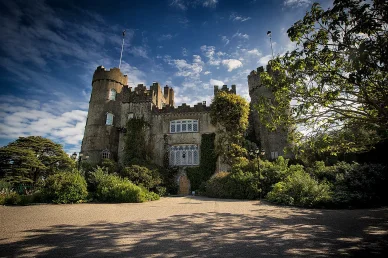
Dublin Castle, Dublin.
While its significance is unmatched, Dublin Castle is not the only castle in Dublin. Some of the others that form part of the Irish castle heritage include the medieval Malahide Castle and Drimnagh Castle. But these castles in Dublin were primarily residential or military fortresses.
The real seat of power rested with the stronghold alone, which shaped Ireland’s political significance and was a symbol of Irish sovereignty. Clearly standing out from its other castle counterparts, Dublin Castle plays a key role in the country’s historical continuity while still completing the wider narrative of Dublin’s fortified past.