u2
Not all empires began with grand ceremonies or dramas; some. Some, as in the case of the rock band with Dublin origins that has gone down in history as one of the greatest — U2 — were started by the simple act of four teenagers answering a notice board post. Against the backdrop of a grey Dublin autumn in 1976, when punk was at the peak of its popularity in the music scene, this was the moment when Larry Mullen Jr., Bono, The Edge, and Adam Clayton, all young pupils of Mount Temple school, gathered in a small kitchen.
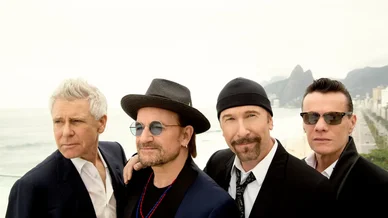
Perhaps none of them ever expected that one day, 170 million copies of their albums would be bought and listened to around the world, or that they would go from schoolboys to global superstars that helped define the sounds of the 80s. While the band’s tightly-knit line-up — which has remained unchanged for over five decades — along with their iconic albums and undeniable cultural impact are often discussed, this article will look more closely into the “how they got here”of the Irish rock band. Now, let’s start from the very beginning of U2’s story.
From Dublin Schools to World Stages
Origins at Mount Temple
It was September 1976, and the 14-year-old Larry Mullen Jr. had put up a simple notice on the corkboard at Mount Temple School, a largely Protestant secondary school in north Dublin. The content of the notice was simple: bandmates needed. Five students responded to the notice — Paul Hewson (later known as Bono), David Evans (The Edge), his brother, Dik Evans, Adam Clayton, and Ivan McCormick. The “audition” was held in a kitchen, and the criteria for passing weren’t so much technical proficiency on an instrument or a good voice, but enthusiasm and chemistry.
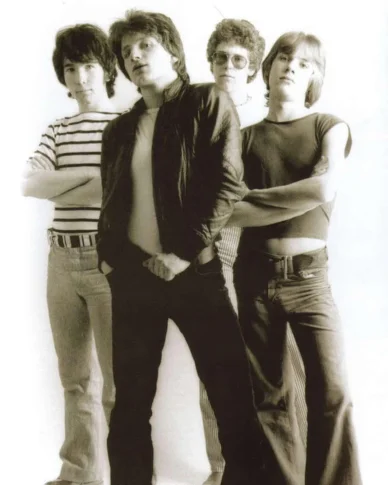
U2 band members in 1976,
The band formation process was difficult. There was a lot of experimentation and shuffling around, not just with the roster of U2 members (Ivan McCormick dropped out early), but also their sound and very identity. This can be seen in the name evolution of the band, starting with Feedback and The Hype, before finally settling on the now-legendary “U2”, chosen primarily for its ambiguity and openness to interpretation.
The members of U2 thought that this mystery in the name could intrigue the audience and give them a boost in their rise to prominence.Considering how people are still searching for the meaning behind the name even today, this name evolution is a great call.
Early Musical Development and Influences
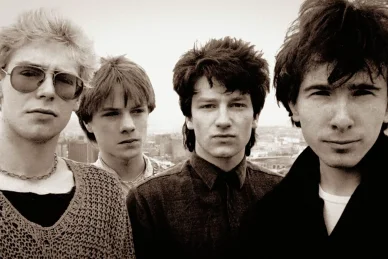
U2 band members in 1978
They couldn’t really play. Not well, anyhow, but that wasn’t a problem. If the punk influences of the 70s, with big names like The Clash, Sex Pistols, and Buzzcocks, taught them anything, then it was that technical mastery wasn’t strictly necessary for meaningful expression or good music. And this was shown very clearly in the fact that some of their early works were cover songs of big hits from legends at the time, such as Bob Dylan or Patti Smith.
Their musical development was a gradual thing as they learned how to play and sing together in a four-piece lineup. When Dik Evans left the group in 1978 to pursue his career with a different punk-rock group, the Virgin Prunes, the roster was trimmed down to a quartet and has remained that way to this day. It’s quite an achievement, considering how the industry is notoriously turbulent. Names like The Damned, Siouxsie and the Banshees, and so on, all swapped out people at one point or another. Just not U2.
U2’s Core Line-up
Bono: The Voice, The Vision, and the Controversy
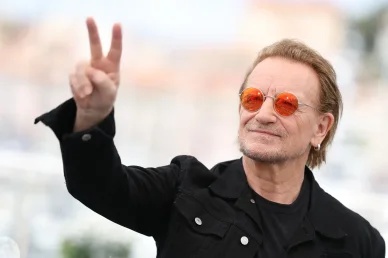
Paul David Hewson, better known as Bono
If there’s such a thing as “the most spectacular self-reinvention in rock”, then that title would have to go to Paul Hewson, better known as Bono. As the lead vocalist and rhythm guitarist, Bono is essentially the face of the band – his stage presence is often enhanced with a pair of sunglasses that adds rockstar mystique and protects his eyes from the decades spent under the stage lights.
However, Bono from U2 uses his highly visible position for far more than just amping up crowds or driving album sales. He is incredibly active in humanitarian work, activism, and political engagements, which have helped define U2’s public image just as much as their music. As a matter of fact, his campaigns, such as the ones in collaboration with DATA or the ONE Campaign, occasionally overshadowed even his music.

Bono - The Busk 2025 - Dublin, Ireland
Despite the positive impacts of his work, it has been a source of controversy for Bono and the band, as fans, pundits, and the public as a whole debate whether rock stars should really be using their stage presence to discuss geopolitics. Nevertheless, this bravery and the willingness to risk mockery for their causes is one of the more integral parts of Bono U2’s identity.
The Edge, Adam Clayton, and Larry Mullen Jr.
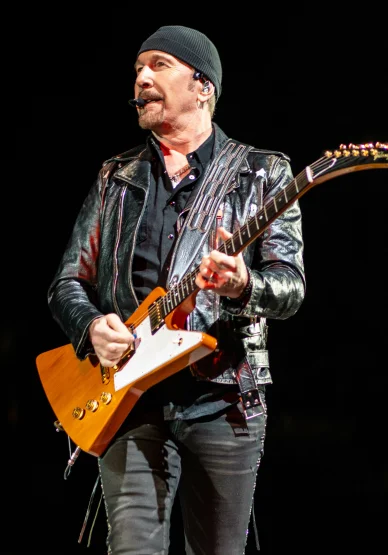
David Evans (The Edge), guitarist of U2
David Evans, or “The Edge” as he’s popularly known, stands out among the U2 members, having earned his distinctive nickname for his sharpness, both in personality and in his guitar work. His style is often described as “minimalist guitar” – there aren’t any finger-twisting chords or elaborate runs and riffs. The tasteful and approachable sounds, ornamented with heavy reverbs and delays, are a signature of U2’s music, and are also part of the reason why their songs are covered so extensively by guitarists and modern-day singers alike – they’re just really easy to play.
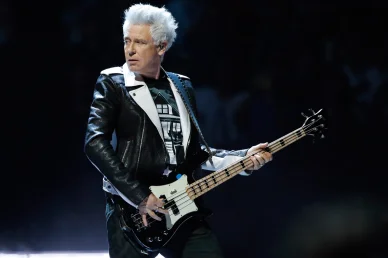
Adam Clayton, bassist of U2
Providing the melodic foundation for the rest of the U2 members is Adam Clayton’s bass, while Larry Mullen's drums anchor the performance. The four managed to find their own rhythm, and a very distinctive sound came about as a result of this interplay. The uniqueness of their chemistry is perhaps the reason why, despite having ample opportunities to strike out and go on solo ventures, the band still sticks together to this very day.

Larry Mullen Jr., drummer of U2
Classic Albums and the Band’s Growth
Early Albums (1980–1983): Boy, October, War
The album Boy, their 1980 debut produced by Steve Lillywhite, was the world’s first introduction to the band. Right away, it was quite a hit with its breakthrough single, “I Will Follow”, written by Bono as a tribute to his late mother. The song is still played by the band on tour today. In fact, it’s the only track in their entire discography that has appeared on the setlist of every tour without fail. The rest of the album was similarly well-received, with critics and listeners praising the emotional honesty of its lyrics, which focus a great deal on relatable themes, such as adolescence, innocence, and loss.
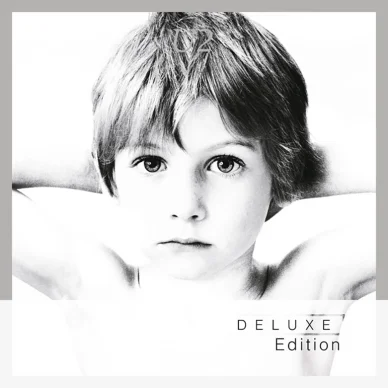
U2 – "Boy" Album Cover (1980)
U2's album lineup grew just a year later, in October 1981, with a second release that focused more heavily on spiritual themes. This was also a rather turbulent time in their history, as three members – Bono, The Edge, and Larry Mullen – were part of a Christian group. The lifestyle of a rock-and-roll band, filled with stereotypes like smoking and drinking, didn’t vibe quite well with their religious beliefs. At one point during the production of the album, the band came very close to disintegrating.

U2 - I Will Follow
And yet, they held on, releasing the War album in 1983. The theme once again changed, and just like the name, it shines a light on the heavy, brutal aspects of warfare. “Sunday Bloody Sunday”, rooted in the context of The Troubles in Ireland, and “New Year’s Day”, influenced by political events in Poland and the rise of the Solidarność movement, both address the intensity of conflict. The two tracks convey its terror not only through their lyrics but also through their heavy, anthemic sound. It was their most overtly political engagement to date.
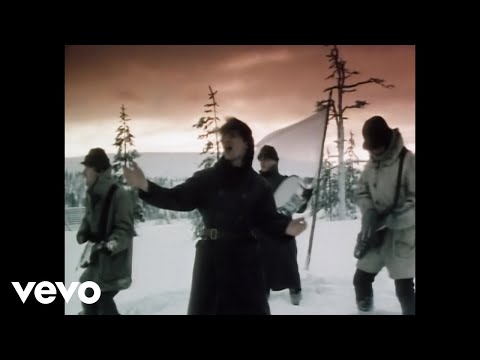
U2 - New Year's Day (Official Music Video)
One might be able to glean the running theme throughout the band's discography up to this point: they weren’t afraid of sounding polarising or of risking alienation among their audience. All U2 albums dealt with sensitive, heavy subjects most musicians would have handled with kid gloves or, better yet, not at all. And as it turns out, their gambit paid off, because not only did the audience respond well to their messages – ones of frustration, hope, and demands for justice – but their songs became soundtracks for the socially conscious of the era.
The Joshua Tree (1987)
The bandreached a true career peak in 1987. That year, they released The Joshua Tree, an album that would go on to become one of the defining works of rock music. This U2 album was their fifth, following The Unforgettable Fire from 1984, and its themes explored Americana in “In God’s Country” and spiritual searching in “I Still Haven’t Found What I’m Looking For”. The band was in good hands, as they were guided by veteran producers Brian Eno and Daniel Lanois, who pushed them from the more ambient sound of previous U2 albums toward a rougher, more diverse sonic landscape.
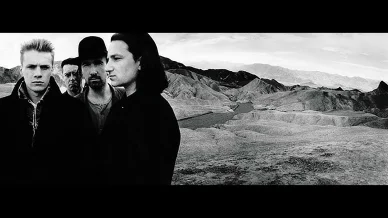
Album cover of U2's "The Joshua Tree" featuring the band in the Mojave Desert at Zabriskie Point, photographed by Anton Corbijn in 1986.
The record was a commercial success, selling 25 million copies around the world. It also spawned multiple number-one singles that became the soundtrack of late-80s aspirations, anxieties, and awakenings, such as “With or Without You”. It’s fair to say that with this album that U2 solidified their position as international superstars.
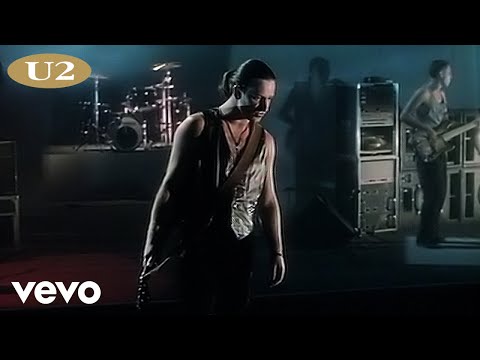
U2 - With Or Without You (Official Music Video)
Legacy and Signature Songs
Anthems for Generations
There’s “Sunday Bloody Sunday” (1983), in which the name itself already conjures images of sheer violence. It becomes even more visceral when you put it on, as the defiant vocals and the military drumbeats begin to play, expressing moral outrage at the brutality that gripped Northern Ireland for decades. “Pride (In the Name of Love)” (1984) turned Dr. Martin Luther King Jr.’s assassination into a tribute to his sacrifice while, in the same song, it galvanized the people to continue the struggle for justice. “Where the Streets Have No Name” (1987) opened with the guitar chiming like church bells, building to a crescendo that felt both intimate and stadium-anthemic at the same time.
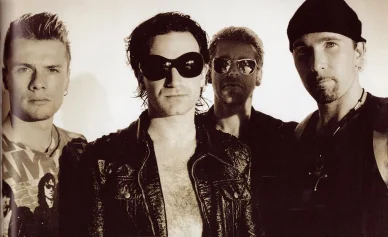
U2 band members in 1991 during the "Achtung Baby" album era
In all of these U2 songs, the band consistently showcases universal themes that resonate across cultures and languages to become true anthems that people all around the world can understand and enjoy in equal measure. “One” from Achtung Baby (1991), for example, is now often used both as a wedding song as well as a protest song. Interspersed between the more intense works were songs like “Beautiful Day”, which brought back a more uplifting, light-hearted feel to U2 songs and reintroduced a sense of optimism to their sound.
U2’s Musical Transformation
Achtung Baby really could have destroyed the band. Should have. Maybe. This radical musical reinvention incorporated electronic influences, industrial textures, and alternative rock aesthetics. It felt almost custom-designed to alienate and offend the sensibilities of fans who had loved the sounds of The Joshua Tree. But instead of torpedoing the band, it propelled them to new heights and revitalized their career.
U2 albums in the 90s brought further experimentation with Zooropa (1993) and Pop (1997). The band began to embrace irony and a postmodern playfulness that contrasted sharply with their earlier sincerity. But it was through these U2 songs that the band shaped its evolved identity. Unlike many other headlining bands at the time, they refused to become a nostalgia act, choosing instead to stay relevant by keeping up with the times while still maintaining their core artistic integrity.
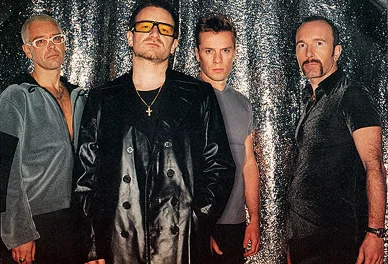
U2 band members during the PopMart Tour in 1997, featuring Bono, The Edge, Adam Clayton, and Larry Mullen Jr. performing on stage
Masters of the Stage
Reinventing the Concert Experience
Live performances became something of a calling card for U2. Their ambition to deliver spectacular shows, combined with their clear passion for performing, made each ticket — no matter how expensive — worth it for fans. The Zoo TV tour (1992–1993) was a criticism of the information age, while still celebrating contemporary culture. PopMart’s golden arch and giant lemon prop risked slipping into kitsch, but ultimately transcended it and became genuinely iconic.
The U2 360° tour (2009–2011) revolutionized stadium shows with its unique “Claw” structure that allowed full 360-degree staging, improved sound distribution, and mind-bending visual effects. During the Live Aid 1985 performance, U2 demonstrated how live television could amplify, rather than diminish, the emotional impact of music. This set, especially their extended version of “Bad”, helped establish their global reputation as a formidable live act. At the show, Bono pulled fans onto the stage and risked the timing of the entire set. The moment ended up creating one of the defining live television images of the era.
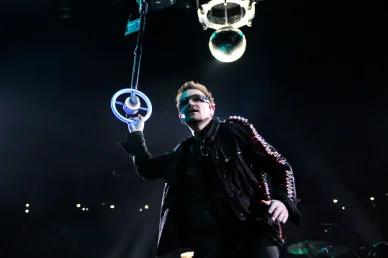
Bono performing live on stage during U2's 360° Tour, singing into a microphone in front of the tour’s circular stadium stage setup.
U2’s Cultural Legacy
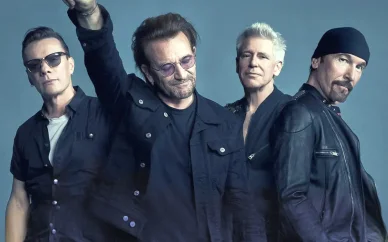
The complete lineup of U2: lead vocalist Bono, guitarist and keyboardist The Edge, bass guitarist Adam Clayton, and drummer Larry Mullen Jr., pictured together as the classic formation of the band that has remained unchanged since 1978.
It’s surprising how big an impact they made on rock music history when we remember they were originally just four kids in a Dublin suburb rehearsing in a kitchen. But it changed more than history: U2 redefined what rock bands could be, what they could do, and what they could mean. Their cultural influence extends beyond their music into humanitarian work, political statements, and technological innovations that have reshaped how live music is performed and broadcast. U2 also brought Irish culture to a global audience, proving that despite their suburban Dublin roots, it was never a barrier to their ambition or their success.
The members of U2 inspired countless bands through both music and example. Even after 45 years, their position as one of the greatest rock bands in history seems more than secure. Fans and pundits can debate this, of course, but their arguments matter far less than U2’s lasting legacy — one that extends beyond any single song, album, or performance they’ve ever given.