Steve Jobs
Whether you’re a huge Apple fanboy whose favourite book is Walter Isaacson’s Steve Jobs biography or whether the only thing you know about the Apple cofounder is that he liked to wear turtleneck sweaters, you’re in for a treat today. We’re going to be taking a close look at the iPhone creator and Pixar boss who revolutionised the way we look at technology and pushed us towards the post-PC era.
Steve Jobs’ impact on technology can’t be overstated, and his story takes us from the creation of Apple to his ousting and return, as well as his work with NeXT, Pixar and more. Towards the end of his life, the focus switches to the rise of the iPod, iPhone and iPad, as well as his untimely passing due to pancreatic cancer and the enduring legacy that he left behind.
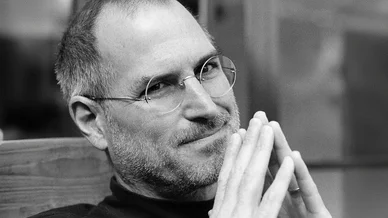
Jobs’ Early Life and How it Shaped His Worldview
From Birth to Adoption and Silicon Valley
Born in San Francisco in 1955, the young Steve Jobs wouldn’t get a chance to bond with his biological parents because he was given up for adoption and taken in by Paul and Clara Jobs, who gave him his surname. Paul was a machinist who taught Steve to take electronic devices apart and put them back together again, while Clara was a bookkeeper and payroll clerk who helped to encourage him to pursue a more rounded education.
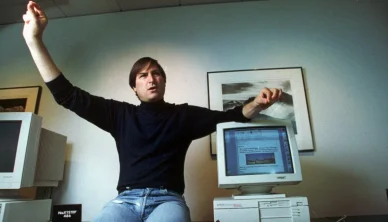
A Young Steve Jobs
Steve grew up in Mountain View, a city in the heart of Silicon Valley and a popular engineers’ neighborhood that would go on to become home to a number of well-known tech companies including Google’s parent company, Alphabet. Even back then, it was a hub for technology and engineering, and this also helped to develop the young Jobs’ interest in technology and its applications.
It was at this time that he attended Homestead High School and met future Apple cofounder Steve Wozniak, with the two of them bonding over their shared love of technology. Even at this early age, he was forging the connections that would serve him well later in life.
Reed College and Jobs’ Voyage of Self-Discovery
After Homestead, we move on to the Steve Jobs Reed College saga, one of the most formative times in his life. Steve Jobs' education history didn’t exactly follow a straight line, with him enrolling at Reed in 1972 and dropping out almost immediately after growing disillusioned after his first semester.
Instead of traditional education, Jobs started to explore his spiritual and creative side, immersing himself in Eastern philosophy, experimenting with LSD and adopting a fruitarian diet. He lived in a commune in Oregon for a while, then took a job as a technician at Atari so that he could save money before travelling to India in 1974 to further pursue his newfound interests.
Of course, Jobs was infamously restless, and so even after getting back from his India trip, he still continued to search for meaning and kept on learning. It was this search for constant improvement that would characterise his later career.
Founding Apple and Early Successes
Jobs and Wozniak Create the Apple Computer
We already mentioned the Steve Jobs Wozniak meeting back at Homestead High School, when the two future founders bumped into each other at the Homebrew Computer Club. Back in the 70s, only hobbyists and tinkerers really knew what computers were or how to use them, making it the perfect setting for Jobs and Wozniak to meet each other, along with other like-minded creative types.
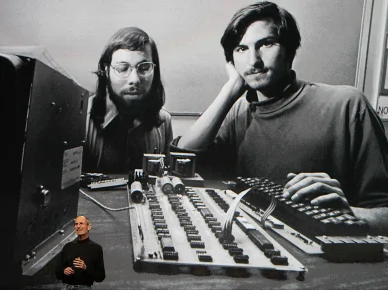
Steve Jobs Met Steve Wozniak
The Apple I history starts at Homebrew, where Wozniak created a simple computer. Jobs immediately saw its potential, and together, they aimed to create a personal computer that could be sold to everyday users instead of specialists. On April Fool’s Day in 1976, Wozniak and Jobs teamed up with Ronald Wayne to create a garage startup called Apple Computer, which was literally based in Jobs’ garage.
The Apple Computer 1976 had been born, and so had the partnership between two of the most iconic founders in tech history.
From Apple I to Apple II
After launching the Apple I, their first computer, Jobs and Wozniak continued to pursue their vision of making desktop computers universal by working on a successor. The Apple II was the ultimate in consumer-friendly computing, coming fully assembled and with colour graphics and a simple setup, making it much easier for people to get started with it.
A big part of the Apple II success story is down to Mark Markula, an Intel executive and early investor who pumped a quarter of a million dollars into the company and helped to make it a professional organisation. It also helped that the Apple II came with VisiCalc, a spreadsheet program that gave businesses a reason to buy the thing.
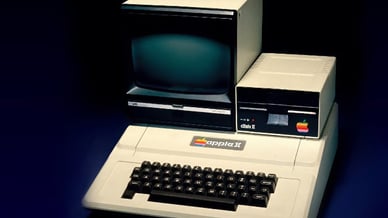
The Apple II computer
Before long, sales had gone through the roof and the company was ready for the Apple IPO 1980, one of the biggest IPOs of the time and one which made 25-year-old Steve Jobs a young millionaire who’d never have to worry about where his next paycheque was going to come from.
The Lisa, the Macintosh and Jobs’ Departure
The Lisa, Xerox PARC and the Advent of the GUI
After the Apple II, the only way was up. Apple had already become a household name and established itself as one of the most promising companies in the tech industry. Now it was time for the Steve Jobs’ Lisa, a new device that was inspired by the Xerox PARC GUI that Jobs had seen on the Alto computer.
A GUI is a graphical user interface, and it’s what we all rely on today. Instead of a user having to type commands into a command prompt, a GUI allows users to navigate using their mouse and to click on icons. By using a GUI, tech companies could focus on object-oriented programming (OOP), allowing them to create things like windows, icons and buttons instead of just lines of code.
The Apple Lisa, which was launched in 1983 as a follow-up to the Apple II, was the company’s first piece of hardware to use a GUI, and it introduced many of the concepts that we still use in computing today. The Lisa was also sold on the basis that it supported laser printing, which was another huge plus for those who wanted to use it for business.
The Creation of the Apple Mac
After the Lisa, Jobs moved on to the Macintosh, which aimed to build on the success of the Lisa to create a computer that would be simple enough for anyone to use. The idea was to build “a computer for the rest of us.”
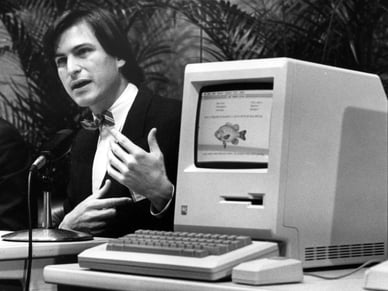
Apple Macintosh was the first successful mass-market personal computer featuring a graphical user interface (GUI), mouse, and built-in screen
To achieve this, Jobs built a small team and encouraged them to think of themselves as rebels, telling them that it was better to be a pirate than to join the navy. Ideas like these came up throughout Jobs’ career, but they also clashed with the fact that Apple had grown into a huge corporation.
Even with iconic moments like the Macintosh 1984 launch and the 1984 commercial, which is often pointed to as one of the greatest commercials of all time, there were still ongoing tensions between Jobs and CEO John Sculley. Eventually, Sculley carried out a boardroom coup, which ended up with Steve Jobs fired and leaving Apple. It was the end of an era.
NeXT and Pixar: Jobs’ Phoenix Moment
NeXT: Technology vs. Business
So what was next for Jobs? Or should that be, what was NeXT?
After leaving Apple in 1985, Jobs founded NeXT Computer with the goal of building an advanced and super powerful computer workstation that was designed with higher education institutions and research organisations in mind. This led to the creation of the NeXT Cube, a UNIX workstation that came with an inbuilt GUI and OOP tools out of the box.
Working alongside directors Ross Perot and John Patrick Crecine, Jobs also helped to develop NeXTSTEP, an OOP operating system that ran on NeXT devices and would later be used to develop video games like Doom and Quake. And yet despite these innovations and the elegant design of the NeXT Cube, it was too expensive for most organisations and had low sales.
Even after the launch of the cheaper NeXTstation, the company still found it difficult to gain market share in a competitive marketplace. Feeling the pressure, several of the company’s co-founders moved on to pastures new, and NeXT ended up pivoting to focus on niche software.
Pixar and Toy Story
NeXT wasn’t Jobs’ only project outside of Apple, though. In 1986, we move on to the Steve Jobs Pixar era, which began with him purchasing the computer graphics division of George Lucas’ Lucasfilm. Given that Lucasfilm didn’t exactly roll off the tongue, he opted to rename it Pixar instead, investing $10 million into the company to turn it into the pioneering animation studio that we know today.

Pixar's Early Days - A Never-Before-Seen Interview With Steve Jobs, 1996
Under Jobs’ leadership, Pixar developed RenderMan, a cutting-edge piece of software that allowed them to create lifelike CGI for movies instead of the clunky graphics that everyone else was making at the time. As part of their mission to showcase this new technology, the company produced a number of short films including the Oscar-winning 1988 animation Tin Toy.
Pixar also secured a huge Disney deal which would lead to their creating full animated movies, the first of which was 1995’s Toy Story. It was a difficult movie to make and its production was riddled with challenges and setbacks, but it also became an instant classic and led to Pixar’s public IPO. Jobs was already a rich and powerful man; the Pixar IPO only made him richer and more powerful.
Jobs Returns to Apple and Revives the Company
NeXT Deal and Apple’s Big Pivot
By the middle of the 1990s, Apple was struggling with declining sales thanks to a convoluted product line and ever-increasing competition from Microsoft, whose Windows 95 had a huge hold over the PC market. In an attempt to revive the company, Apple buys NeXT in 1996, in part to secure Steve Jobs return to Apple.
At the same time, Apple CEO Gil Amelio was removed, while new board members like Larry Ellison were brought in to reassure investors and secure the company’s future. Meanwhile, Apple negotiated a $150 million Microsoft investment which also allowed them to cross-license patents for the benefit of both companies.
With Amelio gone and a new board on-board (pun intended), Jobs was named interim CEO and tasked with revitalising the company and bringing it into the 21st century. There’s an argument to be made that without Jobs’ return, Apple would have gone the way of the dodo and become just another tech company that struggled to stay relevant and eventually collapsed.
iMac, Mac OS X and More
When Jobs returned, his first priority was to revamp the product line, which had grown convoluted and difficult for customers to understand. This included discontinuing models that were underperforming and focusing on key products, including the launch of the iMac 1998. This colourful and user-friendly machine helped to revitalise the Apple brand and to return it to profitability.

The First iMac Introduction
At the same time, the company was working on Mac OS X, a more modern operating system with an Aqua interface that was designed to look “good enough to lick.” A key part of this was the Digital Hub strategy, the idea of which was to develop an entire ecosystem of iLife apps that would put the Mac at the centre of people’s digital lives.
This hub included iMovie for desktop video editing, iTunes for managing and listening to music, iDVD for watching DVDs and iPhoto for photo management. There was also GarageBand, a popular tool for recording and mixing music, and later builds included iWeb for building a website. With all of these tools in a single place, the iMac was one of the most powerful tools on the market.
The iPod, iTunes and the iPhone
How the iPod Revolutionised Music
In 2001, Apple introduced the iPod, making iPod history stretch back a quarter of a century at the time of writing. At the time, nobody could have known how it would revolutionise the way that people listened to music.
Designed as a simple, easy-to-use MP3 player, it’s important to remember that this was the Napster era, when illegal MP3 downloads were commonplace and Metallica was threatening to sue teenagers for downloading music. The iPod integrated with the iTunes music store and made legal music downloads both easy and convenient, doing more to put a nail in piracy’s coffin than Metallica ever could.

Apple Music Event 2001-The First Ever iPod Introduction
Initially released as a Mac-only device, the iPod was eventually given Windows support and was succeeded by the iPod mini and the iPod nano, further helping Apple to solidify their stranglehold on the market. They also worked closely with music labels to keep them on-side and to make sure that everything was legal and above board.
The result? The “iPod nation” phenomenon, with Apple’s popularity exploding throughout the mid-2000s and the company ending up with a market share of 80% of the portable digital music player market. Not bad for a company that had been struggling to survive just a decade earlier.
The iPod Leads to the iPhone and the iPad
The success of the iPod showed Jobs and Apple that they were on to something, and it also showed them that there was a larger opportunity to tap into. Steve Jobs saw that while the iPod was dominating the market for portable music players, the mobile phone could eventually supersede portable music players.
This led to Apple launching a secret project called Project Purple, the goal of which was to create a phone that worked like an iPod. In January 2007, iPhone history was made when Jobs introduced the new device to the world, touting it as a combination of an iPod, a phone and an internet browser.
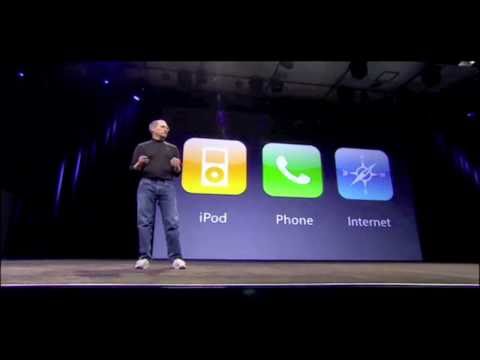
Steve Jobs Introducing The iPhone At MacWorld 2007
As part of the launch, he secured an AT&T deal, with the network having exclusive rights to the device in exchange for Apple being able to control the software and bypass restrictions imposed by other carriers.
It didn’t take long for the iPhone to take over the market, thanks partly to the 2008 launch of the App Store and the ease with which new users could get used to iOS. Steve Job’s iPad soon followed, with the tablet computer becoming the world’s post-PC device of choice. And then there was iCloud, allowing users to store their files and data in the cloud and to seamlessly sync between one device and another.
The End of the Story: Illness, Death and Legacy
Jobs’ Battle with Cancer
In 2003, just as Apple was beginning its resurgence, came the Steve Jobs’ cancer diagnosis. It didn’t look good.
In fact, the Apple co-founder had been diagnosed with a pancreatic neuroendocrine tumour, which is a rare form of pancreatic cancer. To begin with, he refused conventional medical treatment and turned down surgery, opting instead to pursue alternative routes like dietary changes and holistic medicine. But by 2004, it became clear that he was going to need a form of treatment called a pancreaticoduodenectomy.
Unfortunately, the cancer recurred, forcing him to have a liver transplant in 2009 and to take medical leave from the company on several different occasions. By August 2011, it became clear that he wasn’t going to be able to keep on leading the company, and so he resigned as Apple CEO and handed control over to the new CEO Tim Cook.
Steve Jobs passed away peacefully on October 5, 2011 at the age of 56. For fans of his work, his products and his ethos, the only real consolation is that he lived up to the words of his famous Stanford speech in which he said, “Your time is limited, so don’t waste it living someone else’s life.”
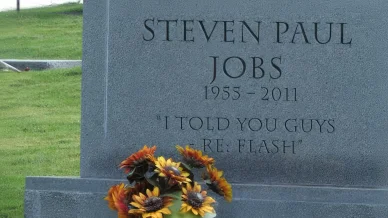
He died of tumor-related respiratory arrest in 2011; in 2022, he was posthumously awarded the Presidential Medal of Freedom
The Legacy Jobs Left Behind
The Steve Jobs legacy is rich and iconic, thanks to everything from the creation of Apple University to the training of Tim Cook as his eventual successor. Indeed, while Cook is no Jobs, he’s done a fantastic job of building on the work that Steve started, and Apple today is as successful as it’s ever been.
Meanwhile, Jobs’ creation of Apple Park gave the company a stunning new headquarters, with the building itself being a masterpiece of design and a showcase of what Apple can achieve. He also found some time to collaborate with author Walter Isaacson to develop an official biography. Walter Isaacson’s biography provided insights into his thinking and personal philosophy that had never been seen anywhere else.
At the time of his passing, Jobs had plenty of other plans, including the idea of building a family yacht, but unfortunately, they wouldn’t all reach fruition. Despite that, and even with his untimely passing in mind, Steve Jobs left a legacy of innovation behind that few other figures in history could hope to match. The world is a poorer place without him.