Jeffrey Epstein
Meet Jeffrey Epstein, the poster boy for systemic corruption. You’ve probably already heard of him.
This isn’t going to be a glamorous biography, although we’ll be answering the question of “how did Jeffrey Epstein get rich?” and looking at where he spent his money. The whole point, though, is to look at how he used his money and connections to abuse his victims and act with impunity, dodging justice right up to the end of his life.
We’ll also have a stab at answering “how did Jeffrey Epstein die?”, although that will ultimately be for you to decide. All we can do is share the facts; what you choose to do with that information is up to you.
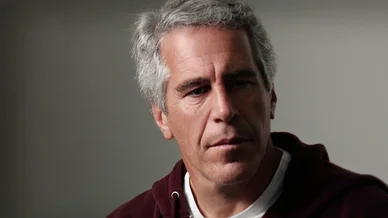
If you’ve come for gossip, you’ve come to the wrong place. We’re going to be sharing the information you need to know to make an informed decision, highlighting victims’ voices and the failures of the system that was meant to protect them. There will be times when it’s going to be rough to read. Just imagine what it was like to research!
And with that disclaimer out of the way, let’s get started. Here’s what you need to know about Jeffrey Epstein.
Epstein’s Background and Early Manipulation
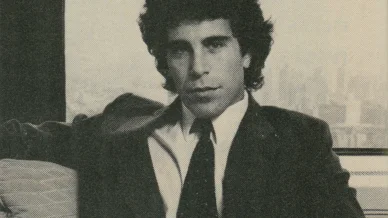
Epstein in his youth
Birth, Childhood and Schooldays
Jeffrey Epstein was born on January 20, 1953 in Brooklyn, New York. His father, Seymour Epstein, worked for the parks department, while his mother, Pauline, was a school aide. Together, their income allowed him to grow up in a gated apartment, in sharp contrast to the working class families that surrounded them.
Epstein’s parents pushed for class mobility, trying to rise up the ranks from working class to middle class and beyond. Meanwhile, the future financier studied first at Lafayette High School and later at Cooper Union, before transferring to NYU. He studied mathematics, but never completed his degree. Even Jeffrey Epstein young was a manipulator, hanging out with elite families despite his lack of formal education.
By the time that he reached his late twenties, Epstein had secured a teaching job at Dalton School, bending the rules by landing the role despite not being a trained teacher. By the early eighties, he was already exploiting privilege and putting himself in positions of authority, and it’s horrifying to think of all of the young people that he must have interacted with during those early years.
From Teacher to Financier: How Epstein Made His Fortune
So how did Jeffrey Epstein get rich? Well, he decided to leave teaching and to get into finance, joining Bear Stearns after impressing a senior executive whose daughter he’d tutored. Jeffrey Epstein had no college degree and no experience in the finance industry, but he somehow rose through the ranks to become a limited partner within just a few years. He specialised in working with wealthy clients who had complicated tax strategies, at least until he left in 1981 under disputed circumstances.
From there, he went on to run his own “consulting” firm, and that’s where his shadowy wealth gets trickier to track. According to Epstein, he only managed money for high-net-worth individuals, but few of his clients have ever been publicly revealed. As earlier in his life, it seems likely that he made his money through the proximity to power, possibly through gaining leverage over clients and blackmailing them as opposed to making some sort of genius investments.
Let’s be clear: it’s not unusual for rich people to have wealth that’s difficult to track down. What’s unusual with Epstein is just how much effort he put into keeping his finances private while silencing any accusations of wrongdoing. It’s a strategy he’d come to rely on in the future.
Mystery Money and Powerful Connections

Jeffrey Epstein’s Islands
Epstein Island, Leslie Wexner and Offshore Companies
The big turning point in the Jeffrey Epstein story comes from his alliances with billionaires like Leslie Wexner, a retail businessman who teamed up with Epstein in the late 1980s. Wexner even gave Epstein power of attorney, which meant he had authority over everything from his offshore finances to his properties. It was an unusual amount of power to hand over, especially to a man with no formal credentials.
This also gave him access to an insane amount of wealth. Epstein took over luxury properties and started travelling by private jet. At the same time, he surrounded himself with society’s elites, many of whom were attracted to him purely because of his frequent shows of riches. It almost didn’t matter whether the money was his or Wexner’s, because either way, it made people think that Epstein was a rich and powerful man.
As money continued to flow Epstein’s way, he pumped it into real estate, most famously into Little St. James, which would go on to be nicknamed Jeffrey Epstein island. The island provided him with a secure base where he could get away with almost anything he wanted to, and as we later found out, his mysterious financial deals were only the beginning.
Donald Trump, Prince Andrew and the Elites
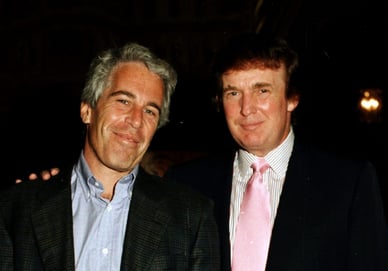
Jeffrey Epstein and Donald Trump
As the years passed, Epstein continued to build his social connections, with his proximity to power acting as his trademark. Through gatherings, parties and public events, he made sure that he was on first-name terms with everyone from politicians and celebrities to billionaires and members of the British royal family.
That’s how the Donald Trump Jeffrey Epstein and Prince Andrew Jeffrey Epstein friendships formed, although “friendship” might not be the right word. Like everything in Epstein’s life, it was all about power, with these relationships proving to be transactional. And let’s be clear here: this isn’t some conspiracy theory and I’m not wearing a tin foil hat. These are documented associations and public controversies, not rumours, allegations and unproven crimes.
The crazy thing here is that it all shows how easily Epstein could move amongst society’s elite. His social circle echoes the access to power that he had, and that high level of power also makes it difficult to investigate him. No single political party will hold him accountable because he had influence and leverage over everyone, and as soon as one link in his network falls, they all will. His social circle acted more like a barrier for his protection than a normal friend group.
Abuse System and Approach to Recruitment
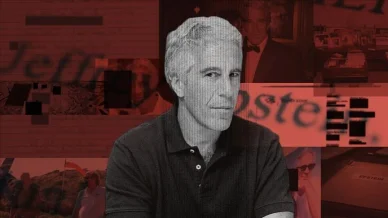
Jeffrey Epstein
How Epstein and His Cronies Abused Minors
Now that we know what we know about Jeffrey Epstein island and the things that went on behind closed doors, we have a clear idea of how his operation worked. Bear with us, because it’s about to get dark.
Epstein and his pals started out by grooming vulnerable teenage girls, especially those from unstable homes and difficult family situations. They’d often be promised cash, education and connections, but it came at a price. Epstein wasn’t doing this out of the goodness of his heart; he was doing it to establish a trafficking ring.
The pattern of abuse would then continue with Epstein offering them money in exchange for a “massage”, which would then escalate into full-blown sexual abuse. He did this across multiple locations, including Epstein Island, his Manhattan townhouse and several other estates. In fact, that property portfolio that we mentioned earlier would come into play, allowing him to create abuse hubs that multiple victims could be passed through.
Epstein relied on classic control methods, those that have been used by abusers throughout the world for decades. He’d start with grooming, giving gifts and cash and promising to help his victims with education, travel and anything else they might be struggling with. From there, he’d move on to isolation, separating the girls from the world they knew and the support networks they had. The threats would soon follow, and by that time, his victims were so reliant on him for financial aid that they couldn’t leave. Even if they could, they were afraid of what Epstein could do to their reputation.
The Survivors Speak Out
Now that the truth has come out, there are countless victim testimonies that tell us everything we need to know about the trauma and the long-term impact that they’ve been left to deal with thanks to the abuse they suffered on Epstein Island. We could fill an entire article with those testimonies alone, but we’re going to summarise them instead and spare you some of the most graphic details.
If there’s one theme that runs throughout all of the stories, it’s the fear that the survivors felt, the similarities between their recruitment and the fact that when they did speak up, nobody ever seemed to listen. We’ve seen the same story over and over again, playing out in interviews, courtrooms and sworn statements.
Epstein’s survivors had been trying to speak out for years, whether to their parents and the police or to lawyers, politicians and school officials. They’d even gone to the media, over and over again, but it seemed that nobody would take them seriously. Perhaps they were afraid of legal action if they took the allegations further, but that’s not justice. That’s cowardice.
For years, those few cases that made it to court ended up stalling or didn’t lead to serious consequences. The media kept quiet. It’s only now that the survivors realise that they’re not alone, which is somehow both comforting and a terrifying thought. One thing’s for sure. The victims were failed time and time again.
The 2008 Plea Deal and How Epstein Cheated Justice
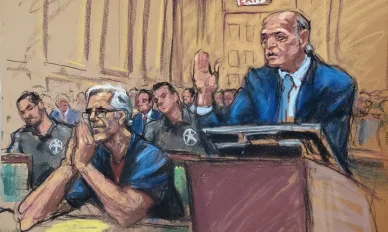
Jeffrey Epstein (left) watches the bail hearing in a courtroom on July 15, 2008.
The first serious investigation into Epstein’s network of abuse started in Palm Beach, Florida, after a victim’s parent reported her concerns to the local police back in 2005. For whatever reason, after so many accusations and reports were ignored, detectives finally took the case seriously and began an investigation, interviewing multiple teenage girls and gathering physical evidence. These findings were handed over to federal prosecutors, and it started to look like Epstein was finally going to face justice.
Then came the plea deal, which was remarkable not because it finally brought him to justice but because of how lenient it was. Instead of serving decades in prison, he pled guilty to the lesser charge of soliciting prostitution and served a 13-month sentence, with much of that sentence taking place on work release. True, it required him to register as a sex offender, but it also effectively closed the door on the investigation. In fact, prosecutors negotiated the deal without notifying the victims, something that the victims argued violated their rights under the Crime Victims’ Rights Act.
Years later, the Jeffrey Epstein files were released, largely due to intense litigation. These internal emails, court records, investigative materials and other documents exposed exactly how prosecutors prioritised protecting Epstein over seeking justice for his victims. Ultimately, the plea deal allowed him to keep on abusing girls. So much for justice.
The 2019 Arrest, Epstein’s Death and the Unanswered Questions
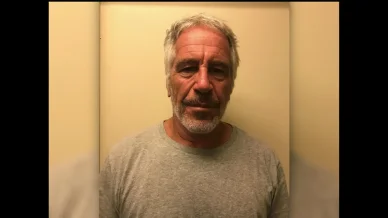
Jeffrey Epstein
The New Charges and the Release of the Epstein Files
In July 2019, Epstein was arrested again at New Jersey’s Teterboro Airport. This time, prosecutors from New York charged him of sex trafficking charges, with the indictment alleging that he’d abused dozens of underage girls between 2002 and 2005.
These new charges led to raids on several of his homes, including his Manhattan townhouse, and led to the discovery of a huge amount of evidence including hard drives, CDs, photographs, cash and documents. These court documents would go on to form the backbone of the Jeffrey Epstein Files.
In the months and years that have passed since that July, we’ve seen the Jeffrey Epstein files released in dribs and drabs, although many of them have been redacted and many others are yet to be released. Still, this partial unsealing of documents has revealed a sinister pattern and shown just how deeply the rot and corruption goes.
Unfortunately, while the documents have revealed information on more victims and more perpetrators, there’s still much that’s yet to be unredacted. Some people believe that enough information has been released; others think that the Department of Justice has a lot more work to do.
Is Jeffrey Epstein Dead? How Did Jeffrey Epstein Die and When Did He Die?
Well, these are the million-dollar questions. Let’s take a look at the official timeline, starting with when Epstein was arrested on July 6, 2019 and held at the MCC jail in New York.
When did Jeffrey Epstein die? Less than six weeks later, on August 10, 2019, he was found unresponsive in his cell.
Is Jeffrey Epstein Dead? Yes, unless you believe the conspiracy theories. But we’re not going to talk about them here because we’re focussing solely on the known and provable facts.
How did Jeffrey Epstein Die?Jeffrey Epstein died as a result of a suicide by hanging himself with a bedsheet in his jail cell. However, the suicide ruling isn’t accepted by everybody due to oversight failures.
Given that Epstein was such a high-profile figure, you’d expect him to have been watched around the clock. In fact, he’d previously been placed on suicide watch, but that was removed shortly before his death.
With no suicide watch, his safety would fall to the surveillance cameras and the correctional officers. However, the cameras by his cell malfunctioned and couldn’t provide usable footage, while the officers assigned to monitor him later admitted to falsifying records after falling asleep during required checks.
Is it a conspiracy? Well, maybe. But there’s also a lot to be said for the idea that you should never suspect foul play when incompetence is just as likely.
The Aftermath: Maxwell, Civil Suits and the Fight for Transparency
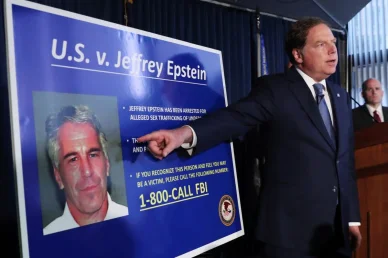
An official briefing with a “U.S. v. Jeffrey Epstein” FBI poster.
Ghislaine Maxwell and Criminal Trials
In July 2020, long-time Epstein associate and former lover Ghislaine Maxwell was arrested in New Hampshire and charged with helping to facilitate Epstein’s abuse. She was accused of helping to recruit and groom underage girls, acting as a friend to them and making Epstein’s ghoulish behaviour seem “normal”.
Her trial went ahead in 2021, and it saw multiple Epstein survivors testifying that Maxwell had played a key role as one of Epstein’s main accomplices. The federal jury agreed, convicting her on several counts including sex trafficking of a minor and sentencing her to 20 years in prison.
It’s true that Maxwell played a major role in Epstein’s network, but it would be a mistake to think that she’s the only one. True, she’s the only one who’s faced accountability, but that just highlights how few of Epstein’s other enablers have faced true consequences for the role they played in Epstein’s trafficking operation. Most survivors point to this as yet another example of how Epstein’s connections have been able to protect themselves.
Civil Lawsuits and the Ongoing Battle Over the Jeffrey Epstein Files
The renewed scrutiny into the Jeffrey Epstein files that came about after his death and the Maxwell trial led to efforts shifting towards providing compensation funds for victims and securing the release of further information. After all, Epstein himself can no longer be brought to justice, but we can at least make sure that his victims are listened to and take steps to stop this from happening again.
In 2020, Epstein’s estate established a victims’ compensation program that would be overseen by an independent administrator. This fund has paid out hundreds of millions of dollars in settlements for the many lawsuits that have been filed by Epstein’s victims.
Meanwhile, lawyers, journalists and campaigners have continued to fight to secure the release of more of the Epstein files. However, it’s not as easy as it could be because there’s a huge amount of tension due to the arguments about transparency vs privacy. Those who swear by transparency say that the world needs to know the truth. Those who swear by privacy say that it shouldn’t come at the cost of victim privacy.
There’s no easy answer to this, but one thing is for sure. The majority of people believe that the perpetrators of these crimes need to be brought to justice, regardless of how powerful they or their friends might be.
Why the Jeffrey Epstein Story Still Matters
The thing that we need to remember about the Jeffrey Epstein case is that this isn’t a story about a single monster, although it’s true that Epstein was exactly that. It’s not the monster that’s scary, though: it’s the system that the monster was allowed to operate in.
Jeffrey Epstein taught us that it’s possible for a serial abuser to befriend the powerful and benefit from systemic failure thanks to compromised and inept law enforcement and prosecutors and a society of elites who looked the other way. The case is a warning that legal systems can be bent and broken by the rich and powerful, allowing them to act with impunity.
So what can we learn from it? Well, we need to put victims first in the future, believing their stories when they’re brave enough to come forward and investigating claims no matter how powerful the accused perpetrator is. There’s a need for reform and for continued and intense scrutiny of the institutions and enablers that allowed Epstein to operate in the first place.
The man himself should be remembered for what he was: a monster. But it’s a little like the famous G. K. Chesterton quote that goes, “Fairy tales do not tell children that dragons exist. Children already know that dragons exist. Fairy tales tell children that dragons can be killed.”
And that monsters like Epstein can be stopped but only if we hold everyone accountable for their actions, no matter how much wealth and influence they have.