Oscar Wilde
If you’ve never heard of the Irish literary genius Oscar Wilde, you’ve been missing out. He’s arguably the most celebrated playwright whose name doesn’t begin with “William” and end with “Shakespeare” as well as the first ever person to be famous just for being famous.
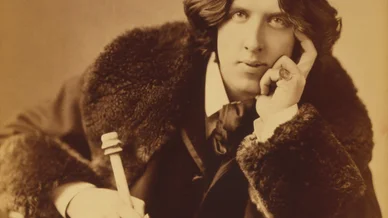
Oscar Wilde was born in Dublin on October 16th 1854, but it didn’t take him long to make a name for himself thanks to his life of wit and tragedy. His plays and his witticisms are iconic, but so is his eventual downfall due to his homosexuality at a time when it was against the law to be gay.
In today’s piece, we’ll be taking a closer look at the life of the Irish legend, covering his transformation from being a scholar at Trinity College Dublin into being the most famous playwright in Victorian London. Along the way, we’ll cover everything from his most influential works to his many controversies. Let’s meet Oscar!
Early Life in Dublin
Birth and Family
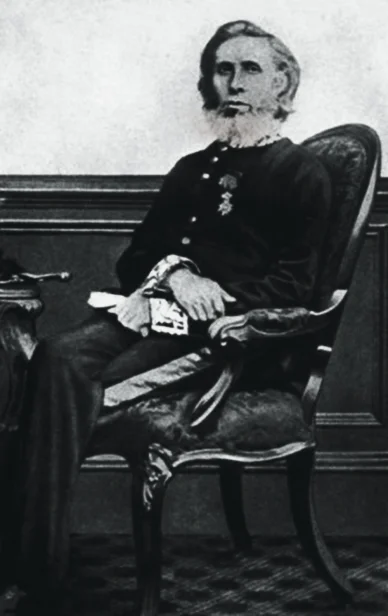
Oscar's father, William Wilde, a leading ophthalmologist, was knighted in 1864 for his service as a consultant physician in Ireland.
The future playwright was born at 21 Westland Row, Dublin, and the Oscar Wilde House is now owned by Trinity College Dublin. In fact, it’s been turned into the Oscar Wilde Centre for Irish Writing. But we’re getting ahead of ourselves.
Both of Wilde’s parents were influential in their own ways. His father, Sir William Wilde, was an eye surgeon who wrote a number of books on everything from medicine to folklore, while his mother was Jane Wilde; with “Speranza” being the pen name that she used to write her poetry.
Given that both parents in his Anglo-Irish family were intellectuals and accomplished authors in their own right, perhaps it’s no surprise that young Oscar would follow in their footsteps. Jane was also a political writer, with her poetry aiding the Young Irelanders rebellion in 1848 and the fight for Irish independence. Meanwhile, William was knighted in 1864 thanks to his work on the 1851 Census, as well as his contributions to the field of medicine.
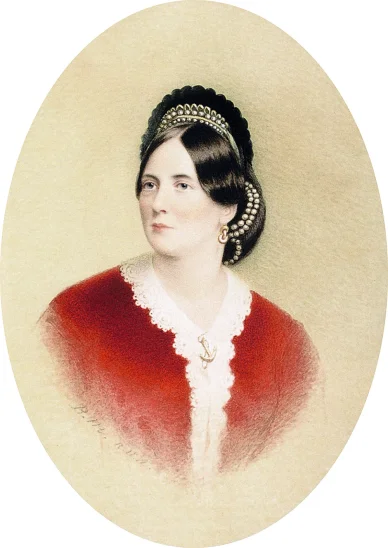
Jane Elgee: Oscar Wilde's Mother
Wilde’s Time at Trinity College Dublin
Literature played an important role in the life of Oscar Wilde from an early age, but it wasn’t until he went to Trinity College Dublin in 1871 that he started to show that he himself had a serious future in the field.
In fact, he was awarded the Foundation Scholarship, which is the highest undergraduate honour that a Trinity student can receive, and he was given the Berkeley Gold Medal for Greek upon his graduation. This prestigious award marked him out as one of the top students of classical studies at the institution.
It was at around this time that Wilde started writing, most notably by presenting a paper on aesthetic philosophy to the University Philosophical Society. His potential clearly showed, because he was awarded a scholarship to Oxford’s Magdalen (pronounced “maudlin”) College. But even after he arrived in Oxford, his early education in Dublin continued to shape the way he looked at the world and thought about his own place in it.
Oscar Wilde: The Writer
Early Writings
Despite the fact that most people think of Wilde primarily as a playwright, Oscar Wilde poems are some of the best out there, especially for the period. People were well aware of it at the time, too. That’s why his Poems collection, which was first published in 1881, sold out its first print run. That’s notoriously difficult to do, even for a novel. For a poetry collection, it’s almost unheard of.

Oscar Wilde documentary
Then again, he’d already been awarded the Newdigate Prize for Ravenna, one of the longer Oscar Wilde’s poems and one which recounts his trip to the Italian city of the same name. This piece is perhaps the best demonstration there is of the aesthetic movement influence on Wilde’s work, showcasing his skills when it comes to describing beauty and bringing it to life in the mind’s eye.
It’s also a great example of how Wilde was able to combine classical influences with the sensibilities of the time. In fact, his work still feels fresh today, especially when you compare it to his contemporaries. True, he was accused of plagiarism by members of the Oxford Union, but those accusations were ultimately dismissed and just led to more eyeballs on the poem.
Wilde’s Success in The Theatre
No investigation of Oscar Wilde's famous works would be complete without taking a look at his work in the theatre. Wilde’s plays were revolutionary for the time, mixing social commentary with social satire and throwing in a hefty dose of humour and wit.
1892 saw the first performance of Lady Windermere’s Fan at London’s St. James’ Theatre, and that was soon followed by A Woman of No Importance in 1893 at the Haymarket Theatre. An Ideal Husband debuted in 1895, as did The Importance of Being Earnest. It was this latter play that brought everything together, using exquisite language and memorable one-liners to tell a tale of mistaken identity that would echo throughout the ages.
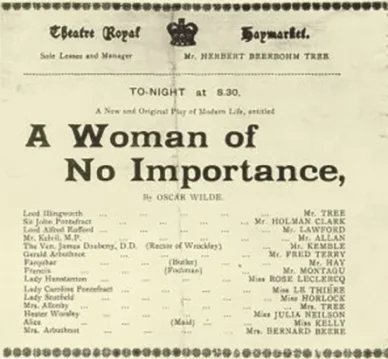
The Original Cast of the 1893 Production
Of course, it would be easy to overlook Salomé, which was perhaps the least commercial of Oscar Wilde's famous works. First written in French, this one-act play told the story of Herod’s stepdaughter, who was promised any gift she desired and asked for the head of John the Baptist. Perhaps unsurprisingly, it was banned in England for many years, though it was performed elsewhere.
Wilde as a Novelist
The Success of Dorian Gray
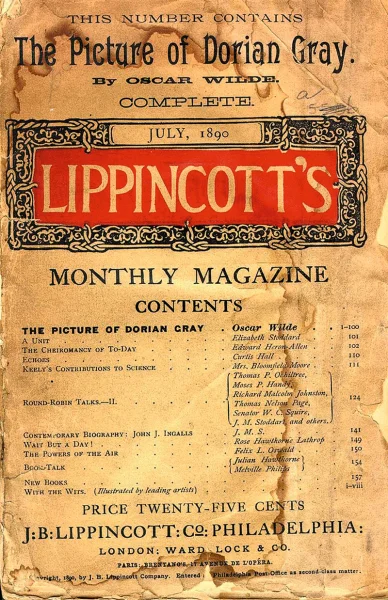
The Picture of Dorian Gray: 1890 First Edition
Most writers of the time tended to focus on either novels or plays, but Wilde was never one to follow the crowd. That’s why there’s a novel amongst the Oscar Wilde books that you’ll see at libraries and on people’s bookshelves.
Despite being Wilde’s only novel, The Picture of Dorian Gray is considered to be a gothic masterpiece, and with good reason. The story follows the titular hedonistic youth as he makes a deal in which a painting of him ages while he himself remains young.
Cue the most iconic of all Oscar Wilde’s famous works in which the author investigates the nature of beauty, morality and corruption. Like Salomé, the novel proved to be controversial, partly because Gray’s behaviour stood in direct opposition to established Victorian morals.
Much of the moral controversy came from the fact that the novel is rooted in the aesthetic movement and its unofficial moral of art for art’s sake. Given that this philosophy still holds true today when it comes to the act of creation, it should be no surprise that the morals of Dorian Gray have echoed throughout the ages.
Essays and Children’s Stories
Despite being remembered primarily as a playwright and a novelist, there are a number of exceptions when it comes to the full list of Oscar Wilde books. Perhaps the most notable of those are his essay collections, which give us a unique perspective on the way his mind worked. These include Intentions, which takes a closer look at his thoughts on aesthetics, and The Soul of Man Under Socialism, both of which were published in 1891.
As you can imagine, the subject matter of these two books contrasts with The Happy Prince and Other Tales, a collection of Wilde’s children’s stories. This actually came out in 1888, making it one of Wilde’s earliest published works. Perhaps more importantly, it also demonstrates his versatility and the intellectual breadth that characterised his work throughout his career.
Personal Life and Eventual Undoing
Wilde as a Husband
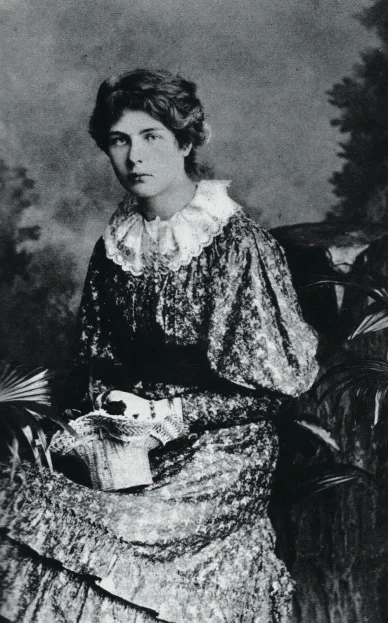
Constance Wilde: Oscar's Wife
Oscar Wilde was famously homosexual, but Victorian homosexuality was against the law. That forced him to pretend to be someone he wasn’t so that he’d be accepted by wider society.
That’s likely what led to the Constance Lloyd marriage of 1884, in which he appeared to settle down and start a traditional family life in London. The couple had two sons, Cyril and Vyvyan, and Wilde loved them both with everything he had.
But that didn’t stop him from developing an illegal love for Lord Alfred Douglas, who Wilde affectionately nicknamed Bosie. Their relationship began in 1891 and grew increasingly reckless throughout the years, with Wilde taking less and less care to ensure that it remained hidden.
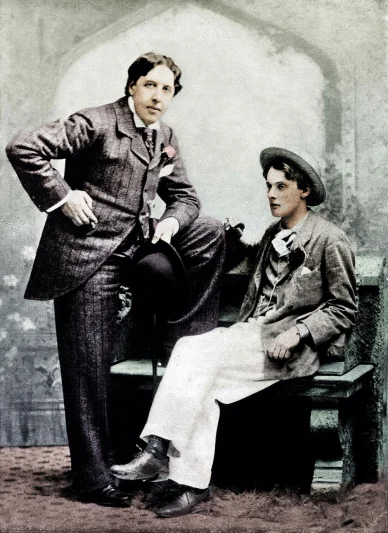
With Alfred Douglas, English poet, close friend and lover, 1894.
Something had to give, although Wilde didn’t see it that way. He would have been perfectly happy to keep on writing and living his double life, but fate had other ideas.
Arrest, Trial and Prison Sentence
In 1895, Bosie’s father, The Marquess of Queensberry, publicly accused Oscar Wilde of being homosexual. Wilde sued the Marquess for libel, but the move backfired. His private life was exposed in court and Wilde hastily withdrew his lawsuit, which was seen by most as an admission of guilt.
And so he soon ended up in court again, this time defending himself against charges of gross indecency. There were two 1895 trials because the first one resulted in a hung jury, but he was convicted at the second and sentenced to two years of hard labour, first at Pentonville and Wandsworth and eventually at Reading Gaol.
The conditions there were brutal, with Wilde being confined to a small cell. It was during this time that he wrote De Profundis, a letter to Bosie which reflects on his emotional torment. After his release, he wrote a poem called The Ballad of Reading Gaol which was a damning indictment of the prison system and the brutality of the death penalty.
Wilde’s time in prison destroyed his health and left him close to penniless. It also ruined his reputation amongst the British public and brought his career to a premature end. Even after he was released, he was never quite the same. He died in Paris in November 1900 due to health complications from his imprisonment.
Oscar Wilde’s Legacy and Reputation
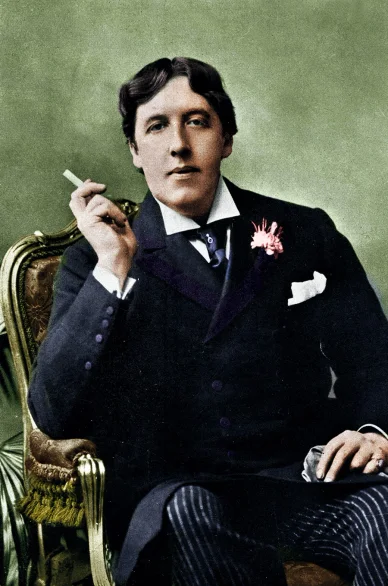
Portrait of Oscar Wilde
Even though Wilde had fallen from favour at the time of his death, he’s remembered today as a genius and one of the most talented authors of all time. That’s why he’s honoured throughout the world, particularly in his native Dublin.
For example, there’s the Trinity Oscar Wilde Centre at Newman House. There’s also the stunning Merrion Square statue which is in a park that sits just opposite Wilde’s childhood home.
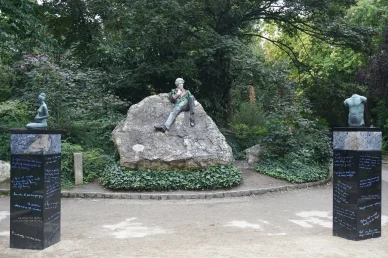
And of course, no literary tourism would be complete without a visit to the Oscar Wilde House on Merrion Square North, which offers occasional guided tours to visitors. You can also learn more about Wilde via everything from walking tours to exhibitions at the Trinity College Library.
All of these Dublin celebrations show just how important Wilde is to the city that he once called home. Put simply, you can’t separate Wilde from the city of his birth, because their two stories are intertwined.
Oscar Wilde’s Quotes and Witticisms
So what’s left to know about Oscar Wilde? Well, you can’t talk about his literary immortality without touching upon his legendary quotable wit. All of the Oscar Wilde's famous works are jam-packed with quotes and ideas that have an enduring influence on popular culture even to this day, 125 years after his death.
Famous Oscar Wilde quotes include:
- “We are all in the gutter, but some of us are looking at the stars.”
- “The truth is rarely pure and never simple.”
- “I don't want to go to heaven. None of my friends are there.”
- “Hearts are made to be broken.”
- “I think God, in creating man, somewhat overestimated his ability.”
All of this shows that Wilde underwent a full rehabilitation from scandal and went on to achieve literary immortality. Given his vast amount of talent, it’s no surprise that Wilde was able to solidify his position amongst the greatest English writers of all time. His messages about art, society, individual freedom and beauty for beauty’s sake are still just as important today as ever.