Sleep Apnea Statistics and Facts You Should Know
We compiled the most important stats and facts about this common sleep disorder.
Key Takeaways
- Approximately 39 million U.S. adults have obstructive sleep apnea (OSA).
- 936 million adults around the world are estimated to have mild to severe OSA.
- Snoring is a common symptom of sleep apnea in up to 94% of patients.
- Untreated sleep apnea can lead to heart, kidney, and metabolic health complications.
- It’s estimated that 33 million U.S. adults could benefit from using a CPAP machine, and even President Joe Biden uses one.
- Sleep apnea treatment can improve quality of life and help regulate blood pressure.
Sleep disorders like sleep apnea are more prevalent in U.S. adults than you might think. In fact, the Centers for Disease Control and Prevention (CDC) found that three in four U.S. adults have sleep disorder symptoms. Obstructive sleep apnea (OSA) is a very common condition where the upper airway becomes blocked while sleeping. Different factors determine your likelihood of developing sleep apnea. Here are a few key things you should know about OSA, its effects on overall health, and treatments.
How common is sleep apnea?
Roughly 6 million Americans have been diagnosed with sleep apnea. But in reality, this sleep disorder is thought to affect 30 million people in the U.S. Older adults are much more likely to have sleep apnea than younger people. One study found that 56% of people age 65 and older have a high risk of developing obstructive sleep apnea.
Not all people with sleep apnea have an official diagnosis. The American Academy of Sleep Medicine (AASM) estimates that as many as 80% of people with OSA are undiagnosed.
Around the world, OSA is a very common condition. A 2019 study funded by ResMed—a company that manufactures machines for sleep apnea treatment—found that as many as 936 million adults around the globe have mild to severe OSA.
Sleep apnea facts
There are two types of sleep apnea:
- Obstructive sleep apnea, when the upper airway becomes blocked during sleep, interfering with breathing.
- Central sleep apnea, when the muscles and nerves aren’t activated enough for breathing while asleep, causing pauses in airflow.
Biological factors like age, gender, and weight influence the development of OSA. The risk increases between ages 30 to 70, and men are two to four times more likely than women to have OSA. Higher weight is also linked to a higher prevalence of OSA.
Other factors that put you at higher risk include hypothyroidism, a family history of sleep apnea, menopause, heart or kidney failure, drinking alcohol, smoking, and the anatomy of the face and neck, like having large tonsils.
How sleep apnea is diagnosed
To be diagnosed with OSA, you’ll need to undergo a sleep study, also known as polysomnography (PSG). They can be done in a sleep clinic or at home. During the overnight study, you wear sensors that monitor your heart rate, breathing, blood oxygen levels, and brain waves while sleeping.
Based on your symptoms and a number called the apnea-hypopnea index (AHI) found during the sleep study, you can be diagnosed with mild, moderate, or severe OSA. The AHI measures the number of times your breathing was stopped or hindered as you slept.
Table 1 Comparing mild, moderate, and severe OSA
Severity | AHI (events per hour of sleep) | Description |
|---|---|---|
Mild | 5–14 | May be asymptomatic or have mild daytime sleepiness |
Moderate | 15–30 | Occasional daytime sleepiness |
Severe | > 30 | Often has daytime sleepiness that interferes with normal daily activities |
Sleep apnea prevalence over time
The number of people diagnosed with sleep apnea has increased in recent years. In a 1993 study, moderate to severe OSA was prevalent in 11% of men and 4% of women. According to a 2013 follow-up study, the number increased to 14% of men and 5% of women. In 20 years, the prevalence of OSA in U.S. adults ages 30 to 70 increased by 27% in men and 25% in women.
Experts suggest two major factors may be contributing to the increasing numbers: expanding access to testing and diagnosis and the increasing average weight of U.S. adults.
Table 2 Prevalence of OSA in U.S. adults 30–70 years old over time
Gender | 1993 | 2013 | Difference |
|---|---|---|---|
Men | 9% | 13% | 27% increase |
Women | 4% | 5% | 25% increase |
Sleep apnea signs and symptoms
Common signs and symptoms of OSA include:
- Loud snoring
- Gasping for air during sleep
- Daytime sleepiness
- Dry mouth
- Headaches
- Frequent waking
If you or your partner frequently snores, gasps during sleep, or experiences daytime sleepiness, consider speaking to a health care provider about sleep apnea.
Snoring and sleep apnea
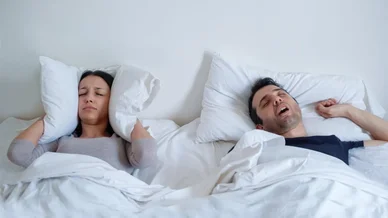
Almost one in two males (44%) and over one in four females (28%) snore regularly. But according to the American Academy of Sleep Medicine, the number may be much higher—about 70% of people who share a bed report that their partner snores.
While snoring by itself doesn’t necessarily mean a person has OSA, loud snoring is one of the most common symptoms. Up to 94% of people with OSA report snoring.
Sleep apnea and age statistics
Older adults age 50 to 70 are more likely to have a sleep apnea diagnosis than other age groups. The increase in OSA prevalence may be due to physical changes that affect the throat and neck area with age. For example, some older adults may have increased fat deposits around the throat that are more likely to restrict airflow during sleep.
Table 3 Prevalence of OSA in middle-aged and older U.S. adults
Gender | 30–49 years old | 50–70 years old |
|---|---|---|
Men | 12% | 18% |
Women | 3% | 8% |
Children and sleep apnea
Although most OSA studies focus on adults 30 and older, sleep apnea can also affect children and young adults. OSA occurs in 1% to 5% of children, most commonly between two and six years old.
Children can develop sleep apnea for several reasons. Children with higher weights, especially adolescents, have higher rates of OSA than their peers with lower weights. Medical conditions such as cerebral palsy, Down syndrome, or Prader-Willi syndrome can also lead to sleep apnea in children.
Physical blockages like enlarged tonsils or adenoidsⓘ can cause sleep apnea as well. The enlargement, whether due to genetics, an infection, or inflammation, can interfere with the airway during sleep.
Sleep apnea and gender statistics
Statistics show that U.S. men have higher rates of sleep apnea compared to women. Men ages 30 to 49 have a four times higher frequency of sleep apnea than women. But between the ages of 50 to 70 years old, the difference between the two groups narrows, and men are only two times as likely as women to experience OSA.
Differences in hormones, anatomy, and metabolism are possible reasons why men have higher rates of sleep apnea.
Table 4 Comparing rates of sleep apnea in U.S. men and women
Ages | Men | Women | Difference |
|---|---|---|---|
50–70 years old | 12% | 3% | Men have 4x higher rates of sleep apnea compared to women in this age group. |
50–70 years old | 18% | 8% | Men have about 2x higher rates of sleep apnea compared to women in this age group. |
30–70 years old | 14% | 5% | Men have about 3x higher rates of sleep apnea compared to women in this age group. |
Menopause and sleep apnea
The frequency of sleep apnea in women increases after menopause. Changes in hormone levels can impact weight and upper airway anatomy, which in turn can impact the likelihood of developing OSA. People who are pregnant or who have polycystic ovarian syndrome (PCOS) may also have higher rates of sleep apnea due to their hormone levels.
Sleep apnea and health conditions
Sleep apnea and your overall health have a two-way relationship. Sleep apnea can impact other aspects of your health, and your health can influence your developing or worsening OSA.
Here are some of the health conditions that increase the risk of OSA:
- Hypothyroidism
- Cleft lip or cleft palate
- Heart disease
- Kidney disease
- Large tonsils
- Higher weight
- PCOS
Sleep apnea can also increase the risk of developing certain health conditions, like:
- Type 2 diabetes
- High blood pressure
- Heart failure
- Kidney disease
- Stroke
- Nonalcoholic fatty liver disease (NAFLD)
- Sexual dysfunction
Untreated OSA can affect your safety and ability to complete everyday activities. For example, daytime sleepiness can make driving dangerous. Poor sleep quality can also lead to difficulty with memory recall and focus. Late-night screen habits can make this worse—endless scrolling, mobile games, or even apple pay casinos—because they delay bedtime and disrupt sleep quality. In addition, studies have found that people with severe OSA have an increased risk of death due to any reason (called all-cause mortality) compared to people without any sleep apnea symptoms.
Correlation versus causation
How exactly sleep apnea affects other aspects of health is still being studied. Some health conditions have a clear link to sleep apnea. For example, higher weight can increase the likelihood of airway blockage during sleep, leading to OSA.rnrnBut other conditions, like depression and post-traumatic stress disorder (PTSD), are more of a mystery. Depression and PTSD show up at higher rates in people with OSA compared to people without, though the research has yet to uncover if or how one condition causes the other.rnrnFor more on how OSA affects mental health, read our article about how meditation can benefit sleep apnea.
Sleep apnea prevention
Eating a heart-healthy diet, managing your weight, quitting smoking, and limiting alcohol intake are all things that can help you prevent OSA.
Because factors beyond your control—like hormones or other health conditions—may affect your risk of developing sleep apnea, getting a yearly wellness visit can help you manage your overall health. You can learn more about your medical benefits using NCOA’s BenefitsCheckUp.
CPAP usage statistics
Continuous positive airway pressure (CPAP) is an effective treatment for obstructive sleep apnea. According to the AASM, 85% of people with OSA—about 33 million U.S. adults—receive CPAP treatment, including President Biden.
CPAP machines use a mask to deliver pressurized air to keep your airways open during sleep.
A study funded by Philips Respironics, a CPAP manufacturer, found the following about people who receive CPAP therapy:
- About 7 in 10 (between 65.7% to 72.5%) people with OSA adhere to CPAP therapy.
- People 61 to 70 years old were more likely to adhere to CPAP therapy compared to younger adults.
- U.S. adults in the Upper Midwest and Mountain West were more likely to adhere to CPAP therapy than U.S. adults in the Northeast and Southwest.
CPAP therapy is effective in the following ways:
- Reduces OSA severity (by reducing AHI)
- Reduces daytime sleepiness
- Improves sleep-related quality of life
- Reduces blood pressure for people with and without blood pressure medications
CPAP machines may cost $400 to $2,700 and can be covered by Medicare or your private insurance. Read more about CPAP machines, including the different types, features, and costs, in our review of the best CPAP machines.
Tips to make your bedroom CPAP-friendly
Ideally, your bedroom should be a space that promotes sleep. To that end, be mindful of sleep hygiene best practices. Getting a good night’s rest starts with finding the best mattress for your needs. If you find yourself tossing and turning at night because you can’t get comfortable, you may need a mattress designed to address your concerns, like a mattress for back pain.
Additionally, maintaining a comfortable sleep temperature and finding pillows to support you in a position to minimize symptoms of sleep apnea can make it easier to drift off. It’s also important to manage disturbing light and sounds so you might consider blackout shades or a white noise machine.
Since you’ll be using your CPAP machine nightly, give it a dedicated space on your bedside table. That will help it become part of your bedroom aesthetic and keep everything you need within easy reach for a smoother bedtime routine.
Bottom line
Sleep apnea is a disorder that affects millions of U.S. adults. It’s found more often in men, older adults, people with higher weight, and people with certain chronic conditions. Common symptoms include snoring, frequent waking during the night, and daytime sleepiness.
CPAP therapy is an effective treatment option for OSA that can improve sleep quality and help control blood pressure. Most people on CPAP therapy continue with it, despite the possible discomfort of sleeping with a mask on. If you experience frequent sleep apnea symptoms, discuss treatment options with your health care provider.