About Adult BMI
Body mass index (BMI) is a simple measure of weight relative to height — your weight in kilograms divided by the square of your height in metres. It is an inexpensive, easy way to sort adults into broad weight categories: underweight, healthy weight, overweight and obesity. BMI does not measure body fat directly, but it is moderately correlated with more direct measures of body fat, and it tends to track metabolic and disease outcomes about as closely as those more complex methods do. You can estimate your own figure in seconds with the Adult BMI Calculator. It is best read as a starting point, not a diagnosis.
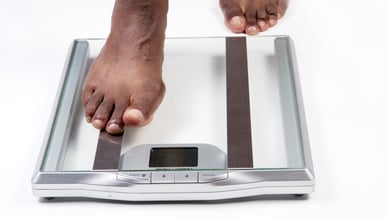
How BMI Is Calculated
The formula is the same for adults and children, and it needs only two numbers: height and weight.
Using the metric system, BMI is weight in kilograms divided by height in metres squared. Because height is often recorded in centimetres, divide by 100 first to convert to metres. For someone weighing 68 kg at 1.65 m, that works out to 68 ÷ (1.65)² ≈ 25.0.
In pounds and inches, the calculation is weight divided by height squared, multiplied by 703. For a person of 150 lb and 5′5″ (65″), that is [150 ÷ (65)²] × 703 ≈ 25.0. Because it relies only on height and weight, BMI is quick and cheap to work out — a large part of why it is so widely used.
Adult BMI Categories
For adults aged 20 and over, BMI is read against standard weight-status categories. These ranges are the same for men and women of every age and body type.
BMI | Weight status |
|---|---|
Below 18.5 | Underweight |
18.5 – 24.9 | Healthy weight |
25.0 – 29.9 | Overweight |
30.0 and above | Obesity |
For children and teenagers the picture is different: their BMI is interpreted by age and sex using percentile charts, because the amount of body fat changes as they grow and differs between girls and boys. This approach is used in many health systems, including Ireland, although local clinical guidance may also consider additional factors such as growth patterns, family history and overall health.
What BMI Does — and Doesn’t — Tell You
BMI is a screening tool, not a diagnosis. A high or low reading simply flags that a closer look may be worthwhile; to judge whether it reflects a real health risk, a healthcare provider carries out further checks such as skinfold measurements and a review of diet, physical activity and family history.
Its biggest blind spot is that it cannot tell muscle and bone from fat. At the same BMI, athletes and very muscular people carry less body fat than non-athletes, so a raised BMI can reflect muscle rather than excess weight. Body fatness at a given BMI also varies from person to person: women tend to have more body fat than men, older adults more than younger ones, and levels differ across racial and ethnic groups — some Asian populations, for instance, face higher health risks at a lower BMI. BMI also says nothing about where fat sits, even though abdominal fat is the more harmful kind.
More direct methods of gauging body fat do exist — among them skinfold callipers, bioelectrical impedance, underwater weighing and DXA scans — but they are typically costly, less widely available, or reliant on trained staff and specialised equipment, which is why BMI endures as the everyday first step.
Reflecting these limits, the American Medical Association advised in 2023 that BMI be used alongside other measures — such as waist circumference, body-fat percentage and metabolic markers — rather than as a standalone gauge of health. The number is one signal, not the whole story.
Why BMI Still Matters
Despite its flaws, BMI remains useful. It is cheap, fast and requires no special equipment, which makes it valuable for tracking weight trends across large populations and for a first, low-cost screen in the clinic.
Higher BMI is also associated, at the population level, with a greater risk of conditions including type 2 diabetes, high blood pressure, heart disease and several others. That is an average pattern, though, not an individual verdict — real risk depends on many factors a clinician can weigh up in context.
The practical takeaway is straightforward. Use BMI as a helpful first check. If your result sits outside the healthy-weight range, treat it as a prompt to speak with a healthcare provider who can consider the fuller picture, rather than as the final word on your health.