War in Iran
There’s a war in Iran today, and it’s one of the biggest Middle East escalations of the 21st century. In fact, the current events Iran is witnessing—including breaking developments even as this article was being written—mean that we might currently be living through one of the most historically significant moments of our lives.
And yet despite that, people are confused. I often see people asking “Is there war in Iran?”, and the answer to that isn’t as simple as it might seem. But I’m getting ahead of myself.
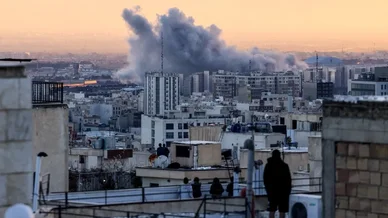
In today’s article, we’re going to look at how the conflict began, the status of the Iran conflict today, and what it means for the world as a whole. We’ll cover the causes, timeline, military actions and humanitarian consequences of active war in Iran, as well as looking at what’s next.
What’s Going on in Iran?
When people ask this, they’re actually asking, “Is there war in Iran?” And that depends upon how you define “war”.
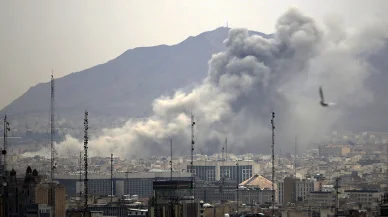
The most accurate way to describe the conflict in Iran is to say that the country is at the centre of an active military conflict involving large-scale strikes, retaliatory attacks and rapidly changing regional dynamics. These attacks have been taking place since late February 2026, with allies Israel and the United States working together to strike Iran’s military and nuclear sites.
With Iran under attack, the purpose of today’s piece is to look at live developments and share current war updates, rather than speculating on who’s in the right and who’s in the wrong. We’ll be looking at the established facts and what they tell us, not at the rumours you’ll see on social media. Remember, though, that this is an active war, and so the situation is changing on a daily basis.
How the War in Iran Got Started
There’s been Israel–Iran conflict for years, with the two countries at each other’s metaphorical throats for decades. In fact, war in Iran and Israel is all but inevitable due to the historical tensions and the clash of cultures and religion pouring water on the roots of war.

Iran war: Worst and best-case scenario
The attack timeline begins on February 28, 2026, when the US and Israel launched a series of coordinated strikes against Iranian targets, including military bases, air defence systems and missile infrastructure, as well as nuclear sites. This was no mere regional confrontation; it was an international strike that was designed to take Iran out of commission before there was any chance of the country attacking first.
But this war had been brewing for decades, stretching back to the Iranian Revolution in 1979. As the country became more conservative and hostility between Iran and the United States and Israel increased, so too did the threat of war. Perhaps the biggest surprise is that it took this long for war to break out in the first place.
What Led to the Escalation
As we’ve discussed, the Israel vs Iran tensions didn’t just appear overnight. In fact, war in Iran and Israel essentially came about as a result of a chain of events that slowly led away from peace and towards war.
Much of the conflict buildup occurred over the past fifty years or so, but you can think of it as like pressure building up inside a kettle before the water boils and steam comes out of the spout. Here, the breaking point was the stalling of diplomatic discussions and increasing military pressure for Iran to stop developing missiles and growing its nuclear program.
Iran’s regional rivalry and its staunch opposition to the US and Israel pushed it to a point where if Iran had access to a nuke, we’d face the real threat of nuclear war. The western allies had been trying to derail Iran’s nuclear development for years through cyber operations and covert strikes; the switch to direct war came about as a result of them running out of time and being forced into a more direct approach.
The Early Days of the Conflict
The war in Iran today began with a coordinated series of rapid attacks that took out the highest priority targets. These first attacks hit facilities like air-defence systems, missile launch sites and military command centres, aiming to cripple the country’s infrastructure and to stop it from being able to defend itself or to launch a retaliation.
This was important for the ongoing air campaign that the western allies have been carrying out ever since, because air superiority is one of their main strategic advantages. Unsurprisingly, Iran quickly retaliated by launching drones and missiles at western military installations throughout the Middle East, potentially drawing other countries into the conflict.
These early strikes soon evolved, with more recent battlefield developments seeing further airstrikes along with the mobilisation of naval and military units throughout the region by both sides. And they’re still just getting started.
Why Iran’s at War
The war in Iran and Israel doesn’t have a single cause, but is instead due to a whole heap of deep-seated reasons. Perhaps the biggest is the US’s focus on national and regional security, with Iran’s unpredictable government posing a threat to stability in the region and throughout the world.
For the last few decades, Israel and the US have been involved in a nuclear dispute with Iran, with serious concerns that the Iranian government could end up with access to nuclear weapons. At the same time, Iran has forged a strategic rivalry with the west by forming alliances with other countries in the region like Iraq, Syria and Lebanon. The western allies view this as a serious threat to global stability, and the historical focus on diplomacy and covert ops was no longer enough to neutralise it.
To justify their attack, the western military doctrine has focussed on the idea that striking now will re-establish deterrence and lead to a state of equilibrium. In other words, it’s a pre-emptive strike that hopes to lead to peace, rather than waiting for the threat to grow worse.
Can Israel Beat Iran in Battle?
This brings us on to the question of who would win in a war (Israel or Iran)? For the purposes of this military comparison, let’s ignore their allies and focus just on these two core countries.
The first thing to acknowledge is that there’s a big difference between a battle and a war, with wars being much more drawn out and therefore requiring greater resources and a deeper commitment. We should also acknowledge that each of the two countries has a drastically different approach to warfare.

Israel has advanced tech and air superiority thanks to everything from their F-35 aeroplanes to their aerial defence systems. Their commitment to tech also covers solid cyberwarfare capabilities and one of the world’s most notorious intelligence agencies, Mossad. Iran has a much larger traditional army, but they lack some of the strategic depth of their opponents.
As a result, we’re likely to see a type of asymmetric warfare in which both countries aim to fight a war on their own terms. But Israel arguably has the edge, especially because it has geography on its side.
Who Would Win in a War?
We’ve established that Israel could likely win a battle, but what about when it comes to the longer term. Can Israel defeat Iran in a war?
Just like before, it depends. I’m also not in the business of making predictions, so let’s rely instead on a comparative military analysis. Israel’s main strengths are its military technology, alongside its access to advanced intelligence courtesy of Mossad. They’ve been running through conflict scenarios for decades, aiming to ensure that they’re never caught off-guard. However, their relatively small size as a country is a major disadvantage.
Iran, meanwhile, is a much larger country, and that means it also has access to a much larger army. Their war readiness efforts have largely focussed on sheer numbers, although it also has a decent number of drones and missiles. However, a lot of its infrastructure is outdated and even the most optimistic force projection has them struggling to sustain war in the long term.
Ultimately, Israel has the edge, but it really comes down to their allies. Which brings us on to the next point.
Will China Back Iran?
Iran has a number of allies, but none of them is a huge cause for concern for the western allies, at least at the moment. For the US and Israel, there’s only one major question that they’re worried about: will China support Iran in war?
So far, Beijing foreign policy has focused on discretion and diplomacy, rather than an outright show of strength through direct engagement. With that said, Chinese oil interests rely on Iranian production, and the two countries have co-operated on a number of economic deals in the past. However, this international strategy is all about mutual growth, and it’s very different to a military alliance.
In fact, China has taken an anti-escalation stance, presenting itself more as a peace-keeper than an active participant in war. They’ve condemned the United States and Israel for the strikes they’ve carried out, but they’re also discouraging Iran from retaliating.
As the conflict continues, we can expect China to encourage participants to negotiate an end to the conflict. They may even provide indirect backing to one or both sides by supporting financial embargoes.
What Military Operations Are Ongoing?
Let’s take a look at the latest news on the ongoing war in Iran and Israel. As you’ve seen, much of this revolves around cross-border strikes by air, building upon the existing approach that Israel and the United States relied upon to start the war in the first place.
Interestingly, both sides are relying on the same tactics, at least for now. Missiles and drones are being used both as part of initial attack waves and as part of a retaliation cycle by which one side strikes the other, then the other side strikes back, and so on and so forth.
With that said, most of the western attacks have focused on strategic operations that are all about taking down key infrastructure, trying to cripple Iran and stop them from retaliating. For Iran, most attacks have been statements and shows of power, showing off the country’s capabilities and demonstrating its ability to strike way beyond its own borders. This is a modern war, and in modern war, borders are no longer limits.
Key Iranian Targets
In terms of the key targets during the war in Iran today, the majority of facilities being hit are military bases, command centres and missile sites. The goal of this strategic bombing is to overwhelm the country’s defence systems and to hopefully lead to a surrender, even if it’s not unconditional.
The Americans and Israelis are backing up these military strikes by also targeting industrial assets (e.g. factories and processing plants), infrastructure targets and other strategic locations. These are important military and political targets because they power the Iranian economy. If they can be eliminated (or even just made less effective), Iran will struggle to fight a long-term war.
At the same time, the incessant strikes on Iran’s command network are disrupting its ability to fight back. What started out as a way to disrupt their future nuclear capabilities has ended up largely neutralising their missile threat in the present.
How Iran Has Responded
Of course, Iran hasn’t just sat back and let the war in Iran and Israel come to them. Instead, their counterattack strategy has relied on a combination of military and political action.
Iran itself has launched a number of retaliatory strikes, and they’ve also encouraged regional retaliation from their allies, although we’re yet to see anything major from another country. Even as their drones and missiles have flown through the skies towards Israeli and US bases, Tehran has used pressure tactics to try to force an end to the war. For example, the country has placed pressure on the Strait of Hormuz, a key international shipping route, and that’s had huge consequences for global energy supplies.
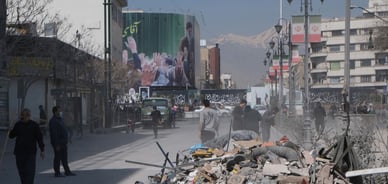
This proxy activity is a clever move by Iran, because it allows them to force neutral countries to take an interest in the war. Many American and Israeli allies want the conflict to end so that gas and oil prices drop back down.
The War’s Humanitarian Consequences
We’ve talked about how war in Iran today is affecting the international community, but what about the country’s citizens? Well, that’s the million-dollar question.
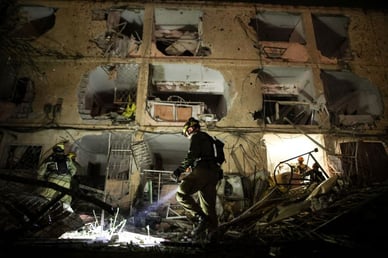
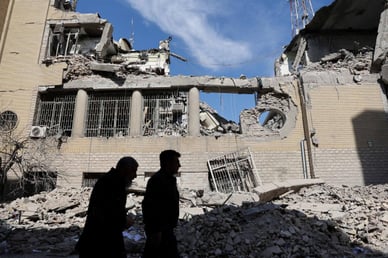
Unfortunately, every war brings civilian suffering, and that’s just as true today in Iran as it was during the First and Second World Wars. The western allies are doing what they can to avoid strikes on civilian targets, but that doesn’t mean there’s not been any collateral damage. From damaged infrastructure to casualties from people who were just in the wrong place at the wrong time, the US and Israeli strikes have had a huge population impact.
There have been power outages and fuel shortages throughout the country, unprecedented pressure on healthcare and other essential services, and a widespread, all-pervasive fear of what the future might bring. Millions of Iranians are living under emergency conditions, and millions more risk displacement if the war comes their way. Right now, the Iranian population is standing on a precipice, and the war could push them over the edge.
The War’s Impact Around the World
As we’ve already discussed, the war in Iran and Israel matters to the whole world and will have an impact far beyond the country’s borders. Even if we ignore the obvious threat to global security, there’s the fact that nearby countries risk being drawn into the conflict. For example, the regional spillover has already resulted in missiles and drone strikes affecting Oman, Qatar and the Gulf states.
Meanwhile, the Iranian stranglehold on the Strait of Hormuz, a key transit route for 20% of the world’s seaborne oil and gas supplies, means that there are very real oil supply concerns for everyone, regardless of whether they take a side or remain neutral. The maritime risk posed by the ongoing conflict means that fewer companies are willing to send out their tankers.
The conflict is bad enough as it is, but there’s also a risk that the wider Middle East will be drawn in. Even though it’s unlikely that China will back Iran, with every new player that shows an interest or enters the war, everyone else has to rethink their approach to national security. No one is safe.
The War’s Impact on the Middle East
The Middle East has never exactly been known for its political stability, but the war in Iran and Israel threatens to pour gasoline on the smouldering fire of the ongoing border tensions and anti-western sentiment. All of a sudden, there’s a huge risk of neighboring states using the conflict as an excuse to pursue their own interests.
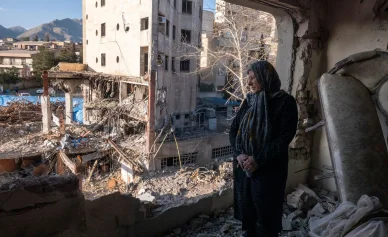
This proxy escalation has already started in Iraq, Lebanon and Syria, where militias have started to spring up on Iran’s side. This has spurred a regional war risk, with Americans and Israelis worried that the tensions will continue to grow and spill out into active war far beyond Iran’s borders. Other Middle Eastern countries may even have the capability to reach Israel with missiles and drone attacks.
Ultimately, the problem here is that conflict in Iran means less stability in an already volatile region. It could end up increasing the scale of the war, broadening the size of the battlefield and causing more death and destruction.
Why We’re All Watching
Even though it’s still early days for the conflict in Iran, it’s pretty clear that the situation needs watching. Regardless of what you think about the question of will China support Iran in war, it’s self-evident that the stakes are as high in Iran as they’ve been in any other conflict over the last twenty years.
For global diplomacy, the war in Iran is the single most important subject on everyone’s mind. The amount of trade disruption we’re seeing, especially for the oil trade, is almost unprecedented, and the longer the war goes on, the greater the disruption will be. The leading superpower interests on every side of the conflict agree that the war is having and will continue to have a huge impact on global energy supplies.
Meanwhile, there’s also international alignment around the fact that military alliances are being put to the test more than ever as countries struggle to come to terms with the new normal. It’s no wonder that people are worried.
What Comes Next?
We’ve already had a go at answering the question of, “Who would win in a war, Israel or Iran?” That’s almost impossible to answer, and so instead, it makes more sense to consider what the next phase of war might look like.
Most experts agree that there are four main escalation scenarios:
- A prolonged air campaign which sees more of the same as both sides try to force the other into submission.
- A broader regional war in which fighting expands outside Iranian borders and draws in neighbouring states and countries like Lebanon, Iraq and Syria.
- Internal destabilisation in Iran, with a grim military outlook leading to growing political pressure for the Iranian government to bow to western demands.
- A push toward negotiation, with both sides acknowledging that the conflict trajectory doesn’t benefit either side in the long run.
And so the “Сan Israel defeat Iran in a war” debate almost doesn’t matter, because the conflict might not come to that. At least, we can hope that it won’t.
Why This War is About More Than the Middle East
As we’ve seen, the war in Iran today isn’t an isolated event, but rather a symptom of wider instability throughout the world. You can’t ask is there war in Iran without acknowledging wider modern warfare trends that are fed by growing polarisation between different ways of life.
This crisis summary has covered the strategic outlook for the foreseeable future, but if you’ll forgive the Ukraine war comparison, we’re likely to see something similar to what’s happening in Europe. The conflict conclusion will take time, and diplomacy will play as much of a part as drone attacks and military power.
International concern will continue to grow as missile strikes and infrastructure attacks become commonplace, with increasing pressure from outsiders to find a peaceful conclusion. As for whether that will happen… well, only time will tell.